 Slashdot Mirror
Cassini Alters Path. Phoebe Now In Sight!
Anonymous Explorer writes "This week the Cassini-Huygens
Spacecraft finally entered
the Saturn system and made its first
main-engine burn in five years in preparation of for the Phoebe flyby. This long
journey
has been one filled with much promise and peril. Launched in 1997,
Cassini is expected to have a rendezvous with
the moon Phoebe
on June 11. For those of us who are lazy, that's just a tad under two
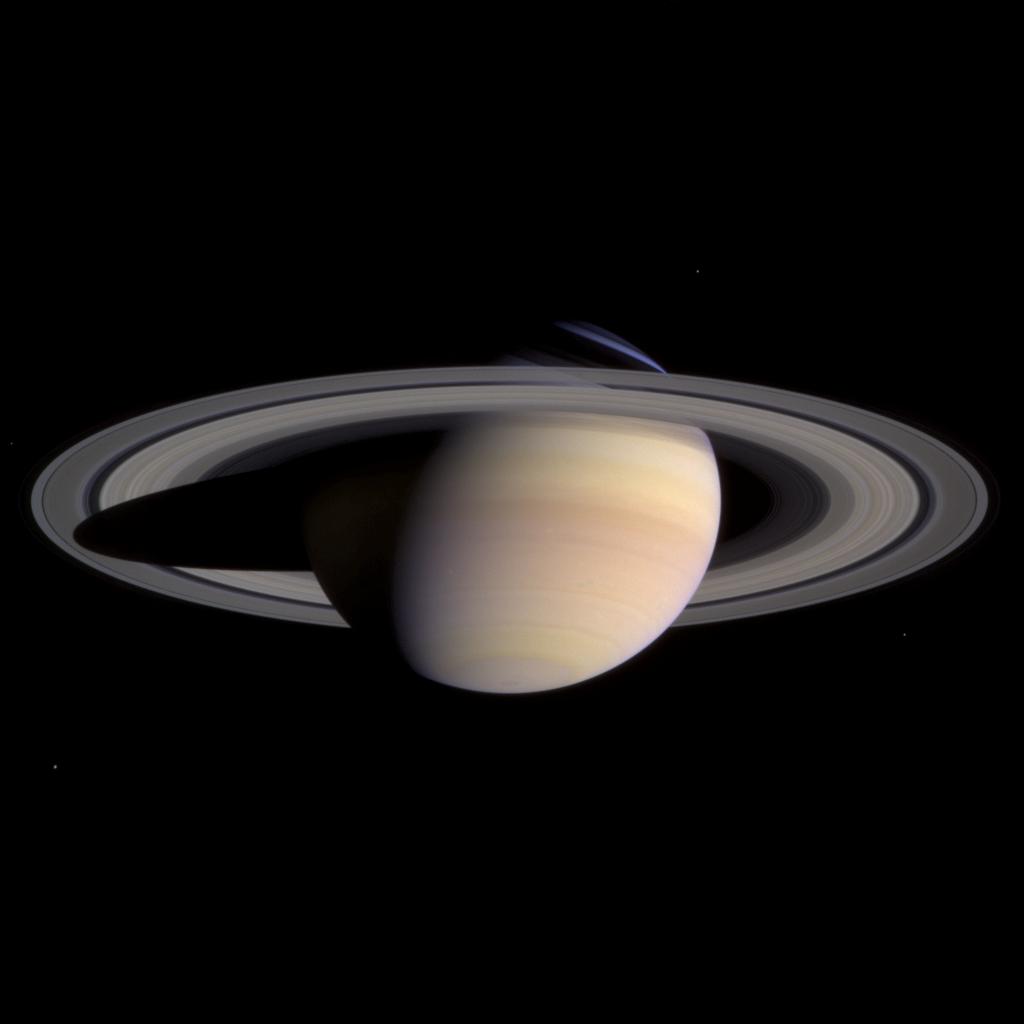
weeks away. After the Phoebe flyby, it's on to the ringed planet, with an
anticipated July 1
ground orbit insertion. The ESA's
Huygens probe will descend into the atmosphere of Titan a few months
after Cassini is inserted into orbit. This mission
promises to be
one that brings a very psychedelic and beautiful area of our solar
system into clearer focus. This multinational
mission is one the
most ambitious scientific explorations yet undertaken and promises some
truly otherworldly images in the near future. With 31 moons/natural
satellites thus far discovered orbiting Saturn, there should be a lot
to keep us occupied. Anyone else excited about the journey
to a ringed world? Lets all enjoy this ride. It promises to
be a unique one as much as for the scenery as for the science. Informal
discussion regarding the Cassini-Huygens mission can be found at
#cassini on irc.freenode.net."


while we are talking about Cassini, let us remember the protesters who were so opposed to it.
Remember cassini is nasa's deadly space probe. It is nice to see that these groups have other stuff to protest these days. Hope that stuff is not as deadly as cassini...
The war with islam is a war on the beast
The war on terror is a war for peace
After the Phoebe flyby, it's on to the ringed planet
All the gas giants have rings, not just Saturn. They're not as easy to see, but they have been detected.
Learn something new.
Judging from previous releases from the imaging team(CICLOPS, they seem to be a very, very competent bunch. During the Jupiter flyby 4 years ago, they used the spare seconds between scheduled observations to take extra images of Jupiter in true color which they then stitched together later to form the highest detailed full planet image of Jupiter ever taken. With Cassini actually passing through a gap in the inner rings during its orbit insertion it's hard to imaging the spectacular images that await us.
- "Hear that?! The percolations are imminent! Cease your ingress!"
Does anyone else think its amazing that the thing actually works after five years of no activity? Seriously, I wouldn't trust my router, cable modem, or toaster (all devices of comparable embedded computing power) to run nonstop for five years. I think it speaks well for the Nasa engineers, and the things they actually do right. Its a shame only their mistakes make the news.
Even those who arrange and design shrubberies are under considerable economic stress at this period in history.
I call troll.
It seems that you don't understand the concepts of risk and probability.
You never have a "certain probability". All you have is probability. Probability is a best guess in cases such as this since there are numerous factors to take into consideration.
72 lbs. of plutonium re-entering the atmosphere BY ITSELF without shielding would cause insignificant damage at best. It would be vaporized and scattered in the upper atmosphere, where cosmic radiation would rapidly turn most particles into unstable elements that breakdown even faster.
In fact, the chances of said particles reaching the surface of the earth is minimal. And even if it did, we are talking fractions of microcuries at best.
BUT IT WILL DAMAGE THE ENVIRONMENT! 36 kg of plutonium vs. 6.14X10^24 kg of Earth? With the way people make radiation sound, you'd think it was magical death wraith just waiting to be set loose on the poor undefended Earth.
And while we're talking about probabilities, I think you should be more concerned with your fellow drivers than an errant space probe. You're far more likely to die in a car crash than any sort of radioactive accident, least of all from a space probe.
To put it in perspective, you have a risk when you take a shower in the morning. There's a risk that you could slip, crak your head and die. The risk is small, but it's there. Does this mean you shouldn't take showers? Do you do a risk/cost analysis everytime you step in the shower? Do you have life insurance, a will, savings, etc. for anyone left behind? Do you estimate how much a funeral will cost? What taxes will be due? How much lawyers will cost? What about your job? The cost it would take to replace you? The list goes on. And this is all just based on you taking a shower.
Do you trully know your risk/cost? I doubt it. It's not possible to know all the repercussions of your demise because no one can predict the future. If you were smart though, you would be prepared as you could be for such a thing and you'd go on living your life and taking showers.
You're just one person. NASA has hundreds who run computer simulations, analysis, environmental impacts, emergency scenarios, etc. . The probe was launched in 1997, but they were probably testing the hell out of it for at least a decade. And NASA has been doing this since the 60's.
They are not infalliable, but they have numbers to back up their claims. And I would take a 100 scientist recommendation over an elitest snob.
~X~
~X~