 Slashdot Mirror
Amazon 1-Click Lawyers Make USPTO Work Xmas Eve
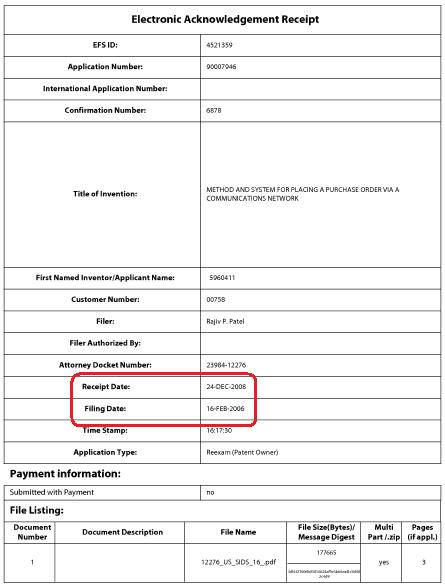
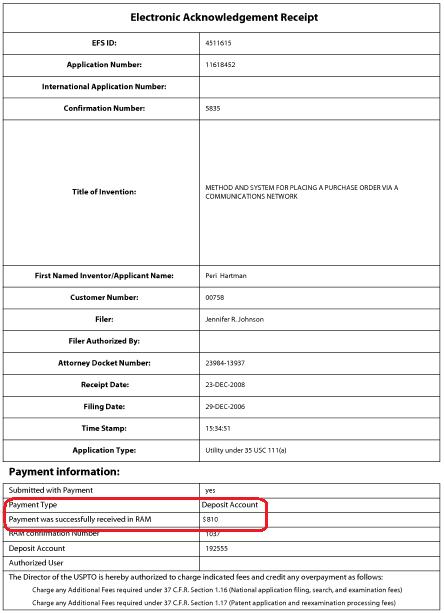
theodp writes "In a move that would do pre-makeover Ebenezer proud, Amazon.com's 1-Click lawyers put the USPTO to work on Christmas Eve. On Dec. 24th, the USPTO acknowledged receipt of yet another round of paperwork submitted by Amazon's high-priced legal muscle, the latest salvo in Amazon's 3-year battle to fend off a patent reexamination triggered by the do-it-yourself legal effort of actor Peter Calveley. Amazon CEO Jeff Bezos' 1-Click patent is also under attack on another front — on Dec. 23rd, the USPTO received $810 from Amazon's attorneys together with a request that the agency invalidate Patent Examiner Mark A. Fadok's final rejection of 1-Click patent claims on the grounds of obviousness. On the bright side, patent clerks — unlike Bob Cratchit — get the day after Christmas off!"
Pushing this absurd patent is costing Amazon more in negative PR than the patent could possibly be worth.
-jcr
The only title of honor that a tyrant can grant is "Enemy of the State."
Is there an assumption that USPTO has to somehow reply to this latest submission by midnight on same day?
The story seems silly. There is no life or death situation. I would expect no action from USPTO for 3 month or more.
It just shows how little some people know about the patent system. A request for continued examination can be filed with the electronic system on Dec 23rd, and very few humans would see it, if any, until the docket clerk looks at it. The examiner won't be looking at it for quite some time, so they aren't working overtime for Bezos. Further, they aren't asking for an invalidation of the final rejection, they are asking for reconsideration on the merits, and a withdrawal of the rejection (very different things). If you know about the system, the summary the submitter put forward was good for a laugh, but nothing else.
Loosely translated means they filed the paperwork online and the whole thing was accepted automatically. So if anything, it was Amazon being Ebenezer making its lawyers work Xmas eve, the USPTO didn't have to do anything.
one click buying was as obvious as n[anything], it starts off with a bunch of steps and slowly gets optimized to the minimum, which is a very logical progression.
see 'one click recording', 'one button printers' and so on. Eventually all technology gets optimized to the minimum number of interfaces required to make it work.
Not only is this an obvious patent, it is part of a special class of obvious patents, the ones that are destined to happen anyway, no matter who patents them.
What's REALLY needed is a law which prohibits the storing of people's credit card numbers. The only people who need access to your credit card info are you and your bank.
That would moot this stupid patent, but who cares.
No sig today...
As far as I can tell this patent fails the Bilski test. It is neither tied to a particular apparatus or machine, nor does perform a unique transformation.
IANAL, but the test outlined in Bilski seems to make this patent NULL. Anyone can implement a one-click system on any machine connected to the internet.
The obviousness test is also valid in this case - at the time Amazon was pushing this through the USPTO... Well, my boss was handing me work from different clients that wanted a sign-in and one-click ordering system for their commerce sites. I had to tell him it was legally impossible each time.
So failing the "obviousness" test - it was a clearly obvious step to take. To both the people writing the code for commerce sites and to the people paying to have them written... And also seeming, to me (and I repeat - IANAL), failing the tests outlined in the Bilski case... Amazon can fight as much as they want, but this patent is a dud.
I have a vague recollection of one of the backbone providers in the Northeast or Midwest trying to prohibit commerical traffic over their network.
You're thinking of NSFNET, which was more-or-less the bridge between the original ARPANET and the commercial Internet we know today. The non-commercial limitations were inherited from ARPANET, and had to do with government funding of the backbone.
so should TV commercials have been patented because before TV was invented "advertising on TV" was a very radical concept?
Amazon didn't invent e-commerce. they only popularized it. and even if they had been the first to implement one-click check out, it's still not a patentable non-trivial/obvious invention.
if businesses are allowed to patent trivial features like saving a customer's credit card information, then you risk destroying the software development industry. within a few years any software development firm would have to license 99% of all of their products' features because everything from autosave to file menus would have been "pretty unbelievable" at some point in time.
I think you need a history lesson. Amazon's one-click was submitted in Fall of 1997--hardly the primitive networking days you describe.
Sorry, youngster, you are not giving those of us who were building e-commerce web sites "way back in the day" before there was an Amazon.com nearly enough credit. One-click was obvious even before they did it; the reason no one else offered it is because it's stupid.
All e-commerce sites I built before Amazon.com existed (and before "e-commerce" was the widely accepted term for them) stored account details that were pre-populated in the checkout forms after successful authentication. It was common as dirt, and even those customers who were beyond the reach of 56k dial-up expected it to work that way.
Yes, indeed, it was obvious even "way back in the day".
Warning: This signature may offend some viewers.
And even then his work would be questionable at best.
I may agree with what you say, but I will defend to the death your right to face the consequences of saying it.
If you pay your respects to Jesus/Santa/Novi God then you are taking part in a religious celebration whether you believe in it or not.
Please feel free to point out what in my description depicted religious ceremony. And please - are you really implying that Santa Claus is a god?
Again - there are underpinnings of Christianity in many Western Christmas traditions. Sure. But then, there's also lots of underpinnings of other religions as well. Just because one follows such a tradition, does not make one a participant of that religion. If it was otherwise, Christmas as most Westerners observe it would present some serious problems for devout Christians (who are pretty uncomfortable with the idea of practicing multiple religions).
I should also note that I do not claim to be an athiest. My religious beliefs are, frankly, nobody's business but my own. The point isn't that Christmas is some Atheist field-day but rather you do not have to be religious to participate in the holiday.
I know that upsets the "reason for the season" folks. They'll have to get over it (they won't).