 Slashdot Mirror
After Online Defamation Suit, Dismissal of Malicious Prosecution Claim Upheld
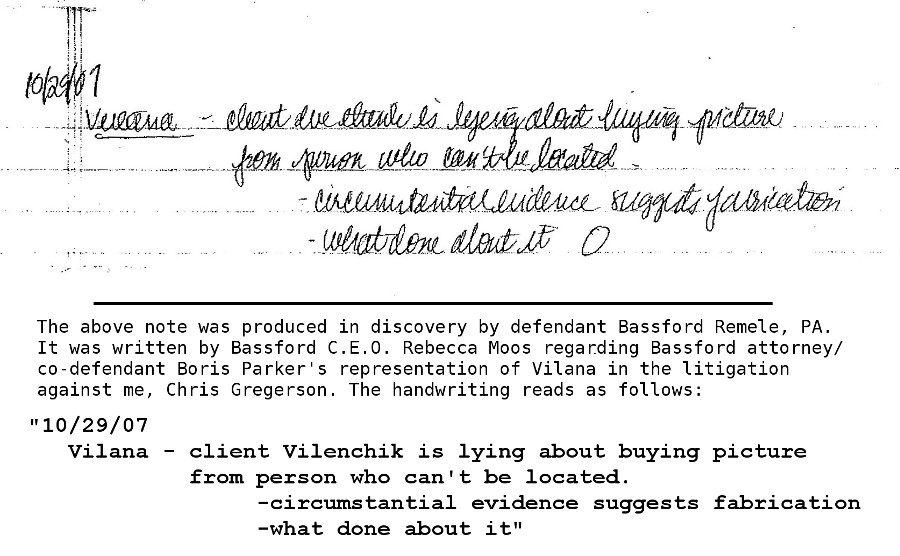
Christoph writes "I'm the Slashdot user who was sued for defamation (and six other claims) by a corporation over negative statements on my website. I prevailed (pro-se) in 2008. The court found the other side forged evidence and lied. In 2009, I sued the other party's lawyers for malicious prosecution/abuse of process (the corporation itself is dissolved/broke). One defendant had stated in writing their client was lying, but the trial court dismissed my claim for lack of evidence. I appealed, and this Tuesday the Minnesota Court of Appeals upheld the dismissal, completely ignoring the defendant's written admission (and other evidence). They further found it was not an abuse of process to sue to 'stop the publication of negative information and opinion.'"
And it has far reaching implications.
They further found it was not an abuse of process to sue to 'stop the publication of negative information and opinion.'"
That line alone shows that they basically see suing people as a way to stop free speech - and that it should be allowed, even if the law isn't technically on their side. Basically, abusing the system to get people to stop saying things you don't like is considered legal.
Can you imagine how many people have been in a situation like Chris, but haven't had the money to go into a legal battle with them?
It sucks indeed.
I'm not entitled to what I want... WAHHHHH
Huh? He got screwed by a criminal corporation and a gang of corrupt attorneys. He's "entitled" to some redress for what they put him through. Do you have a problem with that?
The higher the technology, the sharper that two-edged sword.
Am I missing something?
Yes. This is Slashdot, and we don't much like judges who reach decisions that our cursory inspection of the article summary find wanting.
The higher the technology, the sharper that two-edged sword.
Lawyers aren't just allowed to believe their client, they're one or two hairs short of being required to. To be guilty of malicious prosecution, they'd have to have conspired with your particular nemesis to fabricate the case knowing full well there was no case. Except for factual claim #28 against Vladimir Kazaryan, none of your alleged facts, if found to be true, would support a finding of malicious prosecution. And you lose that one because count 5 (aiding and abetting malicious prosecution) only works if you can first prove that there was a malicious prosecution.
I hate to tell you this but the judge got it right: "Appellants complaint did not set forth claims of abuse of process and vicarious liability for which relief could be granted."
You should have tried something like, "[lawyer] could not have reasonably believed in the existence of Zubitskiy after [date] but failed to promptly terminate the case." The lawyer is both entitled and expected to believe his client, at least until the client's claim becomes utterly non-credible.
Sucks to be falsely sued. I know from first-hand experience. But you can't bust the lawyer for doing his job representing the client.
Moderating "-1, Disagree" is simple censorship. Have the guts to post your opinion.
Naive for expecting the legal system to actually be concerned about the law and dangerous to lawyers that are mostly nothing more than copy/paste artists that think they deserve to get paid $15 an hour to tell the paralegals what to do.
On the other hand, I'm reminded of this story (there are many variations):
There was an engineer who had an exceptional gift for fixing all things mechanical. After serving his company loyally for over 30 years, he happily retired.
Several years later the company contacted him regarding a seemingly impossible problem they were having with one of their multimillion dollar machines.
They had tried everything and everyone else to get the machine to work but to no avail. In desperation, they called on the retired engineer who had solved so many of their problems in the past.
The engineer reluctantly took the challenge. He spent a day studying the huge machine. At the end of the day, he marked a small "x" in chalk on a particular component of the machine and stated, "This is where your problem is." The part was replaced and the machine worked perfectly again.
The company received a bill for $50,000 from the engineer for his service.
They demanded an itemized accounting of his charges. The engineer responded briefly:
"One chalk mark $1. Knowing where to put it $49,999"
Granted, most attorneys do make heavy use of boilerplate, but then again, most legal tasks are entirely routine. In any event, you're paying a professional for both his knowledge of the law, and knowing how to apply it to your situation. I know what you're saying and it's often true: many attorneys do milk the system. But I have lawyers in my family, and number them among my friends. Not all lawyers are crooks, most are honest and earn their keep.
I would say a more correct complaint would be towards a legal system that requires attorneys to be such an integral part of our lives. That wasn't always the case, but as the law has increased in complexity and overall retardedness, the need for a competent lawyer to navigate it's intricacies is frequently a necessity.
The higher the technology, the sharper that two-edged sword.