 Slashdot Mirror
After Online Defamation Suit, Dismissal of Malicious Prosecution Claim Upheld
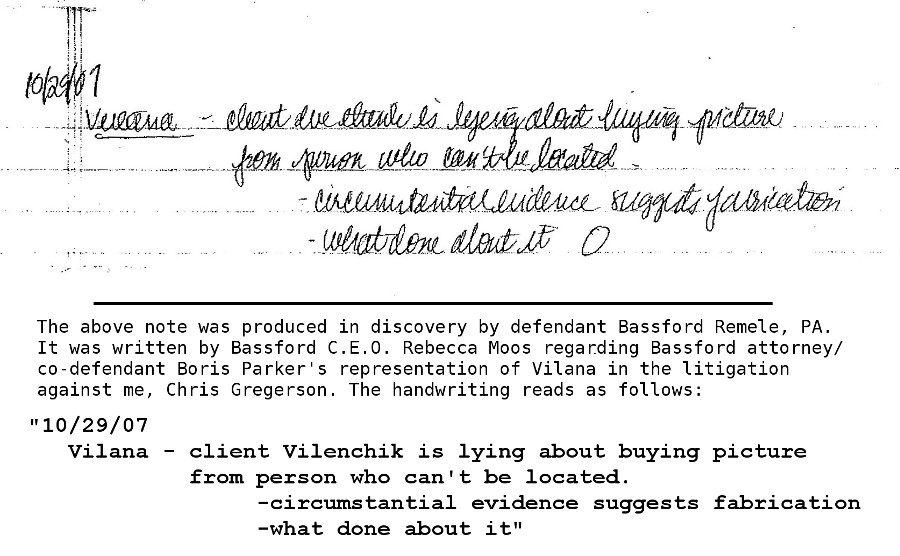
Christoph writes "I'm the Slashdot user who was sued for defamation (and six other claims) by a corporation over negative statements on my website. I prevailed (pro-se) in 2008. The court found the other side forged evidence and lied. In 2009, I sued the other party's lawyers for malicious prosecution/abuse of process (the corporation itself is dissolved/broke). One defendant had stated in writing their client was lying, but the trial court dismissed my claim for lack of evidence. I appealed, and this Tuesday the Minnesota Court of Appeals upheld the dismissal, completely ignoring the defendant's written admission (and other evidence). They further found it was not an abuse of process to sue to 'stop the publication of negative information and opinion.'"
And it has far reaching implications.
They further found it was not an abuse of process to sue to 'stop the publication of negative information and opinion.'"
That line alone shows that they basically see suing people as a way to stop free speech - and that it should be allowed, even if the law isn't technically on their side. Basically, abusing the system to get people to stop saying things you don't like is considered legal.
Can you imagine how many people have been in a situation like Chris, but haven't had the money to go into a legal battle with them?
It sucks indeed.
I'm not entitled to what I want... WAHHHHH
Huh? He got screwed by a criminal corporation and a gang of corrupt attorneys. He's "entitled" to some redress for what they put him through. Do you have a problem with that?
The higher the technology, the sharper that two-edged sword.
Looks like the OP settled with the non-lawyers early on the MP claims. What result there?
As for the lawyers, the sole piece of evidence the OP seems to have presented that the lawyers knew their clients were lying is a late-October 2007 note. This note was written well after the trial commenced. It doesn't indicate that the lawyers knew or had reason to know from jump-street that the clients were lying. It indicates only (if anything) that perhaps they were not aggressive enough in doing fact investigation or in terminating the litigation already underway.
Am I missing something? If not, the courts' decisions appear to be decent.
What the hell were you charged with that your legal bills totaled up to six figures? I got charged with a felony in two different jurisdictions and had to deal with two different cases and my legal bills only came to around $8,000. Granted, we beat it BEFORE trial (thank god for the Grand Jury....) but it would not have accumulated to >$100,000 even if it had gone that far.
BTW, my lawyer saved my ass. I would not have walked away from my situation without a criminal record if I had tried to do it on my own. Don't trash the whole profession just because you hired a lousy legal team.
I want peace on earth and goodwill toward man.
We are the United States Government! We don't do that sort of thing.
Am I missing something?
Yes. This is Slashdot, and we don't much like judges who reach decisions that our cursory inspection of the article summary find wanting.
The higher the technology, the sharper that two-edged sword.
Lawyers aren't just allowed to believe their client, they're one or two hairs short of being required to. To be guilty of malicious prosecution, they'd have to have conspired with your particular nemesis to fabricate the case knowing full well there was no case. Except for factual claim #28 against Vladimir Kazaryan, none of your alleged facts, if found to be true, would support a finding of malicious prosecution. And you lose that one because count 5 (aiding and abetting malicious prosecution) only works if you can first prove that there was a malicious prosecution.
I hate to tell you this but the judge got it right: "Appellants complaint did not set forth claims of abuse of process and vicarious liability for which relief could be granted."
You should have tried something like, "[lawyer] could not have reasonably believed in the existence of Zubitskiy after [date] but failed to promptly terminate the case." The lawyer is both entitled and expected to believe his client, at least until the client's claim becomes utterly non-credible.
Sucks to be falsely sued. I know from first-hand experience. But you can't bust the lawyer for doing his job representing the client.
Moderating "-1, Disagree" is simple censorship. Have the guts to post your opinion.
Comment removed based on user account deletion
Comment removed based on user account deletion
$8,000? Damn, that's great. Hey I agree, there are good lawyers, I just was unlucky enough to not know any. I didn't hire a team at all. I had FIVE individual lawyers, one when I was arrested, who I fired when he failed to challenge the search (which was laughable), then another when the feds came for me, and the state dropped the charges. Him I fired after he blew a bail hearing HARD. Fucking moron, he pulled out some forensic psychiatrist who started challenging the case merits in a bail hearing. Asshole got me held without bail in Feds. The AUSA had a field day...he was actually laughing.
I studied fed law for the four years I did in the feds and if I had known then what I know now, I never would have spent a night in jail. And I don't think my attorneys were stupid, just amoral. Hey, if you can get a guy off for a bad search after a day, you won't earn much. Better to have to "fight" and charge $75k.
Here's the worst part: I spent almost $300,000, and still plead out. From the Alan Ellis site:
"Nearly 94% of all federal criminal defendants will plead guilty. Of the remaining 6% who go to trial, as many as 75% will be convicted; thus 97% of all federal criminal defendants will be sentenced. 80% of defendants will receive jail or prison time." If the feds want you, you're theirs.
"The pie shall be cut in half and each man shall receive.....death. I'll eat the pie."
Patently untrue. Case in point: legal malpractice suits, which are common and involve a lot of money: $4 billion per year back in 1995. I assure you it's more today.
To the extent this guy got screwed it was because he tried to handle his case pro se. Just one little example of his mistakes: "The fact that I prevailed on all seven counts while representing myself in court pro-se further suggests they lacked probable cause." Whether someone is representing themselves or are represented by counsel is generally immaterial in Minnesota, as in most jurisdictions. "Pro se litigants are generally held to the same standards as attorneys." Heinsch v. Lot 27, Block 1 For's Beach, 399 N.W.2d 107, 109 (Minn. App. 1987).
Anyway, this is kind of a silly post for Slashdot. The plaintiff's appeals are not exhausted. He can make a motion for a rehearing, a rehearing en banc, and appeal to the Minnesota Supreme Court.
This is not accurate at all. Appellate courts often review findings of fact, although they are reluctant to disturb factual findings, especially findings by a jury. To reflect this, there are different standards of review for matters of law and matters of fact. The usual standard for review of factual findings in Minnesota is the "clearly erroneous" standard. "Findings of fact shall not be set aside unless clearly erroneous, and due regard shall be given to the opportunity of the trial court to judge the credibility of the witnesses." Minn. R. Civ. P. 52.01. But make no mistake: appellate courts can and do review evidence.
This kind of fundamental error, which was made by the poster and the 3 people who modded up the post, is why representing yourself is such a bad idea.
I'm an attorney, and I agree. If attorneys could rely on "professional courtesy" they wouldn't each pay thousands of dollars per year in malpractice premiums. There's no lack of legal malpractice suits, but I would say that attorney discipline, including disbarment, doesn't happen often enough. Just look at how long it took Jack Thompson to get disbarred.
"In the end, lawyers are held responsible for their--and even their clients'--actions all the time. We get fined, suspended, disbarred, held liable, and otherwise disciplined on a regular basis. Does it happen often enough? Sometimes I doubt that."
For criminal prosecutors, as I understand it, not remotely often enough. Need some more of that:
"Significantly, of the 4,741 public disciplinary actions reported in the California State Bar Journal from January 1997 to September 2009, only ten involved prosecutors, and only six of these were for conduct in the handling of a criminal case. That means that the State Bar publicly disciplined only one percent of the prosecutors in the 600 cases in which the courts found prosecutorial misconduct and NCIP researchers identified the prosecutor."
http://thecrimereport.org/2010/10/04/justice-on-trial/
We know where leadership by an anti-intellectual "strongman" who scapegoats minorities and likes boisterous rallies goes
Naive for expecting the legal system to actually be concerned about the law and dangerous to lawyers that are mostly nothing more than copy/paste artists that think they deserve to get paid $15 an hour to tell the paralegals what to do.
On the other hand, I'm reminded of this story (there are many variations):
There was an engineer who had an exceptional gift for fixing all things mechanical. After serving his company loyally for over 30 years, he happily retired.
Several years later the company contacted him regarding a seemingly impossible problem they were having with one of their multimillion dollar machines.
They had tried everything and everyone else to get the machine to work but to no avail. In desperation, they called on the retired engineer who had solved so many of their problems in the past.
The engineer reluctantly took the challenge. He spent a day studying the huge machine. At the end of the day, he marked a small "x" in chalk on a particular component of the machine and stated, "This is where your problem is." The part was replaced and the machine worked perfectly again.
The company received a bill for $50,000 from the engineer for his service.
They demanded an itemized accounting of his charges. The engineer responded briefly:
"One chalk mark $1. Knowing where to put it $49,999"
Granted, most attorneys do make heavy use of boilerplate, but then again, most legal tasks are entirely routine. In any event, you're paying a professional for both his knowledge of the law, and knowing how to apply it to your situation. I know what you're saying and it's often true: many attorneys do milk the system. But I have lawyers in my family, and number them among my friends. Not all lawyers are crooks, most are honest and earn their keep.
I would say a more correct complaint would be towards a legal system that requires attorneys to be such an integral part of our lives. That wasn't always the case, but as the law has increased in complexity and overall retardedness, the need for a competent lawyer to navigate it's intricacies is frequently a necessity.
The higher the technology, the sharper that two-edged sword.
Huh? He got screwed by a criminal corporation and a gang of corrupt attorneys. He's "entitled" to some redress for what they put him through. Do you have a problem with that?
He didn't get screwed - the summary is (unsurprisingly, given that it was written by one of the parties) biased.
There were three actions. The first was for copyright infringement, which he won and received $19,462 in damages, being $4,462 of actual damages and $15,000 of statutory damages. In response to this the other party countersued over comments made on his website and lost.
This story relates to an attempted claim for malicious prosecution and abuse of process against the other party's attorneys. The judge effectively found that an attorney is entitled to rely on the sworn testimony of his client even if the other party says that testimony is untrue - and how could it possibly be otherwise without rendering litigation impossible? The poster has on his website a document he alleges to show that the attorneys knew their client was lying, but as far as I can tell it is not referenced in any of the cases - I don't know whether it was actually admitted as evidence. The appeal judge refers to the claim as being essentially that because in the end the claims were found not to be credible the prosecution must have been malicious - this is clearly something of a leap. Finally, the poster claims unfairness because he was denied his day in court by this summary judgement. But given that the judgement was given based on there being no chance of success it is difficult to see what the day in court could achieve other than inconveniencing his opponent - and allowing a claim for abuse of process in order only to harass the other party would be a ridiculous irony.
If the claim of malicious prosecution was ambitious the appeal seems to have been consigned to failure from the beginning. The appeal judge notes that the appeal contained no disputes of law or of fact, so it is hard to see how he expected the decision to be reversed.