 Slashdot Mirror
Why My LG Optimus Cellphone Is Worse Than It's Supposed To Be
How long would it have taken you to find these bugs, as a beta tester?
-
The phone's auto-correct changes single-quotes to double-quotes in contractions -- for example, when you type you're, the phone auto-corrects it to you"re .
-
When you backspace over part of a word that you've typed and then type the rest of the word, auto-correct corrects based on the letters that you type after you've finished backspacing, rather than the letters in the entire word that you've just completed. For example, if you type couchsurfing and the phone auto-corrects it to concurring, then backspace over all of the letters except the initial co, and then type "uch" followed by a space to form the word "couch", the Optimus changes "uch" to "such" to form "cosuch", because it thinks it's auto-correcting just the "uch" fragment and doesn't see the entire word "couch".
-
Taking a screen capture still doesn't work, just like it didn't work on the Stratosphere 2. There are official directions on how to do it, but you can follow the steps and nothing happens.
-
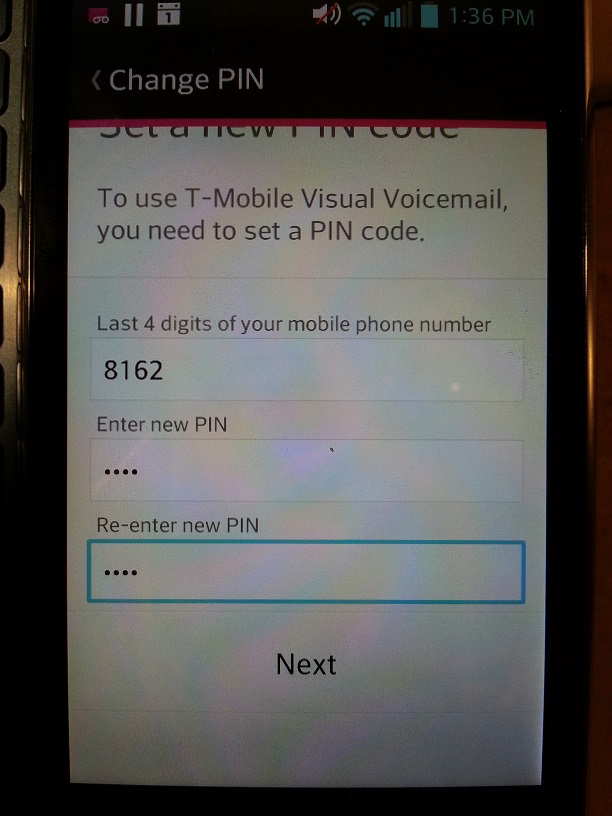
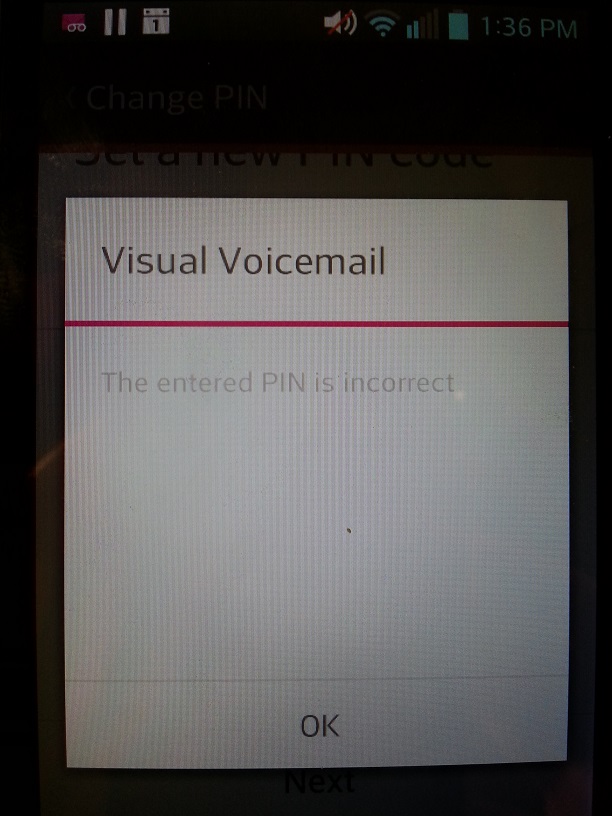
The first time I launched the voice mail application, the app prompted me to freely choose a new PIN code, and then sternly warned me, Mao-like, that my supposedly freely chosen PIN code was "incorrect". (I never got it working, and just called in to the voice mail number manually whenever I wanted to check my messages.)
-
When I bought a movie on Google Play and wanted to "pin" it to the phone -- i.e. download a static, non-streamed copy so that I could watch it offline, e.g. on a plane ride -- the phone didn't have enough internal storage left to save a copy of the movie (1.27 GB, most of it taken up in 1-2 MB increments by crapware already loaded on to the phone, so that only about 200 MB was left). So I tried saving the movie to a 32 GB SD card that I had plugged into the phone, but ran into the problem that Google Play wouldn't let me save the movie to the SD card, a problem described in Joe Levi's 2013 article "Why does Google hate your SD card?" and still not fixed almost a year later. (The comments posted on his article indicate that lots of people are pissed.)
Unlike the other bugs, this may be an example of stupidity not at the testing level but at the design specification level -- perhaps this was done in a misguided effort to prevent illegal copying. But, as Levi says of this theory, "If the DRM being used on Android is sufficient enough for content providers to accept it when media is saved internally, they should also accept it when media is saved to an SD card. Otherwise, the DRM isn't really that trustworthy, is it?" It's pointless from a copy-protection point of view, since anyone who wants to pirate a movie can just download it from various BitTorrent sites anyway; all this "feature" does is alienate people who are trying to pay for a movie legally.
-
In the Messaging (i.e. texting) app, you cannot search for messages by the name of the sender. Your conversations are listed in reverse chronological order by the date of the most recent message in each conversation, but to find a conversation with a particular person, you have to scroll down the entire list of conversations and keep your eyes peeled for the person's name.
- On certain mobile website forms (the Fandango site, for instance, and some others that I don't remember -- it's not clear why this happens on some website forms but not others), the phone won't let me type "special characters", the ones that appear in the upper-right corner of the keyboard keys (so that you can type the "@" symbol by first hitting the "Fn" key to access special characters, and then pressing the "2" key). This means that since I can't type the "@" symbol, I can't log in to any form that requires an email address as a username. (The workaround is to open the Gmail app, find an email address in an email message, copy the "@" symbol from the email address to the clipboard, and then paste it back in the browser form -- yes, I have to do every time I log in to a mobile site that has this problem.)
In my previous phone-suck article about the Samsung Stratosphere, I listed as many problems as I could think of at the time, and I completely forgot the fact that the phone recorded videos without any sound. (I know it wasn't a hardware problem with the microphone, since the phone app picked up my voice fine.) As part of my research into how to ruin Burning Man forever by telling "tourists" how to get there easily, I wanted to post a video of the quintessential Burning Man spectacle that makes all the dust and thirst and heat worthwhile -- and I had to post it with no sound recording, because Samsung's product testing is done by the same drunken bonobos that worked on the LG Optimus.
And both products raise the same question, not rhetorically, but seriously: How did this happen? More specifically, in a theoretical free market, any product improvement that costs only a small amount compared to the benefit it brings to consumers, should be implemented (and consumers will reward the company by paying additional dollars for the improvement, in proportion to the benefit it brings them). While it doesn't always work out that way in practice, it's hard to believe LG couldn't spring for a few English-language testers to point out that the phone shouldn't be correcting you're to you"re.
I think the answer in both cases is that the free market optimizes mainly for things that are easily quantifiable, like camera resolution and network speed, because those can be listed on the packaging and compared against other products. But the amount of stupid s*#t you run into while actually using the phone, is hard to define on an objective scale, so that's the first thing that companies will cut corners on, even if it's something that consumers would be willing to pay money for.
So my solution is still essentially the same as what I proposed after trashing the Stratosphere: Some Consumer-Reports-type outlet should rate phones on a Stupid S*#t Index (along with speed, reception, etc.), based on how much stupid s*#t they run into in a week of typical usage. Ideally the Stupid S*#t Index should be reduced to a number so that you can do a quick comparison between different models. If a cheap phone has a lot of stupid s*#t problems, but you don't mind because you want to save money, that's a valid choice, and if you want to pay more for a phone with less stupid s*#t, that's fine too. But people should know what they're buying.
More generally, I think people vastly overestimate the ability of the free market to meet consumer demand, in cases where the demand is for something that can't be easily quantified. I've spent a fair amount of time in "entrepreneurial" circles (while bouncing back and forth myself between entrepreneurship and regular jobs) and have heard the faithful reciting a lot of platitudes like "The market rewards the best product," or "Focus on building the best product you can make, and the customers will come." But most of them evidently didn't even believe it themselves -- they spent most of their efforts on search engine optimization, running content farms, networking with important business contacts, and other activities that didn't directly relate to the quality of their products. And who could blame them? Since their products weren't competing on qualities that were precisely quantifiable, there was no reason for any of them to try to create the "best" product, or even a particularly good one. And that strategy worked quite well for several of them.
On the other hand, when you're competing on a quantifiable metric like price, the best product or service can shoot straight to the top without wasting any time on zero-sum games like SEO or networking ass-kissery. If you're selling external hard drives on Amazon for $0.01, you'll make a lot of sales. You'll go broke, but in the meantime, the free market will connect you quite effectively with your customers.
So, make the mobile phone Stupid S*@t Index into something quantifiable, and maybe we'll have less stupid s#*t. One review body could publish the average rating from several different reviewers, or several different review bodies could publish their ratings and consumers could weight the averages themselves.
Not that it's a panacea -- I bought the LG Optimus not because it was the cheapest or because I didn't expect it to have bugs, but because it was the only offering with a slide-out keyboard, and I've become addicted to the precision of physical keys. (It is so much easier to let your fingertip feel its way to the right key first, and then actually press the key in a separate motion, rather than having to hope your fingertip lands on the right spot in the first place.) So I never returned the phone, they kept my money, and I suppose that makes me part of the problem.
Because unlike other Slashdot posters, we're actually forced to listen to him every time we glance over stories on the front page.
Why is this on Slashdot?
It's well known that cheap android phones have always been bad, and will always be bad. If you want a cheap, reliable phone, Nokia is more than willing to sell you one of its lower end Lumias. And if you want to have a contract, you can even get a high quality iPhone for "free". Why waste time with bottom of the barrel junk?
hey!
1. Buy crappy cellphone.
2. Complain that it's crappy.
3. Profit.
So my solution is still essentially the same as what I proposed after trashing the Stratosphere: Some Consumer-Reports-type outlet should rate phones on a Stupid S*#t Index (along with speed, reception, etc.), based on how much stupid s*#t they run into in a week of typical usage.
It sure sounds like he's talking about Consumer Reports here. But the solution already exists, and he got burned anyway, so maybe the real solution is complaining about it on Slashdot. That gets things done.
This is why I hated the first generation of "almost smart phones".
Instead of being just a phone, they added half-assed features that got in the way of the phone being a phone.
Strangely, this is why I first went to an iPhone - it was the best at letting me get all the other crap out of the way (out of sight, out of mind, just wish I could delete more crap) and being just a phone.
Don't blame me, I voted for Kodos
My "high end" LG fridge that's supposed to be quiet but grunts along like a 15 year old no-name "white" fridge, with the added bonus of making knocking noises, like the Chinese kid that assembled it is stuck in the compressor.
My LG washing machine that doesn't really check if the door is really closed and will happily pump water out the door like a drooling infant. And when it works, if you use the highest spin speed, be prepared for the smell of burning something or other.
And that's when it doesn't throw you an error message like TcL on its display, but that message doesn't show up anywhere in the manual. Did I have to install TCL/TK to clean my socks? Who knows?
And my LG phone... Oh boy....
Why did I buy so much LG crap? Bad decisions. Oh well.
I shop specifically for a phone that doesn't have terrible software, or can take Cyanogenmod. The S3 had laughably bad software, which I replaced immediately after getting my free Dropbox space. I got a Galaxy Note 10.1 2014 and without Cyanogenmod it just sits.
Bennet should have enough sense to buy a decent phone even if getting a cheap one. Most complaints in the article could be solved by replacing the keyboard and messaging apps. Screen capture is pretty easy via app also. What's more, after penning the first article about getting a terrible phone, wouldn't a rational human being not get another terrible phone or at least return it within the two weeks when it is painfully apparent they made a mistake?
The reason is simple. Software is getting more complex and featureful, but companies are not investing enough to get a matching amount of quality assurance.
Would that have made your rambling screed less boring and stupid? Doubtful.
There's an easy solution.
ONLY buy phones that receive updates from your OS creator, not from a 3rd party manufacturer hackjob who will leave you high and dry with bugs and old software.
So this ends up being ONLY a Nexus device, any Iphone, or any Windows Mobile phone.
I've seen it time and time again, even Samsung can't get the software bugs out of their S-line phones, and other vendors like HTC and LG are much much worse. My boss complains all day and night about the bugs on his LG G2, and my Nexus 5 which runs basically the same hardware is great on all counts.
Then post your bullshit on your own websites. No one wants to listen to you ramble on about crap that you utterly fail to understand and whine like a little girl.
Go back to your hole and whine about what network providers blacklist your retarded lists of open proxies.
Persistent Volume manager for Kubernetes - https://github.com/dwimsey/openshift-pvmanager
I think people vastly overestimate the ability of the free market to meet consumer demand, in cases where the demand is for something that can't be easily quantified.
Oh no sir, the market filled your demand perfectly here. You asked for a cheap phone, and that's exactly what you got.
"First they came for the slanderers and i said nothing."
The subject line isn't actually true, of course. It's the package as a whole on which users generally base their decisions. But I suspect that people in decision making capacity in companies who's primary product is hardware tend to think in these terms. Hardware needs to be cool and compact and capable because that's what differentiates this new model from last year's model or from competitors' models. Software is just... stuff that you use. It's overhead, a necessary evil. And much more likely to be outsourced. For a manufacturer of phones, hardware is their core business, software gets relegated to the LCC (least cost country) and there is a presumption that the customer base will serve as unpaid QA, so funding for testing is an afterthought. And so, the products are cool looking and suck to use.
Some companies try to differentiate on software, and tend to do a better job, but even then, you can get stubborn "we know better than you" decisions that detract from the user experience.
Oliver's law of assumed responsibility: If you're seen fixing it, you will be blamed for breaking it.
The "feature" phone (in that case, a phone with hardware keyboard which is a real oddity nowadays) is not intended to make any money for the company by itself and nobody really gives a damn if it's even working, to be honest.
They are perfectly aware of it and if you bring it back to the store a few days later because you have found out how much it actually sucked, they will be extremely glad to exchange it for a higher priced model.
On the other hand, the issue is compounded by the fact that most Android phones are hacked by the phone service provider. They are not content to let you have the Google Android experience, they have to "differentiate" themselves from the others, and too often that means adding ill-conceived, substandard, undertested apps that ruins the experience.
In that case, Google may not be entirely clean as I am not sure if Android is even supposed to support a hardware keyboard. I have used several Bluetooth keyboards on my Nexus 7 and they do not all work the same.
The free market is working. You paid for a cheap phone, and you got one.
If you want a good phone, don't buy a cheap one. This doesn't mean, "don't buy a low-feature phone"-- it means, don't buy a smart phone for a dumb-phone price and expect it to work well.
Gamingmuseum.com: Give your 3D accelerator a rest.
on behalf of a math student (myself), i will mention that there are literally an infinity of statements that are not "incorrect". some very basic software can enumerate millions of "theorems" within a few hours given appropriate axioms.
this list of facts will not, however, have any point; it will just be a list of correct statements.
simply because something is correct, doesn't mean that it is worth reading. this is the problem people have with you. your slashdot articles are vapid and narcissistic, and you doggedly persist in ignoring (or pretending to ignore) this. that is the point and it's been made ad nauseam.
"They were pure niggers." – Noam Chomsky
So, in a nutshell, the answer to your question about why this stuff happens is "I want something so badly that I'm a captive market who won't explore decent alternatives (is the built-in slider on a 4" phone really that much better than an S5 bluetooth keyboard case or Swype on a phablet? Really?) and will stick with the phone in spite of it being a piece of shit"?
Honestly, I have to give kudos to LG for gauging how desperate the potential users of this phone would be for a physical keyboard and saving themselves a little cash on testing. It seems to have worked out okay for them.
Log in or piss off.
The phone's auto-correct changes single-quotes to double-quotes in contractions -- for example, when you type you're, the phone auto-corrects it to you"re .
Neat. Thanks for your informative review. Can you be bothered to take a moment and tell us WHAT KEYBOARD WERE YOU USING that included this behavior? It's obviously not the stock android keyboard, since it doesn't behave that way, and LG has clearly bundled some other keyboard, but for the love of the FSM, don't tell us which one...
When you backspace over part of a word that you've typed and then type the rest of the word, auto-correct corrects based on the letters that you type after you've finished backspacing, rather than the letters in the entire word that you've just completed. [SNIP!]
Ditto.
Taking a screen capture still doesn't work, just like it didn't work on the Stratosphere 2. There are official directions on how to do it, but you can follow the steps and nothing happens.
Fair.
The first time I launched the voice mail application, the app prompted me to freely choose a new PIN code, and then sternly warned me, Mao-like, that my supposedly freely chosen PIN code was "incorrect". (I never got it working, and just called in to the voice mail number manually whenever I wanted to check my messages.)
The LG Optimus voicemail app, or the TMO one? I assume you're not talking about shovelware. Before you wrote this awesome article, and you talked to TMO about this, what did they say?
When I bought a movie on Google Play and wanted to "pin" it to the phone -- i.e. download a static, non-streamed copy so that I could watch it offline, e.g. on a plane ride [SNIP!]
What you're describing may not be what you want, but it certainly sounds like the software is working as intended - that offline movie downloads aren't supposed to be saved to removable storage. It's hardly a "bug."
Unlike the other bugs
Yeah. Not a bug.
In the Messaging (i.e. texting) app, you cannot search for messages by the name of the sender.
Also, not a bug. Simply a feature that you'd like in your text messaging app.
On certain mobile website forms (the Fandango site, for instance, and some others that I don't remember -- it's not clear why this happens on some website forms but not others), the phone won't let me type "special characters"
FFS. First, how about some article organization. Maybe we could discuss the keyboard first AND last, since it seems like your only real gripe...
Here's a concise version of your article:
I bought a low-end smartphone from TMO. The stock keyboard was a bit wonky, and the shovelware voicemail app didn't work right. I couldn't be bothered to call TMO about the voicemail app, but I did do a Google search before writing this article.
I have one of these phones, and I love it. It has a physical QWERTY keyboard, which basically no other phones released in the past year or so have. I have not run into most of the problems the poster has, but mostly because I don't do most of the silly things he does. For instance, I turned autocorrect off on day one and leave it off. Problem solved. Messaging app? That crap is for teeny-boppers.
I think the web form problems are actually due to silly things the web site is doing rather than the phone itself. I've run into that problem myself, but only on some sites. To conquer the special characters problem, try holding down the fn key while pressing the second key instead of pressing one then the other.
-- Elliott C. "Eeyore" Evans
Get.
The.
Fuck.
Off.
Slashdot.
Dear Slashdot: next time you want to mess with the site, add a rich-text editor for comments.
As someone who tests hardware / software I took exception to the assumption that testers didn't find a long list of issues. I'm working on a shipping product that has hundreds of open software issues. These bugs have been documented in detail but were skipped to make ship dates, then skipped over and over again when updates were released in lieu of new features to lure in new buyers. Most bugs are seen as something not sexy enough to spend time on. If the problem they can create is considered an annoyance and not crucial to the product's operation they are skipped over.
So don't assume that bugs weren't found in testing. It's entirely possible that they were found, and the product shipped anyway.