 Slashdot Mirror
All-Radio 4.27 Portable Can't Be Removed? Then Your PC Is Severely Infected (bleepingcomputer.com)
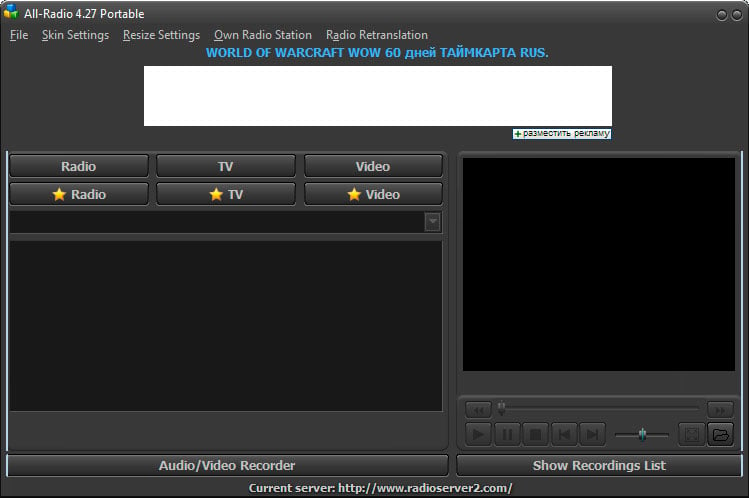
CaptainDork shares a report from Bleeping Computer: Starting yesterday, there have been numerous reports of people's Windows computers being infected with something called "All-Radio 4.27 Portable." After researching this heavily today, it has been determined that seeing this program is a symptom of a much bigger problem on your computer. If your computer is suddenly displaying the above program, then your computer is infected with malware that installs rootkits, miners, information-stealing Trojans, and a program that is using your computer to send send out spam.
Unfortunately, while some security programs are able to remove parts of the infection, the rootkit component needs manual removal help. Due to this, if you are infected with this malware, I strongly suggest that you create a malware removal help topic in our Virus Removal forum in order to receive one-on-one help in cleaning your computer. Some of the VirusTotal scans associated with this infection have also indicated that an information stealing Trojan could have been installed by this malware bundle as well. Therefore, it is strongly suggested that you change your passwords using a clean machine if you had logged into any accounts while infected. 6/29/18: The story has been updated to specify that this malware campaign is targeting Windows computers.
Unfortunately, while some security programs are able to remove parts of the infection, the rootkit component needs manual removal help. Due to this, if you are infected with this malware, I strongly suggest that you create a malware removal help topic in our Virus Removal forum in order to receive one-on-one help in cleaning your computer. Some of the VirusTotal scans associated with this infection have also indicated that an information stealing Trojan could have been installed by this malware bundle as well. Therefore, it is strongly suggested that you change your passwords using a clean machine if you had logged into any accounts while infected. 6/29/18: The story has been updated to specify that this malware campaign is targeting Windows computers.
Windows users get all the cool stuff.
The shepherds did so well protecting the flock that the sheep no longer believed that wolves existed.
Would it be so difficult to place somewhere in an "Operating System" tagged posting which operating system was affected? Slashdot folks really might have more than one OS in their areas and it would be nice to know which is at risk right at the top.
When malware removal expert, Aura, started helping these victims he noticed a common theme. Most of the users reported being infected after they downloaded and installed game cracks and Windows activation tools such as KMSpico.
So don't do that.
I browse on +1 so AC's need not respond, I won't see it.
Hello, my name is Vikash and I am from Microsoft. I am calling because you are the infected PC. I can do the needful but you must revert with all CC number and bank detail. I am also to be posting on the Slashdot with relevant detail. Please to revert immediately.
Comment removed based on user account deletion
You clearly have no clue as to how expensive writing a new Operating System would be. Hell, just look back at when Apple needed to replace Mac OS and had to endure bringing back that smug turtle neck wearing megalomaniac bastard as CEO just to get an OS that wasn't some Open Source cheeseball
Yet another reason to not waste your money on "virus protection." Use the free Windows Defender if you must, and make sure you have good backups.
"First they came for the slanderers and i said nothing."
I run Windows in a VM on Windows. Get twice the updates!
Some viruses are hard to remove
Spending one day looking into something is now called "researching heavily".
On the serious side, I've often been annoyed by Windows 10 aggressively pushing updates, but there have been some interesting security features added to recent builds. Microsoft has a demo website with some good information, along with some tools for testing your configuration.
There is also a video online that details the new features.
Security Program Manager, Microsoft Corporation
I Got Hacked, What Do I Do?
https://technet.microsoft.com/en-us/library/cc700813.aspx
So the parent was modded up before, suddenly it gets modded down. Really slashdot moderation has been trashed recently. It's worth saying why this was the money post. The only post in the whole thread which really mattersL:
The key quote you have to follow is:
But it's the bit before that which really matters:
Below there are people proposing reverse engineering the malware and then, if you know what it does, you can clean it up by reversing that. However, one thing most malware does is open up to the network and let the malware authors do what they want, so even if you know what this malware does you don't know what all malware does. Anything more could have happened to your system.
Reinstall from original installation media and pray to god that your system's onboard firmware is not compromised.
I have never in my life ever heard of any type of malware or code that can be written that can :
"Be removed with human assistance" that cannot be removed by a program.
Those have been around for over a decade.
They work by replacing some core part of the OS, like the SATA driver or the filesystem driver. That makes it impossible for anti-virus software to clean the infected files, because the rootkit can block writes to those files and hand the AV software clean copies when it scans them. They operate at such a deep level, running inside the kernel, that the best AV software can do is detect their secondary effects and try to suppress them.
The only way around this is to manually boot from a recovery CD and replace the infected files. Some AV companies provide bootable CDs that can run their software. The best ones use Linux because the Linux NTFS driver just ignores permissions and lets them access those system files and delete them. Then you can use a Windows install disk or the Windows 10 recovery system to replace them and get the system running.
It's a manual process, the rebooting from CD/USB drive and then running the Windows recovery can't be automated.
const int one = 65536; (Silvermoon, Texture.cs)
SJW, n: "Someone I don't like, and by the way I'm a fuckwit" - AC
Sync to OneDrive, et al, isn't backup.
Most malware doesn't immediately destroy your computer, it cripples it over days or weeks. I can't tell you the number of people who told me "Yeah, I noticed something last week and it's been flaky since then."
Meanwhile, you've been syncing your infection up to the cloud the whole time so now your cloud storage is infected, too. You may get some of it back, but I've also seen people just re-infect themselves, too.
Some cloud storage often at higher tiers will offer some kind of versioning and let you restore pre-infected files, but for most people this isn't the default or isn't even a feature they have.
The only way cloud sync really works as a backup is if you have a spare computer you only bring online periodically that syncs itself and that you then take offline again, but now all you've done is add a complex network transaction to what amounts to a local backup.
Reinstall from original installation media and pray to god that your system's onboard firmware is not compromised.
Sadly today that last part is also very significant. Thanks to the mess of modern infrastructure like UEFI, everybody's device having embedded functionality that can be updated, and processors-within-processors, it's basically impossible to ever fully trust a system that has been compromised now, no matter how drastic your recovery procedures might be. Of course, for similar reasons it's also basically impossible to trust a system that you don't know has been compromised either. Security in modern tech is broken, and the tech industry and security services broke it.
If you disagree, post your argument. (-1, Overrated) isn't your personal censorship tool for views you don't like.
But it's the bit before that which really matters:
That why you don't try anything from within the compromised system.
Either you try all your effort from a known clean bootdisk (CD, USB stick, etc),
or even better, you disconnect the drive and connect it to a known clean machine.
A non compromised OS will not lie about what is on the disk of another system, even if that other (non-currently running system) happens to be compromised.
(The sole exception being malware like ransomware that encrypt your data. Then nobody except the hacker holding the decryption key can read that disk).
Reinstall from original installation media and pray to god that your system's onboard firmware is not compromised.
Well, the attack of firmware (UEFI) or "management chips" running their own firmware (Intel ME engine and co) is indeed an entirely different level of scary.
And given the almost total disappearance of socketed flashchips to hold these firmwares, any chance to recover from that becomes bleak.
"Sufficiently advanced satire is indistinguishable from reality." - [Tips: 1DrYakQDKCQ6y52z6QbnkxHXAocMZJE61o ]