Slashdot Mirror
Domain: canadainfolink.ca
Stories and comments across the archive that link to canadainfolink.ca.
Comments · 12
-
Re:It's not how much more spread out the US is...
This took less than 5 minutes with Google
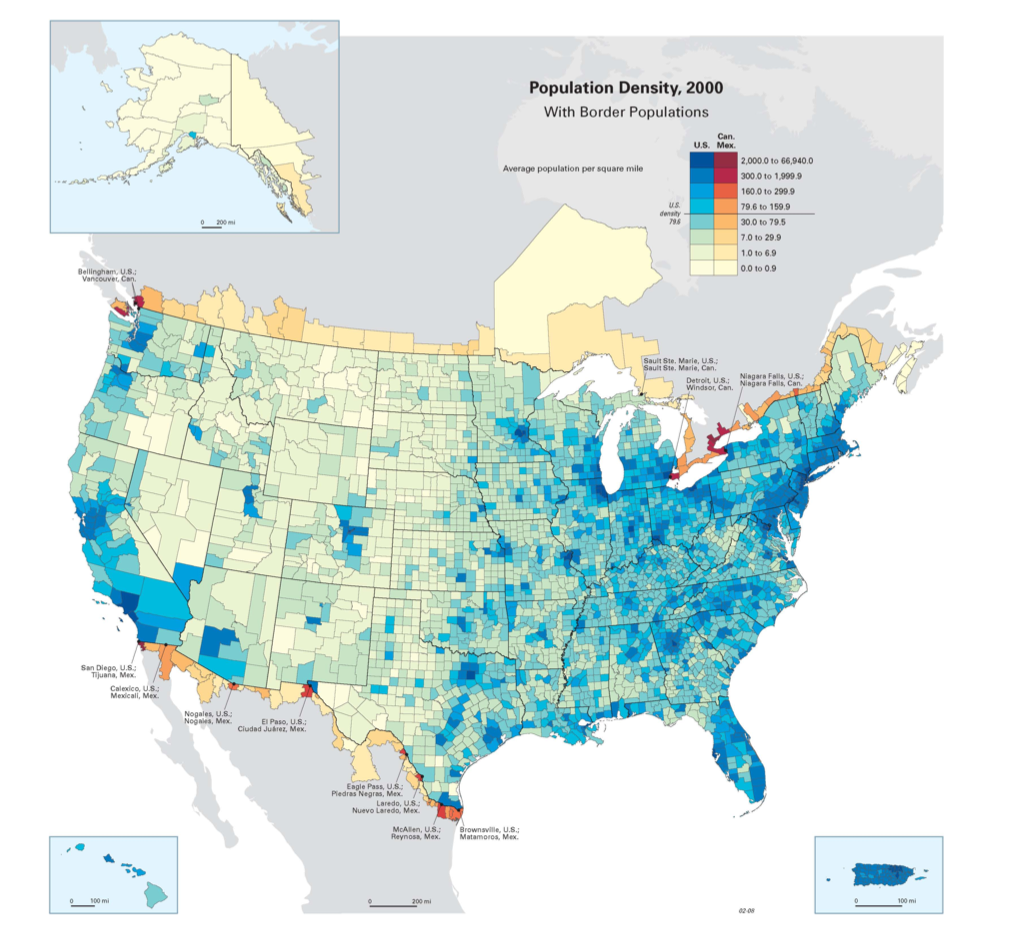
Take a gander at the population density maps of the US and Canada:
http://www.canadainfolink.ca/DensityMap2001.jpg
I guarantee you that Gaston LeBlanc in BFE/Nunavut doesn't have 20mbps cable.
http://cohn.files.wordpress.com/2008/04/population-density.pngMaybe a better map would be an overlay of maximum landline broadband speed available per square kilometer. I doubt that Canada would fare as well as you presuppose.
-
Re:Again?
http://earth.esa.int/applications/dm/archdm/disma
n /db/synthesis_reports/SRCanada.html: Look at figure 3.
and http://www.canadainfolink.ca/chartten.htm
or http://www.britannica.com/eb/art-71476
http://atlas.nrcan.gc.ca/site/english/maps/peoplea ndsociety/population/population2001/density2001 gives some general information.
-dave -
Re:What a great ideaIsn't that funny? I googled and found lots of different numbers. My favorite of the ones I found was this one, which carries the footnote: "Literacy is defined differently by different countries, groups and individuals.The whole topic is a mine field."
Anyway, the place I got my original numbers from was here.
-
Re:Here the problem arises.I know it's fashionable to blame corporations for everything. Nevermind that saying "corporations are the cause" is like saying "wills and deeds are the cause". Although a corporation is just a legal structure, it sure is easy to lay the blame for everything at their doorstep.
There's a big difference between France (about the size of Colorado and Kansas put together) and the United States. You could wire up Colorado and Kansas pretty easily, especially when you have twice California's population living there. But in order to run a wire from New York to Dallas, you've got to have a load of cash. The two situations aren't comparable.
Canada is closer, but even Canada has high population density compared to the US. Also it only has 25 million people. We've got 300 million.
Finally I notice they don't explain anything about France's Internet system. From this I gather that France's broadband boom comes from unmaking some of FT's monopoly. FT is also subsidizing low-income people's Internet access. Which is a noble goal, but harder to do in the US when rural poor are an order of magnitude more expensive to serve.
-
Apples and OrangesAfter seeing what many other countries have accomplished with their broadband markets, namely Japan, Korea, and (gasp) even Canada, the current state of affairs in the U.S. is looking pretty dismal.
Let's play Comparison!
The USA has a population density of 17.
Japan is like 325 and Korea is #3 in the world for population density at well over 400.So, seriously. This is an intelletual exercise? Comparing the telecom infrastructure of Asian nations like Japan and Korea, among the most heavily populated people in the world per land area, to the United States? Canada would indeed make for a better comparison, with its insanely low population density of less than four, except something like 90% of Canadian citizens are condensed to areas that are within 200km of the American border, so the overwhelming majority of their land mass is almost entirely unpopulated and probably does not have cheap Canadian fat pipe broadband access.
American broadband blows because it's hard to wire the 450,000 people in Wyoming using the same deployment strategy that wires the millions that live in Chicago.
-
Re:Shallow article
Canada is larger than the US, yes, and it is better connected, yes. But most of Canada is empty space and the space taht isn't empty is more densely populated. Take a look at this map Population Density of Canada and then at this map Population Density of the USA Sorry that they are slightly different kinds of maps, but it's pretty easy to see that the majority of Canadians live in two densely populated areas (though they are large areas) and that Americans live in a much higher number of densely populated areas. Because of this it is easier for Canada to be better connected.
-
Re:been debunked
Asnwer this then: 1/5th the gun deaths in Canada compared to the US. We watch your shows, we listen to your music, we buy the same cars, food, etc. Except we have very strict handgun laws, and you don't. We even have the same % of rifle ownership as the US per capita, its just the limited access to handguns and assualt-style semi-automatics that makes up the difference.
Like someone else said, there are far less people in Canada. So lets compare the statistics on an even playing field. 1. In 2001, there were 842 gun deaths in Canada ( source.)
2. In 2002, there were 10857 gun deaths in the United State. ( source.)
3. The population of Canada in 2001 was 30,007,094. ( source.)
4. The (estimated) population of the United States in 2004 is 293,027,571. (source.)
I've done all the hard math, and this is what I came up with:
The United States has 9.765 times the population of that of Canada. So, we multipy Canada's murder rate by that number, and we come up with 8222 gun deaths. Again, the US gun death rate is 10857. While the number is still about 2500 deaths lower for Canada, no statistic can take into account the fact that the US has far more urban areas with more people packed more tightly together than Canada. That is, to say, it's a lot easier to take 4 steps in the US and shoot someone than it is in Northern Alberta... your next door neighbor could be 4 miles away. -
Re:Location, Location, Location
I think the original guy is right... he wasn't exactly talking about border towns. Instead he was saying that most of hte population lives close to the US border (and by close we are not talking right next to to). If you look at Canada's map, most people live close to the US border...
Just check out the link some dude posted above (although he/she was listing something else).
Sivaram Velauthapillai -
Re:Population density viz of the Eastern USA
Ohhhhh-kay... so what's your point?
Here's a map of Canada, and its relative densities. Gee, look where all the people are--ain't that where the blackout happened?
And here are two small states--NJ and CT--that flank NYC ("Tri-State Area") and their own densities. Pretty good amount of people eh? Granted the stats are per sq. mile, but it is not too hard to extrapolate.
So please, tell me again how the Northeastern US is so different from France in terms of denisty?
-
Re:Jeez
Well, Ottawa may be a good sized city, but it's still half the size of Greater Vancouver. A quick google pulled up this link for those who care.
But much more important than the size of the city, is the composition of the city. In many ways, Ottawa is a government town - your average bureaucrat isn't going to cause too many problems at a bar. In comparison, Vancouver is a larger city with a LOT of issues to deal with. I'll bet our gangs are more numerous, our drug problems more prominent, and the proportion of people in dire straights is much higher. I'm not saying everyone in Ottawa works for the Feds, and I definitely don't claim that all Vancouverites are gangsters (I'm not!), but looking at the averages, these are VERY different cities.
I've got no problems with our bars and clubs using a bit of technology to proactively avoid problems. Most of the quality patrons at the places that implement this will probably feel safer this way; thus, this may even INCREASE business at these establishments. It's really not all that different than the casinos in Las Vegas using cameras to look out for known card counters (well, the end goals are a little different I suppose). -
Re:Internet TV will be easy for Japanese
You have got to be joking, but in case you're not... it's because Canada's population density isn't that simple. See http://www.canadainfolink.ca/chartten.htm for what I'm talking about. Also, remember the weather in most of the U.S. is conducive to outdoor activities for more of the year than in Canada.
-
Re:Wrong country
Canada's population is more concentrated than the US.
Probably not. The most densly populated parts of Canada are only above 50 p/sqkm and those are cities. Canada's largest cities are only in the 2-3million (1e6) range.