Slashdot Mirror
Domain: computerhistory.org
Stories and comments across the archive that link to computerhistory.org.
Comments · 255
-
Re:Where's the source?
http://www.computerhistory.org...
You have to accept a license agreement and you will get to download msdos.zip
-
Re:Where's the source?
Actual link to the source appears to be http://www.computerhistory.org/atchm/microsoft-ms-dos-early-source-code, but it's throwing 503s at me right now.
-
Downloads are at the computer history museum.
Link. Server is currently overloaded.
-
Bout time...
Finally! I have been waiting for next gen Iris graphics since like forever!
-
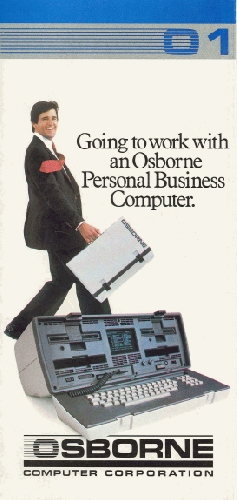
Looks like the Osborne 1 golden boy guy
Did anyone think it looks like this? Going to work with an Osborne Personal Business Computer.
Now too you can swing a bulky and extremely heavy "briefcase" around like it's 1981, pretending it's lightweight or you're so manly you can handle it like it's feathers inside.I don't know how it feels like, might be awesome but I would risk breaking windows or tripping on the ground in bad ways.
-
Re:Huh? World Wide Web. The world’s first p
The inventor of the computer is actually John Atanasoff: http://www.computerhistory.org...
He claimed, successfully, the title
Were those who awarded him the title aware of the Zuse Z3 (it's two items above the ABC item on the page whose URL you cited (note: HTML, despite being a British rather than an all-American invention, isn't that hard to use, and if you use it when posting to
-
Re:Huh? World Wide Web. The world’s first p
The inventor of the computer is actually John Atanasoff: http://www.computerhistory.org...
He claimed, successfully, the title
Were those who awarded him the title aware of the Zuse Z3 (it's two items above the ABC item on the page whose URL you cited (note: HTML, despite being a British rather than an all-American invention, isn't that hard to use, and if you use it when posting to
-
It probably will
They used lead solder back in those days, assuming the floppy drive isn't too dusty and your boot disk is intact.
When Steve Jobs died I booted a mid-80s Mac and it came up fine. MacPaint (source code here) was an amazing feat given that it had to run in 128KB (really 192KB - like most Mac applications of its time, it made extensive use of the code that was in the 64KB of ROM).
So was the "disk copy" program that could copy a 400KB (400,000 byte) disk in only 4 passes. It stole a large chunk of the 22KB RAM normally allocated to video to do it.
-
Re:Comparison to Chess?
By the way, 3x3 Chess was strongly solved in 2004.
On the other hand, Claude Shannon has argued about the original game being unsolvable by computers:
"With chess it is possible, in principle, to play a perfect game or construct a machine to do so as follows: One considers in a given position all possible moves, then all moves for the opponent, etc., to the end of the game (in each variation). The end must occur, by the rules of the games after a finite number of moves (remembering the 50 move drawing rule). Each of these variations ends in win, loss or draw. By working backward from the end one can determine whether there is a forced win, the position is a draw or is lost. It is easy to show, however, even with the high computing speed available in electronic calculators this computation is impractical. In typical chess positions there will be of the order of 30 legal moves. The number holds fairly constant until the game is nearly finished as shown
-
Re:What?
Your comment reminds me of this bit about the code for what became Adobe Photoshop. The code is available for download from a link on the page linked to below.
Thomas Knoll, a PhD student in computer vision at the University of Michigan, had written a program in 1987 to display and modify digital images. His brother John, working at the movie visual effects company Industrial Light & Magic, found it useful for editing photos, but it wasn’t intended to be a product. Thomas said, “We developed it originally for our own personal useit was a lot a fun to do.” Gradually the program, called “Display”, became more sophisticated. In the summer of 1988 they realized that it indeed could be a credible commercial product. They renamed it “Photoshop” and began to search for a company to distribute it.
Commentary on the source code
Software architect Grady Booch is the Chief Scientist for Software Engineering at IBM Research Almaden and a trustee of the Computer History Museum. He offers the following observations about the Photoshop source code:“Opening the files that constituted the source code for Photoshop 1.0, I felt a bit like Howard Carter as he first breached the tomb of King Tutankhamen. What wonders awaited me? I was not disappointed by what I found. Indeed, it was a marvelous journey to open up the cunning machinery of an application I’d first used over 20 years ago. Architecturally, this is a very well-structured system. There’s a consistent separation of interface and abstraction, and the design decisions made to componentize those abstractions – with generally one major type for each combination of interface and implementation — were easy to follow. The abstractions are quite mature. The consistent naming, the granularity of methods, the almost breathtaking simplicity of the implementations because each type was so well abstracted, all combine to make it easy to discern the texture of the system. . . .
This is the kind of code I aspire to write.”
Good examples can provide powerful learning experiences. They can crystalize the intangible aspects of description and discussion.
-
Re:Natural Path of Computing
No matter how popular was the CP/M, it didn't get the microcomputer to the masses. It was IBM which did it.
No, it was IBM clones that did it. Visicalc got microcomputers into offices, and as soon as IBM sold Microcomputers offices bought the same brand of computers as their typewriters and mainframes -- IBM. The masses started buying them when they started getting cheap enough to afford to take their work home. But there were few of them.
It was really the internet that got computers into the masses' homes. I've owned computers since 1982, and until almost the turn of the century everyone kept asking me why in the world I needed a computer.
We don't need to look very far back to see how Apple sued Samsung for the "rounded corner" to know that if IBM really wanted to sue, no matter how *clean* Compaq's *clean room* turned out to be, technically they had the right to do so, and they could very well shut the doors of (at that time) still nascent Compaq with their lawsuits.
They did, in fact, sue Eagle Computer for copying the BIOS. The Compaq was the first sewing machine-sized portable computer that was essentially 100% PC-compatible. The company could not copy the BIOS directly as a result of the court decision in Apple v. Franklin, but it could reverse-engineer the IBM BIOS and then write its own BIOS using clean room design. They must not have patented the BIOS, since they surely would have sued (as shown by suing Franklin). Wikipedia says clean-room design defends against everything BUT patents.
-
Re:Natural Path of Computing
It was, in fact, the IBM, an elite corporation (at that time) which popularize the computer - by deciding to *NOT* stopping others in duplicating the original IBM PC design.
wow, once again IBM definitely *DID* try to stop others from duplicating the original IBM PC design. They couldn't sue Compaq later because Compaq used a clean-room design to avoid copyright violations. (see also the Wikipedia entries for Eagle and Corona computers).
-
Re:350mm (18inch) wafer
The Cray 2 (1985) had 256 million 64 bit words of memory-- that's 2 Gibibytes in modern parlance. Of course, that's only 28 years ago, but if we ignore the hyperbole about one Cray 2 having as much memory as all previously delivered Cray machines combined, we'll downgrade that by one Moore Law cycle to just 1GB.
Thus, at least theoretically, 30 years ago, 1 GB was not wholly unreasonable.
-
Re:Hmmm ...
The Computer History Museum wants an XBOX 360:
http://www.computerhistory.org/artifactdonation/#stepOne
Whether this is for display, or just for the staff to play Halo in their lunch hour, isn't stated. Cheaper than buying one on Amazon, I suppose.
-
Re:All Mozart's Works are Open Source
We don't have the chance to read through 25-year-old Mac symphonies^W programs.
Sure you can. Look here and look here for examples.
Or, you can just ask those of us who wrote the software 25 years ago. We're still around, you know. I even still have some excellent HyperCard stacks I wrote (although that was more like 23 years ago). They still work just fine (the game I wrote still looks like a half-hearted precursor to Myst, and the small business billing and tracking package, well, I think I was my only customer on that one).
OK, for every symphony there were a bunch of us banging on pots and pans. But all that old software's still available, *with source code* for anyone wanting to run it on an emulator or in an interpreter. Or you could, you know, just read the source code and port it to a modern system (with the original author's permission of course).
-
Re:All Mozart's Works are Open Source
We don't have the chance to read through 25-year-old Mac symphonies^W programs.
Sure you can. Look here and look here for examples.
Or, you can just ask those of us who wrote the software 25 years ago. We're still around, you know. I even still have some excellent HyperCard stacks I wrote (although that was more like 23 years ago). They still work just fine (the game I wrote still looks like a half-hearted precursor to Myst, and the small business billing and tracking package, well, I think I was my only customer on that one).
OK, for every symphony there were a bunch of us banging on pots and pans. But all that old software's still available, *with source code* for anyone wanting to run it on an emulator or in an interpreter. Or you could, you know, just read the source code and port it to a modern system (with the original author's permission of course).
-
Re:All Mozart's Works are Open Source
-
Re:All Mozart's Works are Open Source
-
Re:OS/2 was pretty good system software...
That and probably the fact that they priced it outrageously. OS/2 2.0 was great, OS 2 3.0 even better then ultimately WARP but by then Windows and Windows NT were eroding the marketplace. I've spent years writing software for Windows and OS/2 and technically in some areas, OS/2 was much better and in others, not so much. IBM didn't really push the home consumer market but they were big in the corporate world where they still sold a lot of mid-range and mainframe systems. That and a lot of Token Ring crap as well and that's where IBM pushed the O/S. They could have competed much better but IBM had been their hardware groups split up, PCs (PS/2 w/Microchannel), Midrange and Mainframe and the Software group was split from that. PS/2 systems were priced higher and had higher margin vs. COTS Clone PCs which were gaining in market share. I remember going to computer fairs in Southern California in the late 80s / early 90s and you could literally get bidding wars between vendors across the aisle for your business for a 386 or 486 based system. IBM didn't play in that arena and Windows 3.1 for example had an MSRP of $149 when it came out in 1992.. and nobody really paid that in the wholesale market (I used to get legal copies for less than $100 and threw them in on PC hardware deals) OS/2 2.0 was originally started by Microsoft at the time they were partners with IBM but that became estranged when IBM saw their development money being funneled over to this Windows NT thingy. They broke up and IBM released OS/2 1.3, the first release completely done by IBM as well as OS/2 2.0 in 1992. From what I remember, OS/2 2.0 was about $500 for the software and at the time when you could get a screamer 486DX based system for less than $1000 with Windows 3.x in the early 90s a PS/2 loaded with OS/2 2.0 was well over $3000. Businesses would pay that and get the nice IBM support along with it, but not the home consumer market. When Windows 95 came out it was lights out for IBM and OS/2 in the consumer market.
Microsoft and their tactics didn't help but rather than fight in the marketplace, IBM chose to keep pushing the higher margin business deals. Their cost structure was higher of course and that was also a big issue in their competitive edge. Yes, Microsoft was disreputable in their dealings with IBM around OS/2 and the PC market, that's now part of history. It should be pointed out that IBM's corporate history isn't exactly squeeky clean when it comes to some of their business dealings either.
-
Re:Lacked the barest of computer aids?
This flies in the face of at least history. It also flies in the face of the usual mythology that NASA invented the computer. Which is it?
NASA didn't invent the computer. However, in the 1950s computers were room-sized assemblies of hardware. NASA and the Air Force were the only two entities that needed computers that were smaller than that (the Air Force to put in missiles, NASA to put in spacecraft). The Block I Apollo computer was the driver for integrated circuits, and hence the grandfather of all of today's desktop computers (called "microcomputers" back in the old days, when "non-micro" computers meant the Univacs and 1103 and the other big iron of the day.
http://www.computerhistory.org/semiconductor/timeline/1962-Apollo.htmlThey had no computers, or they invented them?
Both.
It's neither, actually. But by 1963 manufacturing, at least for the money-means-nothing military, was already computerized.
http://www.youtube.com/watch?feature=endscreen&v=_1g1b_EeVHw&NR=1
Why do you think it's called "numerically controlled" and not "digital"? It's because the whole concept is so old that the wording has had time to become obsolete.The comment you're responding to was about computer design tools--CAD--not about numerically-controlled milling machines. And for that matter, the numerically-controlled milling machines of 1963 weren't really what you would call general purpose computers.
-
Re:What's wrong with 19" square monitors!
I've never seen a square monitor.
Today's your lucky day!
NCD 16, a 16" monochrome X terminal capable of 1024x1024 resolution, ca. 1989.
As the other AC pointed out, it never really caught on. The CRTs weren't made in any appreciable volume, and as computing got faster, the cost of the CRT, not the motherboard beneath it, became the largest part of the price of any terminal.
(They can have my 21" 1600x1200 LCD when they replace it with a 1920x1200. I'm not going back to resolutions less than what I had on a 19" CRT without a fight.)
-
Re:Provided you had a wodge of BluTak
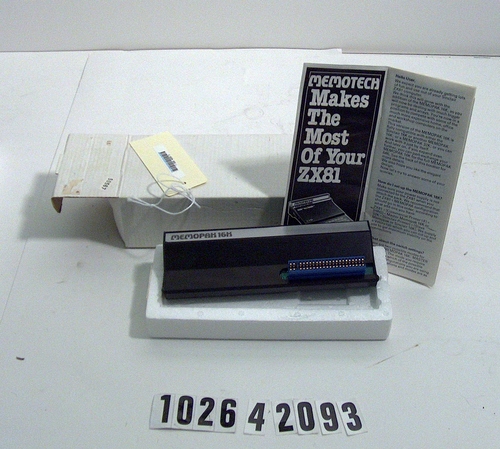
I was the proud owner of a 3rd party (Memotech) low profile RAM pack, bought at WH Smith. No Blu-Tack required!:
http://www.flickr.com/photos/deadkenny/4002315512/
http://archive.computerhistory.org/resources/access/physical-object/2005/04/102642093.01.01.lg.jpg
http://www.zx81stuff.org.uk/zx81/showmag.php?mag=SinclairUser/Issue002/Pages/SinclairUser00200009.jpg -
Re:The simple answer: All of it.
That's what I do for a living
http://www.computerhistory.org/atchm/bit-by-bit-software-collecting/ -
Re:The real granddaddy of FPS: SpaceWar!
The Computer History Museum not only has a working version of the game, but even restore the Digital Equipment PDP-1 computer which ran the original version so many years ago. This game was so far ahead in its design that it is a shock to even think that most other games that followed for a decade are a step backward in quality and sophistication.
-
Re:How could they usefully study such software...
you mean this unavailable source code?
http://www.computerhistory.org/atchm/macpaint-and-quickdraw-source-code/
-
Re:How could they usefully study such software...
At least the source code for MacPaint is available from the Computer History Museum.
http://www.computerhistory.org/atchm/macpaint-and-quickdraw-source-code/ -
McPaint source code
BTW, the source for MacPaint is available online at the Computer History Museum:
http://www.computerhistory.org/atchm/macpaint-and-quickdraw-source-code/
-
Re:Really.
Bah, new fangled screens and stuff, never catch on, the only real way is a manual card punch: http://www.computerhistory.org/collections/accession/X1271.96
-
The early days of MIPS
Fun (if you're into that sort of thing) discussion of the early days of MIPS at the Computer History Museum in 2011. http://www.computerhistory.org/events/video/?videoid=3paiCK3dlK0
-
Re:Access?
Here is a different perspective, posted today by the Computer History Museum. http://www.computerhistory.org/atchm/preservation-conservation-restoration-whats-the-difference/
-
Re:that old canard about x86 complexity
Far closer to the truth of the matter is that x86 has a much higher design cost than an orthogonal clean-sheet alternative.
True. Years ago I went to a talk where the head of the Pentium Pro design team showed a graph of the number of engineers working on the project. It peaked around 3,000. Nobody had ever had a CPU design team that big before.
The variable length instruction alignment problem of x86, although ugly, isn't a huge consumer of transistors. AMD dealt with it by expanding instructions to fixed length when loaded into cache. Intel dealt with it by sometimes starting ambiguous cases in parallel and discarding the bogus results later. The downside of fixed-length instructions, as in RISC machines, is code bloat - PowerPC code is about twice as big as x86 code, which impacts cache miss rate.
While one instruction per clock RISC CPUs (low-end MIPS and DEC Alpha parts, and the Atmel AVR series are examples) are simple, superscalar machines executing more than one instruction per clock are almost as complex as x86 CPUs. That's why RISC stopped being a win.
Harry Pyle was developing the instruction set for the Datapoint 2200 in his dorm room at Case Tech in Cleveland in the late 1960s. Same building I was in; different floor. That led to the 8008 and the 8080 and the 80286 and the 80386 and
-
The Computer History Museum
Which just won a STEM award for one of its education programs.
http://www.computerhistory.org/education/getinvested/ -
Re:useless aspect ratio
So, why don't they make 1:1 monitors?
Once upon a time (ca. 1989-1990), they did. NCD (Network Computing Devices) made a series of X Terminals based on both the 68000 and some of the early MIPS CPUs. One model (the NCD16) featured a 16" square monochrome CRT, at 1024x1024 resolution, and a 1:1 aspect ratio. The Computer History Museum also has an NCD16 in its collection.
-
Re:Cultists
http://hardware.slashdot.org/comments.pl?sid=2982693&cid=40667911 (Exactly one post up from yours in response to the very same thread question).
But thanks for playing.
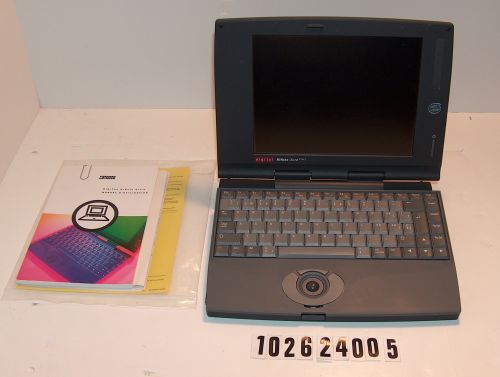
Allow me to retort and prove you a liar and the venerable slashdot post you cite as mistaken. I can't help but notice there is no actual reference to a DEC model number that could be checked... but I did notice there is an "Intel Inside" sticker on the laptop in the picture. Observe the powers of the mighty Google search and the humblest of internet research (my emphasis):
In 1991 Carter launched the Intel Inside® coop marketing program. The heart of the program was an incentive-based cooperative advertising program. Intel would create a co-op fund where it would take a percentage of the purchase price of processors and put it in a pool for advertising funds. Available to all computer makers, it offered to cooperatively share advertising costs for PC print ads that included the Intel logo. The benefits were clear. Adding the Intel logo not only made the OEM's advertising dollar stretch farther, but it also conveyed an assurance that their systems were powered by the latest technology. The program launched in July 1991. By the end of that year, 300 PC OEMs had signed on to support the program.
Source: 11th paragraph down
The PowerBook was launched in October of 1991. I can't see what model laptop that is, nor do you or the cited slashdot poster offer this guarded information. In the late summar of 1991, Intel was scrambling to get their now famous (or infamous) "Intel Inside" campaign off the ground and find computer manufacturers to adopt the campaign and use the sticker. Considering DEC and Intel were invoved in a bitter patent dispute concerining the chips until it was finally settled in 1997, I suspect that the DEC laptop pictured was not released within the three months between July and October of 1991. Suffice to say, it is enough to prove the OP was mistaken... that computer could not have been released in 1990.
Apple indeed was the originator of this wrist-rest laptop design, and the design was very rapidly duplicated by all manufacturers of laptops. It is not cult, attempt at deception or self-delusion. It is a verifiable fact.
Thanks for playing.
-
Re:Cultists
http://hardware.slashdot.org/comments.pl?sid=2982693&cid=40667911 (Exactly one post up from yours in response to the very same thread question).
But thanks for playing.
-
Re:Telecommute
Here's how I sometimes worked from home back then: http://www.computerhistory.org/collections/accession/102674749
-
Re:Not new30 Mbps in ~1970
from the very entertaining: Birth of the Laser Printer
"The problem is, the bits are all coming out a kilometer away, and the printer’s down here at the other end, so how do we get the data to this thing?
So, we sat down one time and said, "So why don’t we make an optical link?" Because we looked at doing microwave, but those were only three megahertz, and you’ve got to get enough FCC permission to do that, even then. So the interesting thing is there are no communications regulations on through-the-air optical communications. As long as the beam power doesn’t destroy things. [Laughter] We built something called a SLOT POLOS , which is the PARC On-Line Office System, Jeanie certainly would probably remember that, so SLOT POLOS On-Line Optical Link. And how do you do this?
Well, I went to my friends Edmund again -- I’ll get free catalogs for the rest of my life [laughter] -- and basically bought four astronomical telescopes. These are just simple Newtonian reflectors. And put two in a box at the 3180 building, on the roof, and two on the roof of Building 34. I put a photomultiplier at the focus of one, and a laser at the focus of the other, and we had a full-duplex optical link running at 30 megabits a second. We used helium-neon for two reasons. First of all, relatively inexpensive -- accousto-optic modulators to turn it on and off. And by using visible light, there was only one risk: fog was a bad thing, because you couldn’t see through fog. On the other hand, if you used infrared, you couldn’t go through rain but you could go through fog. So, made a back-of-the-envelope judgment that rain was probably going to be more prevalent than fog, and went with the visible. It was a good choice, because I think we were only down one day due to fog, in the one year that this system was up."
-
Re:erm.. it was built
They built a second Difference Engine that is currently on loan to the Computer History Museum in Mountain View. CA. I hope they get an Analytical Engine in the future. http://www.computerhistory.org/
-
Re:Maybe the most important PC ever released
They were doing it wrong.
IBM did the same thing to clone makers that used their patented technology.
What made cheap PC clones possible is reverse-engineering the BIOS, so that IBM couldn't claim their technology was being illegally distributed. Compaq made a fortune doing this, though Columbia Data Products was first.
-
Re:Nah! It's Facial hair...
Actually, she wasn't that bad lookijng, but I'm having a hard time finding photos of her when she was young. This photo looks like she's maybe 50 or so.
-
InfoGrip BAT Device, Chorded Input
I remember looking into InfoGrip's BAT Keyboard as an input device for CAD commands many years ago. It DID work with chorded input (it had to, being a product for the disabled), but I lost interest and have no idea where my BAT keyboard is now.
Perhaps I am too old for this technology, as I also have a 3D mouse for navigation through models and never use it. It's just too easy to use the keyboard. -
Dropping Leopard was the last straw.
Mozilla's decision to drop MacOS X leopard, an operating system younger than Windows Vista and XP is infuriating. There are a lot Mac users out there who don't want to pay $29.99 just to run an up-to date browser. This is even worse than Microsoft dropping IE9 support for XP.
Firefox probably evaded a lot of criticism back when it was the only serious competitor to IE (when Opera was adware, Safari Mac only and Chrome is only from 2008), but now there are plenty of good browsers out there it is time for Firefox to pull itself together. They get $100 million a year in Google dollars yet they piss it away on stupid gimmicks like stealing your status bar which dates back from early web browsers (Even IE 9 has one) and other UI changes such as stealing the forward button.
The memory and speed issues are contentious but Microsoft does serious testing on IE to make sure its browser is good enough.
I am really mad at Firefox for messing up after being the good browser for several years. Firefox needs to be forked by competent developers to undo the brain damage that has happened in 2011. I want Firefox to be good again, don't make me flee to Chrome/IE permanently.
-
Computer History Museum
I have heard good things about the Computer History Museum in Mountain View, CA:
http://www.computerhistory.org/Sadly, the place was closed for renovations when I happened to be in town...
-
Re:Perl Is way better
Comments are supposed to tell you what's going on. In fact, Perl has a built-in self-documentation system that makes it a breeze to document and find the documentation you want.
Very true.
You don't maintain perl code by trying to understand it and tweak it. You maintain it by replacing lines or blocks of code with better written code. And if you're not man enough to write better code, wtf are you doing trying to maintain it in the first place?
But this...Yeah, I think you may have been smoking those "roll-your-own" cigarettes again. That's either some pretty potent chemicals you've been ingesting there, or you don't really have any experience maintaining code in a production environment.
First, if you don't understand the code you are working on, how , exactly, are you supposed to know what blocks or lines of code you need to replace? Second, if the software requirements have changed (IME, the most common reason to rewrite working code), then it's not a matter of replacing the other guy's code with "better written code". It's a matter of updating the software to reflect current needs. The old code may have been *perfect* but if it no longer meets the customers' requirements, it needs to be rewritten. Third, "...if you're not man enough to write better code..." -- WTF is that?!?! Did you not know that the person widely credited with being the first programmer was a woman, as was the inventor of the compiler? What chauvinistic B.S.! If it weren't for your low -
Re:two ways
Oh, and every time I'm in the SF bay area, I try to hit the computer history museum. If you are EVER in range, go. Seriously. It's great.
Absolutely. And take the tour, even if you think you know it all--it's good fun, and if you're lucky, you'll be there on one of the days you can play computer games on one of the really old machines against the old dudes from MIT who programmed the thing decades ago.
-
two ways
An SGI O2 that I fire up every once in a while, and a pizzabox Sparc in my closet that I'm going to set up Real Soon Now. Gear that cost thousands and thousands of dollars when I first started working with computers (professionally, that is) can now be acquired for $0 - $25.
Oh, and every time I'm in the SF bay area, I try to hit the computer history museum. If you are EVER in range, go. Seriously. It's great.
-
Commodore Vegas Expo and many others
There are a bunch of classic shows, CommVEx is coming up in under two weeks (July 23 &24) and there are many others in various places throughout the year. Several Commodore ones, and many others including the Vintage Computer Festival. Even the Maker Faires have usually a classic computer or five in their midst. Another to look for are the Arcade/Videogaming expos that pop up, you can play on 8-bit arcade hardware.
There's always the Computer History Museum in Mountain View CA. Intel museum in San Jose, etc.
-
That's cool but...
How about a Dynatyper? http://www.computerhistory.org/collections/accession/X914.88
Or a Stringy Floppy? http://en.wikipedia.org/wiki/Exatron_Stringy_Floppy -
mod parent up
Some time ago, the Computer History Museum helped make the source code to MacPaint and QuickDraw available to the public.
-
Re:Dee Em See Ay
I wonder what if Steve Wozniak began publishing Apple's early documents...
Kinda like this...