Slashdot Mirror
Domain: cray.com
Stories and comments across the archive that link to cray.com.
Comments · 231
-
Return of Vector Processing
"Cray Chairman and CEO Jim Rottsolk said Red Storm reflects Cray's strategy to deliver high-efficiency, high bandwidth supercomputer systems. "Red Storm embodies the same design philosophy as our new Cray X1(TM) vector-based product in a highly cost-effective superscalar architecture and will be a key initiative for Cray."
Quoted from the Cray Press Release.
Ah, I remember my days on the venerable Cray Y-MP, optimizing my programs for vector processing. I am unsure how Cray has managed to make a combined parallel-vector machine like the Y-MP out of PC chips provided by AMD, but I do not envy the programmers who must now begin the task of vector-optimizing their code to take advantage of this beast.
I had hoped that this idea died with Cray. Apparently not. -
Might want to check out what Cray and Sandia
Cray and Sandia say it is a 40 tera*OP* system, not a 100 teraflop one. See what Cray says here and what Sandia says here The really interesting thing is not the processor, but rather the interconnect which seems to be very similar to the torus used in the T3E.
In other supercomputing news, check out what NERSC is proposing for their Earth Simulator Response Proposal. It's a 160 teraflop machine...
-
Might want to check out what Cray and Sandia
Cray and Sandia say it is a 40 tera*OP* system, not a 100 teraflop one. See what Cray says here and what Sandia says here The really interesting thing is not the processor, but rather the interconnect which seems to be very similar to the torus used in the T3E.
In other supercomputing news, check out what NERSC is proposing for their Earth Simulator Response Proposal. It's a 160 teraflop machine...
-
The mighty have fallen
This sort of thing must just be braking all the classic Crayons hearts. I mean, people were getting upset when Cray started building the T3 series Alpha based stuff, nowadays they are cooperating with Dell and making AMD based clusters. At least they have a new vector machine coming out soon.
-
Chunks of five
Unlike the P4, the 970 does one more trick after it has cracked the PPC instructions down into iops. The 970 divides up the iop stream into "groups" of five iops a piece. So first it cracks the PPC instructions down into iops, then it collects the iops back together into groups. The iops are placed the group's five slots in program order with the stipulation that all branch instructions must go in slot 4 (the last slot). Furthermore, slot 4 can hold only branch instructions and nothing else. It is these groups of five iops that are dispatched in-order to the issue queues. (I haven't yet seen a functional diagram of the 970's core, so I'm not sure how many issue queues there are.)
computing in chunks... sounds a lot like a Cray. Together with the 900MHz-effective (jesus... that's a lot) FSB, Apple really will be selling supercomputers in the next few years. -
Terra/Cray MTA
The company that now owns the name Cray does something very much like this on a fairly grand scale on its own architecture, the MTA (Multi-Threaded Architecture). Here, each processor switches between 128(!) hardware threads to take advantage of the sort of concurrancy you can get for waiting for memory access, etc.
-
Terra/Cray MTA
The company that now owns the name Cray does something very much like this on a fairly grand scale on its own architecture, the MTA (Multi-Threaded Architecture). Here, each processor switches between 128(!) hardware threads to take advantage of the sort of concurrancy you can get for waiting for memory access, etc.
-
According the the Orange Book..According to the Orange Book, the now-slightly-obsolete DoD certification, Windows NT 4.0 is secure enough to get a C2 Certification.
Now, before we all laugh and say "doesn't it show that the certifications are stupid?" consider this.. maybe the certification system does work, and all those other certified products are equally flaky. I've got a list of some TCSEC-certified systems here and frankly it's a pretty unappealing set of OSes. If there were as many Unicos systems (rated B1) out there as there were Windows, I betcha they'd find holes in it soon enough. The fundamental problem with any popular OS is that there will be thousands of hackers and wannabees probing away at it. I don't think there are many people reverse engineering CA-ACF2 MVS in their bedrooms.
I think the motto should be: "Security Through Obscurity" - perhaps all those horrid proprietry OSes did have a point after all.
-
Cray's Liquid Cooled SV2 uses evaporative cooling
They have renamed it to the Cray X1 (SV2 was the code name when SGI owned cray - in fact the X1 uses the same technology routers and internode interconnects used in the Origin 3000's and Origin 300s's)
This page has the video describing it (look for the tech overview) in detail.
This press release just talks about it. Look at the 350lbs of force required to mate the MCM to the board.
-
Cray's Liquid Cooled SV2 uses evaporative cooling
They have renamed it to the Cray X1 (SV2 was the code name when SGI owned cray - in fact the X1 uses the same technology routers and internode interconnects used in the Origin 3000's and Origin 300s's)
This page has the video describing it (look for the tech overview) in detail.
This press release just talks about it. Look at the 350lbs of force required to mate the MCM to the board.
-
Re:OS'es for the supercomputers...
These machines tend to be clusters of smaller machines. IBM's SP architecture, for example, runs AIX which doesn't need to scale particularly well.
The magic in SP is partly hardware (high-speed interconnect between nodes), partly the admin software which allows admin tasks to be run simultaneously of many nodes (a non-negligible task), and is otherwise left up to the application programmers to use MPI or similar to get the application to run over the cluster.
Single system images typically don't scale this large. Cray's UNICOS/mk (Unix variant) is a microkernel version of the UNICOS OS, used on the T3E and it's predecessors, where a microkernel runs on each node, obviously incurring some overhead, but avoiding bottlenecks that otherwise occur as you scale. Here's some info. Last time I checked, T3E scaled to 2048 processors.
Out of the box, SGI's IRIX scales very nicely up to 128-256 processors. Beyond that "IRIX XXL" is used (up to 1024 processors, to date). This is no longer considered to be a general purpose OS!
IRIX replicates kernel text across nodes for speed, and kernel structures are allocated locally wherever possible. But getting write access to global kernel structures (some performance counters, for example) becomes a bottle-neck as the system scales.
IRIX XXL works around these bottle-necks, presumably sacrificing some features in the process. Sorry, I can't find a good link on IRIX scalability. -
Re:bad link to cray
No, YOU mean http://www.cray.com Don't mess with my mind like that, you are scaring me.
-
More Info and doh!
Since I submitted this story, Sandia National Labs has released their own press release here. Note that they say, it's an MPP (Massively Parallel Processor), but details to come.
What's interesing is that Cray has two machines that might be called MPPs:
1. The T3E with it's single system image, Unicos/mk and Alpha processors.
2. The Linux Cluster.
The SV2 might be called a massively parallel vector machine with potentially thousands of vector processors; However, they likely would have said 'vector' in the initial press release. On top of that, Cray would have trumpeted probably quite loudly they'd sold $90 million worth of SV2 because it helps more systems.. That makes me have doubts whether or not its an SV2.
The MTA doesn't count here either being called a multithreaded architecture rather than a parallel one (semantic hair splitting, yes, but important ones).
Furthermore, Cray is in the process of discontinuing the T3E because of its age.
To make it even more delicious is that Red Storm is mentioned a lot in searches at Sandia in conjunction with Cplant. Cplant uses linux...
So with a little bit of thought that would imply which Cray would be used here?
Saying 'imagine a beowulf cluster of those' might be a bit more accurate than the joke would normally go. -
More Info and doh!
Since I submitted this story, Sandia National Labs has released their own press release here. Note that they say, it's an MPP (Massively Parallel Processor), but details to come.
What's interesing is that Cray has two machines that might be called MPPs:
1. The T3E with it's single system image, Unicos/mk and Alpha processors.
2. The Linux Cluster.
The SV2 might be called a massively parallel vector machine with potentially thousands of vector processors; However, they likely would have said 'vector' in the initial press release. On top of that, Cray would have trumpeted probably quite loudly they'd sold $90 million worth of SV2 because it helps more systems.. That makes me have doubts whether or not its an SV2.
The MTA doesn't count here either being called a multithreaded architecture rather than a parallel one (semantic hair splitting, yes, but important ones).
Furthermore, Cray is in the process of discontinuing the T3E because of its age.
To make it even more delicious is that Red Storm is mentioned a lot in searches at Sandia in conjunction with Cplant. Cplant uses linux...
So with a little bit of thought that would imply which Cray would be used here?
Saying 'imagine a beowulf cluster of those' might be a bit more accurate than the joke would normally go. -
More Info and doh!
Since I submitted this story, Sandia National Labs has released their own press release here. Note that they say, it's an MPP (Massively Parallel Processor), but details to come.
What's interesing is that Cray has two machines that might be called MPPs:
1. The T3E with it's single system image, Unicos/mk and Alpha processors.
2. The Linux Cluster.
The SV2 might be called a massively parallel vector machine with potentially thousands of vector processors; However, they likely would have said 'vector' in the initial press release. On top of that, Cray would have trumpeted probably quite loudly they'd sold $90 million worth of SV2 because it helps more systems.. That makes me have doubts whether or not its an SV2.
The MTA doesn't count here either being called a multithreaded architecture rather than a parallel one (semantic hair splitting, yes, but important ones).
Furthermore, Cray is in the process of discontinuing the T3E because of its age.
To make it even more delicious is that Red Storm is mentioned a lot in searches at Sandia in conjunction with Cplant. Cplant uses linux...
So with a little bit of thought that would imply which Cray would be used here?
Saying 'imagine a beowulf cluster of those' might be a bit more accurate than the joke would normally go. -
More Info and doh!
Since I submitted this story, Sandia National Labs has released their own press release here. Note that they say, it's an MPP (Massively Parallel Processor), but details to come.
What's interesing is that Cray has two machines that might be called MPPs:
1. The T3E with it's single system image, Unicos/mk and Alpha processors.
2. The Linux Cluster.
The SV2 might be called a massively parallel vector machine with potentially thousands of vector processors; However, they likely would have said 'vector' in the initial press release. On top of that, Cray would have trumpeted probably quite loudly they'd sold $90 million worth of SV2 because it helps more systems.. That makes me have doubts whether or not its an SV2.
The MTA doesn't count here either being called a multithreaded architecture rather than a parallel one (semantic hair splitting, yes, but important ones).
Furthermore, Cray is in the process of discontinuing the T3E because of its age.
To make it even more delicious is that Red Storm is mentioned a lot in searches at Sandia in conjunction with Cplant. Cplant uses linux...
So with a little bit of thought that would imply which Cray would be used here?
Saying 'imagine a beowulf cluster of those' might be a bit more accurate than the joke would normally go. -
Re:bad link to cray
you mean http://www.cray.com
-
Associated clip from the industry standard
from: Building a Better Bio-Supercomputer, this one year old newspiece might provide some info on what the system will be:
<clip> Competitor Compaq is taking a different path. In January, the company announced plans to develop a 100-teraflop bio-supercomputer dubbed Red Storm in partnership with Celera Genomics, the Rockville, Md., company that mapped the human genome, and Sandia National Laboratories in Albuquerque, N.M. Although Blue Gene will be 10 times faster than Red Storm, a Celera executive stresses that the company's machine could eventually match IBM's speed. Unlike Blue Gene, though, Red Storm is being designed for a broader array of life-science experiments and may be used to conduct nuclear research. The supercomputer, set to begin operating in 2004, will cost an estimated $125 million to $150 million to build. </clip>
This seems to be somewhat in-line with the cost approximate stated in the press release $90 million. Or am I completely in my effort to undestand what this press release is about? -
Re:Care to shed some light?
Ok, I'm only halfway through the video about SV2 architecture at http://www.cray.com/company/video/ and I already find my question laughable
This stuff is plain cool. -
Re:Japanese scareThey *are* on the mass market now. Cray made an agreement with NEC to resell them in the US. In return, they dropped the dumping lawsuit stuff that was keeping them out.
I agree that Americans need a more heterogeneous set of supercomputers these days. Vector computing has "gone out of style", but it's still very very useful for a lot of applications. We may see vectors return somewhat with this reselling plan, and with the soon-to-be-released Cray SV2.
-
About the Cray SX-6
-
About the Cray SX-6
-
Real supercomputer, really from Cray
What I am waiting for is the Cray SV2 which can have up to 1024 Cray vector processors. Who needs a beowulf cluster?
-
New metrics?
> Feng also proposed that a new technique is needed for measuring the performance of supercomputers. Instead of looking primarily at how many calculations a system can run in a given amount of time, researchers should also consider factors such as downtime, size, price and maintenance requirements, he said.
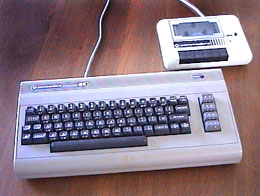
Following Feng's lead, the whole supercomputing industry has reacted to this new paradigm shift. Industry leader Cray has ceased development of its upcoming SV2 and has designed a system based on the reliable commodore 64. Explained lead scientist Joel Grey, "We managed to get a C64 computer out of the dump, and bought 1,000 surplus 'Barney' solar calculators off of ebay for $30".
The new system, dubbed the SV64, is not quite as fast as the SV2, but exceeds at new metrics: Converted to run on solar power, and having spent the last 15 years in an uncooled closet continously generating the "experiencing technical dificulties" logo for a local community access TV station, the new computer shatters existing power and reliability records. "With an expected retail price of less than $1M USD, we expect this computer to eclipse [Japanese rival] NEC's lead and become the platform that will be used to perform most of the world's weather, biological, and nuclear simulations well into the next decade", said Grey.
Wall Street analysts pointed out the the system has never needed maintence, nor suffered downtime, nor needed the services of an UNIX system administrater, and as a result, the total cost of ownership should remain low. Shares of component manufacturer Commodore rose 10 points to 10 1/64 in heavy trading today. -
New metrics?
> Feng also proposed that a new technique is needed for measuring the performance of supercomputers. Instead of looking primarily at how many calculations a system can run in a given amount of time, researchers should also consider factors such as downtime, size, price and maintenance requirements, he said.
Following Feng's lead, the whole supercomputing industry has reacted to this new paradigm shift. Industry leader Cray has ceased development of its upcoming SV2 and has designed a system based on the reliable commodore 64. Explained lead scientist Joel Grey, "We managed to get a C64 computer out of the dump, and bought 1,000 surplus 'Barney' solar calculators off of ebay for $30".
The new system, dubbed the SV64, is not quite as fast as the SV2, but exceeds at new metrics: Converted to run on solar power, and having spent the last 15 years in an uncooled closet continously generating the "experiencing technical dificulties" logo for a local community access TV station, the new computer shatters existing power and reliability records. "With an expected retail price of less than $1M USD, we expect this computer to eclipse [Japanese rival] NEC's lead and become the platform that will be used to perform most of the world's weather, biological, and nuclear simulations well into the next decade", said Grey.
Wall Street analysts pointed out the the system has never needed maintence, nor suffered downtime, nor needed the services of an UNIX system administrater, and as a result, the total cost of ownership should remain low. Shares of component manufacturer Commodore rose 10 points to 10 1/64 in heavy trading today. -
Re:dude
There's different kinds of computers for different kinds of needs. Anything that is easily done in parallel and is only computational(not memory) bound is easily solved with racks of P3's or Athlons.
Certain kinds of problems that are memory bandwidth intensive will run extremely well on computers such as the Cray T3E because that's basically what they were built for. However, you cannot dismiss the shear power of the Cray.
Your example is either a folks tale or mere disinformation. Even if they were OC'd Dell dual P3 Xeons, there's no way a fully equiped T3E wouldn't beat it in every single benchmark. Assuming the application or benchmark was compiled with optimizations for the platform.
The T3E is built in a very seperate, modular fashion. Not all Crays are built the same. There's also many very nice advantages to writing code for a supercomputer:
Message passing in threaded applications is so simple, there's nothing easier. The compiler kicks serious arse. You get native 64bit memory mapping.
Then again, the T3E is old school even at Cray. They've got much cooler stuff coming out right now.
If you've got the mandwidth and a half an hour of time, I suggest you take a look at the Good Shit. [MPEG/400MB]
I think I want one. -
Re:dude
Something like...
this. -
Black isn't any better.
Who cares about black? I want computers that look like these. May also have the benifit of being theft proof without a forklift, and plenty of room for the tank of liquid nitrogen to cool that over-clocked Athlon
-
Re:Other OSesToo bad Cray will smack them all around in a few months. The cray SV2 will be capable of tens of teraflops. ie: 10,000 + GFlops.
(the current number 1 is at 7,266 with #2 at 4059. Cray is setting the bar MUCH higher)
-
Re:Analogies
-
Re:well. damn.Actually, you have to email ussales@cray.com. Here's a recent email I received from them regarding prices:
Date: Fri, 29 Mar 2002 12:51:56 -0600
Jouster
From: Cathy Wells
Subject: Re: Prices
To: Dan Reif
Organization: Cray Inc.
X-Mailer: Mozilla 4.79 [en] (Windows NT 5.0; U)
X-Cray-VirusStatus: clean
The Cray SV-1 vector supercomputer is the current production product for vector types of application problems and most legacy Cray scientific and engineering applications. A 32 processor SV-1 with 32 megabytes of shared main memory would have a list price over $3M depending on the configuration and peripherals required.
The Cray T3E massively parallel supercomputer continues to be the world record holder for the fastest sustained performance on a real world application. These systems can scale to over 2000 processors. An entry level configuration for the Cray T3E might start at approximately $2M with a 1000 processor system listing at over $30M depending on the configuration.
The MTA-2 will be available 3Q 2001. It will be an all CMOS machine--much simpler to manufacture than the all GaS system at SDSC. The MTA-2 will have between 16 - 256 processors and 64 - 1024 GBytes of shared memory. We plan to build the MTA-2 in 16P cages. A case, or stack as we're calling it, will house 4 cages. The case will be approximately 3 ft wide, 5 ft deep, and 7 ft tall. It will weigh a few thousand pounds. -
Re:Leinie's
Other people around Chippewa Falls never managed to pull this off, at least not with one case. A local computer company stayed up many late nights and weekends "working" on this problem until they had enough cases.
-
Re:Time to retire the Athlon 750
What would be really cool is if you had clear tubes and a special die in the water that changed colors by temperature
The Cray 2 had a fancy see-through waterfall cooling unit, you can see a picture at Cray's site too. The cooling liquid is fluorinert, which (IIRC) is used as a substitute for human plasma in surgery. The whole circuitry is immersed in the liquid (which is non-conductive); there's non of the heatsink and radiator business that happens with watercooled CPUs.Every now and then a used Cray turns up on Ebay, so it might be worth a look. It'd save on heating bills, and make a good conversation piece, too!
-
Re:SMT
Cray has been working on this for some time at the higher end. At least Tera, they were for a long time. Their MTA does exactly that, but with 128 cpu equivalents and in GaAs too.
It would be interesting to see if they end up rolling some of their MTA technology into the follow-on to their next vector machine. Hardware threading with vector processing might be interesting...even if not for the desktop.
-
Re:SMT
Cray has been working on this for some time at the higher end. At least Tera, they were for a long time. Their MTA does exactly that, but with 128 cpu equivalents and in GaAs too.
It would be interesting to see if they end up rolling some of their MTA technology into the follow-on to their next vector machine. Hardware threading with vector processing might be interesting...even if not for the desktop.
-
Re:SMT
Cray has been working on this for some time at the higher end. At least Tera, they were for a long time. Their MTA does exactly that, but with 128 cpu equivalents and in GaAs too.
It would be interesting to see if they end up rolling some of their MTA technology into the follow-on to their next vector machine. Hardware threading with vector processing might be interesting...even if not for the desktop.
-
Re:Just like Cray!
Cray may be dead, but supercomputers aren't.
And neither is Cray. Just a few days ago Cray announced over $9 million in orders for their SV1ex, and their SV2 project is coming along nicely. They're not exactly making a profit, but they're not in a crazy death spiral yet, either.
There's a big difference between being a niche player and being a dead company. -
Re:We do it in Condor
As the poster said, there are plenty of others:
- SGI IRIX and Cray UNICOS provide kernel-level checkpoint-restart.
- Condor provides user-level checkpoint restart and process migration by manipulating libraries at runtime.
- esky provides user-level checkpoint restart under Solaris and Linux via runtime library manipulation.
- crak provides kernel-level checkpoint restart for linux.
- cocheck provides user-level checkpoint-restart.
- libckpt provides user-level checkpoint-restart.
I'm sure I left serveral out. Checkpoint-restart has been part of the high-performance computing scene for years. Having been a systdmin on large, high-performance, computing platforms for the last few years of my professional life, my experiences with checkpoint-restart have been a mixed bag. All of the existing systems have limitations. Depending on the application, those limitations can be no problem, or they can be deal-breakers. -
Look at the big boys.
The Cray T3E weighs in at up-to-3-TFLOPS; depending on number of processors. Of course, this machine costs over $10,000,000.
For something a little more practical and realistic, the extremely-fast yet value priced Compaq AlphaServer rings in at 47 GFLOPS.
Granted, FLOPS aren't a very good judge of speed for this application, but they are easy stats to find. If you really want a standardized test, take a look at the TPC-C stats for the fastest cluster machines in the world. These more accurately reflect the kind of performance stats you're looking for in relation to this article. -
Re:colorful argument
And what about an another more computer-related company called Cray?
-
Re:But which OS!?!?
Something like this?
-
Power Usage
I wasn't able to get hard facts about this, so I'm going to throw out the question for general "gee whiz" value.
I was pondering the computrons per watt of a cluster such as this versus a real honest-to-Bob supercomputer (Something from Cray/Terra/SGI, for example). we can assume that each machine in HPs cluster uses probably 60-80 watts (because they're sans monitor), so youre looking at about between 1.2 and 1.8 kilowatt hours to power this thing. I'm not sure what a Cray TSE uses, but I have to think it's nowhere near that because of all the redundancy that PC clusters use (one Power supply, chipset, etc per Core).
Though, I'm sure if you can afford either a Cray or 256 PCs, you can afford the power bills, too. If you have to ask how much it will cost you, you can't afford it. But while CIP (Cluster of Inexpensive PCs) is cheaper, is it as efficient?
. -
a bit of overkill perhaps...
-
a bit of overkill perhaps...
-
Cray sells Beowulf clusters
-
Cray sells Beowulf clusters
-
Cray sells Beowulf clusters
-
Re:Convex, anyone?
Ah! That explains it. I knew Seymour Cray was working on a GaAs computer -- he had renounced silicon and was assembling some of the world's best GaAs equipment. So, that was bought by Tera
Here's the interesting part of my post: Tera replaced the 24 GaAs chips for one CMOS chip. Here's their blurb from the website:
----
Early MTA systems had been built using Gallium Arsenide (GaAs) technology for all logic design. Today, GaAs parts are predominantly used in cellular phones, not high performance computers. As a result of the semiconductor market's focus on CMOS technology for computer systems, there is little support for GaAs technology.
Cray's transition to using CMOS technology in the MTA will occur in stages.
In the first stage, a single CMOS MTA "Torrent" microprocessor replaces 24 GaAs ASICs that had represented 16 different ASIC designs. Torrent chips support up to 128 virtual processors, or threads, and will run at least as fast as today's MTA processors. A Torrent chip requires 50 watts of power compared with 1,000 watts for the GaAs design. The Torrent processor board requires 1,025 connections versus 14,400 connections on the GaAs board.
----
Somewhere else on their page they say the system is "Water cooled at 4KW per processor". So, even with the reduced-power CMOS, they are putting out a lot of heat! -
Re:"best", but not most sexy...
-
Re:"best", but not most sexy...