Slashdot Mirror
Domain: getty.edu
Stories and comments across the archive that link to getty.edu.
Comments · 16
-
Re:the smell of E-6 in the morning
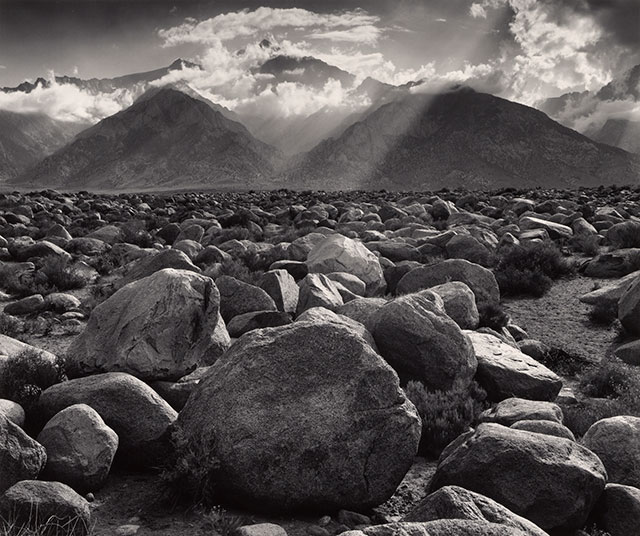
You are correct. This is something that cannot be done with a digital camera:
-
Re:Blocking access
And suddenly extremely low-cost proxy services would be offered, so that people wouldn't have to register with the government to see pictures of naked people.
I'm still waiting for the definition of pornography. Does William Adolphe Bouguereau's A Young Girl Defending Herself Against Eros qualify? How about the work of Spencer Tunick? How about Tennis Girl by Martin Elliott? -
Re:I agree with TFA (Zug)
Is this wrong? I saw this displayed in public in an all-ages museum, to be seen by children, adolescents, and adults:
A Young Girl Defending Herself Against Eros
Or these, on display literally in the hallowed halls of one of the departments of our federal government:
Spirit of Justice and Majesty of Justice
Or this famous painting, representing sentiment and struggle in the French Revolution:
La liberté guidant le peuple
Before you argue that these are paintings or statues and that you're not supposed to feel anything, that would be completely wrong. These works are intended to stir feelings, that's the whole point in their having been created. The artists that created these kinds of works often based them on women that they had intimate knowledge of as well, and had the medium of photography existed or been appropriate at the time the works were created, I suspect it would have been employed, exactly the same way that Playboy operated for most of its existence. -
Re:Smart and Unemployed
People who aren't sociopaths, that's who!
I recommend that everyone read How To Be Rich by J. Paul Getty. He was the richest person in the world in his day, and yet he had some enlightened things to say. For instance, he advocated cooperating with labor unions (when have you ever heard a billionaire do that?). From this book, I received the best management advice ever - praise in public, punish in private. He also thought that spectator sports were a waste of time. But what Getty was most passionate about was art. He amassed an amazing collection, and then made it available to the public for free. If you're ever in Los Angeles, if at all possible, set aside a day or two to visit The Getty - it will make you smarter. And I encourage you to visit museums whenever and wherever you travel - you'll see some amazing things.
-
Re:Pr0n as always drives the industry
I can't help but noticing the illustration in TFA shows a researcher analyzing... a dirty daguerreotype. Surprise surprise...
Obviously you didn't do art history. Art was once often used as the pornography of the day. Where a nobleman would request a scene or a particular portrait of a favoured concubine. And later when ballet was risque and ballerinas enticing fodder for the 'gentlemen' of that latter time.
-
Pr0n as always drives the industry
I can't help but noticing the illustration in TFA shows a researcher analyzing... a dirty daguerreotype. Surprise surprise...
-
Re:Yes...
I also don't think that leaders of major religions truly believe the shit they espouse. Fucking con artists the lot of them.
Christ himself said basically the same thing of the Pharisees, etc, during his time. In fact he got angry enough to open a can of whoop ass on at least one occasion.
-
The Getty Center
I just got back from a trip to Los Angeles that included a stop by the Getty Center and it was as amazing and beautiful as always!
-
Re:Ajax compared to Flash
I've always thought Breeze was pretty impressive. It's a collaboration suite for meetings, events, and presentations. The part of it that's easist to demonstrate is the presentation part, since Macromedia often uses Breeze presentations in their marketing - here's a Breeze presentation about Macromedia Flex. It's like a virtual PowerPoint presentation, but I think it's much more pleasant to watch a Breeze presentation than to click through someone's slides on the web.
LivePlasma, is certainly something that I wouldn't know how to implement in plain HTML.
http://www.slideroll.com/>Slideroll creates online slideshows.
The whole, zoom in and out on pictures thing used to be a good example, but Google Maps and Virtual Earth both know that trick.
I guess most of these examples are data visualization/presentation software, but then that's what most of the web is, isn't it? I personally prefer Flash as a video player, but that's not necessarily what we're talking about here.
I guess my question is, is there something inherient in Flash that you think makes it crappy?
As you've said, web games, which are the most client-side intensive content on the web use Flash very well, is there some inherient reason you think these capabilites couldn't be employed for serious purposes? -
NPR talk on Blink
NPR has several mentions and talks on blink. He also spoke at the Commonwealth Club
Overall, some of his discussions (for example, about the police shootings in New York or the effects on a high speed car chase on one's lack of judgement) were interesting and worthwhile to understand. But his inaccurate comments on the Getty Kouros turned me off on the work. Factual inaccuracies have a tendency to make you, um, blink. He presented it as obvoius that it was a forgery, but the tremendous amount of scholarship to date cannot confirm or deny whether it was a genuine or forged work. It's hard to trust a work's conclusions when the facts they are based on ignore the truth.
-
Re:Nonsense!
This is my beef with digital photography: I found a negative for a photo that was taken sometime between 1891 & 1934 - prints were beautiful. This negative was not stored properly at all.
I'd agree if I kept my digital images in one place, in one proprietary undocumented format. But I keep my images in a widely understood format (JFIF/JPEG), on multiple media types (HD & CDROM, DAT), in multiple physical locations. If a fire burns down my house I'll still have all those photos. If someone threw away that negative, or it just got wet for any period of time it would have been destroyed.
I worked for Horace Bristol when I was younger, mostly throwing out old negatives. I wish I knew then that all that stuff would be gone forever, and kept those priceless photos; not for their value to me, but for their value to society, to preserve them. If they were digital, Horace wouldn't have had any cause to throw them out, since the cost of keeping them would have been so low.
-
LA Geek Spots!
Well, If you want Geeksih how about this:
Palamar Telescope.
Then again there is Cal Tech in Pasadena.
Next you can stop at JPL.
There is also Mt. Wilson above Los Angeles.
Of course you could also goto Griffith Observatory but it's closed for a renovation.
All these are in the San Diego/Los Angeles area.
Heck, if you are into art/old books/old stuff there is the Getty.
And of course the Huntington with their copy of the Guttenburg bible.
We also have Edwards Airforce Base which is where the shuttle use to land, but they put on a heck of an air show.
And when traveling to the LA area you need to fly into the Burbank airport. They built the SR-71, the F117 and several other toys right there...
When you are done with Los Angeles area head on up to the San Fransisco area and check out the Valley. I'm sure a couple more people here can fill you in on those spots.
MAn I think I'm going to love looking at this thread! -
Suggestions for the rest of the Series..Well,
We are, say some people who study such things, at a critical place in history, where it's sometimes impossible to distinguish between pseudo-scientific research and art.Of course, the argument is centuries out of date. The examples are decades old. Let's make it more relevant! Art and Technology has been around for a long, long time. Incidentally Art Technology Group (ATG), which among other things created Dynamo which is now a huge application server product, is from the MIT Media Lab.
For example,
1965: Sony introduces the first monochrome half-inch tape Video Rover portapak-used almost immediately by New York video artist Nam June Paik.And the contemporary media art scene is not about using photoshop. Even if you just count using digital technology, this has been around for years and it is vibrant. One well-known artist (Ingo Gunther) has used satellite transponders in his work, and one project (Kanal X) involved setting up a pirate TV station in Leipzig the transmitter of which was a sculpture. Ars Electronica has been going on for 20 years. DEAF has been held since 1986. ZKM has been open since '97 though many of its exhibitors have been active for far longer. The Getty has a collection of art and technology works from 1966 to 1993. Japan has one of the best media art infrastructures (hurt by the economy to be sure) which draw artists from Japan and overseas to places like the ICC, the International Academy of Media Arts and Sciences (IAMAS), and other spaces. Often the artists are in fact visiting professors who teach technology students (especially programmers) in universities.
Not only have artists always sought to make use of the latest media, but media artists often have to develop the cutting edge themselves in order to get their message across. This is true now that we use supercomputers like the Silicon Graphics Reality Engine, as it was when bromides and daguerrotypes took advantage of advances in industrial chemistry. Art drives science and vice-versa. I don't think you can point to any time when art and technology were not closely related.
While I don't usually have so much trouble with Mr. Katz' work, this time I'd have to say that sweeping generalizations without any enlightening examples must be hurtful to slashdotters' potential enjoyment and participation in some of the most exciting art in the world. Where's the beef? Many cutting edge artists work with very talented programmers and need their help badly. In particular, people who have a flair for networking, opengl, and hardware setup/troubleshooting (oh don't forget circuitry and wireless!) are really needed. Linux is extremely relevant now that machines have gotten so powerful, and the preemptive kernel sounds great for art! Artists who are interested in technology might like to check out MAX which is a great MIDI music and device controller.
It would be useful to point this out with substantial explanation of what this means for this site's users. Art gives context and meaning to budding researchers. And talented artists often come up with the new concepts that drive innovation. A public artwork can drive personal study and honing of one's technological skills like nothing else.
I think the reason it seems new now is that we've got so darn many computers now but little funding for artists (in the U.S.). There are also some very talented young artists who are taking advantage of the latest technology. More about them on Slashdot might be fun! How about a new icon and a media art section? Here are some neat online exhibits at the NYC MOMA.
-
Re:Connectivity to *What*?
A 747 full of DAT's has truly awsome bandwidth, but the latency is deadly.
A 747 freighter has a cargo capacity of 777.9 cubic metres, or 109,800kg (ie: whichever you hit first). By volume, it could carry 8 million DDS3 tapes, equivalent to approximately 96 Terabytes per load. However, it can only carry approximately 481,000 DDS3 tapes by weight (box of 5 weighs 228g), which is only equivalent to 5.7 Terabytes per load.
Assuming you can load the data on and read the data off those tapes instantaneously, and assuming you had a perfect 14 hour flight from Sydney (Australia) to Los Angeles (United States), your maximum bandwidth is close to 916 bits per second.
Not that awesome at all, really.
-
Re:Connectivity to *What*?
A 747 full of DAT's has truly awsome bandwidth, but the latency is deadly.
A 747 freighter has a cargo capacity of 777.9 cubic metres, or 109,800kg (ie: whichever you hit first). By volume, it could carry 8 million DDS3 tapes, equivalent to approximately 96 Terabytes per load. However, it can only carry approximately 481,000 DDS3 tapes by weight (box of 5 weighs 228g), which is only equivalent to 5.7 Terabytes per load.
Assuming you can load the data on and read the data off those tapes instantaneously, and assuming you had a perfect 14 hour flight from Sydney (Australia) to Los Angeles (United States), your maximum bandwidth is close to 916 bits per second.
Not that awesome at all, really.
-
What's wrong with America ?
This dispute seems to encapsulate a lot of what's wrong with America these days. 8-(
Why does anyone need an "Official Geocaching Site" ? Get off your fat SUV-encased butts, get out there and be your own "official" leagues and teams. You don't need some corporate Disney-wannabee telling you how to enjoy yourselves!
Geocaching needs a minimum of two people, some cheap tech, and a flyposted wall poster to communicate between them (oh, and several billions of technology funded by those nice people at the military-industrial complex). You don't need an "official" site, a hierarchy, a league, or a figurehead chairman (especially not a self-appointed one).
Ignore geocaching.com. Don't boycott it, that's itself too organised, just go and do something else instead. There's a whole internet to play with (thanks again to those helpful mil-ind people) - read PhilG's book, and build your own geocaching list server.
What is it with America, "Land of the Free", that can't even fix itself lunch these days without a degree of regimentation and standardised prole-feeding-centres that would put North Korea to shame ? Did you throw off the yoke of colonial British Redcoats, just so that you could be fed by uniformed redshirts ?
Secondly, the map site is legally screwed. He's not providing map references, he's providing direct references to someone else's collection of information. As any amount of legal precedent has shown, a collected work like this is material protected by copyright (and rightly so).
If this map site just listed links to locations, links as DCMI points or to the Getty Thesaurus, then there would be no problem -- but that's not what it's doing.