Slashdot Mirror
Domain: gnome.org
Stories and comments across the archive that link to gnome.org.
Stories · 456
-
SUSE's LibreOffice Core Team Moves To Collabora
An anonymous reader writes "Michael Meeks has announced that the core of SUSE's LibreOffice team is moving over to Collabora, which will now be providing commercial LibreOffice support. 'It seems to me that the ability to say "no" to profitable but peripheral business in order to strategically focus the company is a really important management task. In the final analysis I'm convinced that this is the right business decision for SUSE. It will allow Collabora's Productivity division to focus exclusively on driving LibreOffice into Windows, Mac and Consulting markets that are peripheral to SUSE. It will also retain the core of the existing skill base for the benefit of SUSE's customers, and the wider LibreOffice community, of which openSUSE is an important part.'" -
LXDE Previews Port From Gtk+ 2 to Qt
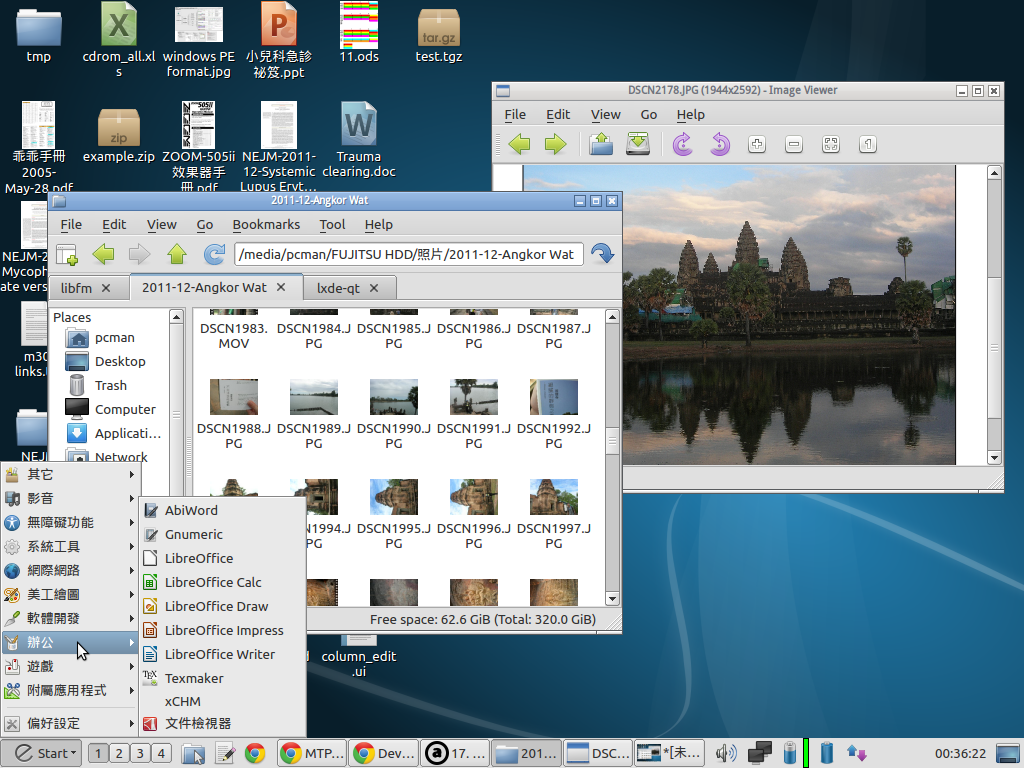
An anonymous reader writes "As the PCMan at the LXDE blog lets us know, the work on a port of LXDE to the Qt platform is showing promise. As the developers stand to face the deprecation of Gtk+ 2, migrating away from the popular toolkit will soon be necessary. The developers note that migration to Qt 'will cause mild elevation of memory usage compared to the old Gtk+ 2 version,' but clarify that a similar increase in resource usage is expected of a migration to Gtk+ 3. Yet, the port to Qt is ongoing, and clearly taking shape, as the screenshot shows. An official release might be a while, though. As an update to the post notes, the plan is to use the recently released Qt 5.1 in the future, which we might not see in distros for some time." They are also cooperating with the Razor Qt desktop. From the weblog post: "...We subscribed razor-qt google groups and discussed about possible cooperation earlier. Currently, the ported LXDE components are designed with Razor-Qt in mind. For example, PCManFM-Qt and LxImage-Qt will reads razor-qt config file when running in razor-qt session. We’ll try to keep the interchangeability between the two DEs. Further integration is also possible. Actually, I personally am running a mixed desktop with LXDE-Qt + Razor-Qt components on my laptop. Components from the both DE blends well." -
One Week With GNOME 3 Classic
An anonymous reader writes "Stephen Gallagher, Security Software Engineer at Red Hat, has completed his week-long experiment running GNOME 3 Classic. Stephen writes: 'While I was never as much in love with GNOME 2 as I was with KDE 3, I found it to be a good fit for my workflow. It was clean and largely uncluttered and generally got out of my way. Now that Fedora 19 is in beta and GNOME Classic mode is basically ready, I decided that it was my duty to the open-source community to explore this new variant, give it a complete investigation and document my experiences each day.' I'll leave Stephen's opinion on the new Classic Mode to the Slashdot reader to discover, but I will say that it does touch on the much debated GNOME Shell Activities Overview, and the gnome-2-like Classic mode's Windows List on the taskbar." -
GNOME 3.8 Released Featuring New "Classic" Mode
Hot on the heels of the Gtk+ 3.8 release comes GNOME 3.8. There are a few general UI improvements, but the highlight for many is the new Classic mode that replaces fallback. Instead of using code based on the old GNOME panel, Classic emulates the feel of GNOME 2 through Shell extensions (just like Linux Mint's Cinnamon interface). From the release notes: "Classic mode is a new feature for those people who prefer a more traditional desktop experience. Built entirely from GNOME 3 technologies, it adds a number of features such as an application menu, a places menu and a window switcher along the bottom of the screen. Each of these features can be used individually or in combination with other GNOME extensions." -
GNOME Aiming For Full Wayland Support by Spring 2014
An anonymous reader writes "Canonical's plan to develop the Mir Display Server for Ubuntu rather than going with their original plans to adopt Wayland has been met with criticism from KDE (and other) developers... The GNOME response to Ubuntu's Mir is that they will now be rushing support for the GNOME desktop on Wayland. Over the next two release cycles they plan to iron out the Wayland support for the GNOME Shell, the GTK+ toolkit, and all GNOME packages so that by this time next year you can be running GNOME entirely on Wayland while still having X11 fall-back support." -
GNOME Aiming For Full Wayland Support by Spring 2014
An anonymous reader writes "Canonical's plan to develop the Mir Display Server for Ubuntu rather than going with their original plans to adopt Wayland has been met with criticism from KDE (and other) developers... The GNOME response to Ubuntu's Mir is that they will now be rushing support for the GNOME desktop on Wayland. Over the next two release cycles they plan to iron out the Wayland support for the GNOME Shell, the GTK+ toolkit, and all GNOME packages so that by this time next year you can be running GNOME entirely on Wayland while still having X11 fall-back support." -
A Proposal To Fix the Full-Screen X11 Window Mess
jones_supa writes "The SDL developers Ryan Gordon and Sam Lantinga have proposed a window manager change to work out the full-screen X11 window mess, primarily for games. The proposal is to come up with a _NET_WM_STATE_FULLSCREEN_EXCLUSIVE window manager hint that works out the shortcomings of the full-screen hint used currently by most games, _NET_WM_STATE_FULLSCREEN. Ryan and Sam have already worked out an initial patch for SDL but they haven't tried hooking it to any window manager yet. Those interested in the details, information is available from this mailing list message. One of the key changes is that software would make the request to the window manager to change the resolution, rather than tapping RandR or XVidMode directly. Martin Gräßlin of KDE was rather wary about the patch and said that games changing the resolution just tend to mess up the desktop." Seems like a reasonable idea, given a bit of time to mature as a spec. In KDE's case, a separate daemon from the window manager handles resolution changes so going through the WM would add complexity, and the plasma shell still has no way to realize that it shouldn't reflow the desktop widgets. Setting window properties seems like a sensible IPC method for communicating intent though (without making yet another aspect of the X desktop reliant upon the not-very-network-transparent dbus): "hey, I need to resize, but just for me so don't reshuffle the desktop and docks." -
A Proposal To Fix the Full-Screen X11 Window Mess
jones_supa writes "The SDL developers Ryan Gordon and Sam Lantinga have proposed a window manager change to work out the full-screen X11 window mess, primarily for games. The proposal is to come up with a _NET_WM_STATE_FULLSCREEN_EXCLUSIVE window manager hint that works out the shortcomings of the full-screen hint used currently by most games, _NET_WM_STATE_FULLSCREEN. Ryan and Sam have already worked out an initial patch for SDL but they haven't tried hooking it to any window manager yet. Those interested in the details, information is available from this mailing list message. One of the key changes is that software would make the request to the window manager to change the resolution, rather than tapping RandR or XVidMode directly. Martin Gräßlin of KDE was rather wary about the patch and said that games changing the resolution just tend to mess up the desktop." Seems like a reasonable idea, given a bit of time to mature as a spec. In KDE's case, a separate daemon from the window manager handles resolution changes so going through the WM would add complexity, and the plasma shell still has no way to realize that it shouldn't reflow the desktop widgets. Setting window properties seems like a sensible IPC method for communicating intent though (without making yet another aspect of the X desktop reliant upon the not-very-network-transparent dbus): "hey, I need to resize, but just for me so don't reshuffle the desktop and docks." -
GNOME 3.6 Released
kthreadd writes "Gnome 3.6 is out. The announcement reads: 'The GNOME Project is proud to present GNOME 3.6, the third update to the 3.x series. This latest version of GNOME 3 includes a number of new features and enhancements, as well as many bug fixes and minor improvements. Together, they represent a significant upgrade to the GNOME 3 user experience.' Andreas Nilsson, President of the GNOME Foundation, said: 'The GNOME Foundation is proud to present this latest GNOME release, and I would like to congratulate the GNOME community on its achievement.' He described the release as 'an important milestone in our mission to bring a free and open computing environment to everyone.' New applications include Clocks and Boxes. Clocks is a world time clock, which allows you to keep an eye on what the local time is around the world. Boxes allows you to connect to other machines, either virtual or remote. For developers there's the new GtkLevelBar widget in GTK+, and GtkEntry can now use Pango attributes." -
GNOME 3.6 Released
kthreadd writes "Gnome 3.6 is out. The announcement reads: 'The GNOME Project is proud to present GNOME 3.6, the third update to the 3.x series. This latest version of GNOME 3 includes a number of new features and enhancements, as well as many bug fixes and minor improvements. Together, they represent a significant upgrade to the GNOME 3 user experience.' Andreas Nilsson, President of the GNOME Foundation, said: 'The GNOME Foundation is proud to present this latest GNOME release, and I would like to congratulate the GNOME community on its achievement.' He described the release as 'an important milestone in our mission to bring a free and open computing environment to everyone.' New applications include Clocks and Boxes. Clocks is a world time clock, which allows you to keep an eye on what the local time is around the world. Boxes allows you to connect to other machines, either virtual or remote. For developers there's the new GtkLevelBar widget in GTK+, and GtkEntry can now use Pango attributes." -
The Linux Desktop and ISVs/OEMs
olau writes "Michael Meeks, who's worked on GNOME and LibreOffice integration for many years, now for SuSE, has some really interesting thoughts on the recent Linux desktop debate and suggestions for possible strategies. He points out that regarding independent software vendors (ISVs), the real issue isn't actually the quality of the tools but the size and attractiveness of the market, and perhaps that a solution could be lower barriers for paying or donating. Regarding OEMs selling hardware with software preinstalled, he points out that while a free OS + software sounds good for consumers, it's actually a problem for OEMs on razor-thin margins, since they lose the cut they get from the preinstallations. A possible countermove could be nailing robustness and hardware diagnostics for good, lowering OEM support costs." -
GNOME 3.6 To Include Major Revisions
supersloshy writes "The launch of the GNOME 3 desktop environment sparked heated debate and criticism. GNOME developers have been listening to the concerns of its users and it is rolling out several significant changes in GNOME 3.6. The message tray, often called hard to use, was made much more visible in addition to being harder to accidentally trigger. The "lock" screen can now optionally control your music player, the system volume, and display notifications so you don't have to type in a password. GNOME will also support different input sources directly instead of requiring an add-on program. Nautilus, the GNOME file browser, is also getting a major face lift with a new, more compact UI, properly working search features, a "move to" and "copy to" option as an alternative to dragging and dropping, and a new "recent files" section. These changes, among many others including improvements to system settings, will be present in GNOME 3.6 when it is released later this month. Any other additions or changes not currently implemented by the GNOME team can be easily applied with only one click at the GNOME Extensions website." -
GNOME 3.6 To Include Major Revisions
supersloshy writes "The launch of the GNOME 3 desktop environment sparked heated debate and criticism. GNOME developers have been listening to the concerns of its users and it is rolling out several significant changes in GNOME 3.6. The message tray, often called hard to use, was made much more visible in addition to being harder to accidentally trigger. The "lock" screen can now optionally control your music player, the system volume, and display notifications so you don't have to type in a password. GNOME will also support different input sources directly instead of requiring an add-on program. Nautilus, the GNOME file browser, is also getting a major face lift with a new, more compact UI, properly working search features, a "move to" and "copy to" option as an alternative to dragging and dropping, and a new "recent files" section. These changes, among many others including improvements to system settings, will be present in GNOME 3.6 when it is released later this month. Any other additions or changes not currently implemented by the GNOME team can be easily applied with only one click at the GNOME Extensions website." -
The True Challenges of Desktop Linux
olau writes "Hot on the heels on the opinion piece on how Mac OS X killed Linux on the desktop is a more levelheaded analysis by another GNOME old-timer Christian Schaller who doesn't think Mac OS X killed anything. In fact, in spite of the hype surrounding Mac OS X, it seems to barely have made a dent in the overall market, he argues. Instead he points to a much longer list of thorny issues that Linux historically has faced as a contender to Microsoft's double-monopoly on the OS and the Office suite." -
GNOME Developers Lay Out Plans for GNOME OS
From the H: "Allan Day has written a blog post on the concrete plans for 'GNOME OS' and provided background on the ideas that have motivated those plans ... Day starts by emphasizing that GNOME OS is not an attempt to replace existing distributions. Although the creation of a standalone GNOME OS is part of the plans, the idea is to make that a testing and development platform, and any improvements that come from GNOME OS should 'directly improve what the GNOME project is able to offer distributions.' Many of the drivers for GNOME OS are, Day says, old ideas to improve the development experience, such as automated testing and sandboxed applications, and while the developers could have separate initiatives for each feature, the idea is to work on them as a 'holistic plan' under the moniker 'GNOME OS.'" A few slides provide more context. In the works are stabilizing the platform APIs, improving deployment of applications, making everything automatically testable, and probably the most controversial: "The increasing popularity of mobile and touch devices represents a challenge to existing desktop solutions. This situation is complicated by the emergence of new hybrid devices that combine keyboards, touchpads and touchscreens. During our discussions last week we talked about how existing types of devices – primarily laptops and desktops – have to remain the primary focus for GNOME ... At the same time, we also want to ensure that GNOME remains compatible with new hardware. ... We have set the goal of having a touch-compatible GNOME 3 within a maximum of 18 months." The drive toward touch may seem obnoxious to desktop users, but spreading Free Software to a hardware ecosystem that is currently locked down and proprietary seems like a good goal to have. -
GNOME: Staring Into the Abyss
New submitter zixxt writes "GTK+ Developer Benjamin Otte talks about the stagnation and decline of the Gnome Project. He describes how core developers are leaving GNOME development, how GNOME is understaffed, why GNOME is a Red Hat project and why GNOME is losing market and mind share. Is the Gnome project on its deathbed? Quoting: 'I first noticed this in 2005 when Jeff Waugh gave his 10×10 talk. Back then, the GNOME project had essentially achieved what it set out to do: a working Free desktop environment. Since then, nobody has managed to set new goals for the project. In fact, these days GNOME describes itself as a “community that makes great software”, which is as nondescript as you can get for software development. The biggest problem with having no goals is that you can’t measure yourself. Nobody can say if GNOME 3 is better or worse than GNOME 2. There is no recognized metric anywhere. This also leads to frustration in lots of places.'" -
GNOME: Staring Into the Abyss
New submitter zixxt writes "GTK+ Developer Benjamin Otte talks about the stagnation and decline of the Gnome Project. He describes how core developers are leaving GNOME development, how GNOME is understaffed, why GNOME is a Red Hat project and why GNOME is losing market and mind share. Is the Gnome project on its deathbed? Quoting: 'I first noticed this in 2005 when Jeff Waugh gave his 10×10 talk. Back then, the GNOME project had essentially achieved what it set out to do: a working Free desktop environment. Since then, nobody has managed to set new goals for the project. In fact, these days GNOME describes itself as a “community that makes great software”, which is as nondescript as you can get for software development. The biggest problem with having no goals is that you can’t measure yourself. Nobody can say if GNOME 3 is better or worse than GNOME 2. There is no recognized metric anywhere. This also leads to frustration in lots of places.'" -
GNOME: Staring Into the Abyss
New submitter zixxt writes "GTK+ Developer Benjamin Otte talks about the stagnation and decline of the Gnome Project. He describes how core developers are leaving GNOME development, how GNOME is understaffed, why GNOME is a Red Hat project and why GNOME is losing market and mind share. Is the Gnome project on its deathbed? Quoting: 'I first noticed this in 2005 when Jeff Waugh gave his 10×10 talk. Back then, the GNOME project had essentially achieved what it set out to do: a working Free desktop environment. Since then, nobody has managed to set new goals for the project. In fact, these days GNOME describes itself as a “community that makes great software”, which is as nondescript as you can get for software development. The biggest problem with having no goals is that you can’t measure yourself. Nobody can say if GNOME 3 is better or worse than GNOME 2. There is no recognized metric anywhere. This also leads to frustration in lots of places.'" -
GNOME: Staring Into the Abyss
New submitter zixxt writes "GTK+ Developer Benjamin Otte talks about the stagnation and decline of the Gnome Project. He describes how core developers are leaving GNOME development, how GNOME is understaffed, why GNOME is a Red Hat project and why GNOME is losing market and mind share. Is the Gnome project on its deathbed? Quoting: 'I first noticed this in 2005 when Jeff Waugh gave his 10×10 talk. Back then, the GNOME project had essentially achieved what it set out to do: a working Free desktop environment. Since then, nobody has managed to set new goals for the project. In fact, these days GNOME describes itself as a “community that makes great software”, which is as nondescript as you can get for software development. The biggest problem with having no goals is that you can’t measure yourself. Nobody can say if GNOME 3 is better or worse than GNOME 2. There is no recognized metric anywhere. This also leads to frustration in lots of places.'" -
GNOME: Staring Into the Abyss
New submitter zixxt writes "GTK+ Developer Benjamin Otte talks about the stagnation and decline of the Gnome Project. He describes how core developers are leaving GNOME development, how GNOME is understaffed, why GNOME is a Red Hat project and why GNOME is losing market and mind share. Is the Gnome project on its deathbed? Quoting: 'I first noticed this in 2005 when Jeff Waugh gave his 10×10 talk. Back then, the GNOME project had essentially achieved what it set out to do: a working Free desktop environment. Since then, nobody has managed to set new goals for the project. In fact, these days GNOME describes itself as a “community that makes great software”, which is as nondescript as you can get for software development. The biggest problem with having no goals is that you can’t measure yourself. Nobody can say if GNOME 3 is better or worse than GNOME 2. There is no recognized metric anywhere. This also leads to frustration in lots of places.'" -
Apache OpenOffice Lagging Behind LibreOffice In Features
An anonymous reader writes "If you are looking for small niche features such as interactive word count, bundled report designer, or command line filtering etc – LibreOffice beats OpenOffice hands down. 'Noting the important dates of June 1, 2011, which was when Oracle donated OOo to Apache; and Apache OpenOffice 3.4 is due probably sometime in May 2012; Meeks compared Apache OpenOffice 3.4 new features to popular new features from LibreOffice: 3.3, 3.4, 3.5. It wasn't surprising to find that LibreOffice has merged many features not found in Apache OO given their nearly year long head start.'" -
GIMP Core Mostly Ported to GEGL
A longstanding task for the GIMP has been porting the core graphics code from the ancient implementation (dating back to version 1.2) to GEGL. Progress has been hampered by the amount of code relying on details of the implementation of image data: tiles are directly accessed instead of linear buffers, and changing that detail would break the entire core and all plugins. A few weeks ago, two GIMP hackers got together to do some general hacking, and inadvertedly ported the core graphics code to GEGL. They work around the mismatch between GEGL buffers and GIMP tiles by implementing a storage backend for GEGL using the legacy GIMP tiles; to their surprise things Just Worked (tm), and their code branch will become the 2.9 development series once 2.8 is released. With this, 2.10 will finally feature higher bit depth images, additional color spaces (CMYK for one), and hardware accelerated image operations. There's still work to be done: to take advantage of the new features, plugins need to be ported to access GEGL buffers instead of GIMP tiles, but the conversion work is straightforward and current plugins will continue working as well as they do now in the meantime. -
MATE Desktop 1.2 Released
An anonymous reader writes "For those of you who still feel GNOME 2 is the best desktop environment, but don't want stick to old distros, MATE is a fork of GNOME 2, with all the names changed to avoid clashes with GNOME 3. Version 1.2 brings fixes, but also new features such as undo/redo in the file manager." This release features better freedesktop standards integration, adds a few missing utilities, and merges new features into the file manager. The project has a new wiki; the roadmap has a few details on future goals, including porting things to Gtk 3 and using bits and pieces of modern GNOME 3 infrastructure where appropriate. -
GNOME 3.4 Released
supersloshy writes "The popular GNOME desktop environment has just announced the release of version 3.4. User-facing updates include, among others, a new look for many GNOME applications, smooth scrolling support in GTK, integrated document search in GNOME Shell, a new dynamic background, improved accessibility configuration options, new high-contrast icons, and more documentation. Developer-facing improvements include the release of GTK+ 3.4 and updates to standard GNOME libraries as part of the latest GNOME Developer Platform." -
GNOME 3.4 Preview
A couple of days ago, GNOME released the first beta of version 3.4. Designer Allan Day has posted a tour of the major interface changes. Some of them seem good (everything looks shiny and clean), but some of them seem questionable. The big thing to take from this release cycle appears to be improvements to the underlying technology that might help other window managers take advantage of the GNOME 3 infrastructure (leading to a world where hackers, tablet users, and grandma can all get along).
-
GNOME 3.4 Preview
A couple of days ago, GNOME released the first beta of version 3.4. Designer Allan Day has posted a tour of the major interface changes. Some of them seem good (everything looks shiny and clean), but some of them seem questionable. The big thing to take from this release cycle appears to be improvements to the underlying technology that might help other window managers take advantage of the GNOME 3 infrastructure (leading to a world where hackers, tablet users, and grandma can all get along).
-
GNOME 3: Beauty To the Bone?
someWebGeek writes "According to the GNOME design crew, as reported by Allan over at As Far as I Know, GNOME 3 will represent a new approach to GNOME application design. The design patterns being developed and employed may effect a new, prettier interface, but more importantly a new mindset about the entire project, a mindset intended to encourage greater deep beauty in the application layers below the user interface. Maybe...for now, I'm sticking to the sinking ship of KDE in the Ubuntu ocean." -
GNOME 3 Wins Linux Journal's Readers' Choice Award
msevior writes "Although Linus Torvalds and some Slashdot commentators may disagree, GNOME 3 has many admirers. GNOME 3 was awarded the Linux Journal Readers' Choice award for 2011." Though I'm one of the complainers, I hope to be converted with the help of Gnome Shell extensions. -
GNOME Shell Extensions Are Live
DrXym writes "GNOME Shell has been criticized for certain shortcomings when compared to GNOME 2.x. Chief amongst them was that 2.x offered panel applets whereas 3.x is seemingly lacking any such functionality. What most people don't know is that GNOME Shell has a rich extension framework similar to Mozilla Firefox add-ons. Now, the official site to install extensions has gone live. So if you yearn for an application menu, or a dock, or a status monitor, then head on over. Extensions can be installed with a few clicks and removed just as easily." -
GNOME Shell Extensions Are Live
DrXym writes "GNOME Shell has been criticized for certain shortcomings when compared to GNOME 2.x. Chief amongst them was that 2.x offered panel applets whereas 3.x is seemingly lacking any such functionality. What most people don't know is that GNOME Shell has a rich extension framework similar to Mozilla Firefox add-ons. Now, the official site to install extensions has gone live. So if you yearn for an application menu, or a dock, or a status monitor, then head on over. Extensions can be installed with a few clicks and removed just as easily." -
Linux Mint 12 Released Today
An anonymous reader writes "Linux Mint 12 was released today. It includes the new 'MGSE' (Mint Gnome Shell Extensions), a desktop layer on top of Gnome 3 that makes it possible for you to use Gnome 3 in a traditional way. MGSE's Gnome-2-Like experience includes features such as the bottom panel, the application menu, the window list, a task-centric desktop and visible system tray icons. MGSE is a 180-degree turn from the desktop experience the Gnome Team is developing with Gnome-Shell. At the heart of the Gnome-Shell is a feature called 'the Overview': 'The Shell is designed in order to minimize distraction and interruption and to enable users to focus on the task at hand. A persistent window list or dock would interfere with this goal, serving as a constant temptation to switch focus. The separation of window switching functionality into the overview means that an effective solution to switching is provided when it is desired by the user, but that it is hidden from view when it is not necessary.' The popularity of Mint 12 with MGSE may be an excellent barometer as to whether users prefer a task-centric or application-centric desktop." -
GNOME 3.2 Released
supersloshy writes "Today marks the release of the latest edition of the GNOME Desktop for Linux-based operating systems. There are numerous fixes and improvements in this release such as smaller title bars (for small screens), the integration of GNOME Contacts and GNOME Documents for easy data management, web application integration, many more configurable settings, and other updates such as a more unified appearance and better chat integration." -
Proposal For Gnome To Become Linux-Only
Moderator writes "Could Gnome drop support for non-Linux operating systems? That was a recent proposal on the Gnome mailing list, although there were significant objections in response. Quoting: 'It is harmful to pretend that you are writing the OS core to work on any number of different kernels...the time has come for GNOME to embrace Linux a bit more boldly.'" -
Proposal For Gnome To Become Linux-Only
Moderator writes "Could Gnome drop support for non-Linux operating systems? That was a recent proposal on the Gnome mailing list, although there were significant objections in response. Quoting: 'It is harmful to pretend that you are writing the OS core to work on any number of different kernels...the time has come for GNOME to embrace Linux a bit more boldly.'" -
Proposal For Gnome To Become Linux-Only
Moderator writes "Could Gnome drop support for non-Linux operating systems? That was a recent proposal on the Gnome mailing list, although there were significant objections in response. Quoting: 'It is harmful to pretend that you are writing the OS core to work on any number of different kernels...the time has come for GNOME to embrace Linux a bit more boldly.'" -
Ubuntu 11.10 To Switch From GDM To LightDM
dkd903 writes "Earlier, during the Natty development cycle we reported that LightDM is being considered as a replacement for GDM. That did not happen for Ubuntu 11.04, but today it has been confirmed at the Ubuntu Developer Summit at Budapest that LightDM is finally replacing GDM in Ubuntu 11.10 Oneiric." -
ALS Sufferer Used Legs To Contribute Last Patch
krkhan writes "This is a little old, but seeing as it didn't make it onto Slashdot at the time, I think it deserves a headline now. Adrian Hands was suffering from ALS and had lost motor skills when he used his legs to type in Morse code and fix a 9-year-old bug in Gnome. The patch was submitted three days before he passed away." -
GNOME 3 Released
Blacklaw writes "The GNOME Desktop team has sent its latest creation into the wild, officially launching GNOME 3.0 — the biggest redesign the project has enjoyed in around nine years. 'We've taken a pretty different approach in the GNOME 3 design that focuses on the desired experience and lets the interface design follow from that,' designer Jon McCann explained during the launch. 'With any luck you will feel more focused, aware, effective, capable, respected, delighted, and at ease.'" -
The Full Story Behind the Canonical vs. GNOME Drama
supersloshy writes this followup to our Thursday discussion of friction between Canonical and GNOME: "I've seen a lot of GNOME bashing for various reasons here on Slashdot as well as several other websites. The problem with all of this is that you never hear GNOME's side of the situation, making a lot of disrespectful comments about GNOME (or the others involved) rather baseless and illogical. Dave Neary has an extremely thorough blog post which details problems on all sides that make the issue much more complicated than 'GNOME is being idiotic by not accepting our technology.' The points covered in the blog post include, among others, how Freedesktop.org is broken as a standards body, that Mark Shuttleworth doesn't understand how GNOME works, that GNOME is not easy to understand, and that open discussions from the very beginning are important for specification development and adoption. Another blog post by 'Sankar' also covers similar points while defending GNOME." -
Has GNOME Rejected Canonical Help? Shuttleworth Responds
akgraner writes "When Canonical made the decision to make Unity the default desktop, some questioned the GNOME/Canonical relationship. Adding fuel to this fire was the recent distribution split of revenue generated by Banshee. These decisions caused the Ubuntu, GNOME and even Fedora community members to ask why these things were done. In Dave Neary's 'Has GNOME rejected Canonical help?' post, he states, 'I have repeatedly read Canonical & Ubuntu people say, "We offered our help to GNOME, and they didn't want it."' Neary gives examples in his post of what others have said to back up the 'they didn't want it' claim by Canonical and Ubuntu people. Today, though, Shuttleworth responds on his blog. 'Competition is tough on the contestants, but it gets great results for everyone else.'" -
First GNOME Census Results
supersloshy writes "The GNOME Census, a project to see who contributes to GNOME and how, has released its first set of results. The results group people by their reasons to contribute code, what they contributed code to, and what percentage of the total contributions they have. For example, 23.45% of code contributions were volunteer, 16.3% of code contributions came from Red Hat, 1% of contributions came from Canonical (which has caused a lot of controversy), and 0.24% came from Mozilla Corporation. The census results are also represented in diagrams (release activity, why contributions were made, and what was contributed to and by who). The report is also available here and is licensed under a Creative Commons Attribution Share-Alike license." -
VP8 Codec Coming To FFmpeg
Jim Buzbee writes "Interested in Google's VP8 codec? Well, so were the FFmpeg guys, so they went ahead and wrote their own native decoder in only 1,400 lines of unique code. They were able to keep the line-count low by relying on heavy reuse from the existing H.264 codebase." -
Gnome 2.30 Released
Hypoon writes "The GNOME project is proud to release this new version of the GNOME desktop environment and developer platform. Among the hundreds of bug fixes and user-requested improvements, GNOME 2.30 has several highly visible changes: new features for advanced file management, better remote desktop experience, easier notes synchronization and a generally smoother user experience. Learn more about GNOME 2.30 through the detailed release notes and the press release." -
Gnome 2.30 Released
Hypoon writes "The GNOME project is proud to release this new version of the GNOME desktop environment and developer platform. Among the hundreds of bug fixes and user-requested improvements, GNOME 2.30 has several highly visible changes: new features for advanced file management, better remote desktop experience, easier notes synchronization and a generally smoother user experience. Learn more about GNOME 2.30 through the detailed release notes and the press release." -
Gnome Switches Nautilus Back To Browser Mode
An anonymous reader writes "In one of the do-the-developers-actually-use-their-own-software decisions in the Linux Desktop World, back in 2004 Gnome switched to the 'Spatial' view by default with their Nautilus file manager opening a new window with each new folder viewed. Many derided the decision as poor design or as being different for the sake of being different. Well, after five long years the Gnome powers that be have decided to switch back to browser mode." -
GNOME 3 Delayed Until September 2010
supersloshy writes "Contrary to popular opinion, GNOME 3 will not be released in March next year. It has been delayed until September 2010, six months later. According to the news message, this is because 'our community wants GNOME 3.0 to be fully working for users and why we believe September is more appropriate.' GNOME 3's main goal is to re-define the ways people interact with the desktop, mainly through a new UI design (currently called 'GNOME Shell'), while GNOME 2.30, set for release in March, will have a focus on being stable. An early visual tour of GNOME 3 has been posted at Digitizor." -
GNOME 3 Delayed Until September 2010
supersloshy writes "Contrary to popular opinion, GNOME 3 will not be released in March next year. It has been delayed until September 2010, six months later. According to the news message, this is because 'our community wants GNOME 3.0 to be fully working for users and why we believe September is more appropriate.' GNOME 3's main goal is to re-define the ways people interact with the desktop, mainly through a new UI design (currently called 'GNOME Shell'), while GNOME 2.30, set for release in March, will have a focus on being stable. An early visual tour of GNOME 3 has been posted at Digitizor." -
WebKit For Metacity/Mutter CSS Theming?
An anonymous reader writes "As Metacity (the GNOME window manager) evolves into Mutter, the question of CSS themes and how to implement them has come up. One of the proposals was WebKit, which the author asked more specifically about on his blog. It seems that WebKit, being a very fast rendering engine, would allow Mutter to have unprecedented power, not to mention being nearly future-proofed. As a major bonus, going this way could allow GNOME to share themes with KDE, which is apparently already headed towards a dependency on WebKit. Many people will reflexively recoil at the idea of a browser being mixed with a window manager. But it's important to remember that WebKit is not a browser — it's just a rendering engine, and it's not where all the security issues come from. So, what are the real technical issues at stake here? What are the pros and cons of using WebKit underneath GNOME rendering?" -
WebKit For Metacity/Mutter CSS Theming?
An anonymous reader writes "As Metacity (the GNOME window manager) evolves into Mutter, the question of CSS themes and how to implement them has come up. One of the proposals was WebKit, which the author asked more specifically about on his blog. It seems that WebKit, being a very fast rendering engine, would allow Mutter to have unprecedented power, not to mention being nearly future-proofed. As a major bonus, going this way could allow GNOME to share themes with KDE, which is apparently already headed towards a dependency on WebKit. Many people will reflexively recoil at the idea of a browser being mixed with a window manager. But it's important to remember that WebKit is not a browser — it's just a rendering engine, and it's not where all the security issues come from. So, what are the real technical issues at stake here? What are the pros and cons of using WebKit underneath GNOME rendering?" -
WebKit For Metacity/Mutter CSS Theming?
An anonymous reader writes "As Metacity (the GNOME window manager) evolves into Mutter, the question of CSS themes and how to implement them has come up. One of the proposals was WebKit, which the author asked more specifically about on his blog. It seems that WebKit, being a very fast rendering engine, would allow Mutter to have unprecedented power, not to mention being nearly future-proofed. As a major bonus, going this way could allow GNOME to share themes with KDE, which is apparently already headed towards a dependency on WebKit. Many people will reflexively recoil at the idea of a browser being mixed with a window manager. But it's important to remember that WebKit is not a browser — it's just a rendering engine, and it's not where all the security issues come from. So, what are the real technical issues at stake here? What are the pros and cons of using WebKit underneath GNOME rendering?"