Slashdot Mirror
Domain: gnu.org
Stories and comments across the archive that link to gnu.org.
Comments · 13,360
-
Re:Does the GPL protect against that?
7. If, as a consequence of a court judgment or allegation of patent infringement or for any other reason (not limited to patent issues), conditions are imposed on you (whether by court order, agreement or otherwise) that contradict the conditions of this License, they do not excuse you from the conditions of this License. If you cannot distribute so as to satisfy simultaneously your obligations under this License and any other pertinent obligations, then as a consequence you may not distribute the Program at all. For example, if a patent license would not permit royalty-free redistribution of the Program by all those who receive copies directly or indirectly through you, then the only way you could satisfy both it and this License would be to refrain entirely from distribution of the Program.
-- GPL -
Re:other way around?
There are different types of "free". There's "free" as in "free speech" and "free" as in "free beer". Some free projects adhere to one or the other, not all to both.
You can read about the GNU Free Software philosophy for more information on the former.
-
Free can mean Babes too - if you use BSD!
IMPORTANT UPDATE: Please show your support for Ceren in this poll of Geek Babes!
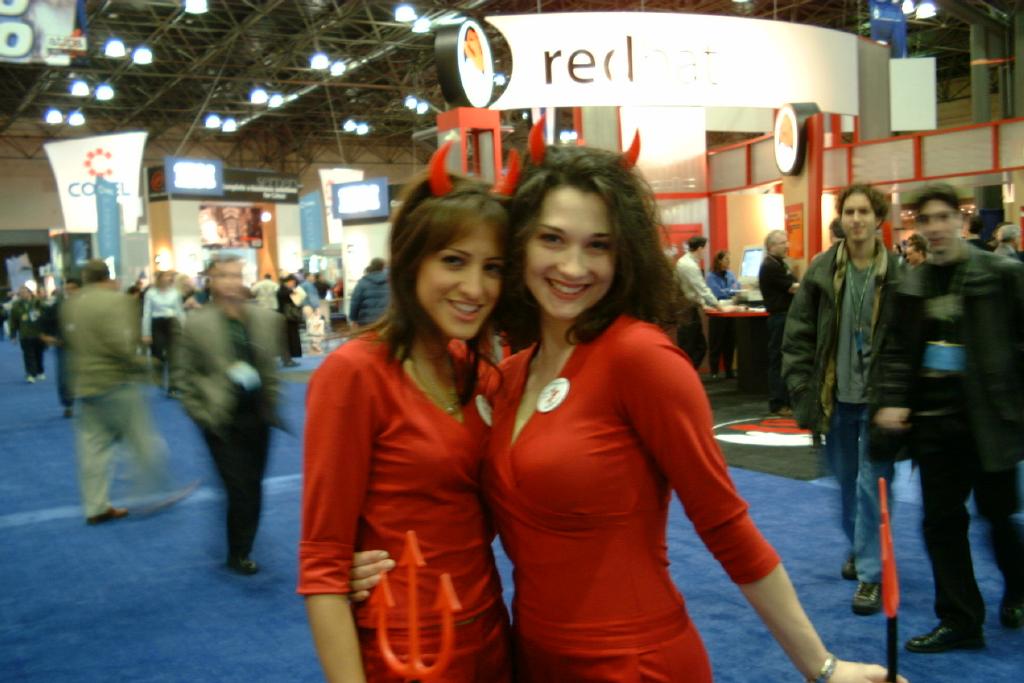
Is it any wonder people think Linux users are a bunch of flaming homosexuals when its fronted by obviously gay losers like these?! BSD has a mascot who leaves us in no doubt that this is the OS for real men! If Linux had more hot chicks and gorgeous babes then maybe it would be able to compete with BSD! Hell this girl should be a model!
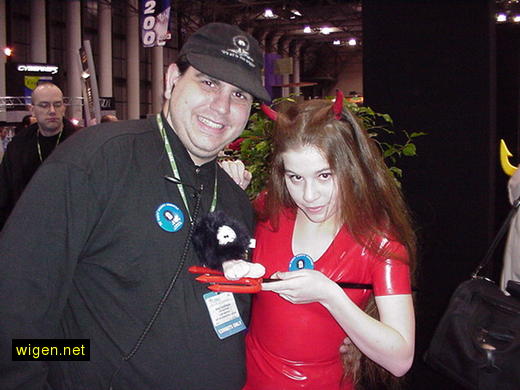
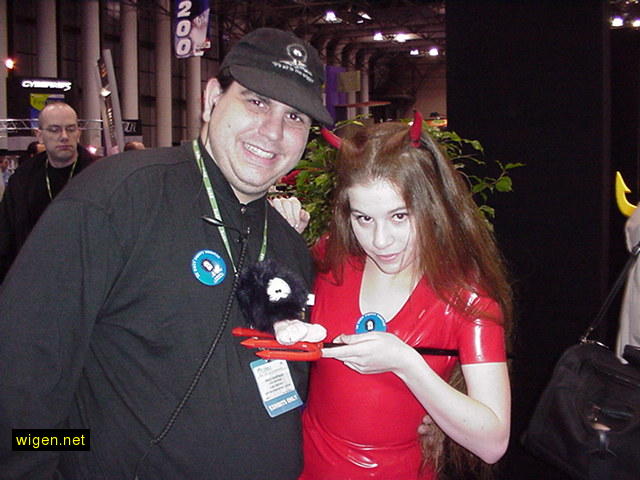
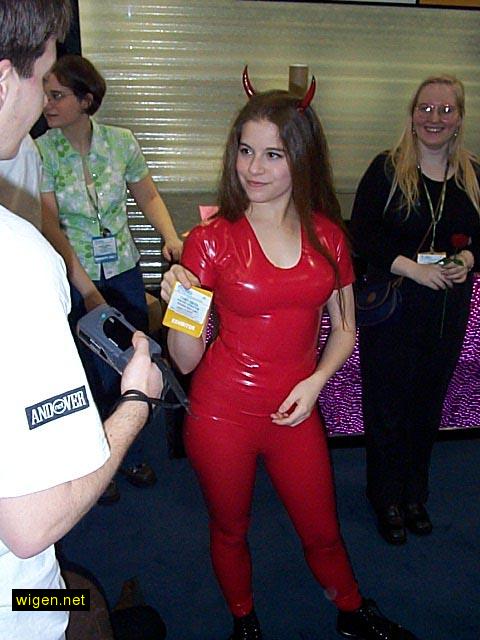
Linux is a joke as long as it continues to lack sexy girls like her! I mean just look at this girl! Doesn't she excite you? I know this little hottie puts me in need of a cold shower! This guy looks like he is about to cream his pants standing next to such a fox. As you can see, no man can resist this sexy little minx. Don't you wish the guy in this pic was you? Are you telling me you wouldn't like to get your hands on this ass?! Wouldn't this just make your Christmas?! Yes doctor, this uber babe definitely gets my pulse racing! Oh how I envy the lucky girl in this shot! Linux has nothing that can possibly compete. Come on, you must admit she is better than an overweight penguin or a gay looking goat! Wouldn't this be more liklely to influence your choice of OS?
With sexy chicks like the lovely Ceren you could have people queuing up to buy open source products. Could you really refuse to buy a copy of BSD if she told you to? Personally I know I would give my right arm to get this close to such a divine beauty!
Don't be a fag! Join the campaign for more cute open source babes today!
$Id: ceren.html,v 9.0 2004/08/08 16:01:34 ceren_rocks Exp $ -
Re:But freedom isn't equal to being dependant.
Heh, no, just don't assume that everyone who is involved with writing open source software shares the same ideas that are very popular among GPL proponents.
I did not do this. I would not do this because the GPL expresses a very different philosophy from the open source movement. I stated something that is true for all free software, including FreeBSD. Whatever motivates FreeBSD developers to continue their work isn't the point; the work they produce is licensed such that everyone (including users) gains software freedom. Therefore I'm grateful that FreeBSD's developers deliver software freedom to all of their users. Therefore I find it ironic that a user would choose to throw away this freedom and add on software which is completely uninspectable, unmodifiable, and possibly can't even be shared (the nVidia software). It seems more reasonable to me to get a different video card from a developer that doesn't treat you this way.
Specifically, when looking at BSD licensed software, as is the case with FreeBSD (just in case you didn't notice yet, we were discussing FreeBSD, not Linux here), you may actually notice that the people designign and writing it don't care that much about 'the open source methodology' but about making something that is usable to everyone. You make closed source software? fine. Makign a card with closed source drivers? perfect, we don't care.
I understand that this is not a discussion of the Linux kernel. I'm looking at this situation in terms of what is being delivered, not why. But if I turn my attention to motivation it seems to me that you don't see the similarity between the motivations you're talking about.
The open source philosophy is a design methodology that aims to make more software available to businesses. For the open source movement, proprietary software is merely less technically efficient or sub-optimal than open source software. But the open source movement doesn't object to proprietary software. This movement can endorse software which doesn't qualify for being called "open source". Hence, delivering a gift of code on which anyone can build any other program (even proprietary programs) is compatible with what the open source movement aims to do. Also, Linus Torvalds' fork of the Linux kernel is developed with comparable motivation; Torvalds licensed the kernel under the GPL but he has made exceptions and given interpretations of the GPL which he believes allow for proprietary derivatives (such as the nVidia software).
Talking about software freedom rankles the open source movement because that movement was designed to get away from freedom talk. Freedom talk tends to make people think of user's rights which, in turn, leads to users distancing themselves from what proprietors offer. One famous software proprietor, Bill Gates, came to the University of Illinois at Urbana-Champaign a few months ago and compared the GPL to the new BSD license along these lines stating how it was appropriate for universities to license under the new BSD license and inappropriate to license under the GPL. Gates was looking out for Microsoft's interests (and thus his own interests) essentially saying that it is a university's job to give Microsoft a gift of code.
I'm not against non-copylefted free software licenses. I think that programs licensed under them are a gift to everyone. Being a gift to everyone, there is a real risk that the developer and the free software community can suffer when a proprietor with superior advertising power makes a proprietary derivative and that derivative becomes accepted. A developer can end up competing against a derivative of their own code and the community can watch a proprietary incompatible modification make their version of the program functionally obsolete.
-
True cross-platform..
For a true cross-platform build system, take a look at Scons, Subversion and Data Debugger - I've used all of those on Windows (except DDD), Mac, Linux and FreeBSD - and they're fantastic.
When I tried using XCode, I found it seriously unfriendly - the UI is bizzare and makes no logical sense. I ended up trying to use XCode simply for editing code, before getting frustrated and using Emacs to edit and the command line to build. -
The License is *very* interesting
The AGPL is a GNU recognized free software license.
It's essentially a modified GPL - with a "running this software over a network constitutes distribution" clause.
Very cool - I had no idea this was around - might be worth some Free Software developers jumping onto until GPL v3 comes out (which will have a similar clause).
For those who have no idea what I'm going on about - read devchannel's explanation: Closing the GPL's distibution loophole -
Ceren causes BSD users to 'lift off'.
IMPORTANT UPDATE: Please show your support for Ceren in this poll of Geek Babes!
Is it any wonder people think Linux users are a bunch of flaming homosexuals when its fronted by obviously gay losers like these?! BSD has a mascot who leaves us in no doubt that this is the OS for real men! If Linux had more hot chicks and gorgeous babes then maybe it would be able to compete with BSD! Hell this girl should be a model!
Linux is a joke as long as it continues to lack sexy girls like her! I mean just look at this girl! Doesn't she excite you? I know this little hottie puts me in need of a cold shower! This guy looks like he is about to cream his pants standing next to such a fox. As you can see, no man can resist this sexy little minx. Don't you wish the guy in this pic was you? Are you telling me you wouldn't like to get your hands on this ass?! Wouldn't this just make your Christmas?! Yes doctor, this uber babe definitely gets my pulse racing! Oh how I envy the lucky girl in this shot! Linux has nothing that can possibly compete. Come on, you must admit she is better than an overweight penguin or a gay looking goat! Wouldn't this be more liklely to influence your choice of OS?
With sexy chicks like the lovely Ceren you could have people queuing up to buy open source products. Could you really refuse to buy a copy of BSD if she told you to? Personally I know I would give my right arm to get this close to such a divine beauty!
Don't be a fag! Join the campaign for more cute open source babes today!
$Id: ceren.html,v 9.0 2004/08/01 16:01:34 ceren_rocks Exp $ -
Why doesn't mono get it (winforms)??I don't see Windows developers switching to Gtk# just coz "It works in Linux"
I have this distinct feeling that supporting Windows.Forms out of the box would have affected Miguel's stated reasons for Mono ie Gtk# and using it for Gnome apps..... That's why probably Mono didn't implement Windows.Forms for Mono 1.0 (talk about MAJOR feature missing). But this is totally off that map ?.
If Apple does run
Nothing to see here folks -
Re:They HAVE modified itThere seems to be some fixation with a requirement to distribute source if it is modified. Just for clarity, it is the distribution, not the modification, that brings with it the source requirement as indicated in this quote from the GPL:
For example, if you distribute copies of such a program, whether gratis or for a fee, you must give the recipients all the rights that you have. You must make sure that they, too, receive or can get the source code. And you must show them these terms so they know their rights.
Anyone can sell a GPL'ed binary, or give it away, barter it, whatever. But the act of distributing it in any form requires the distributor to also provide access to the source on request. -
Re:theft or copyright infringement.
I hope you are being sarcastic (I think you are).
In case anybody actually "learns" that, I would advise you to read this. Without copyright laws, the GPL could not exist. -
That's nothing, BSD offers sexy girls!
IMPORTANT UPDATE: Please show your support for Ceren in this poll of Geek Babes!
Is it any wonder people think Linux users are a bunch of flaming homosexuals when its fronted by obviously gay losers like these?! BSD has a mascot who leaves us in no doubt that this is the OS for real men! If Linux had more hot chicks and gorgeous babes then maybe it would be able to compete with BSD! Hell this girl should be a model!
Linux is a joke as long as it continues to lack sexy girls like her! I mean just look at this girl! Doesn't she excite you? I know this little hottie puts me in need of a cold shower! This guy looks like he is about to cream his pants standing next to such a fox. As you can see, no man can resist this sexy little minx. Don't you wish the guy in this pic was you? Are you telling me you wouldn't like to get your hands on this ass?! Wouldn't this just make your Christmas?! Yes doctor, this uber babe definitely gets my pulse racing! Oh how I envy the lucky girl in this shot! Linux has nothing that can possibly compete. Come on, you must admit she is better than an overweight penguin or a gay looking goat! Wouldn't this be more liklely to influence your choice of OS?
With sexy chicks like the lovely Ceren you could have people queuing up to buy open source products. Could you really refuse to buy a copy of BSD if she told you to? Personally I know I would give my right arm to get this close to such a divine beauty!
Don't be a fag! Join the campaign for more cute open source babes today!
$Id: ceren.html,v 9.0 2004/08/12 16:01:34 ceren_rocks Exp $ -
Re:LZW check, JPEG, erm...
Take a high resolution screenshot with any complexity
Sure - JPG is better for most photos - but sharp edges, text (including high resolution screenshots of text) and the like look much better under png (bit for bit).
Slightly offtopic, but noone seems to have mentioned Unisys yet - soon we may be seeing on GNU a page similar to this one: Why There Are No GIF files on GNU Web Pages
Soon we may need a burn all jpegs day -
who needs patents when we have hot geek girls?!
IMPORTANT UPDATE: Please show your support for Ceren in this poll of Geek Babes!
Is it any wonder people think Linux users are a bunch of flaming homosexuals when its fronted by obviously gay losers like these?! BSD has a mascot who leaves us in no doubt that this is the OS for real men! If Linux had more hot chicks and gorgeous babes then maybe it would be able to compete with BSD! Hell this girl should be a model!
Linux is a joke as long as it continues to lack sexy girls like her! I mean just look at this girl! Doesn't she excite you? I know this little hottie puts me in need of a cold shower! This guy looks like he is about to cream his pants standing next to such a fox. As you can see, no man can resist this sexy little minx. Don't you wish the guy in this pic was you? Are you telling me you wouldn't like to get your hands on this ass?! Wouldn't this just make your Christmas?! Yes doctor, this uber babe definitely gets my pulse racing! Oh how I envy the lucky girl in this shot! Linux has nothing that can possibly compete. Come on, you must admit she is better than an overweight penguin or a gay looking goat! Wouldn't this be more liklely to influence your choice of OS?
With sexy chicks like the lovely Ceren you could have people queuing up to buy open source products. Could you really refuse to buy a copy of BSD if she told you to? Personally I know I would give my right arm to get this close to such a divine beauty!
Don't be a fag! Join the campaign for more cute open source babes today!
$Id: ceren.html,v 8.0 2004/08/01 16:01:34 ceren_rocks Exp $ -
Hot Babe Office studies Ceren
IMPORTANT UPDATE: Please show your support for Ceren in this poll of Geek Babes!
Is it any wonder people think Linux users are a bunch of flaming homosexuals when its fronted by obviously gay losers like these?! BSD has a mascot who leaves us in no doubt that this is the OS for real men! If Linux had more hot chicks and gorgeous babes then maybe it would be able to compete with BSD! Hell this girl should be a model!
Linux is a joke as long as it continues to lack sexy girls like her! I mean just look at this girl! Doesn't she excite you? I know this little hottie puts me in need of a cold shower! This guy looks like he is about to cream his pants standing next to such a fox. As you can see, no man can resist this sexy little minx. Don't you wish the guy in this pic was you? Are you telling me you wouldn't like to get your hands on this ass?! Wouldn't this just make your Christmas?! Yes doctor, this uber babe definitely gets my pulse racing! Oh how I envy the lucky girl in this shot! Linux has nothing that can possibly compete. Come on, you must admit she is better than an overweight penguin or a gay looking goat! Wouldn't this be more liklely to influence your choice of OS?
With sexy chicks like the lovely Ceren you could have people queuing up to buy open source products. Could you really refuse to buy a copy of BSD if she told you to? Personally I know I would give my right arm to get this close to such a divine beauty!
Don't be a fag! Join the campaign for more cute open source babes today!
$Id: ceren.html,v 8.0 2004/08/01 16:01:34 ceren_rocks Exp $ -
Re:Linus.
It is offered under GPL *and* non-GPL licenses. Which was *exactly* the reason I used it as an example.
(Before I go on, bear in mind that IANAL). MySQL AB own the copyright to MySQL (AFAIK); thus they can release it under the GPL. All changes made to the GPL-licensed version are thus also GPL, and, unless all the authors of the new code get together with MySQL AB and come to an agreement, the branch of the GPL licensed version is GPL-only.
In fact, MySQL AB already comes to an agreement with all contributers: Before MySQL AB accepts any non-trivial patch, they ask you to transfer copyright[1], else they are going to implement the change themselves, if they consider it important enough. That's nothing unusual, the FSF does a similar thing.[2] So there isn't really a branch with a GPL'ed version of MySQL.
However, MySQL AB retain the right to the original version they wrote (and all branches that exclusively include their code, I'd guess); thus they can offer it under a non-GPL license.
[1] More precisly, they ask you to share the copyright (so that they may offer it under their commercial license). I don't know the exact wording anymore, but I have it lying around in some old mail from when they asked me.
One can assume that they came to different terms with some huge contributers, such as the author of the InnoDB table type.
[2] Albeit for a different reason: The FSF says it makes legal proceedings and the enforcement of the GPL easier, if there is only one copyright holder. -
Re:Go ... perhaps the best game ever.
Sure... try playing go at kgs or at the Dragon Go Server. You can also play go on Yahoo games. If you want to play go against your computer, try gnugo.
-
Impressive link collection
Just in case his site gets
Downloads
Linux Wipe Tools: Three shell scripts for securely wiping all data from the swap partition, wiping unused disk space on the root partition, or wiping an entire disk, by Thomas C. Greene.
No Messenger: A batch file that eliminates Windows Messenger and fixes the problem of Outlook Express loading slowly when Messenger is absent, by an anonymous friend of The Register.
FileCheck MD5: A free, simple, lightweight MD5 utility for Windows, courtesy of Brandon Staggs.
Errata: A text file containing my various blunders and ommissions in the book (right-click and "save as," or view as HTML). Last updated 6 June 2004.
Links to Other Goodies
Mozilla: A free, open source Web browser and e-mail client for Linux and Windows, feature rich and far more secure than Internet Explorer and Outlook Express. Recommended for novices.
Firefox: A free, open source, stand-alone Web browser for Linux and Windows. Very light and fast. Recommended for intermediate users.
Thunderbird: A free, open source e-mail and news client for Linux and Windows. Recommended for intermediate users.
GnuPG: Gnu Privacy Guard; a free, open source replacement for PGP, for Windows and Linux.
WinPT: Windows Privacy Tools; a free, open source GUI frontend to GnuPG for Windows.
Anonymizer: Various services for anonymous Web surfing, e-mail, chat, etc.
OpenSSH: A free, open source SSH (Secure Shell) client and server for Windows and Linux.
PuTTY: A free, open source GUI frontend to OpenSSH for Windows.
Ethereal: A free, open source network traffic analyzer for Windows and Linux. Windows users will need to install WinPcap before installing Ethereal.
Ad-Aware: A free, closed source adware/spyware scanner for Windows.
SpyBot Search & Destroy: A free, closed source adware/spyware scanner for Windows.
Sam Spade: CGI gateways to numerous online tools, such as whois, traceroute, etc.
SourceForge: A vast repository of open-source software for Windows and Linux. The site can be overwhelming, but it has a search engine to help users locate packages.
GNU Project: The home base of the open source movement. A repository of open source products, chiefly for UNIX-compatible systems.
Security Information
About Internet/Network Security: An informative and useful site dealing with computer and Internet security, with reviews of security products and books, practical howtos and tips, and links to numerous tools and information resources, geared toward beginners and intermediate users.
SANS Institute: An educational and research organization with a vast archive of security research documents, news, and advisories, geared toward intermediate and advanced users.
CERT/CC: Computer Emergency Response Team Coordination Cente -
Re:Is it ironic, hypocritical or neither?
That's the classic "free as in beer vs. free as in freedom" argument, and has been argued on Slashdot too many times to count. Just take a look at the GNU philosophy section for the answer to your question.
And just in case you're wondering, the GNU also publishes the Free Documentation License. -
Re:Is it ironic, hypocritical or neither?
That's the classic "free as in beer vs. free as in freedom" argument, and has been argued on Slashdot too many times to count. Just take a look at the GNU philosophy section for the answer to your question.
And just in case you're wondering, the GNU also publishes the Free Documentation License. -
"Open source" began in the 90s, not the 80s.
From the summary:
The article is a historical overview of the open source revolution, starting in the 80s with the GNU Project [...]
There is no reasonable interpretation of history that can make this claim about GNU true: GNU was started to pursue software freedom. The open source movement did not yet exist. When GNU began, the open source movement would not exist for over another decade.
I do not say this to flamebait or to raise suspicions of malevolence but to clarify and prevent people from being deceived into thinking the free software and open source movements are the same thing. The people at the Free Software Foundation, in particular the most prominent members (Richard Stallman, Eben Moglen, and Brad Kuhn) have all spoken and written on this issue clarifying how these movements are not the same and asking not to be lumped in with the open source movement.
But this is not the first time proponents of the open source movement have tried to take credit for work that is not theirs. Countless articles and posts on discussion websites (including
Mark Webbink, chief counsel for Red Hat and proponent of open source, recently wrote an essay describing different "open source" licenses and apparently found the concept of copyleft so useful he employed it in his essay. He spent quite some words explaining the concept, but he never called the concept by its name nor did he explain that he didn't come up with it (the FSF did years ago). People reading that essay might think otherwise because of (what amount to) his intellectual dishonesty. Ironically, the Open Source Initiative does not use copyleft in its license list. The reasons why one might want to use one of the OSI-approved licenses over another are not clearly delineated on the OSI site (unlike the FSF's site which provides brief commentary on free software licenses).
So let's give credit where credit is due. The open source movement should be happy that they have acheived so much popularity and helped bring so many people to use and develop excellent software. There's no need to try and take credit for the works of others.
-
"Open source" began in the 90s, not the 80s.
From the summary:
The article is a historical overview of the open source revolution, starting in the 80s with the GNU Project [...]
There is no reasonable interpretation of history that can make this claim about GNU true: GNU was started to pursue software freedom. The open source movement did not yet exist. When GNU began, the open source movement would not exist for over another decade.
I do not say this to flamebait or to raise suspicions of malevolence but to clarify and prevent people from being deceived into thinking the free software and open source movements are the same thing. The people at the Free Software Foundation, in particular the most prominent members (Richard Stallman, Eben Moglen, and Brad Kuhn) have all spoken and written on this issue clarifying how these movements are not the same and asking not to be lumped in with the open source movement.
But this is not the first time proponents of the open source movement have tried to take credit for work that is not theirs. Countless articles and posts on discussion websites (including
Mark Webbink, chief counsel for Red Hat and proponent of open source, recently wrote an essay describing different "open source" licenses and apparently found the concept of copyleft so useful he employed it in his essay. He spent quite some words explaining the concept, but he never called the concept by its name nor did he explain that he didn't come up with it (the FSF did years ago). People reading that essay might think otherwise because of (what amount to) his intellectual dishonesty. Ironically, the Open Source Initiative does not use copyleft in its license list. The reasons why one might want to use one of the OSI-approved licenses over another are not clearly delineated on the OSI site (unlike the FSF's site which provides brief commentary on free software licenses).
So let's give credit where credit is due. The open source movement should be happy that they have acheived so much popularity and helped bring so many people to use and develop excellent software. There's no need to try and take credit for the works of others.
-
Re:Infringes on Linux IP!
Well...if anything infringes on the GPL (basically SCO included anything GPL Licensed and didn't include source code) wouldn't the remedy be that SCO has to open source their software??? ooooh the delicious irony....
No. See the actual license This is far from what would happen.
As I understand it(IANAL), any GPL software that they include must have the source available (but only to the people THEY distributed the binaries to) by any reasonable means (mail for cost of media+handling, ftp, http, etc) or they have no authority to distribute it. It would not effect their proprietary software.
If they refused to make source to the same people they made binaries available to, they would be in violation of the GPL, and would have to stop distributing those GPL packages. A judge would have to decide if their actions constitute infringement on the owners copyright in a case brought to the court by the actual copyright holder. At that point, a judge would issue an injuction, disallowing SCO from distributing the one (or more) packages named in that specific suit. Other damages may be awarded, theoretically, but rarely.
At any time (and possibly at the last minute) they could agree to allow access to their modified GPL source, and the case would be more or less moot. They would instantly be in compliance with the license. Still, it has no bearing on their own closed source applications. -
Re: Good Thing there are "Non-Profit" distros
You can't just buy Gentoo Linux, debian or many other distributions for that matter. So even if you buy (out) RedHat, Novell and other (stock listed) companies you simply can not destroy those non-profit organisations.
How would you go about to bring GNU down, even if you were founded by the millions? -
Re:How Fast?
-
Re:Stop playing solitaire on my dialysis machine
In the case of mission-critical or life-critical equipment, there are several things that should be done regarding the control software. For one thing, simplifying the software would be very useful and could reduce the number of possibilities where something could go wrong. Visual attractiveness should not necessarily be one of the highest priorities like it often is with regular software. Another thing would be to emphasize making the software secure to begin with to reduce problems and faults later on. Of course, this might mean that the release of the software might be delayed, but unexpected delays later on would be reduced. It is possible that open-source or free (free as in freedom) software might not be a bad idea. What would be important would be to review it for security issues and to obtain information about the changes and contributions in the past, to avoid a situation where proprietary copyrighted code was accidentally or deliberately introduced. It should not be necessary for the software to be secret in order for it to be secure (no "security through obscurity".) Another important aspect of open source or free software is the position of not being tied to a specific vendor who might change their practices in the future. If the equipment manufacturer can adjust the software to their precise circumstances, that is important.
There is a cancer clinic that uses free software, including the GNU software utilities and the Linux® OS kernel. Though it is not clear that the free software runs actual equipment, it is mentioned to show that free software has been used in serious circumstances.
With regard to security patches, security expert Bruce Schneier recommends monitoring something such as a network as an alternative to relying on security patches. Of course, there might be the issue of how to respond if something suspicious happens. Combined with measures such as simplifying the software, this might be better than repeatedly getting into difficulty over whether to apply a security patch.
-
Re:Stop playing solitaire on my dialysis machine
In the case of mission-critical or life-critical equipment, there are several things that should be done regarding the control software. For one thing, simplifying the software would be very useful and could reduce the number of possibilities where something could go wrong. Visual attractiveness should not necessarily be one of the highest priorities like it often is with regular software. Another thing would be to emphasize making the software secure to begin with to reduce problems and faults later on. Of course, this might mean that the release of the software might be delayed, but unexpected delays later on would be reduced. It is possible that open-source or free (free as in freedom) software might not be a bad idea. What would be important would be to review it for security issues and to obtain information about the changes and contributions in the past, to avoid a situation where proprietary copyrighted code was accidentally or deliberately introduced. It should not be necessary for the software to be secret in order for it to be secure (no "security through obscurity".) Another important aspect of open source or free software is the position of not being tied to a specific vendor who might change their practices in the future. If the equipment manufacturer can adjust the software to their precise circumstances, that is important.
There is a cancer clinic that uses free software, including the GNU software utilities and the Linux® OS kernel. Though it is not clear that the free software runs actual equipment, it is mentioned to show that free software has been used in serious circumstances.
With regard to security patches, security expert Bruce Schneier recommends monitoring something such as a network as an alternative to relying on security patches. Of course, there might be the issue of how to respond if something suspicious happens. Combined with measures such as simplifying the software, this might be better than repeatedly getting into difficulty over whether to apply a security patch.
-
Re:So..?
From GNU page about the GPL
Irrelevant. The topic is not GPL'ed projects, but projects controlled by GNU. You are confused because the GPL is today more famous than GNU which spawned it.
If you want to get a patch included into an actual GNU project, such as emacs or gcc, you must assign copyright to GNU. Otherwise they'll reject your patch (you're always free to fork, of course, but then don't get the benefit high-profile placement) -
Re:So..?
From GNU page about the GPL
How to Apply These Terms to Your New Programs
If you develop a new program, and you want it to be of the greatest possible use to the public, the best way to achieve this is to make it free software which everyone can redistribute and change under these terms.
To do so, attach the following notices to the program. It is safest to attach them to the start of each source file to most effectively convey the exclusion of warranty; and each file should have at least the "copyright" line and a pointer to where the full notice is found.
one line to give the program's name and an idea of what it does.
Copyright (C) yyyy name of author
...(license follows)...
That doesn't seem like surrendering your copyright to GNU...
If you were referring to the restrictions placed on the distribution of code you add to a GPL project, if you don't like them start your own project and license it the way you like, period. -
Please explain how this is a problem.
I don't see how this is a problem or any different from anyone else building services around free software. I don't see how it is the free software community's problem that some businesspeople choose to pay for certification. Furthermore, packaging my free software program doesn't prevent others from packaging it as well (perhaps incorrectly or poorly; possibly their bad packages will be more popular than yours and you will just have to live with it hoping more people will install your improved packages instead). The way I figure it, by distributing free software at all you are contributing to any collection of free software anywhere and possibly helping someone or some organization build a certification program around it.
Perhaps this entire article arises from an "open source" mindset where business users' perceived problems are of chief importance? I'll remind readers of an informative essay on the differences between the two movements.
-
Re:Your errorIs using vi in the first place. For a quick edit use pico, nano or joe.
BLASPHEMER!!!!! Ed is the standard text editor.
I like nano because you can jump right to a line number.
Oh, like in vi.
-
Um... so what? The FSF does this too!
So does my project.
As I mentioned on the linked page: "Also, the FSF makes all contributors attribute copyrights to the FSF. They do this for legal reasons. Mozilla did not, and when they decided to re-license, they had to contact every contributor. Because of this, we too require that any contributors attribute the copyrights to the jasabe project. Of course, you are still free to fork the project and keep your changes under your copyright, but we cannot accept your changes into the main jasabe tree."
Don't believe me? More info can be found on the FSF page as well as on their FAQ.
Not that it matters much for our project. It's only important if you have contributors. -
Um... so what? The FSF does this too!
So does my project.
As I mentioned on the linked page: "Also, the FSF makes all contributors attribute copyrights to the FSF. They do this for legal reasons. Mozilla did not, and when they decided to re-license, they had to contact every contributor. Because of this, we too require that any contributors attribute the copyrights to the jasabe project. Of course, you are still free to fork the project and keep your changes under your copyright, but we cannot accept your changes into the main jasabe tree."
Don't believe me? More info can be found on the FSF page as well as on their FAQ.
Not that it matters much for our project. It's only important if you have contributors. -
The FSF asks people to sign over copyright also
The Free Software Foundation also asks programmers to sign over the copyright of any code they contribute. Ditto with the OpenOffice people. This is a perfectly normal request; having code licensed under both the GPL and some other license is quite common (OpenOffice, etc.).
Nothing to see here, move along. -
Re:Public Doesn't CareIt's scientists like me (and my work) that is impeded by the high subscription prices
Then do something about it. If you're going to give away your work, don't give it to these private journals. Give it to Public Library of Science or Creative Commons or Free Software Foundation. If there isn't a suitable journal, one can be started.
If these private journals paid for work, that'd be different but far from it. No, if your work is accepted, then, unless you skip it, you've got more giving to do to pay for the outrageously expensive conference, which is held at a ski resort, or at a very expensive hotel in a big city that wants in on all this and will sock you with a special 15% tax on the room, car rental, airport usage, etc. The usual way to get the money is to fill out a grant and expense form which demands justification (in triplicate) for every expense however petty, and it doesn't look good when the name of the accomodation is a well known and expensive resort. The journal gets money, the tourist industry does all right too, and what do you get? No money. May get some reputation of uncertain value. You get to feel grateful that your successful publication helps you hang on to your low paying postdoc job that is temporary anyway. And you may get an all expenses paid trip to somewhere, but that doesn't put food on the table. At worst, you may get grilled and denied further funding, for wasting taxpayers money, and treated with suspicion that all you're doing in your "cushy" job is making up barely enough bs for your special friends to vanity publish in their stinking excuse for journal that has almost no legitimacy. That a very few of your colleagues do exactly that doesn't help.
Wish we could focus on our areas of expertise instead of dealing with these constant attempts to create new or keep existing expenses that are no longer relevant, and the efforts to divert our attention from "why is this an expense" by such ploys as wrangling over who pays, but there's always someone out there looking for an angle. It gets real tiresome when it's not once but the same old deal, over and over, like reading and rejecting yet another copy of a Nigerian scam.
It doesn't have to be like that. Drain the swamp. Starve the beast. Don't go along with these questionable arrangements. Don't make yourself a part of the question. There are alternatives.
-
Re:Cry babyI'm wondering how his clients will react. I think he's just shot himself in the foot.
I know that it wouldn't help my confidence in him to read in the papers that he's launched a frivolous suit for something as lame as being called a name on an open message board, for a case that was already disposed of.
Maybe we can get him to post something on usenet
To someone with a hammer, everything looks like a nail. To a lawyer
I know - lets get him after RMS. That'll teach the big wuss (Galton, not RMS). http://www.gnu.org/fun/jokes/courtroom.quips.html and http://www.gnu.org/fun/jokes/lawyers.html
Sample:
Two lawyers are sitting at a table in a restaurant and they see a very attractive woman walk by. The first lawyer turns to the second and says, " Boy, would I like to screw her!"
The other lawyer pauses for a second, and responds, "Oh Yeah? Out of What?"
or these:
Q: What can a goose do, a duck can't, and a lawyer should?
A: Stick his bill up his ass.Q: What do you get when you cross the Godfather with a lawyer?
A: An offer you can't understandQ. Why is it that many lawyers have broken noses?
A. From chasing parked ambulances.Q. Where can you find a good lawyer?
A. In the cemetary -
Re:Cry babyI'm wondering how his clients will react. I think he's just shot himself in the foot.
I know that it wouldn't help my confidence in him to read in the papers that he's launched a frivolous suit for something as lame as being called a name on an open message board, for a case that was already disposed of.
Maybe we can get him to post something on usenet
To someone with a hammer, everything looks like a nail. To a lawyer
I know - lets get him after RMS. That'll teach the big wuss (Galton, not RMS). http://www.gnu.org/fun/jokes/courtroom.quips.html and http://www.gnu.org/fun/jokes/lawyers.html
Sample:
Two lawyers are sitting at a table in a restaurant and they see a very attractive woman walk by. The first lawyer turns to the second and says, " Boy, would I like to screw her!"
The other lawyer pauses for a second, and responds, "Oh Yeah? Out of What?"
or these:
Q: What can a goose do, a duck can't, and a lawyer should?
A: Stick his bill up his ass.Q: What do you get when you cross the Godfather with a lawyer?
A: An offer you can't understandQ. Why is it that many lawyers have broken noses?
A. From chasing parked ambulances.Q. Where can you find a good lawyer?
A. In the cemetary -
Re:Why linux isn't ready.....
So linux isn't ready because if you choose to use software distributed as source you have to use the commandline? It's not even a terribly hard sequence of commands, and they are almost always described in the INSTALL document.
That aside though, the main issue with source installs is that you end up with a mess - files all over the place. You can't remove what you just installed unless the Makefile happened to include an "uninstall".
Up until now I've been very happily avoiding this issue by using stow, but recently I found checkinstall which you run instead of make install. Checkinstall creates a package (.deb, or
"That's still too hard!" you say? Yes, quite possibly - but then the only real reason to be installing from source is if you have very particular needs (special configure options) or a need to be on the bleeding edge. Pretty much anyone who thinks compiling is too hard should be happy with binary installs. With things like synaptic, redcarpet, up2date, etc. around installing distro provided packages is a breeze. If you have to go outside your distro try autopackage. Yes, autopackage isn't finished yet, but they're at the stage where they have some test packages (install the latest version of inkscape via autopackage for instance), and what they do have is fantastic - think of it as installshield with advanced dependency checking resolution. All those third parties currently supplying distro specific rpms ought to shift their project to supplying autopackages, and certainly autopackage looks to be the way to go for any commercial vendor who wants to create a linux installer for their software.
Installs are still a little tricky, but the issues have been spotted, and are being worked on - and the solutions look better than anything Windows provides.
Jedidiah -
Screen
Screen might help you, it lets you put several sessions into one. Learning new shortcuts might be a bitch, but it can be very helpful.
-
Where did you get the example PNG ?
There's this custom PNG decoder
-
Disturbing
Is this an obsolete skill? With handwriting and voice recognition technologies, is using a QWERTY keyboard with nine out of ten fingers something worth knowing anymore?
As a computer enthusiast, programmer, system administrator, and someone who also uses the computer for simple, every-day applications that most everyone else does, I find the skill of touch typing to be invaluable.I started on the computer very young, and for many years my mother bugged me to learn to touch type. I finally hunkered down and took a class in high school, and it would not at all be unfair to say that it changed my life.
Having many years of QWERTY familiarty under my belt, I learned in what seemed like no time, and by the time I had finished the month or two long course I was easily doing 70 words a minute.
It's a skill that I certainly use every day, and lately I had been testing myself with a fantastic program called gtypist, and my speeds have ranged from 100 to 141 words per minute (141 when pushing for speed, ~100 when dealing with words/characters/symbols that I was not very familiar with or something that is particularly difficult to type).
Not only was it a useful skill, but my success in typing inspired me to pursue other things, such as playing the guitar, a first rate hobby of mine now. Also, it impresses a lot of people.
Whether we like it or not, we all have to type somewhere and somehow, so it's a skill that most everyone who has to use a computer is much better off knowing. Also, considering how little of an investment it requires and how great the returns are, it's a great mystery to me why more people aren't doing it.
I realize that not everyone can type so fast, but at school I run across people every day who show great potential. Whenever I see a classmate screaming along using only two or three fingers, I have to stop and tell them how much faster I think they could go if they actually bothered to do it correctly.
Frankly, I'm a bit disturbed by the idea that the skill of typing has or could become obsolete. I think that it is here to stay, and I know that I will be doing it for as long as I can; I will never write as fast as I type, and I will never be willing to use voice recognition systems [ever].
-
The Right to Read?
One step closer to Stallman's vision
-
Re:Now is the time...
A claim contradicted by the words of RMS & the FSF
Ok, I stand corrected, though of course the GPL does still stand on copyright, so the GPL would be obsolete without copyright. For some reason I thought RMS thought like Larry Lessig on this issue, who of course is a strong believer in copyrights, but looks for a balance. Lessig, of course founded the Creative Commons project.
Easy- and pointless. Who would do that 'stealing'? A traditional commericial software company? They can't exist, because without copyright, they only get one customer for each product.
Here I have to disagree with you. Of course commercial software companies would not be able to make much of a profit, as you rightly point out. However, most software is not produced by commmercial software companies, but by in-house programmers found in every company. Right now the GPL compells these programmers to submit changes in software back to the community, whereas with public domain software this is not the case. Eric Raymond states:
First, code written for sale is only the tip of the programming iceberg. In the pre-microcomputer era it used to be a commonplace that 90% of all the code in the world was written in-house at banks and insurance companies. This is probably no longer the case--other industries are much more software-intensive now, and the finance industry's share of the total must have accordingly dropped--but we'll see shortly that there is empirical evidence that approximately 95% of code is still written in-house.
Without copyright law all that in-house developed code does not have to be returned to the community. You might be a cynic and say that there is massive GPL violation going on anyway, or you might make the leap of faith and say organisations will be compelled to share (like Raymond does), however I remain unconvinced. -
SCO can never legally distribute Linux again
4. You may not copy, modify, sublicense, or distribute the Program except as expressly provided under this License. Any attempt otherwise to copy, modify, sublicense or distribute the Program is void, and will automatically terminate your rights under this License. However, parties who have received copies, or rights, from you under this License will not have their licenses terminated so long as such parties remain in full compliance.
[source]
SCO has violated the GPL (and the IBM countersuit will get that fact into the public legal record, perminantly).
Their rights to modify and distribute Linux have therefor been terminated. If they try to distribute Linux now, they will in fact be guilty of willful copyright infringement.
SCO has locked themselves out of the Linux industry forever. Their own outdated, buggy, and next-to-useless UNIX system is their only future. Which means, in effect, they have no viable future at all. Not even frivolous litigation, as the courts are ruling.
IANAL, etc. -
OT: GNU's words to avoid
I always found that page ironic: they list all these words that they think are misleading, but they miss out the mother of them all: "free".
Every damn person on the planet needs the phrase "free software", as used by the FSF, explained to them or they misunderstand it. The FSF stick to their guns, but then suggest that people avoid using, for example, the word "Creator" saying: "The term 'creator' as applied to authors implicitly compares them to a deity ('the creator')."
I generally support the FSF's actions - particularly their insistance on using "GNU/Linux" which helps to clarify what the OS is. But their insistance on using "Free" just clouds the issues that they are trying to address.
-
Parent is a copy of a GNU webpage
Here. I totally agree with it, but you really should acknowledge the source.
-
Re:bash?
This is bash.
-
Inaccuracies in press release
Ravicher found that about a third of the 283 issued patents are owned by large
corporations that are friendly to Linux - ones with some current financial interest in broad Linux
adoption, including: Cisco, HP, IBM, Intel, Novell, Oracle, Red Hat, Sony, and others However, to date,
no Linux vendor has [...] entered into an explicit agreement promising never to use its own patents against Linux users.
How about this one?
Each time you redistribute the Program [...]. You may not impose any further restrictions on the recipients' exercise of the rights granted herein.
I think threatening patent infringement action against any user of a Linux distribution that you had provided them with would be placing a further restriction on usage, hence a violation of this term that a Linux distributor must have agreed to in order to distribute Linux. -
Re:It's GNU/Linux!
No, no, no. It's only GNU/Linux when those thieving Linux bastards don't give credit to the GNU folks, by calling the OS just 'Linux'.
RMS has no problem with you just calling it GNU.
No. GNU/Linux is not the same as GNU. The "official" kernel of the GNU system is Hurd. From the linked website:
"The GNU Hurd is the GNU project's replacement for the Unix kernel. The Hurd is a collection of servers that run on the Mach microkernel to implement file systems, network protocols, file access control, and other features that are implemented by the Unix kernel or similar kernels (such as Linux)."
This clearly indicates that Hurd is the kernel specifically designed to be the centerpiece of the GNU system. Linux is just an acceptable placeholder until the Hurd is ready for spotlight. Therefore GNU/Linux is just a precursor for the True GNU System.
Seriously speaking, the Hurd does seem to have a number of very nice ideas - the translators (little programs that can be attached to directories and files, and which will then control all access to those files - so you can attach one to a directory and make the contents of an FTP site or whatever appear there - not unlike the proc filesystem on Linux), for example. I wonder if anything like them could be implemented in Linux ?
It also has some very serious problems, such as a lack of device drivers and every existing filesystem server memorymapping the entire partition, which means that you can't use partitions larger than 2 GB on a 32-bit system...
Oh well, it's good to know that the next generation free open source operating system is already being worked on - should keep Linux from getting fat and lazy
-
Can Linux ever beat BSD?
IMPORTANT UPDATE: Please show your support for Ceren in this poll of Geek Babes!
Is it any wonder people think Linux users are a bunch of flaming homosexuals when its fronted by obviously gay losers like these?! BSD has a mascot who leaves us in no doubt that this is the OS for real men! If Linux had more hot chicks and gorgeous babes then maybe it would be able to compete with BSD! Hell this girl should be a model!
Linux is a joke as long as it continues to lack sexy girls like her! I mean just look at this girl! Doesn't she excite you? I know this little hottie puts me in need of a cold shower! This guy looks like he is about to cream his pants standing next to such a fox. As you can see, no man can resist this sexy little minx. Don't you wish the guy in this pic was you? Are you telling me you wouldn't like to get your hands on this ass?! Wouldn't this just make your Christmas?! Yes doctor, this uber babe definitely gets my pulse racing! Oh how I envy the lucky girl in this shot! Linux has nothing that can possibly compete. Come on, you must admit she is better than an overweight penguin or a gay looking goat! Wouldn't this be more liklely to influence your choice of OS?
With sexy chicks like the lovely Ceren you could have people queuing up to buy open source products. Could you really refuse to buy a copy of BSD if she told you to? Personally I know I would give my right arm to get this close to such a divine beauty!
Don't be a fag! Join the campaign for more cute open source babes today!
$Id: ceren.html,v 8.0 2004/08/01 16:01:34 ceren_rocks Exp $ -
BSD wins top babe award!
Is it any wonder people think Linux users are a bunch of flaming homosexuals when its fronted by obviously gay losers like these?! BSD has a mascot who leaves us in no doubt that this is the OS for real men! If Linux had more hot chicks and gorgeous babes then maybe it would be able to compete with BSD! Hell this girl should be a model!
Linux is a joke as long as it continues to lack sexy girls like her! I mean just look at this girl! Doesn't she excite you? I know this little hottie puts me in need of a cold shower! This guy looks like he is about to cream his pants standing next to such a fox. As you can see, no man can resist this sexy little minx. Don't you wish the guy in this pic was you? Are you telling me you wouldn't like to get your hands on this ass?! Wouldn't this just make your Christmas?! Yes doctor, this uber babe definitely gets my pulse racing! Oh how I envy the lucky girl in this shot! Linux has nothing that can possibly compete. Come on, you must admit she is better than an overweight penguin or a gay looking goat! Wouldn't this be more liklely to influence your choice of OS?
With sexy chicks like the lovely Ceren you could have people queuing up to buy open source products. Could you really refuse to buy a copy of BSD if she told you to? Personally I know I would give my right arm to get this close to such a divine beauty!
Don't be a fag! Join the campaign for more cute open source babes today!
$Id: ceren.html,v 7.0 2004/01/01 11:32:04 ceren_rocks Exp $