Slashdot Mirror
Domain: nasa.gov
Stories and comments across the archive that link to nasa.gov.
Comments · 16,365
-
Re:Sudden?
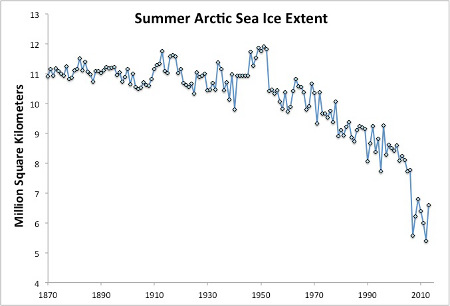
http://neptune.gsfc.nasa.gov/c... 2012 was above / even to 2008. And let's not forget that there was supposed to be NO ICE CAP by the summer of 2014. Ooops.
I'm not saying that we shouldn't be reducing pollution; that we shouldn't be taking actions such as no encroaching into the few wild areas left - but that we're seeing hysteria regarding global warming. -
Re:Won't someone think of the birds.
Which is enough to melt four hundred billion tons of *land* ice per year, for the last 13 years.
http://climate.nasa.gov/vital-...
That's not much, right?
-
Re:The bases have to be built from local material
Living underground covers it. In fact, the Moon and Mars already have lava tubes and caves, so no large scale excavation needed.
-
Re:Cost bigger issue than sonic boom
Thanks for all your calculations, but you entirely neglect auditory acoustic response issues, or the fact this energy is coming exclusively in rapid rise impulses.
There is more direct information in this readily available. We read here that the
"Concorde's sonic boom noise level was 105 PLdB. The PLdB that researchers believe will be acceptable for unrestricted supersonic flight over land is 75, but NASA wants to eventually beat that and reach 70 PLdB."
The measure PLdB is "perceived level of decibels" which takes into the account that impulsive, rapid rise sounds appear louder to humans. A 105 dB sound is a very loud sound to anybody. There would be hundreds, perhaps even thousands, of supersonic flights coast-to-coast a day if this became commercial. If you were under a common flight corridor, you might hear one of these every few minutes all day long.The NASA article discusses though the fact that aircraft design can lessen sonic booms, and that is real key to making this a viable transcontinental technology.
But where we really need supersonic flight is on trans-Pacific flights! Where are the hypersonic trans-Pacific airliner projects these days?
-
IndieGogo because NASA won't fund this?
It seems NASA did fund this concept... for a while, see citation here. Why did they stop this effort? Because of budget priorities? Politics? Or maybe it was a bad idea?
-
Re:Moon rocks
...and how do you propose to BUILD any of this perennial childish sci-fi nonsense?
With our hands, making less than minimum wage. The robots will be busy taking over our jobs on Earth.
The Chinese/Russians/South Koreans will probably be on the moon by 2040, Japan plans an unmanned base by 2020 and Japan/India announced intent to have a permanent base by 2030 but more likely a decade later. A study in grey. Bear in mind that these are visible nation-states but there will be also be an invisible multinational corporate hand behind the early adopters. There will also be a forward-thinking billionaires practicing their Mandarin, Russian and Japanese in the mirror because they're fed up with endless politics.
Notice I didn't pair up the United States with anyone for Lunar exploration, because way things have been going we'll probably be paired up with Iran, Syria, Libya, Lebanon, Somalia and (post-revolution) Saudi Arabia, Pakistan and Morocco, (and still) Iraq and Afghanistan to make portions of Earth more closely resemble the surface of the Moon.
-
Re:tennis rackets
one million tennis rackets.
A tennis racket of sunlight, as in a change of albedo on part of an object's surface using a light colored mesh, has been proposed for Apophis [2036]. Looks promising for known longer term threats which require small adjustment. From the paper Predicting the Earth encounters of (99942) Apophis [2007] p.13,
"altering the energy absorption and emission properties of a few hundred square meters of its surface (i.e., a 40 x 40 m patch) as late as 2018 could divert Apophis from impact in 2036; that is, the currently unknown distribution of thermal properties across Apophis can make the difference between an impact and a miss. Implementations of such a deïection might include depositing materials on Apophis' surface similar to the Kapton or carbon-ïber mesh sheets being considered for solar sails. With areal densities of 3 to 5 g m^-2 420 to 700 kg of carbon-ïber mesh could cover ~35-100% of the surface of Apophis in material with an emissivity of 0.4 to 0.9. For Kapton, static charge build-up in thematerial or asteroid due to solar UV exposure could aid deployment to the surface in such a low gravity environment. If an actionable hazard is found to exist, it would be necessary to move an object's entire uncertainty region (not just the nominal trajectory) away from the Earth. To provide margin adequate to cover all unknowns for Apophis, larger albedo modiïcations might be required. The modiïcation required will therefore depend on the predicted size of the trajectory uncertainty region in 2036 and thus on the asteroid's physical properties."
-
Re:Good thing climate change isn't real!
My first hit for "Global warming"+"times faster" yields this link: As the Earth moved out of ice ages over the past million years, the global temperature rose a total of 4 to 7 degrees Celsius over about 5,000 years. In the past century alone, the temperature has climbed 0.7 degrees Celsius, roughly ten times faster than the average rate of ice-age-recovery warming.
All the opinions you mentioned are, at best, poorly informed.
-
-
Re:Fight!
OP:
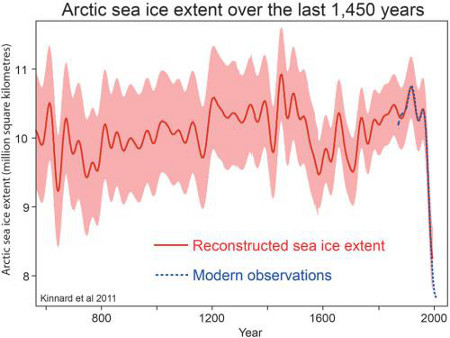
I recall NASA predicting complete loss of arctic sea ice by 2013, and the navy predicting the same in 2016.
You:
after reviewing his own new data, NASA climate scientist Jay Zwally said: "At this rate, the Arctic Ocean could be nearly ice-free at the end of summer by 2012, much faster than previous predictions."
Are you unable to see the difference?
One NASA climate scientist said "the Arctic Ocean could be nearly ice-free at the end of summer by 2012", not "NASA predicted complete loss of arctic sea ice by 2013".
No, I'm not, because, according to your point of view, even in this case is not NASA, but five random NASA guys (mainly from the Radar dept.) saying that "[Larsen B] will likely disintegrate completely in the next few years" and that "Larsen B will eventually break it apart completely, probably around the year 2020", so OP is right: NASA guys were wrong before, so NASA guys could be wrong again.
And by the way, that one NASA climate scientist is NASA's Chief Cryosphere Scientist. -
Re:and yet, the GOP blocks private space.
Sabotage huh? Any proof of that or are you just echoing what Russia Today says? Launching things into space isn't without risks and it knows no geopolitical boundaries.
I think you'll also find that NASA's budget continually grows yet they're not flying shuttles, they still have the ISS (3+ Billion/yr) and they still
have their other programs.Also, if you look at the administrations request for NASA they were funded above their 2015 budget. If the Executive Branch asks for X dollars and Congress funds them above X, your argument about "funded NASA accordingly" is full of shit. If you exclude ISS, NASA has $15B to play with.
https://www.nasa.gov/sites/def...
https://en.wikipedia.org/wiki/...Oh and the privatization of space launches was pushed for by the current administration. http://www.space.com/7835-moon...
Get your facts straight next time please.
-
Re:-dafuq, Slashdot?
"The evidence is overwhelming: Earth’s polar regions are losing ice at a stunning rate. There’s so much ice being lost from Antarctica, for example, that scientists can detect local changes in gravity."
This is not actually true. NASA points out Antarctic is at an all time high. Snowpack accumulates in the middle and cleaves off from the edges,it's doing what it's supposed to.
http://www.nasa.gov/content/go...
NSIDC data shows increase, not decreae in sea ice:
http://rs79.vrx.net/opinions/i...NASA sat imagery (URL in image) shows Arctic sea ice unchanged after 30 years:
http://rs79.vrx.net/opinions/i...
(t did half melt, but for 5 years has been growing back)"Ice cores from Summit show that melting events of this type occur about once every 150 years on average. With the last one happening in 1889, this event is right on time," says Lora Koenig, a Goddard glaciologist and a member of the research team analyzing the satellite data. "
http://www.nasa.gov/topics/ear...I like Slate but I don't know if theyre being deliberately misleading here or are just unaware.
-
Re:-dafuq, Slashdot?
"The evidence is overwhelming: Earth’s polar regions are losing ice at a stunning rate. There’s so much ice being lost from Antarctica, for example, that scientists can detect local changes in gravity."
This is not actually true. NASA points out Antarctic is at an all time high. Snowpack accumulates in the middle and cleaves off from the edges,it's doing what it's supposed to.
http://www.nasa.gov/content/go...
NSIDC data shows increase, not decreae in sea ice:
http://rs79.vrx.net/opinions/i...NASA sat imagery (URL in image) shows Arctic sea ice unchanged after 30 years:
http://rs79.vrx.net/opinions/i...
(t did half melt, but for 5 years has been growing back)"Ice cores from Summit show that melting events of this type occur about once every 150 years on average. With the last one happening in 1889, this event is right on time," says Lora Koenig, a Goddard glaciologist and a member of the research team analyzing the satellite data. "
http://www.nasa.gov/topics/ear...I like Slate but I don't know if theyre being deliberately misleading here or are just unaware.
-
Re:-dafuq, Slashdot?
I'm usually not one to ad hominem by source, but seriously... slate.com? The whole site is a political screed. But, it gets worse...
You could take a little initiative of your own and look in to Operation Ice Bridge which is the serious scientific research behind the article. But yes, the article could have pointed there too.
-
-dafuq, Slashdot?
I'm usually not one to ad hominem by source, but seriously... slate.com? The whole site is a political screed. But, it gets worse...
You go to the article, and of all the links they have, only *two* point to anything that comes even close to scientific -or- academic.
The one academic link points to a summary on UCAR, from 2007(!?), that contains exactly one pretty chart, but *no data* to back it up (or even a link to said data.) If someone finds a link to hard data in any of this mess, please let me know. Meanwhile, it should be noted that one of UCAR's missions is literally "Engaging in effective advocacy."
The one scientific link, to a NASA project site, tells the actual story. the TL;DR is that most of what they saw was routine, but two small areas got their attention... and they didn't measure those areas with anything useful, but instead literally used:
These images were not produced with the lasers, radar, and other instruments flying on the aircraft. (Check out the mission page for content like that.) Rather, IceBridge scientist John Sonntag captured these scenes with a handheld digital camera while looking out the aircraft window.
If you're going to link to something as backup for a story, how about you make it an article that contains some fact, and not an alarmist screed which supports its premise with a series of blind alley links, only one of which eventually leads to something useful... and that useful thing isn't even all that scientific?
Seriously - if you want less skeptics on the subject, it would help if you provided something more than blind assertion by a university-affiliated advocacy group, and what one guy did with his little handycam...
-
Re:Satellites
Pretty much all space solar cells are based on GaAs due to their higher efficiency. The rate of dopant diffusion at operating temperatures should be negligible. Most likely the electrical contacts would fail well before the cell itself; however, radiation damage might win out, and degrade the efficiency to effectively zero. This NASA report shows that efficiency approaches zero after exposure to 1 MeV electrons at a dose of ~1e17 cm^-2. I don't know what the exposure rate would be at L1/L2, but if you can find that, you should be able to estimate the lifetime due to radiation damage.
-
Re:they left out #4
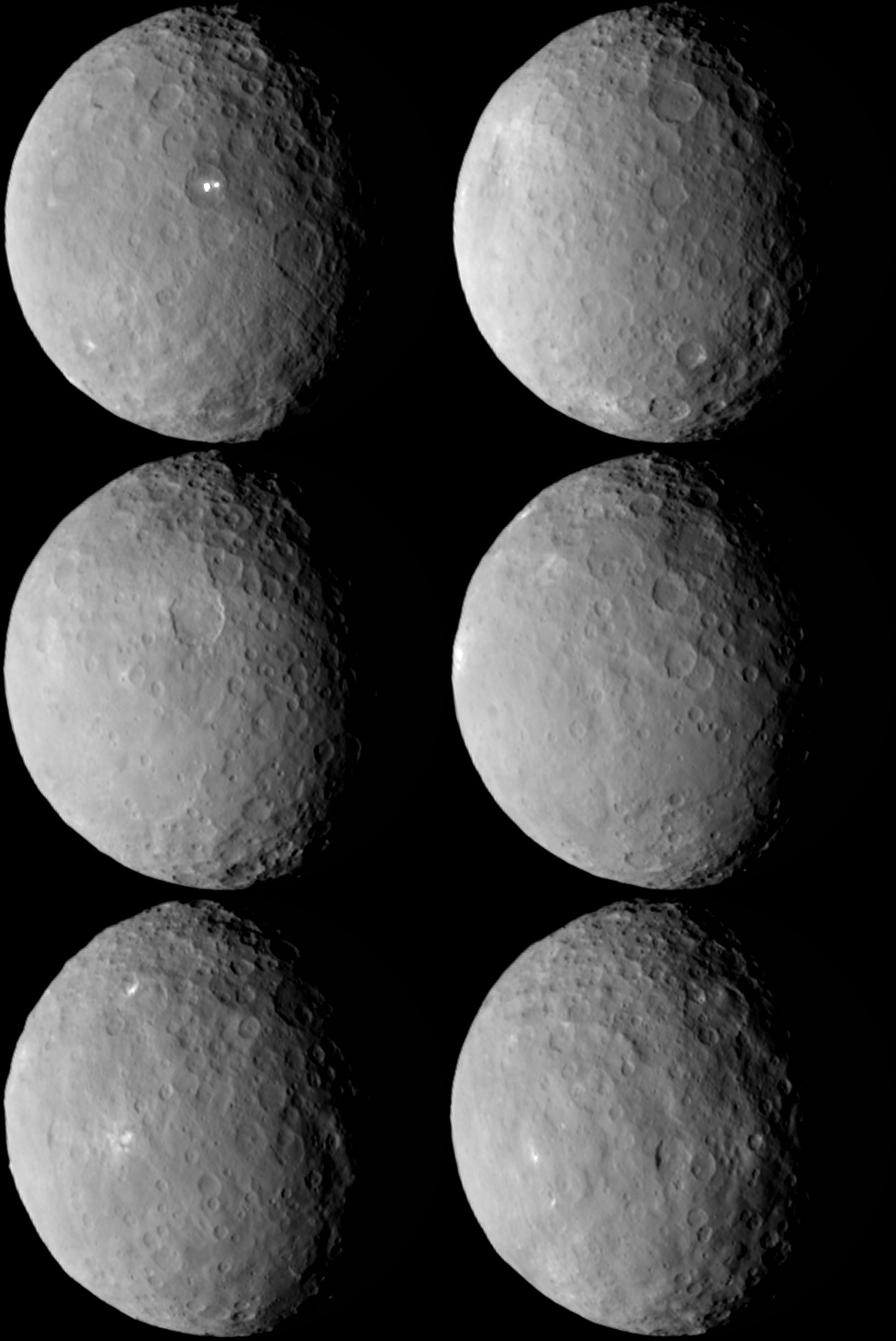
It doesn't seem to shine in the dark, so probably not. Kinda rules out lights from an active alien base, as well. Bummer.
-
Re:Satellites
Maybe the graveyard solar orbit of something like WMAP then... http://map.gsfc.nasa.gov/missi...
Min
-
Re:Satellites
How about the SOHO satellite? A L1 orbit should stay pretty stable even without any further assistance.
http://sohowww.nascom.nasa.gov...
Min
-
Re:Voyager 1 and 2
NASA gives the thermoelectric generators on the Voyagers 10 more years".
-
Re:Voyager
The thermoelectric generators on both Voyagers have a finite lifetime. I don't think it's very much longer until they are both inert lumps of metal. 10 years according to NASA.
-
Hidden Volcanoes Melt Antarctic Glaciers
The Antarctic is setting records for sea ice. See here: http://www.nasa.gov/content/go...
Yes west Antarctic glaciers are melting. Now how can this be happening? IF it were global warming as you all want to shout from the rooftops then sea ice would also be in decline. Instead of spewing the alarmist line why don't you do a little research for yourselves.
http://www.livescience.com/461...
Being skeptical is not required here, simply applying logic to the situation tells you that this is not global warming in action. -
Antarctic Sea Ice Reaches New Record Maximum
Antarctic Sea Ice Reaches New Record Maximum
Oct. 7, 2014On Sept. 19, 2014, the five-day average of Antarctic sea ice extent exceeded 20 million square kilometers for the first time since 1979, according to the National Snow and Ice Data Center. The red line shows the average maximum extent from 1979-2014.
Credits: NASA's Scientific Visualization Studio/Cindy Starr
Sea ice surrounding Antarctica reached a new record high extent this year, covering more of the southern oceans than it has since scientists began a long-term satellite record to map sea ice extent in the late 1970s. -
Re:Who to Believe?
Both. "These guys" are talking about total ice volume, while your link talks about sea ice area.
Also note that these guys are using NASA data: http://www.nasa.gov/topics/ear...
-
Who to Believe?
These guys, or NASA?
-
Ugly Lander [Re:hey, y'all, watch this!]
The rover is light...they had to get it there on that most rickety looking lunar lander.
It's kind of funny that they once envisioned this:
http://public.media.smithsonia...
But instead we got this:
https://www.nasa.gov/sites/def...
To be frank, it looks like a 2nd grade science project using cardboard, aluminum foil, and brass-colored duct-tape.
If somebody brought a model of that to school in the 50's as a lunar lander project, it would be laughed at, smashed, and given an "F", not necessarily in that order.
I remember seeing some aerospace contractor sketches of the early 60's. It started out a bit cleaner, but over time became more and more skeletal. No politically-conscious manager would approve a contract with something that ugly, so they dressed it up a bit.
I would note that Von Braun sketched up spindly looking designs in the early 50's: http://www.astronautix.com/cra...
Ahead of his time.
-
Re:Is this why they always fix things in Star Trek
Trek predates actual Apollo missions. I believe I've seen some pre-Sputnik Buck Rogers clips where they did in situ repairs. I wonder who the original Space MacGyver is?
By the way, Apollo 17 fixed a broken buggy fender with a map and duct tape: http://science.nasa.gov/scienc...
If Trek were realistic, you'd also see some failures . "I hope using Spock's head as an R-wave conductor can restart the warp engine; the Klingons are nearing. Let's go: 3...2...1... AAAUU!!UUGG g g aak k k.....k."
-
What about artificial satellite?
What about artificial satellite? do they also get affected in a considerable way ?. And those gravity measurement [1] satellites must have sensed this phenomenon already? So I suspect this isn't something new. All of this spoken from my deep ignorance.
[1] Grace NASA Project -
Re:DiHydrogen Monoxide
Unfortunately, Dihydrogen Monoxide is known to be Earth’s most abundant greenhouse gas. It's also a major byproduct of burning fossil fuels.
Dihydrogen Monoxide combined with Carbon Dioxide create Carbonated Dihydrogen Monoxide that can cause severe eructation (warning: the video contains SEVERE ERUCTATIONS).
Trees also like Carbon Dioxide.
So, I have come to the conclusion that the Trees are out to get us!
Before you blame the trees, blame the tree lovers!
-
DiHydrogen Monoxide
Unfortunately, Dihydrogen Monoxide is known to be Earth’s most abundant greenhouse gas. It's also a major byproduct of burning fossil fuels.
Trees also like Carbon Dioxide.
So, I have come to the conclusion that the Trees are out to get us!
-
Re:Milestone my ass
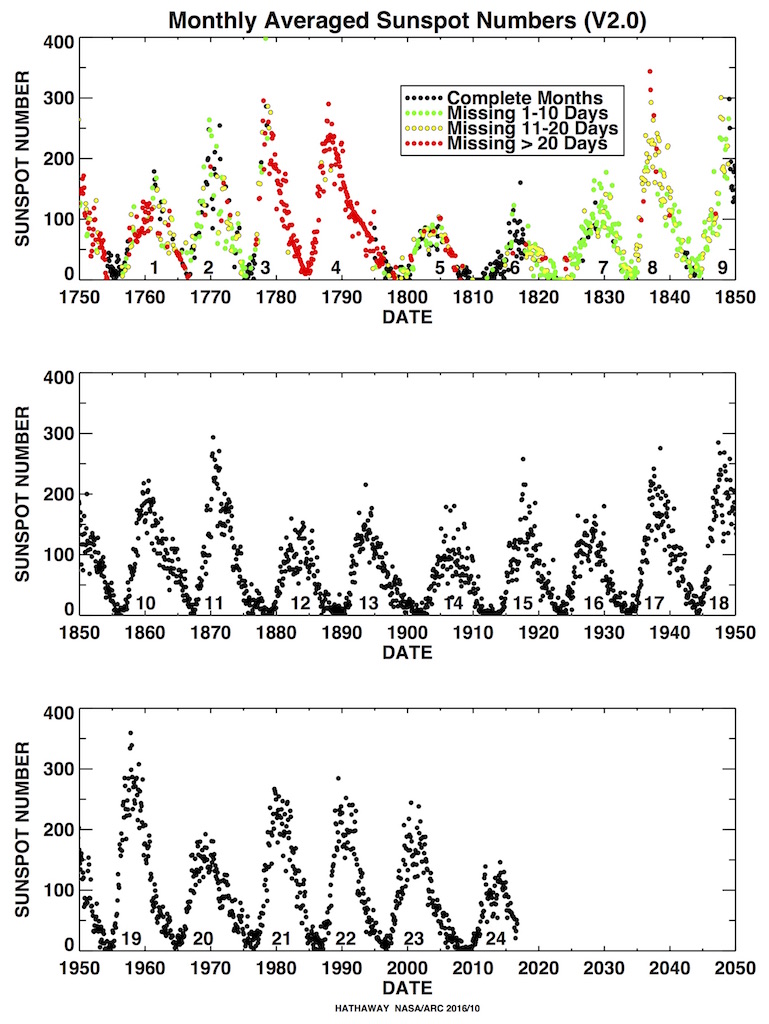
According to your theory, it should now be much colder than it was in the 1950s and 60s. Why the fuck isn't it? http://solarscience.msfc.nasa....
Does sound like some part of the theory isn't quite right, doesn't it?
-
Re:Milestone my ass
The Sun is a stable G2 dwarf, and over the short term (millenia/eons) its power output is stable to parts per ten thousand.
Sure, I really would like that to be true too. But that "fact" doesn't explain the Maunder minimum which appears to be a fluctuation in solar power output considerably greater than the threshold your assertion. I notice that some researchers are actually claiming that a 0.2 W per square meter change in solar output somehow causes climate changes on par with a supposed 2 W per square meter heating today from greenhouse gases (other than water vapor).
Interesting point. According to your theory, it should now be much colder than it was in the 1950s and 60s. Why the fuck isn't it? http://solarscience.msfc.nasa.gov/images/Zurich_Color_Small.jpg
-
Temperature is rising
but we can see from the last 20 years that a massive increase in CO2 does not bring with it an equivalent increase in temperature
Looks rising to me: http://data.giss.nasa.gov/gist...
If you pick just the part of the curve where the temperature isn't rising, you can find data that looks like temperature isn't rising.
But, as of this year, actually it is rising: http://www.giss.nasa.gov/resea... http://www.giss.nasa.gov/resea...
-
Temperature is rising
but we can see from the last 20 years that a massive increase in CO2 does not bring with it an equivalent increase in temperature
Looks rising to me: http://data.giss.nasa.gov/gist...
If you pick just the part of the curve where the temperature isn't rising, you can find data that looks like temperature isn't rising.
But, as of this year, actually it is rising: http://www.giss.nasa.gov/resea... http://www.giss.nasa.gov/resea...
-
Temperature is rising
but we can see from the last 20 years that a massive increase in CO2 does not bring with it an equivalent increase in temperature
Looks rising to me: http://data.giss.nasa.gov/gist...
If you pick just the part of the curve where the temperature isn't rising, you can find data that looks like temperature isn't rising.
But, as of this year, actually it is rising: http://www.giss.nasa.gov/resea... http://www.giss.nasa.gov/resea...
-
Re:Meh
1000 - 2000 ppm is a far more historically normal range
According to ice core samples going back 400 thousand years, the historical maximum was 300ppm until 1950.
-
Since Repubs cannot descredit 'climate change'
they now want to discredit the messenger: Science and Scientists. With 97% of scientists seeing climate change as real. It's really the only way to keep the current system going as is.
Why? Because with climate change deemed as "real" there will be a public demand that all externalities be paid for by the parties that created the harmful externalities. Global Free market capitalism cannot survive such a change as it never pays the true costs of the damage it creates. It's purpose is to socialize externalities costs while privatizing profit. So the reality of 'climate change' will be fought via virtually all means.
Here is what monied capitalists most fear: If climate change is real, either free market capitalism dies or a sizable of chunk of humanity does.
With a 97% consensus of scientists global free market capitalism must be altered significantly so that 100 years from now the Earth is at least as livable as it is for us. -
Not mission creep.
Could this be an emerging Earth Sciences turf war between NOAA and NASA? Lately it seems more of a National Atmospheric Space Administration. Mission creep, much?
Nope, it's fully in compliance with the 2013 OMB memo on an Open Data policy. The subheading on that memo is 'Managing Information as an Asset', and there is a real lack of a comprehensive catalog of NASA's data. (note that this is *not* the same as the 2013 OSTP memo on public access to federally funded data, but they're related.)
Even with the re-design of data.nasa.gov, the content behind is is woefully incomplete. When I contacted the creator of the page years ago, he said that they just did some internet searches to find 'data', and then listed them. They were listing websites that mentioned data, not even breaking it down into missions & investigations.
Someone needs to go through and determine for every investigation from every project what data *should* be there, and figure out if it's online, if it's in a dark archive, if the PI still has it, or if it's missing. They should catalog it according to GEMS and possible DataCite (although assignment of 'creator' for the data might be something that needs to be resolved by each science community)
I had tried proposing something to the NASA IT Labs call shortly after the memo came out, but the people running it were blocking our network from being able to submit. I tried again in 2014, and they gave me an alternate way to submit, but they took weeks to get the work-around, and by then I was out of town for a meeting.
(disclaimer : if it's not obvious, I work at a NASA center)
-
Not mission creep.
Could this be an emerging Earth Sciences turf war between NOAA and NASA? Lately it seems more of a National Atmospheric Space Administration. Mission creep, much?
Nope, it's fully in compliance with the 2013 OMB memo on an Open Data policy. The subheading on that memo is 'Managing Information as an Asset', and there is a real lack of a comprehensive catalog of NASA's data. (note that this is *not* the same as the 2013 OSTP memo on public access to federally funded data, but they're related.)
Even with the re-design of data.nasa.gov, the content behind is is woefully incomplete. When I contacted the creator of the page years ago, he said that they just did some internet searches to find 'data', and then listed them. They were listing websites that mentioned data, not even breaking it down into missions & investigations.
Someone needs to go through and determine for every investigation from every project what data *should* be there, and figure out if it's online, if it's in a dark archive, if the PI still has it, or if it's missing. They should catalog it according to GEMS and possible DataCite (although assignment of 'creator' for the data might be something that needs to be resolved by each science community)
I had tried proposing something to the NASA IT Labs call shortly after the memo came out, but the people running it were blocking our network from being able to submit. I tried again in 2014, and they gave me an alternate way to submit, but they took weeks to get the work-around, and by then I was out of town for a meeting.
(disclaimer : if it's not obvious, I work at a NASA center)
-
Re:EPA has exceeded safe limits, needs curbing
You fucking moron. All youre doing is spreading that myth that because there was more in 2013 than 2012, that it is growing. 2012 was the LOWEST EVER, PERIOD, breaking all expectations. 2013's minimum was higher then 2012, BUT IT WAS STILL THE 6TH LOWEST EVER RECORDED.
Here are the real trends:
http://static.guim.co.uk/sys-i...http://static.guim.co.uk/sys-i...
It melts and regrows every year.
Minimum is reached in roughly mid-september.
Maximum in about mid-March.The problem is its melting more, and regrowing less, every year.
Which is its thinner and younger, and lost significant volume.And here's just a month ago:
2015 Arctic Sea Ice Maximum Annual Extent Is Lowest On Record (NASA)
https://www.nasa.gov/content/g...Just fuck off.
Seriously, Skeptical science is actual science backed by actual fucking measurements.
You are just a cherry picking asshole who wished he had as much "legitimacy" as Natural News. -
Re:Seems he has more of a clue
References
IPCC Fourth Assessment Report, Summary for Policymakers, p. 5 (the 5th AR is published)
B.D. Santer et.al., “A search for human influences on the thermal structure of the atmosphere,” Nature vol 382, 4 July 1996, 39-46
Gabriele C. Hegerl, “Detecting Greenhouse-Gas-Induced Climate Change with an Optimal Fingerprint Method,” Journal of Climate, v. 9, October 1996, 2281-2306
V. Ramaswamy et.al., “Anthropogenic and Natural Influences in the Evolution of Lower Stratospheric Cooling,” Science 311 (24 February 2006), 1138-1141
B.D. Santer et.al., “Contributions of Anthropogenic and Natural Forcing to Recent Tropopause Height Changes,” Science vol. 301 (25 July 2003), 479-483.
In the 1860s, physicist John Tyndall recognized the Earth's natural greenhouse effect and suggested that slight changes in the atmospheric composition could bring about climatic variations. In 1896, a seminal paper by Swedish scientist Svante Arrhenius first speculated that changes in the levels of carbon dioxide in the atmosphere could substantially alter the surface temperature through the greenhouse effect.
National Research Council (NRC), 2006. Surface Temperature Reconstructions For the Last 2,000 Years. National Academy Press, Washington, DC.
Church, J. A. and N.J. White (2006), A 20th century acceleration in global sea level rise, Geophysical Research Letters, 33, L01602, doi:10.1029/2005GL024826.
The global sea level estimate described in this work can be downloaded from the CSIRO website.
http://www.ncdc.noaa.gov/oa/cl... anomalies/index.html
http://www.cru.uea.ac.uk/cru/d...
http://data.giss.nasa.gov/gist...
T.C. Peterson et.al., "State of the Climate in 2008," Special Supplement to the Bulletin of the American Meteorological Society, v. 90, no. 8, August 2009, pp. S17-S18.
I. Allison et.al., The Copenhagen Diagnosis: Updating the World on the Latest Climate Science, UNSW Climate Change Research Center, Sydney, Australia, 2009, p. 11
http://www.giss.nasa.gov/resea...
http://science.nasa.gov/headli... 01apr_deepsolarminimum.htm
Levitus, et al, "Global ocean heat content 1955–2008 in light of recently revealed instrumentation problems," Geophys. Res. Lett. 36, L07608 (2009).
L. Polyak, et.al., “History of Sea Ice in the Arctic,” in Past Climate Variability and Change in the Arctic and at High Latitudes, U.S. Geological Survey, Climate Change Science Program Synthesis and Assessment Product 1.2, January 2009, chapter 7
R. Kwok and D. A. Rothrock, “Decline in Arctic sea ice thickness from submarine and ICESAT records: 1958-2008,” Geophysical Research Letters, v. 36, paper no. L15501, 2009
http://nsidc.org/sotc/sea_ice....
National Snow and Ice Data Center
World Glacier Monitoring Service
-
Re:Seems he has more of a clue
References
IPCC Fourth Assessment Report, Summary for Policymakers, p. 5 (the 5th AR is published)
B.D. Santer et.al., “A search for human influences on the thermal structure of the atmosphere,” Nature vol 382, 4 July 1996, 39-46
Gabriele C. Hegerl, “Detecting Greenhouse-Gas-Induced Climate Change with an Optimal Fingerprint Method,” Journal of Climate, v. 9, October 1996, 2281-2306
V. Ramaswamy et.al., “Anthropogenic and Natural Influences in the Evolution of Lower Stratospheric Cooling,” Science 311 (24 February 2006), 1138-1141
B.D. Santer et.al., “Contributions of Anthropogenic and Natural Forcing to Recent Tropopause Height Changes,” Science vol. 301 (25 July 2003), 479-483.
In the 1860s, physicist John Tyndall recognized the Earth's natural greenhouse effect and suggested that slight changes in the atmospheric composition could bring about climatic variations. In 1896, a seminal paper by Swedish scientist Svante Arrhenius first speculated that changes in the levels of carbon dioxide in the atmosphere could substantially alter the surface temperature through the greenhouse effect.
National Research Council (NRC), 2006. Surface Temperature Reconstructions For the Last 2,000 Years. National Academy Press, Washington, DC.
Church, J. A. and N.J. White (2006), A 20th century acceleration in global sea level rise, Geophysical Research Letters, 33, L01602, doi:10.1029/2005GL024826.
The global sea level estimate described in this work can be downloaded from the CSIRO website.
http://www.ncdc.noaa.gov/oa/cl... anomalies/index.html
http://www.cru.uea.ac.uk/cru/d...
http://data.giss.nasa.gov/gist...
T.C. Peterson et.al., "State of the Climate in 2008," Special Supplement to the Bulletin of the American Meteorological Society, v. 90, no. 8, August 2009, pp. S17-S18.
I. Allison et.al., The Copenhagen Diagnosis: Updating the World on the Latest Climate Science, UNSW Climate Change Research Center, Sydney, Australia, 2009, p. 11
http://www.giss.nasa.gov/resea...
http://science.nasa.gov/headli... 01apr_deepsolarminimum.htm
Levitus, et al, "Global ocean heat content 1955–2008 in light of recently revealed instrumentation problems," Geophys. Res. Lett. 36, L07608 (2009).
L. Polyak, et.al., “History of Sea Ice in the Arctic,” in Past Climate Variability and Change in the Arctic and at High Latitudes, U.S. Geological Survey, Climate Change Science Program Synthesis and Assessment Product 1.2, January 2009, chapter 7
R. Kwok and D. A. Rothrock, “Decline in Arctic sea ice thickness from submarine and ICESAT records: 1958-2008,” Geophysical Research Letters, v. 36, paper no. L15501, 2009
http://nsidc.org/sotc/sea_ice....
National Snow and Ice Data Center
World Glacier Monitoring Service
-
Re:Seems he has more of a clue
References
IPCC Fourth Assessment Report, Summary for Policymakers, p. 5 (the 5th AR is published)
B.D. Santer et.al., “A search for human influences on the thermal structure of the atmosphere,” Nature vol 382, 4 July 1996, 39-46
Gabriele C. Hegerl, “Detecting Greenhouse-Gas-Induced Climate Change with an Optimal Fingerprint Method,” Journal of Climate, v. 9, October 1996, 2281-2306
V. Ramaswamy et.al., “Anthropogenic and Natural Influences in the Evolution of Lower Stratospheric Cooling,” Science 311 (24 February 2006), 1138-1141
B.D. Santer et.al., “Contributions of Anthropogenic and Natural Forcing to Recent Tropopause Height Changes,” Science vol. 301 (25 July 2003), 479-483.
In the 1860s, physicist John Tyndall recognized the Earth's natural greenhouse effect and suggested that slight changes in the atmospheric composition could bring about climatic variations. In 1896, a seminal paper by Swedish scientist Svante Arrhenius first speculated that changes in the levels of carbon dioxide in the atmosphere could substantially alter the surface temperature through the greenhouse effect.
National Research Council (NRC), 2006. Surface Temperature Reconstructions For the Last 2,000 Years. National Academy Press, Washington, DC.
Church, J. A. and N.J. White (2006), A 20th century acceleration in global sea level rise, Geophysical Research Letters, 33, L01602, doi:10.1029/2005GL024826.
The global sea level estimate described in this work can be downloaded from the CSIRO website.
http://www.ncdc.noaa.gov/oa/cl... anomalies/index.html
http://www.cru.uea.ac.uk/cru/d...
http://data.giss.nasa.gov/gist...
T.C. Peterson et.al., "State of the Climate in 2008," Special Supplement to the Bulletin of the American Meteorological Society, v. 90, no. 8, August 2009, pp. S17-S18.
I. Allison et.al., The Copenhagen Diagnosis: Updating the World on the Latest Climate Science, UNSW Climate Change Research Center, Sydney, Australia, 2009, p. 11
http://www.giss.nasa.gov/resea...
http://science.nasa.gov/headli... 01apr_deepsolarminimum.htm
Levitus, et al, "Global ocean heat content 1955–2008 in light of recently revealed instrumentation problems," Geophys. Res. Lett. 36, L07608 (2009).
L. Polyak, et.al., “History of Sea Ice in the Arctic,” in Past Climate Variability and Change in the Arctic and at High Latitudes, U.S. Geological Survey, Climate Change Science Program Synthesis and Assessment Product 1.2, January 2009, chapter 7
R. Kwok and D. A. Rothrock, “Decline in Arctic sea ice thickness from submarine and ICESAT records: 1958-2008,” Geophysical Research Letters, v. 36, paper no. L15501, 2009
http://nsidc.org/sotc/sea_ice....
National Snow and Ice Data Center
World Glacier Monitoring Service
-
Re:EPA has exceeded safe limits, needs curbing
"Oct. 7, 2014 Antarctic Sea Ice Reaches New Record Maximum"
http://www.nasa.gov/content/go...That's the problem with you alarmists, you're familiar with the headlines but have never seen the actual data. Stop reading opinions on blogs.
-
Re:Seems he has more of a clue
I do not see compelling evidence that slashing CO2 is a good course
The ocean hates you.
http://climate.nasa.gov/eviden...
"Ocean acidification
Since the beginning of the Industrial Revolution, the acidity of surface ocean waters has increased by about 30 percent. This increase is the result of humans emitting more carbon dioxide into the atmosphere and hence more being absorbed into the oceans. The amount of carbon dioxide absorbed by the upper layer of the oceans is increasing by about 2 billion tons per year."But this seems the worst info to me:
http://climate.nasa.gov/vital-...
"Data from NASA's Grace satellites show that the land ice sheets in both Antarctica and Greenland are losing mass. The continent of Antarctica has been losing about 147 billion metric tons of ice per year since 2003, while the Greenland ice sheet has been losing an estimated 258 billion metric tons per year. "Approaching half a trillion tons of ice *per year* being melted seems an astounding amount.
That's great, strip a single comment I make of all context and then counter it.
Yes, I said slashing CO2 doesn't look like the best plan, I followed by noting: "technologies to replace major emission sources like automobiles are, in climate timelines, very close to being solved profitably by folks like Tesla without us hamstringing the economy to force the matter."
Before that I stated I see a serious need to plan how we will cope with linear increasing temperature and sea level rise.
But sure, pretend I said there wasn't a problem. The reality remains I stated a serious need to plan how to cope with it, and even posited that one piece of the solution is electric cars. You care to offer any solutions yourself, or would rather just try and criticize everyone not acting panicked enough for your liking?
As you plan solutions, know that from the current CO2 concentrations in the atmosphere, we have to go to pretty much negative emission levels and fast to make a noticeable difference to conditions in the next 50-75 years. Say whatever you want about the importance of doing it, it's not happening. You might as well wish for world peace while you are at it. What can we do for real solutions is the worthwhile matter.
In my book, electric cars and alternative energy are the best routes. Tesla has the electric car timeline rolling already, and I'm hopeful the next 50 years will see not just profitable solar, but better still cheap fusion power(Lockheed claims to be much closer but we'll know for sure in 3-4 years) finally realized and replacing coal plants. If you really want to curtail CO2 concentrations on a meaningfully faster timeline, I'd love to see the plan for how to do it.
-
Re:Seems he has more of a clue
I do not see compelling evidence that slashing CO2 is a good course
The ocean hates you.
http://climate.nasa.gov/eviden...
"Ocean acidification
Since the beginning of the Industrial Revolution, the acidity of surface ocean waters has increased by about 30 percent. This increase is the result of humans emitting more carbon dioxide into the atmosphere and hence more being absorbed into the oceans. The amount of carbon dioxide absorbed by the upper layer of the oceans is increasing by about 2 billion tons per year."But this seems the worst info to me:
http://climate.nasa.gov/vital-...
"Data from NASA's Grace satellites show that the land ice sheets in both Antarctica and Greenland are losing mass. The continent of Antarctica has been losing about 147 billion metric tons of ice per year since 2003, while the Greenland ice sheet has been losing an estimated 258 billion metric tons per year. "Approaching half a trillion tons of ice *per year* being melted seems an astounding amount.
That's great, strip a single comment I make of all context and then counter it.
Yes, I said slashing CO2 doesn't look like the best plan, I followed by noting: "technologies to replace major emission sources like automobiles are, in climate timelines, very close to being solved profitably by folks like Tesla without us hamstringing the economy to force the matter."
Before that I stated I see a serious need to plan how we will cope with linear increasing temperature and sea level rise.
But sure, pretend I said there wasn't a problem. The reality remains I stated a serious need to plan how to cope with it, and even posited that one piece of the solution is electric cars. You care to offer any solutions yourself, or would rather just try and criticize everyone not acting panicked enough for your liking?
As you plan solutions, know that from the current CO2 concentrations in the atmosphere, we have to go to pretty much negative emission levels and fast to make a noticeable difference to conditions in the next 50-75 years. Say whatever you want about the importance of doing it, it's not happening. You might as well wish for world peace while you are at it. What can we do for real solutions is the worthwhile matter.
In my book, electric cars and alternative energy are the best routes. Tesla has the electric car timeline rolling already, and I'm hopeful the next 50 years will see not just profitable solar, but better still cheap fusion power(Lockheed claims to be much closer but we'll know for sure in 3-4 years) finally realized and replacing coal plants. If you really want to curtail CO2 concentrations on a meaningfully faster timeline, I'd love to see the plan for how to do it.
-
Re:Wow
Small prop driven aircraft, ALREADY.
The market was almost nonexistent about five years ago but it's growing quite fast. Don't underestimate what the major and ongoing advances in motors, controllers, and batteries will bring in the future. There's many radically new technologies in the works to partially or completely electrify aircraft transportation, far beyond just electrically driven propellers.
-
Re:Regulatory Capture
Because global warming is a lie and the GOP are going to call out the dems on this.
No it's not, and youre an idiot for saying it is.
The overwhelming majority of the worlds scientists and not engaged in a global conspiracy for some god ony knows reason.
If global warming is only true because of secret data then it probably isn't true.
Then today is your lucky day.
Because There is no secret data.
It's a myth.Here, let me google that for you .
Oh there it is, on the very first page:
http://www.ncdc.noaa.gov/data-...
http://berkeleyearth.org/sourc...
http://data.giss.nasa.gov/ -
Re:EPA has exceeded safe limits, needs curbing
Well then you're in luck!
Because it is that it is a MYTH that there even is any "secret data" in the first place.
There is no secret data.Here, let me google that for you .
Oh there it is, on the very first page:
http://www.ncdc.noaa.gov/data-...
http://berkeleyearth.org/sourc...
http://data.giss.nasa.gov/ -
Re:PS
No, it is that it is a MYTH that there even is any "secret data" in the first place.
There is no secret data.Here, let me google that for you .
Oh there it is, on the very first page:
http://www.ncdc.noaa.gov/data-...
http://berkeleyearth.org/sourc...
http://data.giss.nasa.gov/ -
Re:EPA has exceeded safe limits, needs curbing
The point is that it is a MYTH that there even is any "secret data" in the first place.
Here, let me google that for you .
Oh there it is, on the very first page:
http://www.ncdc.noaa.gov/data-...
http://berkeleyearth.org/sourc...
http://data.giss.nasa.gov/