Slashdot Mirror
Domain: nasa.gov
Stories and comments across the archive that link to nasa.gov.
Comments · 16,365
-
Re:Light Pollution
Correct me if I'm wrong, but isn't that the same image as this (click image for full-res) which doesn't purport to show the 'wasted' light but is being used to study urbanisation?
not trolling - just had that awesome image on my desktop for ages and recognised it straight away! -
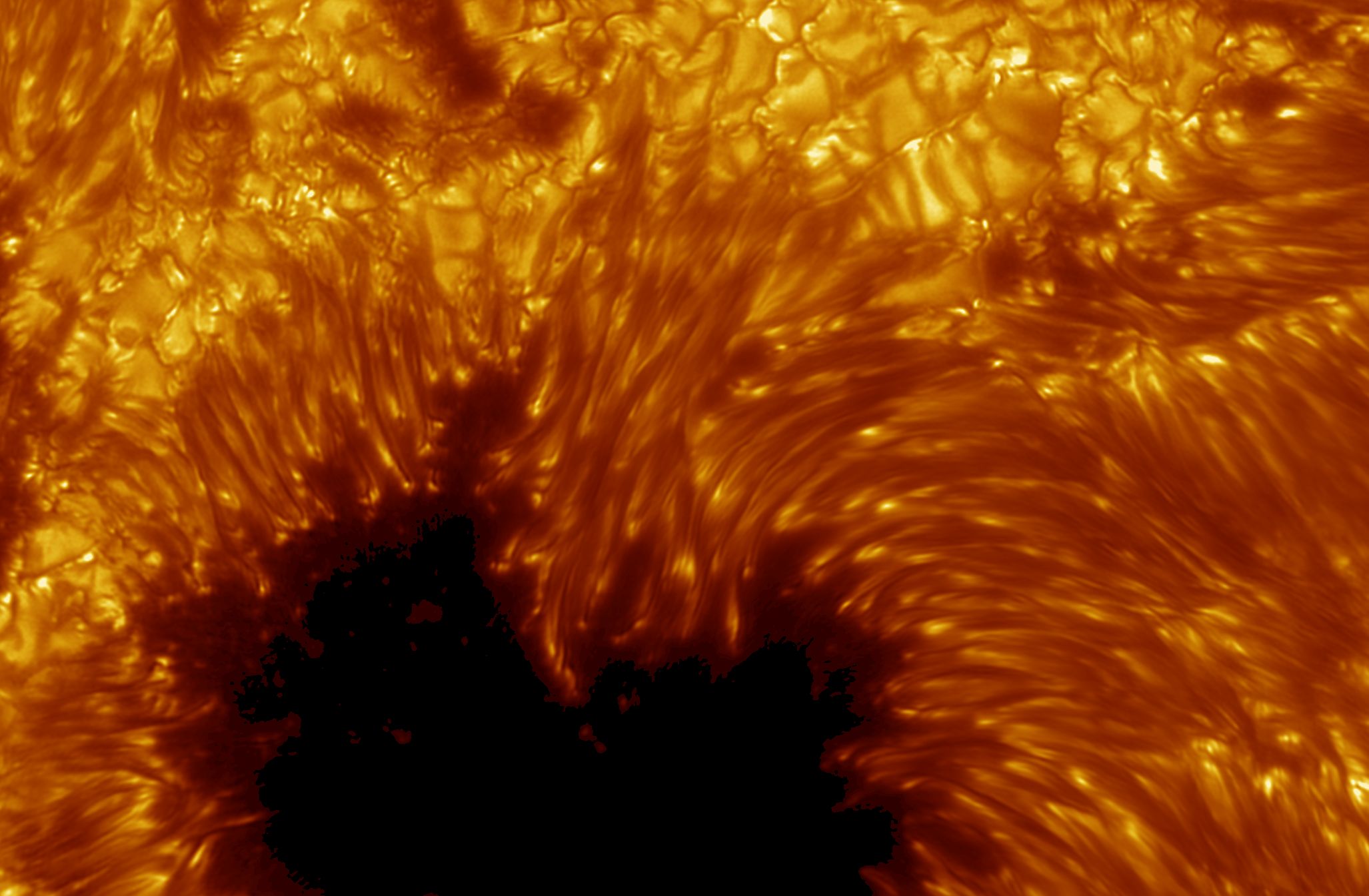
Link to not-slashdotted imageThe link teridon posted is actually NASA's "Astronomy picture of the day" for November 14. It's a closeup of the Sun, the best of those Swedish pictures featured in the story. You can also look over NASA's archive of such pix here. Incredible variety: for example "Leonids over Ayer's Rock", "Gullies on Mars", "Jupiter, Moon, and Bees."
Anyway, NASA puts up a new image every day, which you can check out by bookmarking this URL.
-
Link to not-slashdotted imageThe link teridon posted is actually NASA's "Astronomy picture of the day" for November 14. It's a closeup of the Sun, the best of those Swedish pictures featured in the story. You can also look over NASA's archive of such pix here. Incredible variety: for example "Leonids over Ayer's Rock", "Gullies on Mars", "Jupiter, Moon, and Bees."
Anyway, NASA puts up a new image every day, which you can check out by bookmarking this URL.
-
Link to not-slashdotted imageThe link teridon posted is actually NASA's "Astronomy picture of the day" for November 14. It's a closeup of the Sun, the best of those Swedish pictures featured in the story. You can also look over NASA's archive of such pix here. Incredible variety: for example "Leonids over Ayer's Rock", "Gullies on Mars", "Jupiter, Moon, and Bees."
Anyway, NASA puts up a new image every day, which you can check out by bookmarking this URL.
-
Re:Pictures in the flames
I think I found the face. I outlined it for ya.
Original image. -
Re:Send the Sales VP to California!
Actually, we already have a name for a device that absorbs and does not re-radiate certain amounts of solar energy that you used to be able to find all over the place before major cities grew up. It's called vegetation. Most vegetation has high absorption in the infrared-red ranges. That's how chlorophyll works. You can actually get a good vegetation index of an area by looking at infrared-red absorption patterns in satellite photos.
Large cities already make large changes to the weather. This is known and well documented. As a result of the linked study, Atlanta has doubled efforts to increase greenery in the city limits to mitigate the climate effect and the city's image as "Hotlanta." The problem is that asphalt absorbs a LOT more heat and light than natural greenery or sand. That's why it's black, oddly enough.
Furthermore, solar panels aren't all-consuming one-way doors of solar energy. Solar panels only get 5-20% efficiency. The rest of that is reflected or reradiated as heat. No matter how many solar panels you blanketed city rooftops with, it wouldn't keep urban areas from being a stronger source of heat than surrounding areas. -
Re:GIFs???
er, sorry to reply to my own post...
APOD: January 6, 1997 - Blue Sun Glaring
Explanation: The Sun is a bubbling ball of extremely hot gas. In this false-color picture, light blue regions are extremely hot - over 1 million degrees, while dark blue regions are slightly cooler. The camera filter used was highly sensitive to the emission of highly charged iron ions, which trace the magnetic field of the Sun. The rich structure of the image shows the great complexity of the Sun's inner corona. A small active region can be seen just to the right and above center. This picture was taken in ultraviolet (extremely blue) light by the Extreme-ultraviolet Imaging Telescope (EIT) on board the Solar and Heliospheric Observatory (SOHO) spacecraft, which is orbiting the Sun just ahead of the Earth, at the L1 point. SOHO was launched in 1995 and will continually monitor the Sun for several years.
I just think that's one of the coolest things I've ever seen. I'll use that for my desktop again, now that I've found it again. -
Mirror (of sorts)
This was today's Astronmy Picture of the Day over at NASA.
Along with one picture, they have the following commentary (go to the link above if you want to follow the many informative embedded links they have):
Explanation: This stunning image shows remarkable and mysterious details near the dark central region of a planet-sized sunspot in one of the sharpest views ever of the surface of the Sun. Just released, the picture was made using the Swedish Solar Telescope now in its first year of operation on the Canary Island of La Palma. Along with features described as hairs and canals are dark cores visible within the bright filaments that extend into the sunspot, representing previously unknown and unexplored solar phenomena. The filaments' newly revealed dark cores are seen to be thousands of kilometers long but only about 100 kilometers wide. Resolving features 100 kilometers wide or less is a milestone in solar astronomy and has been achieved here using sophisticated adaptive optics, digital image stacking, and processing techniques to counter the blurring effect of Earth's atmosphere. At optical wavelengths, these images are sharper than even current space-based solar observatories can produce. Recorded on 15 July 2002, the sunspot shown is the largest of the group of sunspots cataloged as solar active region AR 10030.
-
Mirror (of sorts)
This was today's Astronmy Picture of the Day over at NASA.
Along with one picture, they have the following commentary (go to the link above if you want to follow the many informative embedded links they have):
Explanation: This stunning image shows remarkable and mysterious details near the dark central region of a planet-sized sunspot in one of the sharpest views ever of the surface of the Sun. Just released, the picture was made using the Swedish Solar Telescope now in its first year of operation on the Canary Island of La Palma. Along with features described as hairs and canals are dark cores visible within the bright filaments that extend into the sunspot, representing previously unknown and unexplored solar phenomena. The filaments' newly revealed dark cores are seen to be thousands of kilometers long but only about 100 kilometers wide. Resolving features 100 kilometers wide or less is a milestone in solar astronomy and has been achieved here using sophisticated adaptive optics, digital image stacking, and processing techniques to counter the blurring effect of Earth's atmosphere. At optical wavelengths, these images are sharper than even current space-based solar observatories can produce. Recorded on 15 July 2002, the sunspot shown is the largest of the group of sunspots cataloged as solar active region AR 10030.
-
another possible link
Nasa's Astronomy Picture Of The Day archives has this up too. that server may be a bit harder to
-
extra link.
Also available at APOD - Astronomy Picture of the Day . Enjoy.
-
Re:GIFs???
Here's a JPEG.
-
Re:HmmOn the contrary:
The filaments' newly revealed dark cores are seen to be thousands of kilometers long but only about 100 kilometers wide. Resolving features 100 kilometers wide or less is a milestone in solar astronomy and has been achieved here using sophisticated adaptive optics, digital image stacking, and processing techniques to counter the blurring effect of Earth's atmosphere. At optical wavelengths, these images are sharper than even current space-based solar observatories can produce.
-
100 years until next Meteor Storm
The Leonid Meteor Shower are remnants of the comet Tempel-Tuttle. A perturbation by the planet Jupiter in 2029, will change the orbit of Tempel-Tuttle away from the Earth. You may have to wait until 2098, 2099 or 2131 to see the next Leonid storm.
StarrySkies, has some very cool images from last year's Leonid, star charts, folklore and more. Also see Near-Live Leonid Watching System, NASA Leonid Multi Instrument Aircraft Campaign and
Gart W. Kronk's Comets & Meteor Showers. -
100 years until next Meteor Storm
The Leonid Meteor Shower are remnants of the comet Tempel-Tuttle. A perturbation by the planet Jupiter in 2029, will change the orbit of Tempel-Tuttle away from the Earth. You may have to wait until 2098, 2099 or 2131 to see the next Leonid storm.
StarrySkies, has some very cool images from last year's Leonid, star charts, folklore and more. Also see Near-Live Leonid Watching System, NASA Leonid Multi Instrument Aircraft Campaign and
Gart W. Kronk's Comets & Meteor Showers. -
Werner-Braun connects Pennemunde to London... Werner-Braun
And in other news, Wernher von Braun established a 200 mile hop from Baltic Coast to London using a high bandwidth high latency connection.
-
Aeronautics?
IEEE Spectrum magazine has a similar article actually written by O'Keefe. One thing that concerns me with both of these articles is the lack of any mention of NASA's often forgotten role as the AERONAUTICS and Space Administration.
NASA's rather underfunded work with the SATS program has the potential to completely revolutionize air travel and even population distributions (better access to flights and less reliance on the few major hubs could mean more industry for smaller communities and some officials even predict a trend away from cities and suburbia to one of the 10,000 smaller and even rural centres with decent airports).
NASA's aeronautic programs have also recently supported the development of innovations like the Eclipse 500 low-cost microjet, which, if successfully introduced, could be one of the biggest technology stories of the last few years, with the potential to have a massive impact on society. (As an interesting aside, the Eclipse is heavily funded and managed by big players in the computer and software industries, the CEO is the former head of Symantec and the Paul Allen Group, and Bill Gates apparently owns a significant percentage - insert windows crash joke here).
Space is cool, but basic and applied research in aviation is at least as important and no one else really covers this mandate in the way NASA can and sometimes does. It would be a real pity if NASA simply becomes the National Space Agency (I guess they couldn't use the acronym though). -
Open NASA data
What's the deal with NASA data? Especially Hubble data? Sure would be nice to make some screensavers without those unsightly logos on them.
Oh, yeah... just remembered a nice bookmark!
http://earthobservatory.nasa.gov/Newsroom/NewImage s/images_index.php3
The NASA Earth Observatory. Don't know how open, though.
-
Re:Great Idea for Mars, but maybe not EuropaActually, there has been done a lot of research on this, google for cryobot. They performed some really cool (pun intended!
The Cryobot method of "drilling" is more effective than conventional augering because it uses less power than mechanical cutting.
So while you're right in that melting requires a lot of energy, so does drilling. Being a glacier mountaineer, I can tell you that screwing in an ice-bolt is often really heavy work.
-
Re:Technical question
-
Re:Technical question
-
Re:Technical question
-
Re:Get real!
I remember reading about how this [nasa.gov] was being considered not simply for propulsion, but for protecting a crew from solar radiation. I wonder if this technology could be built into satellites?
And as for aircraft navigation, we also used LORAN. -
Re:About the Reversal, and magnetosphere......
That makes sence!
After I posted the comment I read some more, and came to the same conclusion (little to late to revice once post
Reference:
http://science.nasa.gov/headlines/y2001/ast15feb_1
http://istp.gsfc.nasa.gov/earthmag/reversal.htm -
Re:About the Reversal, and magnetosphere......
That makes sence!
After I posted the comment I read some more, and came to the same conclusion (little to late to revice once post
Reference:
http://science.nasa.gov/headlines/y2001/ast15feb_1
http://istp.gsfc.nasa.gov/earthmag/reversal.htm -
NASA doesn't think so
"Some people worry that during magnetic reversals the Earth would receive a higher dosage of high-energy ions and electrons ("radiation" in common terms), which might affect us and any living creatures on Earth. This is not so. Even today, the magnetic shield is not effective near the magnetic poles, yet the radiation received there on the ground is only slightly higher than anywhere else. The reason is that our main shield against such particles is not the magnetic field of the Earth but the atmosphere, equivalent to some 10 feet of concrete." - nasa
-
Re:RAM?
Optic fibre might be fine but what about RAM? I take it that the increase in high energy particles hitting us will randomly flip a few bits? Pretty easily fixed with redundancy but still bad.
Hurray for optical computing!
http://science.nasa.gov/headlines/images/nanosecon d/thepaper.pdf -
FAQ: Magnetic Reversals
-
Re:nope
I'm not particularly worried about it, but I really do not want to be here when it happens. The earth's magnetic field (ie the magnetosphere, see here and here) has a vital role in keeping tremendous amounts of radiation (least of all from our own sun) away from the planet. Buildings make pretty lousy radiation shields, the average building wouldn't keep you safe from the radiation from the fallout from a nuclear weapon, let alone the massive amounts of radiation which would pour onto the earth without the magnetosphere. Even without the direct effects of the radiation on life-forms (massive deaths, sterility, mutations etc), it would be pretty tough to survive once the solar wind had stripped the atmosphere away from this rock we sit on.
-
Re:nope
I'm not particularly worried about it, but I really do not want to be here when it happens. The earth's magnetic field (ie the magnetosphere, see here and here) has a vital role in keeping tremendous amounts of radiation (least of all from our own sun) away from the planet. Buildings make pretty lousy radiation shields, the average building wouldn't keep you safe from the radiation from the fallout from a nuclear weapon, let alone the massive amounts of radiation which would pour onto the earth without the magnetosphere. Even without the direct effects of the radiation on life-forms (massive deaths, sterility, mutations etc), it would be pretty tough to survive once the solar wind had stripped the atmosphere away from this rock we sit on.
-
Moon Hoax Book replaced with new NASA site design
Does this mean that NASA has decided that they don't need a Moon Hoax Book because they can just redesign their web site with more eye-candy?
-
Re:Why don't they...
The conspiracy theorists will come up with the idea of reflective rocks to explain this one away, but it is possible to bounce a laser signal off a peice of reflective foil left on the moon which is still being used to this day for experiments.
-
Russia went to Venus in the 70's...
Nobody seems to ever talk about this... but the Soviet Union sent over two dozen probes to Venus from the 60's and early 80's, many of which included surface photographs beamed back to Earth. This "forgotten history" is well documented and also well forgotten due to the cold war.
http://www.russianspaceweb.com/spacecraft_planetar y_venus.html
Here are photos, including VENUTIAN SURFACE PHOTOS, from the Venera missions, including lots of photos of the Russian probes. Sorted by mission number.
http://nssdc.gsfc.nasa.gov/planetary/venera.html -
Europe - The Final Countdown
At least Europe won't have any dimensional analysis problems with not converting English measurements to metric, like NASA did with their Mars Climate Orbiter a few years ago!
-
Re:why not a website?
You mean like this: Nasa Anti-Hoax page.
-
Re:Payload
The other thing the shuttle has going for it is the ability to carry a big payload.
It can't carry much more than the Titan IV though, and it's much more expensive.
The Shuttle's max payload to orbit is 63,500 lbs, but in practice the payload capability is between 41,000 & 55,000 depending on the launch azimuth.
The Titan IVB's max payload is 47,800 lbs from FL or 38,800 lbs from CA.
Yes, using the shuttle to launch a telecommunications satellite into orbit would be a waste of money - for much the same reason that using a 24-foot U-haul truck to go pick up milk from the store would be a waste of money.
Right, and that's why they're only used for missions needing a human presence now. If you look at the future planned Space Shuttle missions, you'll notice none of them are strictly spacelift. -
Re:Payload
The other thing the shuttle has going for it is the ability to carry a big payload.
It can't carry much more than the Titan IV though, and it's much more expensive.
The Shuttle's max payload to orbit is 63,500 lbs, but in practice the payload capability is between 41,000 & 55,000 depending on the launch azimuth.
The Titan IVB's max payload is 47,800 lbs from FL or 38,800 lbs from CA.
Yes, using the shuttle to launch a telecommunications satellite into orbit would be a waste of money - for much the same reason that using a 24-foot U-haul truck to go pick up milk from the store would be a waste of money.
Right, and that's why they're only used for missions needing a human presence now. If you look at the future planned Space Shuttle missions, you'll notice none of them are strictly spacelift. -
Re:Payload
The other thing the shuttle has going for it is the ability to carry a big payload.
It can't carry much more than the Titan IV though, and it's much more expensive.
The Shuttle's max payload to orbit is 63,500 lbs, but in practice the payload capability is between 41,000 & 55,000 depending on the launch azimuth.
The Titan IVB's max payload is 47,800 lbs from FL or 38,800 lbs from CA.
Yes, using the shuttle to launch a telecommunications satellite into orbit would be a waste of money - for much the same reason that using a 24-foot U-haul truck to go pick up milk from the store would be a waste of money.
Right, and that's why they're only used for missions needing a human presence now. If you look at the future planned Space Shuttle missions, you'll notice none of them are strictly spacelift. -
Re:Why don't they...
.
Bah, I was slightly mistaken. We do have a picture of the Apollo 17 Lunar Module on the surface taken from a spacecraft in orbit around the Moon - but it was taken from the Apollo 17 Command Module:
http://antwrp.gsfc.nasa.gov/apod/ap020628.html
This of course would never satisfy the disbelievers. Oh well. Very cool pic. -
Re:CornerCubes left on Moon
check out this
-
Re:Why don't they...
-
Re:Why don't they...
Let's score a Informative...
Why don't they just use the freekin' Hubble to take pictures of the landing sites and shut these idiots up?
As explained on this Astronomy Picture of the Day:
Can the Hubble Space Telescope take a picture that shows the Apollo lunar modules on the moon? With its 2.4 diameter mirror, the smallest object that the Hubble can resolve at the Moon's distance of about 400,000 kilometers is about 80 meters across.
Besides, why would anyone who believed in that naive hoax suddenly believe a so-called Hubble picture?
-
Aerospike Engines
Whatever happened to Linear Aerospike rocket engines, that were supposed to be more efficient than conventional ones with bell-shaped nozzles? In theory they could be made anular as well as linear. Wouldn't these make good replacements for the shuttles main engines, making it more efficient? What's holding back their development? I once read that they were considered for the space shuttle when it was being designed but they were considered too new and radical.
-
Aerospike Engines
Whatever happened to Linear Aerospike rocket engines, that were supposed to be more efficient than conventional ones with bell-shaped nozzles? In theory they could be made anular as well as linear. Wouldn't these make good replacements for the shuttles main engines, making it more efficient? What's holding back their development? I once read that they were considered for the space shuttle when it was being designed but they were considered too new and radical.
-
NASA's plans
In case you were wondering what NASA knows, tells, and plans to do about it:
http://leonid.arc.nasa.gov/ -
Moon, schmoon...
> Keep in mind this is two days before the full moon, so you're going to miss a lot of low magnitude meteors.
This is true, but Leonid forecasts predict rates of 100 to 350 meteors per 15 minutes, even after adjusting for the brightness of the moon!
You're right that we'll be missing lots of low-mag meteors, and it would be great to get this shower near a New Moon. In fact, I think last year's Leonid shower was near New Moon, though here in Iowa it was just a Clouded Moon. But 350 meteors per 15 minutes is still a big deal - I can't wait! -
Moon, schmoon...
> Keep in mind this is two days before the full moon, so you're going to miss a lot of low magnitude meteors.
This is true, but Leonid forecasts predict rates of 100 to 350 meteors per 15 minutes, even after adjusting for the brightness of the moon!
You're right that we'll be missing lots of low-mag meteors, and it would be great to get this shower near a New Moon. In fact, I think last year's Leonid shower was near New Moon, though here in Iowa it was just a Clouded Moon. But 350 meteors per 15 minutes is still a big deal - I can't wait! -
New evidence of a hoax?
I downloaded a video of an astronaut jumping at
Nasa's Archive.
The frames are 0.03 seconds each. Assuming that it is full speed, which is reasonable since the audio matches the actions of the astronauts, watch the astronaut jump and salute.
How high did he get?
I counted the frames from his apex to his landing: 21 frames.
At 0.03 sec/frame, this is 0.63 seconds.
Correct my math here, but in
The guy was much higher than that! I estimated that from boot to pack he was about 70 inches high. On the video it was 130 pixels, giving 0.53 inches per pixel. By my count, he jumped 32 pixels or about 17 inches.
How far does one fall on earth in 0.63 seconds?
D=1/2*9.8*0.63^2 = 1.94 feet, or 23 inches.
Now, it seems to me either the video is at the wrong speed, or this guy was raised by a cable and then lowered.
I feel like I'm taking crazy pills, but I even think I see, on two frames when he nears the apex of the first jump, a blip of a line of four white pixels above the exact middle of his pack for a second, as if I could actually get a glimpse of the cable!
Is anybody willing to do similar measurements and discuss? This guy was definitely higher than 4 inches from the ground, so how did it only take him 0.63 seconds to reach the ground?
And if he feels like he only weighs 40 pounds, why does he absorb his 17 inch jump with so much knee recoil? That isn't scientific, but it does point out another fact that corroborates that his jump was performed under a full 1g.
I WANNA BELIEVE! PLEASE HELP! -
For those with only a passing interest
For all of the armature astronomers out there with a passing interest in this stuff, here are some helpful links for this years storm:
Where to find a dark place to view from: DarkSky.org
The storm forecast by city (US/World) from NASA: NASA
Astronomy Links In General:
NASA's J-Pass Satellite Passes: Near earth objects(Java,Email)
NASA's SkyWatch 1.4: Excellent for finding events (Java)
Satellite Related Software: For UNIX, Mac, Windows, Palm & more
SpaceWeather.com: Plan to see the auroras
SlashDot.org: Leonid's Last Year
Weather.com: Don't forget to check before you leave
By MichaelCrawford: This
Tips: viewing and what I bring with me.
-
For those with only a passing interest
For all of the armature astronomers out there with a passing interest in this stuff, here are some helpful links for this years storm:
Where to find a dark place to view from: DarkSky.org
The storm forecast by city (US/World) from NASA: NASA
Astronomy Links In General:
NASA's J-Pass Satellite Passes: Near earth objects(Java,Email)
NASA's SkyWatch 1.4: Excellent for finding events (Java)
Satellite Related Software: For UNIX, Mac, Windows, Palm & more
SpaceWeather.com: Plan to see the auroras
SlashDot.org: Leonid's Last Year
Weather.com: Don't forget to check before you leave
By MichaelCrawford: This
Tips: viewing and what I bring with me.