Slashdot Mirror
Domain: nasa.gov
Stories and comments across the archive that link to nasa.gov.
Stories · 2,550
-
Inner Workings of High-Gain Mars Rover Antennas?
cavac asks: "I've been searching for detailed info on how the high gain antennas on the Mars Rovers work, but did not find much useful information except that they DO work. I've been wondering: they are disc-shaped and are approximately the size of a CD. They somehow reassemble parabolic antennas but actually aren't, are they? Anyway, how much use would a parabolic antenna that size have? When I first saw them, they reminded me of the old antennas[*] (enclosed in plastic) used on vacuum tube based radio projects[*]. So, what's really inside the Mars Rovers high gain antennas? Note: Links marked with [*] are german language but the pictures should be self explaining." -
Colorization of Mars Images?
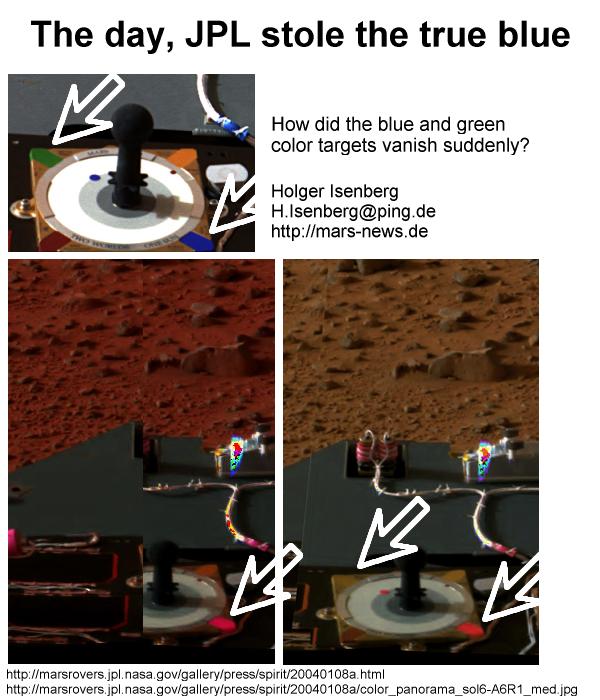
ares2003 writes "There is no scientific reason, why JPL is colorizing Mars in that dull red tint as in their press release images. In the latest panorama image, there is a hint, that they deliberately altered the colors, as the blue and green spots on the color calibration target (the sundial) suddenly converted to bright red and brown. Source of original images: 1, 2 - (for highres replace "br" with "med"). At normal weather conditions, as we have at the moment, there should be a blue sky on Mars and earthlike colors. Furthermore the sky looks overcasted on the pictures as it cannot be considering the sharp shadows on the sundial. If the sky was overcast, then because of diffuse lighting, there would be no shadows. A few years ago, I did an investigation about that very same topic for the Viking and Pathfinder missions." -
Colorization of Mars Images?
ares2003 writes "There is no scientific reason, why JPL is colorizing Mars in that dull red tint as in their press release images. In the latest panorama image, there is a hint, that they deliberately altered the colors, as the blue and green spots on the color calibration target (the sundial) suddenly converted to bright red and brown. Source of original images: 1, 2 - (for highres replace "br" with "med"). At normal weather conditions, as we have at the moment, there should be a blue sky on Mars and earthlike colors. Furthermore the sky looks overcasted on the pictures as it cannot be considering the sharp shadows on the sundial. If the sky was overcast, then because of diffuse lighting, there would be no shadows. A few years ago, I did an investigation about that very same topic for the Viking and Pathfinder missions." -
NASA Images Old Mars Landers
Iron Sun writes "Scientists have used the Mars Global Surveyor orbiter to capture images of what they think are the Viking 1 and Mars Pathfinder craft sitting on the surface of Mars. I'll have to take their word they are the indistinct blobs in question. The probes were supposedly just below the resolution of Surveyor, but they used a new trick developed last year to squeeze more detail out of the camera. The next target will, of course, be the Spirit rover." -
NASA Images Old Mars Landers
Iron Sun writes "Scientists have used the Mars Global Surveyor orbiter to capture images of what they think are the Viking 1 and Mars Pathfinder craft sitting on the surface of Mars. I'll have to take their word they are the indistinct blobs in question. The probes were supposedly just below the resolution of Surveyor, but they used a new trick developed last year to squeeze more detail out of the camera. The next target will, of course, be the Spirit rover." -
NASA Images Old Mars Landers
Iron Sun writes "Scientists have used the Mars Global Surveyor orbiter to capture images of what they think are the Viking 1 and Mars Pathfinder craft sitting on the surface of Mars. I'll have to take their word they are the indistinct blobs in question. The probes were supposedly just below the resolution of Surveyor, but they used a new trick developed last year to squeeze more detail out of the camera. The next target will, of course, be the Spirit rover." -
NASA Images Old Mars Landers
Iron Sun writes "Scientists have used the Mars Global Surveyor orbiter to capture images of what they think are the Viking 1 and Mars Pathfinder craft sitting on the surface of Mars. I'll have to take their word they are the indistinct blobs in question. The probes were supposedly just below the resolution of Surveyor, but they used a new trick developed last year to squeeze more detail out of the camera. The next target will, of course, be the Spirit rover." -
Columbia Memorial Station
-
First High-Res Color Photos from Mars
mzs writes "The first color thumbnail from Spirit was available yesterday from a larger image. Today some full-size color images are available. If you are in the USA you may be interested in catching the NOVA program on your local PBS station tonight." Acrobatman notes the existence of a nifty utility:"Mars24, a Mac OS X and Java application and applet which displays a Mars 'sunclock', a graphical representation of Mars. This free utility shows the current sun- and nightsides of Mars, along with a numerical readout of the time in 24-hour format and landmarks such as the landing positions of the rovers." -
First High-Res Color Photos from Mars
mzs writes "The first color thumbnail from Spirit was available yesterday from a larger image. Today some full-size color images are available. If you are in the USA you may be interested in catching the NOVA program on your local PBS station tonight." Acrobatman notes the existence of a nifty utility:"Mars24, a Mac OS X and Java application and applet which displays a Mars 'sunclock', a graphical representation of Mars. This free utility shows the current sun- and nightsides of Mars, along with a numerical readout of the time in 24-hour format and landmarks such as the landing positions of the rovers." -
First High-Res Color Photos from Mars
mzs writes "The first color thumbnail from Spirit was available yesterday from a larger image. Today some full-size color images are available. If you are in the USA you may be interested in catching the NOVA program on your local PBS station tonight." Acrobatman notes the existence of a nifty utility:"Mars24, a Mac OS X and Java application and applet which displays a Mars 'sunclock', a graphical representation of Mars. This free utility shows the current sun- and nightsides of Mars, along with a numerical readout of the time in 24-hour format and landmarks such as the landing positions of the rovers." -
First Stereograms of Mars from Spirit
An anonymous reader writes "NASA has made the first stereo image pairs from Spirit available. I've made stereo anaglyphs and arranged the full-size images side-by-side for stereo viewing. These are from the low-res black and white hazard avoidance camera, but still very cool. Anxiously awaiting the first stereo pairs from the panoramic cameras!" -
Spirit's First Mars Images
An anonymous reader writes "First panoramic and overhead polar views of Mars, a quarter billion miles away are available. Some spectacular examples and accompanying commentaries are at NASA's Astrobiology Magazine, and JPL." -
Stardust Apparently Successful
Naomi_the_butterfly writes "The Stardust mission, a craft launched in February 1999, just concluded its encounter with comet Wild 2 at 11:40:35 am PST. The encounter went without a hitch, with about 72 images taken and comet coma (tail) dust collected! The first images will be downloaded to JPL over between 1:30 and 2:30 pm, in time for a press conference at 3:00 pm PST. Today a comet, tomorrow Mars!" Space.com has a picture taken by the spacecraft. -
Stardust Apparently Successful
Naomi_the_butterfly writes "The Stardust mission, a craft launched in February 1999, just concluded its encounter with comet Wild 2 at 11:40:35 am PST. The encounter went without a hitch, with about 72 images taken and comet coma (tail) dust collected! The first images will be downloaded to JPL over between 1:30 and 2:30 pm, in time for a press conference at 3:00 pm PST. Today a comet, tomorrow Mars!" Space.com has a picture taken by the spacecraft. -
Astronomers Look for Potential Life Zones
js7a writes "An Australian team of astronomers has an article in the latest edition Science describing a 'Galactic Habitable Zone,' which contains about 10% of all the Milky Way's stars including the Sun. Stars within this band are likely to have rocky planets large enough to hold atmospheres, are sufficiently distant from supernovae, and have existed for at least four billion years. They haven't actually found any life or earth-like planets yet, but presumably this zone is a reasonable place to narrow such searches." -
Stardust Probe Enters Comet's Tail Tomorrow
Tortured Potato writes "NASA's Stardust probe is about to pass through the tail of Comet Wild 2 at 11:40am PST, January 2nd. If all goes well, the probe will return the material to earth for research in 2006-- the first extraterrestrial material captured from outside the moon's orbit." -
Stardust Probe Enters Comet's Tail Tomorrow
Tortured Potato writes "NASA's Stardust probe is about to pass through the tail of Comet Wild 2 at 11:40am PST, January 2nd. If all goes well, the probe will return the material to earth for research in 2006-- the first extraterrestrial material captured from outside the moon's orbit." -
Stardust Probe Enters Comet's Tail Tomorrow
Tortured Potato writes "NASA's Stardust probe is about to pass through the tail of Comet Wild 2 at 11:40am PST, January 2nd. If all goes well, the probe will return the material to earth for research in 2006-- the first extraterrestrial material captured from outside the moon's orbit." -
Suggestions for a Home-Built Telescope
hodet asks: "I would like to know if anyone here has built or are planning to build their own telescope. My plan right now is to build an 8" F/6 Dobsonion Reflector based on these plans. The same design can also be found here. The base has been cut and the primary and secondary mirrors are to be ordered shortly. Since I plan on making a few modifications to this design I'd like to know if anyone here has done anything similar or totally original and what thoughts and suggestions you may have. I know it may be cheaper and easier to buy one from Meade, but that's not what I'm looking for." -
Solar-Powered Plane to Fly Around the World
securitas writes "The BBC's Carolyn Fry reports on the Solar Impulse project, a plan to circumnavigate the globe in a solar-powered airplane. Adventurers Brian Jones and Dr. Bertrand Piccard, who were the first people to circumnavigate the globe in a balloon in 1999, are behind the Solar Impulse project. The project is proceeding to the design stage after a feasability study determined that the solar-powered airplane concept is a viable idea. While other solar-powered planes like the Helios prototype have relied on a secondary power source (fuel cells), this project will be powered by solar energy alone. Batteries will store energy received in daylight hours to fly all night. The first prototype is scheduled for launch in 2006." -
Whatever Happened To The Mars Network?
mhw25 writes "There is a NASA/JPL project, conceptualised back in 1999, that proposed to launch a Mars Network. It boldly projected that "Deployment of a prototype Microsat, tentatively scheduled for 2003, would be the first step in creating this Mars "Internet."" With 2003 drawing to a close and no .mars domain registration offered, perhaps it is time NASA and other space agencies to rethink and revisit this worthy project, especially in light of the recent problems faced by the Beagle2." -
Whatever Happened To The Mars Network?
mhw25 writes "There is a NASA/JPL project, conceptualised back in 1999, that proposed to launch a Mars Network. It boldly projected that "Deployment of a prototype Microsat, tentatively scheduled for 2003, would be the first step in creating this Mars "Internet."" With 2003 drawing to a close and no .mars domain registration offered, perhaps it is time NASA and other space agencies to rethink and revisit this worthy project, especially in light of the recent problems faced by the Beagle2." -
NASA's Mars Polar Lander May Have Landed Safely
JabberBoi writes "On January 3, 1999, NASA lost contact with the Mars Polar Lander after it was supposed to land on Mars. An assessment report by NASA suggested that the lander's legs may have sent an incorrect signal to the craft's computer, which in turn caused a premature shutdown of its landing engines -- resulting in the craft crashing on Mars. However, according to this article from Space.com, analysis of images of the Polar Lander's assumed landing site area obtained by the Mars Global Explorer were sent to a U.S. 'spy' agency called the National Imagery and Mapping Agency (NIMA) to determine if any signs of wreckage or the spacecraft could be discerned through pixel analysis. The article describes NIMA as an 'acclaimed leader in describing, assessing, and visually depicting physical features on Earth' from imagery taken by spy satellites. NIMA's report states that the images they analyzed suggest a successful landing based on identification of three separate parts of the Mars Polar Lander: an upright Polar Lander, and two 'pixel return' signatures that suggest the lander's parachute and heat shield. These findings suggest that something else may have caused the Polar Lander mission to fail. Conspiracy theories about why the Polar Lander never called home abound." -
NASA's Mars Polar Lander May Have Landed Safely
JabberBoi writes "On January 3, 1999, NASA lost contact with the Mars Polar Lander after it was supposed to land on Mars. An assessment report by NASA suggested that the lander's legs may have sent an incorrect signal to the craft's computer, which in turn caused a premature shutdown of its landing engines -- resulting in the craft crashing on Mars. However, according to this article from Space.com, analysis of images of the Polar Lander's assumed landing site area obtained by the Mars Global Explorer were sent to a U.S. 'spy' agency called the National Imagery and Mapping Agency (NIMA) to determine if any signs of wreckage or the spacecraft could be discerned through pixel analysis. The article describes NIMA as an 'acclaimed leader in describing, assessing, and visually depicting physical features on Earth' from imagery taken by spy satellites. NIMA's report states that the images they analyzed suggest a successful landing based on identification of three separate parts of the Mars Polar Lander: an upright Polar Lander, and two 'pixel return' signatures that suggest the lander's parachute and heat shield. These findings suggest that something else may have caused the Polar Lander mission to fail. Conspiracy theories about why the Polar Lander never called home abound." -
NASA's Mars Polar Lander May Have Landed Safely
JabberBoi writes "On January 3, 1999, NASA lost contact with the Mars Polar Lander after it was supposed to land on Mars. An assessment report by NASA suggested that the lander's legs may have sent an incorrect signal to the craft's computer, which in turn caused a premature shutdown of its landing engines -- resulting in the craft crashing on Mars. However, according to this article from Space.com, analysis of images of the Polar Lander's assumed landing site area obtained by the Mars Global Explorer were sent to a U.S. 'spy' agency called the National Imagery and Mapping Agency (NIMA) to determine if any signs of wreckage or the spacecraft could be discerned through pixel analysis. The article describes NIMA as an 'acclaimed leader in describing, assessing, and visually depicting physical features on Earth' from imagery taken by spy satellites. NIMA's report states that the images they analyzed suggest a successful landing based on identification of three separate parts of the Mars Polar Lander: an upright Polar Lander, and two 'pixel return' signatures that suggest the lander's parachute and heat shield. These findings suggest that something else may have caused the Polar Lander mission to fail. Conspiracy theories about why the Polar Lander never called home abound." -
NASA's Mars Polar Lander May Have Landed Safely
JabberBoi writes "On January 3, 1999, NASA lost contact with the Mars Polar Lander after it was supposed to land on Mars. An assessment report by NASA suggested that the lander's legs may have sent an incorrect signal to the craft's computer, which in turn caused a premature shutdown of its landing engines -- resulting in the craft crashing on Mars. However, according to this article from Space.com, analysis of images of the Polar Lander's assumed landing site area obtained by the Mars Global Explorer were sent to a U.S. 'spy' agency called the National Imagery and Mapping Agency (NIMA) to determine if any signs of wreckage or the spacecraft could be discerned through pixel analysis. The article describes NIMA as an 'acclaimed leader in describing, assessing, and visually depicting physical features on Earth' from imagery taken by spy satellites. NIMA's report states that the images they analyzed suggest a successful landing based on identification of three separate parts of the Mars Polar Lander: an upright Polar Lander, and two 'pixel return' signatures that suggest the lander's parachute and heat shield. These findings suggest that something else may have caused the Polar Lander mission to fail. Conspiracy theories about why the Polar Lander never called home abound." -
NASA's Mars Polar Lander May Have Landed Safely
JabberBoi writes "On January 3, 1999, NASA lost contact with the Mars Polar Lander after it was supposed to land on Mars. An assessment report by NASA suggested that the lander's legs may have sent an incorrect signal to the craft's computer, which in turn caused a premature shutdown of its landing engines -- resulting in the craft crashing on Mars. However, according to this article from Space.com, analysis of images of the Polar Lander's assumed landing site area obtained by the Mars Global Explorer were sent to a U.S. 'spy' agency called the National Imagery and Mapping Agency (NIMA) to determine if any signs of wreckage or the spacecraft could be discerned through pixel analysis. The article describes NIMA as an 'acclaimed leader in describing, assessing, and visually depicting physical features on Earth' from imagery taken by spy satellites. NIMA's report states that the images they analyzed suggest a successful landing based on identification of three separate parts of the Mars Polar Lander: an upright Polar Lander, and two 'pixel return' signatures that suggest the lander's parachute and heat shield. These findings suggest that something else may have caused the Polar Lander mission to fail. Conspiracy theories about why the Polar Lander never called home abound." -
Beagle II Successfully Separates
Control42 writes "After the long journey out, it seems that little Beagle II, the lander of the Mars express mission has successfully separated. If all goes well, the lander should touch down on Christmas Day. Seems that NASA has actually lost the edge in robotic space exploration." Reader chalker writes "In order to build public interest in the Mars Exploration Rovers 2004 missions landing in January, NASA has released a series of movie trailers (Flash enabled page, Windows Media and Quicktime formats) for what they are calling "M2K4". They contain quite amazing animations of the landings, as well as a professional artistic style typically seen in action movie trailers. Additional videos on the launch, cruise, and landing challenges can be found at the JPL based mission site." -
Beagle II Successfully Separates
Control42 writes "After the long journey out, it seems that little Beagle II, the lander of the Mars express mission has successfully separated. If all goes well, the lander should touch down on Christmas Day. Seems that NASA has actually lost the edge in robotic space exploration." Reader chalker writes "In order to build public interest in the Mars Exploration Rovers 2004 missions landing in January, NASA has released a series of movie trailers (Flash enabled page, Windows Media and Quicktime formats) for what they are calling "M2K4". They contain quite amazing animations of the landings, as well as a professional artistic style typically seen in action movie trailers. Additional videos on the launch, cruise, and landing challenges can be found at the JPL based mission site." -
Beagle II Successfully Separates
Control42 writes "After the long journey out, it seems that little Beagle II, the lander of the Mars express mission has successfully separated. If all goes well, the lander should touch down on Christmas Day. Seems that NASA has actually lost the edge in robotic space exploration." Reader chalker writes "In order to build public interest in the Mars Exploration Rovers 2004 missions landing in January, NASA has released a series of movie trailers (Flash enabled page, Windows Media and Quicktime formats) for what they are calling "M2K4". They contain quite amazing animations of the landings, as well as a professional artistic style typically seen in action movie trailers. Additional videos on the launch, cruise, and landing challenges can be found at the JPL based mission site." -
Space Shuttle to be Outfitted with New Sensors
Norman at Davis writes "Space.com is reporting on new "sensors designed to pinpoint potential damage from falling debris or other objects [which] will be installed into the wings of NASA's remaining shuttle fleet...." Unfortunately, the sensors won't be too sophisticated, MSNBC reports that 'the extent of damage would still have to be determined by an inspection by astronauts in orbit, using an extension boom equipped with cameras and lasers.' Apparently NASA is in the process of developing three techniques which will allow astronauts to spacewalk and repair holes up to fourteen inches in diameter. Finally... the Australian Broadcasting Corporation is also running an article on the topic, stating that "not only will computers provide state-of-the-art imaging, but Defence Department satellites will supplement inspections made by the shuttle astronauts themselves and photographs taken from the International Space Station." 'NASA's efforts to improve its ability to detect whether the shuttle has been struck during flight have evolved remarkably since Columbia's January launch, when engineers watched loops of film sent to Miami for development and projected against a wall by a noisy old projector.' Hopefully this new technology will prevent another Columbia-like disaster, as a space shuttle replacement is looking less likely by the day." -
Space Shuttle to be Outfitted with New Sensors
Norman at Davis writes "Space.com is reporting on new "sensors designed to pinpoint potential damage from falling debris or other objects [which] will be installed into the wings of NASA's remaining shuttle fleet...." Unfortunately, the sensors won't be too sophisticated, MSNBC reports that 'the extent of damage would still have to be determined by an inspection by astronauts in orbit, using an extension boom equipped with cameras and lasers.' Apparently NASA is in the process of developing three techniques which will allow astronauts to spacewalk and repair holes up to fourteen inches in diameter. Finally... the Australian Broadcasting Corporation is also running an article on the topic, stating that "not only will computers provide state-of-the-art imaging, but Defence Department satellites will supplement inspections made by the shuttle astronauts themselves and photographs taken from the International Space Station." 'NASA's efforts to improve its ability to detect whether the shuttle has been struck during flight have evolved remarkably since Columbia's January launch, when engineers watched loops of film sent to Miami for development and projected against a wall by a noisy old projector.' Hopefully this new technology will prevent another Columbia-like disaster, as a space shuttle replacement is looking less likely by the day." -
Mars Express Sends Back First Photo of Mars
Andrew Browne writes "Today the European Space Agency received the first photo of Mars from its Mars Express probe. The photo was taken on December 1st and processed by the DLR Institute for Planetary Research and by the Freie Universitat Berlin. Mars Express was launched June 2nd of this year and is due to arrive at the Red planet later this month. The extremely speedy voyage is thanks to our close approach to Mars this summer. Other probes taking advantage of the launch window include NASA's Spirit and Opportunity Mars Exploration Rovers. You can track the progress of all the probes heading to Mars with NASA's solar system simulator." -
Mars Express Sends Back First Photo of Mars
Andrew Browne writes "Today the European Space Agency received the first photo of Mars from its Mars Express probe. The photo was taken on December 1st and processed by the DLR Institute for Planetary Research and by the Freie Universitat Berlin. Mars Express was launched June 2nd of this year and is due to arrive at the Red planet later this month. The extremely speedy voyage is thanks to our close approach to Mars this summer. Other probes taking advantage of the launch window include NASA's Spirit and Opportunity Mars Exploration Rovers. You can track the progress of all the probes heading to Mars with NASA's solar system simulator." -
Mars Express Sends Back First Photo of Mars
Andrew Browne writes "Today the European Space Agency received the first photo of Mars from its Mars Express probe. The photo was taken on December 1st and processed by the DLR Institute for Planetary Research and by the Freie Universitat Berlin. Mars Express was launched June 2nd of this year and is due to arrive at the Red planet later this month. The extremely speedy voyage is thanks to our close approach to Mars this summer. Other probes taking advantage of the launch window include NASA's Spirit and Opportunity Mars Exploration Rovers. You can track the progress of all the probes heading to Mars with NASA's solar system simulator." -
Why Mars May Be Difficult
An anonymous reader writes with a link to this "dramatic article leading up to the three Mars probes for December/January at NASA's JPL (also hosted at Ames) on Mars risks: Two out of three missions to the red planet have failed. After 300 million miles of deep space, 'One colleague describes the entry, descent and landing as six minutes of terror,' says Dr. Firouz Naderi, manager of the Mars Program Office. Descending at 1,000 miles per hour, with only 100 seconds left at the altitude that a commercial airliner typically flies -- things need to happen in a hurry. Doesn't mention solar flares, electronics shielding, signal snags or budget tightening. The previous account listed the top 10 reasons Mars was hard in 1976." -
Comet Hunting Craft Closes on Target
JayBonci writes "According to a CNN article (also ScienceDaily), NASA's comet-hunting craft as part of the Stardust mission has sighted the comet early. This will make it easier to complete their plan of bringing a sample of the dust left behind by the comet's icy tail back home to earth. The mission homepage is here." -
Bacteria More Virulent in Microgravity
Tortured Potato writes "Did you know that salmonella become more virulent in simulated microgravity? No one's sure why, either. Professor Cheryl Nickerson of Tulane University is hoping to find out why when an experiment with brewer's yeast gets sent up on a Russian Progress rocket to the Space Station next year." -
Flares Injure Mars Odyssey
Henry writes "The BBC is reporting that NASA's Mars Odyssey has suffered a hit from the recent solar flares. Apparently, the instrument which measures radiation levels has been shut down; it is not known if the damage is permanent." -
NASA Ground Tests Ion Engine
herda05 writes "New Scientist reports from a press release by NASA on a successful ground test of the HiPEP (High Power Electric Propulsion) ion engine, which is the first 'major milestone' for Project Prometheus. Also some pictures and more info on the HiPEP engine." -
NASA Ground Tests Ion Engine
herda05 writes "New Scientist reports from a press release by NASA on a successful ground test of the HiPEP (High Power Electric Propulsion) ion engine, which is the first 'major milestone' for Project Prometheus. Also some pictures and more info on the HiPEP engine." -
NASA Ground Tests Ion Engine
herda05 writes "New Scientist reports from a press release by NASA on a successful ground test of the HiPEP (High Power Electric Propulsion) ion engine, which is the first 'major milestone' for Project Prometheus. Also some pictures and more info on the HiPEP engine." -
Heavy Metal Frost on Highlands of Venus?
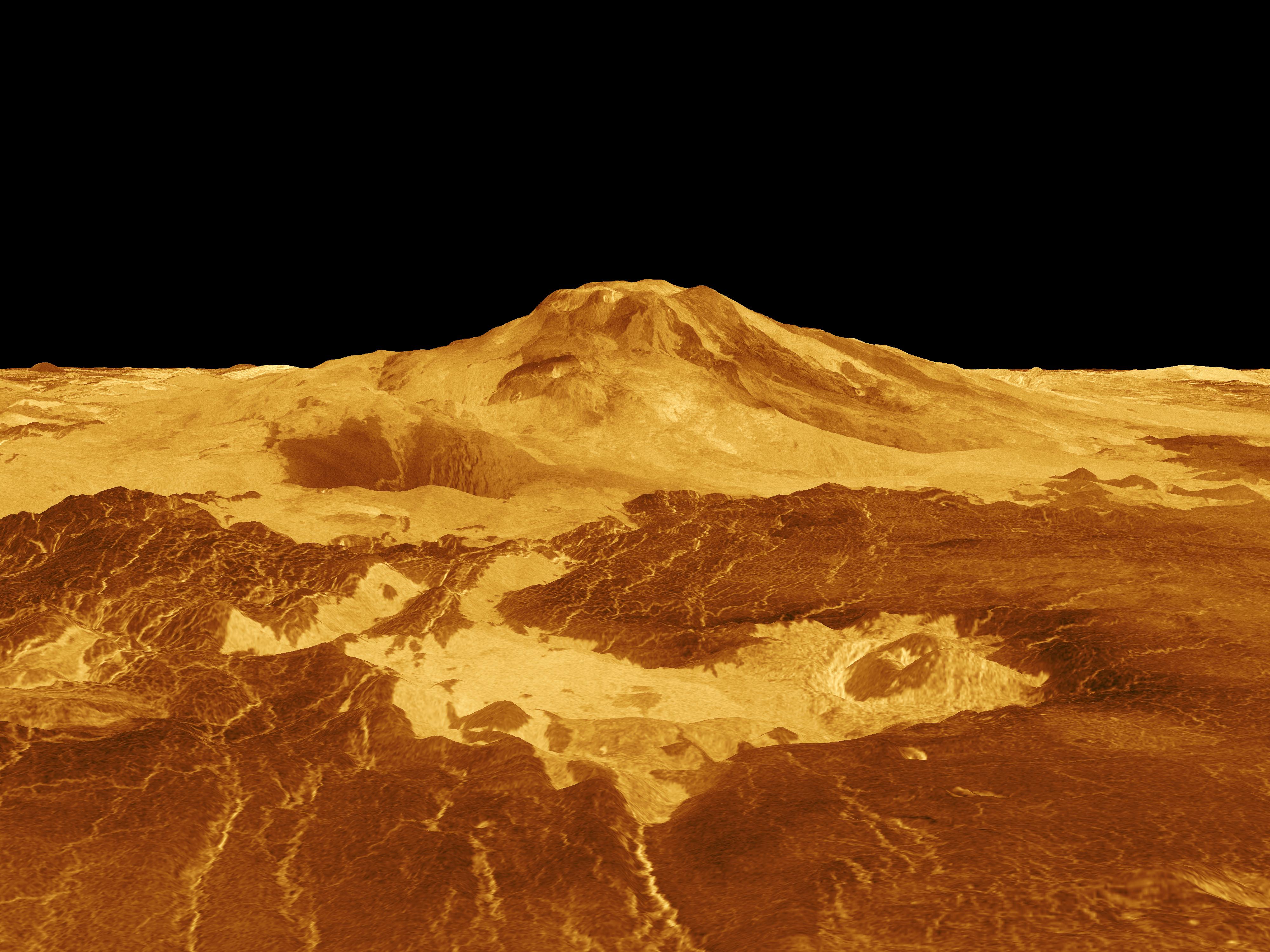
deglr6328 writes "The BBC is reporting that a paper published in the journal Icarus, suggests that the highlands of Venus are covered by a layer of Lead and Bismuth frost. The authors of the paper were looking for a way to explain the anomalous high reflectivity (and corresponding low emissivity) shown at high altitudes in synthetic aperture radar images sent back by the Magellan probe in the early 90's. The study concludes that Venus's lowlands are hot enough (~850F) to partially vaporize these metals into a mist which then condenses back out of the atmosphere to a solid on the surface of the cooler Venusian highlands." -
Heavy Metal Frost on Highlands of Venus?
deglr6328 writes "The BBC is reporting that a paper published in the journal Icarus, suggests that the highlands of Venus are covered by a layer of Lead and Bismuth frost. The authors of the paper were looking for a way to explain the anomalous high reflectivity (and corresponding low emissivity) shown at high altitudes in synthetic aperture radar images sent back by the Magellan probe in the early 90's. The study concludes that Venus's lowlands are hot enough (~850F) to partially vaporize these metals into a mist which then condenses back out of the atmosphere to a solid on the surface of the cooler Venusian highlands." -
Heavy Metal Frost on Highlands of Venus?
deglr6328 writes "The BBC is reporting that a paper published in the journal Icarus, suggests that the highlands of Venus are covered by a layer of Lead and Bismuth frost. The authors of the paper were looking for a way to explain the anomalous high reflectivity (and corresponding low emissivity) shown at high altitudes in synthetic aperture radar images sent back by the Magellan probe in the early 90's. The study concludes that Venus's lowlands are hot enough (~850F) to partially vaporize these metals into a mist which then condenses back out of the atmosphere to a solid on the surface of the cooler Venusian highlands." -
Heavy Metal Frost on Highlands of Venus?
deglr6328 writes "The BBC is reporting that a paper published in the journal Icarus, suggests that the highlands of Venus are covered by a layer of Lead and Bismuth frost. The authors of the paper were looking for a way to explain the anomalous high reflectivity (and corresponding low emissivity) shown at high altitudes in synthetic aperture radar images sent back by the Magellan probe in the early 90's. The study concludes that Venus's lowlands are hot enough (~850F) to partially vaporize these metals into a mist which then condenses back out of the atmosphere to a solid on the surface of the cooler Venusian highlands." -
The Sunspot Cycle Explained
An anonymous reader writes "After the recent spate of auroras visible as far south as Florida and Greece, and radio amateurs having lots of fun bouncing their signals off the auroral curtain, maybe some explanation was needed. It has been known for a while that the peak of solar activity trail trails the sunspot cycle peak by a couple of years, but this BBC article appears to explain why. As you may expect most of the data came from the SOHO satellite and the theory has been put together by some scientists using what appears to be data mining." -
NASA Installs Linux Supercomputer
unassimilatible writes: "Federal Computer Week reports that NASA plans to study the ocean's future with the help of the world's first supercomputer of its kind to run on the Linux operating system. The new supercomputer -- an SGI AltixT 3000 single-system image supercomputer -- has been installed at the space agency's Ames Research Center in California." -
NASA Installs Linux Supercomputer
unassimilatible writes: "Federal Computer Week reports that NASA plans to study the ocean's future with the help of the world's first supercomputer of its kind to run on the Linux operating system. The new supercomputer -- an SGI AltixT 3000 single-system image supercomputer -- has been installed at the space agency's Ames Research Center in California."