Slashdot Mirror
Domain: nasa.gov
Stories and comments across the archive that link to nasa.gov.
Stories · 2,550
-
New Way of Observing Light May Boost Info Content
md_seymour observes: "Today's Astronomy Picture of the Day from NASA has a description and image of light that can twist as well as spin, based on research from Miles Padgett and Johannes Courtial of the University of Glasgow. They and their colleagues have apparently been able to sort individual photons by their orbital angular momentum. Since this characteristic of the photon is able to take on an infinite number of values, it may be possible to pack much more information into a light beam." -
Leonids 2003
Ruger writes "This year's display isn't expected to be a spectacular as last year's, but weather permitting, people in North America should have a pretty good view of the shower. This CNN article provides some information on tonights shower. This is actually the second shower of 2003 and this NASA article gives more details about the shower as well as best viewing times around the world." -
Orbdev Files US Federal Suit Over Asteroid Claim
chongo writes "Orbital Development has filed legal action against the United States by filing a Complaint for Declaratory Judgment in Federal Court. After NASA's NEAR probe landed on the asteroid 433 Eros, Gregory W. Nemitz, who claims to have owned the asteroid since the 3rd of March 2000, sent NASA an $20 invoice for the first 100 years of parking and storage fees. NASA told him to "pound sand". OrbDev's Eros Project seeks to promote their ludicrous ideas about property rights in space." -
Total Lunar Eclipse Tonight
chuckpeters writes "A total lunar eclipse will soon darken the full moon for most of North and South America, Europe, and Africa. The Moon rises about five p.m. EST and the eclipse will be in penumbra. Totality begins at 8:06 p.m. EST. and ends at 8:31 PM EST and the partial eclipse ends at 10:45 PM. EST" To obtain the time and location for your area, use the Lunar Computer. It looks like the weather will cooperate and we will have clear skies for most of the country. Articles can be found at NASA, Space.com, Sky and Telescope, and Starry Skies." -
The Case for the Moon
apsmith writes "Continuing the flurry of recent hearings on the future of humans in space, a Senate committee on Thursday heard testimony in favor of a return to the Moon. Former senator and moon-walker Harrison Schmitt and physicist David Criswell see the lunar surface as an immense energy resource, just waiting to be tapped. Astronomer Roger Angel sees the lunar south pole as the ideal astronomical observatory, with locations for telescopes 100 times better than anything we've done so far. And geologist Paul Spudis sees a lot of unfinished business on the Moon, to develop it as the "feedstock of an industrial space infrastructure." TransOrbital also sent written testimony." -
Sun Produces Strongest Flare Ever Recorded
idontneedanickname writes "The BBC is reporting about the newest flare unleashed by the sun. According to NASA's SOHO website, "Today word came from the SEC that their best estimate was X28. We have a new number 1 X-ray flare for the record books." As usual there are magnificent images to be admired." This one's not headed straight for us... -
Voyager 1 Reaches Interstellar Space
letxa2000 writes "CNN is reporting that Voyager 1, now some 8.4 billion miles (90 AUs) from the sun, has left the solar system and entered interstellar space by reaching the heliopause. However, whether the probe has reached the heliopause or is just coming close is the subject of two papers to be published in Thursday's Nature Magazine. The probe supposedly has enough nuclear fuel to last until 2020. Will it be able to find anything interesting outside the solar system in the next 17 years?" -
Crash Course in Safely Crashing on Mars
An anonymous reader writes "NASA described today how they prepared for the twin air-bag crash landings on Mars. The sites are Gusev Crater on January 4th and Terra Meridiani on January 25th. The golfcart-sized rovers have double-lined bladders, that must protect against: the equivalent of a forty mile-per-hour crash, compression against a surface of unknown sharpness, impacts repeated in rapid succession up to sixteen times, and the big bounce covering more than half-a-mile. Airbag landings are considered easier than retro-rocket or soft landings." -
Crash Course in Safely Crashing on Mars
An anonymous reader writes "NASA described today how they prepared for the twin air-bag crash landings on Mars. The sites are Gusev Crater on January 4th and Terra Meridiani on January 25th. The golfcart-sized rovers have double-lined bladders, that must protect against: the equivalent of a forty mile-per-hour crash, compression against a surface of unknown sharpness, impacts repeated in rapid succession up to sixteen times, and the big bounce covering more than half-a-mile. Airbag landings are considered easier than retro-rocket or soft landings." -
NASA's Earth Observatory Shows Solar Flare
staaktdenarbeid writes "In the past few months I became very impressed with the timeliness and quality of NASA's Earth Observatory. When hurricane Isabel struck, their imagery showed me the biggest latte ever made. Now that Southern California is on fire, it takes only a look from outer space to see how bad the sitation really is. And, today, a massive solar flare showed up on their website as soon as it errupted (so to speak). Each of these pictures is accompanied by detailed technical background. And for the rest of us, they also make perfect screen backgrounds. Very cool." -
NASA's Earth Observatory Shows Solar Flare
staaktdenarbeid writes "In the past few months I became very impressed with the timeliness and quality of NASA's Earth Observatory. When hurricane Isabel struck, their imagery showed me the biggest latte ever made. Now that Southern California is on fire, it takes only a look from outer space to see how bad the sitation really is. And, today, a massive solar flare showed up on their website as soon as it errupted (so to speak). Each of these pictures is accompanied by detailed technical background. And for the rest of us, they also make perfect screen backgrounds. Very cool." -
NASA's Earth Observatory Shows Solar Flare
staaktdenarbeid writes "In the past few months I became very impressed with the timeliness and quality of NASA's Earth Observatory. When hurricane Isabel struck, their imagery showed me the biggest latte ever made. Now that Southern California is on fire, it takes only a look from outer space to see how bad the sitation really is. And, today, a massive solar flare showed up on their website as soon as it errupted (so to speak). Each of these pictures is accompanied by detailed technical background. And for the rest of us, they also make perfect screen backgrounds. Very cool." -
NASA's Earth Observatory Shows Solar Flare
staaktdenarbeid writes "In the past few months I became very impressed with the timeliness and quality of NASA's Earth Observatory. When hurricane Isabel struck, their imagery showed me the biggest latte ever made. Now that Southern California is on fire, it takes only a look from outer space to see how bad the sitation really is. And, today, a massive solar flare showed up on their website as soon as it errupted (so to speak). Each of these pictures is accompanied by detailed technical background. And for the rest of us, they also make perfect screen backgrounds. Very cool." -
X17 Solar Flare Sends 2B Tons of Plasma at Earth
Dr. Zowie writes "This morning a very large solar flare erupted from a large sunspot group that is crossing the face of the Sun. The explosion sent over 2 billion tons of material hurtling across the solar system toward Earth. Movies from the SOHO spacecraft show the flare in UV and the associated coronal mass ejection in visible light as they happened, and the impact of high energy protons that the flare launched at about half the speed of light. NOAA's Space Environment Center shows that the Sun's X-ray brightness went up 100x during the flare. Expect more aurora and geomagnetic effects in the next day or two!" -
X17 Solar Flare Sends 2B Tons of Plasma at Earth
Dr. Zowie writes "This morning a very large solar flare erupted from a large sunspot group that is crossing the face of the Sun. The explosion sent over 2 billion tons of material hurtling across the solar system toward Earth. Movies from the SOHO spacecraft show the flare in UV and the associated coronal mass ejection in visible light as they happened, and the impact of high energy protons that the flare launched at about half the speed of light. NOAA's Space Environment Center shows that the Sun's X-ray brightness went up 100x during the flare. Expect more aurora and geomagnetic effects in the next day or two!" -
X17 Solar Flare Sends 2B Tons of Plasma at Earth
Dr. Zowie writes "This morning a very large solar flare erupted from a large sunspot group that is crossing the face of the Sun. The explosion sent over 2 billion tons of material hurtling across the solar system toward Earth. Movies from the SOHO spacecraft show the flare in UV and the associated coronal mass ejection in visible light as they happened, and the impact of high energy protons that the flare launched at about half the speed of light. NOAA's Space Environment Center shows that the Sun's X-ray brightness went up 100x during the flare. Expect more aurora and geomagnetic effects in the next day or two!" -
X17 Solar Flare Sends 2B Tons of Plasma at Earth
Dr. Zowie writes "This morning a very large solar flare erupted from a large sunspot group that is crossing the face of the Sun. The explosion sent over 2 billion tons of material hurtling across the solar system toward Earth. Movies from the SOHO spacecraft show the flare in UV and the associated coronal mass ejection in visible light as they happened, and the impact of high energy protons that the flare launched at about half the speed of light. NOAA's Space Environment Center shows that the Sun's X-ray brightness went up 100x during the flare. Expect more aurora and geomagnetic effects in the next day or two!" -
The 'Perfect Space Storm' Of 1859
Polyploid Pimp writes "Bruce Tsurutani of JPL recently published a paper on the 'perfect space storm' of 1859. Apparently, this solar superstorm was so massive that it knocked out telegraphs across the Northern Hemisphere, and the aurora borealis could be seen as far south as Hawaii, Havana, and Rome. Among other interesting notes, the amount of sunlight produced in the region of this solar flare actually doubled! Although the article does not discuss in detail the effects of a solar storm of this size on our current technologies, we can all imagine (maybe something like Escape from L.A.?)" -
NASA Engineers Question ISS Safety
Atryn writes "New Scientist is reporting concerns over deteriorating equipment on ISS. ISS will celebrate another anniversary on Nov 2 marking its 3rd complete year. This story was also covered on CNN International and covered on Space.com." -
NASA Engineers Question ISS Safety
Atryn writes "New Scientist is reporting concerns over deteriorating equipment on ISS. ISS will celebrate another anniversary on Nov 2 marking its 3rd complete year. This story was also covered on CNN International and covered on Space.com." -
Sci-Fi Channel Looks for LGM in NASA Files
SharkJumper writes "The Sci-Fi channel expects to file a lawsuit within the week against NASA. They are attempting to gain access under the Freedom of Information Act to classified documents concerning a 1965 UFO sighting in Kecksburg, Pennsylvania. The Department of Defense, Army, and Air Force are next on their list. Here's Sci-Fi's account of the story." -
Mystery Fireball a Concorde Contrail?
unassimilatible writes "Space.com is reporting that an unidentified fireball seen over Wales was not a meteor, as originally claimed by NASA. What was it, and does this throw into question NASA's credibility? The truth is out there..." A follow-up to this story. -
NASA Flies First Laser-powered Aircraft
unassimilatible writes "NASA has successfully tested a small-scale aircraft that flies solely by means of propulsive power delivered by an invisible, ground-based laser. How far away can in-flight IP/LASER broadband be?" -
Scientist Picks a Gem of a Star
UrgleHoth writes "According to a CNN report, the star Gem 37 is the most likely candidate for alien life. Astrobiologist Maggie Turnbull of the University of Arizona in Tuscon has taken a list of most likely habitable planets and stars. Gem 37 topped the list. The deciding factor? 'Gem 37, the 37th brightest star in the constellation of Gemini, came out on top because it looks most like our sun.' This work was done for NASA's Terrestrial Planet Finder." -
Cassini Experiment Confirms General Relativity
MikeZilla writes "An experiment by Italian scientists using data from NASA's Cassini spacecraft, currently en route to Saturn, confirms Einstein's theory of general relativity with a precision that is 50 times greater than previous measurements." -
Interferometer Spots Galaxy at 40M Lightyears
techno-vampire writes "JPL announces that a pair of telescopes used as an optical interferometer have detected a galaxy 40 million light years away, smashing the previous record of 3,000 light years. This feat, using infrared, has given us a far more detailed look into the center of a galaxy, and opened up a whole new field of research." -
Interferometer Spots Galaxy at 40M Lightyears
techno-vampire writes "JPL announces that a pair of telescopes used as an optical interferometer have detected a galaxy 40 million light years away, smashing the previous record of 3,000 light years. This feat, using infrared, has given us a far more detailed look into the center of a galaxy, and opened up a whole new field of research." -
Fireball Over Wales
nagora writes "After last weeks meteor strike on an Indian village, Astronomy Picture of the Day has a spectacular photo of a fireball over Wales. Come home to a real fire..." -
Fireball Over Wales
nagora writes "After last weeks meteor strike on an Indian village, Astronomy Picture of the Day has a spectacular photo of a fireball over Wales. Come home to a real fire..." -
Entire NASA Safety Board Resigns
identity0 writes "All nine members and two consultants of NASA's Aerospace Safety Advisory Panel have resigned today, reports CNN. The Panel was responsible for advising NASA on the safety of its spacecraft and facilities, and was set up in 1967 following the Apollo 1 fire. Recently, it had been criticized by the Congressional investigation into the Columbia accident. Here is the NASA press release, and the official home page of the ASAP." -
Entire NASA Safety Board Resigns
identity0 writes "All nine members and two consultants of NASA's Aerospace Safety Advisory Panel have resigned today, reports CNN. The Panel was responsible for advising NASA on the safety of its spacecraft and facilities, and was set up in 1967 following the Apollo 1 fire. Recently, it had been criticized by the Congressional investigation into the Columbia accident. Here is the NASA press release, and the official home page of the ASAP." -
Galileo, Consumed by Jupiter
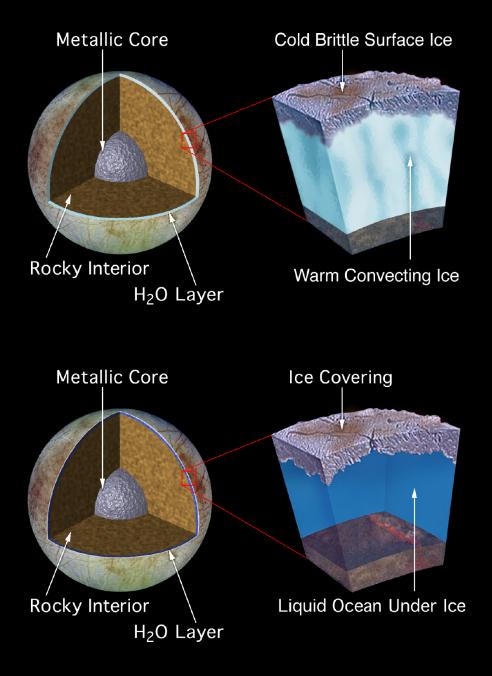
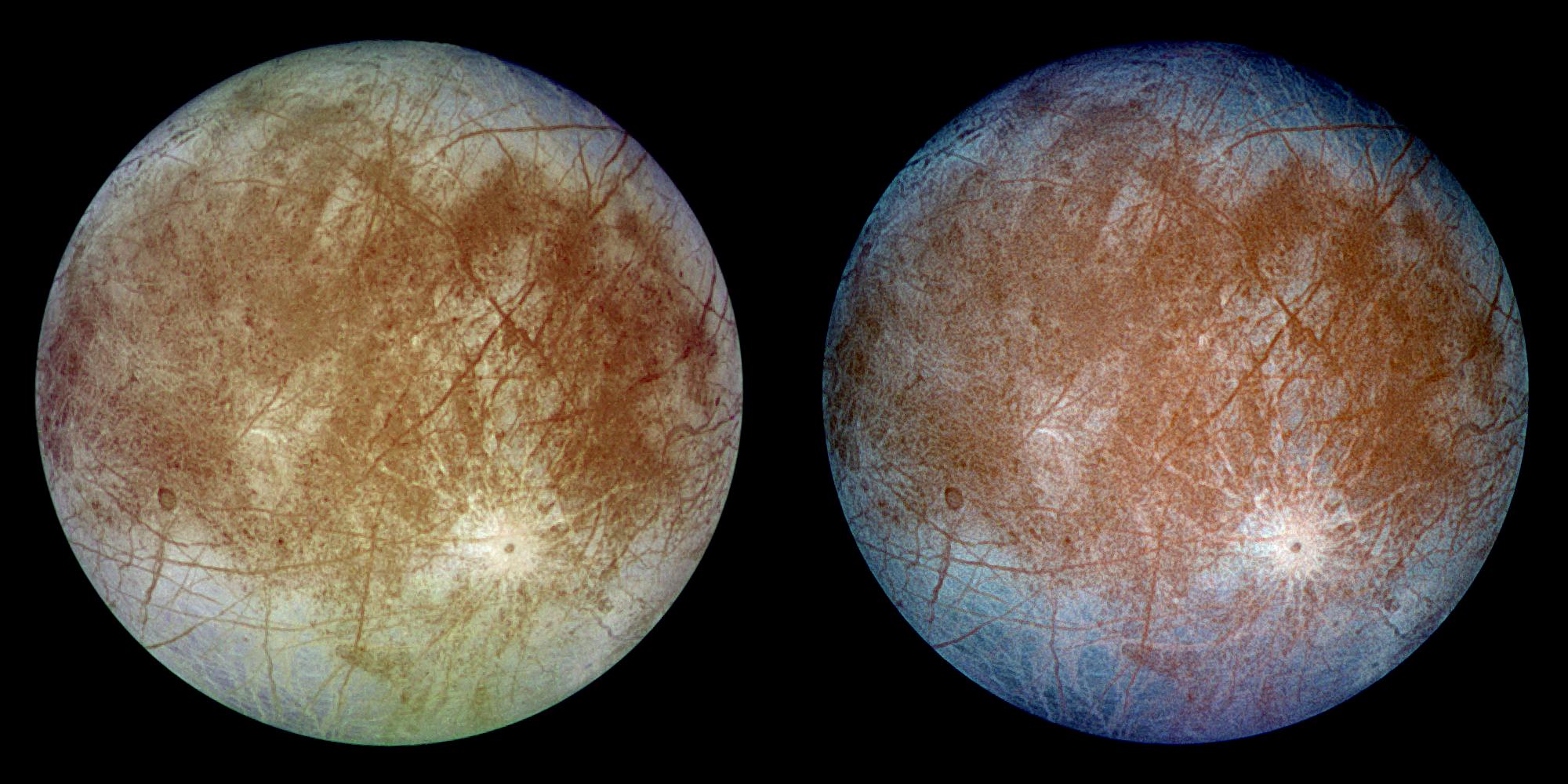
Conceived in 1977, launched in 1989, the spacecraft Galileo ends its 34th orbit exactly one hour from now, hitting the atmosphere at 48 kilometers a second. In its long history, it taught us much, despite the failure of its main antenna that left only its tiny backup to send data, but its enduring legacy will always be the discovery that Europa's icy crust hides a planetary saltwater ocean. That ocean's potential for alien life is why the craft will self-vaporize: to avoid possible terrestrial contamination. The JPL's webcast starts roughly now, and should last about two hours (light delay). Don't miss the view from the prow and impact animations. If you're into these spacecraft and the people who build them, read Journey Beyond Selene. And while we grieve for Galileo today, remember, orbital insertion for Cassini-Huygens is only 283 days away!We ran stories about Galileo's impending incineration earlier this month and last November when the plan was decided.
Here is a typical passage from Journey Beyond Selene, about the worst glitch in Galileo's mission, and the beginnings of how it would be worked around. Failures and the engineers who salvage them are the recurring tragic, triumphant story of our missions into space. Reproduced without permission:
With such triply redundant hardware built into their spacecraft, mission planners could feel confident that they had designed a communications system that was almost completely resistant to failure, and for the first eighteen months after Galileo's 1989 launch, there was no reason to assume anything would fail. Finally, on April 11, 1991, when the ship's trajectory had spiraled out as far as the edge of the asteroid belt between Mars and Jupiter, JPL planners decided it was at last probably safe to unlock the high-gain antenna and spread its ribs. It was only then that they'd learn if triply redundant was redundant enough.
Though the deployment of the high-gain system was not a complicated exercise, it was a critical one, and for that reason the chieftans of the Galileo project made sure they were there to watch it happen. On hand at the flight director's console that afternoon were mission director Neal Ausman, deputy mission director Matt Landanow, and project manager Bill O'Neil. O'Neil and Ausman were far and away the higher ranking of the three men, but Landanow, they all knew, was far and away the most knowledgeable. As chief engineer during the Galileo design phase, he had familiarized himself with every strut, nut and rivet of the ship, and could practically describe their placement and purpose from memory alone. If anything went wrong this afternoon, Landanow would likely be the first person to recognize it -- and the first person to come up with a way to fix it.
For the first forty minutes or so after the deployment command went up, O'Neil, Ausman and Landanow had little to do. Like so many other JPL controllers before them, they knew they would have to tolerate the nonnegotiable limits of light speed, waiting twenty minutes as their signal traveled from Pasadena to the spacecraft and then another twenty minutes as it traveled back again. For that entire time their screens told them nothing, flickering merely with the self-evident information that their command had indeed been sent. Finally, after just over the anticipated forty minutes had elapsed, a column of numbers began to blink on the glass. Landanow gave the figures a quick scan and immediately noticed something amiss. He read them again -- a bit more closely -- and this time started to feel downright queasy. The antenna, from all indications, was pulling what the engineers called stall current. The motor was drawing power, the deployment gears were engaged, but the ribs of the umbrella appeared to be going nowhere at all.
"We're stuck," Landanow said flatly.
"How can you tell?" O'Neil asked.
"The current is saturated, something is jammed," Landanow said. "In any event, the antenna's not budging."
Ausman gave the numbers on the screen a read of his own, confirmed what Landanow was saying, and immediately called out to his flight controllers, instructing them to send a second deployment command up to the ship. The engineers complied, and forty minutes later another stall signal came down. A third command yielded a third signal, and a fourth a fourth. With each new report Landanow winced. If he knew this ship -- and he surely did -- he could all but guarantee that whatever was hanging up the antenna was not much: a single too-tight fitting, perhaps, a single protruding bolt, one that was situated in just such a way that it managed to jam all eighteen ribs. If it were somehow possible to transport the Galileo spacecraft to a hangar in Pasadena, Landanow knew he could probably roll over a stepladder, climb up to the antenna, and spring it free with his hands alone. But Galileo was not in a hangar in Pasadena; it was tens of millions of miles away, at the edge of the asteroid belt between Mars and Jupiter, and more elaborate measures would be necessary.
-
Galileo, Consumed by Jupiter
Conceived in 1977, launched in 1989, the spacecraft Galileo ends its 34th orbit exactly one hour from now, hitting the atmosphere at 48 kilometers a second. In its long history, it taught us much, despite the failure of its main antenna that left only its tiny backup to send data, but its enduring legacy will always be the discovery that Europa's icy crust hides a planetary saltwater ocean. That ocean's potential for alien life is why the craft will self-vaporize: to avoid possible terrestrial contamination. The JPL's webcast starts roughly now, and should last about two hours (light delay). Don't miss the view from the prow and impact animations. If you're into these spacecraft and the people who build them, read Journey Beyond Selene. And while we grieve for Galileo today, remember, orbital insertion for Cassini-Huygens is only 283 days away!We ran stories about Galileo's impending incineration earlier this month and last November when the plan was decided.
Here is a typical passage from Journey Beyond Selene, about the worst glitch in Galileo's mission, and the beginnings of how it would be worked around. Failures and the engineers who salvage them are the recurring tragic, triumphant story of our missions into space. Reproduced without permission:
With such triply redundant hardware built into their spacecraft, mission planners could feel confident that they had designed a communications system that was almost completely resistant to failure, and for the first eighteen months after Galileo's 1989 launch, there was no reason to assume anything would fail. Finally, on April 11, 1991, when the ship's trajectory had spiraled out as far as the edge of the asteroid belt between Mars and Jupiter, JPL planners decided it was at last probably safe to unlock the high-gain antenna and spread its ribs. It was only then that they'd learn if triply redundant was redundant enough.
Though the deployment of the high-gain system was not a complicated exercise, it was a critical one, and for that reason the chieftans of the Galileo project made sure they were there to watch it happen. On hand at the flight director's console that afternoon were mission director Neal Ausman, deputy mission director Matt Landanow, and project manager Bill O'Neil. O'Neil and Ausman were far and away the higher ranking of the three men, but Landanow, they all knew, was far and away the most knowledgeable. As chief engineer during the Galileo design phase, he had familiarized himself with every strut, nut and rivet of the ship, and could practically describe their placement and purpose from memory alone. If anything went wrong this afternoon, Landanow would likely be the first person to recognize it -- and the first person to come up with a way to fix it.
For the first forty minutes or so after the deployment command went up, O'Neil, Ausman and Landanow had little to do. Like so many other JPL controllers before them, they knew they would have to tolerate the nonnegotiable limits of light speed, waiting twenty minutes as their signal traveled from Pasadena to the spacecraft and then another twenty minutes as it traveled back again. For that entire time their screens told them nothing, flickering merely with the self-evident information that their command had indeed been sent. Finally, after just over the anticipated forty minutes had elapsed, a column of numbers began to blink on the glass. Landanow gave the figures a quick scan and immediately noticed something amiss. He read them again -- a bit more closely -- and this time started to feel downright queasy. The antenna, from all indications, was pulling what the engineers called stall current. The motor was drawing power, the deployment gears were engaged, but the ribs of the umbrella appeared to be going nowhere at all.
"We're stuck," Landanow said flatly.
"How can you tell?" O'Neil asked.
"The current is saturated, something is jammed," Landanow said. "In any event, the antenna's not budging."
Ausman gave the numbers on the screen a read of his own, confirmed what Landanow was saying, and immediately called out to his flight controllers, instructing them to send a second deployment command up to the ship. The engineers complied, and forty minutes later another stall signal came down. A third command yielded a third signal, and a fourth a fourth. With each new report Landanow winced. If he knew this ship -- and he surely did -- he could all but guarantee that whatever was hanging up the antenna was not much: a single too-tight fitting, perhaps, a single protruding bolt, one that was situated in just such a way that it managed to jam all eighteen ribs. If it were somehow possible to transport the Galileo spacecraft to a hangar in Pasadena, Landanow knew he could probably roll over a stepladder, climb up to the antenna, and spring it free with his hands alone. But Galileo was not in a hangar in Pasadena; it was tens of millions of miles away, at the edge of the asteroid belt between Mars and Jupiter, and more elaborate measures would be necessary.
-
Galileo, Consumed by Jupiter
Conceived in 1977, launched in 1989, the spacecraft Galileo ends its 34th orbit exactly one hour from now, hitting the atmosphere at 48 kilometers a second. In its long history, it taught us much, despite the failure of its main antenna that left only its tiny backup to send data, but its enduring legacy will always be the discovery that Europa's icy crust hides a planetary saltwater ocean. That ocean's potential for alien life is why the craft will self-vaporize: to avoid possible terrestrial contamination. The JPL's webcast starts roughly now, and should last about two hours (light delay). Don't miss the view from the prow and impact animations. If you're into these spacecraft and the people who build them, read Journey Beyond Selene. And while we grieve for Galileo today, remember, orbital insertion for Cassini-Huygens is only 283 days away!We ran stories about Galileo's impending incineration earlier this month and last November when the plan was decided.
Here is a typical passage from Journey Beyond Selene, about the worst glitch in Galileo's mission, and the beginnings of how it would be worked around. Failures and the engineers who salvage them are the recurring tragic, triumphant story of our missions into space. Reproduced without permission:
With such triply redundant hardware built into their spacecraft, mission planners could feel confident that they had designed a communications system that was almost completely resistant to failure, and for the first eighteen months after Galileo's 1989 launch, there was no reason to assume anything would fail. Finally, on April 11, 1991, when the ship's trajectory had spiraled out as far as the edge of the asteroid belt between Mars and Jupiter, JPL planners decided it was at last probably safe to unlock the high-gain antenna and spread its ribs. It was only then that they'd learn if triply redundant was redundant enough.
Though the deployment of the high-gain system was not a complicated exercise, it was a critical one, and for that reason the chieftans of the Galileo project made sure they were there to watch it happen. On hand at the flight director's console that afternoon were mission director Neal Ausman, deputy mission director Matt Landanow, and project manager Bill O'Neil. O'Neil and Ausman were far and away the higher ranking of the three men, but Landanow, they all knew, was far and away the most knowledgeable. As chief engineer during the Galileo design phase, he had familiarized himself with every strut, nut and rivet of the ship, and could practically describe their placement and purpose from memory alone. If anything went wrong this afternoon, Landanow would likely be the first person to recognize it -- and the first person to come up with a way to fix it.
For the first forty minutes or so after the deployment command went up, O'Neil, Ausman and Landanow had little to do. Like so many other JPL controllers before them, they knew they would have to tolerate the nonnegotiable limits of light speed, waiting twenty minutes as their signal traveled from Pasadena to the spacecraft and then another twenty minutes as it traveled back again. For that entire time their screens told them nothing, flickering merely with the self-evident information that their command had indeed been sent. Finally, after just over the anticipated forty minutes had elapsed, a column of numbers began to blink on the glass. Landanow gave the figures a quick scan and immediately noticed something amiss. He read them again -- a bit more closely -- and this time started to feel downright queasy. The antenna, from all indications, was pulling what the engineers called stall current. The motor was drawing power, the deployment gears were engaged, but the ribs of the umbrella appeared to be going nowhere at all.
"We're stuck," Landanow said flatly.
"How can you tell?" O'Neil asked.
"The current is saturated, something is jammed," Landanow said. "In any event, the antenna's not budging."
Ausman gave the numbers on the screen a read of his own, confirmed what Landanow was saying, and immediately called out to his flight controllers, instructing them to send a second deployment command up to the ship. The engineers complied, and forty minutes later another stall signal came down. A third command yielded a third signal, and a fourth a fourth. With each new report Landanow winced. If he knew this ship -- and he surely did -- he could all but guarantee that whatever was hanging up the antenna was not much: a single too-tight fitting, perhaps, a single protruding bolt, one that was situated in just such a way that it managed to jam all eighteen ribs. If it were somehow possible to transport the Galileo spacecraft to a hangar in Pasadena, Landanow knew he could probably roll over a stepladder, climb up to the antenna, and spring it free with his hands alone. But Galileo was not in a hangar in Pasadena; it was tens of millions of miles away, at the edge of the asteroid belt between Mars and Jupiter, and more elaborate measures would be necessary.
-
Galileo, Consumed by Jupiter
Conceived in 1977, launched in 1989, the spacecraft Galileo ends its 34th orbit exactly one hour from now, hitting the atmosphere at 48 kilometers a second. In its long history, it taught us much, despite the failure of its main antenna that left only its tiny backup to send data, but its enduring legacy will always be the discovery that Europa's icy crust hides a planetary saltwater ocean. That ocean's potential for alien life is why the craft will self-vaporize: to avoid possible terrestrial contamination. The JPL's webcast starts roughly now, and should last about two hours (light delay). Don't miss the view from the prow and impact animations. If you're into these spacecraft and the people who build them, read Journey Beyond Selene. And while we grieve for Galileo today, remember, orbital insertion for Cassini-Huygens is only 283 days away!We ran stories about Galileo's impending incineration earlier this month and last November when the plan was decided.
Here is a typical passage from Journey Beyond Selene, about the worst glitch in Galileo's mission, and the beginnings of how it would be worked around. Failures and the engineers who salvage them are the recurring tragic, triumphant story of our missions into space. Reproduced without permission:
With such triply redundant hardware built into their spacecraft, mission planners could feel confident that they had designed a communications system that was almost completely resistant to failure, and for the first eighteen months after Galileo's 1989 launch, there was no reason to assume anything would fail. Finally, on April 11, 1991, when the ship's trajectory had spiraled out as far as the edge of the asteroid belt between Mars and Jupiter, JPL planners decided it was at last probably safe to unlock the high-gain antenna and spread its ribs. It was only then that they'd learn if triply redundant was redundant enough.
Though the deployment of the high-gain system was not a complicated exercise, it was a critical one, and for that reason the chieftans of the Galileo project made sure they were there to watch it happen. On hand at the flight director's console that afternoon were mission director Neal Ausman, deputy mission director Matt Landanow, and project manager Bill O'Neil. O'Neil and Ausman were far and away the higher ranking of the three men, but Landanow, they all knew, was far and away the most knowledgeable. As chief engineer during the Galileo design phase, he had familiarized himself with every strut, nut and rivet of the ship, and could practically describe their placement and purpose from memory alone. If anything went wrong this afternoon, Landanow would likely be the first person to recognize it -- and the first person to come up with a way to fix it.
For the first forty minutes or so after the deployment command went up, O'Neil, Ausman and Landanow had little to do. Like so many other JPL controllers before them, they knew they would have to tolerate the nonnegotiable limits of light speed, waiting twenty minutes as their signal traveled from Pasadena to the spacecraft and then another twenty minutes as it traveled back again. For that entire time their screens told them nothing, flickering merely with the self-evident information that their command had indeed been sent. Finally, after just over the anticipated forty minutes had elapsed, a column of numbers began to blink on the glass. Landanow gave the figures a quick scan and immediately noticed something amiss. He read them again -- a bit more closely -- and this time started to feel downright queasy. The antenna, from all indications, was pulling what the engineers called stall current. The motor was drawing power, the deployment gears were engaged, but the ribs of the umbrella appeared to be going nowhere at all.
"We're stuck," Landanow said flatly.
"How can you tell?" O'Neil asked.
"The current is saturated, something is jammed," Landanow said. "In any event, the antenna's not budging."
Ausman gave the numbers on the screen a read of his own, confirmed what Landanow was saying, and immediately called out to his flight controllers, instructing them to send a second deployment command up to the ship. The engineers complied, and forty minutes later another stall signal came down. A third command yielded a third signal, and a fourth a fourth. With each new report Landanow winced. If he knew this ship -- and he surely did -- he could all but guarantee that whatever was hanging up the antenna was not much: a single too-tight fitting, perhaps, a single protruding bolt, one that was situated in just such a way that it managed to jam all eighteen ribs. If it were somehow possible to transport the Galileo spacecraft to a hangar in Pasadena, Landanow knew he could probably roll over a stepladder, climb up to the antenna, and spring it free with his hands alone. But Galileo was not in a hangar in Pasadena; it was tens of millions of miles away, at the edge of the asteroid belt between Mars and Jupiter, and more elaborate measures would be necessary.
-
Galileo, Consumed by Jupiter
Conceived in 1977, launched in 1989, the spacecraft Galileo ends its 34th orbit exactly one hour from now, hitting the atmosphere at 48 kilometers a second. In its long history, it taught us much, despite the failure of its main antenna that left only its tiny backup to send data, but its enduring legacy will always be the discovery that Europa's icy crust hides a planetary saltwater ocean. That ocean's potential for alien life is why the craft will self-vaporize: to avoid possible terrestrial contamination. The JPL's webcast starts roughly now, and should last about two hours (light delay). Don't miss the view from the prow and impact animations. If you're into these spacecraft and the people who build them, read Journey Beyond Selene. And while we grieve for Galileo today, remember, orbital insertion for Cassini-Huygens is only 283 days away!We ran stories about Galileo's impending incineration earlier this month and last November when the plan was decided.
Here is a typical passage from Journey Beyond Selene, about the worst glitch in Galileo's mission, and the beginnings of how it would be worked around. Failures and the engineers who salvage them are the recurring tragic, triumphant story of our missions into space. Reproduced without permission:
With such triply redundant hardware built into their spacecraft, mission planners could feel confident that they had designed a communications system that was almost completely resistant to failure, and for the first eighteen months after Galileo's 1989 launch, there was no reason to assume anything would fail. Finally, on April 11, 1991, when the ship's trajectory had spiraled out as far as the edge of the asteroid belt between Mars and Jupiter, JPL planners decided it was at last probably safe to unlock the high-gain antenna and spread its ribs. It was only then that they'd learn if triply redundant was redundant enough.
Though the deployment of the high-gain system was not a complicated exercise, it was a critical one, and for that reason the chieftans of the Galileo project made sure they were there to watch it happen. On hand at the flight director's console that afternoon were mission director Neal Ausman, deputy mission director Matt Landanow, and project manager Bill O'Neil. O'Neil and Ausman were far and away the higher ranking of the three men, but Landanow, they all knew, was far and away the most knowledgeable. As chief engineer during the Galileo design phase, he had familiarized himself with every strut, nut and rivet of the ship, and could practically describe their placement and purpose from memory alone. If anything went wrong this afternoon, Landanow would likely be the first person to recognize it -- and the first person to come up with a way to fix it.
For the first forty minutes or so after the deployment command went up, O'Neil, Ausman and Landanow had little to do. Like so many other JPL controllers before them, they knew they would have to tolerate the nonnegotiable limits of light speed, waiting twenty minutes as their signal traveled from Pasadena to the spacecraft and then another twenty minutes as it traveled back again. For that entire time their screens told them nothing, flickering merely with the self-evident information that their command had indeed been sent. Finally, after just over the anticipated forty minutes had elapsed, a column of numbers began to blink on the glass. Landanow gave the figures a quick scan and immediately noticed something amiss. He read them again -- a bit more closely -- and this time started to feel downright queasy. The antenna, from all indications, was pulling what the engineers called stall current. The motor was drawing power, the deployment gears were engaged, but the ribs of the umbrella appeared to be going nowhere at all.
"We're stuck," Landanow said flatly.
"How can you tell?" O'Neil asked.
"The current is saturated, something is jammed," Landanow said. "In any event, the antenna's not budging."
Ausman gave the numbers on the screen a read of his own, confirmed what Landanow was saying, and immediately called out to his flight controllers, instructing them to send a second deployment command up to the ship. The engineers complied, and forty minutes later another stall signal came down. A third command yielded a third signal, and a fourth a fourth. With each new report Landanow winced. If he knew this ship -- and he surely did -- he could all but guarantee that whatever was hanging up the antenna was not much: a single too-tight fitting, perhaps, a single protruding bolt, one that was situated in just such a way that it managed to jam all eighteen ribs. If it were somehow possible to transport the Galileo spacecraft to a hangar in Pasadena, Landanow knew he could probably roll over a stepladder, climb up to the antenna, and spring it free with his hands alone. But Galileo was not in a hangar in Pasadena; it was tens of millions of miles away, at the edge of the asteroid belt between Mars and Jupiter, and more elaborate measures would be necessary.
-
Galileo, Consumed by Jupiter
Conceived in 1977, launched in 1989, the spacecraft Galileo ends its 34th orbit exactly one hour from now, hitting the atmosphere at 48 kilometers a second. In its long history, it taught us much, despite the failure of its main antenna that left only its tiny backup to send data, but its enduring legacy will always be the discovery that Europa's icy crust hides a planetary saltwater ocean. That ocean's potential for alien life is why the craft will self-vaporize: to avoid possible terrestrial contamination. The JPL's webcast starts roughly now, and should last about two hours (light delay). Don't miss the view from the prow and impact animations. If you're into these spacecraft and the people who build them, read Journey Beyond Selene. And while we grieve for Galileo today, remember, orbital insertion for Cassini-Huygens is only 283 days away!We ran stories about Galileo's impending incineration earlier this month and last November when the plan was decided.
Here is a typical passage from Journey Beyond Selene, about the worst glitch in Galileo's mission, and the beginnings of how it would be worked around. Failures and the engineers who salvage them are the recurring tragic, triumphant story of our missions into space. Reproduced without permission:
With such triply redundant hardware built into their spacecraft, mission planners could feel confident that they had designed a communications system that was almost completely resistant to failure, and for the first eighteen months after Galileo's 1989 launch, there was no reason to assume anything would fail. Finally, on April 11, 1991, when the ship's trajectory had spiraled out as far as the edge of the asteroid belt between Mars and Jupiter, JPL planners decided it was at last probably safe to unlock the high-gain antenna and spread its ribs. It was only then that they'd learn if triply redundant was redundant enough.
Though the deployment of the high-gain system was not a complicated exercise, it was a critical one, and for that reason the chieftans of the Galileo project made sure they were there to watch it happen. On hand at the flight director's console that afternoon were mission director Neal Ausman, deputy mission director Matt Landanow, and project manager Bill O'Neil. O'Neil and Ausman were far and away the higher ranking of the three men, but Landanow, they all knew, was far and away the most knowledgeable. As chief engineer during the Galileo design phase, he had familiarized himself with every strut, nut and rivet of the ship, and could practically describe their placement and purpose from memory alone. If anything went wrong this afternoon, Landanow would likely be the first person to recognize it -- and the first person to come up with a way to fix it.
For the first forty minutes or so after the deployment command went up, O'Neil, Ausman and Landanow had little to do. Like so many other JPL controllers before them, they knew they would have to tolerate the nonnegotiable limits of light speed, waiting twenty minutes as their signal traveled from Pasadena to the spacecraft and then another twenty minutes as it traveled back again. For that entire time their screens told them nothing, flickering merely with the self-evident information that their command had indeed been sent. Finally, after just over the anticipated forty minutes had elapsed, a column of numbers began to blink on the glass. Landanow gave the figures a quick scan and immediately noticed something amiss. He read them again -- a bit more closely -- and this time started to feel downright queasy. The antenna, from all indications, was pulling what the engineers called stall current. The motor was drawing power, the deployment gears were engaged, but the ribs of the umbrella appeared to be going nowhere at all.
"We're stuck," Landanow said flatly.
"How can you tell?" O'Neil asked.
"The current is saturated, something is jammed," Landanow said. "In any event, the antenna's not budging."
Ausman gave the numbers on the screen a read of his own, confirmed what Landanow was saying, and immediately called out to his flight controllers, instructing them to send a second deployment command up to the ship. The engineers complied, and forty minutes later another stall signal came down. A third command yielded a third signal, and a fourth a fourth. With each new report Landanow winced. If he knew this ship -- and he surely did -- he could all but guarantee that whatever was hanging up the antenna was not much: a single too-tight fitting, perhaps, a single protruding bolt, one that was situated in just such a way that it managed to jam all eighteen ribs. If it were somehow possible to transport the Galileo spacecraft to a hangar in Pasadena, Landanow knew he could probably roll over a stepladder, climb up to the antenna, and spring it free with his hands alone. But Galileo was not in a hangar in Pasadena; it was tens of millions of miles away, at the edge of the asteroid belt between Mars and Jupiter, and more elaborate measures would be necessary.
-
Solar Flare Interference From 45k Lightyears Away
Wan2Be writes "Nasa has a story about a solar flare on Aug. 27 that affected our planet with radio bounces and blackouts - but it wasn't from old Sol, it was from SGR 1900+14, a neutron star about 45,000 light years away. " -
Hubble Telescope Shows Giant View of Saturn
An anonymous reader writes "The giant planet, Saturn, offers the best Southern view of its spectacular rings only three times a century. The Hubble Space Telescope astronomers published this seasonal glimpse today, in infrared, ultraviolet and visible spectral bands. The Hubble also first penetrated the changing face of Saturn's biochemically rich moon, Titan, which will be the ambitious target of a landing mission - the Cassini-Huygens probe in 294 days (July 1, 2004). Because Titan changes both spatially and temporally based on observations of its atmosphere, speculation of what drives these variations derives from the moon's high content of methane and other organic building blocks." -
Hubble Telescope Shows Giant View of Saturn
An anonymous reader writes "The giant planet, Saturn, offers the best Southern view of its spectacular rings only three times a century. The Hubble Space Telescope astronomers published this seasonal glimpse today, in infrared, ultraviolet and visible spectral bands. The Hubble also first penetrated the changing face of Saturn's biochemically rich moon, Titan, which will be the ambitious target of a landing mission - the Cassini-Huygens probe in 294 days (July 1, 2004). Because Titan changes both spatially and temporally based on observations of its atmosphere, speculation of what drives these variations derives from the moon's high content of methane and other organic building blocks." -
Solar System Fossils Found By Hubble
segment writes "Astronomers using NASA's Hubble Space Telescope have discovered three of the faintest and smallest objects ever detected beyond Neptune. Each lump of ice and rock is roughly the size of Philadelphia and orbits just beyond Neptune and Pluto, where they may have rested since the formation of the solar system 4.5 billion years ago. The objects reside in a ring-shaped region called the Kuiper Belt, which houses a swarm of icy rocks that are leftover building blocks, or "planetesimals," from the solar system's creation. The results of the search were announced by a group led by Gary Bernstein of the University of Pennsylvania at a meeting of NASA's Division of Planetary Sciences in Monterey, Calif." -
Goodbye, Galileo
deglr6328 writes "On the 21st of this month the Galileo Space Probe, which has been orbiting Jupiter for nearly eight years, will plummet fatefully into the crushing pressures and searing heat of that planet's interior. The spacecraft's 14 year journey has brought the discovery of, among other things, the first moon orbiting an asteroid, the first remote detection of life on earth when Carl Sagan used data from an onboard infrared spectrometer to observe the spectral signature of Oxygen in our atmosphere, it has caught snowflakes of Sulfur Dioxide as it flew through the plume of an erupting volcano on Io, snapped pictures of comet Shoemaker-Levy 9 as it smashed into Jupiter's atmosphere and most importantly, provided proof a >60 Km deep ocean on Europa with hints of oceans on Callisto and Ganymede(listen to Ganymede's eerie sounding plasma wind). And all this with scarcely more computing power than a late '70s video game and a maximum data transfer rate of ~120 bits/s over a distance of more than 600 million Km. In a mission spanning three decades, the Galileo space probe has answered many of humanity's questions about space and presented us with the knowledge to ask many more which will be answered by the next generation of Jovian explorer. Goodnight Galileo." -
Goodbye, Galileo
deglr6328 writes "On the 21st of this month the Galileo Space Probe, which has been orbiting Jupiter for nearly eight years, will plummet fatefully into the crushing pressures and searing heat of that planet's interior. The spacecraft's 14 year journey has brought the discovery of, among other things, the first moon orbiting an asteroid, the first remote detection of life on earth when Carl Sagan used data from an onboard infrared spectrometer to observe the spectral signature of Oxygen in our atmosphere, it has caught snowflakes of Sulfur Dioxide as it flew through the plume of an erupting volcano on Io, snapped pictures of comet Shoemaker-Levy 9 as it smashed into Jupiter's atmosphere and most importantly, provided proof a >60 Km deep ocean on Europa with hints of oceans on Callisto and Ganymede(listen to Ganymede's eerie sounding plasma wind). And all this with scarcely more computing power than a late '70s video game and a maximum data transfer rate of ~120 bits/s over a distance of more than 600 million Km. In a mission spanning three decades, the Galileo space probe has answered many of humanity's questions about space and presented us with the knowledge to ask many more which will be answered by the next generation of Jovian explorer. Goodnight Galileo." -
Goodbye, Galileo
deglr6328 writes "On the 21st of this month the Galileo Space Probe, which has been orbiting Jupiter for nearly eight years, will plummet fatefully into the crushing pressures and searing heat of that planet's interior. The spacecraft's 14 year journey has brought the discovery of, among other things, the first moon orbiting an asteroid, the first remote detection of life on earth when Carl Sagan used data from an onboard infrared spectrometer to observe the spectral signature of Oxygen in our atmosphere, it has caught snowflakes of Sulfur Dioxide as it flew through the plume of an erupting volcano on Io, snapped pictures of comet Shoemaker-Levy 9 as it smashed into Jupiter's atmosphere and most importantly, provided proof a >60 Km deep ocean on Europa with hints of oceans on Callisto and Ganymede(listen to Ganymede's eerie sounding plasma wind). And all this with scarcely more computing power than a late '70s video game and a maximum data transfer rate of ~120 bits/s over a distance of more than 600 million Km. In a mission spanning three decades, the Galileo space probe has answered many of humanity's questions about space and presented us with the knowledge to ask many more which will be answered by the next generation of Jovian explorer. Goodnight Galileo." -
Goodbye, Galileo
deglr6328 writes "On the 21st of this month the Galileo Space Probe, which has been orbiting Jupiter for nearly eight years, will plummet fatefully into the crushing pressures and searing heat of that planet's interior. The spacecraft's 14 year journey has brought the discovery of, among other things, the first moon orbiting an asteroid, the first remote detection of life on earth when Carl Sagan used data from an onboard infrared spectrometer to observe the spectral signature of Oxygen in our atmosphere, it has caught snowflakes of Sulfur Dioxide as it flew through the plume of an erupting volcano on Io, snapped pictures of comet Shoemaker-Levy 9 as it smashed into Jupiter's atmosphere and most importantly, provided proof a >60 Km deep ocean on Europa with hints of oceans on Callisto and Ganymede(listen to Ganymede's eerie sounding plasma wind). And all this with scarcely more computing power than a late '70s video game and a maximum data transfer rate of ~120 bits/s over a distance of more than 600 million Km. In a mission spanning three decades, the Galileo space probe has answered many of humanity's questions about space and presented us with the knowledge to ask many more which will be answered by the next generation of Jovian explorer. Goodnight Galileo." -
Goodbye, Galileo
deglr6328 writes "On the 21st of this month the Galileo Space Probe, which has been orbiting Jupiter for nearly eight years, will plummet fatefully into the crushing pressures and searing heat of that planet's interior. The spacecraft's 14 year journey has brought the discovery of, among other things, the first moon orbiting an asteroid, the first remote detection of life on earth when Carl Sagan used data from an onboard infrared spectrometer to observe the spectral signature of Oxygen in our atmosphere, it has caught snowflakes of Sulfur Dioxide as it flew through the plume of an erupting volcano on Io, snapped pictures of comet Shoemaker-Levy 9 as it smashed into Jupiter's atmosphere and most importantly, provided proof a >60 Km deep ocean on Europa with hints of oceans on Callisto and Ganymede(listen to Ganymede's eerie sounding plasma wind). And all this with scarcely more computing power than a late '70s video game and a maximum data transfer rate of ~120 bits/s over a distance of more than 600 million Km. In a mission spanning three decades, the Galileo space probe has answered many of humanity's questions about space and presented us with the knowledge to ask many more which will be answered by the next generation of Jovian explorer. Goodnight Galileo." -
Goodbye, Galileo
deglr6328 writes "On the 21st of this month the Galileo Space Probe, which has been orbiting Jupiter for nearly eight years, will plummet fatefully into the crushing pressures and searing heat of that planet's interior. The spacecraft's 14 year journey has brought the discovery of, among other things, the first moon orbiting an asteroid, the first remote detection of life on earth when Carl Sagan used data from an onboard infrared spectrometer to observe the spectral signature of Oxygen in our atmosphere, it has caught snowflakes of Sulfur Dioxide as it flew through the plume of an erupting volcano on Io, snapped pictures of comet Shoemaker-Levy 9 as it smashed into Jupiter's atmosphere and most importantly, provided proof a >60 Km deep ocean on Europa with hints of oceans on Callisto and Ganymede(listen to Ganymede's eerie sounding plasma wind). And all this with scarcely more computing power than a late '70s video game and a maximum data transfer rate of ~120 bits/s over a distance of more than 600 million Km. In a mission spanning three decades, the Galileo space probe has answered many of humanity's questions about space and presented us with the knowledge to ask many more which will be answered by the next generation of Jovian explorer. Goodnight Galileo." -
Goodbye, Galileo
deglr6328 writes "On the 21st of this month the Galileo Space Probe, which has been orbiting Jupiter for nearly eight years, will plummet fatefully into the crushing pressures and searing heat of that planet's interior. The spacecraft's 14 year journey has brought the discovery of, among other things, the first moon orbiting an asteroid, the first remote detection of life on earth when Carl Sagan used data from an onboard infrared spectrometer to observe the spectral signature of Oxygen in our atmosphere, it has caught snowflakes of Sulfur Dioxide as it flew through the plume of an erupting volcano on Io, snapped pictures of comet Shoemaker-Levy 9 as it smashed into Jupiter's atmosphere and most importantly, provided proof a >60 Km deep ocean on Europa with hints of oceans on Callisto and Ganymede(listen to Ganymede's eerie sounding plasma wind). And all this with scarcely more computing power than a late '70s video game and a maximum data transfer rate of ~120 bits/s over a distance of more than 600 million Km. In a mission spanning three decades, the Galileo space probe has answered many of humanity's questions about space and presented us with the knowledge to ask many more which will be answered by the next generation of Jovian explorer. Goodnight Galileo." -
Goodbye, Galileo
deglr6328 writes "On the 21st of this month the Galileo Space Probe, which has been orbiting Jupiter for nearly eight years, will plummet fatefully into the crushing pressures and searing heat of that planet's interior. The spacecraft's 14 year journey has brought the discovery of, among other things, the first moon orbiting an asteroid, the first remote detection of life on earth when Carl Sagan used data from an onboard infrared spectrometer to observe the spectral signature of Oxygen in our atmosphere, it has caught snowflakes of Sulfur Dioxide as it flew through the plume of an erupting volcano on Io, snapped pictures of comet Shoemaker-Levy 9 as it smashed into Jupiter's atmosphere and most importantly, provided proof a >60 Km deep ocean on Europa with hints of oceans on Callisto and Ganymede(listen to Ganymede's eerie sounding plasma wind). And all this with scarcely more computing power than a late '70s video game and a maximum data transfer rate of ~120 bits/s over a distance of more than 600 million Km. In a mission spanning three decades, the Galileo space probe has answered many of humanity's questions about space and presented us with the knowledge to ask many more which will be answered by the next generation of Jovian explorer. Goodnight Galileo." -
Shuttle Launches Form Arctic Clouds
core plexus writes "The Anchorage Daily News is reporting that in late May, researchers reported finding that the shuttle's exhaust, 97 percent of which is water vapor, quickly migrates to the highest reaches of the atmosphere above the Arctic. There the vapor spreads out about 50 miles high in Earth's mesosphere, just below the thermosphere, the air's highest layer, and settles to form a wispy type of cloud called noctilucent clouds. The shuttle trails a giant plume of exhaust while rising through the atmosphere, Mike Stevens, the study's lead author, said earlier this summer on Arctic Science Journeys Radio at the University of Alaska Fairbanks. "You can think of it as essentially a long garden hose that is on the order of (621 miles) long," Stevens said."