Slashdot Mirror
Domain: nasa.gov
Stories and comments across the archive that link to nasa.gov.
Comments · 16,365
-
You all realize
that the sun is has basically started it's solar max cycle right now even though the predictions were for 2010 - 2011 with one scientist say 2012. Some say 2013 now. I personally believe since the solar storms have already started that it has started and will peak in February.
http://en.wikipedia.org/wiki/Solar_maximum
http://science.nasa.gov/science-news/science-at-nasa/2006/10mar_stormwarning/
http://science.nasa.gov/science-news/science-at-nasa/2012/20jul_tasteofsolarmax/ -
You all realize
that the sun is has basically started it's solar max cycle right now even though the predictions were for 2010 - 2011 with one scientist say 2012. Some say 2013 now. I personally believe since the solar storms have already started that it has started and will peak in February.
http://en.wikipedia.org/wiki/Solar_maximum
http://science.nasa.gov/science-news/science-at-nasa/2006/10mar_stormwarning/
http://science.nasa.gov/science-news/science-at-nasa/2012/20jul_tasteofsolarmax/ -
Re:How to read NES carts?
FYI:
I am NASA-STD-8739.3 certified. The standard may be canceled, but still in effect until all the old contracts are up.
-
Re:Too cool
Ugh
Maryland - Goddard Space Flight Center
New Mexico - AF Research Lab - Space Vehicles, Sandia Labs, Los Alamos Labs
Colorado - Ball, Raytheon, etc
California - JPL, Livermore Labs and way too many others to list
Virginia - Navy Research Lab, Wallops Island
Texas - UT Dallas, Texas A&M, Johnson Space Center, many more
Arizona - Orbital Sciences Corp., GD, etc
Tennessee - Oakridge
Alabama - U.S. Space and Rocket Center
Utah -Space Dynamics Laboratory, L3
Florida - Kennedy, ATK and many more
Alaska - Kodiak Island
The space industry is spread out over the entire country. This list could go on and on. Saying it is only Florida and Texas that benefit is mildly absurd. I agree with the idea, but it isn't nearly as narrow as that. -
Re:Too cool
Ugh
Maryland - Goddard Space Flight Center
New Mexico - AF Research Lab - Space Vehicles, Sandia Labs, Los Alamos Labs
Colorado - Ball, Raytheon, etc
California - JPL, Livermore Labs and way too many others to list
Virginia - Navy Research Lab, Wallops Island
Texas - UT Dallas, Texas A&M, Johnson Space Center, many more
Arizona - Orbital Sciences Corp., GD, etc
Tennessee - Oakridge
Alabama - U.S. Space and Rocket Center
Utah -Space Dynamics Laboratory, L3
Florida - Kennedy, ATK and many more
Alaska - Kodiak Island
The space industry is spread out over the entire country. This list could go on and on. Saying it is only Florida and Texas that benefit is mildly absurd. I agree with the idea, but it isn't nearly as narrow as that. -
Re:Too cool
Ugh
Maryland - Goddard Space Flight Center
New Mexico - AF Research Lab - Space Vehicles, Sandia Labs, Los Alamos Labs
Colorado - Ball, Raytheon, etc
California - JPL, Livermore Labs and way too many others to list
Virginia - Navy Research Lab, Wallops Island
Texas - UT Dallas, Texas A&M, Johnson Space Center, many more
Arizona - Orbital Sciences Corp., GD, etc
Tennessee - Oakridge
Alabama - U.S. Space and Rocket Center
Utah -Space Dynamics Laboratory, L3
Florida - Kennedy, ATK and many more
Alaska - Kodiak Island
The space industry is spread out over the entire country. This list could go on and on. Saying it is only Florida and Texas that benefit is mildly absurd. I agree with the idea, but it isn't nearly as narrow as that. -
Re:Too cool
Ugh
Maryland - Goddard Space Flight Center
New Mexico - AF Research Lab - Space Vehicles, Sandia Labs, Los Alamos Labs
Colorado - Ball, Raytheon, etc
California - JPL, Livermore Labs and way too many others to list
Virginia - Navy Research Lab, Wallops Island
Texas - UT Dallas, Texas A&M, Johnson Space Center, many more
Arizona - Orbital Sciences Corp., GD, etc
Tennessee - Oakridge
Alabama - U.S. Space and Rocket Center
Utah -Space Dynamics Laboratory, L3
Florida - Kennedy, ATK and many more
Alaska - Kodiak Island
The space industry is spread out over the entire country. This list could go on and on. Saying it is only Florida and Texas that benefit is mildly absurd. I agree with the idea, but it isn't nearly as narrow as that. -
Re:Too cool
Ugh
Maryland - Goddard Space Flight Center
New Mexico - AF Research Lab - Space Vehicles, Sandia Labs, Los Alamos Labs
Colorado - Ball, Raytheon, etc
California - JPL, Livermore Labs and way too many others to list
Virginia - Navy Research Lab, Wallops Island
Texas - UT Dallas, Texas A&M, Johnson Space Center, many more
Arizona - Orbital Sciences Corp., GD, etc
Tennessee - Oakridge
Alabama - U.S. Space and Rocket Center
Utah -Space Dynamics Laboratory, L3
Florida - Kennedy, ATK and many more
Alaska - Kodiak Island
The space industry is spread out over the entire country. This list could go on and on. Saying it is only Florida and Texas that benefit is mildly absurd. I agree with the idea, but it isn't nearly as narrow as that. -
Re:Freaking incredible.
If you count that - Australia is always involved as it is part of the Deep Space Network. It just happened to be pointing to it. Madrid would also be mentioned if that was the direction http://deepspace.jpl.nasa.gov/dsn/
-
Re:Freaking incredible.
Australia was specifically mentioned because the comms coming back during the landing came via Australia.
Other countries are involved with the various science instruments on the rover. My impression is that they they weren't mentioned specifically because they didn't want to risk omitting someone. There's a few non Americans listed on the MSL Project Science Group.
Wikipedia lists Canada, Finland, France, Germany, Russia, Spain, United States, United Kingdom as having a role on the instrument team. -
Re:Freaking incredible.
Australia was specifically mentioned because the comms coming back during the landing came via Australia.
Other countries are involved with the various science instruments on the rover. My impression is that they they weren't mentioned specifically because they didn't want to risk omitting someone. There's a few non Americans listed on the MSL Project Science Group.
Wikipedia lists Canada, Finland, France, Germany, Russia, Spain, United States, United Kingdom as having a role on the instrument team. -
Re:Image sources
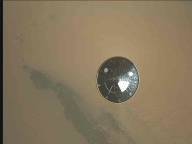
Color image of lander going down
http://mars.jpl.nasa.gov/msl-raw-images/msss/00000/mrdi/0000MD9999000036I1_DXXX.jpg
-
Re:Image sources
-
Image sources
Tiff images
http://photojournal.jpl.nasa.gov/tiff/
XML source file for day 0
http://landingimagecatalog-1450153822.us-west-1.elb.amazonaws.com/landing/images_sol0.xml
-
"NASA should host their own videos" -- They do.
See http://www.nasa.gov/multimedia/videogallery/index.html?media_id=149933921 for the Curiosity landing video.
Cheers,
-
Re:I know NASA has had a few budget cuts ...
Well, partly found the answer -- http://msl-scicorner.jpl.nasa.gov/Instruments/Mastcam/
On the "plus" side, each of the mast cameras has a traditional GR/BG bayer array. On the "minus" side, ALL of the bayer elements are sensitive to low infrared (beyond 700nm). On the other hand, so are basically all CMOS cameras (they require external IR cut filters, which the rover has).
So, it looks like I can be happy. The colors might not be 100% flawless, but they're almost certainly better than even the best DSLRs can produce. The main drawback is resolution. From the description, it's not clear whether 1200x1200 is the Bayer-adjusted "image detail" resolution, or whether they really mean each row has 600 green, and 600 pixels that are either red or blue.
-
Re:Is There Evidence of Shifting Poles
You should ask about the magnetic poles and if increasing/decreasing magnetic fields effect gravity at all? Do they take into account the magnetic fields? And if solar storms impact the larger magnetic field outside the planet... Or are they just detecting mass levels?
GRACE just detects mass; solar storms are a source of noise because they exert non-gravitational forces on the satellites which need to be subtracted to analyze the gravitational forces.
My question is if the melting arctic ice cap will impact the mass up there and will cause a change in the gravity?
Since GRACE only detects mass, it can't tell the difference between floating sea ice and the equivalent amount of water displaced by the floating ice. So GRACE can't see the melting Arctic ice cap, but it can see thinning glaciers and ice sheets when the meltwater flows into the ocean because in that case the mass moves.
Does warmer water in the summer weigh more or take up more volume?
Yes, this is called the thermosteric effect; I mentioned annual variations in paragraph 13 of my 2011 paper. Satellite altimeters like JASON and TOPEX/Poseidon can measure sea level rise due to thermosteric effects, but they also measure the sea level rise due to added water from thinning ice sheets and glaciers. Because GRACE can only measure the mass of the added water, it can't measure sea level rise due to steric effects (temperature and salinity). Ironically, this means we can solve for steric sea level rise by subtracting the GRACE estimate of sea level rise from the altimeter estimates.
If snow is less dense than ice (mostly), can you tell where the glaciers are melting and not recovering after the winter?
Not with GRACE alone, but (as with steric sea level rise) satellite altimetry can provide volume measurements. Of course, if the meltwater drains far away from the glacier, GRACE alone could see this change in mass. And, in fact, GRACE is observing this all over the globe.
-
What a load of carp.
It is just a load of carp.
So is your entire post. No orders came from any president to 'destroy the documentation', it all went into archives where engineers and historians have happily mining it ever since. NASA has also put tons of it online in various places. Here's the results of a search for "Apollo Guidance" on just one of them... Here's a story about NASA using Apollo era documentation for the Constellation program. (And here's a link to some of the experience reports mentioned in the story.)
Sling shot was always the option for emergency and in fact was actually tested on Apollo 8.
Um, no it wasn't. Apollo 8 went into orbit, it did not slingshot.
As to using the LEM for lifeboat, that sort of was invented by the Astronauts at the time.
No, it wasn't. The LEM Lifeboat scenario was first studied around (IIRC) 1967 and was well documented.
Etc... etc...
We see all sorts of rewrite of history crap going on now days and I wish people would quit listening to it.
This from the guy who got almost every single claim verifiable against historical references wrong?
-
What a load of carp.
It is just a load of carp.
So is your entire post. No orders came from any president to 'destroy the documentation', it all went into archives where engineers and historians have happily mining it ever since. NASA has also put tons of it online in various places. Here's the results of a search for "Apollo Guidance" on just one of them... Here's a story about NASA using Apollo era documentation for the Constellation program. (And here's a link to some of the experience reports mentioned in the story.)
Sling shot was always the option for emergency and in fact was actually tested on Apollo 8.
Um, no it wasn't. Apollo 8 went into orbit, it did not slingshot.
As to using the LEM for lifeboat, that sort of was invented by the Astronauts at the time.
No, it wasn't. The LEM Lifeboat scenario was first studied around (IIRC) 1967 and was well documented.
Etc... etc...
We see all sorts of rewrite of history crap going on now days and I wish people would quit listening to it.
This from the guy who got almost every single claim verifiable against historical references wrong?
-
What a load of carp.
It is just a load of carp.
So is your entire post. No orders came from any president to 'destroy the documentation', it all went into archives where engineers and historians have happily mining it ever since. NASA has also put tons of it online in various places. Here's the results of a search for "Apollo Guidance" on just one of them... Here's a story about NASA using Apollo era documentation for the Constellation program. (And here's a link to some of the experience reports mentioned in the story.)
Sling shot was always the option for emergency and in fact was actually tested on Apollo 8.
Um, no it wasn't. Apollo 8 went into orbit, it did not slingshot.
As to using the LEM for lifeboat, that sort of was invented by the Astronauts at the time.
No, it wasn't. The LEM Lifeboat scenario was first studied around (IIRC) 1967 and was well documented.
Etc... etc...
We see all sorts of rewrite of history crap going on now days and I wish people would quit listening to it.
This from the guy who got almost every single claim verifiable against historical references wrong?
-
Re:Recent Greenland Melting
Other satellites noticed Greenland's extensive surface melt because melting snow lowers the ice sheet's albedo. However, water has the same mass as a liquid or solid, so GRACE can't tell the difference between ice and meltwater. GRACE can measure how much meltwater flows into the ocean, because in that case there would be less mass on Greenland.
Also, Ambitwistor referred to the popular monthly GRACE fields, which are available as spherical harmonics and gridded fields. In addition, CNES produces 10 day solutions, and Bonn even produces (constrained) daily solutions. But the monthly fields are by far the most widely used, because the ground track coverage is more complete during a month, and the extra data increases their signal to noise ratios.
-
Re:Recent Greenland Melting
Other satellites noticed Greenland's extensive surface melt because melting snow lowers the ice sheet's albedo. However, water has the same mass as a liquid or solid, so GRACE can't tell the difference between ice and meltwater. GRACE can measure how much meltwater flows into the ocean, because in that case there would be less mass on Greenland.
Also, Ambitwistor referred to the popular monthly GRACE fields, which are available as spherical harmonics and gridded fields. In addition, CNES produces 10 day solutions, and Bonn even produces (constrained) daily solutions. But the monthly fields are by far the most widely used, because the ground track coverage is more complete during a month, and the extra data increases their signal to noise ratios.
-
Re:Recent Greenland Melting
Other satellites noticed Greenland's extensive surface melt because melting snow lowers the ice sheet's albedo. However, water has the same mass as a liquid or solid, so GRACE can't tell the difference between ice and meltwater. GRACE can measure how much meltwater flows into the ocean, because in that case there would be less mass on Greenland.
Also, Ambitwistor referred to the popular monthly GRACE fields, which are available as spherical harmonics and gridded fields. In addition, CNES produces 10 day solutions, and Bonn even produces (constrained) daily solutions. But the monthly fields are by far the most widely used, because the ground track coverage is more complete during a month, and the extra data increases their signal to noise ratios.
-
NASA blocked the article
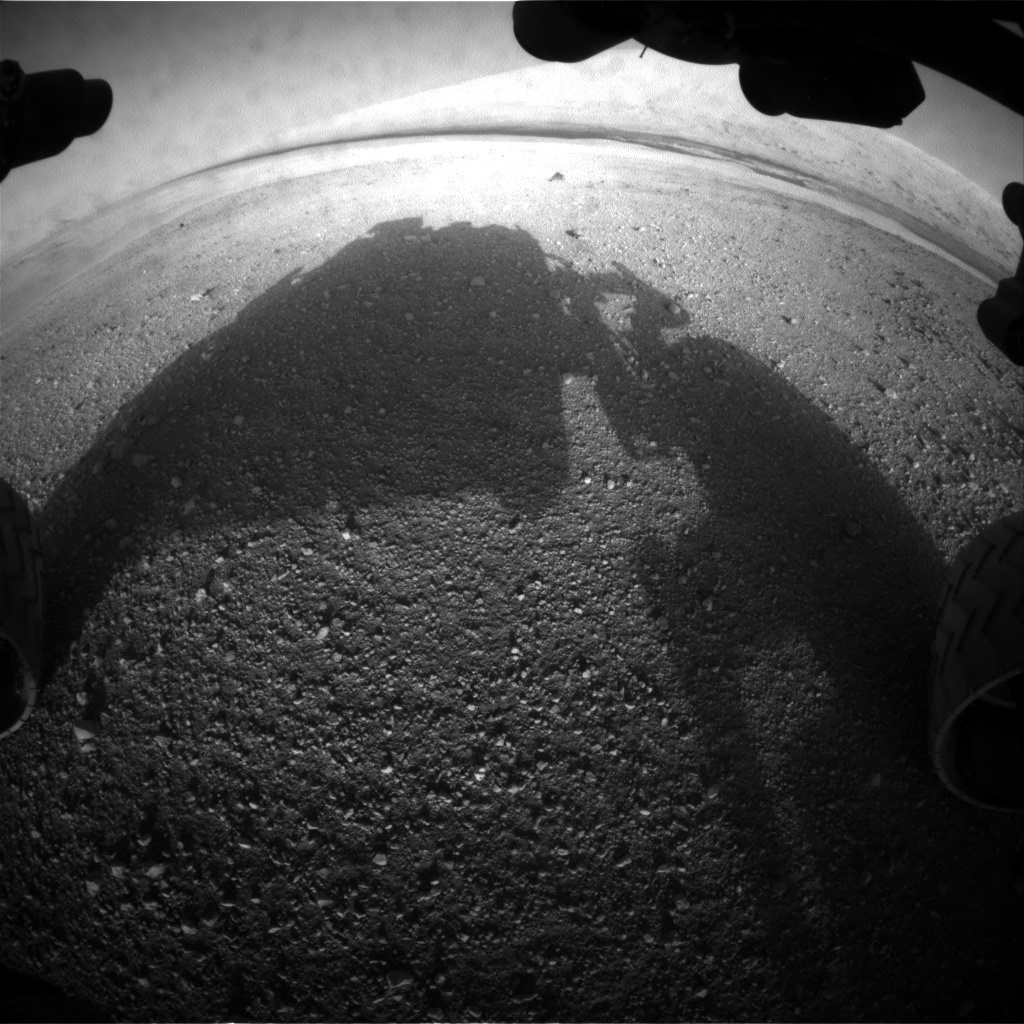
I can't view the article because NASA web filter blocks it. You can view the NASA's curiosity video here: http://www.nasa.gov/multimedia/videogallery/index.html?collection_id=18895
-
Re:Copyright violations
Using NASA Imagery and Linking to NASA Web Sites
Still Images, Audio Recordings, Video, and Related Computer Files
NASA still images; audio files; video; and computer files used in the rendition of 3-dimensional models, such as texture maps and polygon data in any format, generally are not copyrighted. You may use NASA imagery, video, audio, and data files used for the rendition of 3-dimensional models for educational or informational purposes, including photo collections, textbooks, public exhibits, computer graphical simulations and Internet Web pages. This general permission extends to personal Web pages.
http://www.nasa.gov/audience/formedia/features/MP_Photo_Guidelines.html
-
Re:Streaming video
It wasn't the commentator that bothered me. It was the "alec baldwin" look-alike that kept interrupting and pacing back and forth. Surely he was the useless manager pretending to know what was happening. (and accepting praise for success)
Are you referring to Adam Sleltzner? Engineers.
If it was me, I'd be pacing back and forth until the touchdown message well.
-
Re:Wow.
Not true.
In fact NASA was amazed just how much continued interest there was in the Spirit and Opportunity rovers over the years.
The hits on the web site show a huge spike every time one of these
rovers bump into an interesting rock, even if the mainstream media can't be bothered to mention it.Nobody expects constant 24 7 news coverage of the slow journey of a rover across a barren plane. Nor do we watch
sports super stars driving to the stadium.This idea that there has to be 24/7 engagement of drop-jawed rapture to indicate
a high level of public interest seems to be trotted out ONLY for Space explorations.Virtually no other endeavor on earth is judged by this standard.
-
Re:Wow.
http://mars.jpl.nasa.gov/msl/multimedia/raw/
https://twitter.com/NASA/status/232350219700932608/photo/1 for that very first 64x64 pixels thumbnail.
-
Re:Wow.
The first images are online here: http://mars.jpl.nasa.gov/msl/raw/
-
Re:Streaming video
They did. This stream was pure comms and nothing else. I kept the annoying PR stream open in another tab but muted.
-
Re:Most awesome nerd date ever
First images available at: http://mars.jpl.nasa.gov/msl/multimedia/raw/
-
Re:Best place to catch up on the arrival
Check out http://eyes.nasa.gov/
That tool is brilliant, already watching Live. Also following a live stream with commentary at twit.tv.
-
Best place to catch up on the arrival
Check out http://eyes.nasa.gov/
From the page:
""Eyes on the Solar System" is a 3-D environment full of real NASA mission data. Explore the cosmos from your computer. Hop on an asteroid. Fly with NASA's Voyager spacecraft. See the entire solar system moving in real time. It's up to you. You control space and time."and
"Eyes on the Solar System lets you ride with Curiosity all the way to the surface of Gale crater. Preview the events of Entry Descent and Landing, or watch live!"
-
Re:Here is live streamhttp://www.nasa.gov/multimedia/nasatv/ustream.html
That's the official secondary NASA stream. I tried the primary stream for the SpaceX thing a few months ago, and this one worked better for me.
Also, NASA has now intercepted the main nasa.gov web page URL with a special page that has the primary stream.
-
Some linksHere are some good links that I have cobbled together mostly from previous slashdot articles:
- Spacevidcast - live talks, with telemetry sidebar
- Eyes on the solar system - pretty cool simulation with view a few meters away from the lander
- BoingBoing, linked earlier in this post
- NASA TV
Happy viewing! Fingers crossed!
p.s. watching the simulation while listening to the beautiful blue danube is kind of fun -
Some linksHere are some good links that I have cobbled together mostly from previous slashdot articles:
- Spacevidcast - live talks, with telemetry sidebar
- Eyes on the solar system - pretty cool simulation with view a few meters away from the lander
- BoingBoing, linked earlier in this post
- NASA TV
Happy viewing! Fingers crossed!
p.s. watching the simulation while listening to the beautiful blue danube is kind of fun -
Re:150 kg dead weight?
It all has to do with shifting the center of mass. From the official NASA press kit: http://mars.jpl.nasa.gov/msl/news/pdfs/MSLLanding.pdf
After the turn to entry, the back shell jettisons two solid tungsten weights, called the “cruise balance mass devices.”
Ejecting these devices, which weigh about 165 pounds (75 kilograms) each, shifts the center of mass of
the spacecraft. During the cruise and approach phases, the center of mass is on the axis of the spacecraft’s
stabilizing spin. Offsetting the center of mass for the period during which the spacecraft experiences dynamic
pressure from interaction with the atmosphere gives the Mars Science Laboratory the ability to generate lift,
essentially allowing it to fly through the atmosphere. The ability to generate lift during entry increases this mission’s
capability to land a heavier robot, compared to previous Mars surface missions.
The spacecraft also manipulates that lift, using a technique called “guided entry,” to steer out unpredictable
variations in the density of the Mars atmosphere, improving the precision of landing on target.
During guided entry, small thrusters on the back shell can adjust the angle and direction of lift, enabling the
spacecraft to control how far downrange it is flying. The spacecraft also performs “S” turns, called bank reversals,
to control how far to the left or right of the target it is flying. These maneuvers allow the spacecraft to
correct position errors that may be caused by atmosphere effects, such as wind, or by spacecraft modeling
errors. These guided entry maneuvers are performed autonomously, controlled by the spacecraft’s computer
in response to information that a gyroscope-containing inertial measurement unit provides about deceleration
and direction, indirect indicators of atmospheric density and winds.After the spacecraft finishes its guided entry maneuvers, a few seconds before the parachute is deployed, the
back shell jettisons another set of tungsten weights to shift the center of mass back to the axis of symmetry.
This set of six weights, the “entry balance mass devices,” each has a mass of about 55 pounds
(25 kilograms). Shedding them re-balances the spacecraft for the parachute portion of the descent. -
Re:When is it landing?
A few hours from now. For a handy countdown (or to avoid trying to work out the time zone differences): http://mars.jpl.nasa.gov/msl/participate/
-
Countdown
Would it really be so much to ask for a link to the Countdown?!?
-
Re:So WHAT'S THE FUCKING TIME ALREADY !!
Just noticed a typo in the article -- it's actually PDT, not PST.
NASA has a convenient countdown timer here:
-
Re:Only $375 Million?
Neither Cat scans nor MRI came from NASA. Lots of spin-offs and improvements, but not what you said.
-
Re:WTF?
Yep, you've completely misunderstood what this is. Feel free to RTFA. At least this one: http://www.nasa.gov/exploration/commercial/crew/ccicap-announcement.html
-
On TwiT.tv
I'll watch it at TwiT.tv -> http://twit.tv/2012/07/30/mars-landing-special-aug-5th-10pm-pdt
The presenters/guests to this event will be:
Jonathan Strickland (How Stuff Works) -> http://www.howstuffworks.com/jonathan-strickland-author1.htm
Dr Kiki (Dr Kiki Science Hour) -> http://en.wikipedia.org/wiki/Kiki_Sanford
Phil Plait (Bad Astronomer) -> http://blogs.discovermagazine.com/badastronomy/2012/07/20/mars-attacks-of-the-show/
Steve Sell (JPL, Sky Crane) -> http://science.nasa.gov/science-news/science-at-nasa/2012/30jul_skycrane/Hope they do a good job!
Peace!
-
Re:Your eyes
A better Idea would be to watch Streaming NASA TV
Streaming NASA TV
http://www.nasa.gov/multimedia/nasatv/index.html
NASA TV on USTREAM
http://www.ustream.tv/blog/2012/07/31/get-excited-the-mars-rover-landing-will-be-live-on-ustream/ -
Virtual Front Row
You can watch it virtually using this online tool:
http://eyes.nasa.gov/index.html
Will let you visualize the Mars rendezvous and "I think" the decent.
-
Re:Climate Change
I can't see how this furthers the exploration of space,
It doesn't further exploration of space. My point is that exploration of space is not the only thing NASA does, nor the only thing that it is tasked to do.
which seems to be the very last priority on the budget sheet these days, and the one that gets entirely cut first.
I'm sympathetic to cuts in both exploration and science, but my point is that NASA is supposed to, does, and should, do both.
Furthermore, my reading of this year's NASA budget indicates that Earth Science got a 0.2% cut over the previous year, while Exploration got a 6.5% increase. ("Science" as a whole got a 0.2% increase, due entirely to a 3.7% boost to Planetary Science, which IMHO also counts as space exploration.)
-
NASA expertise [Re:Climate Change]
I'll ask the opposite question: why shouldn't aeronautical engineers, astrophysicists, and rocket scientists be involved in trying to make unambiguous measurements of a critical issue, to try to resolve key questions in a way that's independent of computer models or temperature measurements? Making an independent measurement of key scientific claims using a different technique is pretty much the gold standard of science.
Because it's not their field of expertise.
Precision measurements of the gravity field of the Earth using spacecraft? It most certainly is their field of expertise.
Because they should be focusing on what my tax dollars pay them to do - develop methods for space exploration and explore space.
Here is the wording of the Space Act of 1958, which established NASA and listed its mission and objectives. After declaring that NASA will be a civilian agency to undertake aeronautical and space activities of the U.S. "for the benefit of all mankind," it states:
"The aeronautical and space activities of the United States shall be conducted so as to contribute materially to one or more of the following objectives:
(1) The expansion of human knowledge of the Earth and of phenomena in the atmosphere and space. (2)Expanding human knowledge of the Earth and phenomena in the atmosphere: yes, the GRACE objectives fit into the mission that NASA is explicitly instructed to do.
Reference: http://history.nasa.gov/spaceact-legishistory.pdf
-
Re:Investigating Gravity?
No, frame dragging is only barely detectable by Gravity Probe B, which was designed specifically for that purpose. GRACE relies on highly accurate timing, which requires correcting for time dilation due to special and general relativity. Here's a reference.
-
Re:What does this have to do with Climate Change?
GRACE measures the accelerating mass loss in Greenland and Antarctica, and tracks global water storage.
-
Re:'a pernicious myth'
There are currently more than a few unmanned NASA space missions; http://www.nasa.gov/missions/current/index.html
Glancing through this list, confirms my argument. Each such mission is more or less it's own snowflake and doesn't really do much. Why isn't NASA surveying dozens to hundreds of asteroids each year? Putting landers on ten moons a year or rovers every year on Mars? Where is its ISRU research for the Moon and Mars?
Things are "hard" and cost a lot because almost everything is one-off, optimized to employ the most credentialed people (and generate profit for contractors) rather than do actual science or exploration goals. There's no underlying purpose to NASA space science or unmanned space exploration and it shows both in the limited scope of projects attempted and the general lack of ambition and planning.
Frankly, I think the only long term research goal that makes sense is to learn about the Solar System and develop useful technologies in order to enable economically viable activity both manned and unmanned throughout the Solar System.