Slashdot Mirror
Domain: nasa.gov
Stories and comments across the archive that link to nasa.gov.
Comments · 16,365
-
Re:Purcahses
They have facilities http://quest.arc.nasa.gov/antarctica/background/NSF/mc-stay.html . Beer isn't free, even in Antarctica.
-
Re:What ever happened to Terminal Velocity?
Looking at Wikipedia, the speed of sound at that height should be about 300 m/s.
According to the NASA calculator (combined with Google to get from/to SI units), in 120.000 ft height the terminal speed is much larger than that (I inserted Baumgartner's weight (73kg = 161 lbs) and 120000 ft (which the calculator changed to 100000 for reasons unknown to me), but didn't change the other parameters; according to the NASA calculator, the terminal velocity at that height is 1700 ft/s, which is 518 m/s, and therefore much larger than 300 m/s. -
Comparison
Sorry for duplicated post
Compare the referred author picture of NGC 6888 here to a professional job there. The former is still very impressive for an amateur, indeed this is the verbatim comment from the IAC site (where the professional picture was taken):
NGC 6888 is out of the reach of an amateur telescope. The nebula can only be observed in deep images. Large telescopes like the 2.5-m Isaac Newton Telescope on La Palma and narrow-band filters are needed to image the intricate structure of the gas shells.
-
Re:Elon Musk's Rebuttal
Also for reference: Spaceflightnow's actual article as opposed to the apparent soundbite linked to in the summary....I mean really, what was it? Three paragraphs?
Agreed, and going even further a link to a copy of the actual report would have been useful as well.
-
Re:So they RDP to a ground computer....
There are no line of sight problems because the ISS uses TDRSS https://www.spacecomm.nasa.gov/spacecomm/programs/tdrsS/default.cfm, which gives them 24x7x365 global coverage.
-
Re:NASA isn't good at listening
Just trying readying Feynman's experience with them.
It's really funny that you mention Feynman, because the problem he opens with in his dissenting opinion as a member of the panel which studied the Challenger accident is the exact same problem NASA management (especially Alabama's MSFC) has been having in their push of the Ares I as the "safest launch vehicle ever":
http://science.ksc.nasa.gov/shuttle/missions/51-l/docs/rogers-commission/Appendix-F.txt
It appears that there are enormous differences of opinion as to the
probability of a failure with loss of vehicle and of human life. The
estimates range from roughly 1 in 100 to 1 in 100,000. The higher
figures come from the working engineers, and the very low figures from
management. What are the causes and consequences of this lack of
agreement? Since 1 part in 100,000 would imply that one could put a
Shuttle up each day for 300 years expecting to lose only one, we could
properly ask "What is the cause of management's fantastic faith in the
machinery?"If a reasonable launch schedule is to be maintained, engineering
often cannot be done fast enough to keep up with the expectations of
originally conservative certification criteria designed to guarantee a
very safe vehicle. In these situations, subtly, and often with
apparently logical arguments, the criteria are altered so that flights
may still be certified in time. They therefore fly in a relatively
unsafe condition, with a chance of failure of the order of a percent
(it is difficult to be more accurate).Official management, on the other hand, claims to believe the
probability of failure is a thousand times less. One reason for this
may be an attempt to assure the government of NASA perfection and
success in order to ensure the supply of funds. The other may be that
they sincerely believed it to be true, demonstrating an almost
incredible lack of communication between themselves and their working
engineers.(It's also interesting to note that Feynman essentially had to fight the rest of the panel to include his dissent, as they wanted to just trust NASA to fix its problems on its own. Also worth noting that the management-to-engineer ratio at NASA is far higher than it was in Feynman's day)
Even though the Ares I exists only on paper and it hasn't even passed a reasonable design review, NASA management (or at least the pre-Bolden management) claimed it would have a failure rate of 1-in-3000. Also, this failure rate ignores a number of potential problems which have come up with the design, but the ASAP panel mentioned in the summary just takes it on good faith that NASA will still make a perfectly safe vehicle with the Ares I. Fortunately, a number of the top Ares managers have already been canned, and the new administrator, Charles Bolden, seems to be much less problematic than his predecessor, Michael Griffin (i.e. he doesn't believe himself to be the world's greatest aerospace engineer, and so actually listens to what his engineers tell him).
It's also worth noting that NASA (and the DOD, and NRO) already uses commercial launchers for all of their unmanned probes, as they've been doing for several years now. We all like to say human life is priceless, etc. etc., but there frankly isn't much more you'd do to safeguard a volunteering person than you'd do for a billion-dollar unmanned probe representing years of work by huge teams.
-
Re:This just in....Monopolies do not like competit
NASA is not the organization that came out in a statement against commercial spaceflight in this press release. The organization that made the criticisms of commercial space systems is an independent review board of 'experts and engineers' that has been advising and consulting NASA since 1968 if I recall correctly. The panel is known as ASAP. A description of its role can be found on NASA's site here: ASAP. While the agency appears to work very closely with, it was/is supposed to be an independent safety committee formed by Congress to inform Congress. You can take that to infer whatever levels of benevolence vs. evil intent that you wish.
-
Re:Rocks?!?!?
Spirit and Opportunity are geology missions. Looking for & at rocks is what they are intended to do.
There is a back story here. After the perceived strategic failure of Viking (the spacecraft all worked fine, but a lot of money was spent to find life, and then positive results from the bio experiments were disbelieved because of the low levels of organics on the surface), it has taken NASA 3+ decades to attempt another biology test - the MSL. The MER were sold to do geology, and that's what they have been doing.
-
Better article about Marquette Island
Here's a better article with a bigger picture and a bit more explanation, and here's a much bigger picture.
-
Stop with the Limbaugh bullshit already.....
the second one with crappy environmentally friendly tile modifications was most definitely caused by NASA management listening to environmentalist dipshits instead of the experts.
What exactly are these "tile modifications" you refer to? The fragile thermal tiles played no part in the Columbia accident, which involved a chunk of foam insulation from the external tank impacting the reinforced carbon-carbon leading edge of the orbiter's wing.
And before you try to backpedal, and trot out the old right-wing canard (originated by Rush Limbaugh) about the ET insulation foam having been reformulated without CFCs, try reading the CAIB report (volume 1, Page 51), which specifically states that the portion of the foam that broke loose was the OLD CFC-based formulation.
http://www.nasa.gov/columbia/caib/PDFS/VOL1/PART01.PDF
http://mediamatters.org/research/200508090007
http://www.sts107.info/kooks%20and%20myths/kooks.htm#EPA -
Re:Glass worms of Mars
There are already plenty of pictures of those, including even some from HiRISE. Zoom in all you like on those pictures. They are much more detailed than the MGS ones. Contrary to the interpretations of the "Enterprise Mission" guys, these structures are clearly just dunes in the bottom of canyons, as people have previously suggested. They are all over the place on Mars.
The real problem is, the Enterprise guys don't know how to interpret aerial photography and integrate it with other information very well (e.g., terrain profiles from MOLA) to figure out what the real 3D geometry of surface features are. Basically, if something superficially looks like a "tube" or that it is "transparent glass", to them maybe it is. They often fail to use shadows or other known features properly to figure out the geometry, and invert the shape of things (hence the thinking these things were "tubes" rather than the bottom of valleys). The depth of analysis on that site is quite shallow -- lengthy and wordy, but not very critical. For example, he's simply wrong that you can't have wind blowing along the length of differently-oriented valleys and producing dune patterns that reorient due to the terrain, or even that abruptly cross each other (the dunes don't have to all be active simultaneously. In perpendicular valleys the crosswind may be too weak to move those dunes while the parallel ones are active, and vice-versa). There are all sorts of places where the orientation of dunes on Mars practically bend around the terrain at a surprisingly small scale. It is quite common for the dunes to be differently colored from their surroundings because they consist of wind-sorted material -- selective transport of certain mineral grains due to size is common on Earth.
That being said, sure, why not take a picture of the particular ones the Enterprise Mission interpret as something weird? 100 quatloos says the image will show their interpretation to be wrong.
-
Re:Glass worms of Mars
There are already plenty of pictures of those, including even some from HiRISE. Zoom in all you like on those pictures. They are much more detailed than the MGS ones. Contrary to the interpretations of the "Enterprise Mission" guys, these structures are clearly just dunes in the bottom of canyons, as people have previously suggested. They are all over the place on Mars.
The real problem is, the Enterprise guys don't know how to interpret aerial photography and integrate it with other information very well (e.g., terrain profiles from MOLA) to figure out what the real 3D geometry of surface features are. Basically, if something superficially looks like a "tube" or that it is "transparent glass", to them maybe it is. They often fail to use shadows or other known features properly to figure out the geometry, and invert the shape of things (hence the thinking these things were "tubes" rather than the bottom of valleys). The depth of analysis on that site is quite shallow -- lengthy and wordy, but not very critical. For example, he's simply wrong that you can't have wind blowing along the length of differently-oriented valleys and producing dune patterns that reorient due to the terrain, or even that abruptly cross each other (the dunes don't have to all be active simultaneously. In perpendicular valleys the crosswind may be too weak to move those dunes while the parallel ones are active, and vice-versa). There are all sorts of places where the orientation of dunes on Mars practically bend around the terrain at a surprisingly small scale. It is quite common for the dunes to be differently colored from their surroundings because they consist of wind-sorted material -- selective transport of certain mineral grains due to size is common on Earth.
That being said, sure, why not take a picture of the particular ones the Enterprise Mission interpret as something weird? 100 quatloos says the image will show their interpretation to be wrong.
-
Re:Glass worms of Mars
There are already plenty of pictures of those, including even some from HiRISE. Zoom in all you like on those pictures. They are much more detailed than the MGS ones. Contrary to the interpretations of the "Enterprise Mission" guys, these structures are clearly just dunes in the bottom of canyons, as people have previously suggested. They are all over the place on Mars.
The real problem is, the Enterprise guys don't know how to interpret aerial photography and integrate it with other information very well (e.g., terrain profiles from MOLA) to figure out what the real 3D geometry of surface features are. Basically, if something superficially looks like a "tube" or that it is "transparent glass", to them maybe it is. They often fail to use shadows or other known features properly to figure out the geometry, and invert the shape of things (hence the thinking these things were "tubes" rather than the bottom of valleys). The depth of analysis on that site is quite shallow -- lengthy and wordy, but not very critical. For example, he's simply wrong that you can't have wind blowing along the length of differently-oriented valleys and producing dune patterns that reorient due to the terrain, or even that abruptly cross each other (the dunes don't have to all be active simultaneously. In perpendicular valleys the crosswind may be too weak to move those dunes while the parallel ones are active, and vice-versa). There are all sorts of places where the orientation of dunes on Mars practically bend around the terrain at a surprisingly small scale. It is quite common for the dunes to be differently colored from their surroundings because they consist of wind-sorted material -- selective transport of certain mineral grains due to size is common on Earth.
That being said, sure, why not take a picture of the particular ones the Enterprise Mission interpret as something weird? 100 quatloos says the image will show their interpretation to be wrong.
-
Re:Glass worms of Mars
There are already plenty of pictures of those, including even some from HiRISE. Zoom in all you like on those pictures. They are much more detailed than the MGS ones. Contrary to the interpretations of the "Enterprise Mission" guys, these structures are clearly just dunes in the bottom of canyons, as people have previously suggested. They are all over the place on Mars.
The real problem is, the Enterprise guys don't know how to interpret aerial photography and integrate it with other information very well (e.g., terrain profiles from MOLA) to figure out what the real 3D geometry of surface features are. Basically, if something superficially looks like a "tube" or that it is "transparent glass", to them maybe it is. They often fail to use shadows or other known features properly to figure out the geometry, and invert the shape of things (hence the thinking these things were "tubes" rather than the bottom of valleys). The depth of analysis on that site is quite shallow -- lengthy and wordy, but not very critical. For example, he's simply wrong that you can't have wind blowing along the length of differently-oriented valleys and producing dune patterns that reorient due to the terrain, or even that abruptly cross each other (the dunes don't have to all be active simultaneously. In perpendicular valleys the crosswind may be too weak to move those dunes while the parallel ones are active, and vice-versa). There are all sorts of places where the orientation of dunes on Mars practically bend around the terrain at a surprisingly small scale. It is quite common for the dunes to be differently colored from their surroundings because they consist of wind-sorted material -- selective transport of certain mineral grains due to size is common on Earth.
That being said, sure, why not take a picture of the particular ones the Enterprise Mission interpret as something weird? 100 quatloos says the image will show their interpretation to be wrong.
-
Re:"No flight ceiling"
The reference to max altitude being un-inhibited by thin air due to the powerplant not being combustion based is misleading. The term "service ceiling" is used to define the altitude at which (generally), aircraft will not climb at a rate faster than 100 feet per minute in a sustained climb attitude. This is a factor of air density (and max available power) - which affects both power output of the "engine" if this were a combustion engine, as well as the airfoil, and the lift (and drag) it produces (in a fixed wing craft). If the powerplant is electric, one still contends with air density which as a factor in the lift formula: L = (1/2) d v2 s CL, where * L = Lift, which must equal the airplane's weight (and pilot) in pounds * d = density of the air. This will change due to altitude. These values can be found in a I.C.A.O. Standard Atmosphere Table. * v = velocity of an aircraft expressed in feet per second * s = the wing area of an aircraft in square feet * CL = Coefficient of lift , which is determined by the type of airfoil and angle of attack. reference: http://www.grc.nasa.gov/WWW/K-12/WindTunnel/Activities/lift_formula.html If the air gets too thin - you're lift value will drop, and if it drops out (pilot plus craft weight) before the battery runs down, the craft will cease to climb because of the drop in air density.
-
Re:Second Priority
They need to send one of these up around the moon and prove the moon lander is there.
I'm not sure how that's supposed to be better evidence than the presence of mirrors for laser range-finding placed there by the astronauts that a variety of institutions around the world have used to measure the earth-moon distance (and of course in the process verifying their presence) would be.
I don't know would be more annoying - finding out its faked or seeing conspiracy theorists reject it as evidence.
Annoying? If the probe provided evidence that the landings were "faked", meaning we could no longer see the landers that the Lunar Reconnaissance Orbiter imaged only months ago that wouldn't be annoying. It'd be one of the most baffling mysteries in modern history!
The question wouldn't be "does this mean we never landed on the moon?", it'd be "who landed on the moon without telling anyone and stole the fucking landers?!"
Oh and obviously if the conspiracy theorists are not satisfied with the existing evidence, they will never be satisfied, because they simply don't want to be satisfied.
-
Re:First Priority
Here you go, start looking... http://beamartian.jpl.nasa.gov/welcome/
Right now you can help look for crater or map mars. -
Priorities are a function of Probabilities
Scenario 1: Asteroid strike. I defer to NASA JPL, the Tunguska event (100-meter class = ~ 15 mil tons TNT) asteroid occurs once or twice / 1000 years. A 1000-meter class is 1 in 15 million years. An 8000-meter class (dinosaur killer) is 1 in 50-100 million years.
Scenario 2: Earthquake. San Francisco has an annual forecast of earthquake probabilities, and they predict a 68% probability of a 6.7 Magnitude or greater in the next 30 years. Wikipedia gives a probability scale for earthquakes, where a Magnitude 7 (similar to what struke Haiti) occurs 18 / year. A single 6.7 earthquake (P = 120/year) is equivalent to 16 kilotons of energy, or about 1 Tungaska event (P = 0.004/year).
Given the disparity in the probability of asteroid strikes (on populated areas, no less) vs earthquakes, it should be no surprise that the world governments believe money is better spent on earthquake prediction and evacuation relief, not on asteroid strike detection. The "bang for the buck" is clearly higher in earthquake spending.
-
Re:Paid by the tax payer ....
They are being given away. $28.8 million is the estimated "cost to complete display preparation for each Orbiter and ferry the Orbiter to its ultimate display location".
And private collectors are not invited: "Organizations responding to this RFI must be: 1) a U.S. museum, institution, or organization dedicated to education or educational outreach, including NASA Visitor Centers; 2) a U.S. Federal agency, State, Commonwealth, or U.S. possession or any municipal corporation or political subdivision thereof; or 3) the District of Columbia."
http://www.nasa.gov/mission_pages/transition/home/int_orbiter_rfi.html -
Re:Where is Opportunity ?
Here is the actual Nasa Mars Rover site . .
http://marsrover.nasa.gov/home/index.html -
Re:I don't understand
Something I don't get, and is unanswered in general. When the ISS was first assembled back in 1998, it was asserted at the time that this was going to be the first permanent outpost of humanity in space.
Perhaps I'm getting senile in my old age and not remembering things very clearly.
YOU are doing just fine, my friend. Those were my first thoughts reading the TFS. Your post really sparked the old gray cells and I thank you for that. That said, google is my friend, and the fossil record indeed supports the idea that we were promised and sold as taxpayers the idea that this would be a permanent station - I simply googled "iss permanent outpost" and got some interesting stuff right off the bat:
http://www.space.com/common/media/show/player.php?show_id=26&ep=4
http://science.howstuffworks.com/space-station.htm
However, note that in 2000, there came the obscure quote from a NASA mgr - "This is the beginning of what we hope is at least 15 years of continuous human presence in space, and personally, I hope its much, much longer than that that once we get this crew on orbit, well have spacecraft flying with people on board for centuries to come." Source -
http://www.space.com/missionlaunches/missions/exp_one_iss_001030.html
Nonetheless, the "permanent outpost" meme was alive and well in 2007 -
http://eu.spaceref.com/news/viewpr.html?pid=24180
And what's NASA's real plan? Get a load of the roadmap on slide 2 - and the clever glyph at the right end of the ISS bar, showing neither certainty nor commitment -
http://www.nasa.gov/pdf/203075main_ECLSS%20Technology%20Exchange%20Conference%20briefing.pdf
-
Re:Yeah, right
That's overstating it a little bit.
http://www.nasa.gov/vision/space/workinginspace/great_wall.html
-
Re:Where's the big science I heard about?
I'm not questioning the amount of money you have quoted here, as the number feels correct too. It just seems like NASA is incredibly wasteful of the money they have, and that it practically is the very definition of how to spend money in the most foolhardy method possible.
Ack, this is really embarrassing on my part, but it looks like the "$4.5 billion a year" figure is inaccurate. I had it from this source, which was one of the first items to pop up in my Google search: "In the years after the Shuttle retires, the annual operation costs of the ISS will be $4.5 billion per year.1"
The footnote says that the figure came from one of these two GAO sources:
* NASA: Challenges in Completing and Sustaining the International Space Station
* Space Station: Actions Under Way to Manage Cost, but Significant Challenges Remain
However, after reading your comment I've searched through the text of both GAO sources and I can't find anything to support the first source's claim. I did find the following through from the first GAO report: "NASA estimates that assembly and operating costs of the ISS will be between $2.1 billion to $2.4 billion annually for FY2009-FY2012. The ISS as of February 19, 2008, is approximately 65 percent complete."
I ended up looking through the final report of the White House/NASA Augustine Commission (published late 2009) and found this in section 6.4.2:
The choice of ending U.S. participation in the ISS in 2015 really provides only one benefit, that of freeing up the roughly $2.5 to $3 billion per year needed to
run the ISS, which can then be invested in the more rapid development of the exploration systems. The Committee's Integrated Option analyses show that if coupled to the choice of commercial crew launch system to low-Earth orbit and the Ares V Lite heavy lift choice, this expenditure on the ISS would delay the exploration of the Moon until the mid-2020s, only a few years after the most aggressive, unconstrained profile would accomplish it.In any case, $2.5-$3 billion a year is still a huge chunk of change. I totally agree with your original sentiment.
-
Crank stuff indeed
From what I can tell, the Breakthrough Propulsion Physics lab investigates crackpot theories on the off chance that some might have merit. I'm not convinced that this exercise is completely without merit.
The rest of NASA's science work, however, appears to be up the same standards you'd find anywhere else. Look at all the planetary science and material science work: you can't fake that. NASA's results would have been discredited long ago if they weren't engaging in legitimate research.
-
You didn't want to know...
http://www.jpl.nasa.gov/asteroidwatch/
RSS, e-mail, Twitter, OSX & Yahoo Widget; whatever you prefer.
-
Re:I am the Loran
A "nuke in space" wouldn't' do that much. Space is big and already filled with a wide range of radiation. The flash from a single nuke wouldn't blind too many sats for that long, and while it could certainly take out a satilite it wouldn't be able to take out many at once.
Hmm...
http://en.wikipedia.org/wiki/High-altitude_nuclear_explosion#EMP_generation
http://history.nasa.gov/conghand/nuclear.htm"The potential as an anti-satellite weapon became apparent in August 1958 during Hardtack Teak. The EMP observed at the Apia Observatory at Samoa was four times more powerful than any created by solar storms, while in July 1962 the Starfish Prime test damaged electronics in Honolulu and New Zealand (approximately 1,300 kilometers away), fused 300 street lights on Oahu (Hawaii), set off about 100 burglar alarms, and caused the failure of a microwave repeating station on Kauai, which cut off the sturdy telephone system from the other Hawaiian islands
-
JPL Close Earth Approaches
Here is the JPL site that shows the recent misses and all the upcoming near earth approaches - I like to go here once in a while just to see how close we are to the world ending. This is the first time I've seen anything on the list within one lunar distance - srot of makes you go - wow! http://neo.jpl.nasa.gov/ca/
-
Re:Wireless power transmisstion is possible ...
Not necessarily, *if* longitudinal electric waves are used instead of Herzian waves. See Nasa's "Advanced Energetics for Aeronautical Applications: Volume II":
http://ntrs.nasa.gov/archive/nasa/casi.ntrs.nasa.gov/20050170447_2005172301.pdf
"Meyl helps resolve the controversy between longitudinal and transverse waves by explaining that the high-voltage "spark" transmitters used in the early days of radio actually transmitted both longitudinal and transverse waves (Ref. 33, p. 459). The characterization of the type of radio technology employed was in the receiver, not the transmitter. Tesla's equipment would only receive longitudinal waves, whereas the equipment of Hertz and other pioneer radio inventors (such as Marconi) were designed to receive only transverse waves. Because both types of waves (longitudinal and transverse) were being transmitted, both viewpoints of how the technology functioned were correct."If Prof. Meyl is right and any normal RF transmitter indeed transmits both kinds of waves, then you could design a receiver tuned for these longitudinal waves, which according to Meyl can give a very tight coupling between transmitter and reciever and thus a very high efficiency in terms of energy transmission. From the same document:
"Meyl points out the wastefulness of Hertzian wave technology for communicating point to point (Ref. 33, pp. 482-485). With conventional Hertzian waves, only a very small fraction of transmitted energy arrives at the intended point of reception. In contrast to this, scalar wave communication, where the energy couples to the receiver (at resonance), could (according to Meyl) allow one to "carry out a telephone call right through the Earth" with the power expenditure of only a few microwatts."
So, the key then seems to be that transmitter and receiver are in resonance, coupled by the electric field, *not* the magnetic field.
-
Close encounters
If you can trust extrapolating the orbit backwards in time (you can't), JPL's orbital tool shows that this object had a 'close encounter' with Venus on Apr 15th, 2006. It also looks suspiciously like an Earth-Mars trajectory launched around Jan 12th, 2007. I was unable to find any corresponding launches, however.
Real Astronomers (TM) have now discounted the object being man-made, but it is interesting to speculate.
-
Re:Well two things
According to Nasa's "Advanced Energetics for Aeronautical Applications: Volume II" Tesla did get it working:
http://ntrs.nasa.gov/archive/nasa/casi.ntrs.nasa.gov/20050170447_2005172301.pdf
"However, Tesla's claims were backed up with documented experimental demonstrations rather than mathematical equations. In the following quotation, Meyl describes one of Tesla's demonstrations and states that Hertz's technology could not have accomplished such a demonstration:
In Colorado Springs he had built a 10 kW transmitting installation and lighted
200 fluorescent lamps of 50 Watt each on a mountain in the Rocky Mountains in a
distance of 25 miles. With that he had completely transmitted the transmission
power of 10 kW, as can be inferred from the press reports at that time. With
Hertzian waves, which propagate spatially, this experiment even today, after over
100 years, wouldn't be realizable technologically. According to the law of the
square of the distance one isn't even able to let glow a tiny little lamp in such a
distance.Meyl helps resolve the controversy between longitudinal and transverse waves by explaining that the high-voltage "spark" transmitters used in the early days of radio actually transmitted both longitudinal and transverse waves (Ref. 33, p. 459). The characterization of the type of radio technology employed was in the receiver, not the transmitter. Tesla's equipment would only receive longitudinal waves, whereas the equipment of Hertz and other pioneer radio inventors (such as Marconi) were designed to receive only transverse waves. Because both types of waves (longitudinal and transverse) were being transmitted, both viewpoints of how the technology functioned were correct."
-
Re:Free trade of ideas, anyone?
Just a few points...
1. Almost all glaciers are receding precipitously due to AGW, the slashdot article you point to is about the fact that Himalayan glaciers are retrtreating at a faster rate due to soot. The effect of soot on ice has been well documented over the last 50yrs.
2. Your magic eight ball is more informative than Anthony Watts. Watts is either a popogandist or a crank.
3. The world is not heading into 30 years of mini-ice age.
4. There will always be cold spells.
However I agree with your conclusion, the IPCC has been pointing out for over a decade now that the delta's in southern China, India and Bangladesh which currently support well over a billion people are "toast". I doubt the rest of the world will suddenly forget nationalisim and allow those people to simply "get out of Dodge". -
Re:hmm
As long as you have a decently accurate clock, you can get a lot closer than that without any externally-dependent navigational system.
-
Re:Free trade of ideas, anyone?
Personally I think China in it's present form is toast, first the Himalayan glaciers are receding precipitously due to Black soot particulates,which will devastate the Asian watershed, we're heading into 30 years of mini-ice age, Beijing was hit by its heaviest snowfall in 60 years so Asian agriculture may be in for quite a hard time. Cold, thirsty and hungry people get mean, and some kind of massive change is coming as far as China, the magic eight ball says "it's a good time to get the hell out of Dodge".
-
Re:What is the point in studying Mars?
They’re not just going off and dying on a mountain. They’re testing the limits of human endurance in high-altitude, low-pressure, arctic, and generally inhospitable conditions. They’re developing better, stronger, and safer gear and equipment. If it wasn’t for human ambition, and most of all, our curiosity and desire to learn and to build bigger and better things, our species wouldn’t accomplish much.
We do explore space in part for the thrill of it, and also to test our limits and to learn how to build better lives on Earth.
http://www.nasa.gov/about/highlights/what_does_nasa_do.html:
NASA's mission is to pioneer the future in space exploration, scientific discovery and aeronautics research.
To do that, thousands of people have been working around the world -- and off of it -- for 50 years, trying to answer some basic questions. What's out there in space? How do we get there? What will we find? What can we learn there, or learn just by trying to get there, that will make life better here on Earth?
Furthermore, you’re incorrect in your claim that taxes didn’t help climb Everest. Many of the climbs were at least partially funded or sponsored by various governments.
-
Re:Just because the math works doesn't mean it's t
Notice that this particular scientist also has experimental evidence ostensibly proving his theory. A theory must be falsifiable but other theories can fit the same observations. So it is attractive to remove the need for a complicated concept like "Dark Energy" and substitute an simpler and more orthogonal idea in its stead. This does not mean either theory is anymore correct. Once there is a prediction from one theory that cannot be observed then that theory can be discarded.
So far this work is very early on and is just trying to fit current observations. The observation you point to is one that the theory will have to fit or we can take this observation as falsification of the new theory.
What will be interesting is what other effects this "entropic conservation" would make, what experiments it suggests... and what would falsify the whole thing.
-
Re:Just because the math works doesn't mean it's t
I do like the idea of not needing an explanatory tool like "Dark Energy"
And yet do we not have experimental evidence for this dark energy you don't like? I agree its a very odd concept, intuitively, yet it appears to be more than just a hand-waving or mathematical construct.
-
Re:Lets just hope
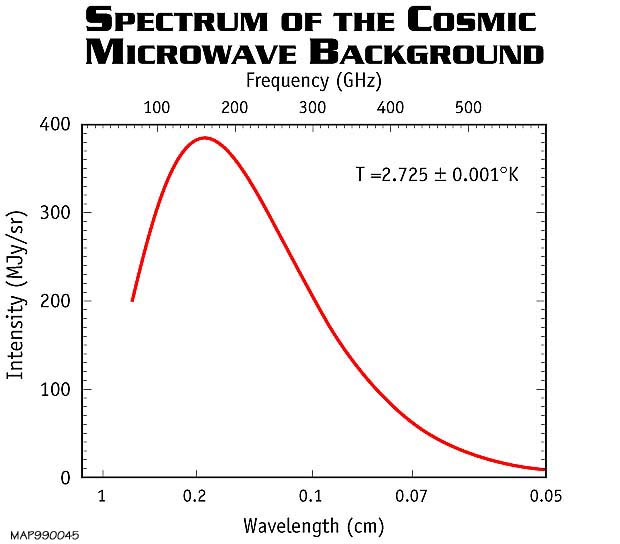
So, when people speak of the temperature of the cosmic microwave background, they're just confused?
this is troll
-
Re:Lets just hope
So, when people speak of the temperature of the cosmic microwave background, they're just confused?
-
These designs are so clutterred they hurt my eyes#3 and #15, sort of OK, the rest - forget it.
Take a look at the Apollo 8 patch if you want to see a good design.
-
Re:Meters are not yards
It's important to notice the difference between 'resolution' and 'posting'. We tried to get the most resolution from the hardware and it ended up being about 30 m. For creating the data sets, we settled on postings of 1 arc-sec as that was near 30 m near the equator. Thus we didn't have to project the data. For areas outside the US, we averaged to 3 arc-sec. There is more information in the publications listed at http://www2.jpl.nasa.gov/srtm/srtmBibliography.html
-
Re:Deniers
I've posted this before, but heres a non-comprehensive list of the raw data: knock yourself out.
Data:
NOAA NCDC: http://www.ncdc.noaa.gov/oa/ncdc.html [noaa.gov]
NOAA sattelite data: http://www.class.noaa.gov/ [noaa.gov]
ARM data: http://www.archive.arm.gov/armlogin/login.jsp [arm.gov]
NASA GISS data: http://data.giss.nasa.gov/ [nasa.gov]
NCAR data: http://www.ncar.ucar.edu/tools/datasets/ [ucar.edu]Models:
NASA GISS GCMs: http://www.giss.nasa.gov/tools/ [nasa.gov]
NCAR models: http://www.ncar.ucar.edu/tools/models/ [ucar.edu]That being said - I think this whole 'give me the raw data' thing is just a big red herring. What are you going to do with it when you get it? Do you understand all the sources of the data, their biases and errors? Do you understand how they calculated some of the parametrizations in the models for bulk cloud parameters? Do you think its just a matter of plugging the data into a code and getting a Yes/No result about global warming? Come on! Theres a reason this stuff generally requires a PhD or years of experience to understand. But there it is, lots of data. Now shut up about the data or methods being unavailable.
-
Re:Deniers
I've posted this before, but heres a non-comprehensive list of the raw data: knock yourself out.
Data:
NOAA NCDC: http://www.ncdc.noaa.gov/oa/ncdc.html [noaa.gov]
NOAA sattelite data: http://www.class.noaa.gov/ [noaa.gov]
ARM data: http://www.archive.arm.gov/armlogin/login.jsp [arm.gov]
NASA GISS data: http://data.giss.nasa.gov/ [nasa.gov]
NCAR data: http://www.ncar.ucar.edu/tools/datasets/ [ucar.edu]Models:
NASA GISS GCMs: http://www.giss.nasa.gov/tools/ [nasa.gov]
NCAR models: http://www.ncar.ucar.edu/tools/models/ [ucar.edu]That being said - I think this whole 'give me the raw data' thing is just a big red herring. What are you going to do with it when you get it? Do you understand all the sources of the data, their biases and errors? Do you understand how they calculated some of the parametrizations in the models for bulk cloud parameters? Do you think its just a matter of plugging the data into a code and getting a Yes/No result about global warming? Come on! Theres a reason this stuff generally requires a PhD or years of experience to understand. But there it is, lots of data. Now shut up about the data or methods being unavailable.
-
Re:Ultra-Blue?
The answer is that there is no big bang 'center' - we are not "moving away from a big bang event" because the location of the event is the entire universe!
-
Re:Terraforming?
Mars once had a much thicker atmosphere, so it must have gone somewhere. A mechanism for its loss to space has been proposed, but this is not settled science. Still, there is no obvious place on the planet for most of the old atmosphere, presumably mostly carbon dioxide, to be sequestered (carbonates or what not).
-
Re:Is there not 2 of them?
I'm not even sure there's a replacement mission in the works in any meaningful timeline.
The next US rover will be the Mars Science Laboratory, a much bigger (five times as heavy) and more capable spacecraft, now planned for 2011.
There is a very strong pressure in NASA to build new things. While it would make a lot of sense to send several more MER just like Spirit to different parts of the planet, that's not how NASA and the Congress (and the contractors and their lobbyists) think. The good side of this is that the new stuff can do more. The bad side is that it makes exploration slow and halting. If you just wanted to explore Mars, sending a MER to a different location every two years would make a lot of sense. Since the pressure is more on the building side, we get a shiny new mission every 7 or 8 years instead.
-
If you like data . . .Check out these pics of transits from the presentation. http://www.nasa.gov/images/content/414829main_3_transit_light_curves.jpg
--Greg
-
Good news for gravitational waves hunters
Great, the collision of these things is exactly the kind of event we need for detecting gravitational waves. These kind of 'inspirals' emit very distinct pattern, which can be retrieved very efficiently from the noise with matched filter banks. The higher the mass, the lower the frequency of this 'chirped' signal, so it is probable that these colliding super-massive black-holes cannot be detected with the ground-based kilometer long observatories, which are measuring right now. This is probably more something for the space-based LISA mission, which can probe much lower frequencies since it has a base-line of millions of kilometers.
-
Re:What happened to their plan from a few days ago
Also, if you're putting a robot on a sand planet, wouldn't it kind of make sense to have some fans to blow off the sand from the solar panels?
Because it was designed for a 3 month mission. Every ounce of weight added is a massive deal to a project like that where it would either add cost or require weight to be removed from somewhere else. As it was they were really testing the limits of the parachute/rocket/bouncy ball re-entry method.
If they were really serious about a long duration rover project they would have sent an RTG powered probe... kind of like what the Mars Science Labratory will have.
-
A Martian Geodetic Observatory
Those of us who are interested in Martian climate oscillations hope that they can turn Spirit into a Martian geodetic observatory, to study the rotation of Mars. There hasn't been a good platform for doing this since Viking 1 died some 27 years ago.
As Bill Folkner says : ""Long-term change in the spin direction could tell us about the diameter and density of the planet's core. Short-period changes could tell us whether the core is liquid or solid." There would also be good science in comparing the current rotation rate of Mars with the value determined by Viking; such data would be sensitive to changes in the water and CO2 accumulated at the Polar Caps.
-
Re:Canada and USSR way ahead in this area.
But it took NASA to develop SAR and refine its use. I worked on the control software for SIR-C back in 1991-1994; all of the software that I wrote for that got re-used by RADARSAT and SRTM and probably other missions as well. (Haven't really kept tabs after I left.)