Slashdot Mirror
Domain: ssc.se
Stories and comments across the archive that link to ssc.se.
Comments · 10
-
Re:What sort of experiments?
Experiments have been performed in microgravity for many years now.
Some methods:
* Drop towers, giving you a few seconds of microgravity
* Parabolic flights, a.ka. vomet comet. About 20 s of microgravity IIRC.
* Sounding rockets, i.e. sub-orbital. Duration depends on rocket motor. For example:
** The REXUS program for students use Nike-Improved Orion, gives you 2-3 min.
** The MASER program for scientists use VSB-30, gives you 6-8 min (250-320 km)
** The MAXUS program use Castor 4B, gives you 12-14 min (>700 km)
* Satellite or ISS. Gives you a long time of microgravityAs for experiments, have a look here: http://ssc.se/microgravity-payloads-2.aspx You will find links to various experiments. A biological experiemnt could be about the behaviour of blood cells or frog eggs in microgravity. A metallurgical experiment could be how metal behaves as it solidifies in microgravity. Or a fluid experiment, to see how fluids behave in microgravity, e.g. boiling and Marconi bubbles.
PS. If you are a student, have a look at the REXUS program. http://ssc.se/?id=5863 . It is _way_ cool to get to build something that flies in space.
-
Re:What sort of experiments?
Experiments have been performed in microgravity for many years now.
Some methods:
* Drop towers, giving you a few seconds of microgravity
* Parabolic flights, a.ka. vomet comet. About 20 s of microgravity IIRC.
* Sounding rockets, i.e. sub-orbital. Duration depends on rocket motor. For example:
** The REXUS program for students use Nike-Improved Orion, gives you 2-3 min.
** The MASER program for scientists use VSB-30, gives you 6-8 min (250-320 km)
** The MAXUS program use Castor 4B, gives you 12-14 min (>700 km)
* Satellite or ISS. Gives you a long time of microgravityAs for experiments, have a look here: http://ssc.se/microgravity-payloads-2.aspx You will find links to various experiments. A biological experiemnt could be about the behaviour of blood cells or frog eggs in microgravity. A metallurgical experiment could be how metal behaves as it solidifies in microgravity. Or a fluid experiment, to see how fluids behave in microgravity, e.g. boiling and Marconi bubbles.
PS. If you are a student, have a look at the REXUS program. http://ssc.se/?id=5863 . It is _way_ cool to get to build something that flies in space.
-
Re:What about
Here in Sweden a lot of mining is done in Kiruna:
City(?):
http://www.strangeharvest.com/mt/archive/kiruna3.jpg
http://www.mynewsdesk.com/files/e1ec5f78a79c345d4a3fcf3c86177f0f/resources/ResourceWebImage/thumbnails/flygbild_kiruna_november_2007_large.jpg?1238409989They are even moving the whole city afaik because they have mined so much underneath it or if it's that they want to mine underneath it so it has to be moved.
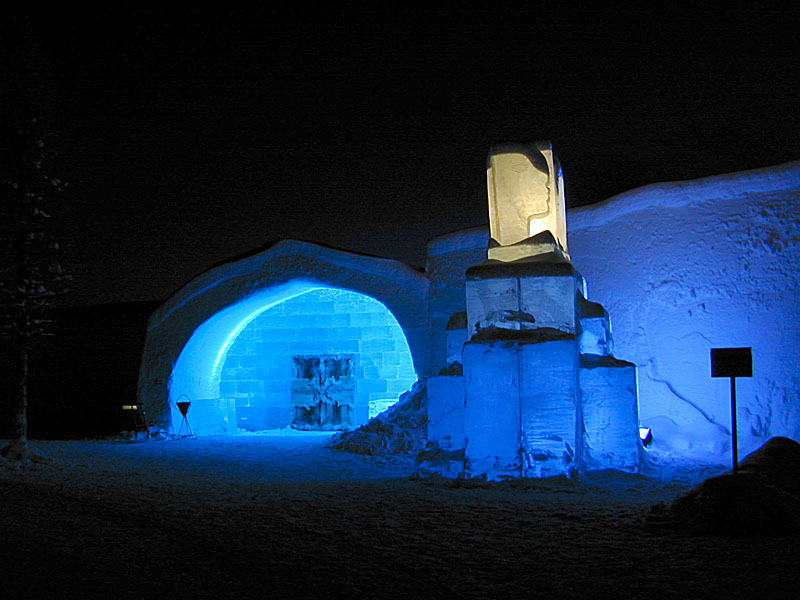
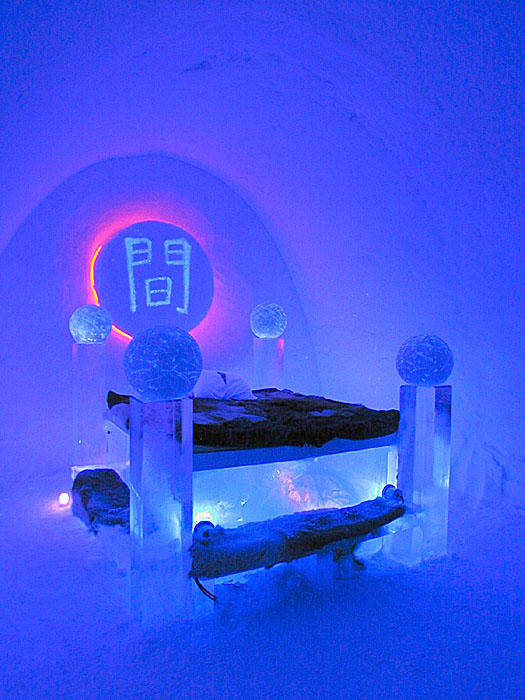
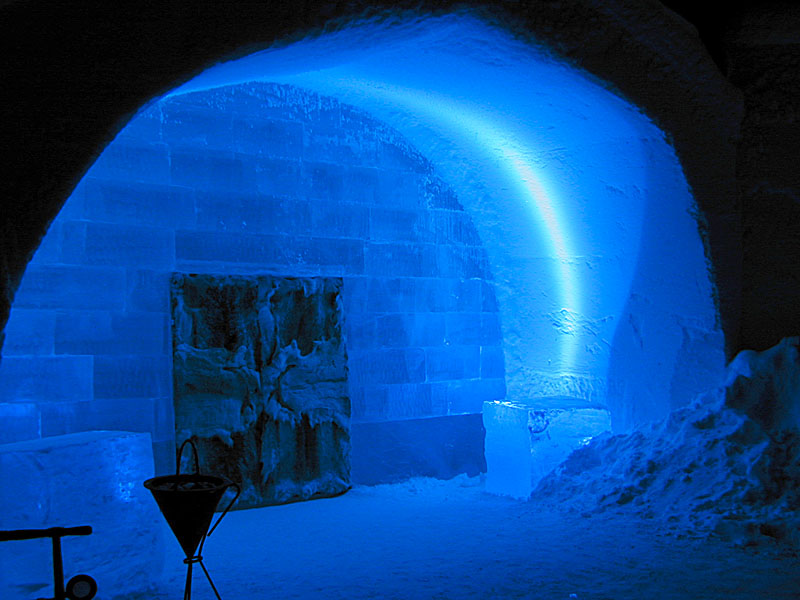
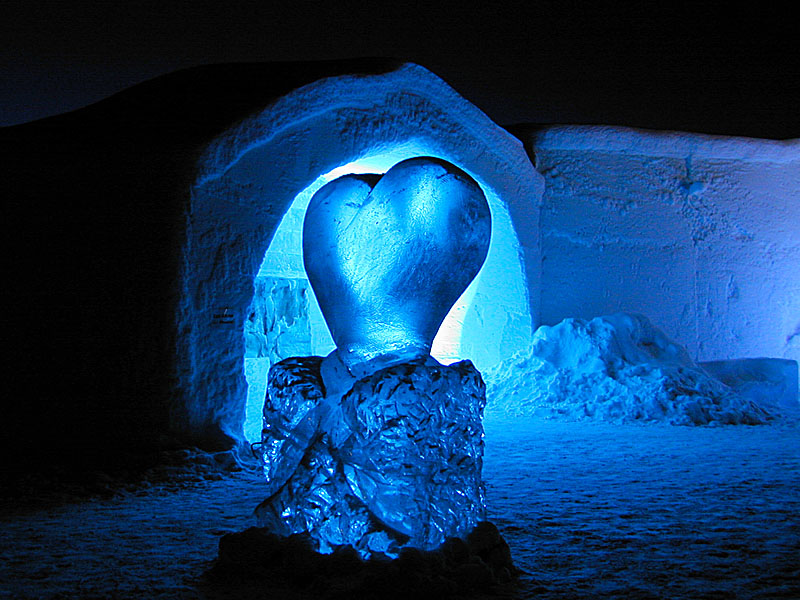
The ice hotel (Jukkasjärvi):
http://www.qedata.se/bilder/gallerier/ishotellet/ishotell-ingang-natt.jpg
http://www.qedata.se/bilder/gallerier/ishotellet/ishotell-rum-japan.jpg
http://www.qedata.se/bilder/gallerier/ishotellet/ishotell-ingang2-natt.jpg
http://www.qedata.se/bilder/gallerier/ishotellet/ishotell-ute-hjerta.jpg
http://www.kirunabuss.se/taxibestallning-ishotellet/282FCFC53F4D46B483E98F34D627F045
http://fjellfotografen.se/albums/uta/sverige/lappland/Miniatyr_Iskyrka%20och%20Ishotell,%20Jukkasj%E4rvi%20%A9%20uta-bg1044.jpg
http://cache.virtualtourist.com/1323606-A_reindeer_fur_covered_bed_in_the_Ice_Hotel-Kiruna.jpgAurora:
http://www.ltu.se/polopoly_fs/1.36982!terassen_kiruna_aurora.jpg
http://www.wired.com/images_blogs/autopia/images/2008/04/24/kiruna.jpghttp://www.wintercities.kiruna.se/nytt/kiruna6.gif
Kiruna on a map: http://homepage.swissonline.ch/Christener/Kiruna/Bilder/Kiruna.jpg
Esrange space center is close by to.
Kiruna location: 675118N, 201331O
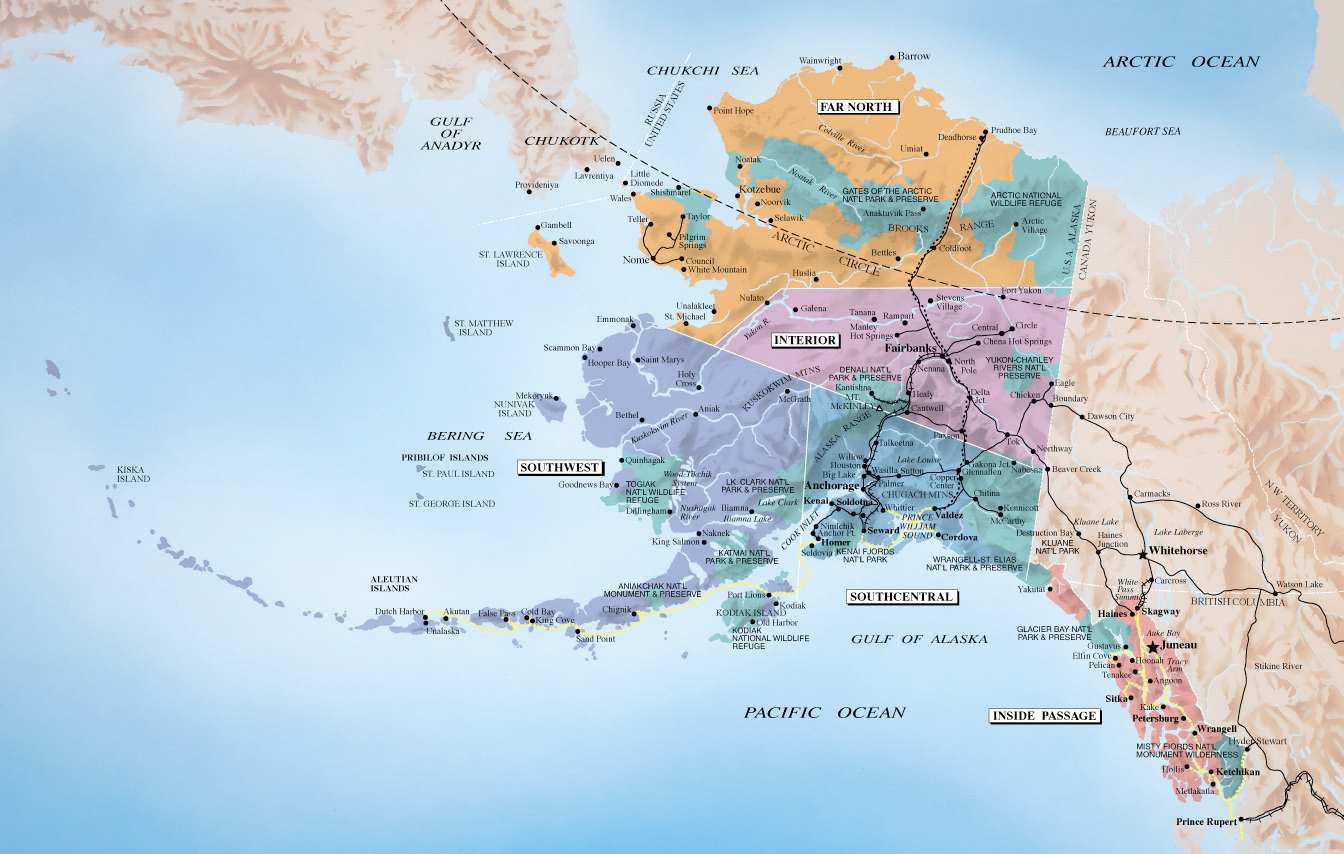
Alaska: 5440'N - 7150'N, 130W - 173EI don't know how much the gulf stream (eventually quite a bit?) help but if people can mine there I assume they can mine in Alaska to, why shouldn't they be able to? Heck I live in Örebro at around the same latitude as Stockholm and the location of this city is 5916N 1513O, so even that is more north than the southern parts of Alaska.
Arctic circle:
World: http://www.athropolis.com/map2.htm
Alaska: http://www.studentsoftheworld.info/sites/country/img/15000_AlaskaMap.jpg -
Not in Esa but in Sweden and France...
There are two kinds of Formation Flying.
One just associates several Earth observation spacecrafts so that they pass above the same piece of ground roughly at the same time, gathering a larger set of observations (in different wavelenths, etc.).
It's an easy way, indeed you just coordinate the orbits through the ground control segments, and a more honest way of calling it would be "coordinated flying". This is the case for e. g. the meteo A-train in the US, and various other missions.The other one is much more difficult and bring different outcomes.
It consists in actually servoing one spacecraft around another one, "in sight". Depending on the need and techno, the relative distance can be controlled to some cm, some mm, or microns, the latter through interferometric measurements.
Two spacecrafts actually flying in formation can create space instruments with very large sizes, for instance telescopes that otherwise would just be not launchable with present-day technology. This technology also is very interesting for tendering, or attacking, a target spacecraft, would it be to refuel it... or to blind its observation cameras, in case of need.
So, this technology -the real formation flying- is futuristic but quite interesting.
In this area, in spite of bold declarations and what is probably a sincere interest from their technology director, Michel Courtois, Esa just never managed to develop anything, which is probably why they now announce some ground testing thing, and a future small spacecraft, Proba 3, that will fly... someday.The really nifty guys as of today are the Swedes, in association with the French, with their mission Prisma, where two initially connected sats do detach themselves and actually turn and manoeuvre, autonomously, one around the other.
Prisma was launched this summer, with a RF technology for formation measurement and control developed by the french CNES space agency onboard (the actual measurement hardware built by Thales Alenia Space, the -very nifty- supporting spacecrafts by Sweedish Space Corporation).
Since then, it does work perfectly, and is a wold premiere, unless nonpublic military tests happened before.
All the details are on the site from SSC: http://www.ssc.se/?id=5104&cid=17201
(a more general presentation of Prisma: http://www.ssc.se/?id=5686&cid=7611)But, Europe being what it is, SSC remains a very small company; Sweden a relatively isolated country with reduced funding allowable to space developments; France, well, is the France of now, with a president far more interested in serving racist electors than having a vision of the future (which just blinds the national agency long-term ambitions, who won't fund Thales anymore), and so, it is quite predictable that the brilliant Prisma development, and associated know-how, will soon become a nice souvenir.
For the moment, go to the above urls, you'll get real photos, of a real couple of spacecrafts flying in formation.
This is today, not in Esa dreams, and paradoxically, it also has this dramatic flavor of those things bound to turn back to ashes soon.(submitted AC for being dangerously close to all those guys)
-
Not in Esa but in Sweden and France...
There are two kinds of Formation Flying.
One just associates several Earth observation spacecrafts so that they pass above the same piece of ground roughly at the same time, gathering a larger set of observations (in different wavelenths, etc.).
It's an easy way, indeed you just coordinate the orbits through the ground control segments, and a more honest way of calling it would be "coordinated flying". This is the case for e. g. the meteo A-train in the US, and various other missions.The other one is much more difficult and bring different outcomes.
It consists in actually servoing one spacecraft around another one, "in sight". Depending on the need and techno, the relative distance can be controlled to some cm, some mm, or microns, the latter through interferometric measurements.
Two spacecrafts actually flying in formation can create space instruments with very large sizes, for instance telescopes that otherwise would just be not launchable with present-day technology. This technology also is very interesting for tendering, or attacking, a target spacecraft, would it be to refuel it... or to blind its observation cameras, in case of need.
So, this technology -the real formation flying- is futuristic but quite interesting.
In this area, in spite of bold declarations and what is probably a sincere interest from their technology director, Michel Courtois, Esa just never managed to develop anything, which is probably why they now announce some ground testing thing, and a future small spacecraft, Proba 3, that will fly... someday.The really nifty guys as of today are the Swedes, in association with the French, with their mission Prisma, where two initially connected sats do detach themselves and actually turn and manoeuvre, autonomously, one around the other.
Prisma was launched this summer, with a RF technology for formation measurement and control developed by the french CNES space agency onboard (the actual measurement hardware built by Thales Alenia Space, the -very nifty- supporting spacecrafts by Sweedish Space Corporation).
Since then, it does work perfectly, and is a wold premiere, unless nonpublic military tests happened before.
All the details are on the site from SSC: http://www.ssc.se/?id=5104&cid=17201
(a more general presentation of Prisma: http://www.ssc.se/?id=5686&cid=7611)But, Europe being what it is, SSC remains a very small company; Sweden a relatively isolated country with reduced funding allowable to space developments; France, well, is the France of now, with a president far more interested in serving racist electors than having a vision of the future (which just blinds the national agency long-term ambitions, who won't fund Thales anymore), and so, it is quite predictable that the brilliant Prisma development, and associated know-how, will soon become a nice souvenir.
For the moment, go to the above urls, you'll get real photos, of a real couple of spacecrafts flying in formation.
This is today, not in Esa dreams, and paradoxically, it also has this dramatic flavor of those things bound to turn back to ashes soon.(submitted AC for being dangerously close to all those guys)
-
Re:wrong link
There's also a lot of info at the main contractors site. Swedish Space Corporation
(ok, I just did that to brag about the fact it's swedish -
Nice team photo link here...
But when the hell did Bill Gates get a job at ESA?
-
Re:All European?
The flag is attached to pheonix (see this picture), but it isn't the US flag.
-
Re:When I first read the headline...
Yup, it sounds as if it (the shuttle) took of from Sweden. Most likely from Esrange in northernmost Sweden. And that's why it's neither strange nor very dramatic (no sheep for example) that it crashed in a field in Sweden. You see, Esrange is positioned in northern Sweden just because there are vast uninhabited fields where rockets can fall down without causing any problems.
-
It came from Outer Space?
A simple goggle search found this.