Slashdot Mirror
Search
Search the archive with full-text matching across story titles, bodies,
and comments. Phrases are quoted; or, -word,
and parentheses behave as in a web search. Queries must be at least
3 characters.
Stories · 13,059
-
IBM Dumping $1 Billion Into New Watson Group
Nerval's Lobster writes "IBM believes its Watson supercomputing platform is much more than a gameshow-winning gimmick: its executives are betting very big that the software will fundamentally change how people and industries compute. In the beginning, IBM assigned 27 core researchers to the then-nascent Watson. Working diligently, those scientists and developers built a tough 'Jeopardy!' competitor. Encouraged by that success on live television, Big Blue devoted a larger team to commercializing the technology—a group it made a point of hiding in Austin, Texas, so its members could better focus on hardcore research. After years of experimentation, IBM is now prepping Watson to go truly mainstream. As part of that upgraded effort (which includes lots of hype-generating), IBM will devote a billion dollars and thousands of researchers to a dedicated Watson Group, based in New York City at 51 Astor Place. The company plans on pouring another $100 million into an equity fund for Watson's growing app ecosystem. If everything goes according to IBM's plan, Watson will help kick off what CEO Ginni Rometty refers to as a third era in computing. The 19th century saw the rise of a "tabulating" era: the birth of machines designed to count. In the latter half of the 20th century, developers and scientists initiated the 'programmable' era—resulting in PCs, mobile devices, and the Internet. The third (potential) era is 'cognitive,' in which computers become adept at understanding and solving, in a very human way, some of society's largest problems. But no matter how well Watson can read, understand and analyze, the platform will need to earn its keep. Will IBM's clients pay lots of money for all that cognitive power? Or will Watson ultimately prove an overhyped sideshow?"
-
Swarms of Small Satellites Set To Deliver Close To Real-Time Imagery of Earth
ananyo writes "A swarm of small satellites set to deliver close to real-time imagery of swathes of the planet is launching today. San Francisco-based Planet Labs, founded in 2010 by three former NASA scientists, is scheduled to launch 28 of its 'Doves' on 9 January. Each toaster-sized device weighs about 5 kilograms and can take images at a resolution of 3–5 metres. Meanwhile Skybox Imaging plans to launch a swarm of 24 satellites, each weighing about 100 kilograms, which will take images of 1 meter resolution or better. Skybox launched its first satellite on 21 November (and captured the first HD video of the world from space) and plans to launch another this year, followed by the remainder between 2015 and 2017. In a first — at least for civilian satellites — Skybox's devices will also stream short segments of near-live high-resolution video footage of the planet. So, too, will UrtheCast, a start-up based in Vancouver, Canada, whose cameras will hitch a ride on the International Space Station. Because the swarms are still to be launched, scientists have yet to fully assess the quality of the imagery. But the satellites' spatial resolutions of 1–5 metres are much higher than those of most scientific satellites. Landsat, NASA's Earth-observation workhorse, for example, has a resolution of 15–100 metres depending on the spectral frequency, with 30 metres in the visible-light range."
-
Japan To Create a Nuclear Meltdown
Taco Cowboy writes "Japanese researchers are planning an experiment to better understand what transpires during a nuclear meltdown by attempting to create a controlled nuclear meltdown. Using a scaled down version of a nuclear reactor — essentially a meter long stainless steel container — the experiment will involve the insertion of a foot long (30 cm) nuclear fuel rod, starting the fission process, and then draining the coolant. The experiment is scheduled to take place later this year."
-
KDE Releases Frameworks 5 Tech Preview
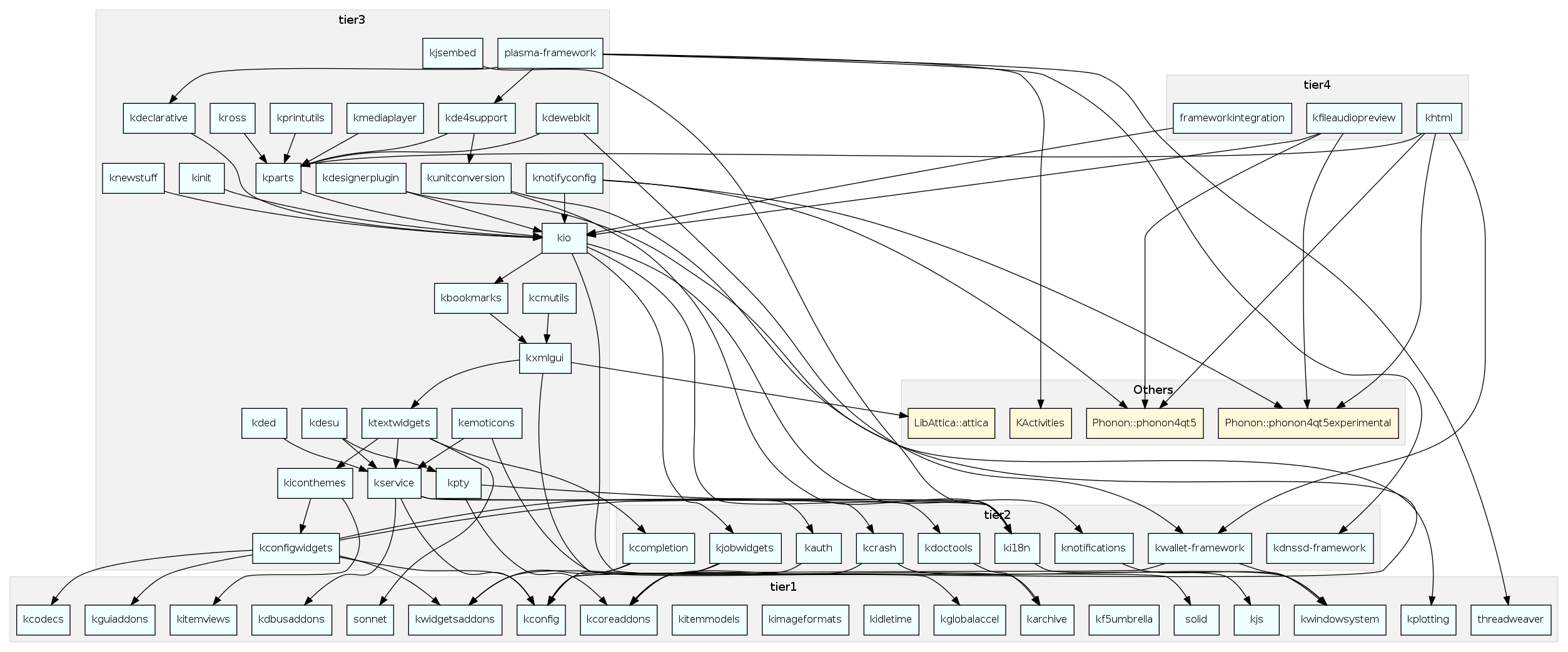
KDE Community writes "The KDE Community is proud to announce a Tech Preview of KDE Frameworks 5. Frameworks 5 is the result of almost three years of work to plan, modularize, review and port the set of libraries previously known as KDElibs or KDE Platform 4 into a set of Qt Addons with well-defined dependencies and abilities, ready for Qt 5. This gives the Qt ecosystem a powerful set of drop-in libraries providing additional functionality for a wide variety of tasks and platforms, based on over 15 years of KDE experience in building applications. Today, all the Frameworks are available in Tech Preview mode; a final release is planned for the first half of 2014. Some Tech Preview addons (notably KArchive and Threadweaver) are more mature than others at this time." Check out that dependency graph.
-
Sony Announces Game Streaming Service
You may remember Gaikai, a company built on the idea of cloud-based gaming. The idea was that a remote server would run the game and stream all graphics and sound to a player's device, which would allow underpowered or obsolete machines to run modern, graphically demanding games on high settings. In 2012, Sony purchased Gaikai. Now, they've announced at CES that their cloud gaming tech (dubbed 'PlayStation Now') is just about ready for the public. CES attendees will be able to try it out, and Sony will begin a closed beta test in the U.S. later this month. Full release is planned for summer. It will first support streaming to PS3s, PS4s, and certain Sony TV models. Later, it will expand more broadly to various non-Sony "internet-connected devices." Players will have the option to rent games or to subscribe for continued access. Forbes reports, "According to Sony, gamers who own disc- or digital-based games will not have access to those games via PS Now free of charge."
-
Mozilla Partners With Panasonic To Bring Firefox OS To the TV
An anonymous reader writes "At CES 2014 in Las Vegas today, Mozilla announced its plans for Firefox OS this year. Having launched Firefox OS for smartphones in 2013, the company has now partnered with Panasonic to bring its operating system to TVs, and also detailed the progress that has been made around the tablet and desktop versions."
-
Linksys Resurrects WRT54G In a New Router
jones_supa writes "A year after purchasing the Linksys home networking division from Cisco, Belkin today brought back the design of what it called 'the best-selling router of all time' but with the latest wireless technology. We are talking about the classic WRT54G, the router in blue/black livery, first released in December 2002. Back in July 2003, a Slashdot post noted that Linksys had 'caved to community pressure' after speculation that it was violating the GPL free software license, and it released open source code for the WRT54G. The router received a cult following and today the model number of the refreshed model will be WRT1900AC. The radio is updated to support 802.11ac (with four antennas), the CPU is a more powerful 1.2GHz dual core, and there are ports for eSATA and USB mass storage devices. Linksys is also providing early hardware along with SDKs and APIs to the developers of OpenWRT, with plans to have support available when the router becomes commercially available. The WRT1900AC is also the first Linksys router to include a Network Map feature designed to provide a simpler way of managing settings of each device connected to the network. Announced at Consumer Electronics Show, the device is planned to be available this spring for an MSRP of $299.99."
-
The SEC Is About To Make Crowdfunding More Expensive
PapayaSF writes "Proposed new rules require that funding portals register with the Securities and Exchange Commission and the Financial Intermediary Regulatory Authority. In addition, investors must have access to a business plan, use of proceeds, a valuation of the company, and financials, so Certified Public Accountants may be needed. The SEC estimates that for amounts under $100,000, the fees will be 12.9% to 39% of the money raised, though it may drop to under 8% for higher amounts. Is this needed regulation, or bureaucratic overreach?"
-
Development To Begin Soon On New Star Control Game
In 1990, a development studio called Toys for Bob created a game called Star Control, a fun little space combat game with a bit of strategy added in. In 1992, they released Star Control 2, a full-blown space adventure RPG, which became one of the seminal works of early PC gaming. (Later open-sourced and released for modern systems.) After that, creators Fred Ford and Paul Reiche III lost control of the franchise to Accolade, who botched Star Control 3 and eventually abandoned the series. Last July, Stardock, the studio behind Sins of a Solar Empire, acquired the rights, and they're now discussing their plans to resurrect the classic series. They'll be using Star Control 2 as a template and an inspiration for all aspects of the game, though they won't be using any of the IP from Star Control I & II. They've also contacted Ford and Reiche and will try to hold true to their creative intentions. (The two currently run an Activision game studio, so they won't be involved with the new game.) Production will begin this winter.
-
Do Non-Technical Managers Add Value?
New submitter Kimomaru writes "Ars Technica asks, 'How does a non-technical manager add value to a team of self-motivated software developers?' IT Managers have come some way in the past decade (for some). Often derided as being, at best, unnecessary and, at worst, a complete waste of budgetary resources, managers in technology today can add significant value by shielding developers and systems engineers from political nonsense and red tape. From the article: 'Don't underestimate the amount of interaction your manager does with other departments. They handle budgets, training plans, HR paperwork. They protect the developers from getting sucked into meetings with other departments and provide a unified front for your group.'" Has that been your experience?
-
Ford Will Demo Solar-Charged Car At CES
Lucas123 writes "Ford plans to demonstrate its first solar-powered hybrid vehicle at CES next week. The Ford CMAX Solar Energi Concept car will have 1.5 square meters of solar photovoltaic cells on its roof to generate power to charge its battery. By themselves, the PV solar panels generate only 300W of power — not enough to charge the vehicle's battery in one day. Ford, however, said the car will be coupled with a carport that has solar concentrating lens atop it. The magnifying lens, called a Fresnel lens, will concentrate about 10 times the solar energy so the vehicle can be recharged in a single day — the same speed with which a standard hybrid charges using a plug." (Of course, some charge faster than others.)
-
Congressman Accepts BitCoin For His US Senate Run
SonicSpike writes "U.S. Representative Steve Stockman, a vocal opponent of Federal Reserve policy, told reporters that he wants to promote Bitcoin, whose most fervent evangelists tout as an alternative to fiat currency. To do so, he is now accepting Bitcoin for his Senate campaign against incumbent John Cornyn of Texas. The announcement was made last night at the launch event for the NYC Bitcoin Center, located just up the street from the New York Stock Exchange. Center founder Nick Spanos a real estate developer and Bitcoin enthusiast says the Center itself is still in something of a planning stage, existing more as a statement about Bitcoin itself, though he plans on hosting a hackathon later this month."
-
Coca-Cola Reserves a Massive Range of MAC Addresses
An anonymous reader writes "GNU MacChanger's developer has found by chance that The Coca-Cola company got a range of MAC addresses allocated at the OUI, the IEEE Registration Authority in charge of managing the MAC addresses spectrum. What would Coca-Cola want around 16 million MAC addresses reserved? What are they planning to use them for? Could this part of a strategy around the Internet-of-things concept?"
-
Illinois Law Grounds PETA Drones Meant To Harass Hunters
schwit1 writes "Illinois passed a new state law that set back the efforts of the People for the Ethical Treatment of Animals (PETA), making the use of drones to interfere with hunters and fishermen prohibited. The law was created in response to PETA's plan to employ drones called "air angels" to monitor outdoors enthusiasts engaged in hunting and fishing nationwide."
-
US Justice Blocks Implementation of ACA Contraceptive Mandate
theodp writes "First approved for contraceptive use in the U.S. in 1960, 'The Pill' is currently used by more than 100 million women worldwide and by almost 12 million women in the U.S. But just hours before the Affordable Care Act was to go into effect, Justice Sonia Sotomayor issued a stay temporarily blocking a mandate requiring health insurance coverage of birth control, and gave the Obama administration until Friday to respond to the Supreme Court on the matter. Sotomayor's order applies to a group of nuns, the Little Sisters of the Poor, and other Roman Catholic nonprofit groups that use the same health plan, known as the Christian Brothers Employee Benefit Trust (PDF). The group is one of many challenging the federal requirement for contraceptive coverage, but a decision on the merits of that case by the full Supreme Court could have broader implications. One imagines Melinda Gates is none too pleased. So, will U.S. health care require a Department of Personal Belief Exemptions that are dictated by employers (PDF, 'The Trustees of CBEBT and the management of Christian Brothers Services are dedicated to protecting the employers participating in the CBEBT from having to face the choice of violating their faith or violating the law')?"
-
World's First Cycle Trip To the South Pole Achieved
Zothecula writes "Shortly before Christmas, we heard about 35 year-old British adventurer Maria Leijerstam's planned attempt to ride to the South Pole on a recumbent fat-tired tricycle. On December 27th at 1am GMT, she achieved that goal, becoming the first person to ever successfully cycle from the edge of the Antarctic continent to the Pole."
-
Is a Super-Sized iPad the Future of Education?
theodp writes "Perhaps people are reading too much into Apple CEO Tim Cook's 'Big Plans' for 2014, but hopes are high that the New Year will bring a biggie-sized iPad. Over at Forbes, Anthony Wing Kosner asks, Will The Large Screen iPad Pro Be Apple's First In A Line Of Desktop Touch Devices?. 'Rumors of a large [12.9"] iPad are many and constant,' notes ComputerWorld's Mike Elgan, 'but they make sense only if the tablet is a desktop for schools.' Elgan adds, 'Lots of schools are buying iPads for kids to use. But iPads don't make a lot of sense for education. For starters, their screens are too small for the kinds of interactive textbooks and apps that Apple wants the education market to create. They're also too small for collaborative work. iPads run mobile browsers, rather than full browsers, so kids can't use the full range of HTML5 sites.' Saying that 'Microsoft has fumbled the [post-PC] transition badly,' Elgan argues that 'the battle for the future of education is likely to be between whatever Google turns the Chromebook into against whatever Apple turns the iPad into.'"
-
Citizen Science: Who Makes the Rules?
New submitter UnderCoverPenguin writes "At MakeZine, David Lang talks about the some of the legal issues around a planned, amateur science 'expedition,' as well as some other amateur science projects. In the not too distant past, most science was amateur. Over the past 20 or so years, society has been making it harder for amateurs to do real science, despite the technical costs falling. With the recent upswing of the 'maker movement,' amateur science has seen an increase as well, but is running into an assortment of legal issues. (An exception is astronomy, where amateurs continue to play important roles. Of course, astronomy doesn't involve chemicals or other (currently) 'scary stuff.') Can amateur science make a come-back? Or are the legal obstacles too entrenched?"
-
How the Dark Lord of the Internet Made His Fortunes
theodp writes "Over at The Atlantic, Taylor Clark's epic Jesse Willms, the Dark Lord of the Internet tells the tale of how one of the most notorious alleged hustlers in the history of e-commerce made a fortune on the Web. 'Accusing Willms of being a scammer,' Clark writes, 'does him a disservice; what he accomplished elicits something close to awe, even among his critics.' The classic themes Willms' company employed in 'sponsored' links for products that included colon cleansers, teeth whiteners, and acai supplements, Clark reports, included dubious scientific claims and fake articles ('farticles'); implied endorsements from celebrities and TV networks; incredible 'testimonials"; manipulative plays on insecurities ('You wouldn't have to worry about being the 'fat bridesmaid' at your sister's wedding!'); and 'iron-clad' guarantees that 'free trials' of the products were absolutely 'risk free.' But beneath his promises of a 'free trial,' the FTC alleged, Willms buried an assortment of charges in the fine print of his terms and conditions. After the 14-day trial period for each product, customers automatically became enrolled in monthly subscription plans, for up to $80 a month. 'The product was never the point,' explained an FTC attorney. 'The point was to get as many hits on each credit card as you could.' Despite a publicized $359 million settlement with the FTC, Jesse Willms is doing just fine financially-and he has a new yellow Lamborghini to prove it. After settling his tax debts, Willms surrendered his assets of just $991,000 to get the financial judgment suspended. Willms has left diet products behind and pivoted into information services. 'As of November,' Clark notes, 'if you searched vehicle history on Google, Yahoo, or Bing, ads for Willms's sites were among the first things you would see.'"
-
PC Makers Plan Rebellion Against Microsoft At CES
Velcroman1 writes "Fearing rapidly plummeting sales of traditional laptops and desktop computers — which fell by another 10 percent or so in 2013 — manufacturers are planning a revolt against Microsoft and the Windows operating system, analysts say. At the 2014 CES in Las Vegas, multiple computer makers will unveil systems that simultaneously run two different operating systems, both Windows and the Android OS that powers many of the world's tablets and smartphones, two different analysts said recently. The new devices will be called 'PC Plus' machines, explained analyst Tim Bajarin. 'A PC Plus machine will run Windows 8.1 but will also run Android apps as well,' Bajarin wrote. Another analyst put the threat to Windows bluntly: 'This should scare the heck out of Microsoft.'"