 Slashdot Mirror
After Online Defamation Suit, Dismissal of Malicious Prosecution Claim Upheld
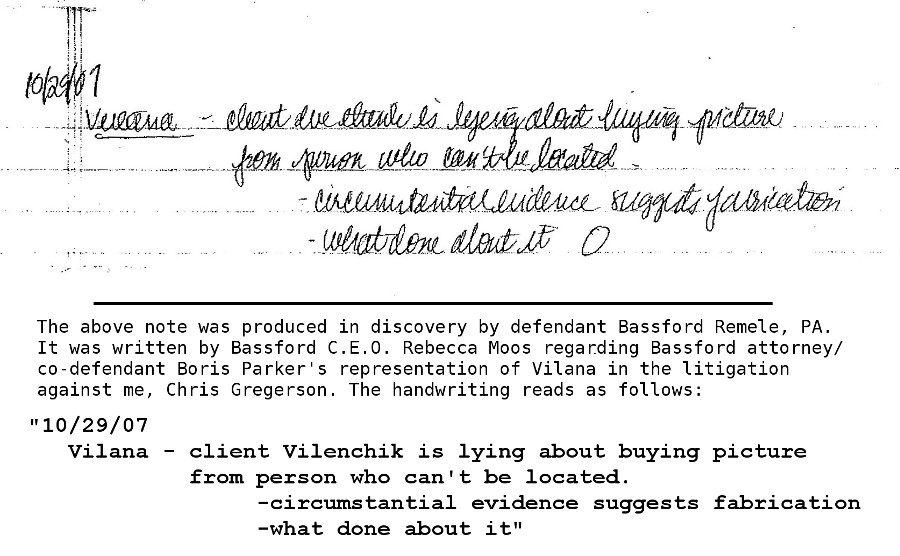
Christoph writes "I'm the Slashdot user who was sued for defamation (and six other claims) by a corporation over negative statements on my website. I prevailed (pro-se) in 2008. The court found the other side forged evidence and lied. In 2009, I sued the other party's lawyers for malicious prosecution/abuse of process (the corporation itself is dissolved/broke). One defendant had stated in writing their client was lying, but the trial court dismissed my claim for lack of evidence. I appealed, and this Tuesday the Minnesota Court of Appeals upheld the dismissal, completely ignoring the defendant's written admission (and other evidence). They further found it was not an abuse of process to sue to 'stop the publication of negative information and opinion.'"
That sucks bro. And?
Plain and simple.
We make fun of China and other places, but it seems that our judiciary is now pretty much bought in many places.
Check out this article on how many businesses see corruption as a barrier to entry to markets.
Make sure everyone's vote counts: Verified Voting
Smart move to proceed pro se. I just finished a few years in the feds, paid my attorneys middle six figures total, and they did nothing. Only when I started writing my own civil motions on collateral attack (specifically 28 USC 2255 ) did I get any traction at all. If I had to do it all over, I'd proceed pro se.
Little tidbit: you are indeed entitled to counsel if you are arrested, while you are in criminal proceedings. But if you lose an appeal, and have to proceed with collateral attack, that is civil and you are NOT entitled to counsel. Many people sit in prison because they have only civil remedies left.
"The pie shall be cut in half and each man shall receive.....death. I'll eat the pie."
The problem is, you tried to sue a laywer. The funny thing about judges: they used to be lawyers. You remember that old joke claiming that sharks don't eat lawyers out of "professional courtesy"? Same goes for judges. You can sue a doctor, a corporation, or your ex-wife, fine, but if you sue a laywer the entire legal profession closes ranks and roots for the home team.
Judges don't want the loser of every case suing for it.
excitingthingstodo.blogspot.com
That Jefferson was right.
...when hearing appeals in civil cases. They consider only errors of law.
Warning: this article may contain humor, sarcasm, parody, and perhaps even irony. Read at your own risk.
I'm not entitled to what I want... WAHHHHH
Huh? He got screwed by a criminal corporation and a gang of corrupt attorneys. He's "entitled" to some redress for what they put him through. Do you have a problem with that?
The higher the technology, the sharper that two-edged sword.
Looks like the OP settled with the non-lawyers early on the MP claims. What result there?
As for the lawyers, the sole piece of evidence the OP seems to have presented that the lawyers knew their clients were lying is a late-October 2007 note. This note was written well after the trial commenced. It doesn't indicate that the lawyers knew or had reason to know from jump-street that the clients were lying. It indicates only (if anything) that perhaps they were not aggressive enough in doing fact investigation or in terminating the litigation already underway.
Am I missing something? If not, the courts' decisions appear to be decent.
He screwed himself by not hiring a lawyer. Defending pro-se is one thing, attempting to prosecute the same way is naive at best and dangerous at worst.
Am I missing something?
Yes. This is Slashdot, and we don't much like judges who reach decisions that our cursory inspection of the article summary find wanting.
The higher the technology, the sharper that two-edged sword.
Lawyers aren't just allowed to believe their client, they're one or two hairs short of being required to. To be guilty of malicious prosecution, they'd have to have conspired with your particular nemesis to fabricate the case knowing full well there was no case. Except for factual claim #28 against Vladimir Kazaryan, none of your alleged facts, if found to be true, would support a finding of malicious prosecution. And you lose that one because count 5 (aiding and abetting malicious prosecution) only works if you can first prove that there was a malicious prosecution.
I hate to tell you this but the judge got it right: "Appellants complaint did not set forth claims of abuse of process and vicarious liability for which relief could be granted."
You should have tried something like, "[lawyer] could not have reasonably believed in the existence of Zubitskiy after [date] but failed to promptly terminate the case." The lawyer is both entitled and expected to believe his client, at least until the client's claim becomes utterly non-credible.
Sucks to be falsely sued. I know from first-hand experience. But you can't bust the lawyer for doing his job representing the client.
Moderating "-1, Disagree" is simple censorship. Have the guts to post your opinion.
Comment removed based on user account deletion
Comment removed based on user account deletion
Naive for expecting the legal system to actually be concerned about the law and dangerous to lawyers that are mostly nothing more than copy/paste artists that think they deserve to get paid $15 an hour to tell the paralegals what to do.
I'm guessing you meant $150 an hour. It's the paralegals that make the fifteen.
The higher the technology, the sharper that two-edged sword.
Who gives a shit. Chris runs a stock photos website. His business model is entirely money for jam and if ya can't get it, sue. Did you read the part of the judgment where it outlines the monetary demands and legal threats Chris made? This is classic stand-over copyright tactics and all these slashtards are applauding it because Chris has presented himself as being the little guy who took on the big corporation and won.
My opinion stands.. you're a copyright troll. If it wasn't for copyright law, no-one would ever give you a dime. That's the definition of non-fair trade to me.
How we know is more important than what we know.
Thank you for summarizing things, but not injecting your opinion or cute sarcastic remarks about the companies involved. Slashdot needs more neutral summaries like this.
He has to prove that the lawyers had ill intent for him. Defending their client, even while knowing he is lying, isn't against the rules, it just opens them up to the liability. But if they were pushing the issue because it allowed them to hurt the OP, then yeah, the should be held accountable.
Um, the trick is that the lawyers in question weren't defending anyone - they were representing the plaintiff in an attempt to win money/concessions from the defendant. And while a defense attorney is supposed to defend their client to the best of their ability, even they aren't allowed to outright lie to the court about something they know to be false.
That being said, I'm not sure if the OP would have prevailed at trial, but cases are supposed to be dismissed either because of facts that are not in dispute, or rules of law that require the case to be dismissed. If the only issue is that the facts are in dispute, that the whole purpose of a trial.
My biggest issue with this ruling is the judges statement that attempting to suppress protected speech is a legitimate use of the courts. This very much sounds to me like a legal maneuver to "protect" the interests of the lawyers by a) not acknowledging that they did something wrong and b) not taking away a source of revenue by discouraging lawyers from taking cases where they know their client is in the wrong...
First, you misunderstand. The case wasn't dismissed because of evidence, it was dismissed because if all of the factual claims were proven to be 100% true they wouldn't add up to malicious prosecution.
Second, check the timeline. The note was written 10/27/2007 by the head of the law firm, not the particular lawyer. Nearly all the claims had been dismissed months earlier and the rest of the case ended the following week. Even if you were to conclude that the lawyer could not have reasonably believed the client following the note, the case was over! There was no more prosecution!
The OP probably has a decent tort against this Kazaryan fellow, since he was (allegedly) found to have participated in manufacturing the case. Libel or something, I don't know exactly the right tort. But the OP went after the folks with deep pockets instead.
I can't say I blame him for wanting to be paid but you don't get to go after the lawyers for doing their jobs.
Moderating "-1, Disagree" is simple censorship. Have the guts to post your opinion.
I'm an attorney, and I agree. If attorneys could rely on "professional courtesy" they wouldn't each pay thousands of dollars per year in malpractice premiums. There's no lack of legal malpractice suits, but I would say that attorney discipline, including disbarment, doesn't happen often enough. Just look at how long it took Jack Thompson to get disbarred.
Yup. The problem is that the legal system has gotten way out of hand.
In theory the way it is supposed to work is that two parties with a disagreement go to court, and the court decides who is in the wrong. Maybe the person in the wrong gets punished by the court via damages of some kind depending on the nature of the dispute.
The problem is that today simply going to court is effectively punishment, and the actual damages are just outrageous quite often. Courts do not value the time of participants, and a trial takes many hours of preparation and motion practice let alone showing up in court. The result is that simply being named in a suit is finacially ruinous. Even going pro se doesn't help a great deal, as it takes countless hours that you aren't paid for to go to trial. It might also cost you your job. If you go pro se you could end up messing up and paying sanctions for the other side's legal expenses. Oh, but if the other side messes up they won't pay for your legal bills since you don't have any, and your time is considered worthless since you aren't an attorney. When it comes to scheduling the opposing counsel can point out to the court various conflicts with other litigation that they need to pursue and the court will respect this, but the court will care little for a pro se defendant's other commitments, since they aren't court-related.
They really need to switch to a system where legal costs are balanced. Courts should stipulate a budget for each side, and the court pays the expenses of all counsel. It will be illegal to pay a lawyer, and lawyers cannot parter with other services/etc as a way to get money in the back door. Lawyers will work for the court, and not for parties themselves, essentially. Then, after the trial the entire cost of the trial becomes one of the matters at issue and the loser generally pays. Oh, wealthy plaintiffs will have to put up security in advance.
With such a system neither side can out-lawyer the other as the legal budgets of both sides are fixed and equal. Poor defendants are not subject to death-by-process either.
Actually thinking about it there might be a way to fix this broken system. simply have BOTH SIDES forced to use public defender style lawyers, and if the corp wants better then they have to pay into a fund that half the money goes to opposing council thus insuring that neither side can just use "hired thugs" to overpower the other. After all the courts have ruled money is speech, so it should be only fair that in a court of law BOTH sides get free speech, yes? Because as it is now the law is a bad joke. The rich can do anything to anyone and short of taking the law into their own hands the poor have NO redress, simply because the rich can afford to drag a case on for decades.
I have seen this in action when a local ISP was screwed out of their backbone access by a big corp who basically said "Don't like it? Just try to sue us" and they were told by their lawyer "Oh no doubt you'll win, but it'll take a decade and cost a million and a half just in lawyers fees". Needless to say they just gave up their ISP and walked away. And THAT is the power the law has given the multicorps with this broken system today. You don't like competition? Well then just bury any startups in so much legal bullshit they can't even breath and will be forced to spend all their money on the courts.
ACs don't waste your time replying, your posts are never seen by me.
But chalking decisions like this up to "professional courtesy" or a broken legal system is overhasty.
That might be the case but it is hard to have confidence in a system where the lawyers police themselves. Would you be happy going to a doctor if you knew that, no matter how badly he might mess up a treatment, you would only be successful in suing him if a panel of other doctors agreed he had mistreated you? If it is fine for lawyers to police themselves then how about all the other professions as well?
"In the end, lawyers are held responsible for their--and even their clients'--actions all the time. We get fined, suspended, disbarred, held liable, and otherwise disciplined on a regular basis. Does it happen often enough? Sometimes I doubt that."
For criminal prosecutors, as I understand it, not remotely often enough. Need some more of that:
"Significantly, of the 4,741 public disciplinary actions reported in the California State Bar Journal from January 1997 to September 2009, only ten involved prosecutors, and only six of these were for conduct in the handling of a criminal case. That means that the State Bar publicly disciplined only one percent of the prosecutors in the 600 cases in which the courts found prosecutorial misconduct and NCIP researchers identified the prosecutor."
http://thecrimereport.org/2010/10/04/justice-on-trial/
We know where leadership by an anti-intellectual "strongman" who scapegoats minorities and likes boisterous rallies goes
Naive for expecting the legal system to actually be concerned about the law and dangerous to lawyers that are mostly nothing more than copy/paste artists that think they deserve to get paid $15 an hour to tell the paralegals what to do.
On the other hand, I'm reminded of this story (there are many variations):
There was an engineer who had an exceptional gift for fixing all things mechanical. After serving his company loyally for over 30 years, he happily retired.
Several years later the company contacted him regarding a seemingly impossible problem they were having with one of their multimillion dollar machines.
They had tried everything and everyone else to get the machine to work but to no avail. In desperation, they called on the retired engineer who had solved so many of their problems in the past.
The engineer reluctantly took the challenge. He spent a day studying the huge machine. At the end of the day, he marked a small "x" in chalk on a particular component of the machine and stated, "This is where your problem is." The part was replaced and the machine worked perfectly again.
The company received a bill for $50,000 from the engineer for his service.
They demanded an itemized accounting of his charges. The engineer responded briefly:
"One chalk mark $1. Knowing where to put it $49,999"
Granted, most attorneys do make heavy use of boilerplate, but then again, most legal tasks are entirely routine. In any event, you're paying a professional for both his knowledge of the law, and knowing how to apply it to your situation. I know what you're saying and it's often true: many attorneys do milk the system. But I have lawyers in my family, and number them among my friends. Not all lawyers are crooks, most are honest and earn their keep.
I would say a more correct complaint would be towards a legal system that requires attorneys to be such an integral part of our lives. That wasn't always the case, but as the law has increased in complexity and overall retardedness, the need for a competent lawyer to navigate it's intricacies is frequently a necessity.
The higher the technology, the sharper that two-edged sword.
The other party claimed I did not create the photo I had a copyright registration for, and his attorneys claimed the real owner was a man the client met in a sauna and paid $850 in cash. This mystery seller had no address, no phone number, and was completely untraceable. When I subpoenaed the phone company for any unlisted phone number for this man, "Micheal Zubitskiy", the other side's lawyers tried to quash the subpoena. This is called "willful ignorance" under the law. The federal judge in the case ruled there was "no credible evidence to support the belief that Zubitskiy existed".
If you bring a suit with no evidence, no personal knowledge of who created the photo, no basis to deny the other party's legal title of ownership, you lack "probable cause". If you didn't know if at first, they had 2.5 years to figure it out. Even after the notary lost his commission for notarizing the fraudulent sales agreement with Zubitskiy, they did not drop their claim he was a real person.
www.cgstock.com
why -!? simple...
slashdot = stagnated
We can say that, and indeed had he done so he probably would have prevailed at trial. The problem is that the people he should have sued--the corporation, ie, the people who actually lied--were bankrupt and he didn't feel it worth the time to sue them. He's probably right. But rather than go "this sucks but there's nothing I can do," he instead decided to look around for somebody who did have some money he could sue for and he went after their lawyers.
Now you have an entirely different ballgame. Not because of some "judges protect lawyers" conspiracy, but because you're now suing a tangential party. Lawyers are their clients' advocates and they operate on an assumption of good faith. Proving the client lied is not enough; now he has to prove the lawyers knew, when they knew, and that they then acted in bad faith to the courts by continuing the case either without informing the respondent or by continuing a case that no longer had merit with the lies exposed -- all of which are tricky.
He knows he sued the wrong people, he says as much in the summary when he mentions the corporation went bankrupt. He just seems to believe that their wrongdoing was also their lawyers' and is acting like a petulant child when two separate courts disagreed with him. What happened to him sucks. The fact that somebody can get away with it because he did it from behind the veil of a corporation sucks, and is, in my mind, the real issue to be gleaned from this situation and addressed. The ruling I'm fine with.
Christoph, well done overall and I'm certainly on your side with respect to the copyright issue, but your position on the lawyers doesn't hold up as well.
Attempting to quash a subpoena is almost standard procedure. Under precisely what law is that "willful ignorance"?
Your response mixes together what the other party knew and did and what his lawyers knew and did. It also mixes together the court's findings-of-fact with what the lawyers knew, should have known, were told, and were required to do. Moreover, you are simply wrong about what the lawyers' responsibility was. Lawyers need not have "personal knowledge" of the facts claimed to be true. They need only believe the facts claimed to be true based on information from the client. We could certainly argue about whether that's good public policy, but that's the way it is. And finding out midway that the client's story may be false does not necessarily equate to malicious prosecution or abuse of process.
The problem with comparing engineers to attorneys is you can hire an attorney to put that chalk mark anywhere you want it. (or an economist)
Well, maybe if lawyers spent more time chalking up economists we'd all be better off.
The higher the technology, the sharper that two-edged sword.
I'd just like to emphasise that boilerplate is used because it is language that has stood the test of the courts for explicitly defining the intent that is being expressed. Writing the same passage from scratch each time would be wasteful and legally dangerous.
That's a valid point. There are a few, rare exceptions. I prevailed in prosecuting a claim for statutory damages for copyright infringement, and removal of copyright management information, against the other party. I was able to use the courts to actually collect the judgment, too. And I did this pro-se, or I would have paid around 40k-60k.
www.cgstock.com
and now you come to /. and whine because?
No, seriously, I looked for the point, purpose, goal, meaning, whatever-you-want-to-call-it of this article, and I can't find one. You intend to do what by posting this? Wouldn't this blurb be much better as a Facebook wall posting?
Assorted stuff I do sometimes: Lemuria.org
We wouldn't need lawyers to interpret the law if we didn't elect lawyers to write them.
What a depressing indictment of our system that the thought of an intelligent, dedicated layman attempting to navigate the courts without expensive guidance is considered "naive at best and dangerous and worst".
You're right of course. But isn't that a horrible place for us to be in?
You know what - I would because it would cut down on the crazy medical malpractices awards and maybe, just maybe, make healthcare affordable.
Huh? He got screwed by a criminal corporation and a gang of corrupt attorneys. He's "entitled" to some redress for what they put him through. Do you have a problem with that?
He didn't get screwed - the summary is (unsurprisingly, given that it was written by one of the parties) biased.
There were three actions. The first was for copyright infringement, which he won and received $19,462 in damages, being $4,462 of actual damages and $15,000 of statutory damages. In response to this the other party countersued over comments made on his website and lost.
This story relates to an attempted claim for malicious prosecution and abuse of process against the other party's attorneys. The judge effectively found that an attorney is entitled to rely on the sworn testimony of his client even if the other party says that testimony is untrue - and how could it possibly be otherwise without rendering litigation impossible? The poster has on his website a document he alleges to show that the attorneys knew their client was lying, but as far as I can tell it is not referenced in any of the cases - I don't know whether it was actually admitted as evidence. The appeal judge refers to the claim as being essentially that because in the end the claims were found not to be credible the prosecution must have been malicious - this is clearly something of a leap. Finally, the poster claims unfairness because he was denied his day in court by this summary judgement. But given that the judgement was given based on there being no chance of success it is difficult to see what the day in court could achieve other than inconveniencing his opponent - and allowing a claim for abuse of process in order only to harass the other party would be a ridiculous irony.
If the claim of malicious prosecution was ambitious the appeal seems to have been consigned to failure from the beginning. The appeal judge notes that the appeal contained no disputes of law or of fact, so it is hard to see how he expected the decision to be reversed.
The attorney's client stated, under oath, he had no evidence to back up his version of events, and no personal knowledge (as to who created the photo). See Appellant's brief, p. 9. They ignored his admission to having no evidence and proceeded with the case. This is not because they "believed him", but if anything they didn't believe him.
Before trial, they even admitted they were not challenging the truthfulness of anything on my website, but still proceeded to trial (and were allowed to do so). Same brief, p. 15.
One of the claims against me was ruled to be "purely speculative" and was dismissed (Id. p. 13). Yet I can't go to trial because there is no hope of showing a "purely speculative" claim lacked probable cause. That's not most people's definition of probable cause.
www.cgstock.com
How are you drying your lawyers? Because without drying I find them quite soggy to begin with, and even with my current drying technique, I find they absorb liquids (like milk or gravy) all too readily.
"Who is the Journal of Quantum Physics going to believe?" --Stephen Hawking
I'd just like to emphasise that boilerplate is used because it is language that has stood the test of the courts for explicitly defining the intent that is being expressed. Writing the same passage from scratch each time would be wasteful and legally dangerous.
True. And for what lawyers typically charge, the "wasteful" part isn't anywhere near as important as the "legally dangerous" part.
And you know what? Us programmers use boilerplate all the time. We call them "macros",or "scripts", or "libraries", pieces of code that we re-use because they do the job and have stood the test of time. Always writing code from scratch can be dangerous, especially when you have some good boilerplate libraries handy to do the work.
The higher the technology, the sharper that two-edged sword.