Slashdot Mirror
Domain: arstechnica.com
Stories and comments across the archive that link to arstechnica.com.
Comments · 9,494
-
Are the Android OEMs banned from shipping CM?
I remember when Google threatened Acer with losing the Play Store and all Google app to stop Aliyun, claiming that the secret rules of the "Open" Handset Alliance prevented Acer from shipping Android forks.
Anyone know if the same rules prohibit all the major OEMs from shipping CM or Jolla(which has Android app support via a third party Dalvik implementation) phones?
The major OEMs include Acer, Asus, Dell, Foxconn, Fujitsu, HTC, Huawei, Kyocera, Lenovo, LG, Motorola, NEC, Samsung, Sharp, Sony, Toshiba, and ZTE.
-
Re:Documentation is King
Yeah, on Intel processors. What about AMD and other x86 processors? Don't ever forget that ICC was once caught red-handed disabling important features when the CPUID did not return GenuineIntel...
-
Re:It's pretty simple
If they cared even remotely enough to do that, then they would have already hardwired the indicator light to the same power source as the camera so that one couldn't be run without the other regardless of the firmware.
Except it was, sort of. The camera sensor has a line called STANDBY. When it's high, the camera is off and is not sending data to the USB chip. When it's low, the camera is sending image data. The LED is wired so when it goes low, the LED turns on.
The flaw is that the USB hardware firmware is on disk, so on boot, it's loaded into the controller's RAM. That firmware then configures the sensor. It turns out that there's a register setting that tells the sensor to ignore the STANDBY line. (Could be a debug bit - these camera sensors have tons of registers that are NOT documented - you're already looking at a good 500+ registers, and probably another 500 that aren't documented or whose presence isn't even known).
Ars Technica has a nice technical writeup - http://arstechnica.com/security/2013/12/perv-utopia-light-on-macbook-webcams-can-be-bypassed/
-
Reminiscent of other attacks
There have been other attacks previous discussed here as I recall, such as using power fluctuations or timing attacks, and so on, as cribs to retrieve a key. It appears this sort of attack that exploits the characteristics of the system performing the encryption will continue to be an attack vector of growing importance.
Timing Attacks on Implementations of Diffie-Hellman, RSA, DSS, and Other Systems
Abstract. By carefully measuring the amount of time required to perform private key operations, attackers may be able to find fixed Diffie-Hellman exponents, factor RSA keys, and break other cryptosystems. Against a vulnerable system, the attack is computationally inexpensive and often requires only known ciphertext. Actual systems are potentially at risk, including cryptographic tokens, network-based cryptosystems, and other applications where attackers can make reasonably accurate timing measurements. Techniques for preventing the attack for RSA and Diffie-Hellman are presented. Some cryptosystems will need to be revised to protect against the attack, and new protocols and algorithms may need to incorporate measures to prevent timing attacks.
Breaking DES with side-channel attacks
This lab will demonstrate how power analysis of cryptographic hardware can reveal the key. We will be using basic electronic measurement tools such as oscilloscopes to demonstrate this side-channel attack.
You will be using a small hardware board (fig. 1) with a generic microprocessor programmed to perform DES encryption and decryption. The scenario is that you are the attacker and want to find out the secret key stored inside the board. There is no way of getting to the key directly, so you will need to perform a side-channel attack by measuring the power consumption of the board while the algorithm is running. The hardware board also allows the user to load a custom key in order to compare the power consumption.
And to think that there were people poopooing NSA for pulling cables and servers that Snowden had access to. More attack vectors for everybody!
The technology inside Apple’s $50 Thunderbolt cable
A source within the telecom industry explained to Ars that active cables are commonly used at data rates above 5Gbps. These cables contain tiny chips at either end that are calibrated to the attenuation and dispersion properties of the wire between them. Compensating for these properties "greatly improves the signal-to-noise ratio" for high-bandwidth data transmission.
-
Re:LOL WTF LMFAO
I think you are missing the more important information here, malware like this and Linux servers being targeted for attack finally drive a stake through the lie that just because you have source that magically makes it more secure. As we see its just as many of us have been saying for years that once Linux reached a level of popularity it too would fall, no different than windows and OSX.
All having the source does is make it so that 1.- if you have the money, or 2.- if you have the coding talent, that you can continue to have that older piece of hardware or software supported...that's it, that's all it does, it keeps you from ending up with software or hardware being unsupported because everybody moved on because you can pay to keep it going or fix it yourself. I mean if anybody even thought about it for more than 30 seconds it would be plain as the nose on your face why "many eyes" is a myth, how many tens of millions of loc is in your average distro? How many programs and/or components are updated/upgraded on that distro per quarter? This is why every bug tracker has bugs going back several years, for the vast majority of any distro I seriously doubt anybody other than the guys that actually work on the project look at it with any regularity and you can be damned sure the majority of it isn't getting a security audit, it simply changes too fast.
But of course I'll be modded off the page for daring to point out what TFA clearly shows, but IRL Linux is just as complex as any other modern OS and where there is complexity there is flaws, simple as that.
Linux vulnerabilities have nothing to do with this, since users are willingly installing the apps and granting them permission to do these things (whether there is a better way of doing the aforementioned things in Android is moot since you decided to attack Linux). The one thing you missed is that when the source is open, the discovery of a vulnerability doesn't have to wait for the corporate "is it worth it to fix it" cycle. Anyone with a smidgen of coding talent can dig in and take a swing at it, which doesnt decrease 0-days but does decrease 180-days or 360-days that we have seen in many closed platforms. You might also want to investigate the fact that it's not a "distro" that needs to be secure at all, it's the individual, visible things (network stack, plus firewalling applications and finally the internet-facing applications) that consist of a much smaller and better reviewed set of code. But have fun getting modded.
-
Re:LOL WTF LMFAO
I think you are missing the more important information here, malware like this and Linux servers being targeted for attack finally drive a stake through the lie that just because you have source that magically makes it more secure. As we see its just as many of us have been saying for years that once Linux reached a level of popularity it too would fall, no different than windows and OSX.
All having the source does is make it so that 1.- if you have the money, or 2.- if you have the coding talent, that you can continue to have that older piece of hardware or software supported...that's it, that's all it does, it keeps you from ending up with software or hardware being unsupported because everybody moved on because you can pay to keep it going or fix it yourself. I mean if anybody even thought about it for more than 30 seconds it would be plain as the nose on your face why "many eyes" is a myth, how many tens of millions of loc is in your average distro? How many programs and/or components are updated/upgraded on that distro per quarter? This is why every bug tracker has bugs going back several years, for the vast majority of any distro I seriously doubt anybody other than the guys that actually work on the project look at it with any regularity and you can be damned sure the majority of it isn't getting a security audit, it simply changes too fast.
But of course I'll be modded off the page for daring to point out what TFA clearly shows, but IRL Linux is just as complex as any other modern OS and where there is complexity there is flaws, simple as that.
-
Re: URL: #badBIOS
You have suggested we look at the hash-tag #badBIOS , to see the system in action, that deploys PC firmware updates via Windows. This is one of the several articles written on the Web about this, all from the same guy, who goes by the name "Ruiu": Suggested Link What I find the most dubious about all this, is the ability "to transmit small amounts of network data with other infected machines even when their power cords and Ethernet cables were unplugged and their Wi-Fi and Bluetooth cards were removed." Also note, "(badBIOS) has the ability to use high-frequency transmissions passed between computer speakers and microphones to bridge airgaps." Can I be forgiven for not taking such claims seriously? To the best of my own knowledge, (1) Actual BIOS updates are infrequent, not a part of any routine workflow. (2) Even though virus-writers can use them to cripple computers - via a running O/S - SysAdmins can't use them unless they shut down the computer first, precisely because they do not work as described in this article. (3) Attempts are frequently made to bypass Protected Memory on the O/S, to result in viruses gaining access to all the hardware. But this cannot - presently - be used to produce a changed BIOS which works normally. (4) Instead of using floppy disks, we use USB sticks today. We put a file onto that USB drive, which has the filename extension
-
Score one for Disney!
And the guy doesnt even mention current events. Fail.
-
Re:Can someone explain
The TorrentFreak "article" you referenced is just quoting the BoingBoing article, so that's the same source. And NEITHER of them actually asked Amazon about it, they just took the word of a user, who took the word of a random customer care person. It's amazing how many people seem to think customer care (usually low paid outsourced phone support people working from a script) somehow are "what a company tells the customer" like it's somehow the official and unerring policy statement of a $100B business.
The Guardian, on the other hand, actually asked Amazon. So did AllThingsD and Ars Technica who both confirmed it was a mistake (and according to AllThingsD has already been fixed).
That's the difference between journalism and blogging. Some journalists actually do some research instead of reposting 2nd hand rumors without confirmation. Sort of like your post vs. mine, in fact
-
That isn't really working out so great...
http://arstechnica.com/uncategorized/2008/09/telco-to-town-were-suing-you-because-we-care/
and even from slashdot:
http://tech.slashdot.org/story/08/09/12/2326251/telco-sues-municipality-for-laying-their-own-fiber -
Good and bad?
GMail will be fetching the images by default but only after the user opens the mail. So it's an improvement because the user's browser and IP address will be hidden (as it will be Google's servers doing the fetching) and it's a step back because it is tracking images will work by default. If you want the old behaviour of not showing images you will need to opt into it so only those who explicitly don't want to be tracked will remain anonymous.
Sources: Wired, Ars Technica
-
change or same mistake I made about announcement?
Is this a new change, because after I saw the google announcement, I saw a report that they would share all that data about loading of images with marketers. End result: safer images, but just as much information for marketers, as along as they make nice with Google as 'official' email marketers. Would love to be wrong. Here's my source, Ars Technica article.
http://arstechnica.com/security/2013/12/dear-gmailer-i-know-what-you-read-last-summer-and-last-night-and-today/ -
Not according to Ars
-
Re:Revolving Door Policy
This is rather like Monsanto, Tyson, Smithfield, etc people working for the USDA. There needs to be serious enforcement of the conflict of interest prevention.
Right. She's only temporary, though. She's been appointed deputy director, and the director slot is vacant. There's a power vacuum at the top of the USPTO; in the last few months, the director (Kappos, who was a good guy), the deputy director, and the general counsel quit.
"Head of the Silicon Valley office of the USPTO" - not. There is no Silicon Valley office of the USPTO. It was killed by budget cuts. So the USPTO had a spare manager around. There's a power vacuum at the top of the USPTO; in the last few months, the director, the deputy director, and the general counsel quit.
The whole "USPTO branch office" thing was a pork program for Detroit; a Congressman stuck a provision for a Detroit office in a bill two years ago, which also provided for a few other branches at locations to be determined. The Detroit office was opened, but none of the others were. The USPTO is completely on-line now; no user has to go to a USPTO office to do anything. There was a time when people had to go to a USPTO location to search patents on paper or microfilm, but that era, thankfully, is over.
-
Traffic camera prone to spoofing and abuse
-
You got that right!
Take for example, Titan. They just found such a huge sea of hydrocarbons there, it would last us longer than we could calculate.
http://arstechnica.com/science/2013/12/meet-the-kraken-hydrocarbon-seas-spotted-at-titans-north-pole/
Nowadays it is possible to convert this into energy in a very clean way. -
UEFI Booting is Required
Not required, supported. The list is supported hardware. I would assume standard BIOS is supported as well but they wanted to point out that newer UEFI only boards are also supported.
Seems you got modded up, despite being WRONG. UEFI booting is required for the installer, which is why UEFI Support was listed as a hardware requirement in the FAQ you looked at. The requirement is also mentioned further down in the FAQ. Also reference:
http://store.steampowered.com/steamos/buildyourown.
http://steamcommunity.com/groups/steamuniverse/discussions/1/648814395741989999/
http://arstechnica.com/gaming/2013/12/valve-releases-steamos-beta-early-build-your-own-system-requirements/One benefit to this is that people won't be trying to install this on an old piece of crap and then complaining it's slow.
-
Re:Ups and Downs
One of Android's selling points has always been it's open nature, and the fact that it's not as locked down as iOS. This seems like it's taking a step in the direction of locking down the OS for the user, and unlocking it for everyone else...
The only reason Google "gave away" Android is because Google needed to counter the iOS threat. Remember, Google viewed the potential harm that iOS could do - it could lock Google out of the advertising business (being that Google owned the vast majority of online ad networks, and the iPhone couldn't show Flash ads that were extremely popular) in the mobile market. Google was forced to buy and release Android so they'd always have a hook. (And Google may have paid Apple to create iAds - so they could avoid DoJ scrutiny over their purchase of mobile advertising heavyweight AdMob).
Remember, Android exists because Google felt threatened that Apple could cut Google off at any point, thus depriving Google of their main source of revenue.
With this in mind, Google has already been heavy handed - the OHA version is different from the AOSP version, and you need the OHA version if you want to release a phone. And doing so meant you obliged by the OHA terms (which included the inability to load in replacements of Google Apps - so no cometing Maps or other services were allowed). Or even the thought of creating a phone that COULD run Android apps could get you kicked out of the OHA, as Acer found out when they wanted to release a phone with a mobile OS that had Android compatibility layer.
In fact, Google's been locking features out of AOSP for a while now - a lot of new features aren't in AOSP as Google has made them closed-source apps. http://arstechnica.com/gadgets/2013/10/googles-iron-grip-on-android-controlling-open-source-by-any-means-necessary/
Of course, Google can do this as tney no longer need Android open-sourced anymore - it's achieved its goal of preventing Google from being locked out of iOS/mobile. In fact, the biggest threat to Google is AOSP (see Kindle), hence closed-sourcing of features.
Oh yeah, the privacy features in Android were removed because they interfered with Google's revenue - ads. Remember how I said Google owns the largest ad networks? They also own the largest mobile ad network as well. It's curious how a two-bit ad network like iAds could even be considered a "competitor" - most ads on iOS are again done by a Google-owned company rather than iAds.
-
Re:Metadata data
Except that when collected in bulk, the metadata reveals your data. A few examples:
"Consider the following hypothetical example: A young woman calls her gynecologist; then immediately calls her mother; then a man who, during the past few months, she had repeatedly spoken to on the telephone after 11pm; followed by a call to a family planning center that also offers abortions. A likely storyline emerges that would not be as evident by examining the record of a single telephone call."
"The phone records indicating that someone called a sexual assault hotline or a tax fraud reporting hotline will of course not reveal the exact words that were spoken during those calls, but phone records indicating a 30-minute call to one of these numbers will still reveal information that virtually everyone would consider extremely private."
https://www.aclu.org/sites/default/files/assets/2013.08.26_aclu_pi_brief_and_declarations.pdf
http://www.cs.princeton.edu/~felten/testimony-2013-10-02.pdf
-
Re:Congratulations!
Gogo's satellite based system won't go live until "second half of 2014" Source. Their system is currently only air-to-ground (they actually call it ATG).
-
Re:The Whole Issue
The whole issue is contained in the US Constitution where it says,
Note to all retards who skimmed the summary and didn't read the article:
This happened in New Zealand, not in the United States. The U.S. Constitution has absolutely fucking nothing to do with this because it didn't happen in the United States.
Note to ACs who haven't been paying attention to the news for a few years:
Remember Kim Dotcom was arrested, his property seized, his servers sent to FBI/CIA labs, all on a pretense (and an illegal US warrant) driven by the FBI.
Seriously, if you think borders make any significant difference you are crazy. The constitution surely doesn't protect foreigners in a foreign country, it doesn't even even protect Americans at home. But US law will affect you no matter where you think you are safe.
-
Re:new stream cipher competition from NIST
RC-4 is on its last legs, and there's isn't much of a consesus on what to replace it with.
Not to mention patent trolls lurking wanting to sue you if you use TLS with RC4.
-
Mars One has raised $183,870 toward its mission...
...and has yet to release a budget for its program. For comparison, NASA anticipates launching another Mars rover in 2020 at a total cost of $1.5 billion.
-
Re:BTRFS filesystem
The only way to truly prevent bitrot is by maintaining at least three complete copies of the data, and regularly compare between them.
There you go again. Acting like you know what you're talking about, but you don't.
ZFS and BTRFS have a much more efficient way to ensure correctness: CRC of everything written. That is what is checked when you do a zpool scrub or a btrfs scrub. Random errors are very unlikely to produce the same checksum, so then you only need a second copy that doesn't produce CRC errors.
Hard drives are nowhere near as reliable as their manufacturers claim. Modern drives don't store the bits that you feed them exactly as you give them. Instead, they use CRC and error correcting codes, so they only need most of the data to be correct. Usually, if the data doesn't match the CRC, and it cannot be corrected by ECC, then you get a read error instead of corrupted data. Which, I guess, is better than getting a corrupted picture. Ideally, a RAID would be able to recreate the missing block, but I can't find any reference to a RAID doing that.
But I've seen enough errors that I suspect something else is going on. It surely doesn't help that modern computers have many gigabytes of memory, but almost none have ECC on that memory. Your computer can be corrupting your data, and you have no warning that it's happening. In addition, hard drives lie. I'm not optimistic about the long-term storage of electronic data.
-
Re:Step 1: use IPv6
The reason that in 2013 IPv6 isn't the simple answer is IMHO conspiracy. This new alliance reeks of "don't look over there at just obviously using the 'internet protocol' as designed and intended and independent of our existing transnational corporate influence. Instead, use this shit we 'invent', and in a few years, the ISPs will be filtering everything else because they consider it 'reasonable network management', and they are fellow establishment players like us.". This is just an extra taxation of the internet by an establishment rightfully afraid of 'disruptive technologies' such as IPv6 combined with any sense of an ISP as an agent of free speech, rather than mainstream media control (as the internet was supposed (/long advertised) to do to the prior cable network).
-
Re:Pay no attention to what I'm actually doing!
"Ars Technica also contacted the Entertainment Software Association for their thoughts on the matter. Surely there is room for consumers to modify the systems they buy if they don't pirate, right? "The technological measures that video game companies use to control or manage access to their works and to prevent unauthorized copying are essential to ensuring the viability of a vibrant video game marketplace," Ken Doroshow, ESA General Counsel & Senior Vice President, told Ars. "These technological measures protect the intellectual property rights on which video game companies depend to create and publish new games." The ESA's view is that you can't mess with your systems, no matter how benign your intention. "Circumventing these protections is never 'harmless fun,' as it erodes the foundation on which video game industry depends for its success.""
http://arstechnica.com/gaming/2009/08/modder-arrest-a-reminder-that-most-console-hacks-are-illegal/ Conflicting statements in the article, but my guess is that if a console maker wanted to sue him, they probably could, just on the basis of protecting design copyrights.
-
#badbios - probing for deeper looks at
@Clive Robinson
A lot of people are wondering why dragosr was the only one to run across this malware. In fact, he wasn't. The people who were before him were mocked and most threads closed and either deleted or shuffled to areas of message boards where Joe Q public couldn't see it and question this for themselves. [some] Major Anti-Virus companies included.
Users didn't want to know, companies didn't want to know. Unless you were "known" in the field, like dragosr, and even then, you are handled like you may be retarded or just need a vacation.
Here is one of dozens of reports:
LCD Monitor Broadcasts Noise To Radio! Why? (FRS)
http://forums.radioreference.com/computer/255488-lcd-monitor-broadcasts-noise-radio-why.htmlFinal post in that thread:
"BOTTOM LINE: No matter WHAT you do, all devices that use electricity will emit some sort of interference in the air and there's nothing you can do about it without unplugging/turning it off. "
including:
"Have you noticed any nondescript white vans or black helicopters in your neighborhood?
What do you do or have you done to make "them" take such an interest in you that "they" have to bug you?
You need a bigger tinfoil hat, perhaps a full body suit."
Another thread:
Gpu based paravirtualization rootkit, all os vulne
http://forum.sysinternals.com/gpu-based-paravirtualization-rootkit-all-os-vulne_topic26706.html
This:
U.N. report reveals secret law enforcement techniques
"Point 201: Mentions a new covert communications technique using software defined high frequency radio receivers routed through the computer creating no logs, using no central server and extremely difficult for law enforcement to intercept."
http://www.unodc.org/documents/frontpage/Use_of_Internet_for_Terrorist_Purposes.pdf
http://www.hacker10.com/other-computing/u-n-report-reveals-secret-law-enforcement-techniques/
I think this is something which has been brewing for years, but "forces" beyond our sight have managed to stifle any serious investigation into the technology. Some have announced they are retreating to ancient technology of the 70's and 80's, others are looking towards open source hardware and software combinations.
Is it time Wireshark included audio monitoring as well? Off to play with a recording device and Audacity.
https://www.schneier.com/blog/archives/2013/11/friday_squid_bl_402.html#c2751193
###
Scientist-developed malware prototype covertly jumps air gaps using inaudible sound
---
Malware communicates at a distance of 65 feet using built-in mics and speakers.by Dan Goodin - Dec 2, 2013 7:29 pm UTC
http://arstechnica.com/author/dan-goodin
https://twitter.com/dangoodin001"Dan is the IT Security Editor at Ars Technica, which he joined in 2012 after working for The Register, the Associated Press, Bloomberg News, and other publications."
--------------------
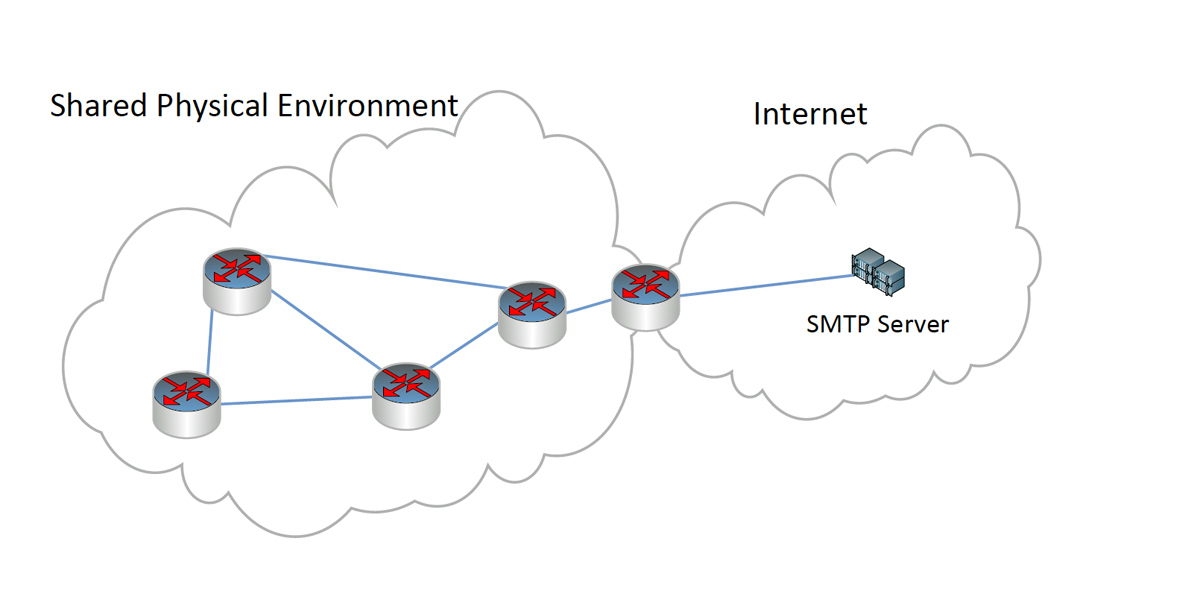
Topology of a covert mesh network that connects air-gapped computers to the Internet: -
#badbios - probing for deeper looks at
@Clive Robinson
A lot of people are wondering why dragosr was the only one to run across this malware. In fact, he wasn't. The people who were before him were mocked and most threads closed and either deleted or shuffled to areas of message boards where Joe Q public couldn't see it and question this for themselves. [some] Major Anti-Virus companies included.
Users didn't want to know, companies didn't want to know. Unless you were "known" in the field, like dragosr, and even then, you are handled like you may be retarded or just need a vacation.
Here is one of dozens of reports:
LCD Monitor Broadcasts Noise To Radio! Why? (FRS)
http://forums.radioreference.com/computer/255488-lcd-monitor-broadcasts-noise-radio-why.htmlFinal post in that thread:
"BOTTOM LINE: No matter WHAT you do, all devices that use electricity will emit some sort of interference in the air and there's nothing you can do about it without unplugging/turning it off. "
including:
"Have you noticed any nondescript white vans or black helicopters in your neighborhood?
What do you do or have you done to make "them" take such an interest in you that "they" have to bug you?
You need a bigger tinfoil hat, perhaps a full body suit."
Another thread:
Gpu based paravirtualization rootkit, all os vulne
http://forum.sysinternals.com/gpu-based-paravirtualization-rootkit-all-os-vulne_topic26706.html
This:
U.N. report reveals secret law enforcement techniques
"Point 201: Mentions a new covert communications technique using software defined high frequency radio receivers routed through the computer creating no logs, using no central server and extremely difficult for law enforcement to intercept."
http://www.unodc.org/documents/frontpage/Use_of_Internet_for_Terrorist_Purposes.pdf
http://www.hacker10.com/other-computing/u-n-report-reveals-secret-law-enforcement-techniques/
I think this is something which has been brewing for years, but "forces" beyond our sight have managed to stifle any serious investigation into the technology. Some have announced they are retreating to ancient technology of the 70's and 80's, others are looking towards open source hardware and software combinations.
Is it time Wireshark included audio monitoring as well? Off to play with a recording device and Audacity.
https://www.schneier.com/blog/archives/2013/11/friday_squid_bl_402.html#c2751193
###
Scientist-developed malware prototype covertly jumps air gaps using inaudible sound
---
Malware communicates at a distance of 65 feet using built-in mics and speakers.by Dan Goodin - Dec 2, 2013 7:29 pm UTC
http://arstechnica.com/author/dan-goodin
https://twitter.com/dangoodin001"Dan is the IT Security Editor at Ars Technica, which he joined in 2012 after working for The Register, the Associated Press, Bloomberg News, and other publications."
--------------------
Topology of a covert mesh network that connects air-gapped computers to the Internet: -
bad BIOS saga continues - 12/2013
Scientist-developed malware prototype covertly jumps air gaps using inaudible sound
---
Malware communicates at a distance of 65 feet using built-in mics and speakers.by Dan Goodin - Dec 2, 2013 7:29 pm UTC
http://arstechnica.com/author/dan-goodin
https://twitter.com/dangoodin001"Dan is the IT Security Editor at Ars Technica, which he joined in 2012 after working for The Register, the Associated Press, Bloomberg News, and other publications."
---
Topology of a covert mesh network that connects air-gapped computers to the Internet:http://cdn.arstechnica.net/wp-content/uploads/2013/12/acoustical-mesh-network.jpg
http://www.jocm.us/index.php?m=content&c=index&a=show&catid=124&id=600
----"Computer scientists have proposed a malware prototype that uses inaudible audio signals to communicate, a capability that allows the malware to covertly transmit keystrokes and other sensitive data even when infected machines have no network connection.
The proof-of-concept software-or malicious trojans that adopt the same high-frequency communication methods-could prove especially adept in penetrating highly sensitive environments that routinely place an "air gap" between computers and the outside world. Using nothing more than the built-in microphones and speakers of standard computers, the researchers were able to transmit passwords and other small amounts of data from distances of almost 65 feet. The software can transfer data at much greater distances by employing an acoustical mesh network made up of attacker-controlled devices that repeat the audio signals.
The researchers, from Germany's Fraunhofer Institute for Communication, Information Processing, and Ergonomics[1], recently disclosed their findings in a paper published in the Journal of Communications[2]. It came a few weeks after a security researcher said his computers were infected with a mysterious piece of malware that used high-frequency transmissions to jump air gaps[3]. The new research neither confirms nor disproves Dragos Ruiu's claims of the so-called badBIOS infections, but it does show that high-frequency networking is easily within the grasp of today's malware."
[1] http://www.fkie.fraunhofer.de/en.html
[2] http://www.jocm.us/index.php?m=content&c=index&a=show&catid=124&id=600
[3] http://arstechnica.com/security/2013/10/meet-badbios-the-mysterious-mac-and-pc-malware-that-jumps-airgaps/""In our article, we describe how the complete concept of air gaps can be considered obsolete as commonly available laptops can communicate over their internal speakers and microphones and even form a covert acoustical mesh network," one of the authors, Michael Hanspach, wrote in an e-mail. "Over this covert network, information can travel over multiple hops of infected nodes, connecting completely isolated computing systems and networks (e.g. the internet) to each other. We also propose some countermeasures against participation in a covert network."
The researchers developed several ways to use inaudible sounds to transmit data between two Lenovo T400 laptops using only their built-in microphones and speakers. The most effective technique relied
-
bad BIOS saga continues - 12/2013
Scientist-developed malware prototype covertly jumps air gaps using inaudible sound
---
Malware communicates at a distance of 65 feet using built-in mics and speakers.by Dan Goodin - Dec 2, 2013 7:29 pm UTC
http://arstechnica.com/author/dan-goodin
https://twitter.com/dangoodin001"Dan is the IT Security Editor at Ars Technica, which he joined in 2012 after working for The Register, the Associated Press, Bloomberg News, and other publications."
---
Topology of a covert mesh network that connects air-gapped computers to the Internet:http://cdn.arstechnica.net/wp-content/uploads/2013/12/acoustical-mesh-network.jpg
http://www.jocm.us/index.php?m=content&c=index&a=show&catid=124&id=600
----"Computer scientists have proposed a malware prototype that uses inaudible audio signals to communicate, a capability that allows the malware to covertly transmit keystrokes and other sensitive data even when infected machines have no network connection.
The proof-of-concept software-or malicious trojans that adopt the same high-frequency communication methods-could prove especially adept in penetrating highly sensitive environments that routinely place an "air gap" between computers and the outside world. Using nothing more than the built-in microphones and speakers of standard computers, the researchers were able to transmit passwords and other small amounts of data from distances of almost 65 feet. The software can transfer data at much greater distances by employing an acoustical mesh network made up of attacker-controlled devices that repeat the audio signals.
The researchers, from Germany's Fraunhofer Institute for Communication, Information Processing, and Ergonomics[1], recently disclosed their findings in a paper published in the Journal of Communications[2]. It came a few weeks after a security researcher said his computers were infected with a mysterious piece of malware that used high-frequency transmissions to jump air gaps[3]. The new research neither confirms nor disproves Dragos Ruiu's claims of the so-called badBIOS infections, but it does show that high-frequency networking is easily within the grasp of today's malware."
[1] http://www.fkie.fraunhofer.de/en.html
[2] http://www.jocm.us/index.php?m=content&c=index&a=show&catid=124&id=600
[3] http://arstechnica.com/security/2013/10/meet-badbios-the-mysterious-mac-and-pc-malware-that-jumps-airgaps/""In our article, we describe how the complete concept of air gaps can be considered obsolete as commonly available laptops can communicate over their internal speakers and microphones and even form a covert acoustical mesh network," one of the authors, Michael Hanspach, wrote in an e-mail. "Over this covert network, information can travel over multiple hops of infected nodes, connecting completely isolated computing systems and networks (e.g. the internet) to each other. We also propose some countermeasures against participation in a covert network."
The researchers developed several ways to use inaudible sounds to transmit data between two Lenovo T400 laptops using only their built-in microphones and speakers. The most effective technique relied
-
bad BIOS saga continues - 12/2013
Scientist-developed malware prototype covertly jumps air gaps using inaudible sound
---
Malware communicates at a distance of 65 feet using built-in mics and speakers.by Dan Goodin - Dec 2, 2013 7:29 pm UTC
http://arstechnica.com/author/dan-goodin
https://twitter.com/dangoodin001"Dan is the IT Security Editor at Ars Technica, which he joined in 2012 after working for The Register, the Associated Press, Bloomberg News, and other publications."
---
Topology of a covert mesh network that connects air-gapped computers to the Internet:http://cdn.arstechnica.net/wp-content/uploads/2013/12/acoustical-mesh-network.jpg
http://www.jocm.us/index.php?m=content&c=index&a=show&catid=124&id=600
----"Computer scientists have proposed a malware prototype that uses inaudible audio signals to communicate, a capability that allows the malware to covertly transmit keystrokes and other sensitive data even when infected machines have no network connection.
The proof-of-concept software-or malicious trojans that adopt the same high-frequency communication methods-could prove especially adept in penetrating highly sensitive environments that routinely place an "air gap" between computers and the outside world. Using nothing more than the built-in microphones and speakers of standard computers, the researchers were able to transmit passwords and other small amounts of data from distances of almost 65 feet. The software can transfer data at much greater distances by employing an acoustical mesh network made up of attacker-controlled devices that repeat the audio signals.
The researchers, from Germany's Fraunhofer Institute for Communication, Information Processing, and Ergonomics[1], recently disclosed their findings in a paper published in the Journal of Communications[2]. It came a few weeks after a security researcher said his computers were infected with a mysterious piece of malware that used high-frequency transmissions to jump air gaps[3]. The new research neither confirms nor disproves Dragos Ruiu's claims of the so-called badBIOS infections, but it does show that high-frequency networking is easily within the grasp of today's malware."
[1] http://www.fkie.fraunhofer.de/en.html
[2] http://www.jocm.us/index.php?m=content&c=index&a=show&catid=124&id=600
[3] http://arstechnica.com/security/2013/10/meet-badbios-the-mysterious-mac-and-pc-malware-that-jumps-airgaps/""In our article, we describe how the complete concept of air gaps can be considered obsolete as commonly available laptops can communicate over their internal speakers and microphones and even form a covert acoustical mesh network," one of the authors, Michael Hanspach, wrote in an e-mail. "Over this covert network, information can travel over multiple hops of infected nodes, connecting completely isolated computing systems and networks (e.g. the internet) to each other. We also propose some countermeasures against participation in a covert network."
The researchers developed several ways to use inaudible sounds to transmit data between two Lenovo T400 laptops using only their built-in microphones and speakers. The most effective technique relied
-
bad BIOS saga continues - 12/13
Scientist-developed malware prototype covertly jumps air gaps using inaudible sound
-
Malware communicates at a distance of 65 feet using built-in mics and speakers.by Dan Goodin - Dec 2, 2013 7:29 pm UTC
http://arstechnica.com/author/dan-goodin
https://twitter.com/dangoodin001"Dan is the IT Security Editor at Ars Technica, which he joined in 2012 after working for The Register, the Associated Press, Bloomberg News, and other publications."
-
Topology of a covert mesh network that connects air-gapped computers to the Internet:http://cdn.arstechnica.net/wp-content/uploads/2013/12/acoustical-mesh-network.jpg
http://www.jocm.us/index.php?m=content&c=index&a=show&catid=124&id=600
-"Computer scientists have proposed a malware prototype that uses inaudible audio signals to communicate, a capability that allows the malware to covertly transmit keystrokes and other sensitive data even when infected machines have no network connection.
The proof-of-concept software-or malicious trojans that adopt the same high-frequency communication methods-could prove especially adept in penetrating highly sensitive environments that routinely place an "air gap" between computers and the outside world. Using nothing more than the built-in microphones and speakers of standard computers, the researchers were able to transmit passwords and other small amounts of data from distances of almost 65 feet. The software can transfer data at much greater distances by employing an acoustical mesh network made up of attacker-controlled devices that repeat the audio signals.
The researchers, from Germany's Fraunhofer Institute for Communication, Information Processing, and Ergonomics[1], recently disclosed their findings in a paper published in the Journal of Communications[2]. It came a few weeks after a security researcher said his computers were infected with a mysterious piece of malware that used high-frequency transmissions to jump air gaps[3]. The new research neither confirms nor disproves Dragos Ruiu's claims of the so-called badBIOS infections, but it does show that high-frequency networking is easily within the grasp of today's malware."
[1] http://www.fkie.fraunhofer.de/en.html
[2] http://www.jocm.us/index.php?m=content&c=index&a=show&catid=124&id=600
[3] http://arstechnica.com/security/2013/10/meet-badbios-the-mysterious-mac-and-pc-malware-that-jumps-airgaps/""In our article, we describe how the complete concept of air gaps can be considered obsolete as commonly available laptops can communicate over their internal speakers and microphones and even form a covert acoustical mesh network," one of the authors, Michael Hanspach, wrote in an e-mail. "Over this covert network, information can travel over multiple hops of infected nodes, connecting completely isolated computing systems and networks (e.g. the internet) to each other. We also propose some countermeasures against participation in a covert network."
The researchers developed several ways to use inaudible sounds to transmit data between two Lenovo T400 laptops
-
bad BIOS saga continues - 12/13
Scientist-developed malware prototype covertly jumps air gaps using inaudible sound
-
Malware communicates at a distance of 65 feet using built-in mics and speakers.by Dan Goodin - Dec 2, 2013 7:29 pm UTC
http://arstechnica.com/author/dan-goodin
https://twitter.com/dangoodin001"Dan is the IT Security Editor at Ars Technica, which he joined in 2012 after working for The Register, the Associated Press, Bloomberg News, and other publications."
-
Topology of a covert mesh network that connects air-gapped computers to the Internet:http://cdn.arstechnica.net/wp-content/uploads/2013/12/acoustical-mesh-network.jpg
http://www.jocm.us/index.php?m=content&c=index&a=show&catid=124&id=600
-"Computer scientists have proposed a malware prototype that uses inaudible audio signals to communicate, a capability that allows the malware to covertly transmit keystrokes and other sensitive data even when infected machines have no network connection.
The proof-of-concept software-or malicious trojans that adopt the same high-frequency communication methods-could prove especially adept in penetrating highly sensitive environments that routinely place an "air gap" between computers and the outside world. Using nothing more than the built-in microphones and speakers of standard computers, the researchers were able to transmit passwords and other small amounts of data from distances of almost 65 feet. The software can transfer data at much greater distances by employing an acoustical mesh network made up of attacker-controlled devices that repeat the audio signals.
The researchers, from Germany's Fraunhofer Institute for Communication, Information Processing, and Ergonomics[1], recently disclosed their findings in a paper published in the Journal of Communications[2]. It came a few weeks after a security researcher said his computers were infected with a mysterious piece of malware that used high-frequency transmissions to jump air gaps[3]. The new research neither confirms nor disproves Dragos Ruiu's claims of the so-called badBIOS infections, but it does show that high-frequency networking is easily within the grasp of today's malware."
[1] http://www.fkie.fraunhofer.de/en.html
[2] http://www.jocm.us/index.php?m=content&c=index&a=show&catid=124&id=600
[3] http://arstechnica.com/security/2013/10/meet-badbios-the-mysterious-mac-and-pc-malware-that-jumps-airgaps/""In our article, we describe how the complete concept of air gaps can be considered obsolete as commonly available laptops can communicate over their internal speakers and microphones and even form a covert acoustical mesh network," one of the authors, Michael Hanspach, wrote in an e-mail. "Over this covert network, information can travel over multiple hops of infected nodes, connecting completely isolated computing systems and networks (e.g. the internet) to each other. We also propose some countermeasures against participation in a covert network."
The researchers developed several ways to use inaudible sounds to transmit data between two Lenovo T400 laptops
-
bad BIOS saga continues - 12/13
Scientist-developed malware prototype covertly jumps air gaps using inaudible sound
-
Malware communicates at a distance of 65 feet using built-in mics and speakers.by Dan Goodin - Dec 2, 2013 7:29 pm UTC
http://arstechnica.com/author/dan-goodin
https://twitter.com/dangoodin001"Dan is the IT Security Editor at Ars Technica, which he joined in 2012 after working for The Register, the Associated Press, Bloomberg News, and other publications."
-
Topology of a covert mesh network that connects air-gapped computers to the Internet:http://cdn.arstechnica.net/wp-content/uploads/2013/12/acoustical-mesh-network.jpg
http://www.jocm.us/index.php?m=content&c=index&a=show&catid=124&id=600
-"Computer scientists have proposed a malware prototype that uses inaudible audio signals to communicate, a capability that allows the malware to covertly transmit keystrokes and other sensitive data even when infected machines have no network connection.
The proof-of-concept software-or malicious trojans that adopt the same high-frequency communication methods-could prove especially adept in penetrating highly sensitive environments that routinely place an "air gap" between computers and the outside world. Using nothing more than the built-in microphones and speakers of standard computers, the researchers were able to transmit passwords and other small amounts of data from distances of almost 65 feet. The software can transfer data at much greater distances by employing an acoustical mesh network made up of attacker-controlled devices that repeat the audio signals.
The researchers, from Germany's Fraunhofer Institute for Communication, Information Processing, and Ergonomics[1], recently disclosed their findings in a paper published in the Journal of Communications[2]. It came a few weeks after a security researcher said his computers were infected with a mysterious piece of malware that used high-frequency transmissions to jump air gaps[3]. The new research neither confirms nor disproves Dragos Ruiu's claims of the so-called badBIOS infections, but it does show that high-frequency networking is easily within the grasp of today's malware."
[1] http://www.fkie.fraunhofer.de/en.html
[2] http://www.jocm.us/index.php?m=content&c=index&a=show&catid=124&id=600
[3] http://arstechnica.com/security/2013/10/meet-badbios-the-mysterious-mac-and-pc-malware-that-jumps-airgaps/""In our article, we describe how the complete concept of air gaps can be considered obsolete as commonly available laptops can communicate over their internal speakers and microphones and even form a covert acoustical mesh network," one of the authors, Michael Hanspach, wrote in an e-mail. "Over this covert network, information can travel over multiple hops of infected nodes, connecting completely isolated computing systems and networks (e.g. the internet) to each other. We also propose some countermeasures against participation in a covert network."
The researchers developed several ways to use inaudible sounds to transmit data between two Lenovo T400 laptops
-
bad BIOS saga continues - 12/13
Scientist-developed malware prototype covertly jumps air gaps using inaudible sound
-
Malware communicates at a distance of 65 feet using built-in mics and speakers.by Dan Goodin - Dec 2, 2013 7:29 pm UTC
http://arstechnica.com/author/dan-goodin
https://twitter.com/dangoodin001"Dan is the IT Security Editor at Ars Technica, which he joined in 2012 after working for The Register, the Associated Press, Bloomberg News, and other publications."
-
Topology of a covert mesh network that connects air-gapped computers to the Internet:http://cdn.arstechnica.net/wp-content/uploads/2013/12/acoustical-mesh-network.jpg
http://www.jocm.us/index.php?m=content&c=index&a=show&catid=124&id=600
-"Computer scientists have proposed a malware prototype that uses inaudible audio signals to communicate, a capability that allows the malware to covertly transmit keystrokes and other sensitive data even when infected machines have no network connection.
The proof-of-concept software-or malicious trojans that adopt the same high-frequency communication methods-could prove especially adept in penetrating highly sensitive environments that routinely place an "air gap" between computers and the outside world. Using nothing more than the built-in microphones and speakers of standard computers, the researchers were able to transmit passwords and other small amounts of data from distances of almost 65 feet. The software can transfer data at much greater distances by employing an acoustical mesh network made up of attacker-controlled devices that repeat the audio signals.
The researchers, from Germany's Fraunhofer Institute for Communication, Information Processing, and Ergonomics[1], recently disclosed their findings in a paper published in the Journal of Communications[2]. It came a few weeks after a security researcher said his computers were infected with a mysterious piece of malware that used high-frequency transmissions to jump air gaps[3]. The new research neither confirms nor disproves Dragos Ruiu's claims of the so-called badBIOS infections, but it does show that high-frequency networking is easily within the grasp of today's malware."
[1] http://www.fkie.fraunhofer.de/en.html
[2] http://www.jocm.us/index.php?m=content&c=index&a=show&catid=124&id=600
[3] http://arstechnica.com/security/2013/10/meet-badbios-the-mysterious-mac-and-pc-malware-that-jumps-airgaps/""In our article, we describe how the complete concept of air gaps can be considered obsolete as commonly available laptops can communicate over their internal speakers and microphones and even form a covert acoustical mesh network," one of the authors, Michael Hanspach, wrote in an e-mail. "Over this covert network, information can travel over multiple hops of infected nodes, connecting completely isolated computing systems and networks (e.g. the internet) to each other. We also propose some countermeasures against participation in a covert network."
The researchers developed several ways to use inaudible sounds to transmit data between two Lenovo T400 laptops using only their built-in microphones and speakers. The most effective technique
-
bad BIOS saga continues - 12/13
Scientist-developed malware prototype covertly jumps air gaps using inaudible sound
-
Malware communicates at a distance of 65 feet using built-in mics and speakers.by Dan Goodin - Dec 2, 2013 7:29 pm UTC
http://arstechnica.com/author/dan-goodin
https://twitter.com/dangoodin001"Dan is the IT Security Editor at Ars Technica, which he joined in 2012 after working for The Register, the Associated Press, Bloomberg News, and other publications."
-
Topology of a covert mesh network that connects air-gapped computers to the Internet:http://cdn.arstechnica.net/wp-content/uploads/2013/12/acoustical-mesh-network.jpg
http://www.jocm.us/index.php?m=content&c=index&a=show&catid=124&id=600
-"Computer scientists have proposed a malware prototype that uses inaudible audio signals to communicate, a capability that allows the malware to covertly transmit keystrokes and other sensitive data even when infected machines have no network connection.
The proof-of-concept software-or malicious trojans that adopt the same high-frequency communication methods-could prove especially adept in penetrating highly sensitive environments that routinely place an "air gap" between computers and the outside world. Using nothing more than the built-in microphones and speakers of standard computers, the researchers were able to transmit passwords and other small amounts of data from distances of almost 65 feet. The software can transfer data at much greater distances by employing an acoustical mesh network made up of attacker-controlled devices that repeat the audio signals.
The researchers, from Germany's Fraunhofer Institute for Communication, Information Processing, and Ergonomics[1], recently disclosed their findings in a paper published in the Journal of Communications[2]. It came a few weeks after a security researcher said his computers were infected with a mysterious piece of malware that used high-frequency transmissions to jump air gaps[3]. The new research neither confirms nor disproves Dragos Ruiu's claims of the so-called badBIOS infections, but it does show that high-frequency networking is easily within the grasp of today's malware."
[1] http://www.fkie.fraunhofer.de/en.html
[2] http://www.jocm.us/index.php?m=content&c=index&a=show&catid=124&id=600
[3] http://arstechnica.com/security/2013/10/meet-badbios-the-mysterious-mac-and-pc-malware-that-jumps-airgaps/""In our article, we describe how the complete concept of air gaps can be considered obsolete as commonly available laptops can communicate over their internal speakers and microphones and even form a covert acoustical mesh network," one of the authors, Michael Hanspach, wrote in an e-mail. "Over this covert network, information can travel over multiple hops of infected nodes, connecting completely isolated computing systems and networks (e.g. the internet) to each other. We also propose some countermeasures against participation in a covert network."
The researchers developed several ways to use inaudible sounds to transmit data between two Lenovo T400 laptops using only their built-in microphones and speakers. The most effective technique
-
bad BIOS saga continues - 12/13
Scientist-developed malware prototype covertly jumps air gaps using inaudible sound
-
Malware communicates at a distance of 65 feet using built-in mics and speakers.by Dan Goodin - Dec 2, 2013 7:29 pm UTC
http://arstechnica.com/author/dan-goodin
https://twitter.com/dangoodin001"Dan is the IT Security Editor at Ars Technica, which he joined in 2012 after working for The Register, the Associated Press, Bloomberg News, and other publications."
-
Topology of a covert mesh network that connects air-gapped computers to the Internet:http://cdn.arstechnica.net/wp-content/uploads/2013/12/acoustical-mesh-network.jpg
http://www.jocm.us/index.php?m=content&c=index&a=show&catid=124&id=600
-"Computer scientists have proposed a malware prototype that uses inaudible audio signals to communicate, a capability that allows the malware to covertly transmit keystrokes and other sensitive data even when infected machines have no network connection.
The proof-of-concept software-or malicious trojans that adopt the same high-frequency communication methods-could prove especially adept in penetrating highly sensitive environments that routinely place an "air gap" between computers and the outside world. Using nothing more than the built-in microphones and speakers of standard computers, the researchers were able to transmit passwords and other small amounts of data from distances of almost 65 feet. The software can transfer data at much greater distances by employing an acoustical mesh network made up of attacker-controlled devices that repeat the audio signals.
The researchers, from Germany's Fraunhofer Institute for Communication, Information Processing, and Ergonomics[1], recently disclosed their findings in a paper published in the Journal of Communications[2]. It came a few weeks after a security researcher said his computers were infected with a mysterious piece of malware that used high-frequency transmissions to jump air gaps[3]. The new research neither confirms nor disproves Dragos Ruiu's claims of the so-called badBIOS infections, but it does show that high-frequency networking is easily within the grasp of today's malware."
[1] http://www.fkie.fraunhofer.de/en.html
[2] http://www.jocm.us/index.php?m=content&c=index&a=show&catid=124&id=600
[3] http://arstechnica.com/security/2013/10/meet-badbios-the-mysterious-mac-and-pc-malware-that-jumps-airgaps/""In our article, we describe how the complete concept of air gaps can be considered obsolete as commonly available laptops can communicate over their internal speakers and microphones and even form a covert acoustical mesh network," one of the authors, Michael Hanspach, wrote in an e-mail. "Over this covert network, information can travel over multiple hops of infected nodes, connecting completely isolated computing systems and networks (e.g. the internet) to each other. We also propose some countermeasures against participation in a covert network."
The researchers developed several ways to use inaudible sounds to transmit data between two Lenovo T400 laptops using only their built-in microphones and speakers. The most effective technique
-
bad BIOS saga continues - 12/13
bad BIOS saga continues - 12/13
-
Scientist-developed malware prototype covertly jumps air gaps using inaudible sound
-
Malware communicates at a distance of 65 feet using built-in mics and speakers.by Dan Goodin - Dec 2, 2013 7:29 pm UTC
http://arstechnica.com/author/dan-goodin
https://twitter.com/dangoodin001"Dan is the IT Security Editor at Ars Technica, which he joined in 2012 after working for The Register, the Associated Press, Bloomberg News, and other publications."
-
Topology of a covert mesh network that connects air-gapped computers to the Internet:http://cdn.arstechnica.net/wp-content/uploads/2013/12/acoustical-mesh-network.jpg
http://www.jocm.us/index.php?m=content&c=index&a=show&catid=124&id=600
-"Computer scientists have proposed a malware prototype that uses inaudible audio signals to communicate, a capability that allows the malware to covertly transmit keystrokes and other sensitive data even when infected machines have no network connection.
The proof-of-concept software-or malicious trojans that adopt the same high-frequency communication methods-could prove especially adept in penetrating highly sensitive environments that routinely place an "air gap" between computers and the outside world. Using nothing more than the built-in microphones and speakers of standard computers, the researchers were able to transmit passwords and other small amounts of data from distances of almost 65 feet. The software can transfer data at much greater distances by employing an acoustical mesh network made up of attacker-controlled devices that repeat the audio signals.
The researchers, from Germany's Fraunhofer Institute for Communication, Information Processing, and Ergonomics[1], recently disclosed their findings in a paper published in the Journal of Communications[2]. It came a few weeks after a security researcher said his computers were infected with a mysterious piece of malware that used high-frequency transmissions to jump air gaps[3]. The new research neither confirms nor disproves Dragos Ruiu's claims of the so-called badBIOS infections, but it does show that high-frequency networking is easily within the grasp of today's malware."
[1] http://www.fkie.fraunhofer.de/en.html
[2] http://www.jocm.us/index.php?m=content&c=index&a=show&catid=124&id=600
[3] http://arstechnica.com/security/2013/10/meet-badbios-the-mysterious-mac-and-pc-malware-that-jumps-airgaps/""In our article, we describe how the complete concept of air gaps can be considered obsolete as commonly available laptops can communicate over their internal speakers and microphones and even form a covert acoustical mesh network," one of the authors, Michael Hanspach, wrote in an e-mail. "Over this covert network, information can travel over multiple hops of infected nodes, connecting completely isolated computing systems and networks (e.g. the internet) to each other. We also propose some countermeasures against participation in a covert network."
The researchers developed several ways to use inaudible sounds to transmit data between two Lenovo T400 laptops using only their built-in microphones and speakers. Th
-
bad BIOS saga continues - 12/13
bad BIOS saga continues - 12/13
-
Scientist-developed malware prototype covertly jumps air gaps using inaudible sound
-
Malware communicates at a distance of 65 feet using built-in mics and speakers.by Dan Goodin - Dec 2, 2013 7:29 pm UTC
http://arstechnica.com/author/dan-goodin
https://twitter.com/dangoodin001"Dan is the IT Security Editor at Ars Technica, which he joined in 2012 after working for The Register, the Associated Press, Bloomberg News, and other publications."
-
Topology of a covert mesh network that connects air-gapped computers to the Internet:http://cdn.arstechnica.net/wp-content/uploads/2013/12/acoustical-mesh-network.jpg
http://www.jocm.us/index.php?m=content&c=index&a=show&catid=124&id=600
-"Computer scientists have proposed a malware prototype that uses inaudible audio signals to communicate, a capability that allows the malware to covertly transmit keystrokes and other sensitive data even when infected machines have no network connection.
The proof-of-concept software-or malicious trojans that adopt the same high-frequency communication methods-could prove especially adept in penetrating highly sensitive environments that routinely place an "air gap" between computers and the outside world. Using nothing more than the built-in microphones and speakers of standard computers, the researchers were able to transmit passwords and other small amounts of data from distances of almost 65 feet. The software can transfer data at much greater distances by employing an acoustical mesh network made up of attacker-controlled devices that repeat the audio signals.
The researchers, from Germany's Fraunhofer Institute for Communication, Information Processing, and Ergonomics[1], recently disclosed their findings in a paper published in the Journal of Communications[2]. It came a few weeks after a security researcher said his computers were infected with a mysterious piece of malware that used high-frequency transmissions to jump air gaps[3]. The new research neither confirms nor disproves Dragos Ruiu's claims of the so-called badBIOS infections, but it does show that high-frequency networking is easily within the grasp of today's malware."
[1] http://www.fkie.fraunhofer.de/en.html
[2] http://www.jocm.us/index.php?m=content&c=index&a=show&catid=124&id=600
[3] http://arstechnica.com/security/2013/10/meet-badbios-the-mysterious-mac-and-pc-malware-that-jumps-airgaps/""In our article, we describe how the complete concept of air gaps can be considered obsolete as commonly available laptops can communicate over their internal speakers and microphones and even form a covert acoustical mesh network," one of the authors, Michael Hanspach, wrote in an e-mail. "Over this covert network, information can travel over multiple hops of infected nodes, connecting completely isolated computing systems and networks (e.g. the internet) to each other. We also propose some countermeasures against participation in a covert network."
The researchers developed several ways to use inaudible sounds to transmit data between two Lenovo T400 laptops using only their built-in microphones and speakers. Th
-
bad BIOS saga continues - 12/13
bad BIOS saga continues - 12/13
-
Scientist-developed malware prototype covertly jumps air gaps using inaudible sound
-
Malware communicates at a distance of 65 feet using built-in mics and speakers.by Dan Goodin - Dec 2, 2013 7:29 pm UTC
http://arstechnica.com/author/dan-goodin
https://twitter.com/dangoodin001"Dan is the IT Security Editor at Ars Technica, which he joined in 2012 after working for The Register, the Associated Press, Bloomberg News, and other publications."
-
Topology of a covert mesh network that connects air-gapped computers to the Internet:http://cdn.arstechnica.net/wp-content/uploads/2013/12/acoustical-mesh-network.jpg
http://www.jocm.us/index.php?m=content&c=index&a=show&catid=124&id=600
-"Computer scientists have proposed a malware prototype that uses inaudible audio signals to communicate, a capability that allows the malware to covertly transmit keystrokes and other sensitive data even when infected machines have no network connection.
The proof-of-concept software-or malicious trojans that adopt the same high-frequency communication methods-could prove especially adept in penetrating highly sensitive environments that routinely place an "air gap" between computers and the outside world. Using nothing more than the built-in microphones and speakers of standard computers, the researchers were able to transmit passwords and other small amounts of data from distances of almost 65 feet. The software can transfer data at much greater distances by employing an acoustical mesh network made up of attacker-controlled devices that repeat the audio signals.
The researchers, from Germany's Fraunhofer Institute for Communication, Information Processing, and Ergonomics[1], recently disclosed their findings in a paper published in the Journal of Communications[2]. It came a few weeks after a security researcher said his computers were infected with a mysterious piece of malware that used high-frequency transmissions to jump air gaps[3]. The new research neither confirms nor disproves Dragos Ruiu's claims of the so-called badBIOS infections, but it does show that high-frequency networking is easily within the grasp of today's malware."
[1] http://www.fkie.fraunhofer.de/en.html
[2] http://www.jocm.us/index.php?m=content&c=index&a=show&catid=124&id=600
[3] http://arstechnica.com/security/2013/10/meet-badbios-the-mysterious-mac-and-pc-malware-that-jumps-airgaps/""In our article, we describe how the complete concept of air gaps can be considered obsolete as commonly available laptops can communicate over their internal speakers and microphones and even form a covert acoustical mesh network," one of the authors, Michael Hanspach, wrote in an e-mail. "Over this covert network, information can travel over multiple hops of infected nodes, connecting completely isolated computing systems and networks (e.g. the internet) to each other. We also propose some countermeasures against participation in a covert network."
The researchers developed several ways to use inaudible sounds to transmit data between two Lenovo T400 laptops using only their built-in microphones and speakers. Th
-
This will go to the Supreme Court
It's not surprising that the Federal Circuit Court of Appeals is looking to side with Oracle. They're notorious for favoring an absurdly over-broad interpretation of patent law, and have been described as a "rogue court". Fortunately, the Supreme Court has shown a great deal of skepticism for the Federal Circuit's decisions, and this crosses traditional party lines (many of the rulings overriding the FC were unanimous or near-unanimous).
My prediction is that the patent shills on the Federal Circuit will side with Oracle, but that the ruling will then be appealed to the Supreme Court, where it will be overturned, setting a binding precedent that APIs cannot be copyrighted.
-
bad BIOS saga continues - 12/13
Scientist-developed malware prototype covertly jumps air gaps using inaudible sound
-
Malware communicates at a distance of 65 feet using built-in mics and speakers.by Dan Goodin - Dec 2, 2013 7:29 pm UTC
http://arstechnica.com/author/dan-goodin
https://twitter.com/dangoodin001"Dan is the IT Security Editor at Ars Technica, which he joined in 2012 after working for The Register, the Associated Press, Bloomberg News, and other publications."
-
Topology of a covert mesh network that connects air-gapped computers to the Internet:http://cdn.arstechnica.net/wp-content/uploads/2013/12/acoustical-mesh-network.jpg
http://www.jocm.us/index.php?m=content&c=index&a=show&catid=124&id=600
-"Computer scientists have proposed a malware prototype that uses inaudible audio signals to communicate, a capability that allows the malware to covertly transmit keystrokes and other sensitive data even when infected machines have no network connection.
The proof-of-concept software-or malicious trojans that adopt the same high-frequency communication methods-could prove especially adept in penetrating highly sensitive environments that routinely place an "air gap" between computers and the outside world. Using nothing more than the built-in microphones and speakers of standard computers, the researchers were able to transmit passwords and other small amounts of data from distances of almost 65 feet. The software can transfer data at much greater distances by employing an acoustical mesh network made up of attacker-controlled devices that repeat the audio signals.
The researchers, from Germany's Fraunhofer Institute for Communication, Information Processing, and Ergonomics[1], recently disclosed their findings in a paper published in the Journal of Communications[2]. It came a few weeks after a security researcher said his computers were infected with a mysterious piece of malware that used high-frequency transmissions to jump air gaps[3]. The new research neither confirms nor disproves Dragos Ruiu's claims of the so-called badBIOS infections, but it does show that high-frequency networking is easily within the grasp of today's malware."
[1] http://www.fkie.fraunhofer.de/en.html
[2] http://www.jocm.us/index.php?m=content&c=index&a=show&catid=124&id=600
[3] http://arstechnica.com/security/2013/10/meet-badbios-the-mysterious-mac-and-pc-malware-that-jumps-airgaps/""In our article, we describe how the complete concept of air gaps can be considered obsolete as commonly available laptops can communicate over their internal speakers and microphones and even form a covert acoustical mesh network," one of the authors, Michael Hanspach, wrote in an e-mail. "Over this covert network, information can travel over multiple hops of infected nodes, connecting completely isolated computing systems and networks (e.g. the internet) to each other. We also propose some countermeasures against participation in a covert network."
The researchers developed several ways to use inaudible sounds to transmit data between two Lenovo T400 laptops using only their built-in microphones and speakers. The most effective technique relied
-
bad BIOS saga continues - 12/13
Scientist-developed malware prototype covertly jumps air gaps using inaudible sound
-
Malware communicates at a distance of 65 feet using built-in mics and speakers.by Dan Goodin - Dec 2, 2013 7:29 pm UTC
http://arstechnica.com/author/dan-goodin
https://twitter.com/dangoodin001"Dan is the IT Security Editor at Ars Technica, which he joined in 2012 after working for The Register, the Associated Press, Bloomberg News, and other publications."
-
Topology of a covert mesh network that connects air-gapped computers to the Internet:http://cdn.arstechnica.net/wp-content/uploads/2013/12/acoustical-mesh-network.jpg
http://www.jocm.us/index.php?m=content&c=index&a=show&catid=124&id=600
-"Computer scientists have proposed a malware prototype that uses inaudible audio signals to communicate, a capability that allows the malware to covertly transmit keystrokes and other sensitive data even when infected machines have no network connection.
The proof-of-concept software-or malicious trojans that adopt the same high-frequency communication methods-could prove especially adept in penetrating highly sensitive environments that routinely place an "air gap" between computers and the outside world. Using nothing more than the built-in microphones and speakers of standard computers, the researchers were able to transmit passwords and other small amounts of data from distances of almost 65 feet. The software can transfer data at much greater distances by employing an acoustical mesh network made up of attacker-controlled devices that repeat the audio signals.
The researchers, from Germany's Fraunhofer Institute for Communication, Information Processing, and Ergonomics[1], recently disclosed their findings in a paper published in the Journal of Communications[2]. It came a few weeks after a security researcher said his computers were infected with a mysterious piece of malware that used high-frequency transmissions to jump air gaps[3]. The new research neither confirms nor disproves Dragos Ruiu's claims of the so-called badBIOS infections, but it does show that high-frequency networking is easily within the grasp of today's malware."
[1] http://www.fkie.fraunhofer.de/en.html
[2] http://www.jocm.us/index.php?m=content&c=index&a=show&catid=124&id=600
[3] http://arstechnica.com/security/2013/10/meet-badbios-the-mysterious-mac-and-pc-malware-that-jumps-airgaps/""In our article, we describe how the complete concept of air gaps can be considered obsolete as commonly available laptops can communicate over their internal speakers and microphones and even form a covert acoustical mesh network," one of the authors, Michael Hanspach, wrote in an e-mail. "Over this covert network, information can travel over multiple hops of infected nodes, connecting completely isolated computing systems and networks (e.g. the internet) to each other. We also propose some countermeasures against participation in a covert network."
The researchers developed several ways to use inaudible sounds to transmit data between two Lenovo T400 laptops using only their built-in microphones and speakers. The most effective technique relied
-
bad BIOS saga continues - 12/13
Scientist-developed malware prototype covertly jumps air gaps using inaudible sound
-
Malware communicates at a distance of 65 feet using built-in mics and speakers.by Dan Goodin - Dec 2, 2013 7:29 pm UTC
http://arstechnica.com/author/dan-goodin
https://twitter.com/dangoodin001"Dan is the IT Security Editor at Ars Technica, which he joined in 2012 after working for The Register, the Associated Press, Bloomberg News, and other publications."
-
Topology of a covert mesh network that connects air-gapped computers to the Internet:http://cdn.arstechnica.net/wp-content/uploads/2013/12/acoustical-mesh-network.jpg
http://www.jocm.us/index.php?m=content&c=index&a=show&catid=124&id=600
-"Computer scientists have proposed a malware prototype that uses inaudible audio signals to communicate, a capability that allows the malware to covertly transmit keystrokes and other sensitive data even when infected machines have no network connection.
The proof-of-concept software-or malicious trojans that adopt the same high-frequency communication methods-could prove especially adept in penetrating highly sensitive environments that routinely place an "air gap" between computers and the outside world. Using nothing more than the built-in microphones and speakers of standard computers, the researchers were able to transmit passwords and other small amounts of data from distances of almost 65 feet. The software can transfer data at much greater distances by employing an acoustical mesh network made up of attacker-controlled devices that repeat the audio signals.
The researchers, from Germany's Fraunhofer Institute for Communication, Information Processing, and Ergonomics[1], recently disclosed their findings in a paper published in the Journal of Communications[2]. It came a few weeks after a security researcher said his computers were infected with a mysterious piece of malware that used high-frequency transmissions to jump air gaps[3]. The new research neither confirms nor disproves Dragos Ruiu's claims of the so-called badBIOS infections, but it does show that high-frequency networking is easily within the grasp of today's malware."
[1] http://www.fkie.fraunhofer.de/en.html
[2] http://www.jocm.us/index.php?m=content&c=index&a=show&catid=124&id=600
[3] http://arstechnica.com/security/2013/10/meet-badbios-the-mysterious-mac-and-pc-malware-that-jumps-airgaps/""In our article, we describe how the complete concept of air gaps can be considered obsolete as commonly available laptops can communicate over their internal speakers and microphones and even form a covert acoustical mesh network," one of the authors, Michael Hanspach, wrote in an e-mail. "Over this covert network, information can travel over multiple hops of infected nodes, connecting completely isolated computing systems and networks (e.g. the internet) to each other. We also propose some countermeasures against participation in a covert network."
The researchers developed several ways to use inaudible sounds to transmit data between two Lenovo T400 laptops using only their built-in microphones and speakers. The most effective technique relied
-
bad BIOS saga continues - 12/13
Scientist-developed malware prototype covertly jumps air gaps using inaudible sound
-
Malware communicates at a distance of 65 feet using built-in mics and speakers.by Dan Goodin - Dec 2, 2013 7:29 pm UTC
http://arstechnica.com/author/dan-goodin
https://twitter.com/dangoodin001"Dan is the IT Security Editor at Ars Technica, which he joined in 2012 after working for The Register, the Associated Press, Bloomberg News, and other publications."
-
Topology of a covert mesh network that connects air-gapped computers to the Internet:http://cdn.arstechnica.net/wp-content/uploads/2013/12/acoustical-mesh-network.jpg
http://www.jocm.us/index.php?m=content&c=index&a=show&catid=124&id=600
-"Computer scientists have proposed a malware prototype that uses inaudible audio signals to communicate, a capability that allows the malware to covertly transmit keystrokes and other sensitive data even when infected machines have no network connection.
The proof-of-concept software-or malicious trojans that adopt the same high-frequency communication methods-could prove especially adept in penetrating highly sensitive environments that routinely place an "air gap" between computers and the outside world. Using nothing more than the built-in microphones and speakers of standard computers, the researchers were able to transmit passwords and other small amounts of data from distances of almost 65 feet. The software can transfer data at much greater distances by employing an acoustical mesh network made up of attacker-controlled devices that repeat the audio signals.
The researchers, from Germany's Fraunhofer Institute for Communication, Information Processing, and Ergonomics[1], recently disclosed their findings in a paper published in the Journal of Communications[2]. It came a few weeks after a security researcher said his computers were infected with a mysterious piece of malware that used high-frequency transmissions to jump air gaps[3]. The new research neither confirms nor disproves Dragos Ruiu's claims of the so-called badBIOS infections, but it does show that high-frequency networking is easily within the grasp of today's malware."
[1] http://www.fkie.fraunhofer.de/en.html
[2] http://www.jocm.us/index.php?m=content&c=index&a=show&catid=124&id=600
[3] http://arstechnica.com/security/2013/10/meet-badbios-the-mysterious-mac-and-pc-malware-that-jumps-airgaps/""In our article, we describe how the complete concept of air gaps can be considered obsolete as commonly available laptops can communicate over their internal speakers and microphones and even form a covert acoustical mesh network," one of the authors, Michael Hanspach, wrote in an e-mail. "Over this covert network, information can travel over multiple hops of infected nodes, connecting completely isolated computing systems and networks (e.g. the internet) to each other. We also propose some countermeasures against participation in a covert network."
The researchers developed several ways to use inaudible sounds to transmit data between two Lenovo T400 laptops using only their built-in microphones and speakers. The most effective technique relied
-
bad BIOS saga continues - 12/13
Scientist-developed malware prototype covertly jumps air gaps using inaudible sound
-
Malware communicates at a distance of 65 feet using built-in mics and speakers.by Dan Goodin - Dec 2, 2013 7:29 pm UTC
http://arstechnica.com/author/dan-goodin
https://twitter.com/dangoodin001"Dan is the IT Security Editor at Ars Technica, which he joined in 2012 after working for The Register, the Associated Press, Bloomberg News, and other publications."
-
Topology of a covert mesh network that connects air-gapped computers to the Internet:http://cdn.arstechnica.net/wp-content/uploads/2013/12/acoustical-mesh-network.jpg
http://www.jocm.us/index.php?m=content&c=index&a=show&catid=124&id=600
-"Computer scientists have proposed a malware prototype that uses inaudible audio signals to communicate, a capability that allows the malware to covertly transmit keystrokes and other sensitive data even when infected machines have no network connection.
The proof-of-concept software-or malicious trojans that adopt the same high-frequency communication methods-could prove especially adept in penetrating highly sensitive environments that routinely place an "air gap" between computers and the outside world. Using nothing more than the built-in microphones and speakers of standard computers, the researchers were able to transmit passwords and other small amounts of data from distances of almost 65 feet. The software can transfer data at much greater distances by employing an acoustical mesh network made up of attacker-controlled devices that repeat the audio signals.
The researchers, from Germany's Fraunhofer Institute for Communication, Information Processing, and Ergonomics[1], recently disclosed their findings in a paper published in the Journal of Communications[2]. It came a few weeks after a security researcher said his computers were infected with a mysterious piece of malware that used high-frequency transmissions to jump air gaps[3]. The new research neither confirms nor disproves Dragos Ruiu's claims of the so-called badBIOS infections, but it does show that high-frequency networking is easily within the grasp of today's malware."
[1] http://www.fkie.fraunhofer.de/en.html
[2] http://www.jocm.us/index.php?m=content&c=index&a=show&catid=124&id=600
[3] http://arstechnica.com/security/2013/10/meet-badbios-the-mysterious-mac-and-pc-malware-that-jumps-airgaps/""In our article, we describe how the complete concept of air gaps can be considered obsolete as commonly available laptops can communicate over their internal speakers and microphones and even form a covert acoustical mesh network," one of the authors, Michael Hanspach, wrote in an e-mail. "Over this covert network, information can travel over multiple hops of infected nodes, connecting completely isolated computing systems and networks (e.g. the internet) to each other. We also propose some countermeasures against participation in a covert network."
The researchers developed several ways to use inaudible sounds to transmit data between two Lenovo T400 laptops using only their built-in microphones and speakers. The most effective technique relied
-
bad BIOS saga continues - 12/13
Scientist-developed malware prototype covertly jumps air gaps using inaudible sound
-
Malware communicates at a distance of 65 feet using built-in mics and speakers.by Dan Goodin - Dec 2, 2013 7:29 pm UTC
http://arstechnica.com/author/dan-goodin
https://twitter.com/dangoodin001"Dan is the IT Security Editor at Ars Technica, which he joined in 2012 after working for The Register, the Associated Press, Bloomberg News, and other publications."
-
Topology of a covert mesh network that connects air-gapped computers to the Internet:http://cdn.arstechnica.net/wp-content/uploads/2013/12/acoustical-mesh-network.jpg
http://www.jocm.us/index.php?m=content&c=index&a=show&catid=124&id=600
-"Computer scientists have proposed a malware prototype that uses inaudible audio signals to communicate, a capability that allows the malware to covertly transmit keystrokes and other sensitive data even when infected machines have no network connection.
The proof-of-concept software-or malicious trojans that adopt the same high-frequency communication methods-could prove especially adept in penetrating highly sensitive environments that routinely place an "air gap" between computers and the outside world. Using nothing more than the built-in microphones and speakers of standard computers, the researchers were able to transmit passwords and other small amounts of data from distances of almost 65 feet. The software can transfer data at much greater distances by employing an acoustical mesh network made up of attacker-controlled devices that repeat the audio signals.
The researchers, from Germany's Fraunhofer Institute for Communication, Information Processing, and Ergonomics[1], recently disclosed their findings in a paper published in the Journal of Communications[2]. It came a few weeks after a security researcher said his computers were infected with a mysterious piece of malware that used high-frequency transmissions to jump air gaps[3]. The new research neither confirms nor disproves Dragos Ruiu's claims of the so-called badBIOS infections, but it does show that high-frequency networking is easily within the grasp of today's malware."
[1] http://www.fkie.fraunhofer.de/en.html
[2] http://www.jocm.us/index.php?m=content&c=index&a=show&catid=124&id=600
[3] http://arstechnica.com/security/2013/10/meet-badbios-the-mysterious-mac-and-pc-malware-that-jumps-airgaps/""In our article, we describe how the complete concept of air gaps can be considered obsolete as commonly available laptops can communicate over their internal speakers and microphones and even form a covert acoustical mesh network," one of the authors, Michael Hanspach, wrote in an e-mail. "Over this covert network, information can travel over multiple hops of infected nodes, connecting completely isolated computing systems and networks (e.g. the internet) to each other. We also propose some countermeasures against participation in a covert network."
The researchers developed several ways to use inaudible sounds to transmit data between two Lenovo T400 laptops using only their built-in microphones and speakers. The most effective technique relied
-
bad BIOS saga continues - 12/13
Scientist-developed malware prototype covertly jumps air gaps using inaudible sound
-
Malware communicates at a distance of 65 feet using built-in mics and speakers.by Dan Goodin - Dec 2, 2013 7:29 pm UTC
http://arstechnica.com/author/dan-goodin
https://twitter.com/dangoodin001"Dan is the IT Security Editor at Ars Technica, which he joined in 2012 after working for The Register, the Associated Press, Bloomberg News, and other publications."
-
Topology of a covert mesh network that connects air-gapped computers to the Internet:http://cdn.arstechnica.net/wp-content/uploads/2013/12/acoustical-mesh-network.jpg
http://www.jocm.us/index.php?m=content&c=index&a=show&catid=124&id=600
-"Computer scientists have proposed a malware prototype that uses inaudible audio signals to communicate, a capability that allows the malware to covertly transmit keystrokes and other sensitive data even when infected machines have no network connection.
The proof-of-concept software-or malicious trojans that adopt the same high-frequency communication methods-could prove especially adept in penetrating highly sensitive environments that routinely place an "air gap" between computers and the outside world. Using nothing more than the built-in microphones and speakers of standard computers, the researchers were able to transmit passwords and other small amounts of data from distances of almost 65 feet. The software can transfer data at much greater distances by employing an acoustical mesh network made up of attacker-controlled devices that repeat the audio signals.
The researchers, from Germany's Fraunhofer Institute for Communication, Information Processing, and Ergonomics[1], recently disclosed their findings in a paper published in the Journal of Communications[2]. It came a few weeks after a security researcher said his computers were infected with a mysterious piece of malware that used high-frequency transmissions to jump air gaps[3]. The new research neither confirms nor disproves Dragos Ruiu's claims of the so-called badBIOS infections, but it does show that high-frequency networking is easily within the grasp of today's malware."
[1] http://www.fkie.fraunhofer.de/en.html
[2] http://www.jocm.us/index.php?m=content&c=index&a=show&catid=124&id=600
[3] http://arstechnica.com/security/2013/10/meet-badbios-the-mysterious-mac-and-pc-malware-that-jumps-airgaps/""In our article, we describe how the complete concept of air gaps can be considered obsolete as commonly available laptops can communicate over their internal speakers and microphones and even form a covert acoustical mesh network," one of the authors, Michael Hanspach, wrote in an e-mail. "Over this covert network, information can travel over multiple hops of infected nodes, connecting completely isolated computing systems and networks (e.g. the internet) to each other. We also propose some countermeasures against participation in a covert network."
The researchers developed several ways to use inaudible sounds to transmit data between two Lenovo T400 laptops using only their built-in microphones and speakers. The most effective technique relied on sof
-
bad BIOS saga continues - 12/13
Scientist-developed malware prototype covertly jumps air gaps using inaudible sound
-
Malware communicates at a distance of 65 feet using built-in mics and speakers.by Dan Goodin - Dec 2, 2013 7:29 pm UTC
http://arstechnica.com/author/dan-goodin
https://twitter.com/dangoodin001"Dan is the IT Security Editor at Ars Technica, which he joined in 2012 after working for The Register, the Associated Press, Bloomberg News, and other publications."
-
Topology of a covert mesh network that connects air-gapped computers to the Internet:http://cdn.arstechnica.net/wp-content/uploads/2013/12/acoustical-mesh-network.jpg
http://www.jocm.us/index.php?m=content&c=index&a=show&catid=124&id=600
-"Computer scientists have proposed a malware prototype that uses inaudible audio signals to communicate, a capability that allows the malware to covertly transmit keystrokes and other sensitive data even when infected machines have no network connection.
The proof-of-concept software-or malicious trojans that adopt the same high-frequency communication methods-could prove especially adept in penetrating highly sensitive environments that routinely place an "air gap" between computers and the outside world. Using nothing more than the built-in microphones and speakers of standard computers, the researchers were able to transmit passwords and other small amounts of data from distances of almost 65 feet. The software can transfer data at much greater distances by employing an acoustical mesh network made up of attacker-controlled devices that repeat the audio signals.
The researchers, from Germany's Fraunhofer Institute for Communication, Information Processing, and Ergonomics[1], recently disclosed their findings in a paper published in the Journal of Communications[2]. It came a few weeks after a security researcher said his computers were infected with a mysterious piece of malware that used high-frequency transmissions to jump air gaps[3]. The new research neither confirms nor disproves Dragos Ruiu's claims of the so-called badBIOS infections, but it does show that high-frequency networking is easily within the grasp of today's malware."
[1] http://www.fkie.fraunhofer.de/en.html
[2] http://www.jocm.us/index.php?m=content&c=index&a=show&catid=124&id=600
[3] http://arstechnica.com/security/2013/10/meet-badbios-the-mysterious-mac-and-pc-malware-that-jumps-airgaps/""In our article, we describe how the complete concept of air gaps can be considered obsolete as commonly available laptops can communicate over their internal speakers and microphones and even form a covert acoustical mesh network," one of the authors, Michael Hanspach, wrote in an e-mail. "Over this covert network, information can travel over multiple hops of infected nodes, connecting completely isolated computing systems and networks (e.g. the internet) to each other. We also propose some countermeasures against participation in a covert network."
The researchers developed several ways to use inaudible sounds to transmit data between two Lenovo T400 laptops using only their built-in microphones and speakers. The most effective technique relied on sof
-
bad BIOS saga continues - 12/13
Scientist-developed malware prototype covertly jumps air gaps using inaudible sound
-
Malware communicates at a distance of 65 feet using built-in mics and speakers.by Dan Goodin - Dec 2, 2013 7:29 pm UTC
http://arstechnica.com/author/dan-goodin
https://twitter.com/dangoodin001"Dan is the IT Security Editor at Ars Technica, which he joined in 2012 after working for The Register, the Associated Press, Bloomberg News, and other publications."
-
Topology of a covert mesh network that connects air-gapped computers to the Internet:http://cdn.arstechnica.net/wp-content/uploads/2013/12/acoustical-mesh-network.jpg
http://www.jocm.us/index.php?m=content&c=index&a=show&catid=124&id=600
-"Computer scientists have proposed a malware prototype that uses inaudible audio signals to communicate, a capability that allows the malware to covertly transmit keystrokes and other sensitive data even when infected machines have no network connection.
The proof-of-concept software-or malicious trojans that adopt the same high-frequency communication methods-could prove especially adept in penetrating highly sensitive environments that routinely place an "air gap" between computers and the outside world. Using nothing more than the built-in microphones and speakers of standard computers, the researchers were able to transmit passwords and other small amounts of data from distances of almost 65 feet. The software can transfer data at much greater distances by employing an acoustical mesh network made up of attacker-controlled devices that repeat the audio signals.
The researchers, from Germany's Fraunhofer Institute for Communication, Information Processing, and Ergonomics[1], recently disclosed their findings in a paper published in the Journal of Communications[2]. It came a few weeks after a security researcher said his computers were infected with a mysterious piece of malware that used high-frequency transmissions to jump air gaps[3]. The new research neither confirms nor disproves Dragos Ruiu's claims of the so-called badBIOS infections, but it does show that high-frequency networking is easily within the grasp of today's malware."
[1] http://www.fkie.fraunhofer.de/en.html
[2] http://www.jocm.us/index.php?m=content&c=index&a=show&catid=124&id=600
[3] http://arstechnica.com/security/2013/10/meet-badbios-the-mysterious-mac-and-pc-malware-that-jumps-airgaps/""In our article, we describe how the complete concept of air gaps can be considered obsolete as commonly available laptops can communicate over their internal speakers and microphones and even form a covert acoustical mesh network," one of the authors, Michael Hanspach, wrote in an e-mail. "Over this covert network, information can travel over multiple hops of infected nodes, connecting completely isolated computing systems and networks (e.g. the internet) to each other. We also propose some countermeasures against participation in a covert network."
The researchers developed several ways to use inaudible sounds to transmit data between two Lenovo T400 laptops using only their built-in microphones and speakers. The most effective technique relied on sof