Slashdot Mirror
Domain: bitcoin.it
Stories and comments across the archive that link to bitcoin.it.
Comments · 253
-
Re:A question to the community
From https://en.bitcoin.it/wiki/Myths#Point_of_sale_with_bitcoins_isn.27t_possible_because_of_the_10_minute_wait_for_confirmation : " Point of sale with bitcoins isn't possible because of the 10 minute wait for confirmation It is true that transactions can sometimes take tens of minutes to become confirmed. Despite this, retailers can accept unconfirmed transactions with very little risk by simply 'listening' on the network for a double-spend transaction, or partnering with a company that provides this service. After a head start of merely several seconds, the original transaction would reach so much of the Bitcoin network that a fraudulent double-spend transaction would almost certainly be fruitless. An attacker would have to commit easily-detectable fraud, in person, several hundred or several thousand times, before one of these low-value double-spend attempts would likely succeed. An attacker could work around the necessity of sending out a second fraudulent transaction to the Bitcoin network by attempting to solo-mine an attack block containing the attack transaction himself - temporarily withholding the block with the rest of the network - and then execute the fraudulent purchase within seconds, or minutes at most, of mining the attack block, before broadcasting the attack block. However, the cost of such an activity would dramatically outweigh the value of anything typically offered without a confirmation wait for several reasons. First, mining a block (attack or otherwise) entitles the miner to a valuable block reward, and because the attack involves temporarily withholding the block from the network, the attacker would put himself in the likely position of his block becoming stale, which would result in forfeiture of the entire reward. Most solo miners solve less than one block per month, so this would represent the loss of proceeds of potentially several weeks of mining. Second, it is not possible for a solo miner to know exactly when his mining activity will yield a block, and because the attack must be carried out within seconds or minutes of successfully mining a block, the attacker will not be able to know or plan in advance the brief window when the attack would be likely to succeed. While it may be easy for a determined attacker to get low-value items that are sold and delivered online instantly without waiting for confirmations (such as downloads), this unpredictability and the briefness of the opportunity would make it extremely difficult to commit any kind of fraud where real-life interaction is required, such as visiting a merchant or taking possession of goods. Petty shoplifting would be far simpler. Even if an attacker went forward with this attack, the retailer would be notified of the fraud the moment the attack block is released seconds later. In short, the 10-minute wait for confirmation is only practically necessary when delivering goods of value that significantly exceed the block reward an attacker would have to risk to perform an attack and where recourse after delivery is practically nonexistent, such as money transfers. "
-
Re:Except that Bitcoin is not deflationary
It turns out that BitCoin is not deflationary, as explained in this link.
I read that link. Twice, just to make sure I got it. The link says lots, some of it contradictory, some of which are:
That bitcoin cannot complete a deflationary spiral to the end (Irrelevant - a spiral, once started, doesn't need to end in division by zero - it just needs to get near enough to the end to be worthless)
That even if bitcoin did deflate, it wouldn't matter as long as the bitcoin economy is growiing (false, there is no bitcoin "economy" in the traditional sense as there is nothing of value produced there. A country can have an economy (producing value), while things like bitcoin and the DiabloIII auction house has what we like to call "markets". Bitcoin isn't an economy, it's a market).
That once prices stabilise after a bit of deflation, they will remain stable (This depends on not having the spiral in the first place - essentially their argument is "As long as we don't spiral, we won't spiral". Utter nonsense and circular reasoning)
There are many more where that came from - I urge everyone to read the link just for entertainment - almost like a seasoned politician's spin doctor.
This is exactly the sort of post I'm wondering about. You argue that BitCoin won't work - based on an untruth.
No, he's not. He's relying on the decades of factual research from experts in the field, some of them even nobel prize-winners. In addition, just about anyone who'se even done a cursory glance over an economics textbooks realises at once why bitcoin won't work until it is adopted as an official tender for all purposes in some country. Nothing is a currency until it's defined by a sovereign state
No one who has looked deeply into the concept has come up with a viable reason that it won't work.
Actually everyone has. It's the people like you with dogmatic faith in the system who won't change your mind, for some reason. Hold a lot of bitcoins, do you? made some money of them?
-
Except that Bitcoin is not deflationary
You make a cogent and logical argument that BitCoin is deflationary. On first reading, I also thought that deflation would be a problem.
It turns out that BitCoin is not deflationary, as explained in this link.
This is exactly the sort of post I'm wondering about. You argue that BitCoin won't work - based on an untruth.
No one who has looked deeply into the concept has come up with a viable reason that it won't work. No one here - of all the people named or anonymous - has put forth an argument that has stood the test of logic and fact checking. It's all surmise, hastily-jumped-to conclusions, and argument by "story-telling".
-
Re:A question to the community
https://en.bitcoin.it/wiki/Weaknesses
Don't bother to read that site - not that there's any evidence that you did - because there are no real attack vectors there.
Unless you think "denial of service" is a valid there's nothing on the linked site that constitutes a real attack.
Yet another example of the "unsupported allegation" type of post... but I applaud your attempt to make it sound legitimate by supplying a link.
Try again.
-
Re:A question to the community
Can you tell us more?
https://en.bitcoin.it/wiki/Weaknesses
what you characterize as unfair seems more like a reward for hard work
I respect your desire to reward BTC inventors and early miners with your own money. But I have no plans to join you
-
You should call it Namecoin!
Yeah, that sounds messy, but perhaps claiming a name could revolve around some sort of bitcoin style "mining" service. That would help prevent mass registration and squatting (At least to an extent)
That's such a good idea that I bet someone else already thought of it.
-
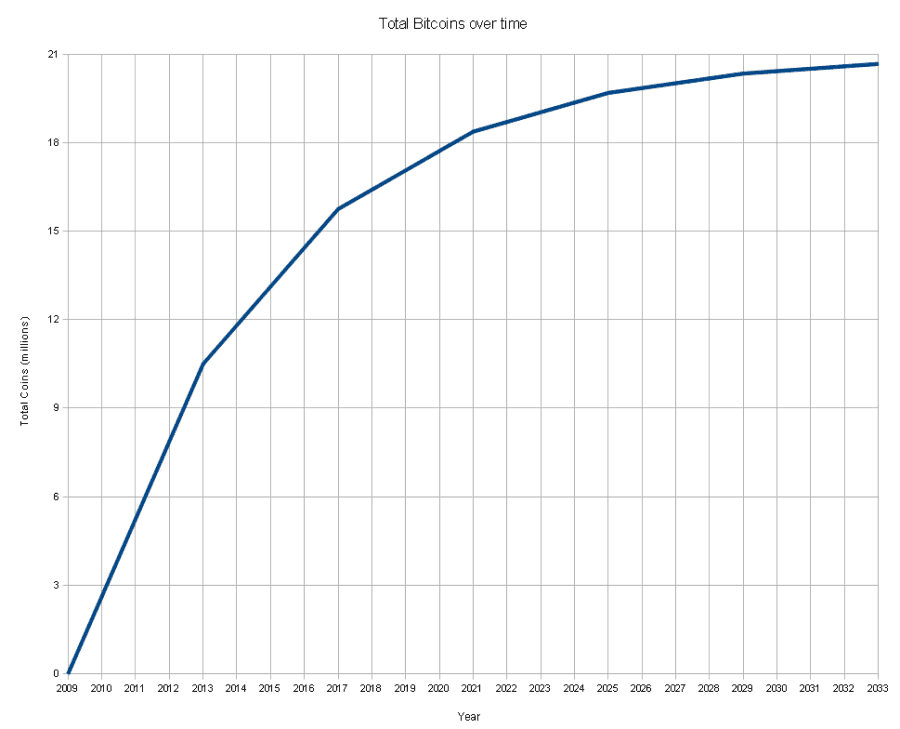
Re:In the 2020s bitcoins will run out anyway
Replying to your what-happens:
If someone breaks the encryption:
Hard to say, exactly. Assuming a full breach of SHA256, things would be pretty bad, the worse the longer it takes for the breach to be publicized. Once it is, the consensus would likely be to cease accepting Bitcoin transactions until a fix is issued - likely moving to a different algorithm, and considering all or some transactions since the breach retroactively invalid. There would be a lot of drama over this, understandably, and I don't know how long such a fix would take to implement technically. It would be a big deal and Bitcoin might not survive it, but that's not a given. Then again, being able to break SHA256 at will would be quite remarkable and would have serious repercussions for a lot of people quite apart from Bitcoin users. I'm not at all convinced breaking Bitcoin would be the best way to use such a trump card.
If someone steals and publicizes "decryption keys":
I assume you mean people's private keys used to control their bitcoins? This is like any other theft - if someone steals large amounts of cash and decides to redistribute it, robin-hood style, the victims are left without their money and some other people have more money than before, and a moral dilemma to go with the funds.
Quantum computers:
I'll point you to the Bitcoin wiki entry on the issue: https://en.bitcoin.it/wiki/Myths#Quantum_computers_would_break_Bitcoin.27s_security -
Terrible idea.
Most users would be mining on CPU power, and that means very poor chance to get any results while wasting enormous amounts of electricity.
You should look at the Mining hardware comparison. Summarizing: Best Xeon setups get 66Mhash/s and most common desktop setups go 1-10Mhash/s
Meanwhile, FPGA mining devices reach 1000-10,000Mhash/s and ASIC ones get order of 10,000-60,000 at powers like 600W.
Now to get power comparable to a single ASIC rig you'd need roughly 1000 customers running 24/7 or 33,000 customers running 5h a week.
33,000 CPUs running at full power, zero energy saving, to produce results comparable with a 600W appliance. This is to stay moderately competetive and get *some* ROI.
While the cost is distributed between the customers, the real cost - the amount of energy wasted - is staggering.
-
Re:I'm not a computer scientist, and...
Sort of a lazy effort on my part to not summarize, but here's a great explanation: https://en.bitcoin.it/wiki/Why_a_GPU_mines_faster_than_a_CPU.
-
Re:99% of most people too. don't let it bother you
Why though?
Assuming the GP's figure is close to accurate, "99% of the world's gold is sitting in a vault", it explains itself.
The rarity of gold IN CIRCULATION combined with its physical properties (ie. it's desirable for many applications) sets its base price, and the higher the rarity (assuming there's still enough out there to be useful), the higher that price. So, stockpile a lot of it and lock it away, and what remains grows in value.This is actually the same thing that happens to bitcoin, and is a big part of why they claim it self regulates... As bitcoin is removed from the market (bought and moved into savings), the price of bitcoin on the exchange goes up. Supposedly, the market would still work with just one bitcoin on the exchange. If it got to that point, adding one bitcoin from savings back into the exchange would earn someone a healthy chunk of money, but the price of bitcoin would drop in half instantly. This is supposed to mean that having a big pile of it doesn't help you, because if you have 100 bitcoin, it's not worth 100 x's the current price as each one put into the exchange reduces the price of the rest of bitcoin on the exchange. IMO, that doesn't make sense, and would make speculation increase (buy one, hope price goes up really high, sell high, wait for it to drop again as others try to do the same, repeat). This paragraph probably has a LOT of details wrong, misworded, etc, but the main point is still there... bitcoin chose it's block creation algorithm such that it approximates the rate at which commodities like gold are mined. (see : https://en.bitcoin.it/wiki/Controlled_Currency_Supply).
Anyway, if all the gold was released into circulation, the price per ounce would certainly drop, but that doesn't mean it wouldn't be just as useful as currency. It's value is based highly on what is in circulation, and that total value (amount_in_circulation * price) would probably be about the same. That's what bitcoin is counting on, and it plays a very similar rarity game.
-
Re:Bubble
-
Re:Or an economic drain?
Depends where you live. It'd be more like $200,000 where I'm from. If you only pay $0.10/kWh then its ~$100,000. USA pays around 8-17c depending where you live, or 37c in Hawaii. I pay about 25c.
The poor Australians pay 22-46c/kWh. They also run air conditioning for a good portion of the year. More bitcoin mining = more heat = more aircon load. It doesn't work the other way around in winter though, unless you heat your house with crappy heaters. Average heat pumps produce 4x more heat than they consume, so 1kWh of extra heat from bitcoin mining would have only cost 250Wh if you just turned up your heat pump.
The problem though, is if 2x the number of people mine now, there will still only be 3600btc per day, but it will use twice as much power.
Once it costs more to mine than it you get back, less people will mine. That means less processing power on the network which leads to less security.
When operating costs can't be covered by the block creation bounty, which will happen some time before the total amount of BTC is reached, miners will earn some profit from transaction fees. However unlike the block reward, there is no coupling between transaction fees and the need for security, so there is less of a guarantee that the amount of mining being performed will be sufficient to maintain the network's security.
https://en.bitcoin.it/wiki/Myths#After_21_million_coins_are_mined.2C_no_one_will_generate_new_blocks
-
Re:Or an economic drain?
retty soon it's hard to see why anyone would seriously consider bitcoin mining for profit unless they have (free) access to many idle machines
Exactly. And it is designed to be that way.
Its a short term problem at worst. Soon no one will bother to mine bitcoins. There will be easier ways to acquire them, such as actually producing a good or service.
Mining will become less important in the future (as it becomes less profitable).
https://en.bitcoin.it/wiki/Controlled_Currency_Supply -
Re:Hard to say
IANABP (I am not a Bitcoin Proponent, I own exactly 0BC and will not in the forseeable future), but I am interested in the idea and mechanisms involved.
If a break is ever found, suspected, or even slightly likely an orderly migration to better cryptographic primitives can be performed. If you are interested in knowing more the wiki enumerates all the known possible attacks.
-
1e-8 BTC == satoshi == ash
although there are 21 million bitcoins there is an endless fractal 0.00000001 of a bitcoin
1e-8 BTC is nicknamed a "satoshi" after the pseudonym of Bitcoin's creator. Why not call it an "ash" outside Japan? It'd make sense on two levels: an "ash" is a very small particle, and Ash is the name for the Pokemon character Satoshi outside Japan.
-
ASICs may have caused the crash
I just checked a comparison of mining hardware and a mining profitability calculator. In essence, with the current prices ($120 last checked), GPUs are no longer profitable but a dedicated ASIC will pay itself back in less than a year even at $3/bitcoin.
Incidentally, I just realized how space based solar power could transfer the energy down to Earth. Just mine bitcoins in space, transfer them down and buy the electricity here. -
Re:Well the ultimate value of Bitcoin is
NOTICE TO JANE Q. PUBLIC:
The words "value" and "worth" are subjective in nature. You can read about this anywhere in a good dictionary.
Like other fiat currencies, bitcoin is without intrinsic value. Look it up.
There is no "standard" amount of computational time or computing power (hashrate) required to mine a bitcoin block. For any given hashrate/difficulty, there is an statistically expected amount of blocks that will be found over a given timeframe. Difficulty changes every two weeks in response to network hashrate in order to keep the amount of blocks found at a predictable, pre-defined rate. Since difficulty changes, the computational resources required to keep bitcoin production at a predictable rate changes.
It is entirely possible - although incredibly unlikely - that I could start my 7970 mining right now and find a block in the next few hours. My 25 bitcoins obviously would not have the same computational time wrapped up in them as the average block found by other miners/pools.
You keep saying that your silly claims are supported by any "good technical description of Bitcoin", yet you fail to provide any links. Here let me help you...there's this and this and most importantly this.
Oh wait...NONE of those resources mention anything about a bitcoin "value standard"! Maybe you should stop posting in this thread lest you make an even bigger fool of yourself.
-
Re:Well the ultimate value of Bitcoin is
NOTICE TO JANE Q. PUBLIC:
The words "value" and "worth" are subjective in nature. You can read about this anywhere in a good dictionary.
Like other fiat currencies, bitcoin is without intrinsic value. Look it up.
There is no "standard" amount of computational time or computing power (hashrate) required to mine a bitcoin block. For any given hashrate/difficulty, there is an statistically expected amount of blocks that will be found over a given timeframe. Difficulty changes every two weeks in response to network hashrate in order to keep the amount of blocks found at a predictable, pre-defined rate. Since difficulty changes, the computational resources required to keep bitcoin production at a predictable rate changes.
It is entirely possible - although incredibly unlikely - that I could start my 7970 mining right now and find a block in the next few hours. My 25 bitcoins obviously would not have the same computational time wrapped up in them as the average block found by other miners/pools.
You keep saying that your silly claims are supported by any "good technical description of Bitcoin", yet you fail to provide any links. Here let me help you...there's this and this and most importantly this.
Oh wait...NONE of those resources mention anything about a bitcoin "value standard"! Maybe you should stop posting in this thread lest you make an even bigger fool of yourself.
-
Re:bottleneck
-
target
Bitcoin exchanges are a target right now at the current exchange rates, but I was thinking just a little while back, isn't it strange that somebody who released the original protocol is unknown and wishes to stay anonymous? I thought about that for a little bit, there are a number of possibilities. Of-course somebody who had the original idea could run the hash generation for a much longer time before anybody started doing it as part of a mining (proof of work) network. I don't know, it's hidden in plain sight
This feature is then used in the Bitcoin network to secure various aspects. An attacker that wants to introduce malicious payload data into the network, will need to do the required proof of work before it will be accepted. And as long as honest miners have more computing power, they can always outpace an attacker.
- good, what if somebody had a much longer stretch of time to work out the answers before they could even become questions? It's not like those transactions are random.
What other motives can somebody have to release a protocol like this one potentially to be used by millions of people who see this as a way to make money? Giving people incentives to come up with faster SHA generators? Somebody who wants to break encryption mechanisms by generating huge amounts of SHA codes against various data?
I think without actually getting into the source code it's impossible to read the answers to any of these questions, so maybe that's the next step, read the source code.
-
Re:It will never be that cheap again
See, we're on a completely different page here. I'm not arguing on a technical level, I'm arguing on a human level. If you want me to make a statement on the technical side of the thing, I'd say BC is technically mostly sound, but not perfect like you would make it seem. Most importantly, there are the scalability issues. There is also the theoretical vulnerability against a well-coordinated attack by a huge botnet (though I personally think BC's attractiveness for illegal operations disincentives this).
Then there are the "semi-soft" issues. There is the risk of forking; disaster was averted during a recent incident, but that doesn't mean it will be averted every time. There is the risk of legal crackdown: the very properties that have libertarian theoreticians drooling all over bitcoin make it attractive for illegal operations and money laundering in particular. Bitcoin is secured against some forms of naughtiness, but it is not a darknet: law enforcement can easily figure out you're using it and with a little bit more effort link different transactions to the same entity. Firewalls can be made to block it (and circumvented and counter-circumvented). But... but... that's not fair? Well, neither are the DMCA and the Patriot Act, kid. If bitcoin really takes off big time, lawmakers will soon have a bigger incentive to regulate the daylight out of BC than they had for voting the DMCA into law. And then there is the cap on the number of coins and the reality of data loss, which make it inherently deflationary. To paraphrase bitcoin.it 's FAQ, there's no telling what this will do to the currency, and there is a finite risk that it will lead to its downfall. Surely you know deflationary commodities don't have the best track record. The FAQ further argues that the (near-)infinite divisibility may mitigate this problem, but this argument is disingenuous: you can divide BCs all the way down to satoshis but that changes nothing to the fact that the BCs/satoshis in your wallet are increasing in value, incentivizing hoarding.
To return to the fully soft issue, why would people lose confidence? Well, in addition to all of the above, one reason could be the intransparent powers that govern bitcoin (early adopters + miners + exchanges + a flourishing black market...) Some people will argue that the current global monetary system is not a whole lot better, but the evil you know...
Bottom line: history is strewn with the bones of technically sound ideas that failed in "unforeseen" ways because of these kind of "details". Bitcoin holds some promise, but it hasn't been in existence for long enough to prove itself (which makes it quite ridiculous of you to compare it to gold), and has some pretty major challenges to overcome before we can be reasonably sure of its continued existence on the time scale of our life expectancy.
Also food for thought: most "stock investing 101" books contain warnings that companies founded on bleeding edge technologies typically go bust, only to see a more finely polished "2.0" version of the same technology taking the world by storm in the hands of other companies.
-
Re:Fundamentals
I had a longer response that was just eaten by the browser. Now unfortunately I have to be brief:
You can't roll back transactions or double spend without producing blocks, and producing valid blocks don't get easier by isolating the victim from the network. If you agree that brute force attacks on proof of work isn't impractical, this isn't very viable either (i.e. people will realize there's something wrong when confirmation takes hours to days instead of minutes).
It has to be easier if you isolate someone from the network. Imagine if all the computers but yours disappeared tomorrow. Are you saying your computer could not now win a race of 1? Or that there is any difference between a communications cutoff and lack of existence?
I don't get what you mean here. Even if a little information is leaked between the segments, the network will be whole again. Of course you have to have a reasonable leak. For instance, you could send the data on a flash drive and I wouldn't consider it a valid leak because of the latency.
If I am intercepting your communications, it is less complex to intercept everything rather than some things. Confirmations will be quite speedy, since they will come from me as well.
For the rest, I would suggest reviewing the Anonymity page bitcoin themselves puts up.
The Weaknesses page puts it succinctly: "Tracing a coin's history can be used to connect identities to addresses."
-
Re:Fundamentals
I had a longer response that was just eaten by the browser. Now unfortunately I have to be brief:
You can't roll back transactions or double spend without producing blocks, and producing valid blocks don't get easier by isolating the victim from the network. If you agree that brute force attacks on proof of work isn't impractical, this isn't very viable either (i.e. people will realize there's something wrong when confirmation takes hours to days instead of minutes).
It has to be easier if you isolate someone from the network. Imagine if all the computers but yours disappeared tomorrow. Are you saying your computer could not now win a race of 1? Or that there is any difference between a communications cutoff and lack of existence?
I don't get what you mean here. Even if a little information is leaked between the segments, the network will be whole again. Of course you have to have a reasonable leak. For instance, you could send the data on a flash drive and I wouldn't consider it a valid leak because of the latency.
If I am intercepting your communications, it is less complex to intercept everything rather than some things. Confirmations will be quite speedy, since they will come from me as well.
For the rest, I would suggest reviewing the Anonymity page bitcoin themselves puts up.
The Weaknesses page puts it succinctly: "Tracing a coin's history can be used to connect identities to addresses."
-
Re:You're not kidding
This doesnt have much to do with cryptography. Your concern is more about the cost of implementation for the average user. This is a known concern and there are some potential future solutions for this, but the main ones in use today are: 1) using an online wallet. Where you would trust a website of your choosing to access your bitcoin holding through their online interface. https://en.bitcoin.it/wiki/Browser-based_wallet 2) using a thin client: https://en.bitcoin.it/wiki/Thin_Client_Security
Both of these existing solutions are not ideal. The ideal solution is for you to bite the bullet and make sure your hardware is sufficient to run a full client with the full block chain on your local PC. Right now, every computer has enough space and processing power to do this. So the problem you mention is a potential issue for the future. But I have researched this and there are potential solutions for improving the space requirements at some point in the future. For now, there are 2 simple solutions available for you if you dont wish to run a full client on your own.
-
Re:You're not kidding
This doesnt have much to do with cryptography. Your concern is more about the cost of implementation for the average user. This is a known concern and there are some potential future solutions for this, but the main ones in use today are: 1) using an online wallet. Where you would trust a website of your choosing to access your bitcoin holding through their online interface. https://en.bitcoin.it/wiki/Browser-based_wallet 2) using a thin client: https://en.bitcoin.it/wiki/Thin_Client_Security
Both of these existing solutions are not ideal. The ideal solution is for you to bite the bullet and make sure your hardware is sufficient to run a full client with the full block chain on your local PC. Right now, every computer has enough space and processing power to do this. So the problem you mention is a potential issue for the future. But I have researched this and there are potential solutions for improving the space requirements at some point in the future. For now, there are 2 simple solutions available for you if you dont wish to run a full client on your own.
-
Already is regulated
https://en.bitcoin.it/wiki/Tax_compliance#Are_my_bitcoins_taxed_as_income.2C_or_as_capital_gains.3F
Are my bitcoins taxed as income, or as capital gains?
Income that is earned through the exchange of services with another person, whether in the form of bitcoins, dollars, or barter; is included in gross income, and would be subject to income tax at applicable rates. Also these bitcoins could be subject to self employment tax.
In some jurisdictions, income earned through the process of buying and selling bitcoins would also be included in gross income, but would be treated as capital gains.
Note: The above interpretation is based on the assumption bitcoins are treated as a store of value such as gold, or other such commodity. If instead they are treated as a currency or debt, the full gain could be taxed based on market value at the end of each tax year. 3858 IRS Ends Currency ETN Adantage Simply put, the IRS never considers currency a long-term investment. Consequently, if bitcoins are treated as a currency, you will be taxed the same as holding an account in any non-functional (foreign) currency.
I.e. if bitcoins are treated the same as gold coins, then for every transaction, one must calculate the capital gains or loss, and pay 28% tax on the total net gain on Form 1040 Schedule D. For anyone who tries to comply with U.S. tax code, such as those seeking political office or security clearance, this makes it impractical to use bitcoins for everyday transactions, and practical only for occasional, large transactions such as investing in bitcoins for the medium or long term.
-
Re:White paper on EXACTLY what a bitcoin is, pleas
Protocol specification: https://en.bitcoin.it/wiki/Protocol_specification
1 Bitcoin can be subdivided into 100,000,000 Satoshis, the smallest possible unit under the current specification.
-
Re:You're not kidding
I'm not a crypto expert but Bitcoin does seem to have scalability issues with regards to transactions, see:
http://www.slideshare.net/dakami/bitcoin-8776098 referencing:
https://bitcoin.it/wiki/ScalabilityAnd the transaction history which the main client keeps is mushrooming approx' 1GB per month but that can apparently be pruned, but how much I don't know.
What the Bitcoin wiki says is acceptable is actually absurd, most people do not want their broadband connection saturated 24/7 or even 1% of that to keep Bitcoin going.
-
Re:What can you buy with bitcoins?
https://en.bitcoin.it/wiki/Trade
Contents
1 Getting started
1.1 Free Samples and Offers
2 Currency exchanges
2.1 Real-time Trading
2.2 Fixed rate
2.3 Bulk/Large-sized Trades
2.4 Gift/Debit Cards
2.5 Precious & Base Metals/Coins
2.6 Local/In-Hand Exchanges
3 Financial
3.1 Lending
3.2 Equities
3.3 Options
3.4 Futures
3.5 Forex
3.6 Interest on Bitcoin
4 Bitcoin eWallets
4.1 Bitcoin Banking and Ewallets
5 Bitcoin payment systems
5.1 Escrow
6 Internet & Mobile services
6.1 Bitcoin-related
6.2 Connectivity
6.3 Design
6.3.1 Creative
6.3.2 Web
6.3.3 Art
6.4 Web Hosting
6.5 Dedicated/Virtual Server Hosting
6.6 Domain Name and DNS Hosting
6.7 Email
6.8 VoIP/SMS
6.9 Security Services
6.10 Mobile App Development
6.11 Productivity
6.12 Other
7 Online products
7.1 Search Engines
7.2 Cloud Providers and Services
7.3 Software
7.4 Education-related Software
7.5 Gambling
7.6 Games
7.7 Graphic design
7.8 File sharing
7.9 Music
7.10 Virtual Art
7.11 Digital Downloads
7.12 Entertainment/Books/Magazines
7.13 Social Media/Aggregators
7.14 Cyber Begging -
Re:How to take a short position in Bitcoin?
-
Re:How to take a short position in Bitcoin?
-
Re:Unlikely.
I have a Radeon HD 5970 and that's not even a good card
Wait, what? The 5970 is the GPU miner's proverbial holy grail. With a 5970 you should be getting 700 MHash/sec easily, 750 if you overclock. Are you sure you don't have a 5770?
-
Bitcoin supports coalescing micro-transactions
There's already a documented way to coalesce arbitrarily many bitcoin micropayments to a single party into exactly two blockchain transactions without involving a trusted third party. It bears a striking similarity to the two-transaction authorize-capture flow used by VISA and friends, but with the added bonus that the payee isn't trusted to capture for the correct amount.
This (like all smart contracts) is a fairly advanced use-case that basic wallet software isn't capable of, but can readily be built as an add-on that operates as a client of bitcoind.
-
Goods for Sale
You could look here:
-
Re:this isn't really testing the hard part
Might the (oft maligned) BitCoin work here? Sidestepping the diminishing-returns-due-to-transaction-cost issue by having a currency value that is highly divisible. Of course, you then have to deal with the value of BtC being unstable (compared to regular national fiat currencies), but if each transaction has an actual useful value rather than having to wait to the end of the month to aggregate values, that may not be an issue.
-
Re:Raises the question
Current fork was not a big deal, it's an extraordinary branching but the protocol is very resilient to that. The chain recovered in a few hours and the transactions were automatically merged.
However, there have been many parallel systems almost since the beginning of Bitcoin: https://en.bitcoin.it/wiki/List_of_alternative_cryptocurrencies
What keeps Bitcoin on the top has always been the network effect. As long as there isn't a completely incompatible breakthrough in the technology, it is likely that it will remain dominant, since it can absorb development done on the alternatives. There hasn't been any such proven improvement yet though.
Also, check out Ripple: https://ripple.com/
-
Re:Old news.
You laugh, but some of the developers, the lead developer Gavin, and another core developer Mike Hearn, are pushing really hard to get the current 1MB limit (7 transactions/second) on blocks lifted so Bitcoin can directly scale to VISA-like volumes.
Never mind that Bitcoin is inherently an unscalable O(n^2) network - every transaction has to be broadcast to every node - and the issue they ran into was also a problem scaling. Mike's solution is to just throw thousands of dollars worth of hardware at the problem. Never mind that for Bitcoin *any* issue the means that some nodes can process a large block, and some can't, turns into the same hard-fork we just saw. Never mind that it will make Bitcoin centralized, and lead to perverse incentives for large miners to attack smaller ones.
You'd think they'd say "OK, hold on, how about we just use ways to transfer funds that don't have to go into this shared state ball of mess?" but no, they're desperate to take the easy way out at any cost.
I really wonder if my Bitcoins will be worth anything in a few years.
-
Re:The concensus should be...
I think its fair to say that while forking code may be a good idea most of the time - when its code running a virtual currency its a very BAD idea.
This isn't a code fork, it's a block chain fork" caused by an incompatible version update. That said, I agree with your assessment that it is not suitable for storing wealth unless you are prepared to take risks. To be fair bitcoin describes itself as ".. an experimental, decentralized digital currency".
-
Re:The concensus should be...
I think its fair to say that while forking code may be a good idea most of the time - when its code running a virtual currency its a very BAD idea.
This isn't a code fork, it's a block chain fork" caused by an incompatible version update. That said, I agree with your assessment that it is not suitable for storing wealth unless you are prepared to take risks. To be fair bitcoin describes itself as ".. an experimental, decentralized digital currency".
-
Re:What is this "bitcoin" you speak of?
BTC isn't a real currency, I can't pay my taxes with it
Right. Nor can you pay them with gold, euros, pogs, flooz, sports trading cards, or a zillion other things. Government authority in the US accepts dollars. So what?
I can't pay any of my debts with it and nobody is forcing anybody to accept it.
You can buy software, web hosting, domain names, precious metals, gamble, clothes, electronics, dental service, legal service, books and fuck all else with it. Just because you can't pay your cable bill with bitcoins yet doesn't mean they aren't useful to others.
It's not backed by gold, silver or the promise of anybody with the means to back it.
Bitcoin is backed by the compute power of the bitcoin mining network, the bitcoin protocol, and modern cryptographic techniques. Can a 51% attack break it? Maybe. Will a flaw in the protocol kill it? If one is found and exploited, certainly. How about some breakthrough in cryptographic analysis or technique, like say quantum computing? Another possible killer.
In fact, it's designed to result in crushing deflation in a way that no currency is. If there aren't enough USD, you can print more, if there are too many, you can take them out of circulation when they come back.
There are some issues here. Hard drive crashes and no backup of your wallet? Barring some heroic drive recovery, or crypto breaking technique (which would likely break the system as well) those coins are gone forever, further lowering the number of potential bitcoins. But really, not much different than cash being destroyed.
A bitcoin can currently be broken up into 10^-8 pieces. There is room in the protocol for that to be increased. There could be 1 bitcoin in the world, and the pieces would still be useful.
Seeing how an elastic money supply controlled by private bankers has only caused larger boom/bust cycles since the Federal Reserve System was implemented, I'm at least interested in how the bitcoin system plays out. Even if it eventually dies, lessons will be learned, and the next iteration will be better.
-
Re:Price Is Not Relevant - You're missing the poin
How divisible are bitcoins? A bitcoin can be divided down to 8 decimal places. Therefore, 0.00000001 BTC is the smallest amount that can be handled in a transaction. If necessary, the protocol and related software can be modified to handle even smaller amounts. https://en.bitcoin.it/wiki/FAQ#How_divisible_are_bitcoins.3F
-
Re:Anonymous currency
Hell, Wall Street is probably looking at ways to set up fractional bitcoin systems so they can do HFT in bitcoins,
Right now the problem is the increasing value of a bitcoin - at $30 each, 1 bitcoin is seriously going to overpay for a lot
https://en.bitcoin.it/wiki/FAQ#How_divisible_are_bitcoins.3F
How divisible are bitcoins?
A bitcoin can be divided down to 8 decimal places.
Therefore, 0.00000001 BTC is the smallest amount that can be handled in a transaction.
If necessary, the protocol and related software can be modified to handle even smaller amounts.I'm surprised you had so much to say about bitcoins without knowing this fact.
-
Driven by online gambling
This is probably being driven by online gambling. Satoshi Dice is now doing more Bitcoin transactions than all other users combined.
-
Re:Don't confuse exchange with speculation
Everyone who uses Bitcoin is a currency speculator.
You could say the same about the US Dollar. You have "speculated" that the government won't default; that Bernanke won't devalue the dollar (even more) with another even bigger round of QE; that Walmart won't decide next week that they only take payment in gold or vintage Furbys or Yuan (yes, they can. No, it doesn't.)
You can't buy everyday essentials with it
Not the best hill to die on - You can buy just about anything denominated in BTC today. In addition to the thousands of online vendors that take it, you can even visit a growing number of brick-and-mortars that take it. -
Re:Don't confuse exchange with speculation
Everyone who uses Bitcoin is a currency speculator.
You could say the same about the US Dollar. You have "speculated" that the government won't default; that Bernanke won't devalue the dollar (even more) with another even bigger round of QE; that Walmart won't decide next week that they only take payment in gold or vintage Furbys or Yuan (yes, they can. No, it doesn't.)
You can't buy everyday essentials with it
Not the best hill to die on - You can buy just about anything denominated in BTC today. In addition to the thousands of online vendors that take it, you can even visit a growing number of brick-and-mortars that take it. -
Re:You use GPUs for video games?
This is the explanation I've been given for the disparity between Nvidia and AMD: https://en.bitcoin.it/wiki/Why_a_GPU_mines_faster_than_a_CPU#Why_are_AMD_GPUs_faster_than_Nvidia_GPUs.3F Specifically:
Secondly, another difference favoring Bitcoin mining on AMD GPUs instead of Nvidia's is that the mining algorithm is based on SHA-256, which makes heavy use of the 32-bit integer right rotate operation. This operation can be implemented as a single hardware instruction on AMD GPUs (BIT_ALIGN_INT), but requires three separate hardware instructions to be emulated on Nvidia GPUs (2 shifts + 1 add). This alone gives AMD another 1.7x performance advantage (~1900 instructions instead of ~3250 to execute the SHA-256 compression function).
For GPU programming I've enjoyed Nvidia's CUDA package greatly over wrangling OpenCL that Radeon relies on.
You're living on borrowed time with CUDA. The entire industry has already moved to OpenCL and it will only expand when all the heavy Engineering and Science vendors are fully on-board. When Ansys 14.5 already moved to OpenCL for its latest release you know such a conservative corporation is one of the last to make the transition.
-
Re:You use GPUs for video games?This is the explanation I've been given for the disparity between Nvidia and AMD:
https://en.bitcoin.it/wiki/Why_a_GPU_mines_faster_than_a_CPU#Why_are_AMD_GPUs_faster_than_Nvidia_GPUs.3F
Specifically:Secondly, another difference favoring Bitcoin mining on AMD GPUs instead of Nvidia's is that the mining algorithm is based on SHA-256, which makes heavy use of the 32-bit integer right rotate operation. This operation can be implemented as a single hardware instruction on AMD GPUs (BIT_ALIGN_INT), but requires three separate hardware instructions to be emulated on Nvidia GPUs (2 shifts + 1 add). This alone gives AMD another 1.7x performance advantage (~1900 instructions instead of ~3250 to execute the SHA-256 compression function).
For GPU programming I've enjoyed Nvidia's CUDA package greatly over wrangling OpenCL that Radeon relies on.
-
Re:Fiat money depends on promises
Herbalife is a ponzi scheme. Bitcoins are not. A bitcoin's stability is related to the number of number of vendors accepting the currency. If it collapses then the founders theoretically lose as much as the later miners (i.e. they gained nothing to begin with because they had no chance to cash out):
https://en.bitcoin.it/wiki/FAQ
Is Bitcoin a Ponzi scheme?
In a Ponzi Scheme, the founders persuade investors that they’ll profit. Bitcoin does not make such a guarantee. There is no central entity, just individuals building an economy.
A ponzi scheme is a zero sum game. Early adopters can only profit at the expense of late adopters. Bitcoin has possible win-win outcomes. Early adopters profit from the rise in value. Late adopters, and indeed, society as a whole, benefit from the usefulness of a stable, fast, inexpensive, and widely accepted p2p currency.
The fact that early adopters benefit more doesn't alone make anything a Ponzi scheme. All good investments in successful companies have this quality."
-
Bitcoin is taking off. Pay attention to it.
In the last 3 months: money supply expansion halved, number of merchants doubled, wordpress accepted it, US facing pokersite leaks they will accept it, largest gambling site profit up hundreds of %
If this stuff happened to any company, its share price would double.
Also, in the last year:
Network transaction fees per day are up 1100% from 4 to 48
Explosion in p2p exchanges for cash or bank transfers on sites like localbitcoins
Coinlab and BitPay each got 500k in venture capital. Coinbase got 100k.
Bitcoin Foundation Launched in September 2012
ponzi worth between 250k and 5mil collapsed
BitInstant lets you buy bitcoins at walmart, 7-11, and CVS
Silk Road is doing at least 2mil/month. Forum usage up hundreds of percent over last year.
A $10mil company will be releasing the BitcoinCard this year at the Vienna Bitcoin Conference. The Russian founders say 5 years of research have gone into this technology allowing a super-low-power credit card sized device to send texts, bitcoins, login info, and consumer data through an ad-hoc network instead of cell towers, at a card cost of only $10-$25
SatoshiDice has shown the potential of the bitcoin gambling market by earning $600k, including 17,266 bitcoins in December
Many companies in the bitcoin community have gone public.Read the bitcoin FAQ: https://en.bitcoin.it/wiki/FAQ
If you still have concerns, see if they are addressed in the "myths" section: https://en.bitcoin.it/wiki/Myths -
Bitcoin is taking off. Pay attention to it.
In the last 3 months: money supply expansion halved, number of merchants doubled, wordpress accepted it, US facing pokersite leaks they will accept it, largest gambling site profit up hundreds of %
If this stuff happened to any company, its share price would double.
Also, in the last year:
Network transaction fees per day are up 1100% from 4 to 48
Explosion in p2p exchanges for cash or bank transfers on sites like localbitcoins
Coinlab and BitPay each got 500k in venture capital. Coinbase got 100k.
Bitcoin Foundation Launched in September 2012
ponzi worth between 250k and 5mil collapsed
BitInstant lets you buy bitcoins at walmart, 7-11, and CVS
Silk Road is doing at least 2mil/month. Forum usage up hundreds of percent over last year.
A $10mil company will be releasing the BitcoinCard this year at the Vienna Bitcoin Conference. The Russian founders say 5 years of research have gone into this technology allowing a super-low-power credit card sized device to send texts, bitcoins, login info, and consumer data through an ad-hoc network instead of cell towers, at a card cost of only $10-$25
SatoshiDice has shown the potential of the bitcoin gambling market by earning $600k, including 17,266 bitcoins in December
Many companies in the bitcoin community have gone public.Read the bitcoin FAQ: https://en.bitcoin.it/wiki/FAQ
If you still have concerns, see if they are addressed in the "myths" section: https://en.bitcoin.it/wiki/Myths