Slashdot Mirror
Domain: feedingamerica.org
Stories and comments across the archive that link to feedingamerica.org.
Comments · 19
-
Re:Low fat whole grain?
According to this website the number could be as many as 450,000.
-
You think I was painting utopia? oh, no.
Not one use for humans in your world is there? This robots - are they goung to consume all this awesome stuff they make?
My expectation is, after a lot of pain, we'll move off of the toxic idea that one only deserves to have self-respect if one performs some kind of drudgework, and that one only deserves respect from without if one performs some kind of drudgework, to a mindset where one deserves respect because one is a socially reasonable human being and pursues one's own interests in some healthy fashion (IOW, with some degree of pleasure, while offering no harm to others.)
"Money for stuff" is an adequate model when there is a too-limited amount of stuff and everyone must produce or we all fall down. When there isn't a too-limited amount of stuff, and one does not have to produce to keep society going, it doesn't make very much sense for the majority to have to do drudgework.
There will need to be some measure of consumption, and some way to meter it out. But it won't be based on work. Or so I imagine.
It's the getting from here to there that I'm worried about. Jobs are going to go away fast. And here in the US, where I am, congress moves slowly, sometimes not moving at all, even when it is obvious they need to (for instance, they've been pursuing the complete failure of a drug war for decades now, and they're still too blind, deaf and self-centered to understand it's a pointless exercise from the POV of accomplishing anything worthwhile, while also harming the maximum possible number of people, far, far more than drugs themselves ever posed a threat to.)
Right now... now... there are about 42 million food-insecure people in the US. That's roughly 1/7th of the population. And the financial imbalance is extreme. It's pretty clear that the current model does not serve the country at large very well.
But the people keep electing millionaires to congress. That's right. The average net worth of a congresscritter is over one million dollars. So any change in the right direction will meet some resistance. I leave it to you to imagine how much.
-
News flash: Average income is deceiving
The average income of 10th through 70th percentile - in other words, most citizens - is $32,245 / year (source, EPI Data Library - Wages by percentile.csv, 2015 [latest] row).
Over 40 million (out of 319 million, or about 12%) of US citizens are going hungry (feedingamerica.org).
The social safety net isn't safe, nor particularly social.
I'm sure we can expect relief from the Trump administration (cough... choke.)
But hey, let's worry about tech interns. My blinders need a workout anyway.
-
Re:Hand-waving hypocrites.
Sorry that highly questionable claim about children in "food insecure households" even if true does not equal bread lines. Which were daily lines in the soviet union to obtain basic food stuffs. Even when adequate supplies existed the process and procedures to obtain the food items were inefficient and time consuming.
Go to your local food banks and you'll see the bread lines. Some distribute 1 or 2 days a week, some daily. Same as soup kitchens operate either a few days a week or daily. All depends on the resources available. Seniors are the most consistent users of food banks. And things have gotten worse since the study, which was done in 2010. Their food banks distributed more than 4 billion meals . And that doesn't count the food banks and soup kitchens that operate independently of Feed America. 46 million Americans depend on food banks, food pantries, and soup kitchens.
This is common knowledge. Only someone who is willfully ignorant or is living in a bubble world doesn't know this. It's mentioned often on daytime TV, it's in the news (print, television, radio, internet). Go visit a food bank. There's one in almost every community in all 50 states.
Of if you're feeling lazy, just google for it.
-
Re:Hand-waving hypocrites.
Sorry that highly questionable claim about children in "food insecure households" even if true does not equal bread lines. Which were daily lines in the soviet union to obtain basic food stuffs. Even when adequate supplies existed the process and procedures to obtain the food items were inefficient and time consuming.
Go to your local food banks and you'll see the bread lines. Some distribute 1 or 2 days a week, some daily. Same as soup kitchens operate either a few days a week or daily. All depends on the resources available. Seniors are the most consistent users of food banks. And things have gotten worse since the study, which was done in 2010. Their food banks distributed more than 4 billion meals . And that doesn't count the food banks and soup kitchens that operate independently of Feed America. 46 million Americans depend on food banks, food pantries, and soup kitchens.
This is common knowledge. Only someone who is willfully ignorant or is living in a bubble world doesn't know this. It's mentioned often on daytime TV, it's in the news (print, television, radio, internet). Go visit a food bank. There's one in almost every community in all 50 states.
Of if you're feeling lazy, just google for it.
-
Re:If I was President... (Or King!)
Well not me.
Why not? Do you honestly think I'd do a WORSE job than either Trump or Clinton?
HOOOOOOOOLLY SHIIIIIIT! Where are you going to get all your money from? Our effective tax rate is around 27%, so you're in deep financial shit.
You're assuming the Federal Government needs to stay its current size. I'd fix that!
But, oh, okay, "all numbers are subject to change". So let's just assume that it's a flat tax at $(ENOUGH) to have the same income as today.
Thank you for bothering to read what I wrote, everyone else seems to not want to read it.
Why do you want to give so much money to rich people? Historically, they've been getting hella wealthier while the bulk of people have lagged behind.
I don't, that is a HUGE tax increase on the rich... or do you think the rich are actually paying 39.6% marginal tax rates? Why do you think Trump isn't releasing his returns? He probably pays less than 10% tax rate overall, better to just not release them.
Want to know how to fix the tax code? Ask a rich person who is willing to pay more. My wife and I made into a comfortable 6 figures last year, yet paid hardly any income tax. All legally, every single penny was reported, but thanks to our insane tax code, we avoided paying much tax. Compare this to normal working people who pay out the nose.
In 2012 it was reported that Mitt Romney paid 14% effective tax rate, and that he probably would refile after the election to lower it even more (he didn't take all the deductions that he could). My plan would raise taxes on people like him and Trump.
Also with no exceptions, most non-profits go away. Which is a real kick in the pants to the poor and anyone hoping for a scholarship.
Meh, people aren't going to stop caring about their fellow human beings over it, what it will do is remove a ton of fraud and cheating... Non-Profits live in society, they need to help pay for it...
Finally, food is cheap. Starving isn't really that big of an issue in America.
http://www.feedingamerica.org/...
Don't be too sure...
48 million Americans live in "food insecure household" - That is unacceptable if we can afford to maintain a trillion dollar military...
...Noooooooo you just said "no exceptions" to the income tax. Corporations as separate people with special tax rules is a pretty big exception.
Corporations don't pay taxes, people do... The other option is to either set it to zero, or set it to 20% of gross receipts, but that would be regressive on the poor...
It can't be based on "profit", that is too easy to make say whatever they want it to say.
Replacing a sales tax with a sales tax. Got it. But did you mean national sales tax or all sales taxes across the nation? It sounds like the latter, primarily because there really isn't a national sales tax. But in that case, how do states and cities get money?
10% national VAT, collected by the federal government, 7% goes to the states, 3% goes to the federal government. If online purchase, then split the 7% to 3.5% for each state, buyer and seller. The states can spend the money on anything they want, no strings attached. The 3% to the feds covers the cost of running the single program (making it easy for all companies to comply) and provides minor income to the government. The 7% to the states is free of cost, so most states will actually get more money this way.
Do you have ANY idea how unreasonable a big-ass wall is? Do you have any idea how much it would cost?
It is totally reasonable... Th
-
Re:Don't conflate those things
We were able to effectively end childhood hunger in the 70s,
... by redefining it to food-insecure. Not necessarily the best example.
-
Re:Story I heard as a kid
It's nothing to do with wealth. It's to do with what cows evolved to eat.
They eat grass in countries of all wealth levels. It's only places with bizarre corn subsidies that their primary food is corn.Farmers feed cows corn because it's the cheapest feed. You can argue corn subsidies all you want, I don't care.
There are about 49 million people in this country however, that do not get regular meals due to poverty and would like beef to be as cheap as possible:
http://www.feedingamerica.org/...
I bet they would dispute your opinion of corn subsidies... -
Re:HR still says
Your comment got me interested in actual numbers, so I did some Google searches. I expected to find a small but nonzero number of yearly deaths. The results I found indicated that death by starvation in America is so infrequent that it's not even tracked. Occasional cases do occur, but they are often the result of something other than lack of access to food, such as child neglect or mental illness. Even Feeding America only talks about the effects of hunger and food insecurity, not actual starvations. There are lots of programs, both government and private charities that provide food and assistance to those who need it.
That's not to trivialize the very real problems of malnutrition or hunger, which can have serious consequences. But outright death to lack of access to food does seem to be practically non-existent in the U.S.
-
Re:HR still says
Your comment got me interested in actual numbers, so I did some Google searches. I expected to find a small but nonzero number of yearly deaths. The results I found indicated that death by starvation in America is so infrequent that it's not even tracked. Occasional cases do occur, but they are often the result of something other than lack of access to food, such as child neglect or mental illness. Even Feeding America only talks about the effects of hunger and food insecurity, not actual starvations. There are lots of programs, both government and private charities that provide food and assistance to those who need it.
That's not to trivialize the very real problems of malnutrition or hunger, which can have serious consequences. But outright death to lack of access to food does seem to be practically non-existent in the U.S.
-
Re:Meanwhile...
A dollar gives 9 meals. If you can't afford a dollar, go stand on a street corner and beg for a few hours. Then you'll be able to afford it and more.
-
Re:Offensive
How many atheist/anti-theist soup kitchens have you ever seen?
This is because it's rarely done under the banner of atheism. It's also worth noting that there are many more religious people than atheists in the US so they have more resources. There's a discussion on the topic here.
To directly answer the question, here are some examples of secular organisations helping the homeless:
Feeding America
The aliveness projectThere may be religious people in the organisation, but it's not a religious organisation. It's not always the same the other way around: two atheist groups were prevented from helping out in religious soup kitchens this year.
-
Re:Fail-safe
One of the news articles mentioned that merchants were supposed to record transactions manually and allow purchases up to $50
Due to the government shutdown, I cannot provide primary source data such as would be normally available from the USDA, etc. In lieu of that, the links provided represent the best non-authoritative sources available at this time.
The average household size is 2.48. Source.
The average person spends about $70 a week on food Source
76% of people on food stamps are disabled, elderly, or children. Source
Around 44 million Americans are on food stamps now** [Couldn't find credible source; Estimated from multiple sources]
This would mean that the average weekly trip to the grocery store, for an average household, would be $173.60. If your number is correct, then the government has opted to allow vendors to 28% of a family's food to be processed. Also according to the article, this outage may last up to three days.
Now here's the thing; A lot of those families live 'paycheck to paycheck'. Even if it is welfare; They don't have a fully stocked pantry. If they don't buy food today, a lot of them don't eat. And most people go shopping on the weekend. Your quoted $50 means the average family runs out of food in just under two days. I was unable to find any citation to back your assertion that they were allowing purchases as long as they were under $50 as well, so I have my doubts as to its validity. Anecdotally, two of my friends who have food stamps in the midwestern area reported being unable to purchase any food or remove any amount of cash benefits from their accounts.
So either the situation is 'rather bad' -- 1 in 8 Americans will be going hungry for at least one day this week on average. Or it's 'very bad', in that 1 in 8 Americans will be going hungry for three days. And possibly longer -- many of those people use public transportation or arranged rides to get to the grocery store every week. Especially the elderly and disabled. These rides are picked out weeks ahead of time. For them, they could be looking at not eating for a week or more.
So I return to my original point: Why is it that credit card companies, who offer a convenience, do this, but our government, which provides something that in a very literal sense is life or death to some people, does not? There is no answer to that question that I come away with that makes this look like anything other than criminal neglect of a vulnerable population.
-
Re:On the other hand...
This is a #firstworldproblem, those who are worrying if they will find food tomorrow have no time to worry about
Then the USA is not a "First World" country. About a sixth of all residents don't get enough food. Particularly heartbreaking is that the numbers tend to get worse when you start talking about just kids. In my hometown the percentage of kids on meal assistance at their schools is so high, I'm too embarrassed to quote it here. These are the kids who are supposed to grow up and run the country.
-
Re: Immigration and Customs are dangerous
http://feedingamerica.org/hunger-in-america/hunger-facts/child-hunger-facts.aspx Child hunger rates in the US
-
Re:We live in abundance
Sorry, no matter how you put it, that doesn't look too good for the US.
Relative poverty is a wonderful thing. It allows you to say that a man who own his own home, his own car, a computer, 60" TV, stereo, etc is "poor" if he lives in Eagle Pass TX, but "rich" if he lives three miles farther west in Piedras Negras.
Thanks, but I prefer the old-fashioned notion of absolute poverty.
I barely start discussions on
Yes, absolute poverty has declined in the US:
While it doesn’t look so bad in terms of absolute poverty in international comparisons, the US is still far worse off than the majority of European countries, except for south-European countries like Portugal and Spain. You can dig up the statistics on your own.
There are many other measures of poverty, like e.g. the following one that doesn’t look too good for the US either:
Or, how about food security in the US:
Sadly most people in the US are irrational when it comes to data like this, they just cherry-pick the statistics they like to hear. Apparently people in the US get hammered the message that the US is the greatest and richest country into their brain from early childhood on.
Enough said.
-
Re:Its not called gas but its called...
You suggest the government manage food distribution, but that would only be worse. With a transport subsidy, the government partially pays for shipping. With a government-managed distribution, the government has to purchase food, transport it, and distribute it to those in need, paying for everything and trying not to act as a monopoly against actual companies. Thanks, but I'd prefer to keep the bureaucracy detached.
I did not say it was "simple". I said it was the "simplest" (though that should be followed by "that I know of"). Subsidies put downward pressure on the price of whatever good they target, because participating companies can make a decent profit, while selling the goods at lower prices. Subsidizing transport forces food's final price to be lower, hopefully enough that even families with low incomes can afford it.
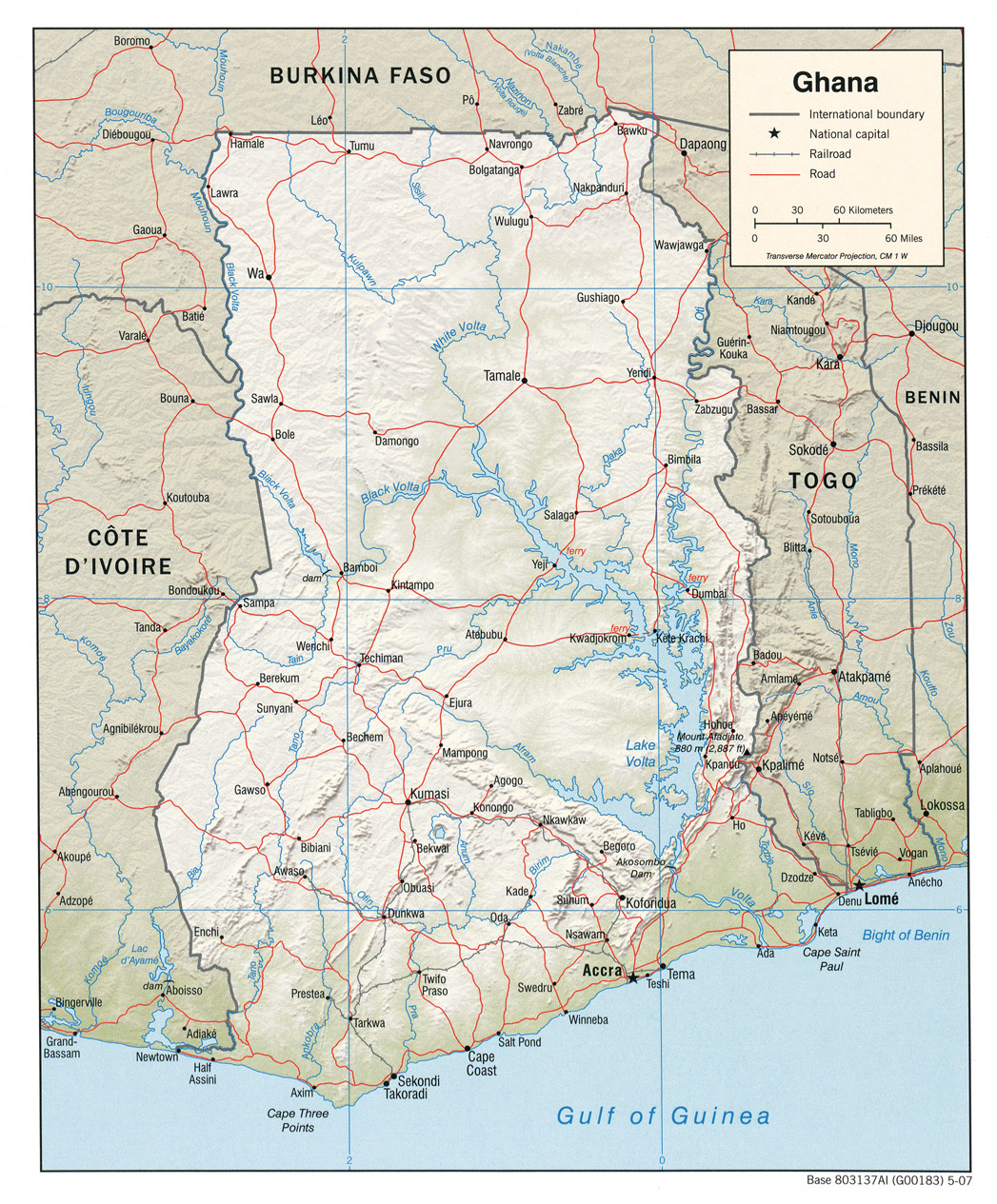
As an example of the situation, let's consider Ghana. In the southern half of the country, there is a food surplus, due to the Atlantic ocean, Lake Volta, and generally heavier rainfall. In the northern half, the farms can't produce enough food, due to winds from the Sahara and a lack of large water sources. Major northbound roads, such as the one from Kintampo to Tamale, have heavy tolls. Those roads are also in poor condition, and vehicles often have to be repaired after only a few crossings. There are fewer big cities in the north, and more small villages, so less wealthy people as well. Food brought to the north will sell, but it's not as profitable as keeping it in the south. Bear in mind that this disparity is in a country roughly the same size as Wyoming. A government-backed reduction in the transport cost would make the northern villages into feasible markets for southern suppliers.
The same situation applies to areas of the United States as well. On average, 1 in 6 Americans don't have secure food supplies. Where Ghana has long treacherous roads, America has mountains and sheer distance. There are areas, like my hometown, that simply can't afford enough food. I grew up less than a mile from a large grain farm, but it was primarily low-grade corn... good for turning into biofuel, but not suitable for human consumption, and certainly not directly contributing to local food stability.
A well-regulated subsidy of transport would improve the availability of food in small towns like mine. Yes, it'd require a lot of people to manage the system, but it's the simplest solution I've heard yet.
-
Re:Free access for all...
Yeah, about that "Food and Water":
It seems, we haven't solved that one yet in the "Richest" nation. What say you, we drop this internet crap and focus first on that basic human need right here in America?
The hunger issue has been solved at least 4 times throughout history. In all cases as soon as hunger was no longer a limiting factor the population grew until it was again.
1) There were enough resources in North America to feed all of Europe, until North Americans started populating
2) Agricultural revolution brought about by "chemically synthesized inorganic fertilizers"
3) The ability to increase farming due to "cheap oil", corn is often referred to as edible oil
4) Norman Borlaug pioneered genetically modified crops allowing hardy wheat strains to grow in otherwise unusable land in Mexico, etc.In all those cases, had the population stabilized, there would have been enough food from those advancements to feed the world. In fact, those advancements are what allowed the populations to grow, proving there will always be hunger issues. It's one of the few limiting factors to our growth.
-
Re:Free access for all...
Yeah, about that "Food and Water":
It seems, we haven't solved that one yet in the "Richest" nation. What say you, we drop this internet crap and focus first on that basic human need right here in America?
Or do you have something against people like William Kamkwamba who might find the internet a halfway decent resource to better their situation?