Slashdot Mirror
Domain: freebsd.org
Stories and comments across the archive that link to freebsd.org.
Comments · 3,599
-
I know who I want to teleport to
IMPORTANT UPDATE: Please show your support for Ceren in this poll of Geek Babes!
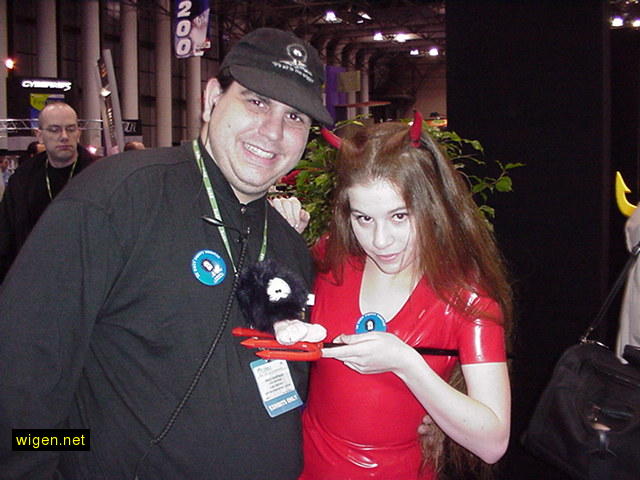
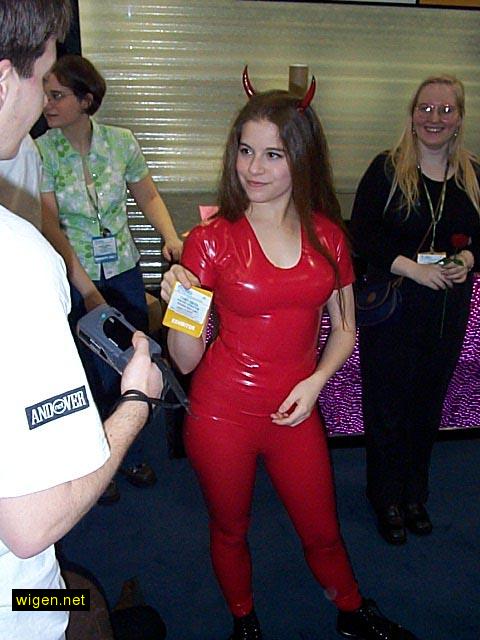
Is it any wonder people think Linux users are a bunch of flaming homosexuals when its fronted by obviously gay losers like these?! BSD has a mascot who leaves us in no doubt that this is the OS for real men! If Linux had more hot chicks and gorgeous babes then maybe it would be able to compete with BSD! Hell this girl should be a model!
Linux is a joke as long as it continues to lack sexy girls like her! I mean just look at this girl! Doesn't she excite you? I know this little hottie puts me in need of a cold shower! This guy looks like he is about to cream his pants standing next to such a fox. As you can see, no man can resist this sexy little minx. Don't you wish the guy in this pic was you? Are you telling me you wouldn't like to get your hands on this ass?! Wouldn't this just make your Christmas?! Yes doctor, this uber babe definitely gets my pulse racing! Oh how I envy the lucky girl in this shot! Linux has nothing that can possibly compete. Come on, you must admit she is better than an overweight penguin or a gay looking goat! Wouldn't this be more liklely to influence your choice of OS?
With sexy chicks like the lovely Ceren you could have people queuing up to buy open source products. Could you really refuse to buy a copy of BSD if she told you to? Personally I know I would give my right arm to get this close to such a divine beauty!
Don't be a fag! Join the campaign for more cute open source babes today!
$Id: ceren.html,v 8.0 2004/08/01 16:01:34 ceren_rocks Exp $ -
Re:Theo de Raadt at its best?
No, he created a kernel, he created a GPL licensed, monolithic and modular kernel.
Linux is _just_ a kernel
By definition of the word Operating system, you're right. Still, though free kernels and user land utilities existed well before Linux, it was his project that kicked off a lot of development around open source operating systems.
Without Linus there would be no Linux, and that's the simple truth.
As FreeBSD user I am well aware of the diversity of ongoing efforts delivering us the final product of a free operating system. Still all the lot would not be possible without the people fighting at the front.
I'll have to stick by Theo on this one, there is a lot of whining about Nvidia binary drivers for their video cards, but that seems to be all it is, whining.
That's just a statement of your personal opinion, not being backed up at all. Just like Theo's. Insulting on the basis of such arguments is unprofessional and does no one any good. Why not try to get together in a proper forum that actually allows bidirectional communication? -
Two RCs, four betas, still can't run on HP laptopsNeil Winterbaue identified a serious problem with all versions of FreeBSD (5 and 4) on all recent Compaq/HP laptops, on all architectures (i386 and amd64):
http://www.freebsd.org/cgi/query-pr.cgi?pr=amd64/6 7745
There is a patch, but its not being committed. Anyone know why? How come the patch exists.... works perfectly.... and isn't being commited?
-
Re:Wow!...and in the link I posted Netcraft reports the number is growing at the rate of half a million a year!
But fear not: it's not a plague. Actually, you know, it often makes your PC go definitely faster.
About FreeBSD's Network Stack -
Re:OpenBSD impossible to update?
mergemaster for OpenBSD is a shell script which I believe is a port from the original FreeBSD perl script. I don't have a link to an online man page for the OpenBSD version but here is the FreeBSD one. It's the same concept and the same commands,keystrokes when you're comparing or merging config files. Quite handy.
-
No, FreeBSD is LOTS faster
-
Re:Can ordinary users use this?
Anyone who can read the handbook should be able to install it and use it. The problem is that not many people (including myself a year ago) want to spend the time to RTFM. The handbook really is well put together though. FreeBSD certainly isn't as "easy" to get up and running as Fedora or Mandrake, but it's certainly possible. Only severe issue I've had with FreeBSD lately is with my Compaq laptop. If you want to run FreeBSD, avoid Compaq like the plaque. I can't even boot into the installer (it shuts the machine down). At least it runs arch linux...
-
Re:Freedbsd-Stable?
This document also has some useful information:The Road Map for 5-STABLE
-
Re:Freedbsd-Stable?Umm, I'm running 5.3-STABLE now actually; kristin# uname -a FreeBSD kristin.lpl.nu 5.3-STABLE FreeBSD 5.3-STABLE #17: Tue Oct 26 00:29:25 CEST 2004 root@kristin.lpl.nu:/usr/obj/usr/src/sys/KRISTIN i386
I'm tracking RELENG_5 in case anyone is wondering.CVSWeb also has some interesting reading...
For those not bothering to check the link, FreeBSD has gone from 5.3-STABLE -> 5.3-RELEASE -> 5.3 RC1 and now 5.3 RC2!? -
Re:FreeBSD Newbie here
I really need to disagree with the previous two posters on this. The early adopter's guide recommends backup-install-restore rather than cvsup from source.
-
Re:FreeBSD Newbie hereHave a look at Synchronizing Your Source and the next chapter, Rebuilding world in the FreeBSD handbook. The whole procedure of a source upgrade is explained there.
You should settle to this method as it is the preferred way of keeping your system up-to-date, wether on updating between releases or incooperating security or maintainance updates from the respective RELEASE branches.
Basically after having your source updated to the latest RELENG_5_3 branch, typically via cvsup(1), it consists of the following steps:
# make buildworld
# make buildkernel
# make installkernel
# reboot
single mode:
# mergemaster -p
# make installworld
# mergemaster
# reboot
It is very straight-forward, still be sure to read about the details in the handbook. -
Re:FreeBSD Newbie hereHave a look at Synchronizing Your Source and the next chapter, Rebuilding world in the FreeBSD handbook. The whole procedure of a source upgrade is explained there.
You should settle to this method as it is the preferred way of keeping your system up-to-date, wether on updating between releases or incooperating security or maintainance updates from the respective RELEASE branches.
Basically after having your source updated to the latest RELENG_5_3 branch, typically via cvsup(1), it consists of the following steps:
# make buildworld
# make buildkernel
# make installkernel
# reboot
single mode:
# mergemaster -p
# make installworld
# mergemaster
# reboot
It is very straight-forward, still be sure to read about the details in the handbook. -
Re:This is good.I always had the impression that FreeBSD has gathered one of the most professional teams around an open source project of this scale. They focus on delivering a high quality operating system, and that's seemingly the only rationale behind engineering decisions. I like that attitude.
Maybe that is why it works out so well ?
-
BSD is of course completely secure, and has girls
IMPORTANT UPDATE: Please show your support for Ceren in this poll of Geek Babes!
Is it any wonder people think Linux users are a bunch of flaming homosexuals when its fronted by obviously gay losers like these?! BSD has a mascot who leaves us in no doubt that this is the OS for real men! If Linux had more hot chicks and gorgeous babes then maybe it would be able to compete with BSD! Hell this girl should be a model!
Linux is a joke as long as it continues to lack sexy girls like her! I mean just look at this girl! Doesn't she excite you? I know this little hottie puts me in need of a cold shower! This guy looks like he is about to cream his pants standing next to such a fox. As you can see, no man can resist this sexy little minx. Don't you wish the guy in this pic was you? Are you telling me you wouldn't like to get your hands on this ass?! Wouldn't this just make your Christmas?! Yes doctor, this uber babe definitely gets my pulse racing! Oh how I envy the lucky girl in this shot! Linux has nothing that can possibly compete. Come on, you must admit she is better than an overweight penguin or a gay looking goat! Wouldn't this be more liklely to influence your choice of OS?
With sexy chicks like the lovely Ceren you could have people queuing up to buy open source products. Could you really refuse to buy a copy of BSD if she told you to? Personally I know I would give my right arm to get this close to such a divine beauty!
Don't be a fag! Join the campaign for more cute open source babes today!
$Id: ceren.html,v 9.0 2004/08/01 16:01:34 ceren_rocks Exp $ -
Re:anyon want to bet on the actual release date?Sad news:
-
Re:Thanks.
I'm not sure about that. Java bytecode is fairly low-level and can't be automatically turned back into human-readable code.
Python bytecode is much more high-level and can be automatically decompiled (minus comments, of course, but including variable names). There is a program called decompyle to do this; it can be found at ftp://ftp.freebsd.org/pub/FreeBSD/ports/distfiles/ decompyle-2.3.zip. It seems to be broken on Python 2.3 at the moment, but can generate a working
To see that this information is available, you can import a module and see what you can find. For example:
import xml.sax
There is a function xml.sax.parse which takes three arguments and one local variable (use dir(xml.sax) to find out that it exists). You can find the number of arguments by typing:
xml.sax.parse.func_code.co_argcount
which will return 3. Now find out the names of the variables by typing:
xml.sax.parse.func_code.co_varnames
which will return the tuple
('source', 'handler', 'errorHandler', 'parser').
Note that there are four values here - the last is the local variable used by the function. This sort of information will be available for all your functions if you distribute a
If you want to see what information is contained in different places, try dir(name-of-variable-or-function-or-class-or-...). This will give a list of all the members of that object (and it even works on things like integers). -
Re:Scheduler?For your interest: this is a copy & paste job from FreeBSD current mailing list. The thread name is "FreeBSD 5.3b7and poor ata performance," and by now it is solved. It looks like it was a hw misconfiguration issue.
This also flies in the face of this troll's claims of FreeBSD developers are uncooperative *sholes. Follow this thread to its end, and you'll see that even though the original poster (as DES rightly claims) was quite confrontative, they went out of their way to reproduce the issue. Robert Watson even commited some code to help trace down similar problems. And some stats from the same guy later, when the problem was solved:
Transfer rates:
outside: 102400 kbytes in 1.897858 sec = 53956 kbytes/sec
middle: 102400 kbytes in 1.934135 sec = 52944 kbytes/sec
inside: 102400 kbytes in 2.735875 sec = 37429 kbytes/sec -
Re:FreeBSD 5.X issues
Correct. And the SMP options have been removed from GENERIC for 5.3-RELEASE. This means that a default install of FreeBSD 5.3 will include a non-SMP kernel. They will be including docs for creating an SMP kernel after installation, and are investigating a method for shipping both a UP and SMP kernel, giving the user a choice of which to install. They don't expect that to come through until 5.4, though.
Here's the Head's Up message posted to the -current mailing list.
-
Re:Why should IBM be forthcoming ?
> I don't know anyone who would want to deal with them, except maybe the guy with the horns and the tail.
err.... I don't think even he would like to deal with them -
Re:My take on FreeBSD 5.x design
Spot the difference.. He's substituted "HawkinsOS" for "DragonFly" !
http://lists.freebsd.org/pipermail/freebsd-current
I hope these anonymous postings are not really by "Hawkins", but just some other people pretending to be nutjobs... -
Re:5.3-STABLE or not?
5.3-STABLE FreeBSD 5.3-STABLE #0: Sun Oct 17 13:50:02 CDT 2004
actually that's not QUITE true.. well yet anyways. -
Re:FreeBSD 5.X issues
Actually they were removed on September 7th
-
Thank God
-
Re:What's so great about FreeBSD 5?I agree that license wars are useless, but GPL being more restrictive than the BSD license is not a matter of opinion, it's a fact (BSD, GPL). So, please, let's be accurate.
In the world there's plenty of room for both licenses. I personally like the purely academic spirit of the BSD license, and personally don't like the huge amount of politics that's contained in the GPL.
I obviously prefer open software, but closed sw is also ok, as long as it's *very* good software.
I'm thinking for example about photoshop and apps like that. If I were a professional image editor, if I had to deliver the *best* possible result, I'd prefer a closed source photoshop (or equivalents) than an open source gimp. I'm not criticizing: the gimp folks are doing a *great* job (and to think they're doing it for free), but the other one is just better. That's only an example, and that's why I think crusades against proprietary software are just plain stupid. -
Re:BSD software abundance?
Either you're looking at closed source software or you're looking in the wrong place. FreeBSD comes with the ports system (/usr/ports) that presents a simple way to install a couple thousand software packages. Check out http://www.freebsd.org/doc/en_US.ISO8859-1/books/
h andbook/ports.html for more details.
As for hardware, I have found that FreeBSD and NetBSD (probably OpenBSD; Mainly use that on non-workstation machines) have better hardware support than leading distributions. As long as you're not using anything too weird, you're fine. -
Re:What's so great about FreeBSD 5?
Also this and Wikipedia's entry on FreeBSD.
-
Re:What's so great about FreeBSD 5?
Please be so good and enter the address http://www.freebsd.org/features.html into your web browser. Thank you very much for your effort..
-
My favorite anti-spyware solutionMy favorite solution to the problem of spyware is Panther. Though if you don't mind something not so fully featured, there is an alternative.
-
Re:Only slightly OTI've made patches to mergemaster that does this a long time ago. These patches are available from my homepage at http://people.freebsd.org/~eivind/. They have not been integrated into mergemaster due to lack of time to review them on the part of the mergemaster maintainer.
However, this is just a more specific case of doing a 3-way merge. I was planning to add this to mergemaster, but due to the issues of maintainer timeout (over a two-year period), I've instead written a new tool: See
This does a full 3-way merge, which means that you usually need no manual interaction (as opposed to all you need to do with mergemaster.)
I'm presently preparing this tool for possible import into FreeBSD, so there will be some enhanchements in the next couple of days.
Eivind.
-
Only intel?
Very good article. It is great that we are not living in Middle Ages any more and someone who uses Debian GNU/Linux can choose an architecture between IA-32, Motorola 68k, Sun SPARC, Alpha, Motorola/IBM PowerPC, ARM, MIPS, HP PA-RISC, IA-64 and S/390, and in fact much more when using a BSD kernel instead of Linux, so I would expect from such a comprehensible review that it would include more than only one architecture, basically comparing apples to apples. Are they planning to add more architectures to their comparison? I really hope so because other than that it is a great review. By the way, do you know what CPU architecture I am really looking forward to? MMIX. I hope one day I will able to buy one.
-
Re:Not a linux geek?
Go back to using the 1 of 5 free e-mail addresses that came with the ISP you have to have anyway, and use "Outlook" or "Mail.app" or "Evolution" or whatever easy-to-use program your OS comes with. Pshaw.
You mean mail(1)? -
err... the best what? [Re:BSD == good]... I'm gonna be kind, even if sb who calls FreeBSD a "Linux distribution" wouldn't really deserve it.
a) FreeBSD is Berkeley Unix, Linux is a Unix-clone. They look similar to the average user, but deep inside they're two quite different things.
b) the media tend to identify Open Source OS's with Linux because of the community hype - GNU & Linux are about politics as well, thus they attract a wider range of people. BSD is a purely technical and academical thing. These different commitments are well reflected in the 2 licenses: BSD (much simpler and less restrictive) and GPL (an anti-proprietary political manifesto).
c) FreeBSD is quite widely used and, notwithstanding the lack of hype, its user base is growing pretty fast.
Nearly 2.5 Million Active Sites running FreeBSD
-
Re:Tom RhodesPlease ignore this troll. It's the same guy who has been pestering every *bsd (yes, even NetBSD) announcments trying to discredit FreeBSD developers. He usually goes on to say just how FreeBSD devs hate Dragonfly, how they unfairly kicked out Matt, and so on.
Sometimes he links to a message posted by DES on FreeBSD-advocacy in his signiture. If you take the time to see how that thread started, you'll see that the original "quesiont" was quite rude, and follow-up messages from the same person were written in a "I'm a famili member of the former Nigerian royal familiy and want to deposit large sums of money" style. Also if, you follow the thread further, you'll see this reply from a FreeBSD developer:
> BTW, I've spent a lot of time looking at the DragonFly approach, and I met
For your interest, Matt still posts occasionally to -current list, in fact, he even helps out a bit here and there. This troll's problem seems to be with DES, PHK, Bosko, but he is ready to extend his warm words towards anyone, even, it seems, to someone associated with the documentation project. Oh, btw: you'll see the same message by Doug-Furlong Smorgreff on Osnews as well. ~molnarcs
> with Matt for quite a while at USENIX to talk to him about the approach. I
> have a number of concerns about it -- I think the premise is very
> interesting, but that the results aren't yet there to prove the model. In
> particular, there's a huge volume of code in their system that has not
> been addressed, and a lot of complexity that will need to be handled
> before the SMP primitives they're using have proven that they offer the
> desired performance advantage. We have the opportunity of using a hybrid
> model, and have been exploring some of the ideas present in DFBSD (and,
> one should point out, many other SMP systems).
>
> A lot of other systems have opted to use elements similar to those
> primitives, but in a much more limited way due to the performance costs.
> For example, locking services into particular CPUs prevents the scheduler
> from balancing load between the CPUs in an service-transparent way. In
> the DFBSD model, load balancing must be implemented separately for each
> service, requiring extensive modifications to the services. I.e., the
> model may indeed offer benefits, but the cost of doing the work will be
> high, and the time to complete it long. We'll adopt elements of the
> design as they prove to make sense, as we do with all other open source
> operating systems (and they do with us!). -
Re:Take a hike
-
Re:Only slightly OT
You can build everything on another box, and then copy
See this for background.
There are many ways to do it depending on whether you want it built from source or just want the binaries. -
Why
Why would you want to pay millions of dollars to buy a copy of Linux under a BSD-like licence, when there is already an operating system available under a BSD-like licence -- and it costs nothing?!
The 3-clause BSD licence is poisonous, because it allows someone effectively to turn an open-source product into a closed-source one, just by not distributing the source code. {The 2-clause variant allowing source code distribution only is fine for stuff written in interpreted languages -- but makes it inconvenient for stuff written in compiled languages. Although the degree of inconvenience is growing less as processor speeds and drive capacities improve; compiling from source is no longer the drain it once used to be. Nonetheless, ex-Windows bods expect pre-compiled binaries}.
OTOH, if a program is distributed under a 3-clause BSD licence but without source code, you would get a licence to distribute the source code if you could get the source code somehow. And decompilers will soon be a practical reality -
Don't forget...
Linux isn't the only desktop alternative
FreeBSD
OpenBSD
NetBSD
DragonFlyBSD -
Re:Close to FreeBSD 5.3
The FreeBSD hardware support lists are not always particularly accurate. I own a wireless card and a sound card, neither of which is listed as being supported by the hardware list, but both listed by the drivers' man pages (and both work).
Actually that has changed with FreeBSD 5.3. Now (most of) the Hardware Notes are generated from the manual pages, so the Hardware Notes for FreeBSD 5.3 should be much more accurate then for previous releases.
The i386 Hardware Notes for 5.3(-BETA) can be found at http://www.freebsd.org/relnotes/5-STABLE/hardware
/ i386/article.html -
Re:SurprisedHere is some info from the mailing lists:
-
Re:SurprisedHere is some info from the mailing lists:
-
Re:SurprisedHere is some info from the mailing lists:
-
Re:Keep in mind
Instead, we get arrogant assholes like you?
Bosko, is that you? There's a big difference between making a comment on
(btw, I like what Matt and friends are doing, nothing wrong with them, but the attitude some of their fans seem to have is just sad)
Excuse me? -
Re:Surprised
There has been some discussion in the freebsd mailing lists about this change. BIND now resides in
t -
Post BitTorrent in summary for RELEASE!For whomever decides to submit the article for the RELEASE of 5.3 would you please post a torrent? The horde of
Please mod this up so any submitters and story accepters can see this. (I'm not a karma whoe, got quite enough just wanted this to start at +2)
PS: why does it take so long for the FreeBSD people so long to update their schedule? -
Re:Close to FreeBSD 5.3
FreeBSD 5.3 supports Project Evil, ala NDIS support.
It can take binary windows drivers for a majority of networking hardware and use them to run the device.
Information on Project Evil can be found at http://www.freebsd.org/cgi/man.cgi?query=ndis&apro pos=0&sektion=0&manpath=FreeBSD+6.0-current&format =html -
What if you don't modify the TCP fields?
The patent covers a system that changes the destination field the packet. What if your system doesn't do that. I use NoCat on FreeBSD and the rule the does the "redirection" does it with IPFW fwd, man ipfw(8), which does not modify the packet in any way, specifically modifying the destination field. It seems to me that such a system is not covered by the claims of this patent. By the way, I got one of this "Licensing Materials" packets today. So nice of them to provide such a nicely arranged extortion note.
-
Re:Totally off-topic, but need Linux advice....
Sir, you are absolutely out of line. BSD is a thriving operating system. Have you never heard of FreeBSD, OpenBSD, and NetBSD? These operating systems are maintained by at least 7 different people. Why even here on Slashdot you'll see there is a seperate section dedicate entirely to BSD. This forum and these operating systems are used by at least 107 people.
Not only is BSD the world's most secure and open operating system in the world, it is extremely easy to use. Before I started using BSD I was using Linux for about 6 years, and Solaris and HP-UX before that. Once I switched to BSD, unencumbered by GUI interfaces, web servers, TCP/IP, and all the other "inventions" so frequently touted as progess I was able to easily produce text files in almost six weeks. I had to port vim from the source, edit it for my Amiga OS, and strip out most of the featurs so it would run in the free memory I have, but man it was awesome. I felt so free. Security and portability are integrated into BSD. You can configure a firewall, router, security, and a VpN in less than 3 days using the very friendly command line interfaces, man files, and well... you don't need any gui help interfaces. It even has lynx.
Anyways. BSD is definitely not dead. Me and 106 other people prove you wrong. If you're looking for a dead or dying OS try these on for size: option #1 and option #2.
Oh yeah, one of the best thing about BSD is that it's not encumbered by the viral GNU license or misappropriated intellectual property. Ditch Linux, ditch Windows, ditch VMS, get yourself BSD. -
mod parent down, incorrect information
Not only are you acting biased, but you are giving incorrect information. Let's start on the BSD part.
You say its not an option because it is no longer being developed. I say you are wrong. In fact, the website of OpenBSD says you are wrong too:
OpenBSD is freely available from our FTP sites, and also available in an inexpensive 3-CD set. The current release is OpenBSD 3.5 which started shipping May 1, 2004.
OpenBSD 3.6, our next release, will be made available for FTP on November 1, 2004. It can be ordered now (CDs are already shipping!)
In fact, Freebsd has already released their 5.3 beta and is having people test it out as we speak (look at their news page).
So, your views on BSD and where it is at in the world are completely inaccurate and misguided. So, because of just that alone, I don't see why I should trust -any- of your other advice above. -
What about DRI?
You can find my benchmarks of DRI compatible cards here. They're a first attempt at benchmarking DRI and still need some tweaking.
Eric Anholt's benchmarks of DRI on FreeBSD are here.
Roland Scheidegger's comparison of the three drivers available for the Radeon 9000 (DRI, FGLRX, XIG) is here.
It's a bit surprising that the Radeon 8500 series is completly absent from this comparison. The 8500 and FireGL 8800 are still remarkable video cards. -
FreeBSD installation
The website explains Windows and Mac installation pretty well; you'lll have to figure it out on your own for Linux
It's pretty easy on FreeBSD: pkg_add -r jzip.