Slashdot Mirror
Domain: fyngyrz.com
Stories and comments across the archive that link to fyngyrz.com.
Comments · 142
-
Re:Sources of improvements?
Do you think these numbers would be large if they didn't need do be?
We can do better than speculate; we have examples of low-neuron count intelligence. So high neuron count is known not to be a requirement.
fyngyrz -- anon due to mod points
-
Yes, but... no.
This is a very misleading metric. First, some not-insignificant number of the neurons in the brain are involved in non-cognitive computations. Muscle control, hormone regulation, kinesthesia, vision (not thinking about what is seen, but simply recognizing it), heart rates and other system regulation and so on.
Examples also exist of low-neuron (and synapse) count individuals who retain cognitive (and all other major) function; these examples cannot be explained away by "counting neurons."
We don't know which yet, but given that high neuron count has been ruled out as the single way to accommodate intelligence, we do know that we need to look to other mechanisms for human cognition. Structure, algorithm, other features known or unknown may be responsible for intelligence; and it may be that something entirely disjoint is responsible for the rise of intelligence; but we know it isn't simply high neuron count.
--fyngyrz (anon due to mod points)
-
I have written about this:
/. readers may be interested in something (fairly lengthy) I wrote on this subject:
-
Re:Romney too.
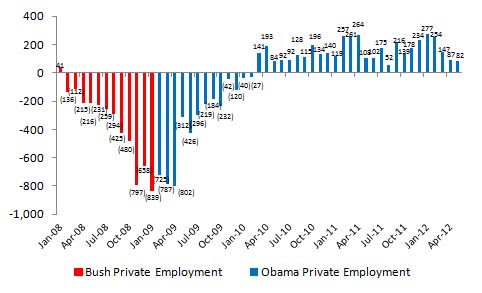
No doubt. It's the one where Bush had us losing jobs, and Obama turned it around and has us gaining jobs.
You know. This one.
It's the one where Romney would have let GM die; and Obama saved it, along with a huge number of jobs.
It's the one where the (rich) credit card companies were taking advantage of credit card users right and left, particularly lower and middle class, screwing them on interest rates in specific, and the Obama admin saw to it that the means they used to do that were taken from them.
That death spiral.
-
Re:Google+ and Facebook are ethically bankrupt
From your sig:
http://fyngyrz.com/?page_id=5you telling me this isn't you:
http://www.offendex.com/citydirectory/MT/GLASGOW/BEN_WILLIAMS_238673 -
Re:Orwell FTW
-
Sorry, but MY calendar is WAY better
I worked this out some time ago. And my approach is MUCH better. Seriously. Take a look. Benefits: Benefits include every month starts with Monday; Pay periods are normalized; billing periods are normalized; the ridiculous and confusing spattering of celebrations all over the calender are eliminated; bills would always be due the same date and day; the 11th would always be Thursday (as every date would always be the same day of the week think of the implications no more figuring that nonsense out!); Your birthday would always be the same day; no more celebrations that wander around the calender; a vastly improved sense of what day and/or date it is, because (for example) there are only four Mondays in the month, and if you know it’s Monday, you probably know what date it is; and if you know the date, it’s always the same day anyway, so you would know the day right off.
I'm not the first to take a swing at this, either -- and almost every attempt I've looked at is better than what these academics made. IMHO, of course.
-
Re:Nurturing accuracy
Maintaining your beliefs whether or not they are correct is not integrity; it's simply stubbornness.
No. It's not that simple. Saying it is stubbornness implies that the believer understands they are wrong, or understands that looking at the data will enlighten them into a new outlook. It's more like this (and I'm still simplifying there.)
I chose my words poorly. What I meant was exactly what you describe; when one continues to believe something which has been proven false. Sorry for the confusion.
-
Re:Nurturing accuracy
Maintaining your beliefs whether or not they are correct is not integrity; it's simply stubbornness.
No. It's not that simple. Saying it is stubbornness implies that the believer understands they are wrong, or understands that looking at the data will enlighten them into a new outlook. It's more like this (and I'm still simplifying there.)
-
Religious susceptability
It's not quite that simple.
-
Re:Soon
You're quite right -- I did research my upgrades, and found that it would have been a very bad idea indeed to move beyond Leopard -- so I didn't. Nor do I plan to. Luckily, Leopard is on optical media, and is very amenable to Hackintoshery, so even if Apple drops the Mac Pro, when the time comes to upgrade my machine, I'm still going to be running Leopard on a heck of a nice machine. It just won't be an Apple. I'll either run Leopard native, or in a VM. Not worried about it at all. Been fixing some of the bugs in Leopard, too, so it's more reliable. Started with the cron/console false error message bug they never fixed.
Unfortunately, WRT IOS5, they didn't "bother" to announce the 10.6 requirement until quite a while AFTER they released it, trumpeting the wifi sync capability. So I ended up with IOS5 on my iPad, and now many of my most commonly used apps crash, wifi sync doesn't work at all, notifications don't clear, and I have that turd of a "bookshelf" stuck in my previously nicely arranged folder collection, making a useless page all off by itself and messing up my single-page arrangement.
-
Aurora conditions / warnings
-
Come on
This belief that people do things for material profit only is a cancer of the mind and needs to die.
Yes, certainly, but any idea that people should only do things for free is also a cancer and should die. There's nothing wrong with putting ideas and functional objects in the public domain, but there's also nothing wrong with deciding to monetize an idea or a functional object. Personally, I find the GPL distasteful and wrongheaded, but even so, I see nothing wrong with it either in the sense that choosing it as a way to go is just fine if you like it. When you birth an idea, it should be yours to decide what to do with. Period. Ideas can have enormous value; people who claim any kind of automatic ownership of other people's ideas when they didn't contribute to the thing's genesis are simply pickpockets. If the idea is given to them by the inventor, that's something completely different.
I pop out the occasional public domain project and/or enhancement, but I also do commercial projects in the hardware and software realms, because I find I have this peculiar need to eat and cower within shelter from time to time, and I've noticed the same curious problems with the rest of my family.
-
Come on
This belief that people do things for material profit only is a cancer of the mind and needs to die.
Yes, certainly, but any idea that people should only do things for free is also a cancer and should die. There's nothing wrong with putting ideas and functional objects in the public domain, but there's also nothing wrong with deciding to monetize an idea or a functional object. Personally, I find the GPL distasteful and wrongheaded, but even so, I see nothing wrong with it either in the sense that choosing it as a way to go is just fine if you like it. When you birth an idea, it should be yours to decide what to do with. Period. Ideas can have enormous value; people who claim any kind of automatic ownership of other people's ideas when they didn't contribute to the thing's genesis are simply pickpockets. If the idea is given to them by the inventor, that's something completely different.
I pop out the occasional public domain project and/or enhancement, but I also do commercial projects in the hardware and software realms, because I find I have this peculiar need to eat and cower within shelter from time to time, and I've noticed the same curious problems with the rest of my family.
-
It's not the marketing that bothers me
I think it's fair to say I'm an extrovert -- I have a blog where I post things of interest to me and answer questions; I welcome decent quality remarks (I simply remove low-level gibbering before it ever sees the light of day), I have yet another personal website from the pre-blog days, I've released a fair number of PD software efforts (not GPL... GPL is da debbil), and I have a healthy social life at home. I stay in contact with my old friends (and I always have... I tend not to lose track of people I think are worth my time.) I run the key genealogy site for my family (thousands of detailed records and some very neat tech, too), have some free service efforts like this one... and you can find my posts all over the web, including here, I'm not in the least afraid to put my opinion out there (laughs a bit ruefully...)
And I have zero interest in joining facebook. I kind of like the idea of Google's "circles", but I have zero interest in joining them, either. Part of it is the low quality of interaction I've seen on facebook (I think Google might be able to avoid this with those circles, but I'm just guessing... no experience); but the most important part of it is being annoyed, and I mean really annoyed, that these sites won't "allow" anonymity, which I consider a cornerstone of both free speech and free association. Facebook also has some items in their TOS that I find distasteful and unnecessary, part of the "save the children" witch-hunt. I've not (yet) seen that from Google, though frankly I expect to any day now.
It's also fair to say I enjoy high self-esteem. But that's not why I avoid facebook and Google+. I avoid them because in ways important to me, I see them as damaging society, ostracizing and marginalizing people who might very well make important social use of the service. That's their right, but it is also mine to say "I'm not going there under those conditions."
-
Re:Classic!
If Social Security was an investment/savings account today, it could be defended. Unfortunately, it isn't anything like that. 100% of the money brought in today is being paid out to existing retirees and others that are eligible. Your money isn't put away somewhere, it is going right back out the door.
This is not because SS itself isn't viable; it's because congress STOLE the SS funds. Here's a pic of Bush holding the IOUs. Arguing that SS isn't viable completely skips over that inconvenient fact. SS would be fine if congress had acted honorably -- but they are thieves and absolutely cannot be trusted with our retirement. And then there was the promise they would never allow our SS numbers to be used for anything but managing our SS funds; now they're a handle the IRS and every other government agency uses to track our private financial activities in DIRECT violation of the constitution -- with the collusion of the oath-breakers in the supreme court.
-
Re:C++ still not attractive to me
RAII. That's a tremendously important idiom that simply cannot be expressed in C.RAII is not important to me and does not implement anything I can't do myself, with extremely fine grained control. To "express" this functionality, I check my allocations, I check my return codes and states, I make sure I provide same, I only do new things based on the known state of things I've already done, and I set up state-testing, abort-capable monitors for operations that might conceivably go open-ended. I try really, really hard to never use other people's code for which I don't have control of the source. Then I test the living heck out of things. And this all leads to release-level programs that don't die by exception in the first place, therefore eliminating the need for a program level mechanism to "save" me due to exceptions.
Compilers are actually quite smart.You know, I hear that a lot, but looking at the code the compilers actually generate... it's not evidently the case. Concrete example: I am presently in the middle of a very large image processing project which uses the GCC compiler for objc and c. I have had many occasions to look at the generated code for both idioms, and it is *terrible*. Constant reuse of single registers, as if the CPU only *had* one or two usable registers; thrashing variables on and off the stack, failure to optimize simple shifts and divides of integers... the kindest thing I can say about the GCC compiler is that the code works. It *certainly* doesn't produce good or "smart" code. Writing in assembly, I could run rings around it without ever breaking a sweat.
Recently, I had occasion to dissemble and patch a bug Apple had left around in the launchd code for Leopard (10.5.) Even if you assume I'm using GCC poorly, one would think that Apple might be a little better at it, yes? Well, the same thing was strongly evident there: register resuse / register wasting, stack thrashing, basically failure to optimize and failure to utilize.
So while I'll certainly grant you that theoretically speaking, compilers could do a good job than a competent assembly programmer, it's not clear, at all, that they actually do a better job than a competent assembly programmer. The evidence I've seen recently, after many years of compiler development, is entirely the other way.
-
Re:C/C++ faster but produces more bugs
No. It's not harder. It's just different. Java poses some huge challenges at times; to be "good", you should be able to say you can meet them. c challenges are very different, and frankly, they're simpler, but again, to be good, you still have to meet them. There are some traps -- the "standard" (K&R and derived) code formatting puts an instant hurt on comprehension, and a lot of programmers have fallen for that because no one has taken the time to show them there is a better way -- many of them are now habituated and can't get beyond it.
The only languages I've ever run into that were legitimately "harder" brought a different type of challenge to the table: APL, for instance, is actually a harder language because you have a lot of non-intuitive learning to do, and you need to make it intuitive if you're going to be any good. It's like learning Klingon.
Some languages form a natural progression of learning: asm to forth to c is a very natural progression, for instance, even though one is direct, one can be interpreted, compiled or byte-coded and is RPN-ish to boot, and the last is almost always primarily algebraic and compiled. So it's an easy learning curve. There's nothing easy about APL, it'll make your brain bleed. Lisp is no picnic, either; visually speaking, it's a bitch, and that makes it difficult to learn. Python is so easy to learn -- and powerful -- it's almost ridiculous. Perl is powerful, but hugely annoying in its non-intuitive symbol-soupness and the first time you try to deal with Other People's Code in perl, you'll learn why the best programmers moved right over to Python as soon as they understood what it offered.
Anyway, no, Java and c... not really different in terms of getting good. Perhaps what has really caught your attention is that there aren't that many good programmers, period. That's where languages with training wheels - memory, lists, dictionaries, the lovely exception handling exemplified in python -- help them along far enough so they can make production code anyway. The resulting apps are inevitably slower, larger, and more fragile than what a good programmer would have made, but you know, they mostly do the job, and that's what the poor public has become accustomed to.
I start the "Island HD" game on my ipad, it cranks for a minute, then crashes. Yep, pretty much par for the course. I start it again, this time it runs. Looks like the OS had a little more memory in a single chunk that time... I start the NPR news app, it can't get to the server, it crashes in the middle of loading a news item. Same thing for my Pulse news reader. Can't get to an article... crash. Chess with Friends: start it, it's a toss up if it'll crash or not. Once running, it appears stable, though. On the Mac, every time a cron job starts, OSX pukes an (incorrect) error message to the console. I use cron a lot, so that got really old... and so I fixed it. And then we get into issues where some fool thinks its ok to constantly prod you to "connect to facebook" and leaves you no way to say, "I'm not on idiot facebook, nor will I ever be, so stop doing that." Just lousy programmers everywhere.
Yeah, that's the main problem. Not c or java.
-
Re:Desktop Apple ain't going anywhere
iOS isn't going to "replace" OS X, because they share the same codebase. I know some people here will balk at this description, but iOS is nothing but OS X optimized for mobile touchscreen devices. They're basically the same operating system.
No. They're similar (not the same) programmer APIs. They are *not* the same operating system facing the user. Nor do they typically have the same classes or even ranges of hardware devices available at either the programmer-API or the user-facing OS level. Want to use that 4800 DPI scanner on your IOS device? Not happening. Want to utilize the tilt sensor in the mac mini? Doesn't have one. Want to open your app's tool palette on a second monitor on IOS? Nope.
They're not the same. They're not used the same way, either. IMHO, this whole "make OSX look like IOS" thing comprises the worst misstep Apple has taken in some years now. IOS devices are very cool for what they are; but they aren't desktop replacements and until they've got 4 or more gb of ram, real multitasking, reliable high speed keyboard and/or voice input, they aren't going to be, either. Likewise a desktop doesn't give you the *useful* part of what IOS devices do: portable functionality. Laptops don't quite make it either, or at least, not until you can fold one up and put it in your pocket and use it in any sub-folded configuration. Which might be a while yet (and which might be bypassed by technological change anyway... like implanted bio-connected computing or some such thing.)
Well, we will see. Me, I'm really pretty happy with Leopard. The worst problem it had for me was the loss of the console to the cron-related Mach Error 9 messages, and I finally went ahead and fixed that, so I think Leopard is a nice stable place for me to sit if Apple is going to be screwing up the OS.
-
Looking forward to it...
I took these aurora shots in NE Montana during the low portion of the solar cycle; I'm very excited to see what more solar activity brings. I wrote this open source application to help me catch them when they occur.
-
Re:Google
ObTopic: If they can "see" it from the street, how is it "private" in any sane sense of the word?
You mean like how you shouldn't look up a woman's dress in the street? That kind of private?
Privacy isn't set by firewalls you can't pass. Privacy is set by respect and social restraint. Which Google hasn't demonstrated. A key problem here is that you, like a lot of people, don't understand privacy, because our educational system is FUBARed.
(Anon due to mod points.)
-
Re:Reasonable atheists don't care
Judges, trial lawyers, and others who hang out in court rooms will readily tell you that both assumptions are demonstrably false.
Those of the religious persuasion --judges, juries -- having the religious test preceding anything else you say, will then apply their dogma to what you say. So either you lie, in order not to awaken the idiocy, and thereby compromise your integrity, or you tell the truth, and thereby risk compromising your case.
As for the tax load question, consider the alternative. They pay their own taxes and are no longer enjoined from, as in institution, being a part of the political process.
They're a huge part of the political process right now. So clearly carrying their tax load is ineffective as a tool to keep government free of religious influence. As far as I'm concerned, the constitution's prohibition against makings laws that respect religions should stand strong with regard to making laws that exclude religion from carrying the same burdens everything else does. Further, the free exercise of religion should allow them to participate in the political process. While I object to the ideas they push, I don't say they shouldn't be able to push them. What I was trying to get across is why, as an atheist, I am concerned with my being compelled to support and endorse religion.
The government isn't allowed to do things like put "in god we trust" on the money; the fact that it does so simply demonstrates that the legislators are willing to violate their oaths. But that doesn't mean that the religious shouldn't be able to walk up to a legislator and say anything they like, including expressing their dissatisfaction with the godless way the government is constructed. It just means that the legislators are forbidden to act on those inputs. The constitution enjoins the feds, and indirectly, via the 14th, the states, to not create law that respects religion. It does not enjoin the religious from speaking, and I think it was a massive error to erect such an idea. I can think of no reason whatsoever that is sufficient to stop a preacher or a supplicant from speaking in any general public venue they please, about any subject they please. Including from their pulpits.
Furthermore... if the religious can get a big enough head of steam going, there's a mechanism in the constitution (article five) that will allow them to change the government into a purely religious one, or make any other changes, large or small, that they like. As it stands now, however, the constitution says no law that respects a particular religion may be made. In the language of the time, that means supporting any religion or religious outlook over any other. It doesn't say religious organizations can't be taxed; in fact, it says they can't be taxed differently. And it doesn't say the religious can't speak to their ideas, no matter what I, or anyone else, thinks of them.
It's bad enough that the SCOTUS has decided that corporations can enjoy the privileges of citizenship.
-
Re:Well, since you asked:
my experience of my wife is not primarily objective and empirical
No? What other kind of experience is there? Your thoughts are really happening, are they not? Hormone dumps as well? Memories actually recalled? Fun, sure, but where is the non-objective or non-empirical here? I submit to you (also respectfully btw, thanks for engaging) that just because you don't know how to describe something in simple terms, that said thing is not mundane in nature. For instance, one might well not know what's going on inside a radio, but that doesn't make the experience transcendent; it's still just as mundane as dropping a rock on the ground. No magic at all. You might think like crazy about it, wondering what is going on; you might experience hormone dumps, frightened by the voices you hear coming from the "magic box"; but the box is, in fact, not magic. What I'm getting at here is that your experience is not what makes something mundane, or not; nor is your understanding. It is what it is. And all the "is" we know of to date... you guessed it. Mundane.
Religion makes claims of truth that don't share an identical domain with science, and therefore need not be mutually exclusive.
To date, we have discovered exactly one domain. Mundane reality. Religion is no more than an exercise of storytelling; there's no difference between a story of Zeus and one of Spongebob. Telling a story doesn't validate its content, any more than any flight of imagination actualizes the concepts involved. Now - if you disagree and would like to engage on the level of what you think the separate domain is, I'd be pleased to discuss it with you.
Please know, however, that those believing in a religion are not necessarily stupid
Well aware of it. My position on what engenders belief in religion (as opposed to implementation and practice as a mechanism for control) may be found here. You'll note intelligence isn't even mentioned.
I'm high IQ myself, well educated, and a better critical thinker than many of my acquaintances.
Ok, so... are you religious? If so, why? Do you think you have an immortal "soul"? What critical thinking process led to that conclusion, if that's what you think? Or, do you think that nature somehow requires a creator? Again, what critical thinking process led you there? By all means, let's talk about it. Perhaps I will have some observations that you can pick apart, or contrariwise, find useful.
I'm open to talk further if you want, but I'm not sure what it would accomplish.
If you're *actually* open, it could accomplish quite a lot. I'm open the other way; show me some solid evidence, that's all.
-
Re:LINUX rounds numbers fine
They are also highly not interoperable. (Every single aspect of it: the App Store, the chargers, iTunes only running on OSX and Windows, DRMs, not supporting open formats,
That's right; iPods and iPads (and, I think, iPhones) work only with Windows and OSX. About 99% of the marketplace, in other words. That's just terrible, isn't it? It's almost as if they thought that someone who chose linux, that fortified bastion of the GPL, wasn't supportive of commercial, closed-source products, and so would have nothing to do with them!
A friend of mine bought an iPod because it looked cool, and after fighting to transfer song under Linux, sworn to never buy Apple again...
Um. Well, I run linux, OS X, and Windows. I bought my iPod so I could use the apps, and listen to music. Not so hot on videos. Anyway, when I bought it, I saw the "Windows and Mac" notice on the box, and for some reason didn't mentally translate that into "Mac, Windows and Linux" -- I guess I'm just an old fuddy-duddy that way. Anyway, what happened was, I wasn't disappointed by trying to make a product work under linux when I hadn't been told it would work that way.
Why you think corporations, long disadvantaged by the OSS/GPL mindset, would support linux... is really beyond me. Now, I like linux (that's why it's on my desk -- I write PD (not GPL) apps for it like this one) but speaking as a person who also sells commercial products, I have to tell you, linux is not an attractive platform for those same products.
-
Re:Not Fair
Not close at all. At my latitude, this storm was a vague glow in the sky; I could see that it was there, and in this case, I could even see a little bit of the detail, but it's just at the edge of vision. The camera, however, can see far more than I can in terms of low light; I used a long exposure, and a wide, light-gathering aperture (like your eye's pupil open wide, only much wider), and turned up the sensitivity of the amplifier on camera's sensor to its maximum in order to capture what you see here.
To perceive it like this with the naked eye, either it would have to be much more intense (which does happen), or you would need to be further north and, as the lament above indicates, be enjoying a season during which the sun isn't hanging above you all night.
I've only seen auroral activity this intense with my naked eye twice in twenty years around here. But this solar cycle has been very active in terms of CMEs and general flashiness, and my hopes are high that it'll happen this time around. I wrote an application (PD, linux/OSX) that lets me see what the auroral and observing conditions are, and another one that texts me when conditions are right, so for the first time in my life, I'll not miss even one opportunity except by choice.
-
Can't wait
It just means I get to take more pictures like these.
I wrote an application that keeps track of auroral potential WRT photography. It's public domain, and you can get the latest version of the project here. Linux, OSX. Nothing for windows, sorry. At least, not without substantial linux-like underpinnings. Love to hear about it if you did get it running under windows, of course.
-
Here's a chart that incorporates population
-
Re:Loophole / workaround
English is one of those languages where one word, or a phrase, can include other meanings. From the fourth:
The right of the people to be secure in their persons, houses, papers, and effects, against unreasonable searches and seizures...
It is very clear that this describes the people's right to not have the feds (and the states, by 14th amendment incorporation) look inside their houses; not look at their papers; not look upon their bodies; not look at their belongings. Those of us who speak English well tend to sum all that up as "privacy, invasion thereof." Perhaps you should read this.
-
Think of the constitution.
This is an ex post facto law. No way around it. Making such a law is outright forbidden - explicitly - by the constitution to both the feds (congress) and the states. The fact that it's aimed at some sex offender is just used to get the foot in the door -- if you remove "sex offender" and put "murderer" or "litterbug" in there, the effect of the law is the same: To increase punishment after the fact.
SCOTUS, out of control, still. Or again. However you want to put it. There's no way to rein in these traitors to their oaths either -- the system as designed is outright broken. The constitution has zero legal teeth.
-
Yep.
Avatar plays fine on my PS3. Looks fabulous. (I blogged about the movie here.) Still not clear why anyone would buy a Bluray player other than a PS3. Horsepower (and therefore loading speed), up-to-date-ness, ability to play games, music, etc... just can't see why you'd want something else. We've got a lot of Bluray titles. They all play flawlessly on the PS3. If I buy a new Bluray tomorrow, I've every reason to think it'll play just fine, too. Sony's been 100% on the ball for us. If my PS3 were to break, I'd complete the purchase of a new one within the hour.
"Works for me."
-
Publishers:
I blogged about this yesterday: Publishers and the E-book Ecosphere
The question of what publishers want for books isn't the correct question.
-
Re:it's not the headline that's bad.
But then you had to go and ruin it:
I didn't ruin anything. I said justification. Not law. See this essay on privacy. The constitution codifies social rules for privacy in order to limit the authorized powers of the feds. Those rules already existed and they were, and are, quite obvious to anyone in our society that isn't brain damaged or so socially inept they must be kept under supervision.
If that is a problem, either (a) encrypt your over-the-air communications, or (b) communicate through a channel over which--unlike free-space radio--one can legitimately claim property-rights.
No. You have mis-identified the problem. The social boundary already exists. Encryption hardens the boundary, but does not make it appear or go away. You are not welcome to walk in my door just because I have not put a lock upon it; the social boundary is obvious. See the skirt argument in the previously referenced essay.
Regardless of whether I encrypt (or employ other hardening), interception of private communications is understood to be wrong, and obviously so. Our entire society would have to change -- and so the reasoning that created the 4th amendment -- in order for it to be ok for someone to cross boundaries simply because they have not been hardened. Such an event is neither likely, or reasonable.
-
Re:it's not the headline that's bad.
I said justification. Not law. Not the same thing at all. It is 100% clear that the constitution was intended to make the feds recognize, and obey, the existence of certain bounds of privacy that already existed in our society, which private citizens are already expected to comply with.
-
It has a lot of issues that could be improved
I've written up a considerably more detailed summary of the iPad's present shortcomings right here.
But eyestrain definitely isn't one of them; the Kindle is where you get eyestrain. That screen is darned near unreadable, with its low contrast, and the achingly slow change from one page to the next; the way it completely fails in readability as the light dims; the inability to show color... the Kindle is an awful reader, with the single exception of battery life.
I can read for many hours on the Kindle *app* on the iPod touch, because the screen is so much better than the actual Kindle. The iPad is worlds better yet, and I know I'll be reading constantly on it.
Which is not to say the iPad doesn't need work. I honestly think it is the least well thought out product Apple has put out. Oh, very well marketed, of course, but it needs a lot to even begin to stay in people's hands after the "new" wears off. Right now, unless you're a reader... it's just too feature poor.
I definitely expect competition to arise from the likes of Android plus a tablet design with a decent feature set that trumps the iPad -- and that won't be difficult to do, considering that the iPad is missing quite a bit. At that point, we'll probably see a significant iPad upgrade. It's just too bad it didn't come out of the chute with a decent feature set already in place. The saving grace is, as always with this whole line of hardware, the apps. Presuming there will be as wide a selection of them as those for the iPod (which work, but look kind of poor), the software functionality of the iPad combined with the responsiveness is its one and only strength. For an iPod/iPhone owner, though... we've already got a lot of that, and it fits in our pockets. Which is why the iPad will see a lot of table-sitting time.
-
Re:No. No, no, no.
However, New Testament Scholarship has been growing by leaps and bounds since the 20th century because more and more evidence (scrolls, historical documents) is being discovered. Along with that, certainty of their authenticity is growing.
- More copies have been found. We already knew there were lots of copies. We already knew they were fairly similar. Finding more doesn't do anything but up the copy count. There are still no originals.
- There is little doubt that the vast majority of these are authentic copies of something. However, if we found an original from the same time (which would mean it was a work of fiction circa the 100's or so), we would not know, because errors and changes would obscure whether it was original or copy itself. They're all handwritten, and none of them say "copy 23" on them.
- As far as the authenticity of the stories, there is no such certainty. Because these stories tell tales of magic and nonsense. So the certainty is that they are made up, at least to that extent. And given that the magical portions are nonsense, the rest of the story isn't very interesting anyway. Take out every reference to heaven, god, etc... and you have a badly written, self-contradictory book about a wandering jew, complete with goat-age rationales about life, the universe, and equality.
Scholarly consensus is growing toward dating all four of the canonical Gospels in the 1st Century.
The stories are dated then. Just as a story written now about the 1800's would be dated as about the 1800's. When one writes a work of fiction, one attempts to create a consistent image of the time one is telling the story about. Surely you've encountered this in every book you've ever read. There's even a word for failing: anachronism. I also agree that the stories are about the 0-30's, from the perspective of narrators in the 30's-60s'. But so what? This doesn't mean that it was written in the 30's-60's, it means that the narration has the tone of those times, which is entirely something else. Add to that the knowledge, the certainty, that the works are fictitious (we know this because of the magic and the contradictions), and it isn't any great leap to consider the possibility that the tone and timing of the writing is also fiction.
I would suggest reading... [clipped]
Please. You have no idea the depth of my religious library, or the time I've spent with the materials therein. Here's a reference for you, written by me, some years ago.
Other thoughts about the historicity of Jesus: First-hand witnesses could be considered reliable.
There aren't any. The only "witnesses" are characters in the bible, which is like saying that U.S. Navy Vice Admiral James Greer is a "witness" to the existence of Jack Ryan in a Tom Clancy book. If you want to show that Jack Ryan is real, you need contemporaneous evidence from outside the book. There is no such thing for the biblical claims of Jesus. The only reports of his existence are in the bible itself. Trying to prove the bible, using claims made in the bible, is like watching a snake eating its tail. Its going to kill itself in the process. And again, since the NT both contradicts itself and tries to present magical nonsense as reality... you should really want an outside opinion. And don't even get me started on the OT. You really don't want to go there.
Oral tradition. Teachers, scholars, and students of the day were far better at memorization than we are. It was a firm part of their educational inheritance and their story-telling culture.
My grandmother told me stories about little black sambo, and she got them pretty much right, too, as I found when I read them, later. That doesn't mean that the s
-
Re:The law is NOT silent. 4th amendment says it al
Email is the modern postcard, not modern mail. Mail is sealed in an envelope PGP is the envelope of email.... use it.
No. You are completely wrong. You're trying to make a case for the elimination of security based upon ease of observation. That's not how, or why, security manifests itself -- it is a right that applies to persons, houses, papers, and effects.
Encryption is not the boundary. Encryption is a hardening of the boundary. The boundary is that you have the right to be secure in your papers and effects. Likewise, an envelope is a (trivial) hardening of the boundary.
If I leave my door unlocked, that doesn't give you permission to come in. If I lock the door, I'm hardening the boundary. If I bar the door, I'm hardening it further. If I drop a portcullis over it, I'm hardening it even further. But the basic right never changes - I have a constitutional right to security [persons, houses, papers, and effects], and that right is in no way pendant upon how much, or if, any boundaries are hardened.
Some content from my "On Privacy" article:
Let us say that a lady elects to wear a skirt. Does this give us the right to look up her skirt? After all, if she didn't want us looking, she could have hardened the boundary, that is, worn pants, is this not true? But any reasonable person understands the security of her person is not to be violated -- she is not extending anyone permission to look up her skirt just because she is wearing one.
But what if she is a shoplifter and is hiding merchandise up her skirt? Would this not give us the right to look up her skirt? The answer is, it would if one had knowledge that this was the case.
The constitution calls this "probable cause." The idea that a lady could hide merchandise under her skirt clearly does not translate into the right to look up all ladies' skirts -- the very idea is ludicrous, is it not?
Yet the US government is telling us that the reason they are justified in looking at everyone's email and other Internet activity is because these activities "could" allow illicit activity, and it's "easy" to look at email.
This is precisely the same kind of reasoning we just disposed of with skirts; the only time the government should be looking at any communication is when (a) they have probable cause to think that those communications are of a criminal nature, (b) they have obtained a warrant that (c) specifically describes the communications to be searched. Why? Go read the fourth amendment again -- it really couldn't be any plainer.
-
The law is NOT silent. 4th amendment says it all.
Any US court that tries to argue that email isn't "protected" has little to no understanding of the US constitution: "The right of the people to be secure in their persons, houses, papers, and effects, against unreasonable searches and seizures, shall not be violated, and no Warrants shall issue, but upon probable cause, supported by Oath or affirmation, and particularly describing the place to be searched, and the persons or things to be seized."
EMail is modern mail; and mail is one case of the "papers" mentioned in the 4th amendment. The US mail is a 100% analogy here. Sure, someone can easily can look in an envelope during its trip between parties, or at either end, but the 4th says you have the right to be secure in your papers and effects, so it is illegal to do so. EMail is precisely the same kind of communication. It isn't about the fact that someone can look; it is about your right to privacy, to expect that they shall not look, and if they do, they have harmed you.
This covers why email is protected as a side issue of the main discussion: On Privacy.
-
Social media is about choosing to share.
If one chooses to put any particular detail on Facebook, then one is explicitly saying I am sharing this with the "friends" I have selected on Facebook; in that regard, because those other people are party to the information, they may elect to share it further, or not -- because you gave the information to them openly, without any particular agreement, that information now belongs to the other party as much as it does to you.
Depending on the user agreement one accepts when one joins Facebook, you may have also stipulated that Facebook itself is party to your information, and in that case, again, Facebook can share it, or not, according to the terms of the agreement you accepted in order to enjoy whatever it is Facebook offers.
However, assuming you have even one friend on Facebook, by the very act of posting something there, you're taking the risk that the other person or people in your friends list may elect to further share that information. This is a choice you made. Your information may now travel to places you didn't plan on because you chose to share it. You still had a choice, and if "sharing" is something that you want to do, then you must accept the potential that the other parties may consider your information not part of the class of things they will won't share. This arises naturally because information that is important to you may be (probably is) of little consequence to others. And of course this applies to Facebook as per the user agreement you agreed to.
In a nutshell, privacy arises as a consequence of socially understood boundaries relating to access; the understanding can arise formally, as an agreement (like Facebook) or it can be culturally infused, like you don't read someone else's diary. It can be legally backed up, such as opening a letter addressed to someone else. It can often be hardened: encryption, bars, etc. In all cases, boundaries that are in the most basic sense (prior to being hardened) easy to cross, are laid out, and you are expected not to cross them.
If you want to know more (or argue) about how privacy actually works, I've written at length about it here.
-
Re:Logic fail
When I post something on Facebook as an average user, my expectation is that the information posted there is only visible to people I have approved as a friend. In this regard, the information is private
That's exactly correct. It is important to understand what privacy actually is.
-
Here's why
I don't see why people are so critical of the TSA.
Because privacy is still something we're raised to expect as a basic civilized consideration, a fundamental personal liberty to maintain social boundaries until we wish otherwise. It's just that simple.
-
Re:I'm surprised nobody has said this yet, but..
Once upon a time I had lots of close friends who are now Scientologists. They actively, passionately, and publicly hate me and consider me to be a deeply immoral person.
Don't worry. The Christians all think you're immoral. So do the Islamists. As for who hates whom, aren't you glad you weren't in the twin towers on 9/11? Aren't you glad you weren't around during these Christian acts of violence? Aren't you glad you were elsewhere when the Hindus got up and into the faces of the Christians, here? Or when they did the same for Islamists, here? Aren't you glad you can still draw a cartoon of Mohammad here in the US? I'm speaking legally, of course... that doesn't mean some moron Islamist won't come and clobber you for it anyway. Or, try wearing one of my atheist themed tee-shirts (right column) on the street, and see what happens. Better yet, try it in the American south. Oh yeah, you'll feel the love, all right.
The gulf between your 'typical' Scientologist and how they view the world and other mainstream faiths is in my own very direct experience, is an extra-ordinary gulf.
No. Your experience is in the day to day "get along" strategies of the various religions. It has nothing to do with their world view, and doesn't exempt you from hidden disrespect and hate, or eventual violence. Eventually, an issue divisive enough will rear its head, and you'll see the strength of the relationships you have across these religious boundaries is to some degree imaginary. As an atheist, you are the lowest of the low to all religionists. For your own safety and the security of your family, you should keep that firmly in mind.
-
Re:Porn Dimensional Fail
Oh. Well, if the marketing folk call it "3D porn", that settles it, doesn't it?