Slashdot Mirror
Domain: gnu.org
Stories and comments across the archive that link to gnu.org.
Comments · 13,360
-
Re:Dear NYT Editors: That Should Be "GNU/Copy Left
Source: GNU Project - Misinterpreting Copyright. Technically, I think the copyright notice was part of the "this notice" that needed to be preserved.
-
Those who forget history are doomed to...something
I appreciate the ideas the article is trying to raise in the public consciousness and I am grateful the NYT is helping to put these issues on the political map. Apparently Boynton agrees with RMS that it's important to "spread understanding of the value of freedom" although Boynton wasn't writing with regard to free software. I hope that in the next articles we can get more into specifics about how these ideas were formed because I think people have an easier time grasping useful abstractions when they are grounded in real-world events.
Giving credit where credit is due is intellectually honest. This article and Mark Webbink's recently praised article both chime in on copyleft or ideas built on copyleft without giving any credit to the person or the organization that brought it to our attention--Richard Stallman and the FSF.
Webbink goes so far as to reinvent copyleft without calling it such, thus confirming how valuable the concept is and what the open source movement is missing out on by rejecting software freedom in favor of practical concerns centered on their chief audience--businesses. The NYT article tells us "Copy Left[sic]" (spelled with a space probably to pigeon-hole the concept on the left side of the left-right false political dichotomy) is a borrowed term:
([...] originally used by software programmers to signal that their product bore fewer than the usual amount of copyright restrictions).
But that would come closer to describing free software. Copyleft is a way to secure the freedoms of free software for a program and its derivative works.
-
Those who forget history are doomed to...something
I appreciate the ideas the article is trying to raise in the public consciousness and I am grateful the NYT is helping to put these issues on the political map. Apparently Boynton agrees with RMS that it's important to "spread understanding of the value of freedom" although Boynton wasn't writing with regard to free software. I hope that in the next articles we can get more into specifics about how these ideas were formed because I think people have an easier time grasping useful abstractions when they are grounded in real-world events.
Giving credit where credit is due is intellectually honest. This article and Mark Webbink's recently praised article both chime in on copyleft or ideas built on copyleft without giving any credit to the person or the organization that brought it to our attention--Richard Stallman and the FSF.
Webbink goes so far as to reinvent copyleft without calling it such, thus confirming how valuable the concept is and what the open source movement is missing out on by rejecting software freedom in favor of practical concerns centered on their chief audience--businesses. The NYT article tells us "Copy Left[sic]" (spelled with a space probably to pigeon-hole the concept on the left side of the left-right false political dichotomy) is a borrowed term:
([...] originally used by software programmers to signal that their product bore fewer than the usual amount of copyright restrictions).
But that would come closer to describing free software. Copyleft is a way to secure the freedoms of free software for a program and its derivative works.
-
Those who forget history are doomed to...something
I appreciate the ideas the article is trying to raise in the public consciousness and I am grateful the NYT is helping to put these issues on the political map. Apparently Boynton agrees with RMS that it's important to "spread understanding of the value of freedom" although Boynton wasn't writing with regard to free software. I hope that in the next articles we can get more into specifics about how these ideas were formed because I think people have an easier time grasping useful abstractions when they are grounded in real-world events.
Giving credit where credit is due is intellectually honest. This article and Mark Webbink's recently praised article both chime in on copyleft or ideas built on copyleft without giving any credit to the person or the organization that brought it to our attention--Richard Stallman and the FSF.
Webbink goes so far as to reinvent copyleft without calling it such, thus confirming how valuable the concept is and what the open source movement is missing out on by rejecting software freedom in favor of practical concerns centered on their chief audience--businesses. The NYT article tells us "Copy Left[sic]" (spelled with a space probably to pigeon-hole the concept on the left side of the left-right false political dichotomy) is a borrowed term:
([...] originally used by software programmers to signal that their product bore fewer than the usual amount of copyright restrictions).
But that would come closer to describing free software. Copyleft is a way to secure the freedoms of free software for a program and its derivative works.
-
Those who forget history are doomed to...something
I appreciate the ideas the article is trying to raise in the public consciousness and I am grateful the NYT is helping to put these issues on the political map. Apparently Boynton agrees with RMS that it's important to "spread understanding of the value of freedom" although Boynton wasn't writing with regard to free software. I hope that in the next articles we can get more into specifics about how these ideas were formed because I think people have an easier time grasping useful abstractions when they are grounded in real-world events.
Giving credit where credit is due is intellectually honest. This article and Mark Webbink's recently praised article both chime in on copyleft or ideas built on copyleft without giving any credit to the person or the organization that brought it to our attention--Richard Stallman and the FSF.
Webbink goes so far as to reinvent copyleft without calling it such, thus confirming how valuable the concept is and what the open source movement is missing out on by rejecting software freedom in favor of practical concerns centered on their chief audience--businesses. The NYT article tells us "Copy Left[sic]" (spelled with a space probably to pigeon-hole the concept on the left side of the left-right false political dichotomy) is a borrowed term:
([...] originally used by software programmers to signal that their product bore fewer than the usual amount of copyright restrictions).
But that would come closer to describing free software. Copyleft is a way to secure the freedoms of free software for a program and its derivative works.
-
The GPL *is* a "commercial" license.
After something of the same journey with licenses for my own open source work, I finally came to the conclusion that Richard Stallman had seen the inevitable truth clearly when he designed the GPL, namely that free software thrives best when there is a definite barrier between it and commercial software.
Then your journey is not yet over because the GNU General Public License (GPL) is not a "barrier between [GPL-covered software] and commercial software" nor is it "open source". The GNU GPL was written by the Free Software Foundation for the free software movement years before the open source movement began. It is a profound mistake to call the GPL anything to do with the "open source" movement. Also, the GPL can be a commercial software license. Perhaps you meant "proprietary" instead of "commercial"?
Our software now uses a dual license model in which it's either licensed for free under the GPL, or licensed for a fee under a standard commercial license.
You appear to be using the word "free" to refer to price and not freedom. This is a side effect of paying attention to the open source movement where software freedom is eschewed instead of learning about the ideas in the license you're using. You could be distributing software in such a manner that your terms conflict with the GPL (because it is not allowed to "impose any further restrictions on the recipients' exercise of the rights granted herein" to quote the GPL section 6). There's nothing in the GPL that prohibits me from distributing covered software for a fee (this actually applies to all free software, not just the GPL). In fact, the FSF says I should make as much money as I can from distributing free software for a fee.
-
The GPL *is* a "commercial" license.
After something of the same journey with licenses for my own open source work, I finally came to the conclusion that Richard Stallman had seen the inevitable truth clearly when he designed the GPL, namely that free software thrives best when there is a definite barrier between it and commercial software.
Then your journey is not yet over because the GNU General Public License (GPL) is not a "barrier between [GPL-covered software] and commercial software" nor is it "open source". The GNU GPL was written by the Free Software Foundation for the free software movement years before the open source movement began. It is a profound mistake to call the GPL anything to do with the "open source" movement. Also, the GPL can be a commercial software license. Perhaps you meant "proprietary" instead of "commercial"?
Our software now uses a dual license model in which it's either licensed for free under the GPL, or licensed for a fee under a standard commercial license.
You appear to be using the word "free" to refer to price and not freedom. This is a side effect of paying attention to the open source movement where software freedom is eschewed instead of learning about the ideas in the license you're using. You could be distributing software in such a manner that your terms conflict with the GPL (because it is not allowed to "impose any further restrictions on the recipients' exercise of the rights granted herein" to quote the GPL section 6). There's nothing in the GPL that prohibits me from distributing covered software for a fee (this actually applies to all free software, not just the GPL). In fact, the FSF says I should make as much money as I can from distributing free software for a fee.
-
GPL is Free, but Free is not GPL
I really should bookmark this:
The Free Software Foundation lists the BSDL as a
"GPL-Compatible, Free Software License". The BSDL grants all four of the software freedoms. To quote from the latter document:
In the GNU project, we use ``copyleft'' to protect these freedoms legally for everyone. But non-copylefted free software also exists. We believe there are important reasons why it is better to use copyleft, but if your program is non-copylefted free software, we can still use it.
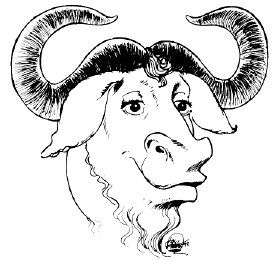
And if you need for someone to draw you a picture, there is a very nice graphic showing the categories.
-
GPL is Free, but Free is not GPL
I really should bookmark this:
The Free Software Foundation lists the BSDL as a
"GPL-Compatible, Free Software License". The BSDL grants all four of the software freedoms. To quote from the latter document:
In the GNU project, we use ``copyleft'' to protect these freedoms legally for everyone. But non-copylefted free software also exists. We believe there are important reasons why it is better to use copyleft, but if your program is non-copylefted free software, we can still use it.
And if you need for someone to draw you a picture, there is a very nice graphic showing the categories.
-
GPL is Free, but Free is not GPL
I really should bookmark this:
The Free Software Foundation lists the BSDL as a
"GPL-Compatible, Free Software License". The BSDL grants all four of the software freedoms. To quote from the latter document:
In the GNU project, we use ``copyleft'' to protect these freedoms legally for everyone. But non-copylefted free software also exists. We believe there are important reasons why it is better to use copyleft, but if your program is non-copylefted free software, we can still use it.
And if you need for someone to draw you a picture, there is a very nice graphic showing the categories.
-
Re:How to stream media files (MP3, MPEG, etc)
Why not MP3 Sushi Server? It is an Aqua frontend to GnuMP3D. Works great on my G5. Just set its source directory to your iTunes Music Folder.
-
Re:Save us from ourselves....Holy crap! Did Darl really say he was pounding on the table? As soon as I read that I thought of Eben Moglen's article and this bit from the very first:
There's a traditional definition of a shyster: a lawyer who, when the law is against him, pounds on the facts; when the facts are against him, pounds on the law; and when both the facts and the law are against him, pounds on the table.
Not a good picture to paint of yourself, even if you aren't the lawyer. -
Re:Forshortened, and three heretics ago...
The point isn't that you are using any GNU programs actively (although I bet you are), but that Linux was built using the GNU tools such as the C compiler.
If it wasn't for the GNU C compiler you would not have a kernel (or anything else for that matter) to begin with.
As Linus said himself when he released Linux
"As I mentioned a month(?) ago, I'm working on a free version of a minix-lookalike for AT-386 computers. It has finally reached the stage where it's even usable (though may not be depending on what you want), and I am willing to put out the sources for wider distribution. It is just version 0.02 (+1 (very small) patch already), but I've successfully run bash/gcc/gnu-make/gnu-sed/compress etc under it."
I don't think Linus would deny the contribution of GNU to the success of Linux.
-
What's better than exploding edibles?
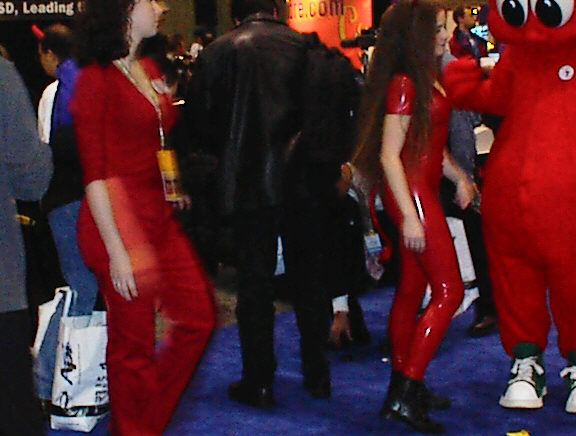
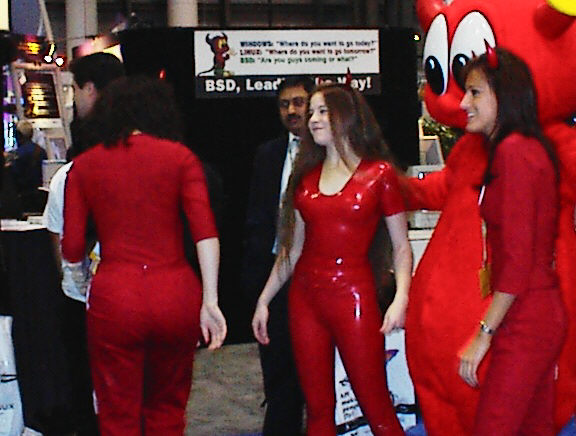
You just can't take Linux seriously when its fronted by losers like these. Would you buy software from them? I don't think so! You Linux groupies need to find some sexy girls like her! I mean just look at this girl! Doesn't she excite you? I know this little hottie puts me in need of a cold shower! This guy looks like he is about to cream his pants standing next to such a fox. As you can see, no man can resist this sexy little minx. I mean are you telling me you wouldn't like to get your hands on this ass?!
With sexy chicks like the lovely Ceren you could have people queuing up to buy open source products. Could you really refuse to buy a copy of BSD if she told you to? Come on, you must admit she is better than an overweight penguin or a gay looking goat! Don't you wish you could get one of these? Personally I know I would give my right arm to get this close to such a divine beauty!
Join the campaign for more cute open source babes today! -
Restricting software freedom is not worthwhile.
why GPL? wouldn't apache or BSD license be "more free"? Since the user doesn't have to contribute the changes back or provide the source to paying customers.
No, that would allow more restrictively licensed derivative works which would mean the freedoms of free software are not necessarily preserved for those who receive improved versions of the program. The freedoms of free software are for everyone to enjoy, not just those who receive a copy of the program from the copyright holder.
Distributing a program under the new BSD license or the Apache license is certainly free software, and it is a valued contribution to the community. But if the intention is to spread software freedom, not donate charitably to corporations, it's a good idea to make sure the software freedom stays with the program and its derivatives. And that's just what copylefted free software licenses are good at doing.
Contrary to what MBA's think, just because the source is available, it doesn't mean the average programmer can understand it or improve on it. the only thing the open licenses do is it allows your competitors to match exactly what you have.
For the free software movement (as opposed to the open source movement which started over a decade later with a different philosophy and a different message aimed at a different set of people), who possesses the skill to improve the program is not the key to understanding software freedom. Also, "open"ness is not a relevant criteria for determining what constitutes a free software license.
-
Restricting software freedom is not worthwhile.
why GPL? wouldn't apache or BSD license be "more free"? Since the user doesn't have to contribute the changes back or provide the source to paying customers.
No, that would allow more restrictively licensed derivative works which would mean the freedoms of free software are not necessarily preserved for those who receive improved versions of the program. The freedoms of free software are for everyone to enjoy, not just those who receive a copy of the program from the copyright holder.
Distributing a program under the new BSD license or the Apache license is certainly free software, and it is a valued contribution to the community. But if the intention is to spread software freedom, not donate charitably to corporations, it's a good idea to make sure the software freedom stays with the program and its derivatives. And that's just what copylefted free software licenses are good at doing.
Contrary to what MBA's think, just because the source is available, it doesn't mean the average programmer can understand it or improve on it. the only thing the open licenses do is it allows your competitors to match exactly what you have.
For the free software movement (as opposed to the open source movement which started over a decade later with a different philosophy and a different message aimed at a different set of people), who possesses the skill to improve the program is not the key to understanding software freedom. Also, "open"ness is not a relevant criteria for determining what constitutes a free software license.
-
GPL licenses for patents in a way BSD does not.
If you wrote a program and released it under the GPL, at any time you can turn around and say that you are going to release it under a more restrictive license.
Actually, copyright holders can do this without ever licensing their program under the GNU General Public License (GPL). This doesn't have anything to do with the GPL.
The key here, is that the released version will still be available, and anybody can improve upon it. However, that is certainly NOT unique to the GPL... Release a program under the BSD license and you have the same effect, but even less chance that it can get shut-down (with the GPL, if a patent shows-up, you can't distribute the program any longer, the BSD license has no such restriction).
You can't grant permission you don't have, regardless of the copyright license. But this GPL "restriction" you talk about is not a restriction at all and "get[ting] shut-down" (if you mean being compelled to stop distributing the program) is greater under the BSD licenses, not lesser. When IBM modifies a program to include patented ideas and then they distribute that program under the GNU GPL, they license "everyone who uses any code from the [program] to practice [the] patented technology" (according to the FSF's GPL quiz).
Under the BSD licenses (either the old or the new) there is no language covering patents at all. One does not simultaneously receive a license to practice the covered technology with the code from the patent-encumbered program. And under the BSD licenses embrace-and-extend is a constant threat to one's ability to improve the program based on someone else's published improvements. The GNU GPL doesn't have either of these significant problems.
-
Re:If you're going to write your CongressCritteronly if the resulting application has been distributed.
I think we can safely assume that there are no copyright implications for programs that are totally in-house and are not distributed or sold. At least I hope we can (can't we assume at least BASIC common sense? Perhaps not...).
the GPL may require your source code to be made available even if zero changes were made to previously GPL'd code (for instance, if you merely linked them on the command line and distributed the result).
This caused me to go back and re-read the GPL FAQ. Apparently I was mistaken on this point:
Q: You have a GPL'ed program that I'd like to link with my code to build a proprietary program. Does the fact that I link with your program mean I have to GPL my program?
A: Yes.
You learn something new every day. I think this is the genesis of the "viral nature" argument about the GPL. Since it's inconceivable to a commercial proprietary software company that anyone would actually create a module that they would distribute for no compensation under the GPL (which only allows charging for distribution of copies which obviously only one person in the world would ever pay), they claim (perhaps rightly if inelegantly) that the GPL is "viral" and (wrongly) that it therefore must be destroyed like any other virus. Their real goal, however, is to maintain their monopoly on software. -
Re:If you're going to write your CongressCritteronly if the resulting application has been distributed.
I think we can safely assume that there are no copyright implications for programs that are totally in-house and are not distributed or sold. At least I hope we can (can't we assume at least BASIC common sense? Perhaps not...).
the GPL may require your source code to be made available even if zero changes were made to previously GPL'd code (for instance, if you merely linked them on the command line and distributed the result).
This caused me to go back and re-read the GPL FAQ. Apparently I was mistaken on this point:
Q: You have a GPL'ed program that I'd like to link with my code to build a proprietary program. Does the fact that I link with your program mean I have to GPL my program?
A: Yes.
You learn something new every day. I think this is the genesis of the "viral nature" argument about the GPL. Since it's inconceivable to a commercial proprietary software company that anyone would actually create a module that they would distribute for no compensation under the GPL (which only allows charging for distribution of copies which obviously only one person in the world would ever pay), they claim (perhaps rightly if inelegantly) that the GPL is "viral" and (wrongly) that it therefore must be destroyed like any other virus. Their real goal, however, is to maintain their monopoly on software. -
Re:If you're going to write your CongressCritteronly if the resulting application has been distributed.
I think we can safely assume that there are no copyright implications for programs that are totally in-house and are not distributed or sold. At least I hope we can (can't we assume at least BASIC common sense? Perhaps not...).
the GPL may require your source code to be made available even if zero changes were made to previously GPL'd code (for instance, if you merely linked them on the command line and distributed the result).
This caused me to go back and re-read the GPL FAQ. Apparently I was mistaken on this point:
Q: You have a GPL'ed program that I'd like to link with my code to build a proprietary program. Does the fact that I link with your program mean I have to GPL my program?
A: Yes.
You learn something new every day. I think this is the genesis of the "viral nature" argument about the GPL. Since it's inconceivable to a commercial proprietary software company that anyone would actually create a module that they would distribute for no compensation under the GPL (which only allows charging for distribution of copies which obviously only one person in the world would ever pay), they claim (perhaps rightly if inelegantly) that the GPL is "viral" and (wrongly) that it therefore must be destroyed like any other virus. Their real goal, however, is to maintain their monopoly on software. -
Re:Open Source Vaporware...
-
Do some research, Darl.Can't these people at least do their homework first? There's so much wrong with this document that it's entirely ludicrous.
First off, we have the standard "some believe the GPL is in violation of the Constitution". W00t. Way to get as vague as possible and to point out that really only SCO (and perhaps Microsoft) believe this (oddly enough, to their benefit as a company).
Second, SCO's constant misrepresentation of the Free Software Foundation and the Open Source community in general is very disturbing.
The author of the GPL is well-known for his view that proprietary software (meaning software as an intellectual asset from which the designer can derive profit) is unacceptable.
Funny that the FSF itself defines proprietary as software whose use, redistribution, or modification is restricted or prohibited. I believe what Darl was trying to refer to was commercial software, which can easily derive profit and still be free. Damn, shot yourself in the foot there, eh Darl?
[The GPL] "frees" the software that is proprietary, licensable, and a source of income from the companies that developed it.
In reality, again, GPL'd software can derive profit from support contracts, installations, and the like. But nowhere in the GPL does it say that you should link in or otherwise include proprietary code; that's not the goal, the goal is to create BETTER code that does the same thing, and also happens to be free. Yes, perhaps it can "free" a source of income from a company which developed a proprietary alternative, but THAT'S BUSINESS, Darl. There's nothing in the constitution that can get you out of the fact that we live in a capitalist society and if you can't find a way to compete, get out of the business.
And then, of course, we get to SCO's main point of business, or "proof" that Open Source software is evil; code has been stolen from them and imported into Linux without authorization. For the last time, everyone is asking, WHAT code, and WHERE is it? We will replace it! There's a whole community ready to fix any wrongdoings inside Linux in the blink of an eye. Oh, but wait, telling that would be "freeing" you of your litigation profit stream. I apologize.
Free or low-cost [ed. contradicted yourself there] Open Source software, full of proprietary code
And a second contradiction to round out that paragraph.
Why should a software company invest to develop exciting new capabilities when their software could end up "freed" as part of Linux under the GPL?
Because of a number of reasons. First and foremost, if they have the superior software, they will continue to own the market. You think Adobe and Photoshop are suffering a lot due to The GIMP? Secondly, because "freeing" software doesn't mean stealing it, even though you blatantly infer that. If any new software is put into Linux, it's either already been released free by its ORIGINAL developer, or it's code that volunteers have created, all their own. There are no bad-faith copyright violations in Linux because nobody knew about SCO's IP "rights" in the first place, and we still don't!
Our economy has been hurt by offshore outsourcing of technology jobs.
Hehe... coming from SCO... hehehe.
The rest of it is BS, mostly (national security?), so I'll leave it at that. Really though, SCO should present something a bit more substantial if they want us to think they're anything more than moneygrubbing lawyers. -
Do some research, Darl.Can't these people at least do their homework first? There's so much wrong with this document that it's entirely ludicrous.
First off, we have the standard "some believe the GPL is in violation of the Constitution". W00t. Way to get as vague as possible and to point out that really only SCO (and perhaps Microsoft) believe this (oddly enough, to their benefit as a company).
Second, SCO's constant misrepresentation of the Free Software Foundation and the Open Source community in general is very disturbing.
The author of the GPL is well-known for his view that proprietary software (meaning software as an intellectual asset from which the designer can derive profit) is unacceptable.
Funny that the FSF itself defines proprietary as software whose use, redistribution, or modification is restricted or prohibited. I believe what Darl was trying to refer to was commercial software, which can easily derive profit and still be free. Damn, shot yourself in the foot there, eh Darl?
[The GPL] "frees" the software that is proprietary, licensable, and a source of income from the companies that developed it.
In reality, again, GPL'd software can derive profit from support contracts, installations, and the like. But nowhere in the GPL does it say that you should link in or otherwise include proprietary code; that's not the goal, the goal is to create BETTER code that does the same thing, and also happens to be free. Yes, perhaps it can "free" a source of income from a company which developed a proprietary alternative, but THAT'S BUSINESS, Darl. There's nothing in the constitution that can get you out of the fact that we live in a capitalist society and if you can't find a way to compete, get out of the business.
And then, of course, we get to SCO's main point of business, or "proof" that Open Source software is evil; code has been stolen from them and imported into Linux without authorization. For the last time, everyone is asking, WHAT code, and WHERE is it? We will replace it! There's a whole community ready to fix any wrongdoings inside Linux in the blink of an eye. Oh, but wait, telling that would be "freeing" you of your litigation profit stream. I apologize.
Free or low-cost [ed. contradicted yourself there] Open Source software, full of proprietary code
And a second contradiction to round out that paragraph.
Why should a software company invest to develop exciting new capabilities when their software could end up "freed" as part of Linux under the GPL?
Because of a number of reasons. First and foremost, if they have the superior software, they will continue to own the market. You think Adobe and Photoshop are suffering a lot due to The GIMP? Secondly, because "freeing" software doesn't mean stealing it, even though you blatantly infer that. If any new software is put into Linux, it's either already been released free by its ORIGINAL developer, or it's code that volunteers have created, all their own. There are no bad-faith copyright violations in Linux because nobody knew about SCO's IP "rights" in the first place, and we still don't!
Our economy has been hurt by offshore outsourcing of technology jobs.
Hehe... coming from SCO... hehehe.
The rest of it is BS, mostly (national security?), so I'll leave it at that. Really though, SCO should present something a bit more substantial if they want us to think they're anything more than moneygrubbing lawyers. -
My keyboard...
I have a pair of Datahands, and they rock. They took about a weekend or so to get used to (the layout is QWERTY-ish, which helps), using gtypist (which I highly recommend as well).
Are they expensive? Yes. But if this is what you do with your life, they're worth the investment, IMO. These aren't your typical stock, mass-produced keyboards, either... they look hand-built, and they're pretty easy to take apart and completely clean out. The keys are optically-driven, so you can't gunk up switches or the like (although you can get the keys sticky, they're fairly easy to clean if you're not afraid to take things apart).
-
Re:Perspective of a Linux neophyte
This is also great for the corporate desktop, because you can give the secretary just the few apps she's allowed and nothing more.
How frustrating for hir it could become if that app selection is too small - what if s/he wants to do a small script to sort the mail, or other work-saving little things?
"This should contribute greatly to computer literacy, especially because many of the people thus exposed will be secretaries taught by society that they are incapable of doing mathematics, and unable to imagine for a moment that they can learn to program."--The Emacs Paper. -
SuSE would do better swapping the lizard for...
You just can't take Linux seriously when its fronted by losers like these. Would you buy software from them? I don't think so! You Linux groupies need to find some sexy girls like her! I mean just look at this girl! Doesn't she excite you? I know this little hottie puts me in need of a cold shower! This guy looks like he is about to cream his pants standing next to such a fox. As you can see, no man can resist this sexy little minx. I mean are you telling me you wouldn't like to get your hands on this ass?!
With sexy chicks like the lovely Ceren you could have people queuing up to buy open source products. Could you really refuse to buy a copy of BSD if she told you to? Come on, you must admit she is better than an overweight penguin or a gay looking goat! Don't you wish you could get one of these? Personally I know I would give my right arm to get this close to such a divine beauty!
Join the campaign for more cute open source babes today! -
Just as long as nobody abuses Ceren...
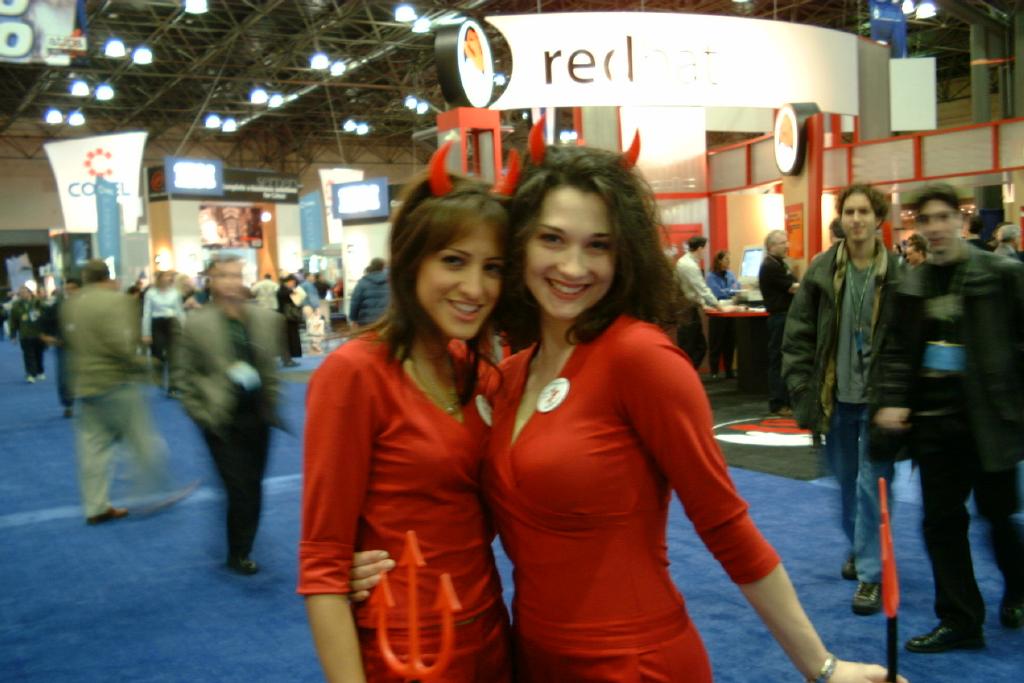
How can people say BSD is dying when it has a mascot like this?! Linux needs to get its act together if it's going to compete with the kind of hot chicks and gorgeous babes that BSD has to offer!
You just can't take Linux seriously when its fronted by losers like these. Would you buy software from them? I don't think so! You Linux groupies need to find some sexy girls like her! I mean just look at this girl! Doesn't she excite you? I know this little hottie puts me in need of a cold shower! This guy looks like he is about to cream his pants standing next to such a fox. As you can see, no man can resist this sexy little minx. I mean are you telling me you wouldn't like to get your hands on this ass?!
With sexy chicks like the lovely Ceren you could have people queuing up to buy open source products. Could you really refuse to buy a copy of BSD if she told you to? Come on, you must admit she is better than an overweight penguin or a gay looking goat! Don't you wish you could get one of these? Personally I know I would give my right arm to get this close to such a divine beauty!
Join the campaign for more cute open source babes today! -
Re:Antivirus Company SubmissionsUnfortunately, it's possible to get around that. Try this:
- Create a shell script in a noexec filesystem. For this example, we'll use
- Run: '/bin/sh
- Create and compile a C program in a noexec filesystem. For example,
- Run: '/lib/ld-linux.so.2
- Watch the fun
8 - Create a shell script in a noexec filesystem. For this example, we'll use
-
Do you folks even know what VAPORware is?
Maybe you cannot be nominated more then 10 times in a row or so?
Or the fact that you can download it might disqualify it from being "vapor"-ware, at least to anyone who understands what the term means. Or are the usual anti-GNU shills more unaware than usual of common dictionary definitions of the terms they bandy about? -
Worth a million bucks...
You just can't take Linux seriously when its fronted by losers like these. Would you buy software from them? I don't think so! You Linux groupies need to find some sexy girls like her! I mean just look at this girl! Doesn't she excite you? I know this little hottie puts me in need of a cold shower! This guy looks like he is about to cream his pants standing next to such a fox. As you can see, no man can resist this sexy little minx. I mean are you telling me you wouldn't like to get your hands on this ass?!
With sexy chicks like the lovely Ceren you could have people queuing up to buy open source products. Could you really refuse to buy a copy of BSD if she told you to? Come on, you must admit she is better than an overweight penguin or a gay looking goat! Don't you wish you could get one of these? Personally I know I would give my right arm to get this close to such a divine beauty!
Join the campaign for more cute open source babes today! -
Re:DRM here on /.
> Digital Rights Managment Year in Review
>
Funny, the first thing I noticed was how the title misspelled Restrictions. -
BSD has security *and* babes!
You just can't take Linux seriously when its fronted by losers like these. Would you buy software from them? I don't think so! You Linux groupies need to find some sexy girls like her! I mean just look at this girl! Doesn't she excite you? I know this little hottie puts me in need of a cold shower! This guy looks like he is about to cream his pants standing next to such a fox. As you can see, no man can resist this sexy little minx. I mean are you telling me you wouldn't like to get your hands on this ass?!
With sexy chicks like the lovely Ceren you could have people queuing up to buy open source products. Could you really refuse to buy a copy of BSD if she told you to? Come on, you must admit she is better than an overweight penguin or a gay looking goat! Don't you wish you could get one of these? Personally I know I would give my right arm to get this close to such a divine beauty!
Join the campaign for more cute open source babes today! -
Give me hotkeys!
I think I remember seeing somewhere that there's a hotkey to switch between apps, but I haven't used that in over a decade in any serious fashion on any OS, so I never took note.
Never design a UI for me then. I use [Alt]-[Tab] to switch between windows, [Alt]-[F1] through [Alt]-[F6] to switch between virtual desktops (or [Alt]-1 through [Alt]-4 when using MSVDM on my WinXP laptop), and [Ctrl]-A-<number> to switch between panes in my screen session. About the only thing I don't multiples are my vim sessions -- I no long split things vertically. (Although I used to, with splitvt
I live on hot keys to hop around my highly multiplexed desktop!
And this, perhaps, is why I'll never design a UI for others....
--Joe -
Linux sucks! Use BSD!
How can people say BSD is dying when it has a mascot like this?! Linux needs to get its act together if it's going to compete with the kind of hot chicks and gorgeous babes that BSD has to offer!
You just can't take Linux seriously when its fronted by losers like these. Would you buy software from them? I don't think so! You Linux groupies need to find some sexy girls like her! I mean just look at this girl! Doesn't she excite you? I know this little hottie puts me in need of a cold shower! This guy looks like he is about to cream his pants standing next to such a fox. As you can see, no man can resist this sexy little minx. I mean are you telling me you wouldn't like to get your hands on this ass?!
With sexy chicks like the lovely Ceren you could have people queuing up to buy open source products. Could you really refuse to buy a copy of BSD if she told you to? Come on, you must admit she is better than an overweight penguin or a gay looking goat! Don't you wish you could get one of these? Personally I know I would give my right arm to get this close to such a divine beauty!
Join the campaign for more cute open source babes today! -
Re: GPL and copies of copies
someone can give a copy to someone else, and then that person can request the source without paying.
Yes, that person can request the source from whoever gave it to him/her, but not necessarily from whoever gave it to whoever gave it to him/her.
If you read your second link carefully, you will see that your friend has to give you a copy of the offer.
Since the offer refers to the entity giving you the copy, it's the person who gave you a copy of the binary (i.e., your friend) who must supply you with a copy of the source.
Whoever gave your friend a copy of the binary must supply your friend with a copy of the source, but need not supply you with a copy.
Disclaimer: IANALADPTBO (... and don't pretend to be one), but that's how I interpret it. -
FSF have similar, but different
FSF have the "Award for the Advancement of Free Software". The award ceremony has been at FOSDEM for the last 3 years, not sure where it was held before that.
Previous winners were: Lawrence Lessig, Guido van Rossum, Brian Paul, Miguel de Icaza, and Larry Wall.
-
FSF have similar, but different
FSF have the "Award for the Advancement of Free Software". The award ceremony has been at FOSDEM for the last 3 years, not sure where it was held before that.
Previous winners were: Lawrence Lessig, Guido van Rossum, Brian Paul, Miguel de Icaza, and Larry Wall.
-
FSF have similar, but different
FSF have the "Award for the Advancement of Free Software". The award ceremony has been at FOSDEM for the last 3 years, not sure where it was held before that.
Previous winners were: Lawrence Lessig, Guido van Rossum, Brian Paul, Miguel de Icaza, and Larry Wall.
-
Re:So, we're awarding wasted duplication of effort
Correct, and I'm not sure why you haven't gotten an informative mod yet. However, I reiterate that there are legal ways to write a closed-source module for a GPL'd program. Very strict and narrow ways, but it is possible.
-
Re:So, we're awarding wasted duplication of effort
For one thing, the GPL only requires you to make source code available to the people who have the binaries. In other words, if you haven't paid, you don't have any right to complain.
Even if they charge for the binary, someone can give a copy to someone else, and then that person can request the source without paying. -
Re:So, we're awarding wasted duplication of effort
For one thing, the GPL only requires you to make source code available to the people who have the binaries. In other words, if you haven't paid, you don't have any right to complain.
Even if they charge for the binary, someone can give a copy to someone else, and then that person can request the source without paying. -
Re:So, we're awarding wasted duplication of effort
-
Re:So, we're awarding wasted duplication of effort
-
Re:So, we're awarding wasted duplication of effort
-
Who needs perl when we could have...
How can people say BSD is dying when it has a mascot like this?! Linux needs to get its act together if it's going to compete with the kind of hot chicks and gorgeous babes that BSD has to offer!
You just can't take Linux seriously when its fronted by losers like these. Would you buy software from them? I don't think so! You Linux groupies need to find some sexy girls like her! I mean just look at this girl! Doesn't she excite you? I know this little hottie puts me in need of a cold shower! This guy looks like he is about to cream his pants standing next to such a fox. As you can see, no man can resist this sexy little minx. I mean are you telling me you wouldn't like to get your hands on this ass?!
With sexy chicks like the lovely Ceren you could have people queuing up to buy open source products. Could you really refuse to buy a copy of BSD if she told you to? Come on, you must admit she is better than an overweight penguin or a gay looking goat! Don't you wish you could get one of these? Personally I know I would give my right arm to get this close to such a divine beauty!
Join the campaign for more cute open source babes today! -
Re:BSD vs LinuxWhich includes BSD-licensed software by definition.
An important distinction. BSD as a license in its original form is incompatible with the GPL and is recommended against usage. However, seeing the error in their ways, the BSD license has been modified and is now compatible with the GPL. Unfortunately, it is still weak and flacid, and I couldn't personally recommend using it in good conscience.
However, the problem is that GPL software is not truly "free." The GPL says, "I own this, and you can't use this except on MY terms."
Nonsense. What you have described is the purpose of any license, including the BSD.
By placing all of the reference works for HTML, and HTTP into the public domain (rather than under a GPL copyright) the web exploded and we have forums like Slashdot.
Please keep in mind that due to the wisdom of Slashdot's developers, you are enjoying the use of a product under the protection of the GPL.
Had Mr. Berners-Lee used the GPL, I have doubts as to whether we would have widespread adoption of the web.
There's no reason to assume that. Your doubts are unfounded.
= 9J =
-
Re:BSD vs LinuxWhich includes BSD-licensed software by definition.
An important distinction. BSD as a license in its original form is incompatible with the GPL and is recommended against usage. However, seeing the error in their ways, the BSD license has been modified and is now compatible with the GPL. Unfortunately, it is still weak and flacid, and I couldn't personally recommend using it in good conscience.
However, the problem is that GPL software is not truly "free." The GPL says, "I own this, and you can't use this except on MY terms."
Nonsense. What you have described is the purpose of any license, including the BSD.
By placing all of the reference works for HTML, and HTTP into the public domain (rather than under a GPL copyright) the web exploded and we have forums like Slashdot.
Please keep in mind that due to the wisdom of Slashdot's developers, you are enjoying the use of a product under the protection of the GPL.
Had Mr. Berners-Lee used the GPL, I have doubts as to whether we would have widespread adoption of the web.
There's no reason to assume that. Your doubts are unfounded.
= 9J =
-
Re:BSD vs Linux
Not much of a lesson, but I appreciate the effort. However, it does underscore your lack of understanding when it comes to Free Software.
Which includes BSD-licensed software by definition.
Somehow you've mistakenly equated GPL with proprietary patents. The entire philosophy behind the GPL is that patents are bad for the community. The GPL is a legal solution against proprietary patents/licenses within the context of laws that uphold proprietary patents and licenses.
However, the problem is that GPL software is not truly "free." The GPL says, "I own this, and you can't use this except on MY terms." I don't have the freedom to, for example, incorporate GPL software into an anonymous work for example. (Anonymous works are by definition, public domain.)
By placing all of the reference works for HTML, and HTTP into the public domain (rather than under a GPL copyright) the web exploded and we have forums like Slashdot. (Accessible through both proprietary and non-proprietary software.) Had Mr. Berners-Lee used the GPL, I have doubts as to whether we would have widespread adoption of the web. -
Re:BSD vs LinuxNot much of a lesson, but I appreciate the effort. However, it does underscore your lack of understanding when it comes to Free Software. Somehow you've mistakenly equated GPL with proprietary patents. The entire philosophy behind the GPL is that patents are bad for the community. The GPL is a legal solution against proprietary patents/licenses within the context of laws that uphold proprietary patents and licenses.
Here's one for you:
"Richard Stallman is the prophet of the free software movement. He understood the dangers of software patents years ago. Now that this has become a crucial issue in the world, buy this book and read what he said."
- Tim Berners-Lee, inventor of the World-Wide Web.
= 9J =
-
Re:BSD vs LinuxIt is interesting that GPL zealots have a far more limited view of what constitutes free software than either RMS or the FSF.
I don't think free software is an issue of concern with GPL zealots. However, Free Software certainly is. But, it may be too subtle a point for BSD zealots to understand.
No. The BSD license considers that the community includes, for example, government organizations that have a mandate to release works into the public domain
The BSD license has an onerous stipulation and cannot be used as a license for works that are mandated by law to be placed in the public domain. This is why there is something called the public domain which is already considered in the U.S. Constitution. In fact, you might say that the public domain is the natural condition of any work in the United States unless the author makes effort to claim copyright, temporarily taking the work away for a limited time before being returned to the public domain.
BSD cannot lay claim to being more of a community builder than the GPL. If anything, BSD has been responsible for the rise of various proprietary Unix systems, completely splintering the market, allowing other inferior proprietary systems to enter and dominate. A fork in GPL code could never be truly splintered as improvements are guaranteed to be made available for all to profit from.
= 9J =