Slashdot Mirror
Domain: latrobe.edu.au
Stories and comments across the archive that link to latrobe.edu.au.
Comments · 47
-
Re:That's not really the point
140 characters may not be enough; but an hour of vid is too much. Can you add anything to TwinBee's post above? I think he answered my question the best. To reiterate, there are a lot of great researchers out there, and a lot of people like yourself who will tell me their ideas deserve my attention. Your whole line of reasoning is "this one is special". Sorry. That's just an assertion.
Personally, I think Manfred Von Thun who you may not have heard of is really great for having shown us the Joy programming language. That doesn't mean I'm going to tell you "it's your loss" because you don't want to spend the better part of a week reading his papers.
You could read the Wikipedia article on it very quickly instead.
-
Re:Is it just me ?
Look up concatenative languages, such as Joy (http://www.latrobe.edu.au/philosophy/phimvt/joy.html); I wrote Underload (http://esolangs.org/wiki/Underload) as a sort of minimal expression of the same idea. Both of those languages effectively allow you to create arbitrary first-class functions despite having no form of function literal, and no concept of a closure, and work fine without garbage collection. However, doing things that way you have to do things differently from more standard functional programming languages.
-
Re:Finally!
One of my lecturers in the philosophy department wrote his own programming language, Joy.
Pure Mathematics (in the Science department) and Formal Logic (in the Philosophy department) are closely related in terms of the apparatus for proofs. Logic was unfortunately a neglected step-child of the Arts faculty.
At the other end of the scale Theoretical Physics and Philosophy share commonality, e.g. Physics was originally termed "Natural Philosophy". -
Re:Specialization Versus BreadthCool languages I've read about, maybe used, but not played with nearly enough:
- Lambda calculus-ish
- Combinator/Forth-ish
- Joy
- Interesting but not practical: unlamdba iota and jot
- Logic
- Pi calculus-ish
I think I want to master logic programming next, though it may be better for me to do some haskell programming first so I have a better foundation. Monads/Arrows give me a headache, but with enough time, I'm sure I could get used to them. s-expressions a-la lisp/scheme are very similar to xml, except better, but logic programming seems more likely to make the hardest parts of internet programming easier.
Unfortuately, I have nowhere near enough time to get proficient in all these languages.
-
Re:Is 65 years excessive?
The ethicist Jonathan Glover has written what some consider to be the definitive paper on committing multiple small crimes:
http://www.latrobe.edu.au/philosophy/resources_ug/ EDU/Jonathan%20Glover.pdf
Like the parent post says, you have to add up the harmful effects of each crime (and Glover continues, you need to divide it by the number of people participating in the action - in this case the viagra merchants and so forth) to see what the person's total culpability is. -
Re:Primary sources cost money
I agree with this in principle, as any encyclopedia is a tertiary source. But if a student wants to read and cite a primary source that the institution's library doesn't have an annual subscription to, what should the student do?
I'm often faced by a problem like this (I'm entering my fourth year at Uni and I've done at least one History unit per year 'til now), but there are always ways around it. For instance, my Mum is at another Uni and so we use each other's library cards and library subscriptions to go through journal databases. There are online databases of journals which we can access through even the public libraries.
There's also a scheme (I'm not sure if it's just in Victoria and Australia or not) where we can get these cards which allow students to borrow from any tertiary library in the state and, if you so wish, also in the whole country.
No matter what, there's always a solution.
And to the article itself - I think that this move should be much more widespread and shouldn't only be happening now. At the La Trobe University History department (where I study), websites (including Wikipedia) can only be 'freely' cited in first year, first semester units.
From second semester of first year, all History students are required to get permission from the unit lecturer and/or tutor to use a specific online source (journals and books published online don't need to go through this) and to also attach a copy of the webpage(s) used to the essay.
Sometimes this can really get on my nerves (if I can't get hold of a lecturer or tutor, for instance), but I think it's a good system. To be honest, I thought most Unis would have a similar system in place already - LTU's had it for five, six years now.
Just my thoughts, anyway.
-
Official Legal Opinion
I picked a random local university to check their copyright-ownership policy. Some bell rang in my head suggesting that Universities claim they own the rights to the IP of their students while they are students (basically the school wants to produce the brilliant idea rather than letting the students). However before I could find such a thing (I now doubt I was correct) I found that the randomly picked university links to a Turnitin "Legal Opinion" based on Australian copyright law
One salient point follows:
It is a question of fact in each instance as to the extent to which a student may have granted an implied license for reproduction or communication of his or her work when submitting it for assessment. An express license to a university to reproduce a student assignment and communicate it to the Turnitin server would be granted by a student who signs a cover sheet for an assignment which contains the following acknowledgement (for example): I declare that this assignment is original and has not been submitted for assessment elsewhere, and acknowledge that the assessor of this assignment may, for the purpose of assessing this assignment: Reproduce this assignment and provide a copy to another member of faculty; and/or Communicate a copy of this assignment to a plagiarism checking service (which may then retain a copy of the assignment on its database for the purpose of future plagiarism checking). -
Re:Joy!Joy is more than interesting. http://www.latrobe.edu.au/philosophy/phimvt/joy.h
t mlRecursion Theory and Joy by Manfred von Thun Abstract: Joy is a functional programming language which is not based on the application of functions to arguments but on the composition of functions. Many topics from the theory of computability are particularly easy to handle within Joy. They include the parameterisation theorem, the recursion theorem and Rice's theorem. Since programs are data, it is possible to define a Y-combinator for recursion and several variants. It follows that there are self-reproducing and self-describing programs in Joy. Practical programs can be written without recursive definitions by using several general purpose recursion combinators which are more intuitive and more efficient than the classical ones.
I wrote an interpreter for a subset of Joy (in Oberon, btw) and as an unexpected side effect, I now understand continuations.
-
Programming trends
You want to know the latest trends for Java-based web development? Fewer and fewer people are going to be doing Java-based web development in the future.
Fuck trends. They're wrong. Every day the industry continues to stay with its current ridiculous technologies when vastly superior ones were invented decades ago infuriates me further. If it doesn't infuriate you, you're not paying close enough attention.
My advice: read Lambda the Ultimate and Steve Yegge's blog. Endeavor to learn what the lambda calculus and referential transparency are. If you are sincerely interested in bettering yourself as a programmer and don't go find out who Alonzo Church was then so help me God I will kick you in the balls. Learn about SML and type inference. Learn about Haskell and monads. Learn about process calculi and Erlang. Learn about Lisp and code generation and domain-specific languages. Learn about Scheme and lexical closures and continuations. Learn about Smalltalk and what OO was really supposed to be. Learn about type theory and formalism and the Curry-Howard correspondence. Learn about Forth and Joy and how you can have a powerful, expressive language without even so much as a grammar. Learn about Intercal and Befunge and just how badly your choice of programming language can torture you. Learn about UML and Ruby on Rails and Seaside and agile programming and Java generics and Python generators. Learn about aspect-oriented programming, context-oriented programming and concept programming. Learn about multi-paradigm languages like OCaml or Oz. Learn about weird Lisp dialects with syntax like Rebol or Dylan.
Realize that library design is language design. Realize that asynchronous programming with callbacks and explicit state in a world where lightweight coroutines were around in the days of fucking Simula in the 60s for Christ's sake is cruel and unusual torture. (Sorry, pet programming construct.) Realize that the programming language research community, while considering systems programming a solved problem and generally not interested in talking about human factors, is doing some genuinely promising work. Did you know that there are conc -
Re:Author: cheerleader for Ruby but has good point
Ruby has made some important OO design contributions
It has ?! Like what ?! What's in Ruby that wasn't in other languages ?!!
For patience's sake, this is the problem...All I see are ideas that were in other languages, thrown together in a learn-as-you-go experiment. People think continuations are cool? Then look at Scheme and look at Smalltalk. You can't compare years of development to that experiment. Ruby is rubbish. Compare it to any Smalltalk implementation. Download a Common Lisp IDE (LispWorks, Franz) and tell me how cool Ruby is...When people diss Java, remember to also diss HotSpot. Can your little language optimize code statistically like that? I thought not...
You want new stuff? Look at Factor, Joy, the Mozart/Oz system, or Slate.
Wanna compile at gcc performance? Try Scheme with the Bigloo implementation, or Objective Caml. Bechmarks for Ocaml here (and for SML with MLTon compiler here.- The bechmarks for Bigloo were reomved some time ago).
I'll just post the buzzwords for Factor:
Continuations, exception handling.
Powerful and logical meta-programming facilities. Introspection, code generation and extension of both syntax and semantics is very easy.
Higher-order programming allows code blocks to be treated as data and used as parameters.
Highly minimalist, very consistent design. No layers upon layers of indirection, no confusing corner-cases, no poorly-thought-out features.
Postfix syntax with an extensible parser; values are passed on the stack.
Higher-order programming allows code blocks to be treated as data and used as parameters.
A powerful and very generic collections library allows many algorithms to be expressed in terms of bulk operations without micro-management of elements, recursion, or loops.
A very consistent object model based on generic predicate dispatch.
Arithmetic operations that closely model mathematical concepts, rather than just being a thin abstraction over underlying machine arithmetic. All integer operations are done in arbitrary precision, and exact fractions are supported. Complex numbers and complex-valued elementary functions are integrated.
Damn, that Slava Pestov is one smart dude.
When you see those languages, you kinda get sad that Ruby is such an attention-grabber, but I can see clearly that this is just because of disinformation. With the exception of Joy and Slate (for now, I hope), all the others I cited have pretty workable environments.
And by the way, you don't write LISP anymore, it's Lisp. -
Re:A "best-practice" in Perl is like...
Bad variable names can't be helped, though...
Well, unless you use a langauge which gets rid of variables and names. -
Re:C.R.E.A.M.
logic classes are taught by fuzzy-minded idiot philosophy professors.
Not all of them--for instance, Manfred von Thun, professor of Philosophy at La Trobe University created the programming language Joy
-
Re:C.R.E.A.M.
logic classes are taught by fuzzy-minded idiot philosophy professors.
Not all of them--for instance, Manfred von Thun, professor of Philosophy at La Trobe University created the programming language Joy
-
Re:A very incomplete list off the top of my head
"One video showed two Notepads rotating around while still completely usable at the same time a video played in Media Player. Old apps will be compatible."
MacOS X 10.2, August 23, 2002.
http://www.atzenbeck.de/research/wildWindows/
http://homepage.cs.latrobe.edu.au/wjtregaskis/Rota ted%20Windows.sitx -
Re:Functional Compilers, anyone?
As a language it has pretty atrocious usability.
Are you crazy? Are you upset just because it doesn't have an Algol-60 syntax? Haskell is pretty much the only language you can write beautiful programs with. The only thing that comes close are Joy and maybe Scheme. Well, Scheme, if it didn't have so many ugly warts (how many different forms of "let" do we really need). -
Re:Ahh Pascal
Ok, a little extreme, but I can't remember the last time I used 'x' as a variable name... joy)
But the Joy language doesn't even have variables! -
Re:Lisp's problem
Now, I don't see how any other language (that isn't Lisp based itself) could actually support true macros without adopting the same syntax Lisp uses.
You might like to check into the Joy language. It may not have macros, but its syntax (even simpler than lisp!) make meta-programming a breeze. Also, the Forth guys don't think programs that write programs are anything new. -
Re:Ha! You call that a solar death ray?
Mu, uhh, death ray is bigger than your death ray
The parabolic reflector gaves at the focal point a maximum flux of 1000 W/cm2. The experimentations takes place at the focal zone (18 m in front of the paraboloid. The range of available temperature is from 800 to 2500 C (the maximum reachable temperature is 3800 C) for a maximum thermal power of 1000 kW.
Picture of the Odeillo Solar Furnace -
Feh, Kid's stuff
This one is a bit bigger!
The parabolic reflector gaves at the focal point a maximum flux of 1000 W/cm2. The experimentations takes place at the focal zone (18 m in front of the paraboloid. The range of available temperature is from 800 to 2500 C (the maximum reachable temperature is 3800 C) for a maximum thermal power of 1000 kW.
(Did someone just say holy fucking shit?)
Picture of the Odeillo Solar Furnace -
Re:best degree to compliment comp sci
http://www.latrobe.edu.au/
Not a bad Uni. My Sis did physiotherapy there.
-
Re:Don't forget ClearType on your LCD
There are always deviations from the norm, and your absolutely right, there will be *some* crt monitors that display in horizontal strips.
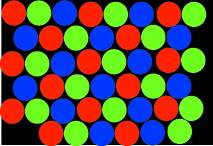
However, a normal CRT monitor has its pixels placed in the triangular pattern I described.
This link shows the standard CRT dot pattern nicely.
Whilst this link shows the standard LCD arrangement. -
Re:Mouse Pee
I have a flatmate with a bunny that has a taste for cables, as a result every cable within reach has a combination of some kind of cable protector over it and/or a few repairs made to it.
-
Sminthopsis crassicaudata crassicaudata
Here's a clearer (and much cuter) picture of a Fat-tailed Dunnart (Sminthopsis crassicaudata crassicaudata).
Awwwwwww.... -
Re:Yeah, like we haven't fucked up the planet enouActually, "freedom of speech" is a vague term. Freedom of speech actually doesn't exist. Check out "There's No Such Thing As Free Speech" by Stanley Fish, a professor at Duke University.
-
Prison States of the Empire
-
openGL - starting points on the web
Not that I have written any major 3D software, or even work in the 3D industry. But at uni we learn't openGL as part of our computer graphics course.
Once you have mastered the coordinate system it is so mind booglingly easy to get graphics on screen it's insane
For windows development you can even start with openGL for free
use google to find some simple openGL sample programs to work from- and away you go
-
Re:Twilight Zone...
Well it might not of actually been physically located in the same location when it was founded. My univerity (yes a relatively recent one) was actually based somewhere in the city in a temporary location while the campus was initially being contructed for a couple of years.
-
Re:A Famous One Is...
I never heard of the term "concatenative languages", can you give a good reference?
Sure thing. Check out the main Joy page. The mailing list linked to from that page is also a very good resource.
I have programmed in both Forth and PostScript; they are incrementally compiled languages with a postfix syntax and no static typing.
Non-incremental Forth compilers are not uncommon; most people never use Postscript incrementally. A strongly statically typed variant of Forth exists (strongForth). And finally, although both do use RPN, they do not have a true postfix syntax; they lack syntax of any kind. Postfix syntax _requires_ that operators appear after their operands; RPN doesn't require operators and operands to have any static relationship.
The important distinction that the two languages share is that
1. any concatenation of valid programs produces another valid program
and
2. any dissection of a valid program produces two valid programs.
(Condition #2 is the equivalent of "referential transparancy" in lambda-based languages: it's nice to have for reasoning, but there are some handy things to have which make it impossible sometimes.)
Concatenativity implies a whole different set of rewriting rules, some of which are quite powerful compared to the applicative/lambda rewriting rules. It turns out to be a whole different way of thinking.
And as a bonus, the implementation is very simple, fast, and highly optimizable. Because data is managed by the programmer on a stack, the compiler doesn't have to guess what datum is more important than which other one; the stack provides a total ordering, and if the compiler can simply provide faster access to the top of the stack things speed up a lot.
-Billy -
White Mars
Nick Hoffman of LaTrobe Uni in Melb, Aus. has a "White Mars" model where the active fluid agent is CO2 rather than water. I was impressed by a lecture he gave to an academic audience. I suspect most people (including those who fund space research) would prefer a Mars with water (for existance of life, etc), but an equal (or better) model should get equal an equal chance. Hoffman's website is here.
-
Re:Reverse engineering DMV
Samba certainly can be a domain controller in a Windows environment.
Samba PDC FAQ
This document refers to 2.2.0 as forthcoming, but it's been out for quite some time. That makes my point even more true. -
Re:Hmmm
You're largely right. The lessons you learn in Forth can sometimes be applied to C and Scheme. But in spite of the lesson we've all heard, that all languages are essentially the same, practical experience shows that they're NOT. Refactorings which are easy in Java are horribly painful in C (because of the lack of classes, for example). Code which looks natural in C looks bad in Java.
The reason? Java uses object orientation. C doesn't.
So does Forth have anything that C doesn't? Yes. In fact, Forth has a characteristic which permeates the entire language and which is shared by only a few other languages: I call that characteristic "concatenativity". Let me explain.
The languages you're used to are probably all "applicative": you apply parameters to functions using the syntax of the language. In Forth parameters are nonexistant as far as the language is concerned; there is no application operator, implicit or explicit. Instead, a Forth program is defined as the concatenation of a series of primitive operations on a stack. Mathematically, this could be modelled as having "Forth words" be functions of one input and one output, and a "Forth program" be the composition of the functions, in the order of their appearance.
But that's all windy and theoretical. I have a more useful definition of what it means for a language to be "concatenative", and it's the reason I chose that name. A language is concatenative if the concatenation of any two valid programs is a valid program, and if the splitting of any valid program along token boundaries produces two valid programs.
Suppose you have the program "2 3 +
Thus we see that your statement "Forth forces you to use small functions" isn't quite true. You can write functions as large as you want; the language doesn't care, and I've never heard of an implementation which would have any problems. The trick is that in Forth, if your definition gets too big, you can simply cut part of it out (arbitrarily), give that section a name, and call that name from your code. Bingo -- you've just performed a complete refactoring "Extract Method". And there was no trace of danger -- no need for a refactoring browser.
If you've survived my exposition this long, congrats. Sorry.
And BTW, you list the claim "Forth is small" as a dubious advantage of Forth. Yet I would say that's a definite advantage. Forth is small because it uses Forthlike implementation techniques; it's easy to manually compress a Forth application by refactoring its methods. Forth is small, and your application in Forth can also be small.
-Billy -
Re:Where is forth going?algebraic notation is much easier for humans to comprehend than reverse polish notation
I guess you haven't taught or tutored any algebra classes? So many programmers imagine that they way they've learned to think so well is the only way to think. Both forms are hard to work with; however, the Forthlike form is easier to express action in (since it's chronologically ordered, with no execution occuring out of order) and easier to refactor (since most refactorings require only cut'n'paste, with no possibility of code breakage); the Algol or Lisp-like form is easier to do certain other transformations (since the arguments of a function are 'tied' or applied to the function by hard syntax).
The theory of Forthlike languages is brand new, in spite of Forth's age and Postscript's overwhelming success; it's discussed at the Joy page.
will Forth's general weirdness make it harder to find an apply good algorithms?
Forth's wierdness is explicitly tailored to help the programmer find and apply good algorithms. Let me list some ways:
- interactive, to encourage experimentation
- fast compile/run cycle, to encourage testing
- programmer can write code to execute at any time: while editing, while compiling, while defining a word, while parsing, while generating code, and (of course) at runtime. This allows unit tests to be run as part of the compilation process.
- syntax is infinitely mutable: if your problem requires BASIC or FORTRAN notation, just write (or load in) a parser and use it. To write an application in Forth, you first write a language in which the problem appears natural; then you naturally solve the problem.
- refactoring is trivial, natural, and mostly free of the possibility of error.
Am I biased?
You have an awesome list of languages, but all of them operate on the same basic system: functions syntactically take parameters. Forth, together with Postscript and Joy, is
Read the Joy page -- I found it mind-stretching. It's good for a programmer to know some truly _different_ languages, which encourage truly different thinking.
-Billy - interactive, to encourage experimentation
-
Re:FFP, Combinator Calculus and Parallel ForthA pretty good survey of the relationship between FFP, lambda and combinator expressions in functional programming is at this write-up on the Joy programming language.
-
Re:What is Forth?
Just FYI, Forth doesn't use true postfix -- it uses a sophisticated superset of postfix. Far from being dated, its technical capabilities are only beginning to be explored. For more info, read the Joy language page.
-Billy -
Re:Forth !!!!
> Why aren't new languages based on Forth?
You just don't hear about them. Check out Joy and Chaos. (the link for chaos points to Coldstore, Chaos is a toy that comes with coldstore and is used to test it). Chaos has perhaps more in common with postscript than forth. The cold fact is, people don't like to program everything in rpn.
Personally, I like the idea of Intentional Programming, where you code to an AST, creating higher levels of abstract AST nodes called "intentions". In IP, the language is merely an intermediate tool to reach that end, and the runtime is a particular implementation of it, both expressed in terms of transformations on the tree (simonyi's colorful term for such transformation functions is "enzymes"). -
Re:have to land near the martian equator?
Water + sunlight + solar cells = oxygen and rocket fuel. Less to pack.
It's probably all meaningless anyway. There's likely never been any significant amount of water on Mars. Once Mars Surveyor gets there and fails to find anything this whole discussion will start to seem laughable.
-
Re:Um, liquid H20... White Mars
Check out the White Mars hypothesis.
While there certainly frozen water at the poles, an argument can be made that most of the "water" features seen across Mars were made by carbon dioxide in a process comparable to pyroclastic flows from Earth's volcanos.
NASA has a vested interest in finding water on Mars, and while it's understandable there's no excuse for ignoring valid alternate hypotheses.
-
Re:Two questions..
So you are saying that her nasty libel was a punishment for him not talking? That sounds like blackmail.
Blackmail isn't a word that scares me, but I don't know if it applies in this case. "Punishment", however, very much does. If Hafner had said to Mitnick something along the lines of "How else is your side of the story going to appear in my book if you don't let me ask you a few questions?", then in some way that might be an unpleasant level of pressure, but nothing a reporter for Newsweek wouldn't be using in the daily course of business anyway. Many subjects don't want to be interviewed, especially when they know their cases are notorious and already overblown, and when the wife of the journalist who got your face on the front page of the New York Times as an FBI's Most Wanted Computer Hacker is there with a pen and a notebook, you already know the article/book being researched isn't going to laud your existence anyway. Mitnick, who was not exactly resplendent in monetary fortune, is not all that out of line to ask for compensation to tell his exclusive story to a couple of book authors who are going to rake in some bucks for splattering his name across the front of their primary-colored book on "Outlaws on the Computer Frontier". And Markoff/Hafner wouldn't be the first authors to not stay their hands in writing about their subject after they're turned down.
By the way, I'm not the first to delve into the intricacies of this debate. And I'm sure I won't be the last.
- Jason Scott
textfiles.com -
Re:A razorsharp balanceIf you're going to do a simple cut-and-paste from Nick Hoffman's White Mars website, you should at least have the courtesy of giving him the credit.
Geez, you didn't even bother to edit out the line break in the final paragraph...
---
-
White MarsLast week I attended a talk given by Dr. Nick Hoffman of La Trobe University (Melbourne, Australia), who is one of the originators of the CO2-not-H2O theory, which he calls "White Mars" (white as in dry ice, and yes it's a nod to Kim Stanley Robinson). I was very impressed. He did a very good job of pointing out the emperor's nudity.
Hoffman has a very informative website at http://irian.geolo gy. latrobe.edu.au/~nhoffman/Mars/index.html, much of it comprehensible to non-planetary scientists like me.
PS: can people PLEASE stop saying "canals" when they mean "channels"? It's important: "canals" implies artificiality, "channels" can be natural in origin. (Damn the Italian language for having "canali" as the word for channels.) There are NO canals on Mars, but there are channels.
-
"Freedom of Speech" is Mere Rhetoric
Freedom of speech is absolute. There are no exceptions. You have the right to say whatever you want, unless you are infringing someone else's rights.
I just love that "unless" part. With a sufficiently (ahem) liberal definition of "infringing someone else's rights", that bold statement can be a prelude to justifying any kind of censorship one might desire.Stanley Fish wrote a fascinating essay called "There's No Such Thing As Free Speech
Thus, "free speech" is like "fairness" or "merit". Different political factions present their spin on what the term means. Whichever faction gets its definition widely accepted then gets to present itself as the champions of virtue and can put its opponents on the defensive.
Fish's essay is not available online, but I found an interview excerpt here with his main points.
--
"But, Mulder, the new millennium doesn't begin until January 2001." -
Specs and PIcutre of the machine.
Specs for the CSIRAC (Hyperlink is to picture of the machine) can be found Here. Includes specs for the memory, drum storage devices, etc..
-
Specs and PIcutre of the machine.
Specs for the CSIRAC (Hyperlink is to picture of the machine) can be found Here. Includes specs for the memory, drum storage devices, etc..
-
Re:How long 'til it hits the 'net?I wanna know if they'd put it on the 'net, assuming of course they could find implementors for the necessary software.
768 words (see specs) would probably be a tight fit, but the tough part would be the hardware... serial ports did not appear until much later.
The first computer I programmed on, an IBM 1401 with 4K (decimal) core RAM, which was from a later generation - transistors and so forth - didn't have any serial ports either. Even when the IBM/360 came out, serials were a separate (and costly!) option... something like $10K for a 300-baud port, IIRC.
Of course, you could bit-bang data to one of the panel lights - or byte-bang 8 of them, come to think of it... but even so I doubt you could find any workable TCP/IP implementation in there.
-
Re:first-generation electronic computer
That 1024 bytes figure is a bit misleading, too. According to the technical specs (here) it had a 20-bit word size, and could hold 768 words in memory at once. So, in terms of bits, it manages to beat my ZX81 quite handily.
-
Some informationI'm a postgrad student in the CS department Melbourne University, where several people who were involved with CSIRAC still work. There are a couple of misconceptions here on Slashdot(which I don't recall being in the article, BTW).
- IMHO, there is no possibility of the machine EVER being fired up again, unfortunately. While it's a nice dream, it's likely that trying to restart the thing would do nothing but cause a large fire. These are 50-year-old vacuum tubes, people!
- I believe that n emulator has been written for it, and many of the original programs (on paper tape) have been saved and run on the emulator.
- The machine WILL be displayed publically in Melbourne, probably at the new Museum of Victoria that's just about completed. This will complement Sydney's Powerhouse Museum, which has a piece of Babbage's Difference Engine.
It's a fascinating device to look at - at first glance, it looks like a piece of old radar junk you'd find in a disposals store, until you talk to some of the people who understand the thing. It all starts to make sense then - the mercury tube memory is particularly clever. Even more fascinating is some of the software written for it, such as the "autocoder" program which looks suspiciously like a proto-compiler, written at or before the same time as FORTRAN and COBOL.
Check out this CSIRAC site.
-
Details