Slashdot Mirror
Domain: msdn.com
Stories and comments across the archive that link to msdn.com.
Comments · 3,271
-
Re:Still...
Interestingly, Visual Studio got C99 library support [msdn.com] last year. I'm mentioning this because the C support in VS has mostly been a desert scene with tumbleweeds passing by. I'm not sure how close VS is to full C99 support and what pieces are possibly missing. Does anyone know?
Microsoft's VC++ team blog provides details on conformance to C99, C++11 and C++14 on a regular basis. Here's a recent one:
http://blogs.msdn.com/b/vcblog...
The TL;DR: their C99 support is complete except for tgmath.h (though they do have ctgmath from C++11). VS2013's printf is also missing some format specifiers though that has been resolved for VS "14". Apparently they had to rewrite their 1980s-era implementation of printf from scratch to get this finished...... not exactly a trivial job. A couple of other minor things are missing too.
-
Re:Oh god so what?
With one thing you are spot on: C++ has a massive feature set. Even Bjarne says that he has trouble mastering the full feature set at any given moment.
But here's the catch: you're not supposed to know it all. C++ is like a large store where you go and "shop" just the features you need. You can keep it super simple and write C-style code and just use classes as the only C++ feature, if you want to.
Then again, modern C++ allows you to also write many things much more elegantly and safely than before.
-
Re:Still...
Interestingly, Visual Studio got C99 library support last year. I'm mentioning this because the C support in VS has mostly been a desert scene with tumbleweeds passing by. I'm not sure how close VS is to full C99 support and what pieces are possibly missing. Does anyone know?
-
More info?
Without knowing your interests or area of expertise, there are some big ones like:
Spiceworld
Various Microsoft conferences: Exchange, SharePoint, TechEd
Some Cisco stuff
And Probably a whole host of others. Choose a vendor/specialty and search for their conferences. -
More info?
Without knowing your interests or area of expertise, there are some big ones like:
Spiceworld
Various Microsoft conferences: Exchange, SharePoint, TechEd
Some Cisco stuff
And Probably a whole host of others. Choose a vendor/specialty and search for their conferences. -
Re:Best Wishes !
> I'd love to see a single UI that works across 4" phones and 7" tablets
> with gorilla glass, and 13" laptops and 10" convertibles with membrane
> keyboards, and 24" desktops with 101-keyboards, and 60" XBox Ones
> with controllers...You want a UI on a 4" device with one low-res input -- your finger -- that's the same as what's on a 24" desktop with 100 keys and a pixel-accurate mouse because......... why?????
Go ahead and build from common core code -- worked for OS X/iOS! -- and make them work together and even have similar styles and icons, but optimize the UIs based on the environment. Different devices are different, and if you don't optimize for each, you get lowest-common-denominator crap. That is literally the definition of "optimize." Why wouldn't you optimize? There is no such thing as "optimized for all situations." Sinofsky's idea of No compromise design was complete and utter bullshit from Day 1 because design IS compromise. A good UI that's identical from 4" to 60" literally can not exist.
OK, fine, maybe it can exist and it's just that no one has invented it yet, but I'd bet my next year's pay that MS isn't going to solve that puzzle with Windows 9 or 10.
-
Re:Best Wishes !
Check out this post for info:
What was the role of MS-DOS in Windows 95?
http://blogs.msdn.com/b/oldnew... -
Re:They need exactly 63 999 employees
> 64K = 64,000
> In no unit of measurement is 64K(anything) = 65635.How the hell did this ignorance of computer history get modded up??
In the context of [binary] computers, 64K = 65536
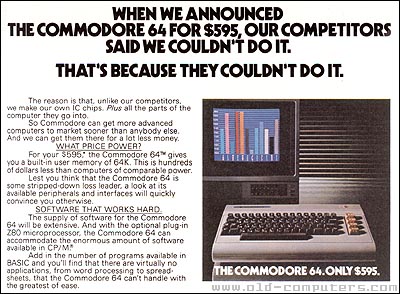
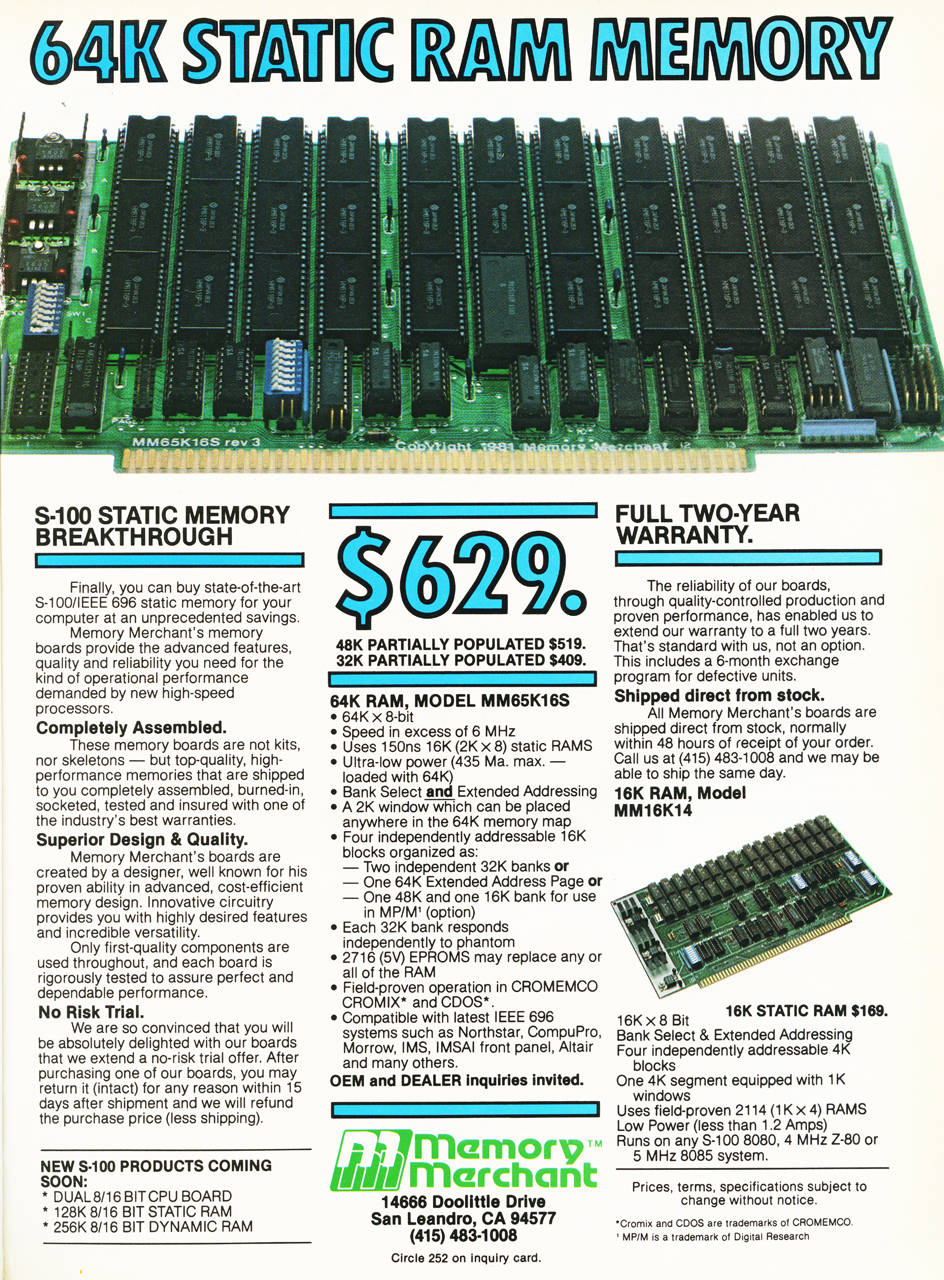
In the context of Science, 64K = 64,000There were many ads showing 64K and there was never any confusion over it. Hell, Microsoft never adapted the KiB notation either.
The retarded term KiB wasn't EVEN invented until 1998!
-
Re:A worldwide contest ... but only in English
Because of programming. If keywords, etc. are in english in programming languages, why not have english planet names? I.e. include, using, new, delete, if, else, etc. http://blogs.msdn.com/b/alfred...
-
Re:Manager
(disclaimer: I have interned at Microsoft for the past three summers; I do not speak for them)
I think your criticism against lock-in is fair, and this is clearly one of Microsoft's strategies, and I suspect that it will continue to be to some degree. But on the language front, you are wrong. Not only are Microsoft's newest languages open-source (F#, TypeScript), but they are also cross-platform and collaboratively developed with open source groups. And, of course, you can run all
While it is theoretically possible that all of this is a deadly Microsoft-bait-and-switch just waiting to happen, having worked at Microsoft, I can say that doing so would fly in the face of a lot of hard work by many, many people there. I was as critical about Microsoft as you were (dig into my
Microsoft is a big company (the Redmond campus is mind-bogglingly huge to me) and they have a lot of corporate momentum. Despite this, in my opinion, I've seen my daily interactions with people do a complete 180 in the last couple of years. Microsoft knows that the era of selling boxed copies of proprietary software is coming to an end. So you're simply wrong about Microsoft not being able to change. -
Other side of this airtight hatchway...
If you are able to arbitrarily modify system
Sounds an awful lot like today's Old New Thing post: http://blogs.msdn.com/b/oldnew...
-
Re: It's too slow.
Isn't that what
-
Re:mess around in unity3d
why web.... just download c# or even better try xna studio to start. They give you a basic start and go to http://xbox.create.msdn.com/en... for help on where to start
-
Re:Network transparency of X has always impressed
Yes, I am aware that RDP can send primitives. According to http://blogs.msdn.com/b/rds/ar... RDP under MS-WIndows is more-or-less implemented as a special graphics driver that simply relays the drawing primitive commands from a Windows application over the network to the RDP client.
X11 when being used with drawing primitives works in a similar manner - only the primitive commands are being sent.
However, the key feature that Wayland tries to hype itself on is client-side rendering - Wayland clients draw into a memory buffer (array of pixels) and then tell Wayland what parts of the buffer have changed, in order to force an update.
http://wayland.freedesktop.org...The problem is that you have to expend more CPU time on the client to determine how to send those pixels to the remote machine in the most efficient manner. You have no insider knowledge on what sort of primitive was drawn (the app programmer will typically use a function call in the graphics toolkit to draw something - but Wayland won't know if the app just drew a 60deg arc, or plotted lots of little pixels all around the place?).
This is clearly a scalability problem on application servers as you add more users. Wayland refuses to go anywhere near remoting, so you have no way of
This is a loss of progress - as I mentioned above, once app programmers have to go well out of their way to make remoting work, then many of them won't bother coding for it and you get stuck with useful (but not justified needing low-latency graphics) applications that can't be remoted in a corporate networked environment because the application programmer decided to use an amateur graphics toolkit that only uses Wayland.
Move on all you like, but one of two things will happen - either Wayland will be rejected by corporate environments, or it will eventually have to grow up and establish a decent common remoting protocol that takes no more CPU load than X11 - by which case you've essentially almost recreated X.
Lastly, relying on RDP is legally dangerous as it's patented by Microsoft and we don't know if/when Microsoft will assert the rights to their patents.
http://en.wikipedia.org/wiki/R... -
Re:Any idea what's the motivation to remove START?
Start up/shut down times are nominally much improved due to hardware states not having to be reinitialized from scratch every single boot. This also assists with a higher function, low power sleep mode.
http://www.pcmag.com/article2/...
http://blogs.msdn.com/b/b8/arc...Cleaned up timing core meaning that where Windows 7 is hard-locked to a timer cycle, Windows 8 is not and can scale down processor usage accordingly. It is also more efficient in memory usage, reducing the footprint in memory considerably. http://www.engadget.com/2011/0...
Hyper-visor core technologies using Hyper-V (supporting 32 and 64 bit guests) rather than that lackluster Virtual PC. (no link, this is just a 'duh' observation)
Problems with the ugly start menu can be resolved in part using the Windows 8.1 free upgrade, the Update 1 (adding more desktop-friendly features back into the UI) and use of the Windows-S search feature to quickly locate programs you frequently use. I don't often go to the start menu myself, I open the Search utility and find my app in as few keystrokes as possible. It isn't perfect, but it (combined with the core re-architecture mentioned before) makes Windows 8 very usable.
-
Re:Buzzzzz word compliant.
And [C] absolutely does not require me to understand how the processor works.
Well then you're not writing that has to run fast. Consider this talk. Yes, it's on C++, but the point is that, at least for code that's used a lot (like the page-display code at Facebook), shaving 1% off the running time saves the company an "engineer's salary for 10 years."
In order to achieve that level of performance, you really do need to understand what's going on at the CPU level.
-
Re:MY EYES!! Want skuemorphism back!
Then they change perfectly Gnome 2 with a half cell phone gnome 3/shell! Now office 365/office 2013 is all FREAKING WHITE IN ALL CAPS where I get a migraine looking at it. Then they change Hotmail.com to all blinding with blue.
You forgot to mention the ever so popular UI changes to Visual Studio 2012/13. An utter UI train-wreck from MS, far worse in implication than Metro, as it is serious productivity s/ware used by Windows developers. And they haven't even backed down from using all-CAPS in the menus.
-
Re:MY EYES!! Want skuemorphism back!
Then they change perfectly Gnome 2 with a half cell phone gnome 3/shell! Now office 365/office 2013 is all FREAKING WHITE IN ALL CAPS where I get a migraine looking at it. Then they change Hotmail.com to all blinding with blue.
You forgot to mention the ever so popular UI changes to Visual Studio 2012/13. An utter UI train-wreck from MS, far worse in implication than Metro, as it is serious productivity s/ware used by Windows developers. And they haven't even backed down from using all-CAPS in the menus.
-
Re:OneNote is very good
+1 for this. Though I'm sure nobody around here wants to hear about M$ products. "LALALALALAproprietaryLALALALALAwalledgardenLALALALALA".
I haven't tried Evernote, but only because I skimmed through the site, didn't like the formatting options, and since I've been using OneNote, I haven't felt the need. It did seem like Evernote had more options for grabbing stuff form disparate sources.
I also haven't tried OneNote 2013, because I don't like subscription software. (LALALALA) But OneNote 2010 has been pretty great. Particularly for my style of note-taking, which involves a lot of page layout, previously requiring going back and erasing when you realize you haven't left enough room, then rewriting all the notes in that section.
Some irritating issues, that mostly have workarounds:
1. You can't edit images (or not very well) once they're pasted in. Workaround: hotkey for screen cliping, hotkey to MS Paint. Ctrl-V edit Ctrl-C Ctrl-V into OneNote.
2. "Dock" mode actually takes over half of your desktop, and shoves all your icons out of the way. Workaround: icon saver program, hotkey.
3. There are some stupid hotkeys that
3. Probably some other stuff I'm not remembering.The killer feature: With this guy's add-on, you can auto-complete to build up fairly complex mathematical equations pretty quickly.
http://blogs.msdn.com/b/murray...It also auto-OCR's images in the background, so that you can search for text in images you've pasted in.
Exporting to pdf appears to preserve links, including "internal" ones between pages, as long as you export all the relevant pages together. Exporting to mht is not quite as successful.
Now my notes look like this:
http://imgur.com/h4wYP3kI believe there's a tablet version - but I wouldn't want to use it with a stylus. Particularly if I was trying to use handwriting recognition to enter math equations.
-
Re:Doesn't have to be free
It might be a bit more complicated than some think. See this: http://blogs.msdn.com/b/ericli...
-
Re:Is JITC finally going to die?
Global optimisation has been in VC++ for years.
Most people don't care that it works - you pass source and libs to the 'compile suite' and it does its magic in some black-box kind of way. As long as you get a binary at the end, you're happy,
See the msdn blog for more info
-
IE 9 has Chakra JIT
No, I meant that Windows XP will leave support in a couple weeks, and all still-supported versions of Windows will have been offered an upgrade to IE 9 or later, which has a JavaScript JIT.
-
Re: Perfect
Microsoft doesn't really have time to fudge millions of telemetry numbers. You may argue that telemetry data is biased or skewed towards larger organizations if you want, but the reality is Office is used because large influential organizations use it and Microsoft introduces the features that they want. Everyone doesn't "need" a different 10%, they learn to use or choose to use a different 10%, its an empirical fact. Most people don't learn Office feature sets formally, but rather in organically. Because the the product allows to accomplish similar things in a variety of ways, some way efficient and some not, people just stick with the path they know. This is especially clear in my case when I try to leverage pivot tables in Google Spreadsheet vs. Excel 2010/2013. Google Spreadsheet allows me to do most of the basic and some of the intermediate data processing I need to build models, but in order to do 100% of the job, I'd have to jump through many more hoops to get Google Spreadsheet to do what I need it to do. Anyone who uses Google Docs and says they haven't had to change their authoring workflow is not being 100% genious. In fact Google's whole strategy has been to tell people that the features its product lacks isn't really that important to begin with, and they're right for a subset of the general user population. This strategy also also allow Google to come closer to feature parity...thought it'll never really happen.
The point is that if your organization invests in Microsoft Office across the enterprise and chooses not to leverage more advanced productivity/collaboration features, you're pretty much paying for compatibility and throwing a lot of money down the drain. Such organizations may find it better to either fire their IT staff or CIO, OR switch to Google or OpenOffice. Organizations with lower quality information workers may find the switch away from Office just fine, but I would argue that the goal should be to provide tools that raise productivity capabilities of the workers. And while I don't discount your experience, I have dealt with massive customer bases that have made that switch only to come back to MS Office stack. Office365 has come such a long way that today its almost a no-brainer compared to Google Apps.
-
Re: SecureBOOT not secure
You're conflating a lot of things.
-Secure boot is a UEFI protocol not a Windows 8 feature
-UEFI secure boot is part of Windows 8 secured boot architecture
-Secure boot doesn’t “lock out” operating system loaders, but is a policy that allows firmware to validate authenticity of components
-OEMs have the ability to customize their firmware to meet the needs of their customers by customizing the level of certificate and policy management on their platform
-Microsoft does not mandate or control the settings on PC firmware that control or enable secured boot from any operating system other than Windows
Above is from http://blogs.msdn.com/b/b8/arc... with some modifications.
In the Intel reference UEFI implementation I have used, I could easily add and remove keys and customize it to implement the trust policy I wanted. This is up to your OEM to implement these features, nothing to do with Microsoft. For their certification program, Microsoft *requires* that SecureBoot is disableable and that the secureboot policy (list of trusted signatures) is customizable by a physically-present user. People whining that they can't install Linux on their systems because of Microsoft have no idea what they are talking about. -
FYI: FxCop
For example, Microsoft used to have something called FxCop, but it hasn't been updated for current versions of the
FxCop is still under active development and ships with Visual Studio 2010, 2012, and 2013. They merely changed the name to "Code Analysis"
http://blogs.msdn.com/b/visual... -
Re:Change
The 8 kernel is so improved it runs on mediocre Nokia phones with qualcom 1.5 ghz cpus
Are you mad? Can you find an OS kernel which can't run on a machine with those kinds of resources? Is this some sort of strange excuse for something? The old XP kernel ran fine on much less.
- Word finally doesn't botch formatting nearly as much and excel has hardly any bugs
Haha this one is funny. It's still crap but not as crap. Brilliant!
MS goes for the more open ooxml.
You mean the one where the pwn3d the ISO by stacking the relevant committee with members who were active only for the ooxml vote and nothing else ever again?
They got that wretched "standard" (which they still don't support properly) through by foul means, and it shows.
VS 2013 C++ is ahead of GNU with support.
Impressive! MS are now so good that they beat 100%!
You're beginning to sound like a shill. GCC had C++11 nailed first. CLang was next. VS is still far behind.
Let's go to the source:
http://blogs.msdn.com/b/vcblog...
You see all those "no" entries? That's where VS2013 does not implement a feature.
You see all those yes entries:
http://gcc.gnu.org/projects/cx...
That's where GCC does.
Ad for 14, VS2013 hsa not a single feature, GCC has over half of them. GCC also has a branch maybe supporting the C++17 concepts-lite.
-
A peek at Microsoft
If you want a closer look on what's happening at Microsoft, check the upcoming Build Conference and the stuff at MSDN Channel 9.
-
Yes.
Reactive Programming (RP) is just flow based programming (FBP) which has been used successfully for 40+ years. Modern RP adds some nice syntactic sugar that makes it more feasable. I have been using RX https://rx.codeplex.com/ some time ago and am pretty happy with it. It combines very well with f# and functional programming. Always try to isolate small autonomous components and test them seperately with http://blogs.msdn.com/b/rxteam... and http://visualrx.codeplex.com/ . Here is a free book about FBP http://www.jpaulmorrison.com/f... You get comparable easy message based concurrency but you have to take care to stay synchron as much as possible because it can get complex pretty easily.
-
Re:Good ol' corporate speak
People complained loudly to Microsoft regarding the all-caps of Visual Studio 2012/13 and Office 2013 during their pre-releases. What happened? They remained there, shouting back at the user in the finals.
Not strictly true. They added an option to turn off all-caps. It's a simple registry setting and the first hit on Google.
-
Re:In other words ...
1. I can't remember anyone saying 'Uh, Windows 3 sucks, DOS is so much better with all its arcane key combinations'.
That wasn't the question. The question is whether anyone asked for Windows (or Mac OS) when all they had encountered were command-line OSes. The assertion is that they did not. They just wanted better DOS. Personally, I was moving between nonexistence and being a baby at the time, so I can't honestly claim to remember what people thought, but it would surprise me if many people literally asked for Windows 3 behaviour at the time (even restricting yourself to the pros of Win3 and ignoring the cons).
Microsoft itself rolled up a selection of mid-80s quotes about how the Mouse was useless, in the context of how important Touch is becoming, which was contemporary to Windows 1:
“Mice are nice ideas, but of dubious value for business users” (George Vinall, PC Week, April 24, 1984)
“There is no evidence that people want to use these things.” (John C. Dvorak, San Francisco Examiner, February 19, 1984)
“I was having lots of fun, but in the back of my corporate mind, I couldn't help but think about productivity.” (George Vinall, PC Week, April 24, 1984)
“Does the mouse make the computer more accessible, more friendly, to certain target audiences such as executives? The answer is no.” (Computerworld, October 31, 1983)
“There is no possibility that this device will feel more comfortable to the executive than the keyboard. Because of its ‘rollability,’ the mouse has the aura of a gimmick” (Computerworld, October 31, 1983)
“The mouse and its friends are merely diversions in this process. What sounds revolutionary does not necessarily help anyone with anything, and therein lies the true test of commercial longevity.” (David A. Kay, Datamation, October 1983)
(found the citations at this citationI remember as a kid in the 90s some people still made these arguments (you can even find some on slashdot where keyboard-only is the most productive!), who were very used to the keyboard-only model. Read further and you find that some couldn't shake the idea that nobody was telling them to use ONLY a mouse in all applications for all devices, which is what you hear now with touch where people instantly go on about gorilla arm as if they think the vision is people sitting on a traditionally-setup desktop surface and manipulating spreadsheets with their outstretched arms, meanwhile dipping their fingers in a vat of grease so the screen gets illegible.
All that said, yes, Windows 8 was stupid, and by far the dominant reason is they got rid of the start menu in favour of a modal UI (which also showed up at boot). I really think that's it. Everything else was either a benefit, or ignorable, or so minor as to not be worth a quibble. There isn't a huge performance or driver stability problem like Vista had. There isn't a big OS stability issue like Windows Me had. It's not even a problem that the "Modern UI" exists -- it's actually pretty good on actual tablets, despite having some differences in the fundamental model than iOS and Android's copycat-iOS.
I don't understand why they haven't fixed that yet. People clamoured for the start button, and then adding a button that takes you to that fullscreen modal experience felt like a huge "fuck you" because that wasn't what anybody meant by the start button. By and large, there's two kinds of people: one wants the old-fashioned cascading menus from XP, another wants the modeless search from Win7 (ideally I'd really like both, but I'd take modeless search). Instead we got modal search that covers the screen.
I'm pretty sure that's basically the entire problem.
Well, that and some of the new apps were shit. The mail app was shit and the store
-
Re:Please
And if you need the sha512 on a Windows machine, here's a powershell script to get it get-hashes.ps1: Get the hashes (sha256, md5, whatever) for a file
-
C++11
I think given the momentum C++ has right now (for better or worse, I can't say yet) you should try to learn C++11 and all the new tricks that come with it. It's a pretty different experience from C and C++98 in my opinion. Watch this for a nice roadmap and insights : http://channel9.msdn.com/Event...
-
Re: Use IIS Express, SQL Server LocalDB, Visual St
In the default installation the services are configured to run
Let's learn about about some of the products I was referring to...
-
Re:A Microsoft Killswitch
Microsoft Malicious Software Removal Toolkit has always been able to uninstall software. They distribute a version once a month or so through Windows Update.
http://en.wikipedia.org/wiki/Windows_Malicious_Software_Removal_Tool
They could theoretically use it to remove or update old, unsecure versions of Java, Flash and Acrobat but as far as I know they've never done this, presumably because they fear anti trust action from Adobe and Oracle.
E.g.
Robert Hensing linked to a post by Thomas Ptacek over on the Matasano Chargen blog. Thomas (who is both a good hacker AND a good writer) has a writeup of a "game-over" vulnerability that was just published by Mark Dowd over at IBM's ISS X-Force that affects Flash. For those that don't speak hacker-speak, in this case, a "game-over" vulnerability is one that can be easily weaponized (his techniques appear to be reliable and can be combined to run an arbitrary payload). As an added bonus, because it's a vulnerability in Flash, it allows the attacker to write a cross-browser, cross-platform exploit - this puppy works just fine in both IE and Firefox (and potentially in Safari and Opera).
This vulnerability doesn't affect Windows directly, but it DOES show how a determined attacker can take what was previously thought to be an unexploitable failure (a null pointer dereference) and turn it into something that can be used to 0wn the machine.
Every one of the "except not quite" issues that Thomas writes about in the article represented a stumbling block that the attacker (who had no access to the source to Flash) had to overcome - there are about 4 of them, but the attacker managed to overcome all of them.
As far as I know Microsoft have never removed or updated Flash or Java even if it is insecure.
Since the people who write Tor are unlikely to sue them, I guess they decided it was OK.
-
Re:Wikipedia of Maps?
Sure it may not happen in downtown Topeka, but imagine to geo-edit wars that will happen in the Middle East or other disputed territory.
Apple and Google have this problem - over Taiwan. China considers it a territory, while Taiwan naturally considers themselves an independent nation.
Heck, remember Windows 95 had a time-zone setting that used a map? Handy, right? But border disputes between Peru and Ecuador and India put an end of that..(And no, Microsoft used official UN-recognized maps for their borders).
And yeah, the middle east. Consider Palestine and Israel. That's going to be a real edit war.
Mapping, like dates and time, are hard. Heck, about the only good thing is you can fork OpenStreetMap to suit your political view of the world, I guess.
-
Older Systems/XP will be problematic
With the abundance of older operating systems out there, I think browser code and general websites will still be hampered for quite sometime. For Yahoo and others that means the lowest common denominator needs to be supported for quite sometime. If you're rolling out your own website and can control those variables then certainly you can enforce TLS 1.2 with ciphers that are much stronger than RC4. If you can't control the client side in terms of minimum support that unfortunately means TLS 1.0 and RC4 if you want your website accessible by those old systems like XP, Vista etc. I don't think that the rest of us who have upgraded to Windows 7/8 or Linux shouldn't be left insecure however just because lowest common denominators have to be supported. Another point to remember is that TLS 1.2 has just rolled out within the last year or so in both Chrome and Firefox and Microsoft on the client side hasn't supported it until Windows 7 and IE 9; that means that site providers who want to reach the broadest spectrum of clients will have to shift support to the older, less secure protocols or lock people out of their website. I don't see Yahoo or Google doing that anytime soon. In fact, I just checked my connection with Yahoo and with Chrome 32.0.1700 it shows AES_256_CBC, on Firefox 26 it's using Camella 256... but both are using TLS 1.0. On Google with Chrome, AES_256_CBC with TLS 1.2 (woohoo!) but on Firefox 26 it's AES_128_CBC bit keys with TLS 1.1 even though I have AES_256 enabled... So that's something the Firefox folks will need to look into. FYI, in Firefox using about:config you can disable RC4 which is also how I configure the protocols and also set security.tls.version.max=3 to enable TLS 1.2 support for Firefox 25 and newer.
If you want to check what a website supports you can use the openssl client connect command with the appropriate switch. For example:
openssl s_client -connect mail.yahoo.com:443 -tls1_2 will attempt to connect to the yahoo mail service using only TLSv1.2 you can use -tls1_1 for obviously tlsv1.1, -tls1 for 1.0 etc. mail.yahoo.com doesn't support TLSv1.1 or TLSv1.2 but does support 1.0..
-
Re:Skydrive is changing name? When?
"Metro style UI" was originally how it was referred to.
http://blogs.msdn.com/b/b8/archive/2012/05/18/creating-the-windows-8-user-experience.aspx
http://blogs.msdn.com/b/b8/archive/2011/08/31/designing-for-metro-style-and-the-desktop.aspx -
Re:Skydrive is changing name? When?
"Metro style UI" was originally how it was referred to.
http://blogs.msdn.com/b/b8/archive/2012/05/18/creating-the-windows-8-user-experience.aspx
http://blogs.msdn.com/b/b8/archive/2011/08/31/designing-for-metro-style-and-the-desktop.aspx -
Re:Watch the video
Skip to 1:15:00 and watch Herb Sutter explain why they're doing this stuff. http://channel9.msdn.com/Events/GoingNative/GoingNative-2012/C-11-VC-11-and-Beyond
I hate reading the comments on Slashdot.
Mod parent up. Take the 15 minutes needed to understand why this is part of a very interesting and important new development for C++, which can also be seen in the work already slated to go into C++14, namely to improve the C++ standard library to a level where it can compete with newer languages.
Notably, the goal is not to reinvent the wheel (which is why they're standardizing existing libraries), and portability is a must... which is why you should not expect e.g. a standard GUI library (oh, and people... graphics library != GUI library).
-
Re:But... why?
So, my question really is why they are doing this? I'm betting the answer is not one where they have actual usecases in mind.
There was a keynote done by Herb Sutter this past September and at roughly the 57 minute mark of his presentation Keynote: Herb Sutter - One C++ he shows a 15 LOC example of numbers being input and then output sorted. He then said, "We need to get past the VT100 era." He continued saying that the standard C++ program cannot even exercise the abilities of the VT100 which has underscore and bold, etc. Pure, portable C++ code cannot even drive a 1970s era VT100.
If you continue watching you'll see the point Herb is trying to make and that point may help explain why they are looking to do this.
-
Re:It's Long-term support...
along with the typical comments about Windows 7 having the feature since introduction
Well, let me be that guy...
Windows implements TRIM command for more than just file delete operations. The TRIM operation is fully integrated with partition- and volume-level commands like format and delete, with file system commands relating to truncate and compression, and with the Volume Snapshot feature.[1]
-
Re:BTRFS filesystem
Without parity checking, you simply aren't addressing bit rot. Period. It could be Raid 9 Million(tm) and if all it's doing is copying the data, and not comparing it, bit rot will still proceed apace, silently eating your data. But let's say you're a good administrator that has enabled parity. Great! But there's still a problem: parity cannot restore data that has become corrupted due to bit rot -- it is a detection-only mechanism. So if you have two drives in a RAID-1 with parity configuration, as you also suggest... it will detect the file corruption, but as it cannot correct it, it will then promptly seize up and fall over dead. This is because for every N clusters written, a parity cluster is also written; This allows the array to detect if that data chunk was correctly committed; But if the data on any of the clusters within the chunk are altered later, the RAID array will only know that this chunk of data (known as a stripe in RAID), is invalid. It cannot correct it.
One quick note: a mirrored space running ReFS will do automatic checksumming and scrubbing. This isn't done for parity spaces, though I'm not sure why this is.
-
Re:many early programmers were female
More on this, I was taught that a lot of the principles behind MPI and other distributed memory parallel programming come from how calculation work was distributed among the women "computers" working at Los Alamos during the time of the Manhattan project.
-
Re:Speed is always nice but...
They have just released a "tech preview" of the compiler that (per the Microsoft provided info) supports constexpr and inheriting constructors with a clear roadmap to supporting the rest of C++11/C++14 (including user defined literals and attributes)
http://blogs.msdn.com/b/vcblog/archive/2013/11/18/announcing-the-visual-c-compiler-november-2013-ctp.aspx is the announcement from the Visual C++ guys about it.
-
Compiler++
Also Microsoft's Jim Radigan held a cool presentation in GoingNative 2013 where he reveals some optimization tricks done by the MSVC++ compiler. It also shows some screenshots where Windows is being compiled on a monster multi-core machine.
-
Re:Visual Studio Online
Actually, they didn't. They have a way for Visual Studio to control what you do in Azure, as the article says:
"developer services that run on Windows Azure, and extends the capabilities of Visual Studio"
Actually, they did. Although "full-fledged" is probably a stretch when one thinks about Visual Studio. And it was only released as a preview.
This is a screenshot of the in-browser editor, complete with IntelliSense, Solution Explorer etc.
Videos of the beast at Channel9.
-
Re:Visual Studio Online
Actually, they didn't. They have a way for Visual Studio to control what you do in Azure, as the article says:
"developer services that run on Windows Azure, and extends the capabilities of Visual Studio"
Actually, they did. Although "full-fledged" is probably a stretch when one thinks about Visual Studio. And it was only released as a preview.
This is a screenshot of the in-browser editor, complete with IntelliSense, Solution Explorer etc.
Videos of the beast at Channel9.
-
Re:Node.js?! How 'bout C89 support?
Designated initializers?
They're there in VS 2013 already.
Compound literals?
Also in VS 2013.
_Bool / stdbool.h as well, and most C99 standard headers except for tgmath.h are there as well.
-
How to revert the uppercase menus
Ok, here's a cool little tip that many will enjoy. A couple of days ago I discovered that there is actually a registry setting to turn off the silly uppercase menus. Enjoy.
While we are at it, can we also have a SuppressDamnSlowStartupAndSluggishUserInterface flag? The other day a teacher of mine intended to open a C file which was part of MicroC/OS-II, into Notepad++. However VS owned the filetype association and the guy was like "aarrrgghhh...how can I make this stop??" when VS fired up and was running that "Loading components..." bar forever and it couldn't be terminated.
-
Re:Node.js?! How 'bout C89 support?