Slashdot Mirror
Domain: nasa.gov
Stories and comments across the archive that link to nasa.gov.
Comments · 16,365
-
Aerogel Facts and a PictureSome facts, from JPL Aerogel site:
- It is 99.8% Air
- Provides 39 times more insulating than the best fiberglass insulation
- Is 1,000 times less dense than glass
- Was used on the Mars Pathfinder rover
--
For news, status, updates, scientific info, images, video, and more, check out:
(AXCH) 2004 Mars Exploration Rovers - News, Status, Technical Info, History. -
Re:The politics of it all....I can't believe that NASA is even considering abandoning the Hubble.
Follow the money...
Let me get this straight. They are going to abandon a working spacecraft, that continues to revolutionize deep space imaging, on the whim of a politician spewing typical election year rhetoric?
It's not about what NASA wants, it's about NASA trying to save their ass dealing with a Commander in Chief who's decided to slit their throat as a sacrifice to Defence contractors. This isn't something the scientists at NASA decided on, it's a political game. And currently, despite the pretty pictures from Spirit, NASA is losing. The possibility that a declining pop star might be a pervert gets better ratings, and is therefore obviously more important... -
Re:stfuz omg lolz
>Must not mention Venus. Must not mention Venus.
Hmmm... Venus
From the big list
US
USSR -
Re:Yay! L2 point!
Thanks for the 411. I had no idea the L2 point was so far away or that the orbit around L2 was so large. ( 1.5million KM!)
Here's another page which has a great diagram of the launch and orbit:
Proposed Orbit for JWST -
Re:Story already posted!
It took me a few moments to figure it out.. i was looking at the image with my Red/Blue glasses, then I scrolled down and saw the texture-mapped sideview. I have seen a documentary about the imager and the scientists were looking at a screen with 3D glasses (polarized), so when the headline said "3D", I was a bit biassed and excited. This quickly turned into disapiontment.
This image is what I call "3D". -
Archiving Hubble's DataThis is a little older (2002) but interesting non the less. It is pulled from Hubble's website
Every day, Hubble archives 3 to 5 gigabytes of data and delivers between 10 and 15 gigabytes to astronomers all over the world. See science highlights. As of March 2000, Hubble has:
- Taken more than 330,000 separate observations. Observed more than 25,000 astronomical targets. Created a data archive of over 7.3 terabytes. (That is like completely filling a PC every day for 10 years.
- Provided data for more than 2,663 scientific papers.
- Traveled about 1.489 billion miles--nearly the distance from Earth to Uranus. It circles the Earth about every 97 minutes.
- Received more than 93 hours of on-orbit improvements in three successful servicing missions.
-
Re:Spirit not that impressive...?
RoSE is part of a suite called RSVP, the rest of which does 3-D visualization, simulation, and playback. Our 3-D stuff is very, very cool (I feel OK about saying this because I didn't write that part
I should clarify that RSVP as a whole is used to write the rover command sequences now that we're in surface ops, not just RoSE. RSVP provides a visual editing environment for command sequences, so that you can (for instance) mark a spot in the virtual 3-D world and tell the rover to go there. This adds a command to the sequence just as if it had been added in RoSE.
-
Re:Wrong
There sure is, at least for deep field viewing. The LBTI .
-
Re:SpeedFrom Athena Science RAT Technical Briefing:
The RAT is a diamond-tipped grinding tool capable of removing a cylindrical area 4.5 cm in diameter and at least 0.5 cm deep from the outer surface of a rock. This operation takes about 2 hours for a dense basalt.
From NASA/JPL info on Rover and wheels:The rover has a top speed on flat hard ground of 5 centimeters (2 inches) per second. However, in order to ensure a safe drive, the rover is equipped with hazard avoidance software that causes the rover to stop and reassess its location every few seconds. So, over time, the vehicle achieves an average speed of 1 centimeter per second.
So moving one meter takes very roughly ~100 seconds (about a minute and a half). Grinding takes roughly two hours. But grinding is just grinding, and you still would want to do some science after that. Also consider that moving will generally be interrupted by other delays such as taking photos. Check the link in the sig below for all kinds of info and links on this type of stuff.
--
For news, status, updates, scientific info, images, video, and more, check out:
(AXCH) 2004 Mars Exploration Rovers - News, Status, Technical Info, History. -
Re:stfuz omg lolz
>stupid mars probe. Also, hooray for communism!
Lets see,
links for the history of missions to the red planet
US Mars Missions
16 Launches containing 21 different probes (4 fly by, 8 orbiter, 4 landers, 3 rovers, 2 penetrators) of which only 7 where lost (1 fly by, 3 orbiters, 1 lander, and both penetrators).
Communist missions
19 Launches containing 25 different probes (6 flyby, 12 orbiter, 7 landers, 0 rovers, 0 penetrators) of which all where lost or failed.
Hurray for ?
And for those keeping score the European orbiter and lander went up on a russia rocket (1 orbiter, one lost lander).
-
Re:Yay! L2 point!
The L2 point is beyond the Earth's umbra and lies in the region of Earth's penumbra called the annular umbra. Further the planed orbit for the JWST will not exactly be at L2 but rather in a more stable configuration around L2.
Earth-Sun L2 and shadows -
Russia's impressive record
-
Re:Spirit not that impressive...?"it weighed just under 2,000 pounds and was designed to operate for 90 days while guided in real-time by a five person team at the Deep Space Center near Moscow"
That's a whole lot different than the semi-autonomous driving of the MER's. You may think it's dull, others see the value in going easy, step by step, evaluating each step before a bigger step is taken. Well, maybe it is dull, but IMHO it's the right thing to do with a $800 million asset...
-
Re:ESA is not very clever.
If you fly lower, you'll make more orbits per day, making the images zip past the camera even faster. With a pushbroom-type sensor such as this appears to be, this can actually lead to worse resolution in the direction of travel. But, being closer would make the perpindicular direction a little better -- it's all about compromises.
-
Re:Mars environment
temp is between 5-15 degree's celsius. here's a fact sheet, i tried to post it here but it said there as too many "JUNK" characters... fact sheet here
-
Spirit not that impressive...?
Check out Lunokhod, two Russian moon rovers from the early 1970s that drove around for months.
Not to bring down the Spirit guys or their great work, but their talk of pioneering 30cm moves sound a bit dull compared with Lunokhod, or the Pathfinder. Also look at the Russian Venera probes that managed to return images from the surface of Venus, at temperatures hot enough to melt lead and pressures of 90 bar.
-
Spirit not that impressive...?
Check out Lunokhod, two Russian moon rovers from the early 1970s that drove around for months.
Not to bring down the Spirit guys or their great work, but their talk of pioneering 30cm moves sound a bit dull compared with Lunokhod, or the Pathfinder. Also look at the Russian Venera probes that managed to return images from the surface of Venus, at temperatures hot enough to melt lead and pressures of 90 bar.
-
Tow it to ISS!
The HST is a big piece of equipment -- we all know that it is expensive to put *anything* in orbit, why let it burn up into the atmosphere/crash into ocean?
Tow the HST to the ISS. Once there, maybe some equipment/raw material can be salvaged (at least) -- if the HST cannot continue to be used and maintained by the ISS crew (MUCH preferd). If we are 'serious' about using the ISS for a while, why not give them something worthwhile to do? hell, is there a reason why you wouldnt (all things being equal) line up all the rest of the hubble-like space ships near the ISS? If nothing else, this will establish a "destination" in space that acts as a central hub for work in space....
Hell, arent the panels on the HST worthwhile? If they can tow it over to the IIS, maybe something on the HST might find itself usefull, either now or in the future. Spare parts? Sheet metal? Something.
I know someone will say "the panels are old/different voltage/designed for another purpose" or "its cheaper just to launch whatever you need than tow the HST" but my response is simple, if we are going to try and make this a permanent behabviour of man (off-world habitat) then we have to learn to be more nimble, adaptable and less dependant on MASSIVE planning efforts for every screw, bolt and hammer that gets into space.
We have to learn to utilize resources *AROUND THEM* and Make It Work. Hell, the ISS could be the 'hotel' for HST repairmen at least.... -
Re:i know
Well considering that ESA's budget is about $5 billion (vs NASA's $17 billion), that the ESA has yet to land a spacecraft on any planetary body, that ESA has yet to build a rover, that there are intense political struggles within the organization, and that there are likely to be more budget cuts, its not suprising that ESA is slow as hell to do *anything*. NASA got where it is today (where most people think NASA might be the only competent government agency in the US) by being extraordinarily sucessful in its early programs. Contrast this with the Russians and look where they're at. ESA hasn't had much sucess lately (due to the Arianne and Beagle 2 fiascos), and really needs to rebuild public confidence in them. Smart people want to work for NASA because they feel they can make a difference. At the ESA they won't feel that way because there is so far little pride in the agency and too much political infighting.
-
Re:In perspective...
I was checking this. Wonder why the colour images are not on that page.
-
Re:*sigh*
NASA has a broad spectrum of image data from Mars.
They could use this data to present a picture of
Mars as it actually appears, or they could use the
data to present a picture of Mars which does not
represent the actual appearance. By making the
latter choice, they misinform the public.
Hmm...? But they still do it very often and explicitly tell when they do. Just look at this recently released image for example:
The rover's first exploration rock
That one is supposed to be "true color" for example. I could pick a dozen more for you. The huge 360 degree panorama was also downloadable as a true color image from JPL's servers.
I must say I still don't get what the problem is. They release true color images occasionally, and other times they release "false color" images. Both are necessary for their own purposes, and they pretty much always mention it in the picture texts. What more *are* you expecting? -
Re:In perspective...
BTW, anyone know why there hasn't been any new Spirt images in the last 3 or 4 days?
You mean, besides this, this, or this?
I have no idea, but have you checked the website?
-
Re:In perspective...
BTW, anyone know why there hasn't been any new Spirt images in the last 3 or 4 days?
You mean, besides this, this, or this?
I have no idea, but have you checked the website?
-
Re:In perspective...
BTW, anyone know why there hasn't been any new Spirt images in the last 3 or 4 days?
You mean, besides this, this, or this?
I have no idea, but have you checked the website?
-
Re:In perspective...
BTW, anyone know why there hasn't been any new Spirt images in the last 3 or 4 days?
You mean, besides this, this, or this?
I have no idea, but have you checked the website?
-
Screw Congress!
Recent polls say as many as 61% of Americans are against the idea of spending money on a mission to Mars (or the moon, or anywhere interesting, really). Fine. Who needs 'em?
I fired off an email to NASA to see if there was a way I could bypass Congress and give them money directly (they take my money anyway, so why shouldn't I be allowed to add to it?). No response as of yet (sent it on the 15th), and I figure odds are any response I'll get will boil down to "What, are you crazy?" but the pessimist in me says this might be the only chance I'll get of seeing someone on Mars before I die and the malcontent in me would enjoy giving my elected "representatives" the finger. -
GWB != JFK
Give me a break. The president's speech was ripped from the history books and was borrowed from JFK's famous "moon speech". GWB's Mars speech was nothing more than spin and diversion to take our attention off the war in Iraq, crappy economy, gay marriage, and war profiteering being done Haliburton, the company where Cheney was the ex-CEO.
If the Mars mission would have failed, there never would have been speech. However, check out the shocking pictures from the rover. Looks like the corporations have already taken over Mars too. -
What about the aliasing on the horizons?
I think NASA have edited out the sky to a pale pink colour. Take a look at the 12MB full panorama, and see how the horizon suffers from the jaggies.
Don't feed me any rubbish about JPEG compression, because JPEG doesn't do that. The raw image from the camera should be naturally anti-aliased: where a boundary crosses a CCD pixel, that pixel will receive a weighted average of the light from either side of the boundary.
The sky is unexpectedly uniform over the entire panorama - where's the sun?
-
Once again, this link could be useful
Mars Climate FAQ:
- Why isn't the Martian sky blue like the Earth's?
That page includes images using colors-close-to-what-a-human-eye-would-see-them-as as well. -
Once again, this link could be useful
Mars Climate FAQ:
- Why isn't the Martian sky blue like the Earth's?
That page includes images using colors-close-to-what-a-human-eye-would-see-them-as as well. -
Re:Coloring.
Every single image taken by the rover (raw and not even combined into color images) is available for download from the mars rover website. Check here.
-
*sigh*
Wow, do we really need another thread about article about the infamous Mars colonization. We already discussed this in the last one. It's all about filters used. When blue-according-to-the-human-eye turns extremely red, well, that's obviously when they aren't using a filter to reflect colors as seen by the human eye best, but to enhance other wavelengths. I don't really see what the problem is, and why this of all technical stuff has to be so mysterious.
The link in the article is of course slashdotted now, so here's another one explaining how a camera on the rover works:
The Panoramic Camera (Pancam)
Pay particular attention to the last paragraph there. -
Bitmapped horizonCan anyone explain to me why the horizon of the hi-res images is bitmapped ? (beware, pic in link is 12MB in size)
Aside of the odd colors, I found this one of the most interesting anomalies in the pictures so far.
-
Re:Also pictures of dresden genocide?
Perhaps you forgot whatever happened to the person that invented these flying bombs. Was he ever convicted for warcrimes? No, it was far worse.
-
This isn't true!
When the Columbia went down, I made it my goal to find out what went wrong. Ultimately I decided that the Space Shuttle was a dated piece of equipment that needed to be replaced. Endeavor should have never been built, instead a new 2nd-gen shuttle should have. (The program existed, but was later canceled) The lack of funding by the Clinton administration is what led to its ultimate demise. The Venturestar Program was the 3rd generation space shuttle (called the Space Launch Initiative), and the X-33 was the prototype. Actually, it wasn't even that, it was a "technology validator". So it makes sense to test the components that had been built already (like the linear aerospike engine, which is revolutionary due to its efficiency and the composite fuel tanks would be a boon to any launching system, shuttle or otherwise) The program was cancelled because too many things had gone wrong and NASA under Clinton appointee Daniel Goldin had shifted focus to small, unmanned probes (faster, better, cheaper) so they were unwilling to tough it out. You can find out all about the X-33 at ALLSTAR or NASA itself.
-
Re:Not NSA but NASA?I've always figured that engineers should have something similar to the ASRS. I'm absolutely certain that hundreds of near-fatal design "oops"'s have been discovered at the last minute, and yet nobody else in a position to make those same mistakes is aware of it.
As someone who hopes one day to get a private pilots licence, by reading the ASRS I've found out about loads of common mistakes, many of the "holy crap that was close!" variety. The same thing would be harder to implement for the computing industry, but if done right could prevent Therac-25 or London Ambulance Service CADS style disasters.
-
You're An Idiot
If you're a professional astronomer, then I weep for the field. Here is the definition of 'fundamental'. Here is the definition of flaw. Here is a NASA newsletter talking about the corrective optics and using software to correct the flawed mirror.
So, to carry forth your moronic and logically flawed analogy, if you bought a car, and the engine didn't run very well because it was defective from the manufacturer, and you took it to a mechanic who wrapped the carbeurator with duck tape, and it ran better, then does it cease to be flawed? More to the point, would you keep that car, or would you insist the dealer replace it?
Hubble is flawed. it is antiquated. It is no longer worth the investment which could be better spent on a newer space telescope or network of telescopes.
Not only are you a troll, you're an arrogant and concieted troll. -
Re:Not NSA but NASA?NASA is the National Aeronautics and Space Administration. Before space became cool, they used to be called NACA -- the National Advisory Committee for Aeronautics. (Only newbies pronounced it "nacka" -- cool people said N A C A. The name was changed in 1958.) Just about all aviation research for US WW2 airplanes came from NACA, for instance. NASA still has the responsibility for aviation research.
One of the cool programs that NASA Ames (at Moffett Field in Mountain View, Silicon Valley) has is the Aviation Safety Reporting Program for crew. If there's a safety issue on any flight, crew members are encouraged to send in an ASRS report. If you screw up in some way and cause an unsafe condition, and file an ASRS report, you get immunity from any FAA enforcement action related to the incident. Anonymised versions of these incidents are available in the ASRS newsletter "Callback." This program has done many orders of magnitude more for safety than any TSA Code Yella (or whatever the hell it is today) ever did.
Of course this present hysteria-driven incident is repugnant. There is no way to be utterly safe, and infringing on citizens' privacy for some dubious profiling benefit is complete crap. I don't see how it's even constitutional to require gummint-issued photo ID from passengers. In a free society one is not expected to have "papers" to move about in one's own country. It doesn't even increase security: any high-school kid will be able to tell you how to get a fake drivers' license.
-
Re:Not NSA but NASA?NASA is the National Aeronautics and Space Administration. Before space became cool, they used to be called NACA -- the National Advisory Committee for Aeronautics. (Only newbies pronounced it "nacka" -- cool people said N A C A. The name was changed in 1958.) Just about all aviation research for US WW2 airplanes came from NACA, for instance. NASA still has the responsibility for aviation research.
One of the cool programs that NASA Ames (at Moffett Field in Mountain View, Silicon Valley) has is the Aviation Safety Reporting Program for crew. If there's a safety issue on any flight, crew members are encouraged to send in an ASRS report. If you screw up in some way and cause an unsafe condition, and file an ASRS report, you get immunity from any FAA enforcement action related to the incident. Anonymised versions of these incidents are available in the ASRS newsletter "Callback." This program has done many orders of magnitude more for safety than any TSA Code Yella (or whatever the hell it is today) ever did.
Of course this present hysteria-driven incident is repugnant. There is no way to be utterly safe, and infringing on citizens' privacy for some dubious profiling benefit is complete crap. I don't see how it's even constitutional to require gummint-issued photo ID from passengers. In a free society one is not expected to have "papers" to move about in one's own country. It doesn't even increase security: any high-school kid will be able to tell you how to get a fake drivers' license.
-
Re:It's the National AERONAUTICS and Space Admin.
-
Not NSA but NASA?
-
Re:SM4 was SO close...
I am not aware of this treaty regarding space debris above a specific size. I'm sure that MIR was larger than Hubble.
I am quite sure that Hubble's fate is not going to be intact and in a museum--the risk involved of retrieving the observatory (both political and physical) is just too great. So I doubt that there will be any mission to retrieve the aging telescope.
While it is unfortunate that all of that money has been wasted, there will (eventually) be another space telescope. But I doubt that Hubble will last anywhere close to 2011 (when it's replacement goes into orbit) without a servicing mission. (which sucks) -
Re: fund future NASA projects
$5 million is not much money as far as NASA is concerned. Even office buildings cost more than $5 million.
Consider this:
Expenditures on National Defense in 2003:
$393.8 billionExpenditures byNASAin 2003:
$15.00 billionThe current NASA budget is 3.809% of the current defense budget.
If the National Defence budget was cut by just 10%, and that money given to NASA, the NASA budget would be increased by more than 260%.
And $5 million is just
-
Re:Corrected Figures (700 M$ instead of 41 M$)
For comparison:
WMAP cost NASA about $145 million (including the Delta-II launch vehicle).
The SNAP telescope as proposed is estimated by observers to cost about $350 million (including a Delta-III launch vehicle).
JWST is supposed to cost less than $500 million, in 1996 dollars (including launch vehicle).
The two MER missions together cost a total of about $820 million (including launch vehicles.. each was a Delta-II).
So I am not convinced that a Hubble servicing mission costing $700 million is worth it. The scientific payoff from WMAP was huge. Unless the HST's capabilities would be increased greatly during the next servicing mission, it would be better to use the money for a whole new instrument, if possible. -
Henry Spencer(!) on Hubble vs. Ground-based Optics
Henry Spencer (yes, that Henry Spencer, famed Usenet figure, recognized space historian and enthusiast, founding member of the Canadian Space Society, Fellow of the British Interplanetary Society, etc.) posted the following commentary to sci.space.policy in July. I hope he will not mind my quoting his informative notes.
> Aren't modern ground-based telescopes with adaptive optics superior to Hubble,
> especially when they are linked up?[Text by Henry Spencer follows]
No. In principle, they [ground-based telescopes] can do *some things* better... although those are mostly still "Real Soon Now!" promises rather than demonstrated facts.
However, in other areas Hubble retains an inherent advantage that is not going to go away.
Hubble can take much longer exposures, given targets in the right parts of the sky, because its sky isn't full of scattered sunlight half the time.
And it works farther into the infrared, and much farther into the ultraviolet, than any ground-based scope can.
And it has a much darker sky background, which matters when working on very faint objects.
And it can point closer to the Sun, although its cautious operating policies limit that.
And it can observe rapid time variations without a lot of superimposed atmospheric noise.
And -- minor but not entirely insignificant -- it has a clear view of the entire sky, something that is quite difficult to achieve from any single point on Earth.
And, finally, although its high resolution has been exceeded by adaptive optics and interferometry on the ground, its high resolution comes with many fewer ifs, ands, and buts.
Adaptive optics requires either nearby bright guide stars, or still-experimental laser guide stars. Imaging interferometry can observe only bright sources, because you need a fair number of photons per millisecond to detect interference fringes.
[End of text by Henry Spencer]I'm no authority on this (Spencer is), but I've heard some similar points second-hand from a Hubble scientist @ JHU.
One more thing: The parent comment talks about Hubble 'in its day'. If you think its heyday has ended, I suggest that you read some of the HST Daily Reports. (In the January 5th report for example, you'll find that Hubble continues to study objects which "do not have bright enough stars nearby that can be used for natural guide adaptive optics in ground-based telescopes", which was one of the points Mr. Spencer mentioned above.)
As shown in the daily reports, Hubble is constantly active, doing valuable and interesting experiments that go far beyond what you read in the mainstream news. The HST schedule will remain packed right through the day of its untimely demise (even without the invaluable new instruments which won't be installed). Imagine the painful 'prioritizing' that must be commencing as we speak; many possible experiments will be tossed, to make room for those chosen as the most important.
-- omr
-
Re:ISS above everything?Basically what I was saying is this:
Cost of ISS to cost of Hubble: say 5-10x; 1 order of magnitude
Scientific return from Hubble to ISS: at least 10x (elaboration below)-that is at least another order
So " bang for bucks, Hubble must be at least two orders of magnitude above the ISS in returning scientific data".Hard as it is to quantify, Hubble has been:
(Taken from NASA)Every day, Hubble archives 3 to 5 gigabytes of data and delivers between 10 and 15 gigabytes to astronomers all over the world. See science highlights. As of March 2000, Hubble has:
And that was from its launch back in 1990; while ISS missions was mostly construction - with occasional scientific works maybe a few weeks every year with a shuttle visiting.
Taken more than 330,000 separate observations.
Observed more than 25,000 astronomical targets.
Created a data archive of over 7.3 terabytes. (That is like completely filling a PC every day for 10 years.)
Provided data for more than 2,663 scientific papers.
The cost of Hubble? Initial construction has been less than the cost of 1 B2 (approx 2.2 billion according to CNN) and in its lifetime, around 6 billion, by the time it is projected (earlier) to be retired in 2010
I admire your back of envelope calculations, it is indeed very accurate for the Hubble, but quite short on the ISS (which is a very complex project). I don't have to, and didn't exaggerated on anything - these things you read about for interest and the approx figures stay in your head and if there need be, someone would have written it on some authoritative organisation that you can refer to.
The thing is, ISS was intially planned to cost around 9billion in Reagan's era. How it balloned to that is perhaps something someone would write a book about one day.
And now I have wasted another 20min on this, precious Sat time at that!
-
Shame
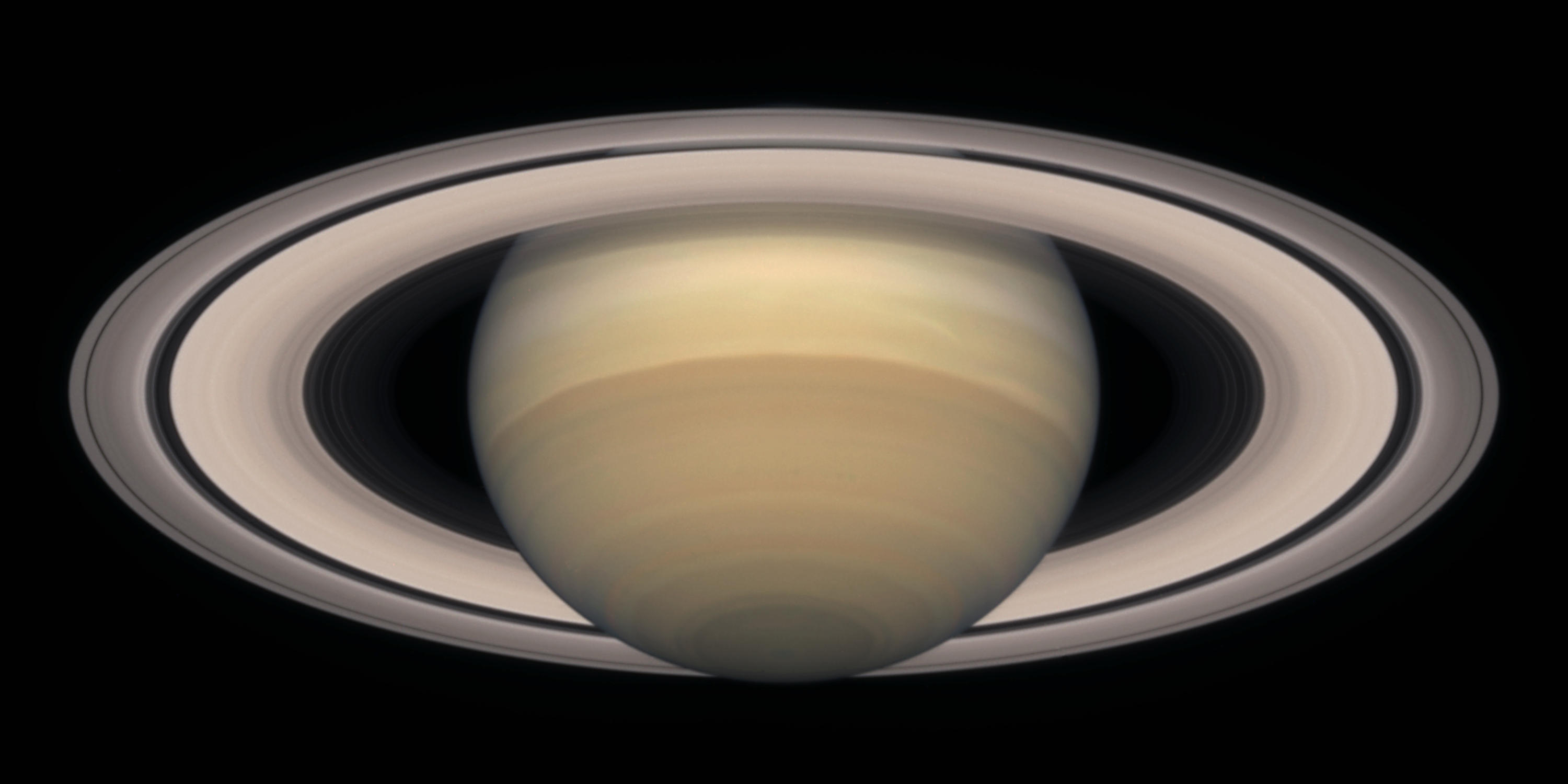
When the HST can produce images like this, it's a real shame they are so quick to shut it down.
-
Re:New proof of intelligent Martian life
I guess you would call all of the people at NASA kooks, then. Their stated Mars mission is to search for signs of life. Their entire purpose is searching for life and hospitable places for life. They've publicly stated that they have "no official opinion" either way about the face. Also, have you personally visited the sites in question? No? Then you can't say for sure that those formations are natural. I'd like to see a rover land there and put these questions to rest.
-
New proof of intelligent Martian life
Ancient Martian pyramid found! Couple this with the face on Mars, and it's clear that life exists or existed on the red planet.
-
What's This?
Has the Gay Niggers Association of America infiltrated NASA? Is this at all related to the membership requirement of watching Gay Niggers from Outer Space?