Slashdot Mirror
Domain: nasa.gov
Stories and comments across the archive that link to nasa.gov.
Comments · 16,365
-
Re:Fuel Demo already done!
http://science.nasa.gov/science-news/science-at-nasa/2007/06jul_astroandnextsat/
Sure, it was done on a satellite scale, but it was also completely autonomous.
-
There are worse things we could do
There's a scene from the first episode of "From the Earth to the Moon" featuring a Kennedy adviser asking the opinions of Hugh Dryden, the Budget Bureau Chief, and the national science adviser played by none other than Al Franken. Dryden is clearly the realist of the group laying out a precise plan and why alternatives are pointless while Al Franken clearly in a method-acting role tries to opt for a cheap no-humans-involved alternative. The Budget Chief says "Pumping that much cash into the private sector could be very popular." The Franken character clearly misses the point as have many after him that the average taxpayer isn't going to care unless they feel like they're part of it. IMHO, people like to live vicariously through famous people. A handful of geeks think the Mars rover program is cool. The average taxpayer won't care until a human sets foot on Mars.
The point here is that instead of pouring trillions of dollars into a massive government bureaucracy that creates and produces nothing but more of itself as it is currently doing, steering tax dollars into NASA necessarily requires that private companies do the work. Furthermore, the technologies developed can be used for other things so the investment pays off long after the program ends. http://www.nasa.gov/centers/ames/pdf/80660main_ApolloFS.pdf
Sure, private space companies are a good thing and I'll bet they end up being the primary contractors, but by themselves they have a more difficult time getting funded initially until they can regularly accomplish money-making launches e.g. satellite deployment.
-
Re:A better idea
Okay, I remembered that one wrong, however there are tons of inventions that you can trace back to NASA. They have over 6500 patents, you use stuff that NASA invented every day.
-
Re:A better idea
You mean an event that will not happen for millions of years as in 2029 and 2036? Just because the likelihood is low doesn't mean it won't happen tomorrow. Frankly, humans themselves are a *lot* more likely to make Earth uninhabitable and a lot faster than a million years.
-
Re:Terraforming 101
Wouldn't the problem be that the solar wind would just blow away the atmosphere? From what I understand Mars has a very weak and unstable magnetic field (unlike the Earth). http://science.nasa.gov/science-news/science-at-nasa/2001/ast31jan_1/
-
Re:Interesting...
The space shuttle used aluminum fuel.
http://www.nasa.gov/returntoflight/system/system_SRB.html -
Re:Spam
Is there substantially less?
After all, if you ORBIT the red dwarf, the Far star is going to have to be QUITE FAR away, or you would find yourself orbiting the far star in short order.
Light falls off as the square of distance. So a Second Sun, located, say for example, at the orbit of Saturn would still be but a speck of light.
Nasa has a cool simulator for visualizing this located here: http://space.jpl.nasa.gov/
This Image is what our sun would look like from Saturn. Even a red dwarf would provide more light (or heat energy) than a bright sun at that distance.
If that second sun was located any closer than Saturn in a binary system the solar system would have developed dramatically different than today due to gravitational effects. Its unlikely that there exists any planets orbiting a star at photosynthetic-life bearing distance which would also see the companion star as anything close to the same size.
But be that as it may, lets take your theory at face value, and assume you could contrive a binary-star system where one planet provided more light than the other. In this case, plant life would develop to take advantage of the most abundant light source. In all probability, the secondary light source would simply be ignored. There is no plant that I know of that takes advantage of moon light. Yet moon light is several orders of magnitude brighter than the sun viewed from Saturn.
-
Re:Spam
Is there substantially less?
After all, if you ORBIT the red dwarf, the Far star is going to have to be QUITE FAR away, or you would find yourself orbiting the far star in short order.
Light falls off as the square of distance. So a Second Sun, located, say for example, at the orbit of Saturn would still be but a speck of light.
Nasa has a cool simulator for visualizing this located here: http://space.jpl.nasa.gov/
This Image is what our sun would look like from Saturn. Even a red dwarf would provide more light (or heat energy) than a bright sun at that distance.
If that second sun was located any closer than Saturn in a binary system the solar system would have developed dramatically different than today due to gravitational effects. Its unlikely that there exists any planets orbiting a star at photosynthetic-life bearing distance which would also see the companion star as anything close to the same size.
But be that as it may, lets take your theory at face value, and assume you could contrive a binary-star system where one planet provided more light than the other. In this case, plant life would develop to take advantage of the most abundant light source. In all probability, the secondary light source would simply be ignored. There is no plant that I know of that takes advantage of moon light. Yet moon light is several orders of magnitude brighter than the sun viewed from Saturn.
-
Summary of milestones
(From a post I made over on the nasaspaceflight forums)
From the Space Act Agreements, here's a quick summary of the payment milestones each company has set for each sub-project going up to a year from now:
http://procurement.ksc.nasa.gov/
Sierra Nevada:
system requirements review
canted airfoil fin selection
cockpit based flight simulator
vehicle avionics integration laboratory
system defniition review
flight control integration laboratory
ETA structure delivery (does this mean "Engineering Test Article"?)
separation system test
preliminary design review for Dream Chaser
optional milestones: materials testing captive carry and ETA landing gear drop tests, ETA captive carry flight test, wind tunnel testing, dream chaser handling qualities evaluation, main RCS test, two hybrid rocket motor test firing, thrust vector control test, ETA captive carry flight test readiness review, ETA free flight testBlue Origin (only listing final milestones for each sub-project):
* Space Vehicle Design: space vehicle system requirements review
* Pusher escape Risk Reduction: pusher escape ground firing, pusher escape pad escape test (optional milestones: pusher escape max-Q sled test calibration run, pusher escape max-Q sled test egress run)
* RBS (reusable booster system) engine risk reduction: engine thrust chamber assembly test at Stennis (optional: engine pump cold gas drive test, engine pump hot gas drive test) [as an aside, apparently the RBF is a 100klbf restartable hydrolox engine)Boeing:
launch abort engine fabrication & hot fire test demonstration
landing air bag drop demonstration #1
phase I wind tunnel tests
interim design review - 4
parachute drop tests demonstration
SM propellant tank development test
LV EDS/ASIF interface simulation test
preliminary design review
optional milestones 12-25 all redactedSpaceX:
launch abort system propulsion conceptual design review
design status review 1 (for Falcon 9/Dragon crew transportation system)
LAS propulsion components PDR
crew accommodation concept prototype and in situ trial (internally-funded by SpaceX, NASA astronauts invited to try crew accomodations and give feedback)
DSR 2
crew accommodation concept delta-prototype and in-situ trial 2
LAS propulsion component test articles complete
LAS propulsion component initial test cycle
concept baseline review
(SpaceX seems to be the only one without "optional" milestones) -
Who -didn't- get funding
It's also quite interesting to note who -didn't- get funding in this round (but are of course contenders for future funding rounds):
ULA: This was the most surprising one, since basically all of the accepted non-SpaceX spacecraft proposals have ULA's Atlas V rocket as their baseline and would require upgrades to their emergency detection system. My thinking is that getting spacecraft development up and running was more urgent than making the necessary low-risk changes to existing rockets. If the spacecraft which baseline the Atlas V continue to develop smoothly, I strongly suspect ULA will get funding for CCDev3.
Paragon: They got funding in CCDev1 to develop their turnkey life support system. I get the impression that it's pretty much ready to use in other spacecraft designs now, so I guess from this point on most of their commercial crew income will come from selling their system to the spacecraft manufacturers.
ATK: One of the most anti-commercial companies in aerospace with quite a few politicians in their pockets, they created a bit of a stir when they announced their "Liberty" rocket. The Liberty was basically a rehash of their cancelled Ares I rocket with an Ariane upper stage. The stated reason for why they weren't chosen is because there's already enough potential rockets to launch on, although I expect to see a senator or two to raise a ruckus about this in the coming days. Apparently none of the spacecraft designers planned to use the ATK rocket as a baseline launcher, either.
United Space Alliance (USA): These are the folks who manage the soon-to-be retired Shuttle program. Their proposal was basically to commercialize the Shuttles and keep them operating. This wasn't considered to fit into the scope of CCDev though (and presumably would have cost an absurd amount of money), so USA ended up withdrawing their proposal.
Orbital Sciences: They proposed a lifting-body spaceplane kind of similar to Sierra Nevada's, but much more heavyweight.
Excalibur Almaz: A really interesting company which purchased and was working to upgrade some flight-proven reusable space capsules from the former Soviet Union's 70s-era military space station program.
There's a really fascinating selection statement from NASA which explains the rationale for which companies were and weren't chosen.
-
Here are the SAAs
http://procurement.ksc.nasa.gov/documents/NNK11MS03S_Boeing_SAA_Combined_Redacted.pdf
http://procurement.ksc.nasa.gov/documents/NNK11MS01S_SAA-%20SNC_Redacted.pdf
http://procurement.ksc.nasa.gov/documents/NNK11MS02S_SAA_BlueOrigin_04-18-2011.pdf
http://procurement.ksc.nasa.gov/documents/NNK11MS04S_SAA-SpaceX.pdfThe SpaceX milestones amount to this:
- meeting
- design review
- another design review
- another design review
- testing of the crew cabin seats and controls (SpaceX is paying for this)
- design review
- more testing of the crew cabin seats and controls (SpaceX is paying for this)
- confirmation that SpaceX has built the parts required for the Launch Abort System test
- actually do the Launch Abort System test
- yet another design review
So, out of 10 milestones, 4 of them involve actual work and 6 are posturing, paperwork and oversight. And to think, Space Act Agreements are the most efficient way NASA does business.
-
Here are the SAAs
http://procurement.ksc.nasa.gov/documents/NNK11MS03S_Boeing_SAA_Combined_Redacted.pdf
http://procurement.ksc.nasa.gov/documents/NNK11MS01S_SAA-%20SNC_Redacted.pdf
http://procurement.ksc.nasa.gov/documents/NNK11MS02S_SAA_BlueOrigin_04-18-2011.pdf
http://procurement.ksc.nasa.gov/documents/NNK11MS04S_SAA-SpaceX.pdfThe SpaceX milestones amount to this:
- meeting
- design review
- another design review
- another design review
- testing of the crew cabin seats and controls (SpaceX is paying for this)
- design review
- more testing of the crew cabin seats and controls (SpaceX is paying for this)
- confirmation that SpaceX has built the parts required for the Launch Abort System test
- actually do the Launch Abort System test
- yet another design review
So, out of 10 milestones, 4 of them involve actual work and 6 are posturing, paperwork and oversight. And to think, Space Act Agreements are the most efficient way NASA does business.
-
Here are the SAAs
http://procurement.ksc.nasa.gov/documents/NNK11MS03S_Boeing_SAA_Combined_Redacted.pdf
http://procurement.ksc.nasa.gov/documents/NNK11MS01S_SAA-%20SNC_Redacted.pdf
http://procurement.ksc.nasa.gov/documents/NNK11MS02S_SAA_BlueOrigin_04-18-2011.pdf
http://procurement.ksc.nasa.gov/documents/NNK11MS04S_SAA-SpaceX.pdfThe SpaceX milestones amount to this:
- meeting
- design review
- another design review
- another design review
- testing of the crew cabin seats and controls (SpaceX is paying for this)
- design review
- more testing of the crew cabin seats and controls (SpaceX is paying for this)
- confirmation that SpaceX has built the parts required for the Launch Abort System test
- actually do the Launch Abort System test
- yet another design review
So, out of 10 milestones, 4 of them involve actual work and 6 are posturing, paperwork and oversight. And to think, Space Act Agreements are the most efficient way NASA does business.
-
Here are the SAAs
http://procurement.ksc.nasa.gov/documents/NNK11MS03S_Boeing_SAA_Combined_Redacted.pdf
http://procurement.ksc.nasa.gov/documents/NNK11MS01S_SAA-%20SNC_Redacted.pdf
http://procurement.ksc.nasa.gov/documents/NNK11MS02S_SAA_BlueOrigin_04-18-2011.pdf
http://procurement.ksc.nasa.gov/documents/NNK11MS04S_SAA-SpaceX.pdfThe SpaceX milestones amount to this:
- meeting
- design review
- another design review
- another design review
- testing of the crew cabin seats and controls (SpaceX is paying for this)
- design review
- more testing of the crew cabin seats and controls (SpaceX is paying for this)
- confirmation that SpaceX has built the parts required for the Launch Abort System test
- actually do the Launch Abort System test
- yet another design review
So, out of 10 milestones, 4 of them involve actual work and 6 are posturing, paperwork and oversight. And to think, Space Act Agreements are the most efficient way NASA does business.
-
Re:Should we be happy that it didn't happen?
That also shows nothing about the global temperature trend. If you want to focus on small geographic areas, we can look at the trend in Arctic ice, which is clearly melting, and the trend in Antarctic ice, which is also clearly melting. You're showing only two cherry picked images from one specific location, not the overall trend in that location, and certainly not a global trend.
-
Re:Mars is possible
It should be possible to get to Mars and back, however it won't be cheap. It would probably take the equivalent of as many Saturn V rockets as were ever launched to put enough material into Mars obit for ONE mission.
It turns out it's actually nowhere near that bad. If you look at the Mars DRA 3.0 architecture NASA released back in the 1990s, they could do a Mars mission using three launches of an 80mt vehicle:
http://ares.jsc.nasa.gov/HumanExplore/Exploration/EXLibrary/docs/MarsRef/addendum/A4.htm#A4.0
By comparison, the Saturn V was a 120mt vehicle. Just last week SpaceX announced that they're be building a 53mt vehicle which will be available for a price of $100M/launch. If the DRA 3.0 mission were repacked, it could potentially perform a Mars mission with ~5 Falcon Heavies, at a total launch cost of half a billion dollars. This is coincidentally much less than it costs to launch a Space Shuttle mission.
-
Re:You're forgetting about radiation
One of my favorite anecdotes from the Apollo era was the flashes of light they kept seeing. It was from radiation impacting their retinas.
Cataracts are very common among astronauts, especially the Apollo astronauts.
-
Re:No faked moon landing
You can't see the leftovers from the landing via telescope from earth.
Maybe not from earth, but with the Lunar Reconnaissance Orbiter we can get a resolution of 20" - and we can clearly see the descent stage of the Apollo Lunar Module, the Lunar Ranging Retro Reflector and the Passive Seismic Experiment to the south, and the tracks the astronauts made walking around.
-
Re:Save Smallpox
Your entire argument depends on two thing, both of which you assume and one of which you actually admit is not sound. First, your argument requires that only "life" be put on the endangered species list. You cite to no authoritative source for that point. There are different lists of endangered species. The one most people think of is probably the Red List of Threatened Species, published by the International Union for Conservation of Nature. However, other such lists exist and you have presented no proof that a list that classifies quasi-lifeforms as endangered is per se invalid.
Second, you outright say that whether a virus is a form of life "depend[s] on your definition." Your argument, however, depends on viruses not being a form of life. You present "Nasa's definition of life" without any citation to a source. Here's an article from NASA.gov discussing the definition of life, in which viruses are specifically mentioned as a type of life and as a borderline case. NASA also recognizes that the definition of life is a flexible, evolving thing in its own right. For instance, this article discusses the effect that discovery of a bacterium that thrives on arsenic in lieu of phosphorus had on the definition of life.
Third, and most important of all: Whooooosh! That's the sound of the point of the comment you responded to flying over your head.
-
Re:Save Smallpox
Your entire argument depends on two thing, both of which you assume and one of which you actually admit is not sound. First, your argument requires that only "life" be put on the endangered species list. You cite to no authoritative source for that point. There are different lists of endangered species. The one most people think of is probably the Red List of Threatened Species, published by the International Union for Conservation of Nature. However, other such lists exist and you have presented no proof that a list that classifies quasi-lifeforms as endangered is per se invalid.
Second, you outright say that whether a virus is a form of life "depend[s] on your definition." Your argument, however, depends on viruses not being a form of life. You present "Nasa's definition of life" without any citation to a source. Here's an article from NASA.gov discussing the definition of life, in which viruses are specifically mentioned as a type of life and as a borderline case. NASA also recognizes that the definition of life is a flexible, evolving thing in its own right. For instance, this article discusses the effect that discovery of a bacterium that thrives on arsenic in lieu of phosphorus had on the definition of life.
Third, and most important of all: Whooooosh! That's the sound of the point of the comment you responded to flying over your head.
-
Re:But smaller then the Saturn V from the 1960s
I just came upon this document from 1982 which talks about keeping the tank in orbit. Some of the things it talks about are now precluded by safety (eg. having a fueled LOX/LH2 engine in the orbiter cargo bay), but it's worth reading.
http://ntrs.nasa.gov/archive/nasa/casi.ntrs.nasa.gov/19940004970_1994004970.pdf
-
Re:What is the meaning of 'shut-down?'
I guess this means no more updates to NASA's Cool Robot of the Week site...
-
Re:NASA has an app for that
For those that avoid apple and want to use computers; you can view the model predictions with the 'iNTEGRATED SPACE WEATHER ANALYSIS SYSTEM' which is very cross platform and browser: http://iswa.gsfc.nasa.gov/iswa/iSWA.html , look under the "Events" tab.
Here's a direct link to the heliosphere model showing the coronal mass ejection and Messenger that was discussed: http://iswa.ccmc.gsfc.nasa.gov:8080/IswaSystemWebApp/StreamArgumentServlet?cygnetInstanceId=65209753&argumentId=1
I'm not sure why this is considered news, except for that Messenger is orbiting Mecury now and has been in the news recently. Messenger has been in the direct path of larger CMEs many times in it's looping paths to reach Mercury.
-
Re:NASA has an app for that
For those that avoid apple and want to use computers; you can view the model predictions with the 'iNTEGRATED SPACE WEATHER ANALYSIS SYSTEM' which is very cross platform and browser: http://iswa.gsfc.nasa.gov/iswa/iSWA.html , look under the "Events" tab.
Here's a direct link to the heliosphere model showing the coronal mass ejection and Messenger that was discussed: http://iswa.ccmc.gsfc.nasa.gov:8080/IswaSystemWebApp/StreamArgumentServlet?cygnetInstanceId=65209753&argumentId=1
I'm not sure why this is considered news, except for that Messenger is orbiting Mecury now and has been in the news recently. Messenger has been in the direct path of larger CMEs many times in it's looping paths to reach Mercury.
-
Re:Another sad day for space
>Maybe that will kick US ass...
Yawn. Wake me when they're doing the space science we're doing. Where are their versions of just the stuff we've done in the past decade? When are they launcing a hubble or a Stardust or an LCROSS or a Spirit or a Cassini or a Mars Global Surveyor or Deep Space 1? What part of the ISS have they built or ferried? Where is their competitive private industry changing the face of space exploration?
I love how the haters keep brining up the moon like its this great prize. Err, it a big universe out there.
Let me guess, you're just another pissant whiner who doesn't care two shits about space science or exploration, but has this NASCAR-like menality of "vroom vroom, machines go fast!!! USA #1!!' Guess what? Expect to be disappointed from now on. Go watch a monster truck show and leave space to the adults. Thanks.
-
stamp tool fail
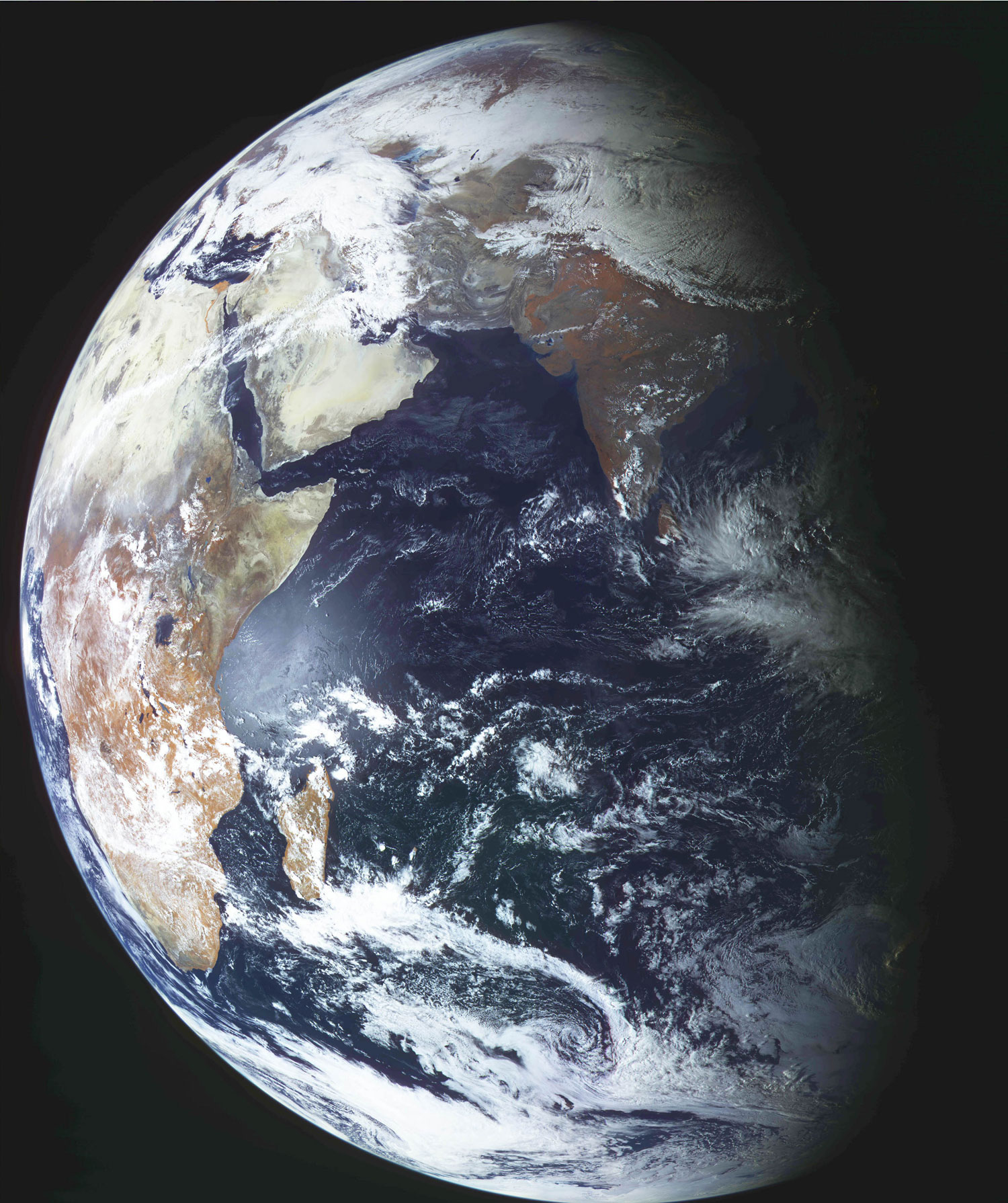
Obviously a huge Photoshop fail, this image highlights possible stamp tool locations https://picasaweb.google.com/lh/photo/Iv5FJWlGM-5OVSKJ7yWupw?feat=directlink original: http://eoimages.gsfc.nasa.gov/ve/2429/globe_west_2048.jpg
-
Re:Obligatory moon hoax post
Louis Armstrong never walked on the moon. Neil Armstrong was the first man on the moon. Alan Shepard was the guy who golfed on the moon. There wouldn't be a reason for NASA to send a jazz trumpeter to Earth's only naturally occurring satellite.
-
1st and I hope last time on gizmodo
Oh, gizmodo is horrible. First it took me to the german site, which didn't have the article. Then, after lots of manipulation (click the little 'US' label on the left top), I got to the article, but couldn't figure out how to close the stupid window that covers half of the cool image they're talking about.
But, to the subject: Isn't it fairly obvious why the russian image looks better? Look: compare the NASA image: http://visibleearth.nasa.gov/view_rec.php?id=2429 to the russian one: http://www.russianspaceweb.com/images/spacecraft/application/weather/elektro/earth_disk1_1.jpg One obvious difference - in the NASA image, clouds have no shadow, in the russian one they do. That makes the NASA image look flat, and the russian one jump out in 3D. Why that is, I'm not sure. -
Re:What have astronauts done lately?
While there may not be a lot of exploration and discovery, it doesn't mean that there isn't any science being done.
http://www.nasa.gov/mission_pages/station/research/experiments/List.html
Maybe they need flashier experiments?
-
Re:Spirit is doing just fine!
Did you miss the title of the blog? "five years delayed." The blog posts are 2011, -5, meaning they're from 2006.
Actual report pertaining to first link from Sol 792: http://marsrover.nasa.gov/mission/status_spiritAll_2006.html#sol790
-
Spirit is doing just fine!
Spirit is doing just fine on Sol 792. Just four days ago one of the rover drivers blogged this:
"The good news is, we have data from Spirit at last! And a lot of it, too -- a whopping 110 Mbits!"
Here are some pictures Spirit has taken recently.
Is this sloppy Slashdot reporting, or an early April's Fool joke?
-
Re:Whatever
-
Re:Whatever
-
Re:Hay guys I got this one!
Satellites are usually lifted to their orbit by a launch vehicle. Normally they don't do any extensive manuvering using thrusters.
Thrusters on satellites are used primarily for attitude control. If the satellite is in low earth orbit attitude control can be performed without using thruster. For example, ISS was designed for attitude control using thruster, but zero-propellant manouvers is possible.
-
It's already been done
-
Re:Projects for Android
Not to shamelessly use this for advertisement, but this *is* actually our focus this year - hoping that we can get students interested in model checking/verifying Android applications with Java Pathfinder (see http://babelfish.arc.nasa.gov/trac/jpf/wiki/events/soc2011#android/)
-
NetworkWorld?
I thought we would actually get the NASA link http://www.nasa.gov/mission_pages/kepler/news/keplerm-20110321.html which FWIW is almost verbatim to the NetworkWorld link shows. Copy pasta FTW!
-
Re:Physics Simulators
Don't forget these:
http://www3.gettysburg.edu/~marschal/clea/CLEAhome.html - If you have smart 8th graders, they can do simulated astronomy and learn how we know some of the things we know
Stellarium and Skycharts (Cartes du Ceil) are among the best sky simulation and mapping software and well worth a look along with Stellarium. Or try Kstars on Linux
http://www.stellarium.org/
http://www.ap-i.net/skychart/en/download (newer more comprehensive
http://www.stargazing.net/astropc/oldversion/index.html - Version 2 (older, easier on the PC)NASA World Wind
http://worldwind.arc.nasa.gov/java/Hubble for pretty pictures and the stories behind them
http://hubblesite.org/If they don't mind math try a gravity simulator
http://www.orbitsimulator.com/gravity/articles/what.htmlVarious Roller Coaster Simulators
Rasmol Molecule simulator
http://rasmol.org/
http://www.umass.edu/microbio/rasmol/Scorched Earth style artillery games may get their imagination fired (but be careful as political correctness may mean you're fired)
Much more. No time to post right now though.
http://www.umass.edu/microbio/rasmol/ -
Re:NASA good, hard to navigate
NASA has the best resources, but it can be tough to find them. My favorite, and most applicable for physical science (8th grade in most states), is the solar system simulator from JPL: Eyes on the Solar System But do search the link in parent, and be persistent as NASA's site sucks.
-
Zooniverse, NASA
You mentioned Galazy Zoo, but there's actually a larger effort called Zooniverse, which includes:
- Old Weather : transcribing temperature information in British Naval Logs to add to the climate record
- Solar Stormwatch : estimating the leading front of Coronal Mass Ejections
... and the other astronomy like stuff.
Besides that, a number of science agencies have various educational resources. From NASA, for 5th to 8th grade:
Other agencies have stuff too, but I don't know where it all is off the top of my head.
-
Re:No No No !!!!! It will be BARELY noticable
Does anybody research these things?? It's not that THAT unusual. Slashdot is turning into Digg. Do a Google search on "supermoon hype" and read the links!
Arrrggghhh
Practice what you preach perhaps? http://science.nasa.gov/science-news/science-at-nasa/2011/16mar_supermoon/
-
This picture is old, from October 11, 2010
This picture is low resolution and months old: "The Moderate Resolution Imaging Spectroradiometer (MODIS) on NASA’s Aqua satellite captured the image on October 11, 2010..." (source) If I want a picture of f-n Ireland, I want it recent and zoomable, as big as the redheaded noogin on my 12 year old so I can oogle the Irish drinkin their Guinesses no earlier than yesterday. If it ain' Scottish, it's crap!
-
Re:This is what space exploration should look like
Also develop warp drive, so our robotic probes can explore *other* solar systems.
PHOTOS FROM MESSENGER:
2008 http://apod.nasa.gov/apod/ap080116.html
2010 http://apod.nasa.gov/apod/ap100901.html
2011 http://apod.nasa.gov/apod/ap110223.html -
Re:This is what space exploration should look like
Also develop warp drive, so our robotic probes can explore *other* solar systems.
PHOTOS FROM MESSENGER:
2008 http://apod.nasa.gov/apod/ap080116.html
2010 http://apod.nasa.gov/apod/ap100901.html
2011 http://apod.nasa.gov/apod/ap110223.html -
Re:This is what space exploration should look like
Also develop warp drive, so our robotic probes can explore *other* solar systems.
PHOTOS FROM MESSENGER:
2008 http://apod.nasa.gov/apod/ap080116.html
2010 http://apod.nasa.gov/apod/ap100901.html
2011 http://apod.nasa.gov/apod/ap110223.html -
Also...
... nice APOD today.
-
Re:There I fixed it
the reason it looks relatively dull is because it was taken in early to mid-March
It was actually taken on 11 October 2010, according to this page http://earthobservatory.nasa.gov/IOTD/view.php?id=49687 linked in a post somewhere above here. -
Better link
TFS just links to somebody's blog with the low resolution image, and repetition of much of NASA's text. It has no links to better resolution images.
Here's a link to the NASA Image of the Day page, with the same image and much the same text, but with links for larger versions of the image such as this.
-
Better link
TFS just links to somebody's blog with the low resolution image, and repetition of much of NASA's text. It has no links to better resolution images.
Here's a link to the NASA Image of the Day page, with the same image and much the same text, but with links for larger versions of the image such as this.
-
Re:Question having RTFA
The nice thing about cut and paste journalism is that it makes it easier to find the original source.
The nice thing about cut and paste journalism is that it makes it easier to find the original source, according to Pyrus.mg