Slashdot Mirror
Domain: netbsd.org
Stories and comments across the archive that link to netbsd.org.
Comments · 1,583
-
``Of course it runs NetBSD!''In case you have an MIPS based Cobald Qube or Raq around and don't want to run a dead-old L*nux system, have a look at http://www.netbsd.org/Ports/cobalt/.
- Hubert
-
Re:Red Hat
You're correct about "solid default security configuration", but what *NIX OS (besides OpenBSD) comes with a good default security configuration?
E.g. NetBSD. -
Re:Wow... a *BSD ported to x86, that's impressive.I'll admit that getting the apple only code working is a little impressive, but we've got Linux for everything from the Compaq Ipaq to massive multiprocessor alphas, so I am not terribly thrilled that one commercial company got something of theirs cross platform, for FreeBSD is almost a spread as Linux...
"...almost [as] spread as linux..." ???
Don't you mean NetBSD?
NetBSD is running on around 30 different platforms, while FreeBSD is running on i386 & Alpha. -
hemos is a newbie to bsd storiesIf it's a BSD story, it should have the daemon icon. If it's an Apple story, don't use the BSD color scheme. I guess Hemos doesn't realize how this works, since Nik Dickintheass usually posts the BSD stories.
Everyone already knows that Darwin works on x86. And everyone also knows that this has absolutely no impact on Apple's business plan, and does not mean that OS X will run x86. It's also irrelevant because there are several BSD-based systems which are much more worthy of x86 PC users' time.
Let's run through more facts that everyone should know. This has nothing to do with GNU/Linux or the GPL. It does not mean that Photoshop will work on FreeBSD. It doesn't mean that the Free Unix community will see an outpouring of money, code, or other support from Apple. All it means is that Apple decided to, for once, release a real operating system. They lack the talent to do so, as should be evident from MacOS 1 through 9. They found an excellent codebase, which, do to the wonderful BSD license, is essentially free (as in both pro bono and libre) for them to plunder however they wish. So they take twenty years of the best operating systems code ever written and, um, "embrace and extend" it with the GUI that Jobs brought with him from NeXT. Very "innovative". They then release this code, which allows Mac lusers run Photoshop without crashing, and allows them to get very rich with very little work.
Years of hard work and research from many real computer professionals associated with several projects across the country and around the world go to buy Mr. Jobs another few houses (hice?) and cars. Yay.
(And this, my friends, is flamebait. I love Fridays.)
---------///----------
All generalizations are false. -
Re:Yay! Will it squeeze into an ancient IPC?
In fact NetBSD or OpenBSD would be a better choice for an IPC - Linux still has problems with the sun4c-MMU. See the Ultralinux or NetBSD FAQ or Redhat's Ha rdware compatibility list.
-
More machines running NetBSDCheck this page to see NetBSD in Action!
Probably the most complete list of hardware running NetBSD besides Todd's collection is Herb's NetBSD build lab.
- Hubert
-
It may point at a problem, but not one at Cygnus..There's already been some interesting discussion of this on the GCC mailing list, and all the other lists Michael posted it to.
In general, I like to recommend that people do a little research before they take what Michael says too literally. Unfortunately, Google seems to have got bored with Michael's magnum opus (the page in which he describes his love for the GNU project is particularly fun), but it still lists many of the other mailing lists Michael has tortured over the years.
-
Re:Licensing
I also wonder what packaging systems it wil be based off of; will it be like RPM with lots of functionality but confusing or absent categorization (my RPM databases always turned into one package per category because I'd install mandrake or SuSE packages on top of RedHat), or will it be like
There is already a package system. It is something like Red Hat, but there are no categorizations (at least in the OpenBSD version; I really only have some experience with it). You can check out the (in no particular order) OpenBSD man pages and port info, the FreeBSD port section of the FreeBSD handbook, and the NetBSD pkgsrc info. Reading those pages should give you more information about BSD ports/packages.
-- Floyd -
*BSD on ARM
morgus morphus opined:
The BSD one seems to be delayed.
I don't know about FreeBSD (that page was last updated in 1995!). However, there is a NetBSD ARM page here.
According to that page:
NetBSD/arm32 is a port of the OS to a variety of ARM- and StrongARM-powered computing platforms. The port has been a work in progress for the past four years, and is maintained by Mark Brinicombe.
They have a short history of the NetBSD/arm32 project.
---
In a hundred-mile march, -
*BSD on ARM
morgus morphus opined:
The BSD one seems to be delayed.
I don't know about FreeBSD (that page was last updated in 1995!). However, there is a NetBSD ARM page here.
According to that page:
NetBSD/arm32 is a port of the OS to a variety of ARM- and StrongARM-powered computing platforms. The port has been a work in progress for the past four years, and is maintained by Mark Brinicombe.
They have a short history of the NetBSD/arm32 project.
---
In a hundred-mile march, -
*BSD on ARM
morgus morphus opined:
The BSD one seems to be delayed.
I don't know about FreeBSD (that page was last updated in 1995!). However, there is a NetBSD ARM page here.
According to that page:
NetBSD/arm32 is a port of the OS to a variety of ARM- and StrongARM-powered computing platforms. The port has been a work in progress for the past four years, and is maintained by Mark Brinicombe.
They have a short history of the NetBSD/arm32 project.
---
In a hundred-mile march, -
Re:Just when you thought...
Errrmmm...
Done..
BTW it was damn fast with a 202MHz SA on a RiscPC, even despite its lack of FPU.
-- -
Re:Windows loses install, wins ease of use.
There's
On NetBSD, there's
I think NetBSD has it down better than anything else I've used, actually. Install the base OS (it's about an 80 Meg download) then install the pkgsrc.bin.tgz tree properly, get your system online, cd to the subdirectory in
There's as easy a system for installing FreeBSD, too, but they tend to push a lot more at you in the default install than NetBSD. And NetBSD runs on anything, even your old Mac.
-
Re:Linux is not for the handheld market.
Its funny to see a slashdot user say that linux isn't good for some platform. I have the frame of mind that, initially, it might not be the best, but because of it being open sourced, and having thousands of developers, it will become the best for what people use it for.
And, since the point of a PDA is for it to work quickly and behave as if it were a notepad, addressbook, etcetera, from where do you expect those thousands of developers to arise?
I have a palm. I use it a lot. I'm not about to replace it with something less useable that maybe has a touch more hack value. These things are not computers, and treating the market the same way is a mistake.
So, I'm not interested, but maybe other people will be? I doubt it. I'm an active contributer to NetBSD. I've whacked away mostly at making extraneous things behave on the macppc port. There are fewer active developers of the port than I can count on two hands. Definitely not thousands.
I'll grant you that I'm not talking about Linux, but development of NetBSD functions along similar principles... principles that are perhaps more applicable to the porting-[insert OS here]-to-a-PDA discussion, considering the number of platforms on which NetBSD runs (ls -l
Especially for those of us perfectly content with PalmOS's functionality... things are pretty much right with it already, why change? -
NetBSD on VAX (was Re:VAXen rocks)
courageous folks are working hard to port NetBSD to VAX architecture.
NetBSD already runs on VAXen. It has for quite a while, and gets better all the time. Just a few weeks ago, VAX ELF binaries were demonstrated, so it probably won't be too long before GNU/Linux runs on them too.
-
Re:wtf
-
Re:wtf
-
Re:Specs ?
How much memory? Anyone want to take bets on how long it takes a zealot to port Linux to it? Come on, you know someone will try it...
What good is it if it doesn't run Linux or NetBSD?
If it has >=4MB, it has a good chance to get NetBSD/ARM32 ported to it...then I'd *REALLY* shell out the bucks for that...
Someone designs an embedded NetBSD or Linux kernel in a GBA cart, with 16MB RAM and a USB port sticking out of it, and I'm there. -
Re:Two things suck for non-geeksMovies can't play smooth
Point taken, for now.
There are NO games
- /usr/games
- Take a look at the FreeBSD Ports Collection under "games". Here's a link. Sure, most of them suck. Deal with it.
- Most geeks are too busy writing scripts'an'programs'an'config files'an'nat to do *real* work rather than write games. I haven't seen too many games written by DMR, Eric Allman, Kirk McKusick, RMS*, et. al.
At the most the average geek has an xpilot or freeciv session running.
*-If you don't think emacs is a game itself -
aaah... Wrong... NetBSD does NOT support the...
NetBSD does NOT support the 5200/5300/6200/6300 (except for the 6300/160 and the 6360 which used differant motherboards). These are the old school Apple systems that didn't use PCI, or Nubus for that matter... According to http://www.netbsd.org/Ports/macppc/m odels.html NetBSD does not support these machines.
-
NetBSD? Are you sure?
MkLinux now has official support for these much sold first Nubus based PowerMac generation, that is rotting away in basements. These machines make excellent X-Terms." And the same models can naturally run NetBSD, too.
Really? The MkLinux announcement refers to "5200/5300/6200/6300 family of computers, and their Performa equivalents". I don't see those on the list of NetBSD supported hardware. The PowerMac models, anyway -- even Gil Amelio probably couldn't tell you offhand what the "Performa equivalent" of a 5300 is. Maybe somebody more knowledgable can comment on this?
x86'ers, this is why Apple has now shifted to using such a short list of product names. Which is why we now have to mention that we're using a "beige G3" or a "blue & white". No, it's not because the only thing we know about our hardware is what color it is. -
Re:NetBSD .. ok..Well, Apache and php3 should be available on PPC; I don't know about mysql, but I don't see why it wouldn't be.
For the Open Firmware, grab the System Disk tool (you'll need MacOS 8 or 9). There is a mini-tutorial (with pictures
- Joe
-
NetBSDNetBSD has a much more mature PowerPC port than any of the current Linux PowerPC ports, IMHO. If you want Unix on a Mac, this is probably your best bet. Hell, NetBSD runs on almost any other platform you can dream up.
Also, for the security-conscious, OpenBSD has a PowerPC port in progress as well.
- Joe
-
Re:So Hemos and Kadtz, time to deliver.
I believe IP should be free.
Cool. Here's some free IP, and here's some more free IP, and here's some more free IP.
This page also lets you get at some free IP, although you have to go to one of the subdirectories, download and unpack the tarball, and get it from the appropriate directory (kernel/net/ipv4).
-
Re:I don't see why either.First, OS X is Un*x. Load the "admin" package (whether it comes as part of the distribution or as a separate download is anyone's guess right now) and bingo, you have a shell.
Second, we're talking about commercial applications aren't we? OS X is potentially a massive new market for such.
at my old job, we had a ton of macs that were useless because they did not have the software on them that was needed...I could see putting Unix on it and then having use for them again and saving a little money.
Then you ought to check out:
-- Dirt Road
-
Yes
-
Three button pointer.
Cool, a three button mouse!
Where? Where? Gimme!
How about a three button trackpad for a powerbook? Or even a two button trackpad? I've used Linux and NetBSD (with X11) on a Powerbook before, and the most painful part of the whole thing was always trying to work around the one pointer button issue. I know Linux has a keyboard kluge to simulate the basic three pointer buttons, but in day to day use it turned out to be less than... ideal. It made the UI seem more like an Abuser Interface. And NetBSD/macppc doesn't even have that workaround (or anything similar, so far).
T. M. Pederson
"...and so the moral of the story is: Always Make Backups." -
Re:Java-bastardizing-then-dumping bastards....
Yeah, talk about an unbiased, objective article (wink, wink). It's not like Sessions has anything to gain with this Microsoft brown-nosing. Here's a quote:
Java is not the first time the industry has been promised a WO/RE solution. In fact, this has been a recurrent theme since the dawn of software. Unix, CORBA, and C++ are just a few examples of the many products that originally made similar claims.
Huh? How many architectures does Windows NT run on? One, since even Alpha support was dropped recently. How about NetBSD? 29. Maybe not WO/RE [Write Once/Run Anywhere] but you get the point.George Santayana said, "Those who cannot remember the past are condemned to repeat it." Unfortunately, the collective memory of our industry seems particularly poor. WO/RE has never worked and it seems unlikely to me that it ever will. And we appear to be caught in an endless cycle of relearning this lesson.
How about C++? I've run the same exact C++ code on Solaris, Linux, and Windows NT. I'm sure it would run on any other OS with a C++ compiler.
Vim, written in C, runs on about 50 different operating systems.
It's irritating that the author suggests that portability (recompiling -- admittedly a weaker form of WO/RE) just doesn't work. Obviously, it does. But then why would Roger Sessions (a very good author, and I liked his COM book) misrepresent the true state of affairs?
Oh, yeah, Microsoft is threatened by WO/RE, so it must be a failure. Shame, shame!
I can't resist this quote, either:
So Microsoft did an about-face, and threw its full strength behind Java the language. I see no evidence that this support has slacked off in the slightest. Microsoft seems fully committed to providing the best tools available for creating components using Java. Although Microsoft will always support other component development languages, I believe Java is Microsoft's language of choice for implementing the software that will run on the component tier.
Yes, I know. It's mean old Sun's fault for suing those innocent Microsoft engineers, who were only trying to innovate for customers. That's why Microsoft dropped support for Java. After all, as Sessions says, the Java UI pales in comparison to the sophisticated stuff Microsoft offers.I've programmed in Win32 and MFC a great deal. Swing is vastly superior, in functionality, design, and simplicity (that's just my opinion, of course). I know he wrote this article three years ago, so I'll cut him some slack. But don't quote it like it's still true.
-
Re:Java-bastardizing-then-dumping bastards....
Yeah, talk about an unbiased, objective article (wink, wink). It's not like Sessions has anything to gain with this Microsoft brown-nosing. Here's a quote:
Java is not the first time the industry has been promised a WO/RE solution. In fact, this has been a recurrent theme since the dawn of software. Unix, CORBA, and C++ are just a few examples of the many products that originally made similar claims.
Huh? How many architectures does Windows NT run on? One, since even Alpha support was dropped recently. How about NetBSD? 29. Maybe not WO/RE [Write Once/Run Anywhere] but you get the point.George Santayana said, "Those who cannot remember the past are condemned to repeat it." Unfortunately, the collective memory of our industry seems particularly poor. WO/RE has never worked and it seems unlikely to me that it ever will. And we appear to be caught in an endless cycle of relearning this lesson.
How about C++? I've run the same exact C++ code on Solaris, Linux, and Windows NT. I'm sure it would run on any other OS with a C++ compiler.
Vim, written in C, runs on about 50 different operating systems.
It's irritating that the author suggests that portability (recompiling -- admittedly a weaker form of WO/RE) just doesn't work. Obviously, it does. But then why would Roger Sessions (a very good author, and I liked his COM book) misrepresent the true state of affairs?
Oh, yeah, Microsoft is threatened by WO/RE, so it must be a failure. Shame, shame!
I can't resist this quote, either:
So Microsoft did an about-face, and threw its full strength behind Java the language. I see no evidence that this support has slacked off in the slightest. Microsoft seems fully committed to providing the best tools available for creating components using Java. Although Microsoft will always support other component development languages, I believe Java is Microsoft's language of choice for implementing the software that will run on the component tier.
Yes, I know. It's mean old Sun's fault for suing those innocent Microsoft engineers, who were only trying to innovate for customers. That's why Microsoft dropped support for Java. After all, as Sessions says, the Java UI pales in comparison to the sophisticated stuff Microsoft offers.I've programmed in Win32 and MFC a great deal. Swing is vastly superior, in functionality, design, and simplicity (that's just my opinion, of course). I know he wrote this article three years ago, so I'll cut him some slack. But don't quote it like it's still true.
-
Re:an honest opinion
Well you might want to prove that. Please show me a Linux distribution (yes distribution, no gross kernel hacks) with a unified, clean source tree complete with all the platforms in the tree.
-
Re:an honest opinion
Well you might want to prove that. Please show me a Linux distribution (yes distribution, no gross kernel hacks) with a unified, clean source tree complete with all the platforms in the tree.
-
Re:more importantly...OK. Here's some background. The answer is maybe.
First, you'll need something to convert the VGA signals to the lcd pannel's format. This format isn't hard, but you have some interesting timing windows on some parts. However, I'm not aware of any commercial chips that will do this. There has got to be some, since there are a larege class of VGA LCD monitors out there. I'd start looking in databooks to try to find them.
Another option would be to get a ISA/PCI card that will drive a flat pannel LCD directly. This will almost certainly involve some tricky custom cables to make it work, and you'll likely have a fairly short cable run (on the order of 1-2 feet, sometimes 3 or more is possible, but when I've seen it done there is extreme ghosting).
If all you want is a battery sipping device, I'm very happy with my NEC MobileGear2 MC/R430. This is what NEC sells in this country as a Mobile Pro 750C (well, more or less). It has about a 14 hour battery life, decent screen (640x240), tiny form factor, etc. It normally runs Windows CE, but I have mine running NetBSD/hpcmips and it works great. Even X works, but I have my large flash disk on order to be able to run that.
The IBM z50 is also a good choice. It too is a MIPS based Windows CE machine. Runs a little cheaper than the MobilePros (since IBM dumped them) and has about as good a battery life (10 hours rather than 14) under NetBSD/hpcmips. It has a better screen too, but the keyboard has an odd touch to it.
Good luck. If you don't have the datasheet for your LCD screen, you may be in a lot of trouble.
-
Damn...
I keep hoping someone'll get a port to the Power series (which use, for example, the R3000 CPUs) going, but by the looks of this post to the NetBSD/sigmips mailing list, it ain't gonna happen... -
Re:Indy's?From the SGI port mailing list: "code for the Indy machines will be available soon."
As the proud owner of a 150mhz r4400, i'm happy...
-
Re:netbsd
A lot: Take a look at the NetBSD Packages Collection
-
Loads of nice features...
So many features, so little time
Let me see. IPv6, softdeps, integrated crypto (might happen, at least in part due to the RSA patent expiration. We'll see what happens to cryptosrc-intl and domestic) etc...
The changelist from 1.4 to 1.5 is here. Since the 1.5 branch is effectively frozen the 1.5 to 1.6 changelog is here.
I'm actually testing the 1.5ALPHA releases at the moment. Looks OK. -
Loads of nice features...
So many features, so little time
Let me see. IPv6, softdeps, integrated crypto (might happen, at least in part due to the RSA patent expiration. We'll see what happens to cryptosrc-intl and domestic) etc...
The changelist from 1.4 to 1.5 is here. Since the 1.5 branch is effectively frozen the 1.5 to 1.6 changelog is here.
I'm actually testing the 1.5ALPHA releases at the moment. Looks OK. -
Old News.
From the NetBSD web page: Today, the release cycle for NetBSD 1.5 has started.
Today? Hardly. This is Old News. Slashdot is falling further and further behind and frankly, it's depressing. -
Re:Most Portable ?
Err...
"Unix" is a trademark and refers to a specific implementation of system software (but for the life of me I can't keep track of who owns it now. SCO?).
"Unix-like" operating systems, such as Linux and BSD, cannot be considered a single operating system; anyone who has used, say AIX and Slackware could tell you that.
When they say that NetBSD is the most portable operating system, they mean that the NetBSD system (which was originally derived from Unix) runs on more architechtures than any other operating system (See their web site for a list of supported architechtures).
And remember: "Of course it runs NetBSD!" -
Re:good stuff
And here are detailed instructions for NetBSD.
-
LinuxPPCWhy does everyone seem to assume that LinuxPPC is the only distribution of Linux that runs on an iMac? What's up with that?
For a list of distros, check Apple's Linux page. Of course, NetBSD and OpenBSD are available as well.
--
-
Re:Constant release model?
The so-called "release it early, release it often" model of open source development is quite simply a load of nonsense, and not one that anybody engaged in a project which they want to ever complete should bother with
The "relase early, release often" model is the very soul of Open Source Software. Eric Raymond, in his landmark Cathedra l and the Bazaar , which lead directly to the start of the Open Source Revolution, wrote so much, and am I to believe that you are more knowldgeable than the inventor of Open Source?
If you have some ivory tower ideal in which bug are found as soon as possible, then you end up spending all of your time fixing these bugs (because all open source does is let more people complain about bugs)
As Mr. Raymond said, "Many eyes make all bugs shallow", once again proving he is right. Open Source Software rarely has bugs do to it's very nature. OSS programmers make fewer, if any, mistakes than their commerical counterparts, and scientific studies have backed this up.
Let's face it, how many open source projects ever get anywhere? Apache and Linux are the only two that I can think of
Fetchmail is a very sucessful Open Source Projects which from Eric S. Raymond. I use it all the time.
On the other hand we have vapourware like ext3,
wishware like the GIMP and crapware like Mozilla to try and keep us going.
Well, I heard that ESR will be working with the Gimp's Scheme code (since he helped to write Scheme), but I haven't heard anything about his involvement in the Mozilla project since the early days of it. He hasn't even mentioned ext3, so I can't comment on it.
All I can say is thank God for Borland, leading the way in allowing corporate interests to migrate to Linux.
I'm just hoping they'll become interested in NetBSD! -
Probably Not
The different hardware manufactures tend to add strange chips around the processor or actually put a "wrapper" around the processor in order to interface it with their hardware. There are few standards for this (CE hardware is somewhat standardized, but not as much as you might think), so it's hard to get things running reliably. You might get NetBSD going, but it would be hard to find a version of Linux that worked. PalmOS certainly wouldn't, because even the StrongARM version would still be hardcoded for use with Palm RAM, Palm buses, and Palm screens. Sorry the news couldn't be more positive.
-
Re:While it is nice to see articles touting FreeBS
After a while they do become boring... but apparently they're needed to "sell the product" to the upper management. Whatever. I couldn't care less about things as "user base" and such. (My chosen BSD) works for me.
Now for some real news:
Did you know that you can now get access (source license) to different BSD-versions from 1BSD via 2.xBSD, 3BSD and upto 4.3BSD-Reno ?? Yes,siree!
A click through license available a here.. PUPS archives contain a lot of other material too...
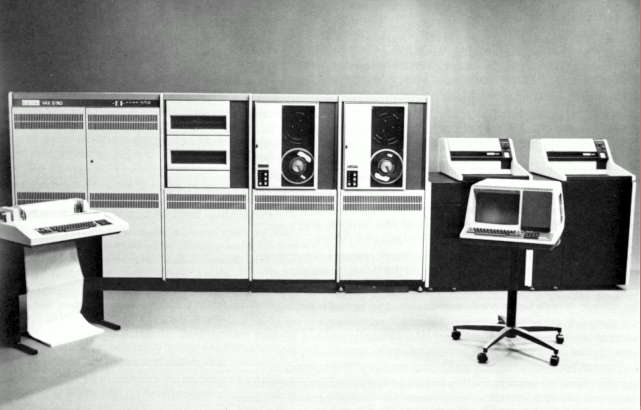
Now just dig out that VAX 11/780 from the closet and start hacking! -
It's a Cobalt.
Once again, Slashdot doesn't read Slashdot.
How about:
http://slashdot.org/articles/99/ 10/13/132216.shtml
or even
http://slashdot.org/articles/99/ 12/08/136255.shtml
Where Hemos acknowledges that slashdot doesn't read slashdot on this very topic.
As for this story:
It's MIPS, not ARM, yes, it is Samba, and yes, it's self-hosting.
Oh, and it is Apache, and Cobalt did a pretty nice job with the web management.
They work great for their intended purpose, but get a little wonky if you try to do things that the web-gui can't do.
But you can always give up and put NetBSD on it.
-Zandr -
FreeBSD has no ad clause.
-
Re:Alpha=El Mucho BucksoYou might consider going with PowerPC; you can get a 350MHz PowerPC box with monitor for $999, or older used models for less than that. There are several Linux distributions available, as well as Darwin, NetBSD and OpenBSD.
--
-
Re:NetBSD already runs on the imac...
Not that folks can't figure it out for themselves, but the Mac PowerPC port is at http://www.netbsd.org/Ports/macppc".
Jordan Hubbard is welcome to look at the iMac, but it sure seems like reinventing the wheel, since NetBSD/macppc works just fine as far as I can tell:
uriel:~% uname -mprs NetBSD 1.4R macppc powerpc uriel:~% uptime 5:50PM up 11 days, 33 mins, 4 users, load averages: 0.19, 0.10, 0.09
(It's a PowerMac 7500 with a G3 processor card.) -
*BSD is already on the iMac
NetBSD/macppc already runs on the iMac. We've been there for over a year (since the 1.4 release in May 1999).
-
NetBSD already runs on the imac...
and PDA's - http://www.netbsd.org/Ports/hpcmips/.