Slashdot Mirror
Domain: science.org.au
Stories and comments across the archive that link to science.org.au.
Comments · 23
-
Re:Glad I don't have kids
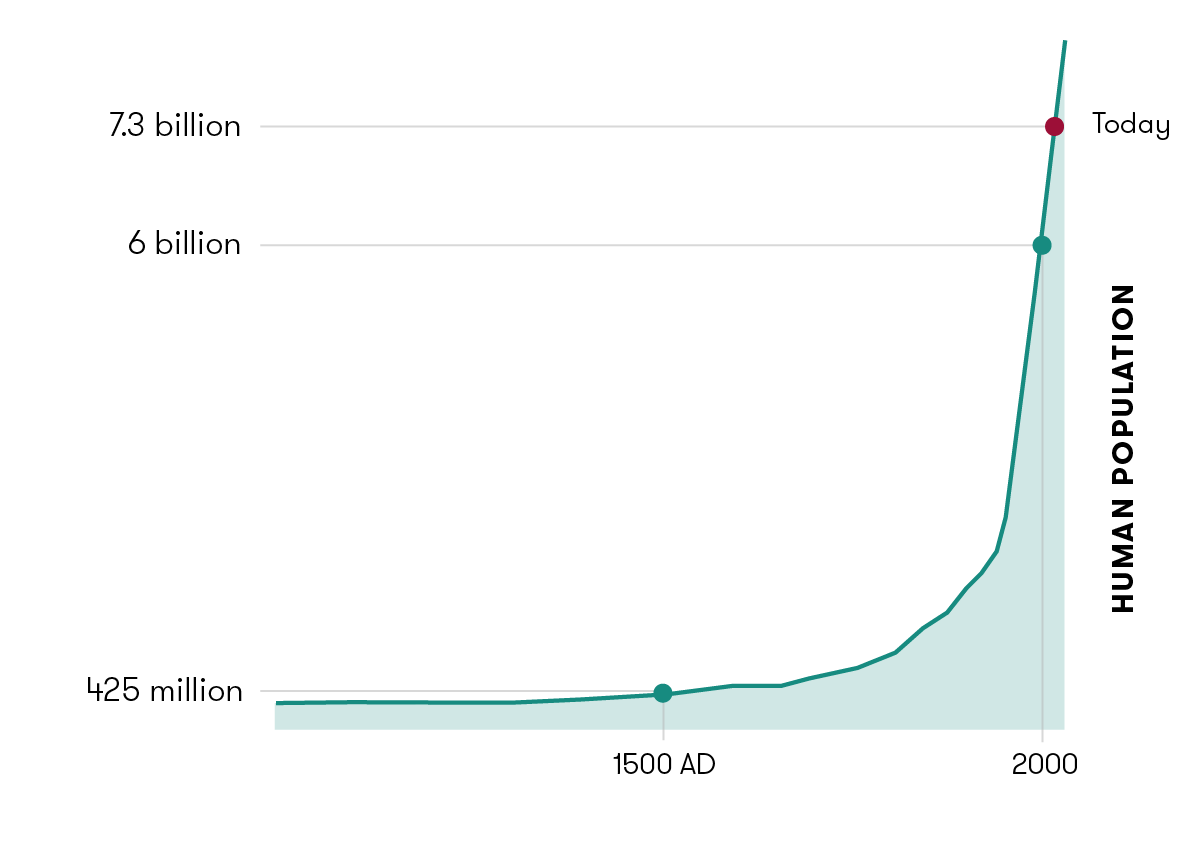
You're either an idiot or a troll or a Russian troll or all three. Either way, the world population *is* growing at an exponential rate. This has been happening since about 1970. This is unsustainable.
-
Re:I will be doing one thing about it.
note - the 7 meter wave is on the ocean's surface, which can translate to a much larger wave once it hits the shore. Possibly over 50ft in areas with the correct beach conditions. (note how a nearly identical height wave in the ocean off Japan translated to 70-80 ft in certain bays and areas) It's survivable, but it's also a major disaster. http://www.science.org.au/nova/045/045key.htm.
Note how this site mentions a 400 theoretical meter asteroid and a well over 100meter(!) tsunami. 7 meters is a Japan like event. Some areas hardly felt a thing, others just got obliterated. One area was just the wrong combination and the water finally stopped up in the mountains, creating a whole new lake at over 1000 ft. But, of course, 140 meters is something that could easily be shot at or blown into smaller pieces first.
-
Design difference with TGV
My cynical nature seems to be not surprised about "that builders had ignored safety standards", in China.
One thing that should be mentioned is looking at the photos of the Chinese bullet train, is that the design did not inspire itself on one of the key advantages of the French TGV. That advantage being that the bogies are between the carriages and not under each carriage. Apparently the French designed it that way because it reduces the scope of damage due to derailment. The TGV has derailed, but it always derails in a straight line.
-
Re:Puff piece
This more scholarly article says copper supplies of easily extractable sources might run below demand by 2100, for the next 90 years we'll just see price spikes that lead to additional mines being opened and new sources being sought. Remember the US mineral reports on Afghanistan? There's tons of places on earth where mining has never even really been attempted or seriously studied due to various geopolitical forces.
-
Learn to google better.
Higher speed limits on the interstate can decrease accidents, but only if traffic already moves faster than the speed limits. It's not high speeds that are necessarily the problem, but rather variation in speeds. That should be the argument against these things, not that higher speeds save lives. http://www.pubmedcentral.nih.gov/articlerender.fcgi?artid=2621023 http://www.science.org.au/nova/058/058print.htm http://www.consumersunion.org/other/speedlimits/speed031500a2.htm http://www.roadsafety.org.uk/information/publish/article_127.shtml http://sense.bc.ca/disc/disc-09.htm http://www.motorists.org/speedlimits/
-
Re:Very important kind of experimentation!
You would simply be aware (insofar as awareness might be possible in such a universe) that the various components of wavefunctions decohere smoothly over time due to interactions and entanglements with systems
Actually, a very great and quite under appreciated physicist, HS ("Bert") Green, did show with colleagues that this collapse does occur just because of the interaction between systems and that mathematically it is not the least bit mysterious or spooky. Why the name of this man, who Max Born called "brilliant", is not better known has to be the real mystery.
See http://www.science.org.au/academy/memoirs/green.htm
In 1958 Bert published one of his best papers [53]. It was entitled 'Observation in Quantum Mechanics' and addressed one of the outstanding problems of modern physics, namely the process by which indeterminate superpositions in quantum mechanics become converted to the determinate, although possibly unknown, alternatives of ordinary macroscopic physics. For many years the prescription of von Neumann, usually called the 'collapse of the wave packet', was the accepted view of how this happened. As it assumed that some processes outside quantum mechanics had to be invoked, even going so far as involving the brain of the human observer, people were not comfortable with it, although it seemed the only possible answer. The best known representation of this difficulty appears in the well-known SchrÃdinger's cat paradox. Bert, together with a number of others such as Wakita and Ludwig, found a much more satisfying explanation, which is basically still the received description, although nowadays in various forms. The idea was to suppose that a measuring apparatus could be of almost any form so long as it was very complicated, that is, contained a very large number (often for mathematical convenience taken to be infinite) of components such as molecules or electrons. The system being measured could be microscopic. When the two systems interact, any 'interference terms' in the state of the microscopic system become vanishingly small purely as a consequence of the size of the measuring instrument. There are, of course, many processes in nature in which a human observer is not involved â" especially before homo sapiens evolved â" and the von Neumann description is quite unable to say how these could happen. However with Bert's theory all one has to do is to replace the measuring apparatus by the environment to bring about the necessary disappearance of interferences. The only place where this very satisfactory explanation might run into some difficulty is in the early evolution of the universe, where there is no environment!
-
Nuclear power
don't listen the CATO institute, they're not very trustworthy.
First, why do you say CATO is not trustworthy? Do you trust Forbes? That article CATO has is from "Forbes", CATO just reprinted it. As this next one is anti-nukes you probably won't accept it either but there goes. Dating from 2005 " True Costs of Nuclear Power -- Half-a-Trillion Dollars Sunk" says electricity from nuclear power plants cost at "least 9.0 cents a kilowatt-hour, far more than other readily available fuels." But the most important assessment of nuclear power's profitability is Wall Street and Wall Street has never funded nuclear without subsidies.
Yucca mountain is no longer a viable storage site if that is what you were talking about. They found a fault ran underneath it that they didn't think did.
Why should they be surprised? Back in the '70s a building was damaged when Yucca Mountain was hit by an earthquake. Then several years ago another earthquake hit near Yucca.
The general impression I get from your post is that you think nuclear power is somehow really dirty.
Nuclear power is dirty, as are all sources of power we could use. even geothermal energy is dirty.
All you need for long term storage is a geological stable site that is isolated from the water table.
And where will sites like this be found?
I was not aware of mines on native lands, most of the best mines are in Canada from my understanding.
Those mines in Canada are on First Nations's land. "Greenpeace joins First Nations and citizens to oppose Sharbot Lake uranium exploration". "A Violation of Algonquin Law".
And it's not just the US and Canada that mines uranium on Native lands. Australia does it as well as other nations.
As for "government funding" it's just government loans that I've heard of no grants
From January 2007, "Analysis of Nuclear Subsidies in Lieberman-McCain Climate Stewardship and Innovation Act of 2007 [pdf]". It says "Finally, Sec. 323 of the bill enables projects within different technology categories, including nuclear power, to bid for an additional federal grant of as much as $100 million - or more if approved by the Secretary of Energy."
Now those subsidies are just US ones not Chinese, French, Indian, or Russian.
Falcon
-
Re:It's not the heat, it's the stupidity.
Paper recycling is pointless. It biodegrades...
Theoretically. Practically, no, not once it goes into a landfill. That's why you can still find readable newspapers from half a century ago.
As a rule, stuff doesn't really biodegrade once it goes to the dump.
-
No Evidence Offered
Before accepting the argument that we are imminently running out of a whole slew of elements, it would be nice to see a reasonably solid case presented for even one of them.
Looking around for a source that actually makes a case for running out of any of these elements what I came up with are references to New Scientist articles that do nothing of the sort: http://www.idtechex.com/products/en/articles/00000591.asp
and
http://www.science.org.au/nova/newscientist/027ns_005.htmTo the extent that this is even addressed, the articles make appeals to uncertainty - production figures are lacking and good estimates of reserves don't exist - then offer specific dates for running out, alluding to the USGS as providing the data used to make these claims. No explanation of how any of the calculations were done, nor an enumeration of the assumptions regarding supply on which they were based.
So lets pick one of the elements deemed most at risk, gallium say, nearly all of which is used in GaAs electronics.
Actually reading the relevant USGA report: http://minerals.usgs.gov/minerals/pubs/commodity/gallium/mcs-2008-galli.pdf and also consulting this industry paper (gallium is discussed near the end): http://www.indium.com/_dynamo/download.php?docid=552
we learn the following.- The principal source of gallium is bauxite, a widely distributed ore of aluminium for which the reserves are immense.
- Currently, less than 10% of the gallium in bauxite is extracted, apparently due to technology and cost considerations (that is, at current prices and with current technologies it isn't sufficiently profitable to do it).
- Current refinery production is around 80 tons annually, substantial gallium is already recycled, but considerable growth in demand is expected.
- The total world supply of gallium in mineable bauxite ore is estimated at (whether or not the gallium is considered recoverable) is estimated to exceed one million tons.
So: if extraction rates can rise to 10% then the world supply is really 100,000 tons. About a 1000 year supply at current usage rates. If we suppose that higher prices and more advanced technology can increase the extraction efficiency beyond this, then the supply is correspondingly increased.
Now there might be an impending imbalance in supply and demand if the total extraction rate by the aluminum industry is too low to match demand in the future. But this is quite different from "running out". Better extraction and more efficient use of gallium could redress it (both natural results of higher prices), and new technologies might largely supplant GaAs with superior products (quantum dot lasers, organic solar cells, anyone?). At some point recycling might take over as the principal supply (one of the reasons that iron production has flattened).
-
Re:So
Yeah, because bank tellers are very well trained in psychology. Oh and even if all banks including small Credit Unions were retro fitted with the PHI (Project Hostile Intent) from your article, people 'of interest' will just put the money under their mattress.Seriously, how can anyone think that they can "make sure" that someone isn't a terrorist by asking the subject a few questions?
By watching their unconscious responses when they answer.
The technology in that article is vaporware and only aims to make the company 'selling' it rich leveraging off people's fear. -
Re:So
Seriously, how can anyone think that they can "make sure" that someone isn't a terrorist by asking the subject a few questions?
By watching their unconscious responses when they answer. -
Re:I hope they do away with the tunnelsMRI machines cost several million dollars http://www.science.org.au/nova/062/062key.htm an average MRI machine costs approximately $2 million to buy and install http://www.phc4.org/reports/fyi/fyi27.htm Overall cost of the MRI machine was nearly $1 million http://www.bellevuehospital.com/new_mri_moves_in.htm Construction costs approximately US$ 1 million per Tesla http://en.wikipedia.org/w/index.php?title=Magnetic_resonance_imaging&oldid=170202436
-
Re:Shark School
Their lack of immunoresposive antigenicity makes embryonic stemcells transplantable between individuals.
Ah, no, that's completely wrong. According to the Australian Academy of Science, which was the first link that popped up in Google, one of the first hurdles in stem cell therapy is immune rejection. To quote:
"Patients receiving a graft of embryonic stem cells or adult stem cells sourced from cadavers would probably be treated in much the same way that organ transplant recipients are treated. The grafts would be matched to the individual patient and anti-rejection drugs would be used. Patients receiving brain cells may not need these drugs; the brain seems to get away with less surveillance by the immune system than other parts of the body."
They do mention that "there is one type of stem cell known as a mesenchymal stem cell that seems to evade detection by the immune system", however they are limited to "treatments of bone and joint diseases or repair heart muscle damaged during a heart attack". Thus, the statement that all stem cells "lack
While there could be ways that eating stemcells could preserve their restorative effects
And this would be where I realized you were probably just quoting a wikipedia article.
And parthenogenesis is another example of pluripotent primitive cells.
Only insofar as any embryonic tissue will contain stem cells. But there's nothing particularly special about a parthogenetically created embryo.
So, would you care to try again? -
Re:And the cause of the cooling?
Just like you are a product of American school institution.
ps. Read this -
Re:And the cause of the cooling?Doesn't the ocean rise due to an increase in the temperature of the water (expansion) ?
It increases both because of melting ice and thremal expansion. The expansion is projected to be the dominating cause over the next 100 years or so. But theoretically, if all ice in antarctica melted the sea level would rise 60 meters(!).
More can be read here (among other places): http://www.science.org.au/nova/082/082key.htm
-
Re:Adaptive OpticsThe only way for ground-based telescopes as a class to "adjust" to increasing contaminants and light pollution and to compensate for natural absorption (a lot of which is due to water vapour), scattering and emission in the atmosphere is to build them higher, dryer and more remote.
Early observatories were built near (or within!) cities. With each subsequent generation they were moved further away and to higher altitudes to get away from pollution (light and chemical) and above as much of the atmosphere as possible.
The current generation of top telescopes is to be found in places like central Chile at altitudes of about 2000m. The next generation will be in places like the high Atacama desert (further north in Chile) or even in Antarctica, both at altitudes of 3500-4000m -- even more remote and even drier (yes, the air in central Antarctica is very dry). -
Re:Two-Dimensional
and if this new... uh... material is just graphite, can you send me some graphite bundles from the jewlery shop? it has as much a right being called planiar diamond as graphite.
Only if because you don't know what you're talking about.
Let me hit you with some undergraduate-level chemistry:
Graphite is the planar crystal conformation of carbon where each carbon atom binds to three others, forming plane unit rings of 6 carbon atoms. See this image, for example. The bonds between the layers are not chemical bonds. They are van der Waals bonds, which are intermolecular bonds, and are far weaker than a real chemical bond.
Diamond, on the other hand, is a conformation of carbon where the atoms bind with four others in a tetrahedral fashion. See this picture. All bonds here are equally strong, and far much stronger than the interplane bonds in graphite. That's why diamond is hard.
Fullerenes on the other hand, are bonded like graphite, with three bonds on each carbon. However, in the case of these molecules, there are both five and six-member rings, causing a curved structure. See this picture.
These are the three distinct types of stuctures pure carbon can have. This monolayer compound belongs to the first. It is a monolayer of graphite, or a single 'graphite molecule' if you want.
-
Re:Just for the record...Actually, an Australian company has developed a cost-competitive method that uses Corn Starch to create biodegradable plastic. There's many links available here.
This still does not solve our problem with major dependence on black gold.
-
Re:What is a buckyball?
I didn't read the article myself, but instead went to google and searched for buckyballs. I didn't know anything about them before either, but I found this site to be particularly helpful. http://www.science.org.au/nova/024/024key.htm
-
Re:Air bags are safety hazards
I know a guy who died because he was wearing a seat-belt in a car crash.
From experience attending crash scenes I have never seen this. The crash, assuming it happened, must have been in an open car without rollbars but then generally if it was that old it wouldn't have seat belts.
From extensive studies in Australia the facts are clear. Seatbelts save many more lives than being unrestrained.
Just a few google responces to "seatbelts safety australia"
Death-defying designs for car safety
Seatbelts & Restraints the facts -
Re:Air bags are safety hazards
I know a guy who died because he was wearing a seat-belt in a car crash.
From experience attending crash scenes I have never seen this. The crash, assuming it happened, must have been in an open car without rollbars but then generally if it was that old it wouldn't have seat belts.
From extensive studies in Australia the facts are clear. Seatbelts save many more lives than being unrestrained.
Just a few google responces to "seatbelts safety australia"
Death-defying designs for car safety
Seatbelts & Restraints the facts -
Re:Slashdot proves globalwarming!Well, it's surprising, but it's also what we were taught in my chemistry classes. As it turns out DDT is mostly safe for humans (yeah, it is somewhat toxic, but it would take a lot to kill you, or even make you feel ill). People practically lived in DDT (spraying their houses, clothes, everything) without obvious health-effects.
On the other hand, people was going somewhat overboard in their enthusiasm of spraying with DDT, and the long time for natural decomposition meant it would accumulate through the food chain. One of the effects spotted was weaker eggs in birds of prey, especially those eating fish, such as in the antarctic region. As usual, it was the continued increased exposure that worried scientists, not the short-term effects (and yes, we live on top of the food-chain too).
Oblinks:
- ToxFAQ from CDC for DDT
- Short article about DDT usage in Australia
- More from the CDC about DDT and Malaria, look especially at figure 7
- Another overview article
- A typical "let's all spray with DDT again" article
So, it seems reasonable that we could continue to use some DDT, but because of the worrying long-term effects, it shouldn't be used as freely as in the 40's and 50's. The fact that we are still debating it's effects after 60 years shows us that Malaria/DDT is not an easy issue. As an added complication comes the economic divide between north and south, if it was us living in malaria-infected areas, we would probably have kept spraying...
-
Those crazy Aussies...
I suspect that the story may have been sensationalized somewhat ("Killer Virus Created! Extra Extra, Read All About It!"). But somehow I'm not surprised that Australians would be involved.
I guess it's their history of using biological agents to control pests (like rabbits), such as myxoma virus in the 50's. Or Rabbit Calicivirus Disease, which was released onto the mainland after escaping from a test facility on Wardang island, ripped through the rabbit population, and was later was smuggled into New Zealand by some farmers who thought it would be a good idea to let it loose and see what happened. I think it's a pretty safe bet that there are some folks over there who are seriously considering using it in the wild.