Slashdot Mirror
Domain: scotland.gov.uk
Stories and comments across the archive that link to scotland.gov.uk.
Comments · 24
-
Re:Not going to be as rosy as the YES! campaign sa
Imagine how the Scottish feel having to accept crippling austerity to prop up reckless English banks. Yes, obviously RBS is Scottish
Just going to quote this here so readers can ponder this contradiction. RBS was bailed out at huge expense. It is indeed based in Edinburgh and the S in RBS stands for Scotland. So this is a very strange argument to make.
but it's losses were all made in London under weak UK regulation from the Thatcher era.
Ye gods, here we go blaming Thatcher again. You realise she's died of old age, don't you? Labour was voted in on the back of Labour voting Scots multiple times since 1991 and any of them could have changed banking regulations. None of them did. What about "true Scotsmen" like Salmond? Well he strongly supported the disastrous takeover of ABN AMRO that was largely responsible for crippling the bank and directly contributed to tanking the UK economy. In fact not only did he support RBS politically, he actually worked for them for a good chunk of his career.
In short: blaming Thatcher, a dead woman who was not in power for the last 23 years, for the failure of a Scottish bank due to a deal strongly supported by the erstwhile future leader of Scotland, typifies the kind of thinking that is making the Yes campaign seem more and more unreal.
-
Re:Also this deliberate pretended stupidity
What's with the name calling and vitriol? Usually I see people reacting this way when they hold and defend beliefs that are based on faith rather than hard data.
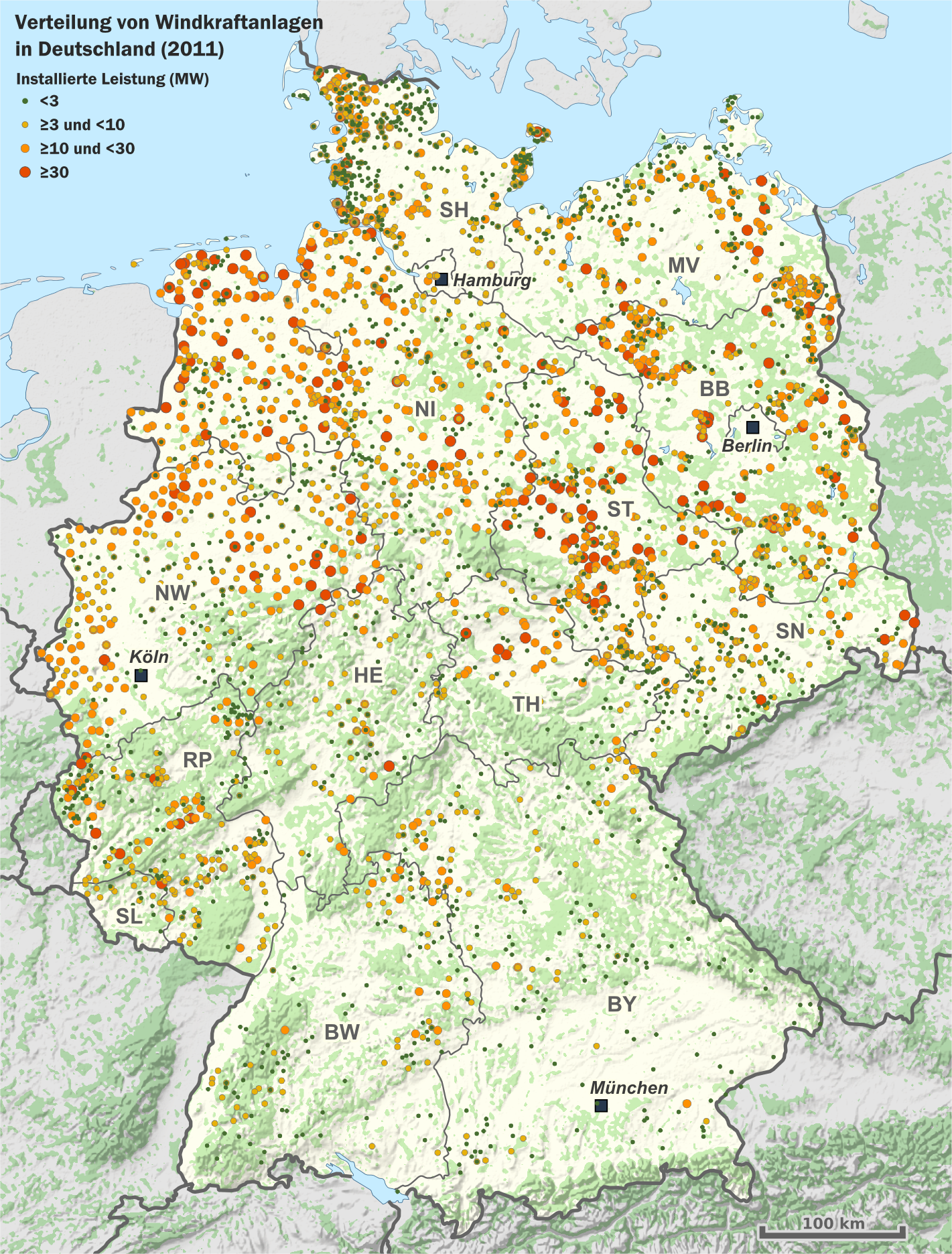
In any case, you should re-read what I wrote: "given that most of Germany's wind power is installed near the norther sea shore and Denmark & Poland are there too". A localized loss of wind is going to affect a majority of production in both Germany and Denmark. We've mapped wind resources out very accurately, you know.
-
Re:What society really needs to do
Okay so you claim whites have "far more opportunity" to own cars. And yet, according to this study in Scotland: "The Scottish Government (2012) reports that Indian, Pakistani and Chinese households are the ethnic groups most likely to have access to a car."
But according to the stats in OP's link, white applicants in Scottish cities have far higher pass rates than Chinese and Asian/Asian British (mostly Pakistani and Indian) applicants.
So... basically you are making stuff up, you think it sounds good, you do no research to confirm your guess, and you state it authoritatively. And then your "out" is to accuse others of being hellbent on backing up their racism, which is merely a ploy to excuse your own incompetence. Yeah, if the other guy is an evil racist, then of course you're not going to waste your time doing research and vetting your hypotheses... who would waste their time on a racist...
Of course, you're wrong about pretty much everything you said, so there's that...
-
Re:Unfair comparison
I don't think you have much experience of UK government consultations then - my experience tends more towards the devolved Govs, but we worked closely with our English counterparts and for popular topics i.e. smoking ban, local income tax, gay marriage rights etc. the number of responses was massive and came from both sides of the argument in droves.
To have a well read consultation without a single person coming out one side at all, is unheard of.
Don't take my word for it though - all consultations are open to the public (legally - if you catch one that isn't then report it to the papers) and all responses should be posted to the Web and the British Library with 3 months. In fact I really do implore all UK citizens (and citizens of devolved nations) to take some time to check these things out regularly - don't wait for the news to come out about some piece of shit law, catch the buggers at the idea stage and you have a much higher chance of stopping things.
UK consultation are a pest - different site for each one http://www.direct.gov.uk/en/Governmentcitizensandrights/UKgovernment/PublicConsultations/DG_170463
Scottish ones are a bit easier - http://www.scotland.gov.uk/Consultations/Current
Welsh ones are similarly easier - http://wales.gov.uk/consultations/?lang=en -
Scotland 100% renewable by 2020?
I'd like to see a source on this claim. All too often when I see such projections it's heavily weighted with unrealistic assumptions and back-end installations. For example, stuff like 75% of the renewable power will be installed in 2015-2020, and they're already behind their 25% goal by 2015.
A google search - seems the goal is 100% electricity from renewables, not energy. The goal for heating is only 11% by 2020:
Not until 2030(by Oil&Gas, admittably)
Equivalent, not 'actual' 100% - They'll be trading with other countries, buying non-renewable power, but will sell renewable at other times, but will net out 100%(realistic).
This page suggests they lucked out on the renewable resource trend; favorable wind and tide power locations. They're also 'ahead of schedule' and 35% of the way there. Still, they'll need to increase 8% a year to meet the goal, which I find a bit ambitious.That doesn't mean that I wouldn't be trying to reach similar goals if I was evil overlord of the United states; it's just that nuclear power would very much be part of the mix.
-
Re:Let the Fracking Begin!
Actually Soctland isn't planning to use any shale gas, and in fact intends to be 100% renewable by 2020. What that means is they will produce 200% of their energy requirements, half of which will be renewable. The overproduction will be exported, mostly to what remains of the UK after Scottish independence.
Scotland really doesn't need shale gas. There is plenty of demand for what fossil fuels they do have and vast untapped renewable resources (mainly wind). They will end up "oil rich" without the oil.
-
Re:Erosion of the Commons
England is a country that shares a border to the south of Scotland. Scotland has an entirely different legal system. A lot of people get confused by this (recently seen during the release of Al-Meghrahi).
It's worth noting that the union between the four countries of England, Wales, Northern Ireland and Scotland is been the source of much turmoil in politics as the country of England has a much higher population than the other countries. The current government in Scotland is a pro-nationalist (i.e. would like separation from the union) and is set to take the country to vote in 2012 about whether to remain in the union, change the balance of devolved powers or indeed leave union completely. The Scottish government currently has limited devolved powers that include the judicial system and policing. They have to balance their books from budgets assigned by Westminter (unlike England, that can publicly borrow)
e.g. the latest Police and Criminal Justice act was passed by Holyrood, but not by westminster. The Human Rights act was passed by Scotland, but not in England & Wales until many years later.
-
UK government doesn't have powers over power.
The Scottish Government doesn't agree.
http://www.scotland.gov.uk/News/Releases/2011/05/31082406
Westminster aims to recover the power to build nuclear stations in Scotland with the passing of the Scotland bill/Calman commission. We export electricity to England as it is so perhaps the next generation of nuclear stations will be so safe they can be built in Battersea where it's needed.
-
Re:Except what alternatives do we have?
Electricity isn't required "8 hours a day", and the grid required for current solar panels to supply an entire country's worth of power...
So you like most others ignored other energy sources. I mentioned two that don't depend on the sun shining, geothermal and wind. Geothermal is steady and reliable, and the wind is always blowing somewhere.
in the US, you have a lot of empty space, but over here in the UK we don't actually have room for all the of required panels.
So use other sources. At the beginning of 2011 the UK received over 5.2 gigawatts of wind power making it the eighth largest wind energy producer. The UK's wind potential is much higher. The University of Strathclyde says "it is theoretically possible to obtain more than 1000TWh of electricity each year from the wind." The University of St Andrews in Scotland says there's a lot of potential for geothermal. The Scottish National Minewater Potential Study [pdf] details some of that potential.
Falcon
-
Re:Solve yes...
Whilst the Glasgow fall in crime was not deemed to be significantly greater than the fall in crime in the control areas, the sister study in Airdrie DID indicate a statistically significant fall in the CCTV area, greater than in the control areas.
http://www.scotland.gov.uk/Publications/1998/12/978abe73-d412-4ea3-86a7-e5acf24c8d7a
The GP is right in that many studies simply don't come to a conclusion because of the difficulty establishing statistical significance. Not because crime didn't fall.
-
The UK is finally getting DNA retention right
Your DNA reveals a lot about you and so unauthorised access to is a clear invasion of privacy, which could only be justified by any protection against crime it causes.
Furthermore, any national database which can act as a primary index for further information held on you is a genuine totalitarian threat.
The outgoing Labour Government, which has been repeatedly noted on
The new coalition Government is committed to only retaining DNA of convicted criminals and temporary retention for those charged with violent and sexual offences, a model already applied in Scotland.
It should be noted that DNA is retained from crime scenes and that DNA of arrestees is checked against that before being destroyed. This is a world apart from the blanket retention that the outgoing Goverment pretended was necessary to solve certain cases.
-
Re:Watch out, realtors!
And just to ensure they know exactly which area's to target, the Gov provides a map.
I couldn't find a handy interactive map for the whole of the UK - but the stats are about. Affluent area's were ridiculously easy to identify long before Google.
-
Re:Efficiency
The thing you are missing is that there's roughly a factor of 4 multiplier. 25GW is peak generating power for wind power. If that were 25GW of continuous power, then it'd be enough to power say 20 million homes. Also we need to consider the economic disparity between US and Scottish homes. US GDP per capita is significantly better than Scottish GDP per capita. For example, from 2001, Scottish GDP per capita was under $25,000 compared to roughly $36,000 per capita for the US. I see no reason to get excited about extravagant energy consumption when there is corresponding extravagant GDP production as well.
-
Re:Promusicae has screwed up
"he only exceptions are the UK " sorry but just plain WRONG http://www.scotland.gov.uk/Topics/Justice/Civil that's Scottish law which is seperate and discinct from english law i am sure if you look you'll find that england also has plenty civil law cases.
-
This won't increase public safety
Billboards distract drivers and cause accidents. http://www.scotland.gov.uk/Publications/2003/08/17782/23546
These particular billboards could distract drivers worse than regular billboards. When you're designing a sign, you realize that you won't get much attention. There's a limit to visual acuity and available time as people move past your sign. You therefore make it simple. People get the message quickly and move on. These wanted posters invite you to take a close look so you can pick out the details and recognize the suspect if you see him/her. People will do that and there will be a net decrease in public safety as they smash into each other.
This is a clueless plan and a waste of the public's tax dollars. (Smoke comes out of my ears as I resist a rant.) -
Re:A simple rant.
Same things are happening in Scotland as England. My aunt is a primary school teacher, and she now has sixteen students out of a class of 30 who don't speak English as a first language (Polish, Bulgarian, Lithuanian, Japanese).
Our secondary schools also went for the multi-tiered level of basichigh school qualifications. Instead of just one exam (as in 'O' Grades) there is now Foundation, General and Credit levels. Also, marks are awarded through coursework and not just exams.
There is also a policy of closing down primary and secondary schools which have small class rolls, so that the stone buildings can be converted into luxury apartments. -
Better Theory
This has a significant impact on criminals
This theory also explains the "unexpected" delay: Basically you scared away some of the normal people, the potential victims and once there were less of them around the criminals followed.
These links about government surveys show that CCTV has almost no effect on crime.
link, link, link (PDF), link, link (PDF). -
Re:Why do you need machines?Because rather than voting for an MP along with maybe one or two other issues, a typical US ballot has DOZENS of candidates and issues on it, and the issues that appear on your personal ballot can vary according to which school district you live in, what part of town you live in (for things like roads), what LIBRARY district you live in, and so on.
It's orders of magnitude more complicated.
Here's the slate from San Francisco County for the upcoming election. The one from another city or county in California will have the same state and federal positions on it, but will have completely different local questions. One from a different state will be almost unrecognizable, as it will even have different federal officials (except in a presidential election year).
Now, compare that to this sample ballot from Canada or this one from Scotland and the problem should be obvious.
-
Only in Texas
British constitutional arrangements have always been moderately hard for outsiders to understand, and are now even more difficult. The Union parliament (in Westminster) happens to be the same institution as one of the National parliaments (for England). It isn't the same as the parliament for Scotland or Wales, and it doesn't (in general) make laws for Scotland or Wales, except with regard to things like foreign policy.
In principle Northern Ireland also has its own parliament. In practice it doesn't, because the Loyalists won't co-operate with the Republicans so the province is governed from Westminster - but nevertheless has its own laws.
So while it is true that 'UK MPs approve compulsory ID cards', this only applies in England, because 'UK MPs' don't have legislative authority over the rest of the UK. Of course, England is by far the largest of the nations of the United Kingdom. It's also by far the most authoritarian and right-wing nation of the United Kingdom.
The Scottish Executive have already said that Scotland will not have compulsory ID cards; I don't know what the position is for Wales and Northern Ireland, but in any case this law won't apply there. What will happen if someone from Scotland (who does not have to have an ID card) is stopped by police in England (where people will have to have ID cards) isn't clear, but doubtless this will get sorted out by the courts.
So this is a bit like the Texas legislature introducing compulsory ID cards, and the headlines saying 'US introduces compulsory ID cards'. It is true, sort of, but... only in Texas.
-
*Bits* of other people's countries?
The English still totally control two entire nations, and half of a third. And they violently put down resistance from the locals. Sure the empire is not as big as it used to be, but let's not pretend it's just "bits."
-
Danish Wind Powers Scandinavia
Denmark trades electricity with Norway, Sweden, and Finland on a regular basis (selling wind when it blows, buying hydro from Scandinavia when it doesn't); this means wind energy provides about 2% of _total_ consumption for that region (rather than 30% for just Denmark). Quick population reference for the region:
http://www.scotland.gov.uk/library3/environment/cc na-g05.gif
Now check out this image to get an idea of the proliferation of wind turbines in Denmark:
http://www.opet.dk/windsector/wind-intro.html
This grid setup does demonstrate that wind + hydro have a special synergy that can be used for grid integration -- an issue almost as important as extracting rewnewable energy itself. -
Re:That's solid logic...
Seems like the page you list is actually the #1 result on Yahoo - not Google. I get this rather crappy result on Google.
Google's sooo 2003... [yawn] -
The land of the free?
Unbelievable.
The USA has taken the lead in the incarceration rate.
It's prison population rate was between 686 (in 2001) and 702 (in 2000) prisoners per 100,000 of the national population, according to various sources.
Also see here and some additional info here.
I wonder what were the rates for 2002 and what they are today.
-
In sytematic use in Europe since 1992 (IACS)The EU has been systematically using satellite data to monitor farmers for almost ten years now, to prevent farmers falsely claiming government subsidies for crops they then never plant.
Every farm in Europe now has to submit an annual IACS form (Integrated Administration and Control System), listing what they are going to grow that year field-by-field; and submit new maps with it showing any changes in field boundaries (new fences etc), with the new areas measured to the nearest 100 square metres (0.01 of a hectare).
These plans are then automatically compared against the IR satellite photos of what actually gets grown. If you have planted less than you have claimed for, your entire subsidy claim is void. If it looks like you've done it intentionally, they'll nail you for fraud. (The inspectors are on results bonuses, so they don't take prisoners).
Crazy system, the C.A.P., in lots of ways; but without farm support, many of the more marginal Scottish rural areas would turn into depopulated deserts.