Slashdot Mirror
Domain: slashdot.org
Stories and comments across the archive that link to slashdot.org.
Stories · 37,380
-
Which Language To Learn?
LordStormes writes "I've been a Java/C++/PHP developer for about 6 years now. However, I'm seeing the jobs for these languages dry up, and Java in particular is worrisome with all the Oracle nonsense going on. I think it's time to pick up a new language or risk my skills fading into uselessness. I'm looking to do mostly Web-based back-end stuff. I've contemplated Perl, Python, Ruby, Erlang, Go, and several other languages, but I'll put it to you — what language makes the most sense now to get the jobs? I've deliberately omitted .NET — I have no desire to do the Microsoft languages." -
Edward Tufte's Library Up For Auction
px2 writes "I was poking around Christie's auction house after taking a look at the Apple 1 when I came across this: Beautiful Evidence: The Library of Edward Tufte. He's unloading everything from Galileo and Da Vinci firsts to a rotating Japanese astronomical text from 1801. I guess he didn't conjure his ideas on information design from thin air." Based on Christie's estimates, the collection of 29 artifacts could fetch in excess of two and a quarter million dollars. -
Researchers Take Down Koobface Servers
splitenz notes the first actions in the war against the Koobface botnet, taken on the heels of a comprehensive report (PDF) on the operations of the botnet and the criminal gang behind it. The researchers who analyzed Koobface are the same ones who brought Ghostnet to light. "Security researchers, working with law enforcement and Internet service providers, have disrupted the brains of the Koobface botnet.The computer identified as the command-and-control server used to send instructions to infected Koobface machines was offline late Friday (US Pacific time). Criminals behind the botnet made more than $US2 million in one year. Facebook accounts are used to lure victims to Google Blogspot pages, which in turn redirect them to Web servers that contain the malicious Koobface code. This action is only a stage in the war against Koobface." -
Saudi Arabia Bans Facebook
gandhi_2 sends in a brief Associated Press piece on Saudi Arabia's blocking of Facebook. "An official with Saudi Arabia's communications authority says it has blocked Facebook because the popular social networking website doesn't conform with the kingdom's conservative values. ... He says Facebook's content had 'crossed a line' with the kingdom's conservative morals, but that blocking the site is a temporary measure." Some reports indicate that at least some individual Facebook pages can be reached from inside the kingdom. There hasn't been an official announcement; the source noted above requested anonymity. Earlier this year when Pakistan and Bangladesh banned Facebook, it was over particular content — cartoons of Mohammed — and the Saudi ban may prove similar once more details emerge. -
Saudi Arabia Bans Facebook
gandhi_2 sends in a brief Associated Press piece on Saudi Arabia's blocking of Facebook. "An official with Saudi Arabia's communications authority says it has blocked Facebook because the popular social networking website doesn't conform with the kingdom's conservative values. ... He says Facebook's content had 'crossed a line' with the kingdom's conservative morals, but that blocking the site is a temporary measure." Some reports indicate that at least some individual Facebook pages can be reached from inside the kingdom. There hasn't been an official announcement; the source noted above requested anonymity. Earlier this year when Pakistan and Bangladesh banned Facebook, it was over particular content — cartoons of Mohammed — and the Saudi ban may prove similar once more details emerge. -
The Great Cyberheist
theodp writes "In this week's cover story, the NY Times Magazine delves into the mind of Albert Gonzalez, the hacker who is currently doing time (the longest sentence ever handed down for computer crime in the US) for masterminding attacks on the nation's leading retailers, reportedly costing TJ Maxx, Heartland, and other victimized companies more than $400 million. And that may just be the tip of the iceberg. 'The majority of the stuff I hacked was never brought into public light,' said one of Gonzalez's partners-in-crime. Another claims there 'were major chains and big hacks that would dwarf TJX. I'm just waiting for them to indict us for the rest of them.' Online fraud is still rampant in the US, but statistics show a major drop in 2009 from previous years when Gonzalez was active. While reportedly not a gifted programmer, even the Feds that Gonzalez two-timed admired his ingenuity, likening him to top CEOs. When asked how Gonzalez rated among criminal hackers, a prosecutor replied: 'As a leader? Unparalleled. Unparalleled in his ability to coordinate contacts and continents and expertise. Unparalleled in that he didn't just get a hack done — he got a hack done, he got the exfiltration of the data done, he got the laundering of the funds done. He was a five-tool player.' Accounting for time served and good behavior, Gonzalez is expected to get out of prison in 2025." Last June Rolling Stone ran a long profile of Albert Gonzalez written by Sabrina Rubin Erdely; they have dusted it off now that producer Eric Eisner has embarked on the development of a feature film based on Erdely's piece. -
The Great Cyberheist
theodp writes "In this week's cover story, the NY Times Magazine delves into the mind of Albert Gonzalez, the hacker who is currently doing time (the longest sentence ever handed down for computer crime in the US) for masterminding attacks on the nation's leading retailers, reportedly costing TJ Maxx, Heartland, and other victimized companies more than $400 million. And that may just be the tip of the iceberg. 'The majority of the stuff I hacked was never brought into public light,' said one of Gonzalez's partners-in-crime. Another claims there 'were major chains and big hacks that would dwarf TJX. I'm just waiting for them to indict us for the rest of them.' Online fraud is still rampant in the US, but statistics show a major drop in 2009 from previous years when Gonzalez was active. While reportedly not a gifted programmer, even the Feds that Gonzalez two-timed admired his ingenuity, likening him to top CEOs. When asked how Gonzalez rated among criminal hackers, a prosecutor replied: 'As a leader? Unparalleled. Unparalleled in his ability to coordinate contacts and continents and expertise. Unparalleled in that he didn't just get a hack done — he got a hack done, he got the exfiltration of the data done, he got the laundering of the funds done. He was a five-tool player.' Accounting for time served and good behavior, Gonzalez is expected to get out of prison in 2025." Last June Rolling Stone ran a long profile of Albert Gonzalez written by Sabrina Rubin Erdely; they have dusted it off now that producer Eric Eisner has embarked on the development of a feature film based on Erdely's piece. -
UK Twitter Users Declare 'I'm Spartacus'
An anonymous reader writes "Tweeters have joined forces to support Paul Chambers, the man convicted and fined for a Twitter message threatening to blow up an airport. A so-called 'I'm Spartacus' campaign encouraging users to 're-tweet' his words has also become a huge hit. The hashtag #IAmSpartacus is currently the number one trending topic on Twitter in the UK, with #twitterjoketrial in second place. Chambers is believed to be the first person convicted in the UK for posting an offensive tweet. After the hearing, actor and Twitter fan Stephen Fry tweeted that he would pay Chambers' fine. Comedian Dara O'Briain tweeted that the verdict was 'ludicrous' while Peep Show actor David Mitchell said it was 'punishment for flippancy.'" I suspect not as many people will re-tweet on behalf of Garreth Compton. -
After Online Defamation Suit, Dismissal of Malicious Prosecution Claim Upheld
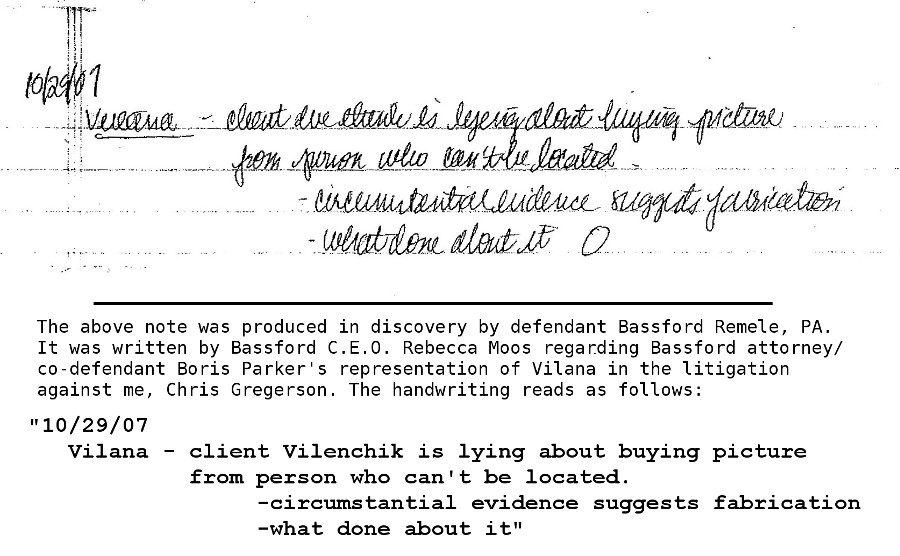
Christoph writes "I'm the Slashdot user who was sued for defamation (and six other claims) by a corporation over negative statements on my website. I prevailed (pro-se) in 2008. The court found the other side forged evidence and lied. In 2009, I sued the other party's lawyers for malicious prosecution/abuse of process (the corporation itself is dissolved/broke). One defendant had stated in writing their client was lying, but the trial court dismissed my claim for lack of evidence. I appealed, and this Tuesday the Minnesota Court of Appeals upheld the dismissal, completely ignoring the defendant's written admission (and other evidence). They further found it was not an abuse of process to sue to 'stop the publication of negative information and opinion.'" -
Tetris May Reduce PTSD, But Pub Quiz Makes It Worse
Last year we discussed news that researchers from Oxford University discovered playing Tetris after watching a disturbing film reduced the amount of intrusive flashbacks experienced by test subjects. The researchers then wondered if that was true for other games, so they began a new study, the results of which were just published in the journal PLoS ONE. Reader SpuriousLogic points out that while they repeated their earlier finding about Tetris, they also found that subjects who played trivia game Pub Quiz instead reported more flashbacks. "Research tells us that there is a period of up to six hours after the trauma in which it is possible to interfere with the way that these traumatic memories are formed in the mind. During this time-frame, certain tasks can compete with the same brain channels that are needed to form the memory. This is because there are limits to our abilities in each channel: for example, it is difficult to hold a conversation while doing math problems. The Oxford team reasoned that recognizing the shapes and moving the colored building blocks around in Tetris competes with the images of trauma in the perceptual information channel. Consequently, the images of trauma (the flashbacks) are reduced. The team believe that this is not a simple case of distracting the mind with a computer game, as answering general knowledge questions in the Pub Quiz game increased flashbacks. The researchers believe that this verbal based game competes with remembering the contextual meaning of the trauma, so the visual memories in the perceptual channel are reinforced and the flashbacks are increased." -
Pluto Might Be Bigger Than Eris
astroengine writes "Look out, the battle of the dwarf planets is about to re-ignite! During last weekend's rare occultation of a star by Eris, astronomers managed to gain one of the most accurate measurements of Eris' physical size. When three Chilean telescopes watched the star blink out of sight, astronomers were shocked to find that Eris is actually a lot smaller than originally thought. So small that it might be smaller than Pluto. On speaking with Discovery News, Eris' discoverer Mike Brown said, 'While everyone is more interested in the "mine is bigger than yours" aspect, the real science is the shockingly large density of Eris.' The mass of Eris is well known, so this means the object is more dense than Pluto. Does this mean the two mini-worlds have different compositions? Did they evolve differently? In light of this finding, is the underlying argument for Pluto being demoted from the planetary club on wobbly ground?" -
Obama May Toughen Internet Privacy Rules
CWmike writes "The Obama administration is considering plans to step up policing of Internet privacy issues and to establish a new position to direct the effort, reports the WSJ, which cites unnamed sources. Any push for stronger federal oversight over online privacy is likely to be welcomed by privacy advocates increasingly concerned about the data-collection and data-sharing practices of big Internet and marketing companies. High profile cases such as the uproar over Facebook's personal data collection habits and the public reaction to Google's continuing problems over its Street View Wi-Fi snooping have created a broader awareness of online privacy issues. The big question, though, is just how successful any fresh attempt at enforcing new privacy strictures on the Internet will be with Republicans soon to be in charge of the House." -
Obama May Toughen Internet Privacy Rules
CWmike writes "The Obama administration is considering plans to step up policing of Internet privacy issues and to establish a new position to direct the effort, reports the WSJ, which cites unnamed sources. Any push for stronger federal oversight over online privacy is likely to be welcomed by privacy advocates increasingly concerned about the data-collection and data-sharing practices of big Internet and marketing companies. High profile cases such as the uproar over Facebook's personal data collection habits and the public reaction to Google's continuing problems over its Street View Wi-Fi snooping have created a broader awareness of online privacy issues. The big question, though, is just how successful any fresh attempt at enforcing new privacy strictures on the Internet will be with Republicans soon to be in charge of the House." -
Google Says No More Cash For Trash Web Bugs
Trailrunner7 writes "It's bound to happen: you create a cool, forward looking incentive program designed to tap the 'wisdom of the crowd' and help make your products better, only to find out that, in fact, the 'crowd' isn't all that wise — and now wants you to pay cold, hard cash for their tepid ideas. That's the experience that Google appears to have had since announcing that it would extend its bounty program for bugs from its Chromium platform to the various Web applications that the company owns. In an updated blog post this week, the company said it has already committed to some $20,000 in bounties, but also provided some 'clarification' to the terms of the reward program, saying that — in essence — not all bugs are equal and that researchers dumping low priority vulnerabilities shouldn't expect to get much in return. 'The review committee has been somewhat generous this first week,' wrote Google's Security Team in a blog post. 'We've granted a number of awards for bugs of low severity, or that wouldn't normally fall under the conditions we originally described.'" -
The Return of the Microsoft Kin
symbolset writes "In a surprising turn of events, Engadget is reporting that the Microsoft Kin One and Kin Two will have an encore in the market. Some years ago Microsoft purchased Danger, Inc, services provider for the legendary Sidekick line of phones, and set upon refreshing them for a new generation in 'Project Pink.' Several project restarts and one data loss incident later, the project had lost favor internally and relations with the launch carrier Verizon had gone sour. The product was launched anyway to dismal sales and yanked from the market in under two months. According to the article, the costly data plan was thought to be to blame for the poor sales, so cellular data services and features that require them have been removed." -
The Return of the Microsoft Kin
symbolset writes "In a surprising turn of events, Engadget is reporting that the Microsoft Kin One and Kin Two will have an encore in the market. Some years ago Microsoft purchased Danger, Inc, services provider for the legendary Sidekick line of phones, and set upon refreshing them for a new generation in 'Project Pink.' Several project restarts and one data loss incident later, the project had lost favor internally and relations with the launch carrier Verizon had gone sour. The product was launched anyway to dismal sales and yanked from the market in under two months. According to the article, the costly data plan was thought to be to blame for the poor sales, so cellular data services and features that require them have been removed." -
Palin E-Mail Snoop Gets Year In Prison
netbuzz writes "David Kernell, whose prying into Sarah Palin's personal e-mail account caused an uproar two months before the 2008 presidential election, was today sentenced to a year and a day by a judge in Knoxville, Tenn. Kernell was convicted of misdemeanor computer fraud and felony obstruction of justice back in April. His attorney had argued for probation on the grounds that what Kernell did amounted to a prank that spun out of control." -
The Coming War Over the Future of Java
snydeq writes "Fatal Exception's Neil McAllister writes about what could be the end of the Java Community Process as we know it. With the Apache Software Foundation declaring war on Oracle over Java, the next likely step would be a vote of no confidence in the JCP, which, if the ASF can convince enough members to follow suit, 'could effectively unravel the Java community as a whole,' McAllister writes, with educators, academics, and researchers having little incentive to remain loyal to an Oracle-controlled platform. 'Independent developers could face the toughest decisions of all. Even if the JCP dissolves, many developers will be left with few alternatives,' with .Net offering little advantage, and Perl, Python, and Ruby unable to match Java's performance. The dark horse? Google Go — a language Google might just fast-track in light of its patent suit with Oracle over Android." Reader Revorm adds related news that Oracle and Apple have announced the OpenJDK project for OS X. -
Google Engineer Sponsors New Kinect Bounties
ashidosan writes "Hot on the heels of the Adafruit competition, Matt Cutts (a search spam engineer at Google) is sponsoring two more $1,000 bounties for projects using Kinect. 'The first $1,000 prize goes to the person or team that writes the coolest open-source app, demo, or program using the Kinect. The second prize goes to the person or team that does the most to make it easy to write programs that use the Kinect on Linux.'" Relatedly, reader imamac points out a video showing Kinect operating on OS X. -
Google Says 3rd Parties Would Be Liable For Java Infringement
angry tapir writes "Third parties, not Google, would be liable for any Java copyright violations in the Android mobile OS, according to a filing Google made in the US District Court for the Northern District of California. Oracle sued Google in August over a number of alleged Java patent and copyright violations in Android." -
Can Windows, OS X and Fedora All Work Together?
greymond writes "In my ever growing job responsibilities, I've recently been tasked with documenting our organization's IT infrastructure, primarily focusing on cost analysis of our hardware leases and software purchases. This is something that has never been done in our organization before and while it's moving along slowly, I'm already seeing some places where we could make improvements. Once completed, I see this as an opportunity to bring up the topic of migrating the majority of our office from Windows 7 to Linux and from Exchange to Gmail. However, this would result in three departments each running a different system: Windows, OS X, and most likely Fedora. Has anyone worked in or tried to set up an environment like this? What roadblocks did you run into? Is this really feasible or should I just continue to focus on the cutbacks that don't require OS changes? (The requirement for having three different systems is that the vast majority of our administration, who rely solely on an install of Microsoft Windows, Word and Excel, are savvy enough that if they came in and saw Gnome running on Fedora with Open Office they'd pick it up fast. However, our marketing department is composed entirely of Apple systems, and the latest Adobe Creative Suite doesn't seem to all work under Wine. The biggest issue is with the Sales department though, as they rely on a proprietary sales platform that is Windows only — and generally, sales personal give the biggest push back when it comes to organizational changes.)" -
Mystery 'Missile' Identified As US Airways Flight 808
sean.peters writes "The mystery missile discussed on Slashdot Tuesday? It was US Airways 808 from Honolulu to Phoenix. An amateur sleuth checked the time against airline schedules, then the following day, checked out a webcam that was trained in the appropriate direction. He found the exact same contrail at the time AWE808 was coming over. The author deals persuasively with a number of objections to his argument." -
Kinect Hacked, Adafruit Bounty Won
scharkalvin writes "Adafruit has announced a winner to their bounty for an open source driver for the MS Kinect. From the article: 'We have verified that it works and have a screenshot from another member in the hacking community (thanks qdot!) who was also able to use the code. Congrats to Hector! He's running all this on a Linux laptop (his code works with OpenGL) and doesn't even have an Xbox!'" We talked about Adafruit's bounty yesterday. -
Blender 3D 2.49
terrywallwork writes "A while back I received an email from the people at Packt publishing telling me of a new book they had just put out, and since any email the mentions the possibility of being able to read new Blender books instantly gets my attention, I clicked the link and was presented with a web page detailing a book called Blender 3D 2.49 - Architecture, Buildings and Scenery. This was confusing as I remember having reviewed a book with almost the same title and identical cover picture. So I went to my reviews and checked and sure enough I found a review with the same book cover and almost the same title. So I deleted the email and just put it down to an automated email snafu. Unfortunately I should not have been so quick with the delete button as it turned out to be an updated version of the previous book they put out." Read on to see what Terry thinks of this book. Blender 3D 2.49 - Architecture, Buildings and Scenery author Allan Birto pages 376 publisher Packt Publishing rating 8.5/10 reviewer Terry Wallwork ISBN 1849510482 summary Using Blender 3D 2.49 to create architectural visualizations For those that do not know architectural visualization is the technique of modeling the exterior and interior parts of a building so a potential client can see what it looks like (usually before it is constructed). In the old days before 3D, this would be done using an artists painting/drawing or someone would have constructed a model out of wood or card, now that all this kind of modeling is done on computers, this book covers the processes involved in visualization using Blender 3D 2.49.
This book is written by Allan Brito, who is a very skilled modeler and user of Blender 3D and has written multiple books on using Blender for various tasks. He has a very popular website that covers all aspects of architectural modeling (http://www.blender3darchitect.com). Mr Brito is very skilled at both the topics of Blender and Architectural Visualization.
Knowing all the above how does the updated book do in explaining the process of using Blender 3D to do Architectural Visualization? The short answer is very well given the page count.
The book starts by guiding the user through the basic but most important features of Blender, so as to allow a person that has never used Blender to get their feet. Covering the Blender interface and the basic ways of interacting with objects and meshes in Blender. To further help with this many pictures are used that for the most part are very clear and really help in getting across how to carryout particular tasks.
On a side note about the pictures: Some of you may remember that in the older version of this ebook the pictures were all in color, while in this newer updated version, most of the pictures in the ebook version are in grayscale? This was not intentional and having contacted the people at Packt, they say it's a mistake and are investigating. So they will probably fix that issue soon, then you will be able to re-download the book from Packt. So I am assuming in this review that the correction gets carried out. In any event even with the grayscaled pictures they are still useful and it is still possible to follow along using the pictures, it doesn't get in the way of using the book.
One thing that really stood out in this getting started section was the explanation of the Active Window concept, as I don't often see that described users are normally just left to figure that out, it was good Mr Brito took the time. Chapter 1 through 3 cover most of the basics of using Blender.
At Chapter 4 with the basic Blender tutorial chapters out of the way is when we start to use what we have learned to do Architectural Visualization tasks. Also scattered throughout the book are sections which cover the theories and fundamental concepts of Architectural Visualization. They help in explaining why certain things are done the way they are and how they are different from more traditional ways of doing 3D modeling.
A good amount of text is given over to using Blender to do precision modeling using the 3D grid and various snapping and 3D Cursor techniques. Which is useful for a lot of different Blender tasks not just Architectural Visualizations. Coverage of what layers are used for in Blender and how to use them was also present, a useful section on using layers for backups when doing complicated modeling changes was used in the book to show their usefulness.
Throughout the text different pieces of furniture and building elements are constructed, while introducing the user to different features of Blender at the same time. Various modifiers are explained that are deemed useful for Architectural Visualization, such as the mirror modifier and the array modifier. An informative section of the text goes over the process involved in making rounded corners for building walls using Blenders spin tool. As well as showing you have to construct items yourself, a discussion of when and how to use other peoples models is detailed, and various links to useful sources for models are provided. A nice clear explanation of edge loops and control loops was given helping new users when it comes to using the Subsurf Modifier and constructing object from scratch, even though the book is not really trying to teach you all the modeling fundamentals.
Importing models was covered and here although it gives you just enough information to import a DXF file and modify it for use within Blender, here I think more time should have been taken to describe more of the importing features and the various scripts and techniques used for cleaning and importing the varied import formats that Blender supports. Although hopefully this section of the book should give you enough information to find out the rest of it on your own, it's an important topic and needed more time as lots of things can and do go wrong when importing models from other formats that are not native to Blender.
Once the book has gone over how to create some simple objects it moves on to showing how use materials, textures and UV mapping over the next 3 chapters, giving enough information to do basic materials and texturing work for an Architectural Visualization project, even covering how to use Radiosity in later chapters. Though baking of textures is not covered in any detail. The sections on UV Unwrapping were clear and I think a new Blender user would have had no problems understanding them. UV Unwrapping is often a difficult subject to describe in a book especially describing seams, but the book does it well. There is the odd technical mistake about pinning preventing you from moving UV Unwrapped Nodes but its not a big issue, and it arguable depending on how you read it weather it's wrong at all. Thankfully there are very few problems like that in the book. Another advantage of this updated book is that a lot of the bad grammar and mistakes have been removed and for a book with over 300 pages there are not many typos.
In Chapter 10, Lighting is covered and this is a highlight (no pun) of the book. The descriptions of the different types of lights in Blender and their uses for Architectural Visualization is very detailed, going over both theory and practice on how to use them within Blender. Although its a small thing I thought the description of the Dist: parameter for lighting was one of the best I have read from a Blender book. I found out things even I didn't know about Dist. As a final test of all the things learned in the lighting section a demonstration of how to light a Solarium is used show the uses of various lighting types, which I think would be useful.
The more exotic lighting techniques are covered in chapter 11, those being Radiosity and Ambient Occlusion. Given the Blender 2.4x series doesn't have fully fledged global illumination (yet), the coverage of radiosity is welcome as there will be times where it comes in useful, even if it is being phased out slowly. More useful was the text on Ambient Occlusion and its various uses and options to bring a rendered scene to a new level of realism. The only real criticism I have of this section was that baking was not covered and being able to bake Occlusion is very useful, but other than that a good chapter.
Chapter 12 covers how to use external render Yafaray with Blender to produce globally illuminated scenes. Some of Yafaray's most important options as regards setting up Blender materials to be used in Yafaray are covered, and a good description of the different techniques that Yafaray uses to render a realistic 3D scene are described in some detail. Though obviously in a book this size an in-depth treatment of Yafaray could not be done, but enough information to get you started with Yafaray and Blender is given.
Chapter 13 introduces animation and Blenders Game Engine and shows the reader how to integrate models and scenes into Blender's animation system. The process of creating basic animatics and renderable animations is covered, as is how to take those animations and make them into a playable movie file. Blender IPO curves and NLA editor are covered briefly showing how they are used and how they can modify the timing of animations. Lastly on the animation side of things Blender Game Engine is used to make an interactive animation which allows the user to navigate around a 3D scene using the keyboard, so as to explore a building model. Although coverage of Blender Game Engine was very brief, it gave enough information to allow someone who has never used it to make a walk-through using it. Even though it was a small section it does give Blender a unique feature that other systems don't generally have.
Chapter 14, moves outside of Blender and covers how to use the Gimp application to carry out certain post production tasks such as color balancing and correcting hypothetical errors which could be introduced in to render. While Post Processing in Gimp is very useful and often needed, I do think that attention should have been put on Blender's Node editor as at least for color correcting Blender's Node editor is the more Blender centric way to do things. Still the coverage of GIMP was clear, someone who has little experience with Gimp will have no problem following along.
Chapter 15 is the final chapter and is a new chapter that didn't exist in the older version of this book. It covers some of the changes that will be coming when the Blender 2.5x series is stable and finally released. The chapter does not go into any great detail on using the newer version of Blender other than describing how to reorganize its interface. No attempt is made to actually build anything using it. This is probably just as well because since this part of the book was written the Blender 2.5 series has moved on quiet a bit and a lot of the information written about it would be out of date. Even so it does serve as a heads up on what to expect when the new version of Blender is released.
Overall this has been a good book. It won't make you an expert in any of the areas it covers, but it doesn't try to. It gives you enough information to get tasks done. The previous version of this book was littered with grammatical errors and some repeating sections, thankfully this updated version does not suffer from either of those problems and is a very useful book.
You can purchase Blender 3D 2.49 - Architecture, Buildings and Scenery from amazon.com. Slashdot welcomes readers' book reviews -- to see your own review here, read the book review guidelines, then visit the submission page. -
Blender 3D 2.49
terrywallwork writes "A while back I received an email from the people at Packt publishing telling me of a new book they had just put out, and since any email the mentions the possibility of being able to read new Blender books instantly gets my attention, I clicked the link and was presented with a web page detailing a book called Blender 3D 2.49 - Architecture, Buildings and Scenery. This was confusing as I remember having reviewed a book with almost the same title and identical cover picture. So I went to my reviews and checked and sure enough I found a review with the same book cover and almost the same title. So I deleted the email and just put it down to an automated email snafu. Unfortunately I should not have been so quick with the delete button as it turned out to be an updated version of the previous book they put out." Read on to see what Terry thinks of this book. Blender 3D 2.49 - Architecture, Buildings and Scenery author Allan Birto pages 376 publisher Packt Publishing rating 8.5/10 reviewer Terry Wallwork ISBN 1849510482 summary Using Blender 3D 2.49 to create architectural visualizations For those that do not know architectural visualization is the technique of modeling the exterior and interior parts of a building so a potential client can see what it looks like (usually before it is constructed). In the old days before 3D, this would be done using an artists painting/drawing or someone would have constructed a model out of wood or card, now that all this kind of modeling is done on computers, this book covers the processes involved in visualization using Blender 3D 2.49.
This book is written by Allan Brito, who is a very skilled modeler and user of Blender 3D and has written multiple books on using Blender for various tasks. He has a very popular website that covers all aspects of architectural modeling (http://www.blender3darchitect.com). Mr Brito is very skilled at both the topics of Blender and Architectural Visualization.
Knowing all the above how does the updated book do in explaining the process of using Blender 3D to do Architectural Visualization? The short answer is very well given the page count.
The book starts by guiding the user through the basic but most important features of Blender, so as to allow a person that has never used Blender to get their feet. Covering the Blender interface and the basic ways of interacting with objects and meshes in Blender. To further help with this many pictures are used that for the most part are very clear and really help in getting across how to carryout particular tasks.
On a side note about the pictures: Some of you may remember that in the older version of this ebook the pictures were all in color, while in this newer updated version, most of the pictures in the ebook version are in grayscale? This was not intentional and having contacted the people at Packt, they say it's a mistake and are investigating. So they will probably fix that issue soon, then you will be able to re-download the book from Packt. So I am assuming in this review that the correction gets carried out. In any event even with the grayscaled pictures they are still useful and it is still possible to follow along using the pictures, it doesn't get in the way of using the book.
One thing that really stood out in this getting started section was the explanation of the Active Window concept, as I don't often see that described users are normally just left to figure that out, it was good Mr Brito took the time. Chapter 1 through 3 cover most of the basics of using Blender.
At Chapter 4 with the basic Blender tutorial chapters out of the way is when we start to use what we have learned to do Architectural Visualization tasks. Also scattered throughout the book are sections which cover the theories and fundamental concepts of Architectural Visualization. They help in explaining why certain things are done the way they are and how they are different from more traditional ways of doing 3D modeling.
A good amount of text is given over to using Blender to do precision modeling using the 3D grid and various snapping and 3D Cursor techniques. Which is useful for a lot of different Blender tasks not just Architectural Visualizations. Coverage of what layers are used for in Blender and how to use them was also present, a useful section on using layers for backups when doing complicated modeling changes was used in the book to show their usefulness.
Throughout the text different pieces of furniture and building elements are constructed, while introducing the user to different features of Blender at the same time. Various modifiers are explained that are deemed useful for Architectural Visualization, such as the mirror modifier and the array modifier. An informative section of the text goes over the process involved in making rounded corners for building walls using Blenders spin tool. As well as showing you have to construct items yourself, a discussion of when and how to use other peoples models is detailed, and various links to useful sources for models are provided. A nice clear explanation of edge loops and control loops was given helping new users when it comes to using the Subsurf Modifier and constructing object from scratch, even though the book is not really trying to teach you all the modeling fundamentals.
Importing models was covered and here although it gives you just enough information to import a DXF file and modify it for use within Blender, here I think more time should have been taken to describe more of the importing features and the various scripts and techniques used for cleaning and importing the varied import formats that Blender supports. Although hopefully this section of the book should give you enough information to find out the rest of it on your own, it's an important topic and needed more time as lots of things can and do go wrong when importing models from other formats that are not native to Blender.
Once the book has gone over how to create some simple objects it moves on to showing how use materials, textures and UV mapping over the next 3 chapters, giving enough information to do basic materials and texturing work for an Architectural Visualization project, even covering how to use Radiosity in later chapters. Though baking of textures is not covered in any detail. The sections on UV Unwrapping were clear and I think a new Blender user would have had no problems understanding them. UV Unwrapping is often a difficult subject to describe in a book especially describing seams, but the book does it well. There is the odd technical mistake about pinning preventing you from moving UV Unwrapped Nodes but its not a big issue, and it arguable depending on how you read it weather it's wrong at all. Thankfully there are very few problems like that in the book. Another advantage of this updated book is that a lot of the bad grammar and mistakes have been removed and for a book with over 300 pages there are not many typos.
In Chapter 10, Lighting is covered and this is a highlight (no pun) of the book. The descriptions of the different types of lights in Blender and their uses for Architectural Visualization is very detailed, going over both theory and practice on how to use them within Blender. Although its a small thing I thought the description of the Dist: parameter for lighting was one of the best I have read from a Blender book. I found out things even I didn't know about Dist. As a final test of all the things learned in the lighting section a demonstration of how to light a Solarium is used show the uses of various lighting types, which I think would be useful.
The more exotic lighting techniques are covered in chapter 11, those being Radiosity and Ambient Occlusion. Given the Blender 2.4x series doesn't have fully fledged global illumination (yet), the coverage of radiosity is welcome as there will be times where it comes in useful, even if it is being phased out slowly. More useful was the text on Ambient Occlusion and its various uses and options to bring a rendered scene to a new level of realism. The only real criticism I have of this section was that baking was not covered and being able to bake Occlusion is very useful, but other than that a good chapter.
Chapter 12 covers how to use external render Yafaray with Blender to produce globally illuminated scenes. Some of Yafaray's most important options as regards setting up Blender materials to be used in Yafaray are covered, and a good description of the different techniques that Yafaray uses to render a realistic 3D scene are described in some detail. Though obviously in a book this size an in-depth treatment of Yafaray could not be done, but enough information to get you started with Yafaray and Blender is given.
Chapter 13 introduces animation and Blenders Game Engine and shows the reader how to integrate models and scenes into Blender's animation system. The process of creating basic animatics and renderable animations is covered, as is how to take those animations and make them into a playable movie file. Blender IPO curves and NLA editor are covered briefly showing how they are used and how they can modify the timing of animations. Lastly on the animation side of things Blender Game Engine is used to make an interactive animation which allows the user to navigate around a 3D scene using the keyboard, so as to explore a building model. Although coverage of Blender Game Engine was very brief, it gave enough information to allow someone who has never used it to make a walk-through using it. Even though it was a small section it does give Blender a unique feature that other systems don't generally have.
Chapter 14, moves outside of Blender and covers how to use the Gimp application to carry out certain post production tasks such as color balancing and correcting hypothetical errors which could be introduced in to render. While Post Processing in Gimp is very useful and often needed, I do think that attention should have been put on Blender's Node editor as at least for color correcting Blender's Node editor is the more Blender centric way to do things. Still the coverage of GIMP was clear, someone who has little experience with Gimp will have no problem following along.
Chapter 15 is the final chapter and is a new chapter that didn't exist in the older version of this book. It covers some of the changes that will be coming when the Blender 2.5x series is stable and finally released. The chapter does not go into any great detail on using the newer version of Blender other than describing how to reorganize its interface. No attempt is made to actually build anything using it. This is probably just as well because since this part of the book was written the Blender 2.5 series has moved on quiet a bit and a lot of the information written about it would be out of date. Even so it does serve as a heads up on what to expect when the new version of Blender is released.
Overall this has been a good book. It won't make you an expert in any of the areas it covers, but it doesn't try to. It gives you enough information to get tasks done. The previous version of this book was littered with grammatical errors and some repeating sections, thankfully this updated version does not suffer from either of those problems and is a very useful book.
You can purchase Blender 3D 2.49 - Architecture, Buildings and Scenery from amazon.com. Slashdot welcomes readers' book reviews -- to see your own review here, read the book review guidelines, then visit the submission page. -
Critics Call For Probe Into Google Government Ties
bonch writes "The National Legal and Policy Center has written to the House Oversight Committee to investigate alleged ties between Google and the Obama administration, specifically with regards to the closure of an FTC probe into Google's Wi-Fi privacy breach, when the company admitted to having collected users' unencrypted information over the course of three years. The NLPC compares Google's relationship with the administration to that of Halliburton and cites the timing of a $30,000-a-head Democratic fundraiser at Google CEO Marissa Meyer's home less than a week before the FTC ended its inquiry, where Obama made a personal appearance, as well as the fact that US deputy chief technology officer Andrew McLaughlin is a former Google employee. The NLPC further alleges that the FTC is tougher on other companies, issuing fines to Twitter and Sears for their privacy violations while letting Google off the hook after the company promised to improve its privacy practices." -
Google Asks Users To Complain Against Facebook
dkd903 writes "A kind of war has been going on recently between Facebook and Google over a contact export issue. First, Google blocked Facebook access to the Gmail contacts API. To this, Facebook responded back with a new method to get Gmail contacts of a user (the download contacts option). And now Google has slapped back again at Facebook and asks users indirectly to file a data protectionism complaint against Facebook. When a Facebook user clicks on the Download Your Contacts button on the 'Facebook import contact via Gmail' page, the user is then redirected to a new page on Google's server, which looks something like this..." Can I just say that watching this is absolutely hysterical? -
What's the Oracle Trial Against SAP Really About?
Ponca City writes "Chris O'Brien writes in the Merucry News that Larry Ellison's lawsuit against bitter rival SAP gives Ellison the opportunity to deliver the final humiliation to his company's greatest foe of the past decade while sending a blunt message to Oracle's next great enemy, Hewlett-Packard: 'This is who you are fighting. This is how determined we are to win. Get ready.' O'Brien writes that it's a crafty bit of psychological warfare that is already having the desired effect. When Oracle decided to subpoena former SAP CEO Léo Apotheker after he was appointed president and CEO of HP, Apotheker decided to stay out of the country to avoid testifying so now we have the bizarre spectacle of the new CEO of the largest technology company in the world unable to show his face in Silicon Valley. Ellison loves to fight. In gaining control of PeopleSoft, Ellison demonstrated the love of combat and confrontation that has made him one of the wealthiest men on the planet. He waged an 18-month hostile takeover bid to acquire the company, and fought off an effort by the US Department of Justice to torpedo the deal. 'Oracle probably could have settled this case [with SAP],' writes O'Brien. 'But why pass up a glorious chance to subpoena Apotheker and send your new opponent running in circles?'" -
What's the Oracle Trial Against SAP Really About?
Ponca City writes "Chris O'Brien writes in the Merucry News that Larry Ellison's lawsuit against bitter rival SAP gives Ellison the opportunity to deliver the final humiliation to his company's greatest foe of the past decade while sending a blunt message to Oracle's next great enemy, Hewlett-Packard: 'This is who you are fighting. This is how determined we are to win. Get ready.' O'Brien writes that it's a crafty bit of psychological warfare that is already having the desired effect. When Oracle decided to subpoena former SAP CEO Léo Apotheker after he was appointed president and CEO of HP, Apotheker decided to stay out of the country to avoid testifying so now we have the bizarre spectacle of the new CEO of the largest technology company in the world unable to show his face in Silicon Valley. Ellison loves to fight. In gaining control of PeopleSoft, Ellison demonstrated the love of combat and confrontation that has made him one of the wealthiest men on the planet. He waged an 18-month hostile takeover bid to acquire the company, and fought off an effort by the US Department of Justice to torpedo the deal. 'Oracle probably could have settled this case [with SAP],' writes O'Brien. 'But why pass up a glorious chance to subpoena Apotheker and send your new opponent running in circles?'" -
LimeWire Lives Again
Slayer Silver Wolf writes with this excerpt from TorrentFreak: "'On October 26 the remaining LimeWire developers were forced to shut down the company's servers and modify remote settings in the filesharing client to try to harm the Gnutella network. They were then laid off. Shortly after, a horde of piratical monkeys climbed aboard the abandoned ship, mended its sails, polished its cannons, and released it free to the community.' And so, LimeWire Pirate Edition (LPE) was born. Based on the LimeWire 5.6 beta that was briefly released earlier this year and then withdrawn when Lime Wire LLC lost its lawsuit, LPE is now in the wild. In many ways, it is better than the version killed by the RIAA." -
Strong Contender Already For Adafruit's Kinect Challenge
sammyF70 writes "Adafruit's bounty on open source drivers for Microsoft's Kinect may have been already won. Someone called 'KinectMan2' has posted videos of Kinect's output as seen on Windows 7 to YouTube. That was fast. Hopefully Linux drivers are coming soon." A few more details are available on a forum post the man made. Adafruit said the bounty could be his if he posts the source code, and they also upped the reward to $3,000 in response to another silly statement from Microsoft. -
The Linux Programming Interface
Muad writes "Michael Kerrisk has been the maintainer of the Linux Man Pages collection (man 7) for more than five years now, and it is safe to say that he has contributed to the Linux documentation available in the online manual more than any other author before. For this reason he has been the recipient a few years back of a Linux Foundation fellowship meant to allow him to devote his full time to the furthering this endeavor. His book is entirely focused on the system interface and environment Linux (and, to some extent, any *NIX system) provides to a programmer. My most obvious choice for a comparison of the same caliber is Michael K. Johnson and Eric W. Troan's venerable Linux Application Development, the second edition of which was released in 2004 and is somewhat in need of a refresh, lamentably because it is an awesome book that belongs on any programmer's shelf. While Johnson and Troan have introduced a whole lot of programmers to the pleasure of coding to Linux's APIs, their approach is that of a nicely flowing tutorial, not necessarily complete, but unusually captivating and very suitable to academic use. Michael's book is a different kind of beast: while the older tome selects exquisite material, it is nowhere as complete as his — everything relating to the subject that I could reasonably think of is in the book, in a very thorough and maniacally complete yet enjoyably readable way — I did find one humorous exception, more on that later. Keep reading for the rest of Federico's review. The Linux Programming Interface author Michael Kerrisk pages 1552 publisher No Starch Press rating 8/10 reviewer Federico Lucifredi ISBN 9781593272203 summary The definitive guide to the Linux and UNIX programming interface This book is an unusual, if not altogether unique, entry into the Linux programming library: for one, it is a work of encyclopedic breadth and depth, spanning in great detail concepts usually spread in a multitude of medium-sized books, but by this yardstick the book is actually rather concise, as it is neatly segmented in 64 nearly self-contained chapters that work very nicely as short, deep-dive technical guides. I have collected an extremely complete technical library over the years, and pretty much any book of significance that came out of the Linux and Bell Labs communities is in it — it is about 4 shelves, and it is far from portable. It is very nice to be able to reach out and pick the definitive work on IPC, POSIX threads, or one of several socket programming guides — not least because having read them, I know what and where to pick from them. But for those out there who have not invested so much time, money, and sweat moving so many books around, Kerrisk's work is priceless: any subject be it timers, UNIX signals, memory allocation or the most classical of topics (file I/O) gets its deserved 15-30 page treatment, and you can pick just what you need, in any order.
Weighing in at 1552 pages, this book is second only to Charles Kozierok's mighty TCP/IP Guide in length in the No Starch Press catalog. Anyone who has heard me comment about books knows I usually look askance at anything beyond the 500-page mark, regarding it as something defective in structure that fails the "I have no time to read all that" test. In the case of Kerrisk's work, however, just as in the case of Kozierok's, actually, I am happy to waive my own rule, as these heavyweights in the publisher's catalog are really encyclopedias, and despite my bigger library I will like to keep this single tome within easy reach of my desk to avoid having to fetch the other tomes for quick lookups — yes, I still have lazy programmer blood in my veins.
There is another perspective to this: while writing, I took a break and while wandering around I found myself in Miguel's office (don't tell him ;-), and there spotted a Bell Labs book lying on his shelf that (incredibly) I have never heard of. After a quick visit to AbeBooks to take care of this embarrassing matter, I am back here writing to use this incident as a valuable example: the classic system programming books, albeit timeless in their own way, show their rust when it comes to newer and more esoteric Linux system calls (mmap and inotify are fair examples) and even entire subsystems in some cases — and that's another place where this book shines: it is not only very complete, it is really up to date, a combination I cannot think of a credible alternative to in today's available book offerings.
One more specialized but particularly unique property of this book is that it can be quite helpful in navigating what belongs to what standard, be it POSIX, X/Open, SUS, LSB, FHS, and what not. Perhaps it is not entirely complete in this, but it is more helpful than anything else I have seen released since Donald Lewine's ancient POSIX Programmers Guide (O'Reilly). Standards conformance is a painful topic, but one you inevitably stumble into when writing code meant to compile and run not only on Linux but to cross over to the BSDs or farther yet to other *NIX variants. If you have to deal with that kind of divine punishment, this book, together with the Glibc documentation, is a helpful palliative as it will let you know what is not available on other platforms, and sometimes even what alternatives you may have, for example, on the BSDs.
If you are considering the purchase, head over to Amazon and check out the table of contents, you will be impressed. The Linux Programming Encyclopedia would have been a perfectly adequate title for it in my opinion. In closing, I mentioned that after thinking for a good while I found one thing to be missing in this book: next to the appendixes on tracing, casting the null pointer, parsing command-line options, and building a kernel configuration, a tutorial on writing man pages was sorely and direly missing! Michael, what were you thinking?
Federico Lucifredi is the maintainer of man (1) and a Product Manager for the SUSE Linux Enterprise and openSUSE distributions.
You can purchase The Linux Programming Interface from amazon.com. Slashdot welcomes readers' book reviews -- to see your own review here, read the book review guidelines, then visit the submission page. -
The Linux Programming Interface
Muad writes "Michael Kerrisk has been the maintainer of the Linux Man Pages collection (man 7) for more than five years now, and it is safe to say that he has contributed to the Linux documentation available in the online manual more than any other author before. For this reason he has been the recipient a few years back of a Linux Foundation fellowship meant to allow him to devote his full time to the furthering this endeavor. His book is entirely focused on the system interface and environment Linux (and, to some extent, any *NIX system) provides to a programmer. My most obvious choice for a comparison of the same caliber is Michael K. Johnson and Eric W. Troan's venerable Linux Application Development, the second edition of which was released in 2004 and is somewhat in need of a refresh, lamentably because it is an awesome book that belongs on any programmer's shelf. While Johnson and Troan have introduced a whole lot of programmers to the pleasure of coding to Linux's APIs, their approach is that of a nicely flowing tutorial, not necessarily complete, but unusually captivating and very suitable to academic use. Michael's book is a different kind of beast: while the older tome selects exquisite material, it is nowhere as complete as his — everything relating to the subject that I could reasonably think of is in the book, in a very thorough and maniacally complete yet enjoyably readable way — I did find one humorous exception, more on that later. Keep reading for the rest of Federico's review. The Linux Programming Interface author Michael Kerrisk pages 1552 publisher No Starch Press rating 8/10 reviewer Federico Lucifredi ISBN 9781593272203 summary The definitive guide to the Linux and UNIX programming interface This book is an unusual, if not altogether unique, entry into the Linux programming library: for one, it is a work of encyclopedic breadth and depth, spanning in great detail concepts usually spread in a multitude of medium-sized books, but by this yardstick the book is actually rather concise, as it is neatly segmented in 64 nearly self-contained chapters that work very nicely as short, deep-dive technical guides. I have collected an extremely complete technical library over the years, and pretty much any book of significance that came out of the Linux and Bell Labs communities is in it — it is about 4 shelves, and it is far from portable. It is very nice to be able to reach out and pick the definitive work on IPC, POSIX threads, or one of several socket programming guides — not least because having read them, I know what and where to pick from them. But for those out there who have not invested so much time, money, and sweat moving so many books around, Kerrisk's work is priceless: any subject be it timers, UNIX signals, memory allocation or the most classical of topics (file I/O) gets its deserved 15-30 page treatment, and you can pick just what you need, in any order.
Weighing in at 1552 pages, this book is second only to Charles Kozierok's mighty TCP/IP Guide in length in the No Starch Press catalog. Anyone who has heard me comment about books knows I usually look askance at anything beyond the 500-page mark, regarding it as something defective in structure that fails the "I have no time to read all that" test. In the case of Kerrisk's work, however, just as in the case of Kozierok's, actually, I am happy to waive my own rule, as these heavyweights in the publisher's catalog are really encyclopedias, and despite my bigger library I will like to keep this single tome within easy reach of my desk to avoid having to fetch the other tomes for quick lookups — yes, I still have lazy programmer blood in my veins.
There is another perspective to this: while writing, I took a break and while wandering around I found myself in Miguel's office (don't tell him ;-), and there spotted a Bell Labs book lying on his shelf that (incredibly) I have never heard of. After a quick visit to AbeBooks to take care of this embarrassing matter, I am back here writing to use this incident as a valuable example: the classic system programming books, albeit timeless in their own way, show their rust when it comes to newer and more esoteric Linux system calls (mmap and inotify are fair examples) and even entire subsystems in some cases — and that's another place where this book shines: it is not only very complete, it is really up to date, a combination I cannot think of a credible alternative to in today's available book offerings.
One more specialized but particularly unique property of this book is that it can be quite helpful in navigating what belongs to what standard, be it POSIX, X/Open, SUS, LSB, FHS, and what not. Perhaps it is not entirely complete in this, but it is more helpful than anything else I have seen released since Donald Lewine's ancient POSIX Programmers Guide (O'Reilly). Standards conformance is a painful topic, but one you inevitably stumble into when writing code meant to compile and run not only on Linux but to cross over to the BSDs or farther yet to other *NIX variants. If you have to deal with that kind of divine punishment, this book, together with the Glibc documentation, is a helpful palliative as it will let you know what is not available on other platforms, and sometimes even what alternatives you may have, for example, on the BSDs.
If you are considering the purchase, head over to Amazon and check out the table of contents, you will be impressed. The Linux Programming Encyclopedia would have been a perfectly adequate title for it in my opinion. In closing, I mentioned that after thinking for a good while I found one thing to be missing in this book: next to the appendixes on tracing, casting the null pointer, parsing command-line options, and building a kernel configuration, a tutorial on writing man pages was sorely and direly missing! Michael, what were you thinking?
Federico Lucifredi is the maintainer of man (1) and a Product Manager for the SUSE Linux Enterprise and openSUSE distributions.
You can purchase The Linux Programming Interface from amazon.com. Slashdot welcomes readers' book reviews -- to see your own review here, read the book review guidelines, then visit the submission page. -
Firesheep Countermeasure Tool BlackSheep
Orome1 writes "Slashdot already covered Firesheep, the Firefox extension that makes it easier to steal logins and take over social media and email accounts after users log in from a WiFi hotspot or even their own unprotected network. Zscaler researchers have created, and are now offering to every consumer, a free Firefox plugin called BlackSheep, which serves as a counter-measure. BlackSheep combats Firesheep by monitoring traffic and then alerting users if Firesheep is being used on the network. BlackSheep does this by dropping 'fake' session ID information on the wire and then monitors traffic to see if it has been hijacked." -
Bloglines Shutdown Avoided
angry tapir writes "Pioneer RSS feed manager Bloglines will continue operating thanks to a last-minute agreement for MerchantCircle to take over operation of the service from Ask.com. Ask.com, which announced it would shut down Bloglines by Oct. 1 and then postponed the closure several times, said that MerchantCircle, an online network for local business owners, will manage Bloglines starting in December." -
Porn Maker Sues 7,000+ For Copyright Infringement
This summer, we discussed news that the producers of The Hurt Locker had sued 5,000 people for sharing the movie over BitTorrent. Reader suraj.sun writes with word that a porn company is now following suit, filing a complaint targeting 7,098 people for illegally sharing one of their films. Quoting: "Axel Braun Productions filed the complaint Friday in US District Court for the Northern District of West Virginia, alleging that the defendants illegally shared the adult film Batman XXX: A Porn Parody. The film was written and directed by Axel Braun and distributed by Vivid Entertainment, one of the country's best known porn studios. ... '**** 'em all,' Braun told Xbiz. 'People don't realize that when you pirate a movie it hurts all of the people who work very hard to get it produced — from the cast to the production assistants to the makeup artists. So we are going after every one of them who pirates our content.'" -
Considering a Fair Penalty For Illegal File-sharing
An anonymous reader writes with this excerpt, following up on yesterday's announcement of the 1.5 million dollar verdict against Jammie Thomas: "This week a federal jury handed down the verdict in the third file-sharing trial against a Minnesota mother of four who has been fighting against the charges brought by the RIAA since 2005. Understandably, a lot of people are outraged by this verdict and while reading through comments about the fine on some online forums, I saw some interesting opinions on how these fines should be assessed. The point that $62,500 per song is excessively high seems to be something that everyone can agree on, but what actually is fair seems to be a big point of contention." -
NASA's Stunning Close-Up Photos of Comet Hartley 2
Several readers have sent word that NASA's EPOXI spacecraft performed a close approach to comet Hartley 2 yesterday, taking pictures within roughly 700km of the nucleus. Bad Astronomer Phil Plait has a collection of some fantastic photographs, and you can check out a ton of other images on the mission website. The Planetary Society blog put together a neat animation of the flyby. NASA's mission fact sheet (PDF) explains EPOXI's background — it's the supplemental mission of the Deep Impact craft that smashed a small probe into a different comet back in 2005 — and why Hartley 2 was chosen for this flyby (they couldn't find their original target). -
Skin-Tight Bodysuits Could Protect Astronauts From Bone Loss
jamie passes along a report about research from MIT's Man-Vehicle Laboratory into using "superhero-style" skinsuits to combat the effects of extended stays in microgravity on bone density in astronauts. (Abstract.) Quoting: "Astronauts lose 1 to 2 percent of their bone mass for each month they spend in space. As far back as the Gemini missions, conditioning exercise regimes have been used to slow the rate of bone loss, but a 2001-2004 NASA-sponsored study showed that crew members aboard the International Space Station were still losing up to 2.7 percent of their interior bone material and 1.7 percent of outer hipbone material for each month they spent in space. ... With stirrups that loop around the feet, the elastic gravity skinsuit is purposely cut too short for the astronaut so that it stretches when put on — pulling the wearer's shoulders towards the feet. In normal gravity conditions on Earth, a human's legs bear more weight than the torso. Because the suit's legs stretch more than the torso section, the wearer's legs are subjected to a greater force — replicating gravity effects on Earth." See? Seven of Nine's outfit was inspired by science after all. -
Apple To Discontinue Xserve
Toe, The writes "Apple has announced that they are discontinuing their line of 1u rack-mount servers. With their usual understated style, the announcement comes in the form of a box on their website and a transition guide (PDF) to their low-end Mac mini server or their now-more-powerful-than-Xserve Mac Pro server. Attitudes about the Xserve have ranged from considering it a token nod to enterprise to an underpowered wimp to a tremendous value. Apparently, the migration to Intel processors removed some of the value of clustering Xserves, leaving them somewhat overpriced compared to other, more traditional offerings. The odd thing is that Apple clearly has shown they have the capacity for enterprise, but rarely the will to take it on. So, does the discontinuation of their rack-mount mean they have abandoned enterprise for their post-PC offerings, or are they simply acknowledging that their products aren't gaining traction in the data center? Or do they have something else up their sleeve for next year?" -
ITU's Definition Aside, T-Mobile Pushes 4G Label In New Ad Campaign
snydeq writes "T-Mobile has officially joined Sprint in pushing the promise of '4G' mobile services on consumers, despite the fact that, according to the ITU standards body, neither carriers' offerings constitute 4G mobile technology. In Sprint's defense, it has been advertising its WiMax-covered areas as 4G for nearly a year — technically not a lie because until last month 4G didn't mean anything, InfoWorld's Galen Gruman reports. But now that the ITU has provided a standard against which the FCC and FTC can judge truth in advertising, T-Mobile's new 4G ad campaign is a 'bald-faced lie,' Gruman writes." National ad campaigns take more than a month to coordinate, though — if the term was basically free-floating until last month (with quite a few candidate standards over the years), it seems hard to condemn companies too harshly for using a marketing catch-phrase. -
HP CEO Goes On the Lam As Oracle Hunts Him Down
theodp writes "Oracle said HP has refused to accept a subpoena requiring new CEO Leo Apotheker to testify in a trial against his former employer SAP, which will determine how much SAP owes Oracle for copyright infringement by its discontinued TomorrowNow unit. 'Mr. Apotheker started work for HP on Monday, but it now appears that the HP board of directors has decided to keep him away from HP's headquarters and outside the court's jurisdiction,' an Oracle spokeswoman said. 'We will continue to try to serve him,' she added. An HP spokeswoman countered: 'Given Leo's limited knowledge of and role in the matter, Oracle's last-minute effort to require him to appear live at trial is no more than an effort to harass him and interfere with his duties and responsibilities as HP's CEO.' The spokeswoman declined to discuss the whereabouts of Mr. Apotheker, who was featured in a 2006 SAP/TomorrowNow press release attacking the 'uncertainty' of Oracle. Coincidentally, among the charges leveled at SAP/TomorrowNow was 'pretextual customer log-in,' an area in which HP has some subject matter expertise." -
China Mobile Joins the Linux Foundation
eldavojohn writes "As a gold member, China Mobile has joined The Linux Foundation putting it next to AMD, Google, HP and Cisco in the roster of the foundation's gold members. This marks the very first time a Chinese enterprise has joined The Linux Foundation. Earlier this year, we saw the first Chinese company openly participate in open source and now China Mobile, ranked 77th in the world by Fortune with over half a billion customers, has joined the foundation that fosters the growth of Linux." -
Land of Lisp
vsedach writes "Remember the 1980s and BASIC, when programming was simple, brains flew through space, and everyone ate lasers? Computer magazines came with code listings, and classics like David Ahl's BASIC Computer Games offered a fun and easy way to get started in computer programming. Conrad Barski remembers, and with Land of Lisp, he's set out to demystify programming in the 21st century." Keep reading for the rest of Vladimir's review. Land of Lisp: Learn to Program in Lisp, One Game at a Time! author Conrad Barski, M.D. pages 504 publisher No Starch Press rating 10 reviewer Vladimir Sedach ISBN 978-1-59327-281-4 summary Learn to Program in Lisp, One Game at a Time! This is no small feat. Modern computers don't come with anything that looks like BASIC. Getting started with a "real" programming language like Java requires installing and learning hundreds of megabytes worth of compiler and integrated development environment. Barski's thesis is that Lisp is a refreshing alternative - it offers BASIC's ease of getting started (get a prompt, type in code, and it works), while providing a combination of modern features unmatched in other programming languages.
The first thing that immediately jumps out about Land of Lisp is that it has a lot of comics. The book is an outgrowth of Conrad's Casting SPELs in Lisp illustrated online tutorial, which originally appeared in 2004 (incidentally, around the same time as why's (poignant) guide to ruby, probably the most famous and epic programming language comic book). The comics are humorous and irreverent - if you're a C programmer, you might be surprised to know that you're a Cro-Magnon fighting the COBOL dinosaur.
Despite the silly humor and Barski's approach of introducing programming completely from scratch, Land of Lisp builds up to cover topics like graph theory, search algorithms, functional and network programming, and domain-specific languages. All throughout, the book emphasizes various techniques for doing I/O. The topics covered will leave the reader with a solid understanding of what modern programming entails and a good basis from which to explore either application or lower-level systems programming.
The most unintentionally impressive aspect of Land of Lisp is that it manages to completely explain web programming. No more hiding behind complicated software stacks and impenetrable web server packages - chapter 13, titled "Let's Create a Web Server!," does exactly what it promises, in only 15 pages. Later chapters introduce HTML and SVG to build a graphical game as a web application. If nothing else, this book will leave the reader with all the necessary basic skills and total confidence in their understanding to build real-world web applications.
Other introductory programming books use Lisp, but none fall into the same category as Land of Lisp. Abelson, Sussman and Sussman's Structure and Interpretation of Computer Programs, arguably the greatest introductory programming book ever written, requires a solid math background to understand the examples. Felleisen et alia's How to Design Programs offers a much deeper introduction to programming than Land of Lisp, but is an academic textbook, and hence lacks funny cartoons and may be boring. Friedman et alia's The Little Schemer is a favorite of many, but doesn't have LoL's real-world applications.
Land of Lisp is an excellent book for someone who wants to learn how to program, for web programmers who want to move up out of their niche and start learning about CS theory and systems programming, and for anyone who is puzzled about what really goes on behind the web and wants to learn what web programming is really about. Experienced programmers who want to jump into using Lisp are probably better off with Peter Seibel's Practical Common Lisp, though.
Watch Conrad's hilarious promotional music video for the book.
You can purchase Land of Lisp: Learn to Program in Lisp, One Game at a Time! from amazon.com. Slashdot welcomes readers' book reviews -- to see your own review here, read the book review guidelines, then visit the submission page. -
Land of Lisp
vsedach writes "Remember the 1980s and BASIC, when programming was simple, brains flew through space, and everyone ate lasers? Computer magazines came with code listings, and classics like David Ahl's BASIC Computer Games offered a fun and easy way to get started in computer programming. Conrad Barski remembers, and with Land of Lisp, he's set out to demystify programming in the 21st century." Keep reading for the rest of Vladimir's review. Land of Lisp: Learn to Program in Lisp, One Game at a Time! author Conrad Barski, M.D. pages 504 publisher No Starch Press rating 10 reviewer Vladimir Sedach ISBN 978-1-59327-281-4 summary Learn to Program in Lisp, One Game at a Time! This is no small feat. Modern computers don't come with anything that looks like BASIC. Getting started with a "real" programming language like Java requires installing and learning hundreds of megabytes worth of compiler and integrated development environment. Barski's thesis is that Lisp is a refreshing alternative - it offers BASIC's ease of getting started (get a prompt, type in code, and it works), while providing a combination of modern features unmatched in other programming languages.
The first thing that immediately jumps out about Land of Lisp is that it has a lot of comics. The book is an outgrowth of Conrad's Casting SPELs in Lisp illustrated online tutorial, which originally appeared in 2004 (incidentally, around the same time as why's (poignant) guide to ruby, probably the most famous and epic programming language comic book). The comics are humorous and irreverent - if you're a C programmer, you might be surprised to know that you're a Cro-Magnon fighting the COBOL dinosaur.
Despite the silly humor and Barski's approach of introducing programming completely from scratch, Land of Lisp builds up to cover topics like graph theory, search algorithms, functional and network programming, and domain-specific languages. All throughout, the book emphasizes various techniques for doing I/O. The topics covered will leave the reader with a solid understanding of what modern programming entails and a good basis from which to explore either application or lower-level systems programming.
The most unintentionally impressive aspect of Land of Lisp is that it manages to completely explain web programming. No more hiding behind complicated software stacks and impenetrable web server packages - chapter 13, titled "Let's Create a Web Server!," does exactly what it promises, in only 15 pages. Later chapters introduce HTML and SVG to build a graphical game as a web application. If nothing else, this book will leave the reader with all the necessary basic skills and total confidence in their understanding to build real-world web applications.
Other introductory programming books use Lisp, but none fall into the same category as Land of Lisp. Abelson, Sussman and Sussman's Structure and Interpretation of Computer Programs, arguably the greatest introductory programming book ever written, requires a solid math background to understand the examples. Felleisen et alia's How to Design Programs offers a much deeper introduction to programming than Land of Lisp, but is an academic textbook, and hence lacks funny cartoons and may be boring. Friedman et alia's The Little Schemer is a favorite of many, but doesn't have LoL's real-world applications.
Land of Lisp is an excellent book for someone who wants to learn how to program, for web programmers who want to move up out of their niche and start learning about CS theory and systems programming, and for anyone who is puzzled about what really goes on behind the web and wants to learn what web programming is really about. Experienced programmers who want to jump into using Lisp are probably better off with Peter Seibel's Practical Common Lisp, though.
Watch Conrad's hilarious promotional music video for the book.
You can purchase Land of Lisp: Learn to Program in Lisp, One Game at a Time! from amazon.com. Slashdot welcomes readers' book reviews -- to see your own review here, read the book review guidelines, then visit the submission page. -
Gigabit Wireless Will Link Smartphones To TVs
judgecorp writes "More progress for WiGig, the proposal for 3Gbps wireless links on 60GHz radio waves. The WiGig group has signed a deal with VESA, the display standards group, to include WiGig as a fast wireless option in VESA's DisplayPort standard. As well as letting you use a TV as a display for your phone, without having to connect a cable, it will also make synching and file transfer quicker." -
An Anonymous, Verifiable E-Voting Tech
Kilrah_il writes "After the recent news items about the obstacles facing E-voting systems, many of us feel it is not yet time for this technology. A recent TED talk by David Bismark unveiled a proposal for a new E-voting technology that is both anonymous and verifiable. I am not a cryptography expert, but it does seem interesting and possibly doable." -
An Anonymous, Verifiable E-Voting Tech
Kilrah_il writes "After the recent news items about the obstacles facing E-voting systems, many of us feel it is not yet time for this technology. A recent TED talk by David Bismark unveiled a proposal for a new E-voting technology that is both anonymous and verifiable. I am not a cryptography expert, but it does seem interesting and possibly doable." -
An Anonymous, Verifiable E-Voting Tech
Kilrah_il writes "After the recent news items about the obstacles facing E-voting systems, many of us feel it is not yet time for this technology. A recent TED talk by David Bismark unveiled a proposal for a new E-voting technology that is both anonymous and verifiable. I am not a cryptography expert, but it does seem interesting and possibly doable." -
iPad Serial-Port Adapter Previewed
swandives writes "Following on from the iPhone serial port hack, Chris Pollock shows how an iPad will look with a serial port adapter for those who need more screen space. The pictures show a basic prototype, but Pollock expects to have a more attractive alternative up and running in the coming months."