Slashdot Mirror
Domain: thunderbolts.info
Stories and comments across the archive that link to thunderbolts.info.
Comments · 275
-
Re:NASA Once Again Ignores Electrical Explanations
I'm going to throw a bunch of links at you here, but this should answer your question.
First, look at the electric dust devils of Mars etching the ground black as it moves across:
http://www.thunderbolts.info/tpod/2005/arch05/0509 16dustdevil.htm
Now look at the scalloped curled trenches that would result from a pair of Birkeland Currents twisting around one another (as happens in plasma globes). The scalloping and flat bottoms are exactly the same thing you notice on asteroid and cometary craters too
http://www.thunderbolts.info/tpod/2005/arch05/0508 29curly.htm
More Martian electric rilles. You've seen the electric dust devils now, so this should not be any great mystery
http://www.thunderbolts.info/tpod/2005/arch05/0503 18europamars.htm
Domed craters on Mars look precisely like things that have been generated in the lab with electricity
http://www.thunderbolts.info/tpod/2005/arch05/0511 16domes.htm
http://www.thunderbolts.info/tpod/2005/arch05/0503 25blueberries.htm
And next, the "collapsed lava tubes"
http://www.thunderbolts.info/tpod/2005/arch05/0511 11ascraeus.htm
Rilles exist on the Moon, Earth, Mars and Venus (among other planets), and yet we ascribe different geological mechanisms for nearly all of these. Shouldn't we also consider that one single phenomenon is possibly causing many of them? We know, for instance, that the Grand Canyon was not carved out by the Colorado River because it would have had to plough straight through a gigantic plateau called the Kaibab Upwarp. Interestingly, scientists to this day cannot agree on what caused the Grand Canyon and the fact that entire geological records are missing for that canyon doesn't help either
http://www.thunderbolts.info/tpod/2005/arch05/0504 08marineris.htm
Remember this? When the rover was mysteriously cleaned? What's so mysterious about electrostatic cleaning?
http://www.thunderbolts.info/tpod/2005/arch05/0505 31roverclean.htm
But my favorite of all time is the mysterious Martian geysers popularized in the news media like here:
http://www.theregister.co.uk/2006/08/21/mars_geyse rs/
The fact that somebody can look at these images (pictured below) and conclude that they are geysers rather than the remnants of electrical strikes
http://www.thunderbolts.info/tpod/2006/arch06/0607 24spiders.htm
Water on Mars? I'll believe it when astronauts are drinking it. -
Re:NASA Once Again Ignores Electrical Explanations
I'm going to throw a bunch of links at you here, but this should answer your question.
First, look at the electric dust devils of Mars etching the ground black as it moves across:
http://www.thunderbolts.info/tpod/2005/arch05/0509 16dustdevil.htm
Now look at the scalloped curled trenches that would result from a pair of Birkeland Currents twisting around one another (as happens in plasma globes). The scalloping and flat bottoms are exactly the same thing you notice on asteroid and cometary craters too
http://www.thunderbolts.info/tpod/2005/arch05/0508 29curly.htm
More Martian electric rilles. You've seen the electric dust devils now, so this should not be any great mystery
http://www.thunderbolts.info/tpod/2005/arch05/0503 18europamars.htm
Domed craters on Mars look precisely like things that have been generated in the lab with electricity
http://www.thunderbolts.info/tpod/2005/arch05/0511 16domes.htm
http://www.thunderbolts.info/tpod/2005/arch05/0503 25blueberries.htm
And next, the "collapsed lava tubes"
http://www.thunderbolts.info/tpod/2005/arch05/0511 11ascraeus.htm
Rilles exist on the Moon, Earth, Mars and Venus (among other planets), and yet we ascribe different geological mechanisms for nearly all of these. Shouldn't we also consider that one single phenomenon is possibly causing many of them? We know, for instance, that the Grand Canyon was not carved out by the Colorado River because it would have had to plough straight through a gigantic plateau called the Kaibab Upwarp. Interestingly, scientists to this day cannot agree on what caused the Grand Canyon and the fact that entire geological records are missing for that canyon doesn't help either
http://www.thunderbolts.info/tpod/2005/arch05/0504 08marineris.htm
Remember this? When the rover was mysteriously cleaned? What's so mysterious about electrostatic cleaning?
http://www.thunderbolts.info/tpod/2005/arch05/0505 31roverclean.htm
But my favorite of all time is the mysterious Martian geysers popularized in the news media like here:
http://www.theregister.co.uk/2006/08/21/mars_geyse rs/
The fact that somebody can look at these images (pictured below) and conclude that they are geysers rather than the remnants of electrical strikes
http://www.thunderbolts.info/tpod/2006/arch06/0607 24spiders.htm
Water on Mars? I'll believe it when astronauts are drinking it. -
Re:NASA Once Again Ignores Electrical Explanations
I'm going to throw a bunch of links at you here, but this should answer your question.
First, look at the electric dust devils of Mars etching the ground black as it moves across:
http://www.thunderbolts.info/tpod/2005/arch05/0509 16dustdevil.htm
Now look at the scalloped curled trenches that would result from a pair of Birkeland Currents twisting around one another (as happens in plasma globes). The scalloping and flat bottoms are exactly the same thing you notice on asteroid and cometary craters too
http://www.thunderbolts.info/tpod/2005/arch05/0508 29curly.htm
More Martian electric rilles. You've seen the electric dust devils now, so this should not be any great mystery
http://www.thunderbolts.info/tpod/2005/arch05/0503 18europamars.htm
Domed craters on Mars look precisely like things that have been generated in the lab with electricity
http://www.thunderbolts.info/tpod/2005/arch05/0511 16domes.htm
http://www.thunderbolts.info/tpod/2005/arch05/0503 25blueberries.htm
And next, the "collapsed lava tubes"
http://www.thunderbolts.info/tpod/2005/arch05/0511 11ascraeus.htm
Rilles exist on the Moon, Earth, Mars and Venus (among other planets), and yet we ascribe different geological mechanisms for nearly all of these. Shouldn't we also consider that one single phenomenon is possibly causing many of them? We know, for instance, that the Grand Canyon was not carved out by the Colorado River because it would have had to plough straight through a gigantic plateau called the Kaibab Upwarp. Interestingly, scientists to this day cannot agree on what caused the Grand Canyon and the fact that entire geological records are missing for that canyon doesn't help either
http://www.thunderbolts.info/tpod/2005/arch05/0504 08marineris.htm
Remember this? When the rover was mysteriously cleaned? What's so mysterious about electrostatic cleaning?
http://www.thunderbolts.info/tpod/2005/arch05/0505 31roverclean.htm
But my favorite of all time is the mysterious Martian geysers popularized in the news media like here:
http://www.theregister.co.uk/2006/08/21/mars_geyse rs/
The fact that somebody can look at these images (pictured below) and conclude that they are geysers rather than the remnants of electrical strikes
http://www.thunderbolts.info/tpod/2006/arch06/0607 24spiders.htm
Water on Mars? I'll believe it when astronauts are drinking it. -
Re:NASA Once Again Ignores Electrical Explanations
I'm going to throw a bunch of links at you here, but this should answer your question.
First, look at the electric dust devils of Mars etching the ground black as it moves across:
http://www.thunderbolts.info/tpod/2005/arch05/0509 16dustdevil.htm
Now look at the scalloped curled trenches that would result from a pair of Birkeland Currents twisting around one another (as happens in plasma globes). The scalloping and flat bottoms are exactly the same thing you notice on asteroid and cometary craters too
http://www.thunderbolts.info/tpod/2005/arch05/0508 29curly.htm
More Martian electric rilles. You've seen the electric dust devils now, so this should not be any great mystery
http://www.thunderbolts.info/tpod/2005/arch05/0503 18europamars.htm
Domed craters on Mars look precisely like things that have been generated in the lab with electricity
http://www.thunderbolts.info/tpod/2005/arch05/0511 16domes.htm
http://www.thunderbolts.info/tpod/2005/arch05/0503 25blueberries.htm
And next, the "collapsed lava tubes"
http://www.thunderbolts.info/tpod/2005/arch05/0511 11ascraeus.htm
Rilles exist on the Moon, Earth, Mars and Venus (among other planets), and yet we ascribe different geological mechanisms for nearly all of these. Shouldn't we also consider that one single phenomenon is possibly causing many of them? We know, for instance, that the Grand Canyon was not carved out by the Colorado River because it would have had to plough straight through a gigantic plateau called the Kaibab Upwarp. Interestingly, scientists to this day cannot agree on what caused the Grand Canyon and the fact that entire geological records are missing for that canyon doesn't help either
http://www.thunderbolts.info/tpod/2005/arch05/0504 08marineris.htm
Remember this? When the rover was mysteriously cleaned? What's so mysterious about electrostatic cleaning?
http://www.thunderbolts.info/tpod/2005/arch05/0505 31roverclean.htm
But my favorite of all time is the mysterious Martian geysers popularized in the news media like here:
http://www.theregister.co.uk/2006/08/21/mars_geyse rs/
The fact that somebody can look at these images (pictured below) and conclude that they are geysers rather than the remnants of electrical strikes
http://www.thunderbolts.info/tpod/2006/arch06/0607 24spiders.htm
Water on Mars? I'll believe it when astronauts are drinking it. -
Re:Look and calculate all you wantI'm going to ignore all of your comments that are nothing more than *assertions* that you are right. These are merely expressions of how strongly you feel about this stuff -- not arguments.
The static universe was falsified by many other observations, one of which is the CMBR spectrum. Its predictions for the CMBR temperature are irrelevant.
I'd like to hear *why* a prediction for the temperature was irrelevant. Is it irrelevant because it was wrong? Or is there a good reason for why this temperature was considered a free variable?
The point is that there are other explanations for the microwave signals being noticed. In fact, here's a pretty good one (http://www.holoscience.com/news.php?article=knb8h x39):The simplest answer, from the highly successful field of plasma cosmology, is that it represents the natural microwave radiation from electric current filaments in interstellar plasma local to the Sun. Radio astronomers have mapped the interstellar hydrogen filaments by using longer wavelength receivers. The dense thicket formed by those filaments produces a perfect fog of microwave radiation--as if we were located inside a microwave oven. Instead of the Cosmic Microwave Background, it is the Interstellar Microwave Background. That makes sense of the fact that the CMB is too smooth to account for the lumpiness of galaxies and galactic clusters in the universe. We cannot "see" them through the local microwave fog.
The only reason that the Big Bang version is preferred over the others is because we teach the Big Bang to physics students. It acts to create consensus in fields where a little bit of disagreement could only be a healthy thing. Why are Big Bang advocates so allergic to debate? Debate causes us to question our assumptions. In the process of debating things, you are forced to ask yourself what you truly know. Debate is a *good* thing. What's actually bad is when a particular theory becomes so accepted that there are few dissenting voices -- because there is always still the possibility that the theory could be wrong.
Just because the Big Bang theorists were able to integrate this observation into their model does not mean that the data supports the Big Bang Theory.
Actually, it does mean that.
A theory can have no predictive capabilities and yet fully describe all of the observations that have been made. In such a scenario, it would forever seem as if we are just barely on the edge of understanding the theory of everything, and yet new mysterious observations would happen all the time and little to no technology would ever derive from this theory. This is pretty coincidentally the situation we have with the Big Bang Theory.
Arp's statistical methodology is biased in a way that guaranteed to indicate excess QSOs in the directions of bright galaxies.
Actually, a recent publication supports his statistics (from http://www.thunderbolts.info/tpod/2006/arch06/0612 04arpejection.htm):In a recent paper by astronomers Lopéz-Corredoira and Gutiérrez (astro-ph/0609514), a statistical investigation was performed to test if there are overdensities of QSOs along the minor axis (rotation axis) of nearby galaxies, as predicted by Arp's model. To this end, the authors selected 71 nearby edge-on spiral galaxies that were sufficiently well-studied and compared the positions of QSOs from a large database. The edge-on constraint was necessary to ensure a clear direction of the rotation axis. Indeed, the authors found an overdensity towards the minor axis. Depending on the magnitude of the quasars, the overdensity was found to be between 13% and 38%, with a statistical significance of 3.9 sigma (chance of this finding being a fluke is roughly 1 in 10,000). While the authors are cautiously describing this result as "te
-
NASA Once Again Ignores Electrical Explanations
I suppose you have to at least give them points for consistency.
There is plenty of reason to be skeptical of this *interpretation* of the images. For instance, pull up Figure B at http://www.nasa.gov/mission_pages/mars/images/pia0 9020.html. Now, in a separate, parallel window, open up the following image: http://www.thunderbolts.info/tpod/2004/arch/041126 craters-lab.htm
Can we really say for *sure* that this was an *impact*? Or were the craters formed by electrical discharge between the planet and an object as it fell towards the planet? This would explain the multiple impact craters and this is after all exactly what happened when a large copper ball was shot towards the Tempel 1 comet. I wonder if the "impacts" correspond to high points on the land? Nobody seems to be asking these sorts of questions because electricity is assumed to not be an important part of terraforming for the planets.
We have plenty of evidence already for electrical dust devils on Mars. Why is the electrical explanation consistently ignored when the morphologies appear almost identical?
There are all sorts of mysterious phenomenon on Mars that lose their mystery once you consider that electricity may be active on that planet. -
Re:EM Radiation Interferes with Absolute DatingI can point you to Halton Arp, who attempted to publish a paper explaining that quasars are being ejected from the centers of spiral galaxies. It is clear that a good number of these quasars do not appear to be at their cosmological redshift distances because they appear in *front* of spiral galaxies with lower redshifts. Since his paper was rejected and his telescope time was yanked, he has written about his findings in his book "Seeing Red". The point though is that his research was denied for publication with a note scrawled onto the paper by the editor of the Astrophysical Journal, "This exceeds my imagination". Because his research was contradicting the Big Bang Theory, his telescope time was yanked. This was 30 years ago. Misleading NASA press releases aside, nobody has ever successfully refuted that research. In fact, just recently, a paper came out in *support* of his findings. Here's the info, excerpted from http://www.thunderbolts.info/tpod/2006/arch06/0612 04arpejection.htm:
Arp's ejection model (1998):
http://www.journals.uchicago.edu/ApJ/journal/issue s/ApJ/v496n2/36745/36745.html
As seen in the above illustration, quasars are ejected from their parent galaxy and will evolve into mature galaxies over time. Arp's model is based on observations of active (Seyfert) galaxies that show pairing of identically redshifted quasars predominantly along the minor (rotation) axis of these galaxies.
In a recent paper by astronomers Lopéz-Corredoira and Gutiérrez (astro-ph/0609514), a statistical investigation was performed to test if there are overdensities of QSOs along the minor axis (rotation axis) of nearby galaxies, as predicted by Arp's model. To this end, the authors selected 71 nearby edge-on spiral galaxies that were sufficiently well-studied and compared the positions of QSOs from a large database. The edge-on constraint was necessary to ensure a clear direction of the rotation axis. Indeed, the authors found an overdensity towards the minor axis. Depending on the magnitude of the quasars, the overdensity was found to be between 13% and 38%, with a statistical significance of 3.9 sigma (chance of this finding being a fluke is roughly 1 in 10,000). While the authors are cautiously describing this result as "tentative", it is the first time that a statistical relation was found in support of Arp's ejection model.A lot has actually happened since then -- especially recently with the Deep Impact mission. It would appear that the results of that mission don't match traditional cometary theory *at all*. The curious thing though is that the unusual Deep Impact results did not cause a lot of chatter. And this is the problem with astrophysics today that links these two cases together: there is no interest in understanding anomalies anymore. If Whipple's theory about comets being pushed around by jets appears to be wrong, then comets continue to have unexplained non-gravitational acceleration. This is exactly what EU Theory states -- that there is a link between gravity and electrical charge of a body in space.
I've spent time learning about the traditional model of astronomy. I didn't start out with EU Theory. But I found EU Theory to be more compelling. The EU guys make some good points and I've thought a lot about them on my own. My own opinion is that astrophysics has made the mistake of attempting a divide-and-conquer strategy. Rather than trying to identify unifying principles of the universe, they have subdivided the universe's components into small parts. Planets and comets are great examples. We know that both planets and comets have plasma tails. But rather than trying to understand the plasma tail in terms that affect them both, they've created completely different terminology for the two things -- even -
My response to the BBC
Thank you so much for the opportunity to actually talk to you. I'll try my
hardest be concise.
There is indeed evidence for censorship in science today. Confusion may arise
though because this censorship is happening in astronomy, which serves to
provide us with the scientific basis for which we draw our conclusions about the
Sun. I refer you to Halton Arp's book, "Seeing Red: Redshifts, Cosmology and
Academic Science". Halton Arp lost his telescope time because he wrote a paper
detailing observational evidence that contradicted the Big Bang. For a far
faster treatment of the material, you should purchase and watch the two-part
video, "Universe -- The Cosmology Quest" and then "Thunderbolts of the Gods --
The Tutorial". If you want further information after or before viewing those
videos, then I refer you to the database of "Picture of the Days" on the
www.thunderbolts.info site. Their paper on The Electric Comet is very good too.
Now I will try to summarize the issue. This is a very complex issue, but I will
do my best to explain it to you as quickly as possible. The "Queen of the
Sciences", cosmology, is defining limits on the research that we can do in all
of the sciences. Also, the concept of uniformitarianism -- this idea that we
can deduce what happened in the past based upon our observations of our
surroundings right now -- is flawed and is causing scientists to disregard both
theories and observational evidence in the sciences of geology, archaeology and
astronomy that don't conform to the queen of the sciences.
There is now an alternative theory for cosmology which deserves attention, but
which is not getting it due to scientific bias. And this theory dramatically
affects our understanding of the Sun, which in turn affects our understanding of
global warming. The Electric Universe Theory proposes that the electric force
exists on large scales in deep space. Most people are actually surprised to
learn that traditional astrophysicists assume that all large bodies in space are
electrically neutral. We now have observational evidence that would suggest
this to not be true. In June of 2005, the Deep Impact mission to Comet Tempel 1
created overwhelming observational evidence that the tail and coma of comets are
in fact electrical phenomenon (See
http://www.thunderbolts.info/pdf/ElectricComet.pdf ). In fact, Electric Universe
theorist Wallace Thornhill accurately predicted the results of that mission --
results which have to this day baffled NASA scientists. There is not enough
water on Tempel 1 to explain the coma and tail in terms of sublimating ice and
the impact of that comet generated two undeniable sparks, as well as a fine dust
that enveloped the probe cameras (dust just like one gets from electrical
sputtering of telescope dishes). Video of the encounter show unmistakable white
spots, which are pretty clear evidence of electrical arcing. Images of comets
confirm that comets that are not currently flaring up appear just as asteroids.
Wallace Thornhill and his Thunderbolts crew have proposed that comets are in
fact merely asteroids on elliptical orbits around the Sun. When far away from
the Sun, they pick up the voltage of deep space. Then, as they approach the
Sun's electric field, this charge is pushed away from the Sun until it is
stripped off of the comet's body, at which point we see the tail and coma. It
is worth noting that asteroids have been observed to turn into comets
(http://www.thunderbolts.info/tpod/2006/arch06/060 407cometasteroid.htm) and even
do so far away from the Sun near the gas giant planets. At this distance from
the Sun, sublimation would not make any sense. The notion that cometary tails
and comas are likely electrical phenomenon have also been confirmed by x-ray
imaging of a comet. -
EM Radiation Interferes with Absolute Dating
I wouldn't believe the dating results for these types of things. There is a big problem with trying to date asteroids, meteorites and such.
Absolute dating assumes that isotopes degrade in a purely statistical manner. There is reason to believe, however, that changes in electromagnetic bombardment of an isotope can affect the decay of those isotopes. Using a simple experimental apparatus, decay rates can be correlated with the phases of the moon, the motions of the Sun and the stars. Go to http://www.21stcenturysciencetech.com/articles/tim e.html for the details. This is not some crazy idea. Labs already perform corrections on raw carbon dating data due to electromagnetic bombardment into the atmosphere (which affects the amount of carbon isotopes in the atmosphere, which are then inhaled by living things).
There is also good reason to believe since the Deep Impact mission to Comet Tempel 1 that comets are merely asteroids on elliptical orbits that have picked up the voltage of deep space and then come into range of the Sun's weak electric field. Rather than being the trail of sublimating ice, the comet's coma and tail are evidence of electric machining. This makes sense because asteroids have occasionally been observed to turn into comets near the gas giant planets. If this is true, then this would mean that asteroids are regularly exposed to potentially large amounts of electromagnetic radiation. For more information, go here: http://www.thunderbolts.info/pdf/ElectricComet.pdf .
This process of electric machining would almost surely affect the dating ages of these objects *if* the experiment linked to above is true. It might also explain why some craters don't quite date to the years that we think they should.
This of course causes all sorts of problems for archaeology, geology and astronomy, and this fact alone might induce a lot of scientists to want to look the other way. So, I wouldn't expect a lot of curiosity on these things so long as they pose such a threat to research that has already been done. -
Re:surface structure of Sol
This may be what you're looking for. Click on the "Iron Sun Debate" links on this page
http://www.thunderbolts.info/tpod/00subjectx.htm#S olar
But be careful talking about electric arcing in the Sun around these parts. You might start a ruckus!
I suspect that there are few observations at this point in time that will dramatically alter the debate about the Sun. The problem is not really a function of observations. The problem has more to do with the stuff happening on the other end of the telescopes. -
Re:Garbage In, Garbage OutThe blue whale is believed to be larger than any whale before it, does that mean our water has different proporties than it did back then?
Gravity's effects are not so dominant in water.
Evolution is a weird thing, it doesn't operate with the goal to produce the largest animals the environment it can, just to produce animals that can survive.
And yet, being bigger would surely be a useful trait for killing competitors.
It could also be that Dinosauria were better suited for large sizes in basic design than mammals. They died out, now mammals dominate which perhaps can't get as big. Also a better theory than higher gravity.
There is certainly more than one explanation for what happened. What's striking is that not all of them are being investigated. We assume that some are impossible because they seem too "weird" to us. The thing is, although we may break the world down into categories by sciences, the physical world operates on all levels all the time. So, any theory regarding dinosaurs should look at *all* sciences at once, including questions regarding the biology of which creatures survived. And any time that we are acting on a feeling of "weirdness", we are using emotions to make decisions. Emotions have no place in science.
If it were electric charge and not gravity, you would expect things orbiting the sun (extreme electromagnetic activity) and objects orbiting planets (nearly electromagnetically inert) to behave with different rules. They don't, the same formula works perfectly. So perfectly that we can plot orbits of spacecraft that do gravitational slingshots and execute them perfectly. The math involved there doesn't even acknowledge electrical charge of the objects involved, only their mass, since charge in insignificant on these scales.
This actually isn't true. The most electrical items within our solar system -- the Sun and comets -- exhibit gravitational anomalies. I'll include the quote once again (from http://www.newscientist.com/article.ns?id=dn2814):"To make mathematical models of the star's interior tally with experimental data, physicists have to use a lower value of G than is traditionally agreed. Mbelek says his calculations predict that electromagnetism would not boost gravity as much at higher temperatures, so you would expect G to be lower inside the Sun.
Exotic physics
But other researchers are not convinced. Clifford Will, a gravity theorist at Washington University in St Louis, Missouri, believes improvements in terrestrial experiments will eventually do away with the need for explanations that rely on such exotic physics.
"In many ways it's a scandal that we don't have an agreed value for G, but if you look at the experiments, the values have been converging," he says. "In five years or so, we'll have an agreed value."
But Mbelek does not think so. Although the precision of individual measurements is improving, he says, the values are not converging."Also, if you do a search on "non-gravitational acceleration", you'll notice that comets too exhibit gravitational anomalies. Astrophysicists tell us that these anomalies are caused by jets of gas outpouring from the center of the comets, causing it to spin around and do strange things. But we've observed comets up close now on multiple occasions and these supposed "jets" are actually electrical machining -- the result of charge being stripped off of the comet as it enters an electric field. The Deep Impact mission confirmed this probably as much as it can possibly be confirmed. Without jets, there are still gravitational anomalies on comets -- just like the Sun. I recommend that you look at the Deep Impact results:
http://www.thunderbolts.info/pdf/ElectricComet.pdf
It's Gravity. Gravity gravity gravity. -
Re:Garbage In, Garbage Out
I'm gonna switch to your italics. That's definitely better
The point is that, using the Hubble, we've been able to actually see such a collision - a real rarity - and the observed images behavior directly support the contention that there is a large component of 'dark' mass effecting things, gravitationally, while still not behaving like a normal component of the vast dust/gas clouds are part of every galaxy.
Actually, The New York Times article that featured the bullet cluster that you speak of quoted two scientists that stated that this doctored NASA image *proved* the existence of dark matter (http://www.holoscience.com/news.php?article=stb9s 0ye). To any intelligent beings not expecting to find electricity, the existence of electricity in space would indicate a general lack of mass and an existence of force. We know that electricity can flow over matter in the plasma state because this matter consists of free-flowing ions, electrons and protons. And we know that plasma exists in space. In fact, it composes about 99.99% of the observable universe. By consistently excluding the strong action of this electrical force over this abundant plasma, you end up with mysterious matter that consumes 95% of the universe.
Neither neutrons, nor much of anything else, behave "normally" when the normal forces that govern their behavior outside of such an intense gravitational gradient are overcome by such density. Add a little more, and you've got a singularity.
Neutron stars were only postulated when it was observed that the repetition rate was too high for a normal star to keep its shit together while spinning. This is what is called an "ad hoc epicycle" -- something you add in to a theory to make it work, but which you wouldn't add in so long as you had never observed it. The Big Bang never predicted the existence of neutron stars.
Shouldn't we first consider the possibility that we can explain these observations using known physical laws before resorting to exotic, law-defying explanations? Neutron stars show all the characteristics of a spark happening between a binary star pair. We actually have images that show the sparks themselves. If you're willing to still believe your eyes over Big Bang Theory's math, go to http://www.thunderbolts.info/tpod/2004/arch/040920 pulsar.htm. By the way, close observations of the Vela Pulsar by astronomers in these images indicated a "glitch" in the pulsing.
You say "nebulae" as if they all behaved the same way, were formed of the same material, by the same processes, and were exposed to the same sources of nearby radiation. They're not. Some are being continually cooked by unspeakably intense radiation, and were formed while being accelerated within a hair of lightspeed during a violent explosion. Some of the molecules in those nebulae are quite juiced up indeed.
Actually, all nebulae would be related. Any gas that's hot enough to glow of its own accord is going to be in the plasma state by definition (astrophysicists will admit this much). We would expect to see some differences. But we can understand them *all* by applying plasma physics and electricity and magnetism. The only reason you are seeing scientists break the problem down into distinct unrelated parts is because they refuse to accept the fact that electricity could be causing all of the various phenomenon in these images. Each time a new observation comes up that they don't understand by gravity alone, they must concoct a new exotic physical theory to explain it (anything but electricity). Then, without ever attempting to validate these theories in any way, the problem is passed off as having been "solved". But as sure as tomorrow, there will be more unusual images next week and the week after that, ad infinitum. Space will continue to be a big mystery if you consistently ignore the greatest -
Garbage In, Garbage Out
If you ask the wrong questions, you'll get the wrong answers.
People should be asking how it is possible that dinosaur birds of the past could have been as large as 747's. We don't have birds today on the entire planet that are larger than about 50 lbs. And this clearly pushes the limits of what's possible with bird mass because these 50-lb birds practically kill themselves when they land. The Mongolians have tried to breed bigger falcons for thousands of years with no luck. So, how is it possible that birds were once as big as 747's?
People should be asking exactly *which* animals survived, and why?
People should be asking if the land-walking dinosaurs were alive today, would they survive? Check out http://www.bearfabrique.org/Catastrophism/sauropod s/biganims.html.
Ask those questions *WITH* the questions about the impact, and suddenly the bigger picture changes. Is the Big Bang Theory still just a theory, or are there alternative cosmologies that people will consider? What about the electrical force? In a theory of everything based upon electricity, gravity would be a function of electrical charge accumulation and the Theory of Relativity could be very easily explained using aether concepts that contrary to popular belief, have never actually been disproven. The aether explanation for Relativity is actually much simpler to understand than Relativity.
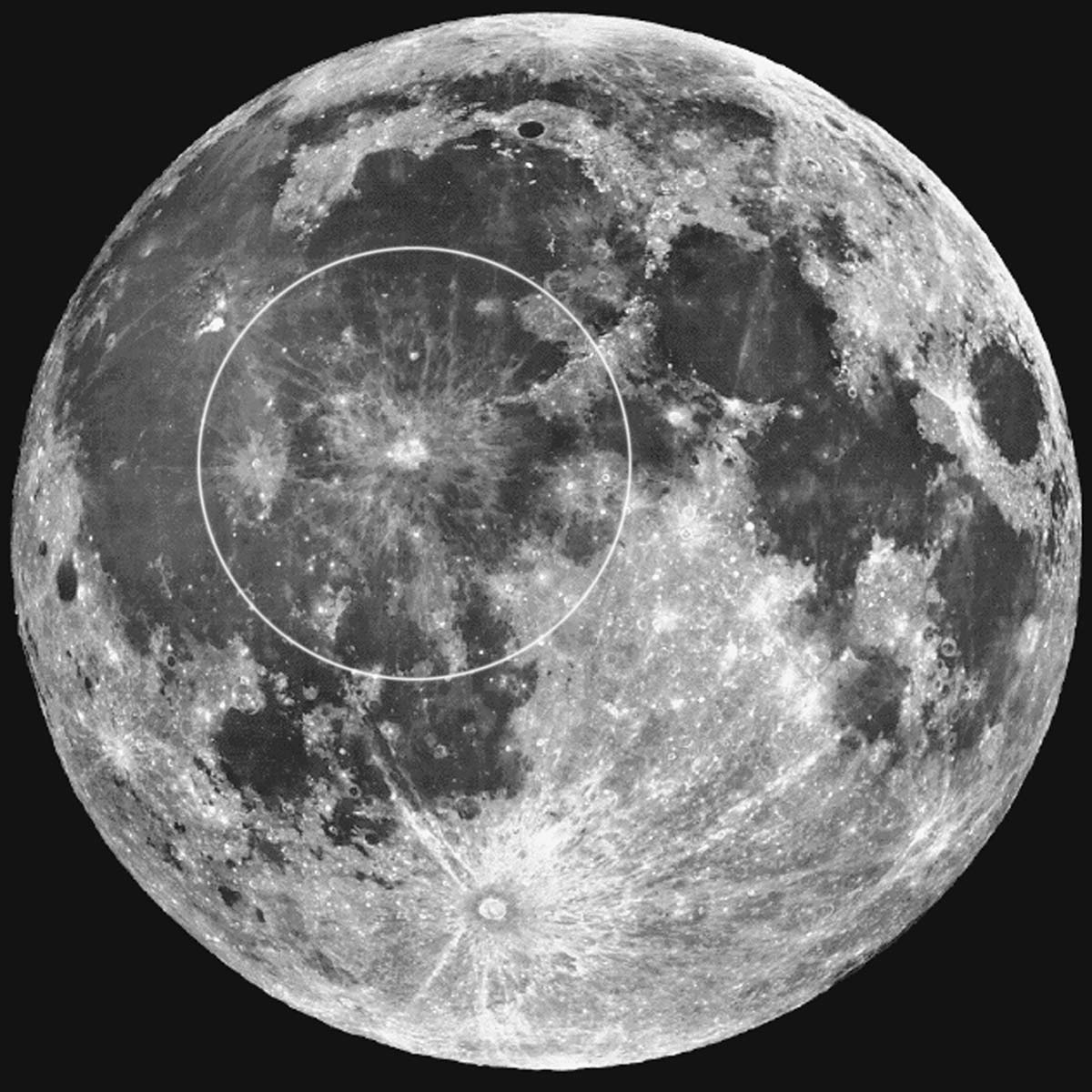
Do planets accumulate and transfer charge? According to astrophysicists and NASA, the answer is a vehement "NO!". But have you ever actually looked at the Aristarchus crater on the Moon? That "debris field" has *negative depth*. They are trenches! That looks a hell of a lot more like a lightning strike to me than a debris field: http://www.thunderbolts.info/tpod/2006/image06/060 309hubble.jpg. Should we just assume that it is pure coincidence that the Aristarchus and Tycho craters occur on naturally high spots on the Moon's surface?
We know that metals can accumulate charge and we know that the Earth has a hell of a lot of metals. So, why can't the Earth accumulate and transfer charge with nearby planets or bodies? Because we've never seen it happen? But we can see large-scale electrical activity all over the universe with our telescopes. We've gathered enough data by now on comets to suspect that the tail and coma of a comet are in fact lightning bolts. Check it out: http://www.thunderbolts.info/pdf/ElectricComet.pdf . If we're seeing large magnetic fields and temperatures of 100 million Kelvin inside of nebulae, then that means that nebulae are almost certainly *not* forming by gravitational collapse and that electricity is the dominant force in creating stars. If we're seeing large-scale electrical forces elsewhere in the universe, why should our solar system be so special as to not have these?
Why are all craters round? Sure, astrophysicists will tell you that it's because an object going fast enough will create an explosion upon impact, but then why is the sedimentary layer at the bottom of Meteor Crater undisturbed? Would a comparable nuclear explosion leave no trace of itself in the ground beneath it?
How To Kill A Planet of Dinosaurs:
What motivated Einstein to say that space is modified by gravity? Imagine that a planet is orbiting around the sun. Then imagine that suddenly the Sun disappears, and the source of gravitational attraction is gone. What happens to the planet? Does it instantly go off the orbit? Or does the disappearance of gravity require some time to reach the orbiting planet's position? Einstein's answer is that it stays in the orbit for a time R/c before going off. It is as though gravitation continues to operate on the planet at its location even though the Sun is gone. Something wa -
Garbage In, Garbage Out
If you ask the wrong questions, you'll get the wrong answers.
People should be asking how it is possible that dinosaur birds of the past could have been as large as 747's. We don't have birds today on the entire planet that are larger than about 50 lbs. And this clearly pushes the limits of what's possible with bird mass because these 50-lb birds practically kill themselves when they land. The Mongolians have tried to breed bigger falcons for thousands of years with no luck. So, how is it possible that birds were once as big as 747's?
People should be asking exactly *which* animals survived, and why?
People should be asking if the land-walking dinosaurs were alive today, would they survive? Check out http://www.bearfabrique.org/Catastrophism/sauropod s/biganims.html.
Ask those questions *WITH* the questions about the impact, and suddenly the bigger picture changes. Is the Big Bang Theory still just a theory, or are there alternative cosmologies that people will consider? What about the electrical force? In a theory of everything based upon electricity, gravity would be a function of electrical charge accumulation and the Theory of Relativity could be very easily explained using aether concepts that contrary to popular belief, have never actually been disproven. The aether explanation for Relativity is actually much simpler to understand than Relativity.
Do planets accumulate and transfer charge? According to astrophysicists and NASA, the answer is a vehement "NO!". But have you ever actually looked at the Aristarchus crater on the Moon? That "debris field" has *negative depth*. They are trenches! That looks a hell of a lot more like a lightning strike to me than a debris field: http://www.thunderbolts.info/tpod/2006/image06/060 309hubble.jpg. Should we just assume that it is pure coincidence that the Aristarchus and Tycho craters occur on naturally high spots on the Moon's surface?
We know that metals can accumulate charge and we know that the Earth has a hell of a lot of metals. So, why can't the Earth accumulate and transfer charge with nearby planets or bodies? Because we've never seen it happen? But we can see large-scale electrical activity all over the universe with our telescopes. We've gathered enough data by now on comets to suspect that the tail and coma of a comet are in fact lightning bolts. Check it out: http://www.thunderbolts.info/pdf/ElectricComet.pdf . If we're seeing large magnetic fields and temperatures of 100 million Kelvin inside of nebulae, then that means that nebulae are almost certainly *not* forming by gravitational collapse and that electricity is the dominant force in creating stars. If we're seeing large-scale electrical forces elsewhere in the universe, why should our solar system be so special as to not have these?
Why are all craters round? Sure, astrophysicists will tell you that it's because an object going fast enough will create an explosion upon impact, but then why is the sedimentary layer at the bottom of Meteor Crater undisturbed? Would a comparable nuclear explosion leave no trace of itself in the ground beneath it?
How To Kill A Planet of Dinosaurs:
What motivated Einstein to say that space is modified by gravity? Imagine that a planet is orbiting around the sun. Then imagine that suddenly the Sun disappears, and the source of gravitational attraction is gone. What happens to the planet? Does it instantly go off the orbit? Or does the disappearance of gravity require some time to reach the orbiting planet's position? Einstein's answer is that it stays in the orbit for a time R/c before going off. It is as though gravitation continues to operate on the planet at its location even though the Sun is gone. Something wa -
Hello!? What other major thing causes magnetism?
Once again, NASA ignores the possibility (perhaps probability is a better word?) that the magnetism is the result of electrical exchange between bodies in space.
In 2005, the mission to comet Tempel 1 called Deep Impact shot a copper ball into that comet. To my knowledge, NASA scientists still have not adequately explained the results of that experiment even though plasma cosmologist accurately predicted the results *before* the impact occurred. For a thorough summary of those results, visit http://www.thunderbolts.info/pdf/ElectricComet.pdf . There, you will learn that there is substantial evidence that cometary tails and comas are the result of electrical processes rather than any sort of sublimation of any icy snowball. When the copper ball got close, before impact, a small flash of lightning occurred. And in the video of the ball's approach, you can see white patches on the comet (charge equalization with the ball). Any critical eye in possession of a detailed photograph of a cometary tail can notice something peculiar about the dirty snowball theory. The zig-zaggy tail is lightning -- not a vapor trail. Vapor trails would not move in zig-zags. But more technically, we have yet to observe enough water on any comet that could create the tail and comas that we're seeing.
Why does this matter?
Well, it matters a lot! Because -- and this should be alarming to people -- the comets have craters just like asteroids and planets. If it is true as Thornhill and numerous other plasma cosmologists allege that these craters are the result of electrical machining, then it is possible that craters on the planets could also be the result of electrical charge transfers (aka lightning). And it shouldn't surprise anybody that lightning could leave magnetic traces of its activity. In fact, if it weren't for the big bang theory, then that might be our first guess.
Have you ever for a second stopped and wondered why all of these frickin impact craters are round!? Doesn't that seem like a bit too coincidental? Exactly how many impacts can you expect to occur at right-angles? If we're talking about lightning, however, it would be exactly the case that all of the craters would be round because the charge would travel the path of least resistance (a 90 degree angle connecting the two bodies).
Also, if we accept the plasma cosmologists' conclusions for the Deep Impact mission that comets glow because charge is being stripped from the comet, then first of all, this means that the Sun is emitting an electric field that is causing this charge separation (and that's a whole different story!). But just as importantly, it also implies that such similar charge movements and transfers can occur for planets. All of these things are fundamental concepts of plasma physics, and considering that 99.99% of the observable universe consists of matter in the plasma state, it might be wise to listen to those guys.
When the Space Shuttle Columbia went down some years ago, a rogue amateur astronomer captured an image of the Shuttle's plasma exhaust being struck by a bolt of lightning, which could very clearly be seen to travel from the upper atmosphere onto the exhaust plasma trail and in the direction of the Shuttle. This image coincided precisely with the Shuttle's malfunctioning and Shuttle parts have been observed to have electrical machining that one would expect from a lightning strike. However, NASA discounted this explanation on the basis that the lightning was too high in the atmosphere to exist (planets cannot transfer charge with outer space, in other words), and that instruments were unable to hear any lightning strike (even though it's known by plasma cosmologists that lightning in the upper atmosphere wouldn't make the same sounds it does in the lower atmosphere). It's also important to note that meteorologists still do not fully understand the origins of lightning, so it's rather curious that NASA could b -
Electric Nova.
Supernova don't get most of their energy from the sun itself. It gets the energy from the entire circuit it is a part of. Thus, this star could in fact have been very small, but been in a very large circuit and been this bright.
Check these out:
http://www.thunderbolts.info/tpod/2005/arch05/0510 11elec-nova.htm
http://www.thunderbolts.info/tpod/2006/arch06/0604 12supernova.htm
http://www.thunderbolts.info/tpod/2005/arch05/0509 30tychostar.htm
IMarv -
Electric Nova.
Supernova don't get most of their energy from the sun itself. It gets the energy from the entire circuit it is a part of. Thus, this star could in fact have been very small, but been in a very large circuit and been this bright.
Check these out:
http://www.thunderbolts.info/tpod/2005/arch05/0510 11elec-nova.htm
http://www.thunderbolts.info/tpod/2006/arch06/0604 12supernova.htm
http://www.thunderbolts.info/tpod/2005/arch05/0509 30tychostar.htm
IMarv -
Electric Nova.
Supernova don't get most of their energy from the sun itself. It gets the energy from the entire circuit it is a part of. Thus, this star could in fact have been very small, but been in a very large circuit and been this bright.
Check these out:
http://www.thunderbolts.info/tpod/2005/arch05/0510 11elec-nova.htm
http://www.thunderbolts.info/tpod/2006/arch06/0604 12supernova.htm
http://www.thunderbolts.info/tpod/2005/arch05/0509 30tychostar.htm
IMarv -
On the Universe.
The real problem about the Astronomy is that they only know slightly more than the Astrologers. The plasma scientists here on earth know more about how the stars really work than the Astronomers.
http://www.thunderbolts.info/tpod/00archive.htm
The plasma scientists can create the common Spiral Galaxy in simulations with ease. They don't have to create any dark matter or dark energy to do it, or even black holes.
Until the Astronomers catch up to what the Plasma scientists know about magnetism and electric currents, everything we're told about is wrong. Red shift very little to do with distance.
IMarv -
On the Universe.
The real problem about the Astronomy is that they only know slightly more than the Astrologers. The plasma scientists here on earth know more about how the stars really work than the Astronomers.
http://www.thunderbolts.info/tpod/00archive.htm
The plasma scientists can create the common Spiral Galaxy in simulations with ease. They don't have to create any dark matter or dark energy to do it, or even black holes.
Until the Astronomers catch up to what the Plasma scientists know about magnetism and electric currents, everything we're told about is wrong. Red shift very little to do with distance.
IMarv -
Oxygen, Micrometorites, pah, think LIGHTNING!
I wouldn't worry about the small things like Oxygen and micrometorites and other debris. The real threat would be an electrical discharge between the Earth and the Solar system. Take all the energy going through an Aurora Borealis and let it go all at once through a lightning rod that goes from low in Earth's atmosphere to outside the ionosphere and BOOM!
I was a big fan of a Space Elevator until I realized that we're a speck of dust floating around in a splasma globe with our Sun in the middle.
Check out http://www.thunderbolts.info/tpod/2004/arch/040927 earth-capacitor.htm for a graphic.
IMarv -
does it explain this
-
Electric universe
Maybe it is Birkeland current. You can learn about electric universe theory here:
http://www.thunderbolts.info/tpod/00subjectx.htm -
Re:Space Plasma?Surely you're joking. Profound effects of space plasma on satellites have been well-known (by engineers) for decades.
There's practically nothing up there but plasma. The only places in the universe that aren't practically all plasma are planets and bits of space junk, a negligible fraction of the universe's (observable) mass. Maybe you're confused because you think plasma is some sort of exotic substance. Compositionally, the only difference between a gas and a plasma is that some fraction of the atoms in a plasma are ionized. That just means one or more of the electrons that, at lower temperatures, would be bound closely in orbit around the nucleus are instead banging around loose.
That seems like a small difference, but oh! what a difference. In a familiar gas, the atoms only interact when they collide, so at very low pressures nothing much happens. In a plasma, particularly at very low pressure, the particles interact with immediate neighbors, via the electric force, at distances of centimeters, and with large masses, via magnetic forces, at distances up to light years.
Plasma dynamics, the description of how masses of plasma behave, is fiendishly complex, largely because the positive particles (nuclei) are all at least 2000 times more massive than the negative particles (electrons). As a result, anything that accelerates a nucleus at X cm/s/s blasts any electrons at more than 2000X cm/s/s the other way. Furthermore, plasmas can be neutral, or biased positive, or biased negative. When a biased plasma moves, it produces a magnetic field, and any magnetic fields it moves in affect the its motion.
Even an ionization of one in 10 000 particles is enough to make celestial stuff behave by plasma-dynamical rather than ordinary gas laws. Under rather weak electric fields, the ions accelerate enough to ionize and re-ionize the neutral atoms, a process called "entraining". Motion of biased plasma amounts to an electric current, which self-generates a magnetic field that, in turn, concentrates the current (and particles of the conductive medium) into flux tubes, called "Birkeland currents", that span solar systems (e.g. producing the Aurora) and galaxies.
The equations that describe real plasma dynamics are fiendishly complicated, and the observed behavior exhibits so many fundamental instabilities, that nobody can solve typical problems mathematically. Serious researchers fall back on computer simulations and extrapolation from vacuum-lab observations. Most fall back, instead, on a (usually) distinctly unphysical approximation known as "MHD".
Typical astronomers and astrophysicists have had a semester of MHD, where they were misled about how little it resembles any phenomenon they will ever observe. As a result, most astronomers are ill-equipped to evaluate such observations. They tend to ignore them, instead, and to discount explanations that depend on awareness of actual plasma-dynamical phenomena. This causes them two problems: they have to explain what they see using only gravitation, stellar-core fusion, and shock waves; and they have to explain why plasma dynamics has no effect on the system. Their colleagues generally give them a pass on the latter. Such common plasma-dynamical phenomena as ultraviolet and x-ray emission have traditionally been easy to ignore.
Most of the working plasma dynamicists are not involved in astrophysics, and their contribution isn't generally welcome in astrophysical journals. Of course the most vocal of the ones interested in astronomy, and thus most easily found in web searches, are highly-motivated and
-
He has fellow-travellers...
...here. With some uberkewl photos to back up what they're saying.
-
Re:Double Layers Well-known, Still FascinatingPlasma dynamics is not synonymous with "Electric Universe", "Holoscience", nor whichever catastrophism cult you're reviling today. That they have latched onto plasma phenomena means no more than that nature worshippers prefer herbal medicine; herbs came first, and (lately, as of old) are as interesting to Merck. That said, mainstream astronomy does have a problem. If astronomy were a real science, it would engage instead of circling the wagons.
For a serious peek at the role of plasma dynamics in the solar system, you need go no farther than NASA: 15.1.1. Applicability of Hydromagnetics and Plasma Physics . For wider application, the Los Alamos National Laboratory has up a nice tour of The Universe (which universe even your neighborhood astronomer, if pressed, will admit is over 99% plasma-phase -- at least the baryonic bits! -- even if he has little inkling what that means), and links to refereed-journal papers.
I'm afraid ceoyoyo and 2008 will need to find their cranks elsewhere. That said, the Velikovskyite cultists at Thunderbolts have a very nice picture-of-the-day archive, with captions that besides being much more fun than the pap on APOD, are remarkably often thought-provoking. You don't have to believe that Venus popped out of Saturn in immediate prehistory (as "proven" by widespread legends) to enjoy them rattling the chains that hold astronomers in their 19th-century Christian-esque universe.
You can't honestly poke fun at a hairy-eyed Velikovskyite without ribbing the Big-bang mooncalves equally. The latter have much less excuse for their silliness, and a lot more to answer for.
-
something similar on asteroids, (to some extent..)
The link below shows few strange photos of asteroids. One of them has a strikingly similar (compared to size of the body, and if you take off small craters) big hole like your moon. http://www.thunderbolts.info/tpod/2005/arch05/050
7 14asteroids.htm -
Erosion? don't make me laugh
There is no water or wind there and no way erosion could cause such shapes. I better start taking more seriously Electric Universe folks. Their explanations might be lees crazy than official party line. I will keep checking http://www.thunderbolts.info/tpod/2005/arch05/00c
u rrent.htm for some interesting explanations. -
Re:The Electric Universe theories predicted thisThe "completely insane and already disproven multiple times" Electric Universe theory isn't one, and so can't have been. That is, "electric universe" is an amalgam of a lot of different theories, by a lot of different people, smushed together. Some are utterly compelling, and should make the jokers at NASA blush at their own poor educations. Others are frankly nuts. Most are in between, but testable.
It's adolescent rubbish that (as far as I have been able to discern from their writings) Earth used to orbit Saturn, or that Venus was calved off of Saturn in immediate prehistory. It's almost certain that within that same period there were terrifying Aurorae Australis, bright enough to be seen by day. It's unlikely that there's no fusion going on within the sun, but very possible that the sun's chromosphere is a plasma "double layer" that accelerates into the corona those particles that overcome its activation threshold, producing the corona's astonishing temperature.
It's likely that galaxies are not organized around "billion-solar-mass black holes," and that quasars are no more distant or energetic than the nearby Seyfert galaxies they cluster about. It's visibly true that currents in the interstellar plasma self-organize into intertwining filaments and extended membranes that sometimes fluoresce, exactly like neon lights, to produce stunningly beautiful nebular displays.
It's an easy bet that cosmologists' notions of "dark matter" and "dark energy" adding up to over 99 times as much stuff as the visible universe are fantasies ginned up to rescue failed hypotheses. It's a matter of public record that astrophysicists, as a rule, have only rudimentary training in the dynamics of the plasma that they admit fills all of space, but insist on calling "ionized gas".
Whatever their failings, the Electric Universe people have the best astronomical picture gallery on the web.
-
Yes, Electric Model Failed Major Experimental TestLooks like the Electric Universe folks were a bit off.
Ya think?
Granted, this one sample of cometary material doesn't totally shitcan their overall model of the universe, but it should force them out of that unnecessarily doctrinaire "comets aren't snowballs" stand.
-
Re:Explain to me why this is such quackeryif you haven't read one that suggests some basic facts which can be used to debunk the claims of the article
I didn't ask for ones that debunk the claims of the article per se, I asked for ones that "debunk the basic claim of the plasma cosmologists and the Electric Universe proponents: that plasma physics (i.e. electrodynamics as embodied in the behavior of plasmas) is not given enough credit [in] scietific models and theories that attempt to explain stellar and interstellar phenomenon."
Why not just go check out the badastronomer link like everyone says to?
I have, but thanks for the link. The author seems to spend most of his time dismantling a straw-man version of the so-called "electric sun" model, that is an "electrostatic" electric sun. See this link: Of Pith Balls and Plasma.
(I do hope you actually take the time to read some of the pages to which I've linked.)
As to the neutrino issues, here is an interesting quote from plasmacosmology.net:
Nuclear reactions take place on the surface, not in the core, perhaps explaining why neutrino numbers vary with sunspot cycles, and nuclear reactions are produced in the same way that we produce nuclear reactions in the lab -- by accelerating particles in an electric field.
So it seems to me that the page you've pointed me to spends most if it's time knocking down a "straw man."
Now, I realize that one such quote doesn't make for a complete scientific theory. May we could invite Dr. Anthony Peratt to point us to a paper or two or three that develops this concept in a more rigorous manner.
Oh, be cause you're obviously trolling, that's why.
I'm never intended to, actually; but as I mentioned in my previous post, I am willing to overlook antagonistic and patronizing comments like this to further some interesting discussions.
I'm sorry, why does your B.S. meter not go off the scale when you read about "interstellar electric transmission lines" ?!?
Check it out:
Electric Currents and Transmission Lines in Space
Immense Flows of Charged Particles Discovered Between the Stars
(repeat: I do hope you actually take the time to read some of the pages to which I've linked.)
By the way, the pages linked to above were authored by a respected plasma physicist, Peratt. If what is related in those articles is total b.s., please explain to me (and the other
don't get me wrong- especially when looking at some of the more interesting structures, thinking of *magneto*-electric fields involved does help explain those structures
Where there are magnetic fields, there are electric currents; and where there are electric currents and fields, there are magnetic fields. Try this: Magnetic fields in space.
but electric fields aren't the only ones that create some of these structures, and *everything* in cosmology can't be explained in such terms. There's *matter* and *fusion* involved in a lot of it.
I agree with you, of course. I think most of the plasma cosmologists do as well. Your impression is different for some reason. Explain. -
Side note
First of all, let me just say that despite my earlier posts, I am a fan of modern science. Though I feel that it is sometimes too quick to dismiss those ideas that run contrary to popular opinion.
But mainly, I want a better explanation for this photo, other than NASA's assertion of "comera wobble."
-
Original TheoryCurrently I am siding with the original theory, since it is quite logical and has so far been supported with much data and information.
However this new concept is interesting, but leaves a lot of questions. How are these "catastrophic electrical discharges" occur and funciton? Why and how do they stars to supernova?
I attampted to conduct some research on the subject, but only found concepts on ESD (Electrostatic Discharges), which pretty much is static. I did find out that it is capable of more than just shocking and irritating you. Though possibly relating to this subject, it is not what I seek.
Here are some interesting articles that I found:
http://www.reade.com/Safety/esd.html
http://www.thunderbolts.info/tpod/2004/arch/041230 predictions-scarring.htm -
Re:Something less speculative that may be at work
I should have included these links specifically, in the spirit of relevance:
Galactic Rotation: Point or Axis?
Galactic Currents or Collisions?
Plasma Galaxies
Galaxy Filaments -
Re:Something less speculative that may be at work
I should have included these links specifically, in the spirit of relevance:
Galactic Rotation: Point or Axis?
Galactic Currents or Collisions?
Plasma Galaxies
Galaxy Filaments -
Re:Something less speculative that may be at work
I should have included these links specifically, in the spirit of relevance:
Galactic Rotation: Point or Axis?
Galactic Currents or Collisions?
Plasma Galaxies
Galaxy Filaments -
Re:Something less speculative that may be at work
I should have included these links specifically, in the spirit of relevance:
Galactic Rotation: Point or Axis?
Galactic Currents or Collisions?
Plasma Galaxies
Galaxy Filaments -
Something less speculative that may be at work ...Plasma physics:
it may dominate the large scale structure and behavior of the universe (star formation, galaxy formation, intergalactic structures . .
Check out the following:
Plasma Cosmology
Plasma Universe
Guided Tour of the Plasma Universe
Electric Currents and Transmission Lines in Space
Immense Flows of Charged Particles Discovered Between the Stars
Interesting quote from Hubble regarding redshift:Edwin Hubble. "Humason assembled spectra of the nebulae and I attempted to estimate distances." So wrote Hubble of his colleague Milton Humason in 1935 by which time spectra had been obtained for over 150 nebulae. Hubble was a stern warner of using the Doppler effect for galaxies and argued against the recessional velocity interpretation of redshift, convincing Robert Millikan, 1923 recipient of the Nobel Prize for Physics and director of physics at the California Insitute of Technology, that the redshift interpretation as an expanison of the universe was probably wrong, the year before both of their deaths in 1953.
Hubble ended his book Observational Approach to Cosmology with the statement:..."if the recession factor is dropped, if redshifts are not primarily velocity-shifts, the pic[t]ure is simple and plausible. There is no evidence of expansion and no restriction of time-scale, no trace of spatial curvature, and no limitation of spatial dimensions. Moreover, there is no problem of internebular material. The observable region is thoroughly homogeneous; it is too small a sample to indicate the nature of the universe at large. The univers[e] might even be an expanding model, provide[d] the rate of expansion, which pure theory does not specify, i[s] inappreciable. For that matter, the universe might even be contracting."
Taken from:
http://public.lanl.gov/alp/plasma/people/contribut ors.htmlThuderbolts.info
Thunderbolts' Picture of the Day
Picture of the Day Archive
A few very interesting selections from the archive:
The Picture that Won't Go Away
Quasars in Infrared are Still Nearby
Predictions on "Deep Impact"
Electric Stars
Of Pith Balls and Plasma
Space Shuttle Struck by Megalightning?
The website of Halton Arp
The Observational Impetus For Le Sage Gravity -
Something less speculative that may be at work ...Plasma physics:
it may dominate the large scale structure and behavior of the universe (star formation, galaxy formation, intergalactic structures . .
Check out the following:
Plasma Cosmology
Plasma Universe
Guided Tour of the Plasma Universe
Electric Currents and Transmission Lines in Space
Immense Flows of Charged Particles Discovered Between the Stars
Interesting quote from Hubble regarding redshift:Edwin Hubble. "Humason assembled spectra of the nebulae and I attempted to estimate distances." So wrote Hubble of his colleague Milton Humason in 1935 by which time spectra had been obtained for over 150 nebulae. Hubble was a stern warner of using the Doppler effect for galaxies and argued against the recessional velocity interpretation of redshift, convincing Robert Millikan, 1923 recipient of the Nobel Prize for Physics and director of physics at the California Insitute of Technology, that the redshift interpretation as an expanison of the universe was probably wrong, the year before both of their deaths in 1953.
Hubble ended his book Observational Approach to Cosmology with the statement:..."if the recession factor is dropped, if redshifts are not primarily velocity-shifts, the pic[t]ure is simple and plausible. There is no evidence of expansion and no restriction of time-scale, no trace of spatial curvature, and no limitation of spatial dimensions. Moreover, there is no problem of internebular material. The observable region is thoroughly homogeneous; it is too small a sample to indicate the nature of the universe at large. The univers[e] might even be an expanding model, provide[d] the rate of expansion, which pure theory does not specify, i[s] inappreciable. For that matter, the universe might even be contracting."
Taken from:
http://public.lanl.gov/alp/plasma/people/contribut ors.htmlThuderbolts.info
Thunderbolts' Picture of the Day
Picture of the Day Archive
A few very interesting selections from the archive:
The Picture that Won't Go Away
Quasars in Infrared are Still Nearby
Predictions on "Deep Impact"
Electric Stars
Of Pith Balls and Plasma
Space Shuttle Struck by Megalightning?
The website of Halton Arp
The Observational Impetus For Le Sage Gravity -
Something less speculative that may be at work ...Plasma physics:
it may dominate the large scale structure and behavior of the universe (star formation, galaxy formation, intergalactic structures . .
Check out the following:
Plasma Cosmology
Plasma Universe
Guided Tour of the Plasma Universe
Electric Currents and Transmission Lines in Space
Immense Flows of Charged Particles Discovered Between the Stars
Interesting quote from Hubble regarding redshift:Edwin Hubble. "Humason assembled spectra of the nebulae and I attempted to estimate distances." So wrote Hubble of his colleague Milton Humason in 1935 by which time spectra had been obtained for over 150 nebulae. Hubble was a stern warner of using the Doppler effect for galaxies and argued against the recessional velocity interpretation of redshift, convincing Robert Millikan, 1923 recipient of the Nobel Prize for Physics and director of physics at the California Insitute of Technology, that the redshift interpretation as an expanison of the universe was probably wrong, the year before both of their deaths in 1953.
Hubble ended his book Observational Approach to Cosmology with the statement:..."if the recession factor is dropped, if redshifts are not primarily velocity-shifts, the pic[t]ure is simple and plausible. There is no evidence of expansion and no restriction of time-scale, no trace of spatial curvature, and no limitation of spatial dimensions. Moreover, there is no problem of internebular material. The observable region is thoroughly homogeneous; it is too small a sample to indicate the nature of the universe at large. The univers[e] might even be an expanding model, provide[d] the rate of expansion, which pure theory does not specify, i[s] inappreciable. For that matter, the universe might even be contracting."
Taken from:
http://public.lanl.gov/alp/plasma/people/contribut ors.htmlThuderbolts.info
Thunderbolts' Picture of the Day
Picture of the Day Archive
A few very interesting selections from the archive:
The Picture that Won't Go Away
Quasars in Infrared are Still Nearby
Predictions on "Deep Impact"
Electric Stars
Of Pith Balls and Plasma
Space Shuttle Struck by Megalightning?
The website of Halton Arp
The Observational Impetus For Le Sage Gravity -
Something less speculative that may be at work ...Plasma physics:
it may dominate the large scale structure and behavior of the universe (star formation, galaxy formation, intergalactic structures . .
Check out the following:
Plasma Cosmology
Plasma Universe
Guided Tour of the Plasma Universe
Electric Currents and Transmission Lines in Space
Immense Flows of Charged Particles Discovered Between the Stars
Interesting quote from Hubble regarding redshift:Edwin Hubble. "Humason assembled spectra of the nebulae and I attempted to estimate distances." So wrote Hubble of his colleague Milton Humason in 1935 by which time spectra had been obtained for over 150 nebulae. Hubble was a stern warner of using the Doppler effect for galaxies and argued against the recessional velocity interpretation of redshift, convincing Robert Millikan, 1923 recipient of the Nobel Prize for Physics and director of physics at the California Insitute of Technology, that the redshift interpretation as an expanison of the universe was probably wrong, the year before both of their deaths in 1953.
Hubble ended his book Observational Approach to Cosmology with the statement:..."if the recession factor is dropped, if redshifts are not primarily velocity-shifts, the pic[t]ure is simple and plausible. There is no evidence of expansion and no restriction of time-scale, no trace of spatial curvature, and no limitation of spatial dimensions. Moreover, there is no problem of internebular material. The observable region is thoroughly homogeneous; it is too small a sample to indicate the nature of the universe at large. The univers[e] might even be an expanding model, provide[d] the rate of expansion, which pure theory does not specify, i[s] inappreciable. For that matter, the universe might even be contracting."
Taken from:
http://public.lanl.gov/alp/plasma/people/contribut ors.htmlThuderbolts.info
Thunderbolts' Picture of the Day
Picture of the Day Archive
A few very interesting selections from the archive:
The Picture that Won't Go Away
Quasars in Infrared are Still Nearby
Predictions on "Deep Impact"
Electric Stars
Of Pith Balls and Plasma
Space Shuttle Struck by Megalightning?
The website of Halton Arp
The Observational Impetus For Le Sage Gravity -
Something less speculative that may be at work ...Plasma physics:
it may dominate the large scale structure and behavior of the universe (star formation, galaxy formation, intergalactic structures . .
Check out the following:
Plasma Cosmology
Plasma Universe
Guided Tour of the Plasma Universe
Electric Currents and Transmission Lines in Space
Immense Flows of Charged Particles Discovered Between the Stars
Interesting quote from Hubble regarding redshift:Edwin Hubble. "Humason assembled spectra of the nebulae and I attempted to estimate distances." So wrote Hubble of his colleague Milton Humason in 1935 by which time spectra had been obtained for over 150 nebulae. Hubble was a stern warner of using the Doppler effect for galaxies and argued against the recessional velocity interpretation of redshift, convincing Robert Millikan, 1923 recipient of the Nobel Prize for Physics and director of physics at the California Insitute of Technology, that the redshift interpretation as an expanison of the universe was probably wrong, the year before both of their deaths in 1953.
Hubble ended his book Observational Approach to Cosmology with the statement:..."if the recession factor is dropped, if redshifts are not primarily velocity-shifts, the pic[t]ure is simple and plausible. There is no evidence of expansion and no restriction of time-scale, no trace of spatial curvature, and no limitation of spatial dimensions. Moreover, there is no problem of internebular material. The observable region is thoroughly homogeneous; it is too small a sample to indicate the nature of the universe at large. The univers[e] might even be an expanding model, provide[d] the rate of expansion, which pure theory does not specify, i[s] inappreciable. For that matter, the universe might even be contracting."
Taken from:
http://public.lanl.gov/alp/plasma/people/contribut ors.htmlThuderbolts.info
Thunderbolts' Picture of the Day
Picture of the Day Archive
A few very interesting selections from the archive:
The Picture that Won't Go Away
Quasars in Infrared are Still Nearby
Predictions on "Deep Impact"
Electric Stars
Of Pith Balls and Plasma
Space Shuttle Struck by Megalightning?
The website of Halton Arp
The Observational Impetus For Le Sage Gravity -
Something less speculative that may be at work ...Plasma physics:
it may dominate the large scale structure and behavior of the universe (star formation, galaxy formation, intergalactic structures . .
Check out the following:
Plasma Cosmology
Plasma Universe
Guided Tour of the Plasma Universe
Electric Currents and Transmission Lines in Space
Immense Flows of Charged Particles Discovered Between the Stars
Interesting quote from Hubble regarding redshift:Edwin Hubble. "Humason assembled spectra of the nebulae and I attempted to estimate distances." So wrote Hubble of his colleague Milton Humason in 1935 by which time spectra had been obtained for over 150 nebulae. Hubble was a stern warner of using the Doppler effect for galaxies and argued against the recessional velocity interpretation of redshift, convincing Robert Millikan, 1923 recipient of the Nobel Prize for Physics and director of physics at the California Insitute of Technology, that the redshift interpretation as an expanison of the universe was probably wrong, the year before both of their deaths in 1953.
Hubble ended his book Observational Approach to Cosmology with the statement:..."if the recession factor is dropped, if redshifts are not primarily velocity-shifts, the pic[t]ure is simple and plausible. There is no evidence of expansion and no restriction of time-scale, no trace of spatial curvature, and no limitation of spatial dimensions. Moreover, there is no problem of internebular material. The observable region is thoroughly homogeneous; it is too small a sample to indicate the nature of the universe at large. The univers[e] might even be an expanding model, provide[d] the rate of expansion, which pure theory does not specify, i[s] inappreciable. For that matter, the universe might even be contracting."
Taken from:
http://public.lanl.gov/alp/plasma/people/contribut ors.htmlThuderbolts.info
Thunderbolts' Picture of the Day
Picture of the Day Archive
A few very interesting selections from the archive:
The Picture that Won't Go Away
Quasars in Infrared are Still Nearby
Predictions on "Deep Impact"
Electric Stars
Of Pith Balls and Plasma
Space Shuttle Struck by Megalightning?
The website of Halton Arp
The Observational Impetus For Le Sage Gravity -
Something less speculative that may be at work ...Plasma physics:
it may dominate the large scale structure and behavior of the universe (star formation, galaxy formation, intergalactic structures . .
Check out the following:
Plasma Cosmology
Plasma Universe
Guided Tour of the Plasma Universe
Electric Currents and Transmission Lines in Space
Immense Flows of Charged Particles Discovered Between the Stars
Interesting quote from Hubble regarding redshift:Edwin Hubble. "Humason assembled spectra of the nebulae and I attempted to estimate distances." So wrote Hubble of his colleague Milton Humason in 1935 by which time spectra had been obtained for over 150 nebulae. Hubble was a stern warner of using the Doppler effect for galaxies and argued against the recessional velocity interpretation of redshift, convincing Robert Millikan, 1923 recipient of the Nobel Prize for Physics and director of physics at the California Insitute of Technology, that the redshift interpretation as an expanison of the universe was probably wrong, the year before both of their deaths in 1953.
Hubble ended his book Observational Approach to Cosmology with the statement:..."if the recession factor is dropped, if redshifts are not primarily velocity-shifts, the pic[t]ure is simple and plausible. There is no evidence of expansion and no restriction of time-scale, no trace of spatial curvature, and no limitation of spatial dimensions. Moreover, there is no problem of internebular material. The observable region is thoroughly homogeneous; it is too small a sample to indicate the nature of the universe at large. The univers[e] might even be an expanding model, provide[d] the rate of expansion, which pure theory does not specify, i[s] inappreciable. For that matter, the universe might even be contracting."
Taken from:
http://public.lanl.gov/alp/plasma/people/contribut ors.htmlThuderbolts.info
Thunderbolts' Picture of the Day
Picture of the Day Archive
A few very interesting selections from the archive:
The Picture that Won't Go Away
Quasars in Infrared are Still Nearby
Predictions on "Deep Impact"
Electric Stars
Of Pith Balls and Plasma
Space Shuttle Struck by Megalightning?
The website of Halton Arp
The Observational Impetus For Le Sage Gravity -
Something less speculative that may be at work ...Plasma physics:
it may dominate the large scale structure and behavior of the universe (star formation, galaxy formation, intergalactic structures . .
Check out the following:
Plasma Cosmology
Plasma Universe
Guided Tour of the Plasma Universe
Electric Currents and Transmission Lines in Space
Immense Flows of Charged Particles Discovered Between the Stars
Interesting quote from Hubble regarding redshift:Edwin Hubble. "Humason assembled spectra of the nebulae and I attempted to estimate distances." So wrote Hubble of his colleague Milton Humason in 1935 by which time spectra had been obtained for over 150 nebulae. Hubble was a stern warner of using the Doppler effect for galaxies and argued against the recessional velocity interpretation of redshift, convincing Robert Millikan, 1923 recipient of the Nobel Prize for Physics and director of physics at the California Insitute of Technology, that the redshift interpretation as an expanison of the universe was probably wrong, the year before both of their deaths in 1953.
Hubble ended his book Observational Approach to Cosmology with the statement:..."if the recession factor is dropped, if redshifts are not primarily velocity-shifts, the pic[t]ure is simple and plausible. There is no evidence of expansion and no restriction of time-scale, no trace of spatial curvature, and no limitation of spatial dimensions. Moreover, there is no problem of internebular material. The observable region is thoroughly homogeneous; it is too small a sample to indicate the nature of the universe at large. The univers[e] might even be an expanding model, provide[d] the rate of expansion, which pure theory does not specify, i[s] inappreciable. For that matter, the universe might even be contracting."
Taken from:
http://public.lanl.gov/alp/plasma/people/contribut ors.htmlThuderbolts.info
Thunderbolts' Picture of the Day
Picture of the Day Archive
A few very interesting selections from the archive:
The Picture that Won't Go Away
Quasars in Infrared are Still Nearby
Predictions on "Deep Impact"
Electric Stars
Of Pith Balls and Plasma
Space Shuttle Struck by Megalightning?
The website of Halton Arp
The Observational Impetus For Le Sage Gravity -
Something less speculative that may be at work ...Plasma physics:
it may dominate the large scale structure and behavior of the universe (star formation, galaxy formation, intergalactic structures . .
Check out the following:
Plasma Cosmology
Plasma Universe
Guided Tour of the Plasma Universe
Electric Currents and Transmission Lines in Space
Immense Flows of Charged Particles Discovered Between the Stars
Interesting quote from Hubble regarding redshift:Edwin Hubble. "Humason assembled spectra of the nebulae and I attempted to estimate distances." So wrote Hubble of his colleague Milton Humason in 1935 by which time spectra had been obtained for over 150 nebulae. Hubble was a stern warner of using the Doppler effect for galaxies and argued against the recessional velocity interpretation of redshift, convincing Robert Millikan, 1923 recipient of the Nobel Prize for Physics and director of physics at the California Insitute of Technology, that the redshift interpretation as an expanison of the universe was probably wrong, the year before both of their deaths in 1953.
Hubble ended his book Observational Approach to Cosmology with the statement:..."if the recession factor is dropped, if redshifts are not primarily velocity-shifts, the pic[t]ure is simple and plausible. There is no evidence of expansion and no restriction of time-scale, no trace of spatial curvature, and no limitation of spatial dimensions. Moreover, there is no problem of internebular material. The observable region is thoroughly homogeneous; it is too small a sample to indicate the nature of the universe at large. The univers[e] might even be an expanding model, provide[d] the rate of expansion, which pure theory does not specify, i[s] inappreciable. For that matter, the universe might even be contracting."
Taken from:
http://public.lanl.gov/alp/plasma/people/contribut ors.htmlThuderbolts.info
Thunderbolts' Picture of the Day
Picture of the Day Archive
A few very interesting selections from the archive:
The Picture that Won't Go Away
Quasars in Infrared are Still Nearby
Predictions on "Deep Impact"
Electric Stars
Of Pith Balls and Plasma
Space Shuttle Struck by Megalightning?
The website of Halton Arp
The Observational Impetus For Le Sage Gravity -
Interstellar "gas" medium"Interstellar gas" made of "ionized hydrogen" is what we call, outside the walled garden of astronomy, plasma. As plasma, it's much more interesting stuff than gas, because when it moves, that's an electric current, and it produces a magnetic field that affects the motion of other plasma around it. Such currents naturally self-organize, through a positive-feedback process (neglected in MHD, note), into ropelike bundles of tubes, sweeping the surrounding material together and carrying it along.
Such currents in near-vacuum plasma, called Birkeland currents, have been directly detected flowing between stars. Finding and analyzing these (real, measurable) flows has to be more interesting than mapping interstellar "gas" density or chasing "dark matter" unicorns. Actually to measure a current flowing between the Milky Way and a Magellanic cloud would make a career -- and ultimately make "dark matter" and "supermassive black holes" seem about as relevant to future work as phlogiston gas and cranial phrenology are today.
-
Re:Cracks me up1) The volcanoes at Io's surface have nothing to do with plasma physics or MHD.
Easy to say. "Much to the astonishment of mission scientists, it was discovered that the 'volcanic' plumes emit ultraviolet light, something inconceivable under normal conditions of volcanic venting."
2) No volcanoes have "drifted around" the surface of Io.
No, just the place where stuff comes out. "Since the Voyager observations in the late 1970s, Prometheus and the exposed regions have traveled more than 80 kilometers".
3) There have been migrations of Ionian eruption plumes (the gas/dust "geysers" above the surface).
"Migration" is a nice word. "Gas/dust" is a nice way to say "ejecta", if you have trouble forming the word "plasma".
4) We can quite readily explain this with simple thermophysics. Plasma or MHD has nothing to do with it.
Squint hard. "Cornell University astrophysicist Thomas Gold
5) Some people have claimed that MHD has influenced the shape of plumes, but we can't reconcile that with the observations of WHERE the fields interact with Io.
Because you don't, personally, know where and how fields interact with Io, they can't cause anything? The earth's magnetic field still surprises.
(Somebody said, "Theory is fine, but if your pet theory can't handle the observations, go back to the theory--the observations are rarely 'wrong'." I wonder who. Me, I'd start with the observations and see where they lead. A theory might suggest itself, later.)
6) Some have claimed that electric currents can cause the elevated temperatures of some of Io's volcanoes, but they haven't done the simple math to know that even at 100% efficiency, there simply isn't enough energy available, and AGAIN, the field lines don't intersect the high temperature volcanoes.
On the contrary. From Perratt & Dessler's pre-Galileo paper,"Filamentation of Volcanic Plumes on the Jovian Satellite Io":
"Plasma in Jupiter's magnetosphere injected from Io (the Io plasma torus) flows pas[t] Io with a speed of about 57 km/s. The magnetic field from Jupiter at Io is 1900 nT. The v x B voltage induced across Io (3620 km) is, therefore, 400 kV, and approximately 10^6 A was observed to be flowing out of the satellite.
So, not only is there "enough" energy available, the energy available actually matches observation of the energy consumed. Furthermore:
"the effluent ejection velocity as calculated from an expression for the sheath velocity in a plasma gun (0.893 km/s) is close to that observed for Prometheus, 0.49 km/s."
(Have you ever heard of a volcano ejecting material continuously, year upon year, at 1100 mi/hr? On earth (neglecting atmospheric drag) that would blast 15 mi high! Mt. St. Helens managed that, for a few seconds.) Furthermore, it always comes out around the edges of the blackened region, as predicted.
Your thermophysics have a long way to go. Your "field lines" seem not to be such an impediment, perhaps be
-
Re:Cracks me upHeadlines like "Nothing New Seen" or "Unexpected Finding Immediately Explained" just don't attract much attention.
That would be fine, except the explanations make no sense at all, and also fail to account for the features observed. What's worse is when they doctor the pictures to make them seem more like the explanation, as in the Io volcano pictures where they painted in flaming geysers in place of white-outs in the actual images. The white-outs were from something way hotter than any volcanic eruption could be.
-
Re:Cracks me up... Never mind trotting out
Based only on the assumption that nothing but gravitation can produce x-rays and high-velocity jets, or affect motion of large (electrically-conductive) masses. Even your "super-massive black holes" aren't enough to account for galactic rotation; you need to make up "dark matter" too.
galactic lensing,
Sure, here and there. But it gets trotted out every time somebody points out that quasars are all clustered around nearby galaxies.
the Big Bang has quite a bit of evidence for it.
Meaning, really, that the mountains of evidence against it are neatly hidden behind an even bigger pile of ghostly "dark matter".
zero-point energy This exists too.
Sure, and any astronomical or cosmological event that demands an unlimited energy supply can tap into it at need.
That, and cropping from Hubble pictures anything embarrassing, such as quasars actually in front of opaque nearby galaxies. Cite?
OK:
The Discovery of a High Redshift X-ray Emitting QSO Very Close to the Nucleus of NGC 7319
Missing Quasars of M82and Big Bang is looking iffier every month. Doubtful.
I will note here that respondent fails to defend "dark matter", never mind "inflation" or "dark energy".