 Slashdot Mirror
Domain: transportenvironment.org
Stories and comments across the archive that link to transportenvironment.org.
Comments · 21
-
Re:scandalous
When the emissions were retested on all EU cars in 2018 Fiat were the company that had cheated least... maybe they weren't clever enough?
The most, not the least. Well, together with Suzuki, but Suzuki source their diesel engines from Fiat.
-
Re:Cutting Emissions
Are there still people here who believe in this "long tailpipe" nonsense?
Start reading. Or, if you just want a cheat sheet for the US: here and here.
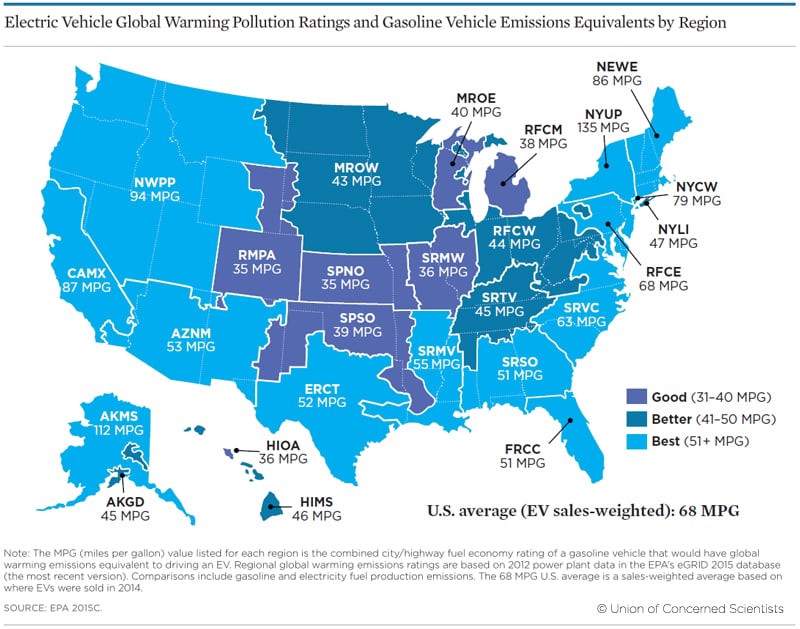
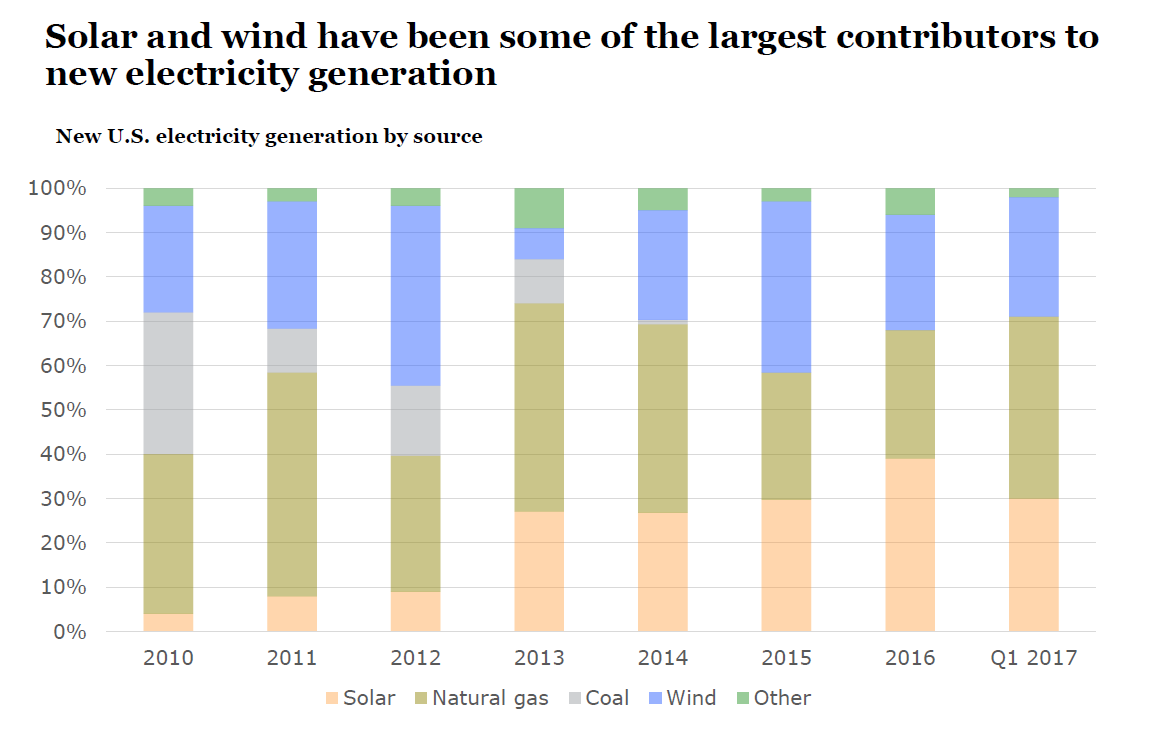
Here's where the US grid has been heading. Here's where it's going. So note that using, say, 2012 data above actually downplays the improvements of EVs vs. ICEs. Same story with the energy used in battery manufacture (which has been falling in almost direct correspondence to battery prices)
If I was wrong in my assumption that you're an American (most people who ask this question turn out to be), let me know where you're from and I'll give you data appropriate to your location. For example, major EU countries.
-
Re:Nope
Even that is not the case.
From TFS, a "conventional car
According to the DoE, an average BEV powered in West Virginia (95.7% coal power) would emit 4.29 tonnes a year, compared to an average ICE emission of 5.19 tonnes/year, a difference of 0.9 tonnes. So the ICEV emissions would exceed the BEV even in the worst-case power mix after just 3.5 years.
-
Re: Volkswagen AG says.....
Reality does not agree with you.
-
Re:Of course it's Germany
The U.S. EPA went and measured the other diesel cars (re-tested them). Mercedes, BMW, Chevrolet all passed with flying colors, since they actually had the Urea/NOx neutralization system installed. They continue to be sold, since they are legally compliant.
Then the US EPA must be extremely incompetent, because their colleagues in several European countries all reached a very different conclusion, as did several NGOs. See for example this report.
Ditto over-the-road truck makers who use the same tech to keep freight trucks clean..... all passed EPA standards.
Trucks are clean these days (that is, if they haven been tampered with), but that wasn't always the case. All major truck makers in the US were fined US $1 billion twenty years ago for their emissions cheats, which were very similar to the ones widely employed in diesel cars.
-
Re: Germany and the EU
Have you not read the news at all in the past two years? There have been extensive reviews by agencies in several countries and they all found that essentially every car manufacturer has been cheating in one way or another. See for example this review by the researcher who first published about the defeat device in the VW EA189.
See the ADAC EcoTest, or this report from T&E for a per-manufacturer comparison.
-
Re: So...
On my desktop I can see the link at the end of the Title on both the main and story pages but it's not there on my phone.
Here's the Guardian article, here's Transport&Environment's press release and the briefing and study.
-
Re: So...
On my desktop I can see the link at the end of the Title on both the main and story pages but it's not there on my phone.
Here's the Guardian article, here's Transport&Environment's press release and the briefing and study.
-
Re:double standards
I do knot know what GP believes or knows, but one would have to be have been living under a rock for the past one and a half years not to know that the use of defeat devices is very widespread in the industry. Some reports and articles easily found with your favourite search engine:
The emissions test defeat device problem in Europe is not about VW
Dieselgate At GM? Defeat Devices Claimed To Be Found In Opel Cars
Test of Fiat diesel model shows irregular emissions: Bild am Sonntag
Report on France’s Renault emissions probe omitted crucial details
French government ordered to hand over full details of Renault emissions study
PSA Group Raided by French Fraud Office in Emissions Probe
Nissan faces suit over alleged emission fraud
#Dieselgate continues: new cheating techniques
RDW emission test programme - Results of indicative tests for the presence of an unauthorised defeat device
VW, Daimler, Nissan, Mitsubishi, GM: Can We Finally Agree That Dieselgate Is An Industry Problem?
Revealed: nearly all new diesel cars exceed official pollution limits
Many car brands emit more pollution than Volkswagen, report findsDefeat devices are hardly a recent phenomenon:
How Common Are EPA “Defeat Devices” In The Auto Industry?
Carmaker Cheating on Emissions Almost as Old as Pollution TestsThere are different ways to cheat, too:
`Shameful' Mitsubishi Fraud Risks Pushing Carmaker to Brink
This is the world now: Suzuki also admits to cheating on fuel-economy testsIt's not hard to find more. Pretty much every manufacturer cheats or has cheated in one way or another.
-
Re:But... But...
Nope, pretty much every other car brand produces more.
-
Re:But... But...
-
Re:Big news
Here is one about a meta-analysis from several different studies by government agencies and independent environment groups across Europe.
-
Re:Big news
Except that volkswagen gave themsalves a comptitive advantage by a massive amount of lying, and caused a lot of extra pollution.
There was neither extra pollution nor a competetive advantage. The VW Group cars that turned out to be equipped with defeat devices produce an amount of NOx comparable to what comes out of contemporary cars from competing manufacturers and the defeat device did not provide any benefits compared to the tricks employed by other manufacturers. See e.g. this page, written by the person who first identified the defeat device in the VW EA189, or this overview by Transport & Environment.
-
Re:Physics is a bitch
The point of cheating NOx emissions tests is not to make the car cheaper, but to reduce wear and increase fuel economy. Dropping EGR rates reduces internal engine pollution and increases the interval between particulate filter regeneration cycles. Except perhaps in warranty claims, it does not save money. It does make the car more attractive to the customer, however.
BMW cheated in the same way most (if not all) manufacturers do: with a thermal window. To be fair, their thermal range is wider than in most cars and the real-world NOx emissions from recent BMWs are amongst the lowest (bujt not as low as the VW group brands),
-
Re:VW Overlords should be Gassed
VWs have the lowest NOx emissions in practice.
-
Re:no end to the cheating
That has already beendone. Don't expect any punishment though, because the patsy has been found.
GM and Ford got of very cheaply the last time they were caught cheating emissions in the US and I expect that their European cheating will have even fewer consequences. Maybe the Chrysler/Cummins cheat will have some consequences in the US, because of the lawsuit announced yesterday, but I wouldn't bet on it. US regulators are very friendly with the American car manufacturers.
-
When are the others due?
So far, the US government has launched a massive campaign against VW, looting billions of dollars and severely damaging the company's until recently almost spotless reputation. However, there is plenty of evidence that most other car manufacturers, including the 2.5 US domestic majors, have been pulling similar tricks for years. Except from a few stern words from the German transportation minister and a few 'voluntary' recalls, there have been exactly zero consequences. No suits, no fines, no withdrawals, no buybacks, no criminal prosecution, no exaggerated claims from government officials, no media outcry. Nothing.
The other manufacturers seem to get away with it scott-free, even though the cheating is often relatively easy to detect and the NOx emissions are in many cases several times larger than from the VW EA189. The simply continue to deny even after getting caught, or they attempt to cover it up, and government authorities let it pass, or even help covering it up. Meanwhile, they all get to steal sales from the scapegoat, the only manufacturer that actually admitted and recalled the affected vehicles (except in the US, where the authorities are dragging their feet) and, ironically, makes the cars with the lowest real-world NOx emissions.
The anti-VW campaign has nothing to do with the environment and everything with economic interests. The Americans found something and exploited it to the maximum extent in every possible way, just like they did with Toyota's 'sudden unintended acceleration'.
-
Re:thats strange
I don't think any one with any car has had better than advertised fuel economy in the last ten years. All manufacturers overstate it and increasingly so, because of European CO2 fleet emissions requirements and because taxes in many countries is based on the official figures. See for example Transport & Environment's report "Mind the Gap!".
-
that's strange - everygets one worse than official
everyone I know who has a VW, or has had one in the past 10 years (around 8 or so) has all gotten BETTER than advertized MPGs.
Its funny, maybe it is a US vs Europe thing but I've never known anyone get anything near the official MPG. There is an interesting paper from the European Federation for Transport and Environment which shows that the average difference is now 36%, and that despite real world MPG scarecly improving since 2012 the manufacturers claims continued to reduce. Strangely VW is far from the worst, being bang on average with a difference of 36% from real world figures, whereas Daimler manages a 48% difference.
-
Re:Oh good grief...
You are making the mistake of equating the speed of aircraft as the main measure of progress in aircraft.
Since Concorde, however, the main areas of focus for aircraft development have been in making them safer, easier to maintain, larger and more fuel efficient.
For busy routes, larger aircraft reduce the number of flights needed, so reduce the landing fees, maintenance needed, number of flight crews, etc.Compared to the first commercial passenger jet, the comet, the B747-100 introduced in 1970 used about 55% as much fuel, and the modern B777 only uses 30% as much fuel of the Comet, per passenger mile.
http://www.transportenvironment.org/Publications/prep_hand_out/lid/398
-
Re:Um, Al Gore wouldn't agree...
And yet, passenger cars in the US contribute to 18% of US CO2 emissions, while in the EU, they only account for 12% of total CO2 emissions. Maybe the fact that Europeans drive less than Americans would explain their different priorities. Perhaps their cars may emit more smog and carbon-monoxide per liter of fuel, and still, because of their lighter weight, still get better gas mileage, and emit less carbon-dioxide. (But that's just a guess.)
http://www.bnl.gov/rideshare/benefits.asp
http://www.transportenvironment.org/Downloads-req- getit-lid-29.html
You may want to check out a more reputable website for your information. Your "pop" quiz is incorrect about the satellite data, which _does_ show warming trends, and is misleading about the greenhouse effect and the significance of the _rapid_ change in global average temperatures. To clarify, if it took a thousand years instead of twenty years for the recent increase in temperature, there would be a very different reaction.
The many, many, many studies done around the world show that there is a recent, rapid increase in global temperature, and that it is linked to human activities, and, in a single lifetime, left uncorrected, will cause great amounts of worldwide suffering. Also, we can mitigate the effects with substantial and early corrective actions.
http://www.ncdc.noaa.gov/oa/climate/globalwarming. html#Q1



.png)