Slashdot Mirror
Domain: vectronicsappleworld.com
Stories and comments across the archive that link to vectronicsappleworld.com.
Comments · 11
-
Re:Apple ][ note: schematics included
Well, I had a revision B motherboard (something I specifically requested, because of certain features I wanted to experiment with), and the extended 80 column adapter, which expanded my system memory to 128k (bank switched, since only 64k was addressable), but the CPU in my system was definitely not a 65c02.
My system also did not have the MouseText characters that came out with the
This website refers to a model that was discontinued in 1985, and is right beside an image that looks exactly like the model that I had. Note that it has the
It's all pedantry anyway. But sounds like you had what could be called a "partially enhanced" machine:
http://mirrors.apple2.org.za/ground.icaen.uiowa.edu/MiscInfo/Empson/iie.vers
If you are able to turn the machine on, the easiest way to identify an
enhanced IIe is to look at the machine name printed on the top line of
the startup screen:Apple ][ indicates an unenhanced IIe
AppleThe catch is that you might have a machine which has been partially
enhanced: it is possible for the CPU, video ROM and firmware ROMs (CD
and EF) to be updated independently (the firmware ROMs must be a
matching pair). Looking at the chips would be safest bet.I remember engaging in many online (BBS & Usenet) discussions where the common shorthand was to use ][e for unenhanced,
-
Re:Apple ][ note: schematics included
Well, I had a revision B motherboard (something I specifically requested, because of certain features I wanted to experiment with), and the extended 80 column adapter, which expanded my system memory to 128k (bank switched, since only 64k was addressable), but the CPU in my system was definitely not a 65c02.
My system also did not have the MouseText characters that came out with the
This website refers to a model that was discontinued in 1985, and is right beside an image that looks exactly like the model that I had. Note that it has the
-
Re:Jony Ive should be in charge of everything ther
I gotta admit, this is somewhat interesting.
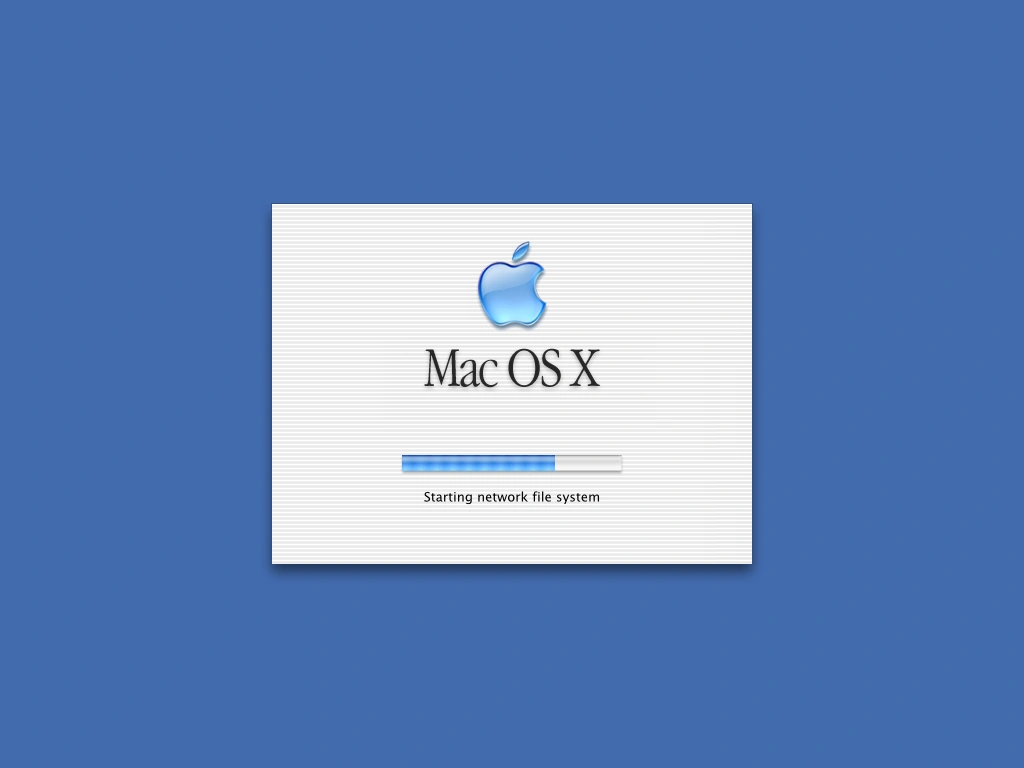
Remember the original iMac and Mac OS X 10.1? The original iMac had these lines in the plastic. Mac OS X 10.1 also had these lines. As Apple hardware went more metalic, so did the interface.
I wonder if we'll see more of that "integrated whole" type of thing.
-
Re:Power Macintosh 4400
That model used ADB. You can see on that picture of the back the ADB symbol. There has never been PS2 on any Apple machine.
-
Re:Happens all the time.
"Actually Apple did steal a lot of their ideas for the Mac from the Xerox Parc"
If, by "steal," you mean "bought and paid for with pre-IPO stock shares," you're right. -
Re:and what about xerox's stuff?
Xerox received shares in exchange for rights to use intellectual property from PARC. The urban myth that it was stolen, is a lie.
False, as a number of other posters have pointed out. Apple did not receive rights to anything from Xerox - they only got a tour and a demo.
Also, Xerox wasn't given any shares in Apple, they were given an opportunity to buy shares.
http://vectronicsappleworld.com/macintosh/creation.html
http://www.fool.com/news/foth/2000/foth000918.htm
(captcha: contrite)
-
Re:"awesomely bad 80s graphics"
I had it on the Apple IIe as well - "SAM: Software Automated Mouth" did text to speech on a 1MHz 6502.
http://www.vectronicsappleworld.com/appleii/sam.html
So do you want to retract your bullshit about needing 32-bit power?
-
Re:Penalties
And, yes, I do realize Apple stole the GUI from Xerox...
On Xerox, Apple, and Progress. Fact is in return for Xerox allowing Steve Jobs and a development team to tour PARC Jobs allowed Xerox to invest in Apple by buying 100,000 shares of stock at $10 a share. Less than a year later that $1 million investment netted Xerox $17.6 million when Apple had it's IPO.
Falcon
-
Re:cat and mouse
You mean the Apple that paid Xerox for the rights AND then wrote from scratch the drawing routines (important parts that weren't even done on the Xerox PARC stuff, but the Apple people thought it was done)?
http://vectronicsappleworld.com/macintosh/creation.html
http://www.folklore.org/StoryView.py?story=On_Xerox,_Apple_and_Progress.txt
-
Re:Hmmmm ...
Yeah, especially since Apple has been making the same mistake for almost 30 years now.
Steve Jobs' insistence that the Apple III be fanless, coupled with the cramped aluminum chassis designed to reduce radio-frequency emissions without regard to the demands of the electrical circuitry was a recipe for disaster. As the computer was used, its chips got hot, expanded slightly, and slowly worked their way out of their sockets, at which point the computer simply died. Apple's solution was to recommend lifting the front of the computer six inches off the desktop, then letting it drop with the hope that the chips would reseat themselves.
-
GUI, Xerox, Apple, and Microsoft
GUI's could have been patentable, but as we've seen, Xerox started it, Apple used it, and Microsoft stole it from apple. When Microsoft was sued, they claimed prior art from Xerox. Once again, graphical representation is now prior art.
I used to think the same as you, that MS stole the GUI from Apple. However as CEO of Apple in or around 1991 John Sculley sold a license to a GUI to Microsoft. Some people think Steve Jobs stole the GUI from Xerox too. However Xerox invested in Apple and invited Jobs to tour Xerox PARC and try to develop a commercial product from what he saw there, PARC did fabulous research but weren't so good at commercializing what they created.
Falcon