Slashdot Mirror
Domain: xmp.net
Stories and comments across the archive that link to xmp.net.
Comments · 90
-
Re:That's only because Deepmind wasn't playing
"They said we'd never achieve $FOO, and then we did. This proves we'd achieve $BAR" is a fundamentally flawed argument, regardless of what values you assign to FOO and BAR.
Except in cases where FOO and BAR are essentially the same thing, but BAR is a bit further on the scale of size and complexity than FOO,
It's debatable whether "Win at Go" and "Win at Starcraft" are the same thing separated only by complexity, but let's be generous and assume that it is. We went from needing 30 x 120MHz CPUs to win at Chess (Deep Blue), to 1202 CPUs and 176 GPUs to win at Go (Alphago).
IOW, we used almost 1000x more resources to win at Go than at Chess.
For humans, at least, Go is roughly 2.5 times more complex than Chess . To address the 2.5 extra complexity going from Chess to Go, we used 1000x extra resources.
Starcraft, for humans at any rate, is a lot more than 2.5 times more complex than Go.
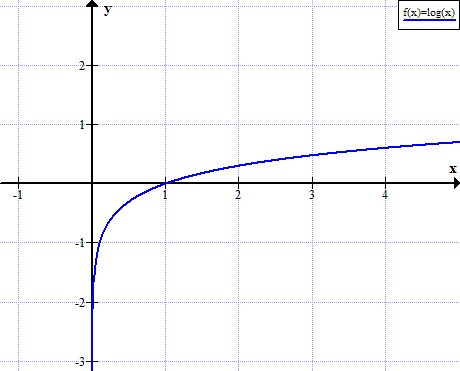
You're assuming that the required computational power/problem-solving scales log(x), like in this chart: as we get closer to the maximum computational power of the universe we'll solve more and more problems.
I'm more inclined to believe that the computational power/problem-solving chart looks like this (the right half only, obviously). IOW, the easy problems scale well, the hard problems are impossible.
-
Re:So, you know how the rewritten version works?
It was over 1000 CPUs and over 200 GPUs. That's rather beefy, mate.
Beefy, yes, but nothing extraordinary, and as I have mentioned since reduced by about 90%.
there was definitely an inflection point in Go progress around 2005
Between about 2005 and 2011, significant progress was made. The top programs got to the point where they were competitive with professional players when receiving a (still very big) 4 or 5 stone handicap. (Note, however, that players could exploit weaknesses in computer Go programs once they were studied which makes the achievement a bit less impressive than it seems at first glance.) Between 2011 and 2015, no further progress was made, as the techniques then being applied had reached their limits. The expectation by most in 2015 was that there would be a slow progression of beating average professional players at 3 stone handicap, 2 stone, 1 stone, and eventually level, followed by the ultimate achievement of beating the top professional at even. See Sensei's library page on computer Go which has been updated over time as progress was made, and is not a revisionist account. AlphaGo advanced the state of the art to an extent that shocked the Go community and 99% of the AI community. The leap was not just from beating a middle rank professional with a 4 or 5 stone handicap to beating the top professionals level, it was doing so while having no apparent weaknesses the human player could exploit.
-
Re:Grid
Indeed, also:
The goal is to completely surround the stones of another player, removing them from the board.
Only beginning players think that. The true goal of the game is to occupy more territory than the opponent.
By the way, the best source of information on go is probably Go Sensei
-
Re:Rise of the Machines
Ok, time to increase the board size to 37x37.
People have been playing with different (larger) sized boards for decades if not centuries (ISTR that some Japanese professionals were studying 21x21 games in the 18th century ; 20x20 was considered a solution to the "mirror go" problem in the 15/ 16th century, until more elegant solutions were developed). The high-dan players who have worked on larger boards say the balance of the game between territory and influence changes considerably.
37x37 would be an unnecessary extension in size unless you're one of those people who think that "more is better". Consider the common sizes of board in use already : 5x5 has only ever been used for the most basic of teaching games and was completely evaluated for optimal play by hand in about 1990 ; 9x9 is the norm for teaching once you get beyond the rankest of beginners (in the mid-20s of kyu - a few hours of teaching) ; 13x13 is a popular size for quick games between the rounds of a tournament ; and 19x19 has been the "serious" size since around 800 BCE. People have been experimenting with 21x21 and 23x23 for centuries, but neither have ever become popular, suggesting that human exploration of 19x19 is far from complete.
you might find these Sensei's Library pages interesting : Interesting board sizes ; Different Sized Boards ; Large Boards (an interesting speculation, with grounding : "Go boards and stones were often used in fortune telling. The connection between 361 intersections and 365 days is important. " ; also some specific comments on 37x37 play). And for entertainment value, Unusual Gobans. Go players have been looking at variations to the rule sets for a long time.
-
Re:Rise of the Machines
Ok, time to increase the board size to 37x37.
People have been playing with different (larger) sized boards for decades if not centuries (ISTR that some Japanese professionals were studying 21x21 games in the 18th century ; 20x20 was considered a solution to the "mirror go" problem in the 15/ 16th century, until more elegant solutions were developed). The high-dan players who have worked on larger boards say the balance of the game between territory and influence changes considerably.
37x37 would be an unnecessary extension in size unless you're one of those people who think that "more is better". Consider the common sizes of board in use already : 5x5 has only ever been used for the most basic of teaching games and was completely evaluated for optimal play by hand in about 1990 ; 9x9 is the norm for teaching once you get beyond the rankest of beginners (in the mid-20s of kyu - a few hours of teaching) ; 13x13 is a popular size for quick games between the rounds of a tournament ; and 19x19 has been the "serious" size since around 800 BCE. People have been experimenting with 21x21 and 23x23 for centuries, but neither have ever become popular, suggesting that human exploration of 19x19 is far from complete.
you might find these Sensei's Library pages interesting : Interesting board sizes ; Different Sized Boards ; Large Boards (an interesting speculation, with grounding : "Go boards and stones were often used in fortune telling. The connection between 361 intersections and 365 days is important. " ; also some specific comments on 37x37 play). And for entertainment value, Unusual Gobans. Go players have been looking at variations to the rule sets for a long time.
-
Re:Rise of the Machines
Ok, time to increase the board size to 37x37.
People have been playing with different (larger) sized boards for decades if not centuries (ISTR that some Japanese professionals were studying 21x21 games in the 18th century ; 20x20 was considered a solution to the "mirror go" problem in the 15/ 16th century, until more elegant solutions were developed). The high-dan players who have worked on larger boards say the balance of the game between territory and influence changes considerably.
37x37 would be an unnecessary extension in size unless you're one of those people who think that "more is better". Consider the common sizes of board in use already : 5x5 has only ever been used for the most basic of teaching games and was completely evaluated for optimal play by hand in about 1990 ; 9x9 is the norm for teaching once you get beyond the rankest of beginners (in the mid-20s of kyu - a few hours of teaching) ; 13x13 is a popular size for quick games between the rounds of a tournament ; and 19x19 has been the "serious" size since around 800 BCE. People have been experimenting with 21x21 and 23x23 for centuries, but neither have ever become popular, suggesting that human exploration of 19x19 is far from complete.
you might find these Sensei's Library pages interesting : Interesting board sizes ; Different Sized Boards ; Large Boards (an interesting speculation, with grounding : "Go boards and stones were often used in fortune telling. The connection between 361 intersections and 365 days is important. " ; also some specific comments on 37x37 play). And for entertainment value, Unusual Gobans. Go players have been looking at variations to the rule sets for a long time.
-
Re:Rise of the Machines
Ok, time to increase the board size to 37x37.
People have been playing with different (larger) sized boards for decades if not centuries (ISTR that some Japanese professionals were studying 21x21 games in the 18th century ; 20x20 was considered a solution to the "mirror go" problem in the 15/ 16th century, until more elegant solutions were developed). The high-dan players who have worked on larger boards say the balance of the game between territory and influence changes considerably.
37x37 would be an unnecessary extension in size unless you're one of those people who think that "more is better". Consider the common sizes of board in use already : 5x5 has only ever been used for the most basic of teaching games and was completely evaluated for optimal play by hand in about 1990 ; 9x9 is the norm for teaching once you get beyond the rankest of beginners (in the mid-20s of kyu - a few hours of teaching) ; 13x13 is a popular size for quick games between the rounds of a tournament ; and 19x19 has been the "serious" size since around 800 BCE. People have been experimenting with 21x21 and 23x23 for centuries, but neither have ever become popular, suggesting that human exploration of 19x19 is far from complete.
you might find these Sensei's Library pages interesting : Interesting board sizes ; Different Sized Boards ; Large Boards (an interesting speculation, with grounding : "Go boards and stones were often used in fortune telling. The connection between 361 intersections and 365 days is important. " ; also some specific comments on 37x37 play). And for entertainment value, Unusual Gobans. Go players have been looking at variations to the rule sets for a long time.
-
Re:Stupid predictions
You could make an argument about beating chess not being AI, but that argument wouldn't hold for Go. With chess you don't have to program "intuition", it's evaluation of possible moves. With Go the possible number of boards is obscene : around 10^800 possible boards, where there are ~10^80 atoms in the universe. You can't just extrapolate and calculate possible moves, you have to program a deep neural net with a sort of AI "intuition". Very impressive feat, and the South Korean government immediately dumped billions into AI on hearing about the feat.
http://senseis.xmp.net/?Number...
http://www.nature.com/nature/j... -
Re:It time, this will be good for Lee SedolI felt that both the commentaries on the official stream and the one of AYA with Kim Myungwan were mostly focusing on analysing alternatives to moves that were already played, instead of focusing on possible moves to be played. At one point Haijin Lee, also known as Haylee, the current secretary of the International Go Federation, took a seat behind the computer. While Lee Sedol was taking a long time to think about the 78 move, she suggested the "wedge" move to Kim Myungwan. He first asked with some surpise: "This one?", and after she confirmed he exclaimed: "O, that is very creative". They analyzed the various possibilities to take benefit of the move, but did not see how it could work. Haijin at one time remarked, "It has to work", indeed because otherwise the game would be a loss. Then with still 6:16 on the clock, Lee Sedol played the proposed "wedge" move at L11. Then Haylee has to go. Then AlphaGo plays the move that Kim Myungwan just played as a possible continuation. Soon it is acknowledged that it is a mistake and that the chances for Lee Sedol have turned. The "wedge" move is later recognized as the genius move with which Lee Sedol defeats AlphaGo. Demis Hassabis tweeted Mistake was on move 79, but #AlphaGo only came to that realisation on around move 87 and When I say 'thought' and 'realisation' I just mean the output of #AlphaGo value net. It was around 70% at move 79 and then dived on move 87. The question remains if there is another move that AlphaGo could have played to prevent Lee Sedol from winning. If this is not the case, then move 78 is simply an over play that tricked AlphaGo.
It seems that AlphaGo suffers from the horizon effect, meaning that when it is ahead, it becomes blind for wining sequence that starts with an unusual move. It is great that Lee Sedol has won this game, because it shows that humans still have a better understanding of the game. Relying on a mental vocabular for reasoning about the game, has some weaknesses, it might still prove superior when reasoning about very complex situations like the one encountered in this game. It seems that Lee Sedol took most time to think about this move. Later on in the game, AlphaGo, played some bad moves, probably because its winning percentage had dropped.
-
Re:It time, this will be good for Lee SedolI felt that both the commentaries on the official stream and the one of AYA with Kim Myungwan were mostly focusing on analysing alternatives to moves that were already played, instead of focusing on possible moves to be played. At one point Haijin Lee, also known as Haylee, the current secretary of the International Go Federation, took a seat behind the computer. While Lee Sedol was taking a long time to think about the 78 move, she suggested the "wedge" move to Kim Myungwan. He first asked with some surpise: "This one?", and after she confirmed he exclaimed: "O, that is very creative". They analyzed the various possibilities to take benefit of the move, but did not see how it could work. Haijin at one time remarked, "It has to work", indeed because otherwise the game would be a loss. Then with still 6:16 on the clock, Lee Sedol played the proposed "wedge" move at L11. Then Haylee has to go. Then AlphaGo plays the move that Kim Myungwan just played as a possible continuation. Soon it is acknowledged that it is a mistake and that the chances for Lee Sedol have turned. The "wedge" move is later recognized as the genius move with which Lee Sedol defeats AlphaGo. Demis Hassabis tweeted Mistake was on move 79, but #AlphaGo only came to that realisation on around move 87 and When I say 'thought' and 'realisation' I just mean the output of #AlphaGo value net. It was around 70% at move 79 and then dived on move 87. The question remains if there is another move that AlphaGo could have played to prevent Lee Sedol from winning. If this is not the case, then move 78 is simply an over play that tricked AlphaGo.
It seems that AlphaGo suffers from the horizon effect, meaning that when it is ahead, it becomes blind for wining sequence that starts with an unusual move. It is great that Lee Sedol has won this game, because it shows that humans still have a better understanding of the game. Relying on a mental vocabular for reasoning about the game, has some weaknesses, it might still prove superior when reasoning about very complex situations like the one encountered in this game. It seems that Lee Sedol took most time to think about this move. Later on in the game, AlphaGo, played some bad moves, probably because its winning percentage had dropped.
-
Re: 2x2 board
You capture opponents pieces and remove them from the board. There's a good introduction here (the site is a great resource overall): http://senseis.xmp.net/?RulesO... In addition to playing a stone, passing is always a legal move (if both players pass the game ends). Because of this, "infinite loop" positions occur frequently and there's a rule called ko to address that. If your move would repeat the previous board position, you must play somewhere else. (Again, a good explanation is http://senseis.xmp.net/?Ko ) At any rate, for any given board state, there are a huge (but finite) number of different sequences of moves that might have led to that board state.
-
Re: 2x2 board
You capture opponents pieces and remove them from the board. There's a good introduction here (the site is a great resource overall): http://senseis.xmp.net/?RulesO... In addition to playing a stone, passing is always a legal move (if both players pass the game ends). Because of this, "infinite loop" positions occur frequently and there's a rule called ko to address that. If your move would repeat the previous board position, you must play somewhere else. (Again, a good explanation is http://senseis.xmp.net/?Ko ) At any rate, for any given board state, there are a huge (but finite) number of different sequences of moves that might have led to that board state.
-
Not much to transfer the other way
I can tell from my experience, having played Go decently, but being a calamity at Chess.
To give an example, I wrote a chess-playing program (a simple alpha-beta minimax with a value function pilfered from SunFish
https://github.com/thomasahle/...
No iterative deepening, no transposition table, no null-move search, noContrast this with Go, where blindfold play is almost unheard of. One of the well-known difficulties is to "play under the stones"
http://senseis.xmp.net/?IshiNo...
where part of a group is captured and you have to play new stones on the vacated intersections. This is a place where blindfold-chess type of skill is required, and most Go players avoid that. Here is a great article on that:http://senseis.xmp.net/?Herman...
Also, the opening in chess follows very precise sequences, while in Go, the two players can almost ignore each other for the first few moves.
In the opening you have to think of the large-scale pattern of the territory you want to grab, not of the exact position of one piece/stone. -
Not much to transfer the other way
I can tell from my experience, having played Go decently, but being a calamity at Chess.
To give an example, I wrote a chess-playing program (a simple alpha-beta minimax with a value function pilfered from SunFish
https://github.com/thomasahle/...
No iterative deepening, no transposition table, no null-move search, noContrast this with Go, where blindfold play is almost unheard of. One of the well-known difficulties is to "play under the stones"
http://senseis.xmp.net/?IshiNo...
where part of a group is captured and you have to play new stones on the vacated intersections. This is a place where blindfold-chess type of skill is required, and most Go players avoid that. Here is a great article on that:http://senseis.xmp.net/?Herman...
Also, the opening in chess follows very precise sequences, while in Go, the two players can almost ignore each other for the first few moves.
In the opening you have to think of the large-scale pattern of the territory you want to grab, not of the exact position of one piece/stone. -
Re:Go! or Go?
Of course, but I'd agree with my opponent to setup a molasses ko
-
Compulsory games
Wouldn't it make more sense to force babies to learn Bridge instead of Go Fish? Really, though
Go, aka weiqi or baduk, now... That makes some sense, and despite recent news releases, Go as played by humans has not yet succumbed to computers, even those using Monte Carlo algorithms.
http://senseis.xmp.net/
http://senseis.xmp.net/?MoGo%2FPlayingStrength -
Compulsory games
Wouldn't it make more sense to force babies to learn Bridge instead of Go Fish? Really, though
Go, aka weiqi or baduk, now... That makes some sense, and despite recent news releases, Go as played by humans has not yet succumbed to computers, even those using Monte Carlo algorithms.
http://senseis.xmp.net/
http://senseis.xmp.net/?MoGo%2FPlayingStrength -
Re:Hand gestures
Chess has some pretty weird aspects that stem from its simplicity.
Try playing Go. The cheating mechanism is called the Sleeve of God. The game is played taking alternate turns placing non-moving pieces that all have exactly the same value. Captures are made by completely contact-surrounding groups, with contact on the four cardinal directions.
-
Re:Go is great, but war is ironic these days
On the quoted point, the problem is that it is stated US defense doctrine to assume that any potential physical threat is a real threat that needs to be responded to. So, if everyone adopts a similar policy, everyone else would, by US military logic, have to see the USA as a terrible threat that needs to be neutralized ASAP in some way.
This is asinine.
it's not quite as big a problem if, as you outline, people use conventional weapons and target only military installations as opposed to target populations
Yes, tactical military defense.
What would Go be like if you had to play 100 stones in one minutes or lose them (and there was no turn taking)?
http://senseis.xmp.net/?NuclearTesuji
And now you are making the connection. This is why I think generals (and the president of the united states, as commander in chief, is a general) need to be well versed in the study of Go, and will naturally make the same strategic considerations. Even more so, the study of philosophy, meditation, and the like will bring more intelligent questions to mind. Understand that people are not thinking; they are reacting. I want people to think, and I especially want these people to think.
Think of businessmen too. They want to make money, they think of what they can do, legal repercussions... I know a few CEOs that are overly concerned with doing the "right" thing, and will tell clients to fuck off if they're abusive to our employees regardless of the golden city that awaits on completion of the contract. They have an attitude of people first, then profits; most businesses run profits first, and people are a commodity. This is the difference between someone that accepts that "nothing can be perfect" and a car will have manufacturing issues that lead to peoples' death; and a person that determines that "People WILL die, but fixing this flaw will cost more than the wrongful death lawsuits" and sends out a known-faulty car.
I know people that would rather go into the red than produce a fatally faulty car. I know people that are genuinely concerned with moral right and wrong and run their businesses accordingly. They are still thinking humans. I don't always agree with such people, but that is a quality I highly value in a person. Some people that agree with me on everything are retarded and I generally dislike them; some people that disagree with me on a lot are still able to garner respect from me even though I hate everything about them.
I am not sure I'd want you running my country; but you definitely possess a quality our leaders sorely need. Wherever that lies, I'm sure you can see what's lacking in our world's current mentality.
-
Re:Explanation of go AI
Monte Carlo
Yes, it's just a variant of Monte Carlo, but don't knock it. Recent programs implementing the algorithm have improved their handicaps by up to 5 stones, which is huge. The top bots at the KGS Go server are now ranked up to 4 dan (like a good amateur player) in games against humans.
You may want to read this short article in the Guardian about these recent improvements in the MoGo go bot. In October 2009 (6 months after this article appeared) a version of MoGo finally beat a top-ranking (9 dan) professional in an even game on a 9x9 board.
-
Re:This is why, if I get SC2
Go is infinitely more interesting then Chess. There are no hundreds of standard openings to memorize like in Chess -- every game is pretty much guaranteed to be unique.
While the game might be unique to a certain degree, there is no way that you will get to any kind of decent level without memorizing many standard josekis (i.e. corner opening, to those unfamiliar with the game...). It doesn't matter how many options you have in mid-game, if you're behind in 2 or more corners, you've got a very deep hole to climb out of.
I'm with you that it's way more interesting than chess and gives you way more options, but let's not kid ourselves -- you have to memorize good openings to be proficient at Go.
-
Re:And this is why I stopped playing SC.
There is a go proverb that states "Learning joseki loses two stones strength" which would apply. (Joseki are "are generally agreed-upon sequences of play resulting in what is considered a fair outcome for both players.") The basic idea is that you'll handicap yourself out of learning why and how to respond to your opponent if you focus too much on standard patterns. It's generally accepted that you shouldn't spend too much time on joseki until your understanding of the game is at a level where you can actually analyze the moves in a joseki, understanding as you go WHY each move is the best in the situation and HOW it depends on other factors.
http://senseis.xmp.net/?Joseki
http://senseis.xmp.net/?LearningJosekiLosesTwoStonesStrength -
Re:And this is why I stopped playing SC.
There is a go proverb that states "Learning joseki loses two stones strength" which would apply. (Joseki are "are generally agreed-upon sequences of play resulting in what is considered a fair outcome for both players.") The basic idea is that you'll handicap yourself out of learning why and how to respond to your opponent if you focus too much on standard patterns. It's generally accepted that you shouldn't spend too much time on joseki until your understanding of the game is at a level where you can actually analyze the moves in a joseki, understanding as you go WHY each move is the best in the situation and HOW it depends on other factors.
http://senseis.xmp.net/?Joseki
http://senseis.xmp.net/?LearningJosekiLosesTwoStonesStrength -
Re:*yawn*. Call me when we lose at Go.
What makes Go hard isn't anything particularly neat about the game. Is just a boring brute force exercise.
I'm curious why you think Go is a brute force game. I'm not sure you've actually played the game before, maybe you're thinking of Atari Go?
A real game of Go has very subtle strategies. Using brute force tactics against a strong player usually ends in a loss, which is why computers have only been able to win against Dan level players on very small boards or with very large handicaps.
-
Re:The fun is in the simplicity
Huh? Which parts of life-or-death determination are "historical"? I mean, maybe I'm exposing my ignorance, here, but doesn't it come down to whether you can form two eyes with a group? Granted, there are a few complicated cases, like seki and double ko (a good page covering them is here), but none of them are "historical", and fall out straight from the basic ruleset.
-
Go Proverb
Players of the game of Go have a proverb "Lose your first fifty games as quickly as possible".
-
This guy just invented hot water
Tie breaker using opponent score in tournament exists from a while.
SOS: Sum Of Opponents' Scores.
SODOS: Sum Of Defeated Opponents' Scores. -
Re:Holy esoteric, Batman
It's not that surprising that you haven't heard of it if you live in the US. For some reason Go never caught on here, but it's very popular in Asia, especially China, Japan, and Korea. Big matches are televised and top players can make a lot of money. It's really a great game. I used to play a bit of chess, and then I learned how to play go a few years ago, and now chess seems kind of boring.
If you want to learn a bit more about it, Sensei's Library is a good place to start. Or if you want to jump right in to some basic problems, the go problems site will help you get a good understanding of the rules.
-
Re:When are they going to get it?
What I posted first is just a simplification of course. Here is the algorithm in more detail. From a given position it will play thousands if not millions of games to determine which move gets the best winning percentage. This is how these games are played When you are at a node in the game tree and want to decide which move you will make next you first calculate a score for each possible move. Unexplored moves get a score based on a heuristic. moves that we have tried before get a score based on the number of times we have tried it and the winning percentage. The higher the winning percentage the higher the score, but the higher the number of times we have tried it the lower the score. This results in searching down the path with the best winning percentage most of the time. But there is still searching going on in the less good paths. See here and here for more details.
-
Re:When are they going to get it?
What I posted first is just a simplification of course. Here is the algorithm in more detail. From a given position it will play thousands if not millions of games to determine which move gets the best winning percentage. This is how these games are played When you are at a node in the game tree and want to decide which move you will make next you first calculate a score for each possible move. Unexplored moves get a score based on a heuristic. moves that we have tried before get a score based on the number of times we have tried it and the winning percentage. The higher the winning percentage the higher the score, but the higher the number of times we have tried it the lower the score. This results in searching down the path with the best winning percentage most of the time. But there is still searching going on in the less good paths. See here and here for more details.
-
Re:ignorance
It is not really comparable to mathematically reducible games like Mancala, Chess, Backgammon, Draughts/Checkers, etc.,
Huh? What are you talking about? Go is much more 'mathematical' then chess or backgammon. It's one of the best examples of combinatorial game theory .
-
Re:How to unfork:Add the following in Preferences window: [X] Allow resizing of chat input area Sadly, some devs know the "Any feature that can't be disabled is a bug." principle and just disagree with it. Then you're just screwed. Or forked.
There are people in the linked thread saying things like "But in practice, IM messages are usually one line.". This is so unbelievably not true in so many contexts that it's like they're trying to stir up trouble. (I'm trying to avoid saying "pissing contest".) In my office, we use IM to send a lot of "ok", "thx", et cetera, but we also frequently IM the entire text of an email for review before sending, or send 15 or 20 lines of data from a report so someone in a branch office can check job progress, et cetera. I don't think we're the only ones doing this. -
Re:One way to look at it...
When mentioning the longevity of games, you are remiss to omit Go(Weqi) which is at least 2500 years old and going strong.
http://senseis.xmp.net/?HistoryOfGo
http://en.wikipedia.org/wiki/Go_(board_game)
(And Chinese Chess(Xiangqi) comes a close second.) -
Re:Good luck with positional evaluation
That does, of course, assume that there is a final position.
In fact there are 4 outcomes that can be achieved. A group can be alive, dead, in seki (dual-life), or triple ko (no result, play again).
It is not always clear when you have which outcome. In fact there is the famous case of moonshine life where, according to different rulesets, a group could be considered in any of the four outcomes! -
Re:Good luck with positional evaluation
That does, of course, assume that there is a final position.
In fact there are 4 outcomes that can be achieved. A group can be alive, dead, in seki (dual-life), or triple ko (no result, play again).
It is not always clear when you have which outcome. In fact there is the famous case of moonshine life where, according to different rulesets, a group could be considered in any of the four outcomes! -
Go is different, give it some practice.
Yes. The go proverb for this is "loose your first 100 games as quickly as possible". The hidden truth in that statement is that Go is a somewhat different game than most others. The pieces are stationary, and can't run away from danger. It takes some repetition to quickly perceive the way in which the continual addition of stationary stones can create the same effect with respect to a group of stones. In go you don't "run away", you "grow away"
-
Re:the supercomputers advantage...
Sorry, to be more precise, I should have referred to the branching factor... For example the first move of a chess game, has 20 possible moves, the first move of a Go game has 361 possible moves. so 1 pair of moves at the start of a chess game is 20x20 = 400 possible positions, whereas the first pair of moves is 361*360 = 129960 possibilities. Starting on move 7 stones can be removed from the board in some branches re-opening the used points and so at that point the possible positions begin to exceed 361!/(361-n)! where n is the number of the move about to be played. Even in the end game in chess, usually has less than 100 possible moves. The average Go game is around 250-300 moves except when one side resigns early (The Wikipedia article I cite below is wrong about the average game length, it is indeed quite hard to achieve a finished game by 200 moves without resignation), chess around 80. I've played over 120 though back when I used to play chess, my longest go game is 365 moves (yes, more than there are spaces on the board, it does happen, and games over 400 moves have been recorded) As for search space, The search space for Go is 10^360, so from the perspective of Go, the search space of chess is much, much, much smaller than an atom is to a human being. But more than all of that, Go can't really be reduced to local battles. A single move can have profound effects across the entire board. The most famous example of course is Shusaku's Ear-Reddening move.
-
Re:We'll always have Go
> 'course, Go would be kind of dull too on an 4x8 board (checkers only uses half the squares)
Duh? Go is _designed_ to be played on a 19x19 grid; the sheer size of the board is an important aspect to strategy. Chess on a 4x2 board doesn't sound too exciting, either (but I'd try 3/2x3/4 tic-tac-toe any day). For the record, 9x9 go (as played on a chess board) is still quite interesting. As for full size go, here is a quote from http://senseis.xmp.net/, the go wiki: "It is commonly said that no game has ever been played twice. This may be true: On a 19×19 board, there are about 3^361×0.012 = 2.1×10^170 possible positions, most of which are the end result of about (120!)^2 = 4.5×10^397 different (no-capture) games, for a total of about 9.3×10^567 games. Allowing captures gives as many as 10^(7.49×10^48) possible games, most of which last for over 1.6×10^49 moves! (By contrast, [...] physicists estimate that there are not more than 10^90 protons in the entire universe.)" -
Re:how does compression relate to AI?
I didn't think of a solid explanation until I've already clicked "post," so here goes: Boardgames are an excellent place to compare AI to actual, human intelligence. A roughly four thousand year old boardgame called "go" is my favorite example here. Brute-forcing your way through a go game is obscenely difficult, even for modern computers; the number of possible games is absolutely astronomical. See http://senseis.xmp.net/?PossibleNumberOfGoGames Humans don't need to read every possible move to play the game, but rather we use our excellent pattern recognition capabilities. Hence, for a computer to even try to undertake playing this game against a human it must find "shortcuts" for reading things out - or in other words, compression. One of the leading go programs, Gnu Go (), is based largely on referencing established working responses for certain situations on localized parts of the board ("joseki"). In this sense, Gnu Go's capability is based largely on compression.
-
Go
There's also Go, one of the oldest and coolest board games in existence.
Lots of places sell equipment. -
The board game GoThe board game Go is great for mixed-skill players.
Because of the handicap system used in it, players of differing skills can play challenging games against each others and get a result that is close to draw. Beginners can also start playing meaningful games quickly.This page introduces the rules of Go, http://playgo.to/interactive/ and this page gives background information about it: http://senseis.xmp.net/?WhatIsGo
The second site mentioned contains a Wiki with lots of Go-related information. -
Re:Teach her yourself
The "play chess with her, not against her" strangely doesn't have any suitable word for that style of gaming, however in go it's "shidougo" which translates to basically teaching go.
A random google search found: http://senseis.xmp.net/?TeachingGame -
Sensei's Library
Sensei's Library is one of the most creative uses of a Wiki I've seen. It's all focused around the game of Go (Wei'qi, Baduk). The owner modified it, added some scripts, that allow for easy creation of board diagrams, etc. And, most importantly, it's got a strong, knowledgeable community. Overall, it's one of the best resources for Go players. As far as Wiki's go, it does its job fantastically well.
-
Silly games analogy
As you can guess, Rockmore disagrees and comes with an analogy of his own. For him, analyzing paintings and drawings is like comparing chess and checkers. And for him, computer programs have already beaten men in chess tournaments. So will art historians be the next victims of computers? Time will tell.
On the other hand if you happened to choose chess and go, then you would reach a completely different conclusion. Since they're both two player strategy games with fairly simple rules, but while computers are obviously excellent at playing chess they've always sucked at playing go (and are highly likely to go on sucking in the forseeable future). Just because two problems are in a similar area doesn't mean they'll both be amenable to computer analysis. -
Re:"we" won?Go is beatable
After 32 moves or so the number of possible states exceeds the number of particles in the universe. Compute that
-
Re:Microsoft buy Macromedia? Don't be stupid!
If you play Go, you know the proverb that "your opponent's good move is your good move".
It could be that Microsoft would have bought Macromedia simply because they thought it would have been good for Adobe. If Adobe and Microsoft compete at all (I hear rumblings about a Photoshop competitor, and other digital media programs), then what's bad for Adobe is good for Microsoft.
In other words, it doesn't need to directly help Microsoft. As long as it would directly hurt Adobe, then it would indirectly help Microsoft.
Do I think it's beneath even Microsoft to buy a medium-sized company out of (basically) spite? Perhaps. Then again, I'd never bet against Microsoft buying a company for strategic reasons. -
Re:OT: sig
That comment was shamelessly ripped from here.
Go is to Western chess what philosophy is to double entry accounting.
- From Shibumi, bestseller by Trevanian -
Re:Go
Pair Go is good fun for 4 players. The only problem I have with Go is the name, makes searching next to impossible.
-
Stick with the classics.
-
how about Go?
Go is nice.
It will take you 15 min to learn the rules and rest of the life to actually learn the game.
cheers!