Slashdot Mirror
Search
Search the archive with full-text matching across story titles, bodies,
and comments. Phrases are quoted; or, -word,
and parentheses behave as in a web search. Queries must be at least
3 characters.
Stories · 13,059
-
Facebook Acknowledges It Shared User Data With Dozens of Companies (cnet.com)
An anonymous reader quotes a report from CNET: Facebook has admitted providing dozens of tech companies with special access to user data after publicly saying it restricted such access in 2015. Facebook continued sharing information with 61 hardware and software makers after it said it discontinued the practice in May 2015, the social networking giant acknowledged in 747 pages of documents delivered to Congress late Friday. The documents were in response to hundreds of questions posed to Facebook CEO Mark Zuckerberg by members of Congress in April.
Facebook said it granted a special "one-time" six-month extension to companies that ranged from AOL to package-delivery service United Parcel Service to dating app Hinge so they could come into compliance with the social network's new privacy policy and create their own versions of Facebook for their devices. Data shared without users' knowledge included friends' names, genders and birth dates. Facebook's documents also said it had discovered that five other companies "theoretically could have accessed limited friends' data" as a result of a beta test. Facebook said in the documents it has ended 38 of the partnerships and plans to discontinue seven more by the end of July. -
UK Police Plan To Deploy 'Staggeringly Inaccurate' Facial Recognition in London (independent.co.uk)
An anonymous reader quotes the Independent: Millions of people face the prospect of being scanned by police facial recognition technology that has sparked human rights concerns. The controversial software, which officers use to identify suspects, has been found to be "staggeringly inaccurate", while campaigners have branded its use a violation of privacy. But Britain's largest police force is set to expand a trial across six locations in London over the coming months.
Police leaders claimed officers make the decision to act on potential matches with police records and images that do not spark an alert are immediately deleted. But last month The Independent revealed the Metropolitan Police's software was returning "false positives" -- images of people who were not on a police database -- in 98 percent of alerts... Detective Superintendent Bernie Galopin, the lead on facial recognition for London's Metropolitan Police, said the operation was targeting wanted suspects to help reduce violent crime and make the area safer. "It allows us to deal with persons that are wanted by police where traditional methods may have failed," he told The Independent, after statistics showed police were failing to solve 63 per cent of knife crimes committed against under-25s....
Det Supt Galopin said the Met was assessing how effective facial recognition was at tackling different challenges in British policing, which is currently being stretched by budget cuts, falling officer numbers, rising demand and the terror threat.
A policy officer from the National Council for Civil Liberties called the technology "lawless," adding "the use of this technology in a public place is not compatible with privacy, and has a chilling effect on society."
But a Home Office minister said the technology was vital for protecting people from terrorism, though "we must ensure that privacy is respected. This strategy makes clear that we will grasp the opportunities that technology brings while remaining committed to strengthening safeguards." -
Is Google's Promotion of HTTPS Misguided? (this.how)
Long-time software guru Dave Winer is criticizing Google's plans to deprecate HTTP (by, for example, penalizing sites that use HTTP instead of HTTPS in search results and flagging them as "insecure" in Chrome). Winer writes: A lot of the web consists of archives. Files put in places that no one maintains. They just work. There's no one there to do the work that Google wants all sites to do. And some people have large numbers of domains and sub-domains hosted on all kinds of software Google never thought about. Places where the work required to convert wouldn't be justified by the possible benefit. The reason there's so much diversity is that the web is an open thing, it was never owned....
If Google succeeds, it will make a lot of the web's history inaccessible. People put stuff on the web precisely so it would be preserved over time. That's why it's important that no one has the power to change what the web is. It's like a massive book burning, at a much bigger scale than ever done before.
"Many of these sites don't collect user data or provide user interaction," adds Slashdot reader saccade.com, "so the 'risks' of not using HTTPS are irrelevant." And Winer summarizes his position in three points.- The web is an open platform, not a corporate platform.
- It is defined by its stability. 25-plus years and it's still going strong.
- Google is a guest on the web, as we all are. Guests don't make the rules.
"The web is a social agreement not to break things," Winer writes. "It's served us for 25 years. I don't want to give it up because a bunch of nerds at Google think they know best."
-
Microsoft Details Secret 'Pocketable' Surface Device (theverge.com)
Microsoft's mysterious new Surface device, codenamed Andromeda, that's been in development for the past two years is going to be pocketable, reports The Verge. The company says it will create a "new and disruptive" device category to influence the overall Surface roadmap and blur the lines between what's considered PC and mobile. From the report: "It's a new pocketable Surface device form factor that brings together innovative new hardware and software experiences to create a truly personal and versatile computing experience," is exactly how Microsoft describes the device internally. The Andromeda device is still being developed in secrecy inside Microsoft, with a wraparound display that bridges the gap of the hinge when it's fully opened. We understand current engineering samples of the pocketable Surface look identical to the 3D concept created by David Breyer.
Microsoft has also been experimenting with stylus input for Andromeda, so that the device can fold over like a book and a pen can be used to capture digital ink. Microsoft is also experimenting with ARM processors inside prototype Andromeda devices. Microsoft views Andromeda as a unique response to its failures with Windows Phone devices. "It will blur the lines between mobile and stationary computing," reads one internal document describing the device. Microsoft is tentatively planning to release Andromeda in 2018, with similar devices from some of Microsoft's top OEMs to "follow afterwards." -
America is Falling Behind On Its Paris Climate Pledge (technologyreview.com)
An anonymous reader shares a report: The US remains well behind pace to meet its commitments to cut greenhouse-gas emissions under the landmark Paris climate agreement. Under current policies, the nation will reduce climate pollution between 12 and 20 percent from 2005 levels by 2025, according to a Rhodium Group analysis published today. That's well below the 26 to 28 percent target agreed to under the Paris accords. The report estimates that total emissions between 2020 and 2030 could be 196 million metric tons lower than Rhodium projected last year. That's due to an increase in the number of planned coal plant closures, as well as the falling costs of natural gas, renewables, and electric vehicles. Slower economic growth forecasts were also a factor.
-
Google Is Planning a Game Platform That Could Take On Xbox and PlayStation (kotaku.com)
An anonymous reader quotes a report from Kotaku: We haven't heard many specifics about Google's video game plans, but what we have heard is that it's a three-pronged approach: 1) Some sort of streaming platform, 2) some sort of hardware, and 3) an attempt to bring game developers under the Google umbrella, whether through aggressive recruiting or even major acquisitions. That's the word from five people who have either been briefed on Google's plans or heard about them secondhand.
So what is this streaming platform, exactly? Like Nvidia's GeForce Now, the Google service would offload the work of rendering graphics to beefy computers elsewhere, allowing even the cheapest PCs to play high-end games. The biggest advantage of streaming, as opposed to physical discs or downloads, is that it removes hardware barriers for games. Whispers have been quieter about Google's hardware, whatever that may look like, but the rumors we've heard suggest that it will link up with the streaming service in some way. We're not sure whether Google is looking to compete with the technical specs of the next PlayStation and Xbox or whether this Google console will be cheaper and low-end, relying on the streaming service to pull weight. The streaming platform, which is code-named Yeti, was first reported by the website The Information earlier this year. -
What's Up With ProtonMail Outages? (bleepingcomputer.com)
ProtonMail, a secure email service provider used by more than two million users and references of which has been made in shows like Mr. Robot, has been facing outages for the last two days as it fights numerous DDoS attacks. "The attacks went on for several hours, although the outages were far more brief, usually several minutes at a time with the longest outage on the order of 10 minutes," a ProtonMail spokesperson told BleepingComputer, adding that it has tracked the attack to a group that claims to have ties to Russia. But things are more complicated than that, and it appears ProtonMail users, who are already annoyed at the frequent outages over the last few days, are up for more such downtimes in the coming days. BleepingComputer: But in reality, the DDoS attacks have no ties to Russia, weren't even planned to in the first place, and the group behind the attacks denounced being Russian, to begin with. Responsible for the attacks is a hacker group named Apophis Squad. In a private conversation with Bleeping Computer today, one of the group's members detailed yesterday's chain of events. The Apophis member says they targeted ProtonMail at random while testing a beta version of a DDoS booter service the group is developing and preparing to launch.
The group didn't cite any reason outside "testing" for the initial and uncalled for attack on ProtonMail, which they later revealed to have been a 200 Gbps SSDP flood, according to one of their tweets. "After we sent the first attack, we downed it for 60 seconds," an Apophis Squad member told us. He said the group didn't intend to harass ProtonMail all day yesterday or today but decided to do so after ProtonMail's CTO, Bart Butler, responded to one of their tweets calling the group "clowns."
This was a questionable response on the part of the ProtonMail CTO, as it set the hackers against his company even more. "So we then downed them for a few hours," the Apophis Squad said. Subsequent attacks included a whopping TCP-SYN flood estimated at 500 Gbps, as claimed by the group. -
Inside the Effort To Print Lungs and Breathe Life Into Them With Stem Cells (technologyreview.com)
United Therapeutics, a startup that sells drugs to treat lung ailments, plans to use a 3-D printer to manufacture human lungs in "unlimited quantities." Bioprinting isn't a new idea. 3-D printers can make human skin, even retinas. Yet the method has been limited to tissues that are very small or very thin and lack blood vessels. From a report: United instead is developing a printer that it believes will be able, within a few years, to manufacture a solid, rubbery outline of a lung in exquisite detail, including all 23 descending branches of the airway, the gas-exchanging alveoli, and a delicate network of capillaries. A lung made from collagen won't help anyone: it's to a real lung what a rubber chicken is to an actual hen. So United is also developing ways to impregnate the matrix with human cells so they'll attach and burrow into it, bringing it alive.
[...] United has already made some risky organ bets. One of its subsidiaries, Revivicor, supplies surgeons with hearts, kidneys, and lungs from genetically engineered pigs (these have been used in baboons, so far). Another, Lung Bioengineering, refurbishes lungs from human donors by pumping warm solution into them. About 250 people have already received lungs that would otherwise have been designated medical waste. Don't expect fully manufactured organs soon. United, in its company projections, predicts it won't happen for another 12 years. United CEO Martine Rothblatt acknowledges that the printed structure I saw is just a start. "It's only two branches and no cells," she says. -
AT&T Is Screwing Customers By Almost Tripling a Bogus Fee (androidpolice.com)
AT&T has almost tripled the cost of the "Administrative Fee" featured in its wireless service bills. "Up until early this year, that 'fee' was typically assessed at $0.76 per postpaid line -- not nothing, but over the course of two years of service, it ends up being a little over $18," reports Android Police. From the report: Most recently, subscribers getting their statements for June are finding an Administrative Fee charge of $1.99 per line every month. That brings the two-year cost of this "administrative fee" to almost $50 for each line on your account. The fee was raised earlier this year incrementally in March (by $0.54), but this new hike comes just three months after the first one, and it's not even clear why.
AT&T is likely hoping subscribers just won't notice their per-line bill is going up $1.23 a month versus where it was a few months ago, and in the process, could net almost a billion dollars in additional revenue according to one analyst. This could allow AT&T to finance up to $10 billion in new debt to expand its ever-broadening media empire. The fee is being assessed against all postpaid subscribers, regardless of their service plan or any grandfathering. AT&T says the fee is related to its cost of doing business, in terms of interconnect fees with other operators and cell site rents. -
Satellites Could Show Airplanes Faster Long-Haul Routes in Mid-Air (qz.com)
The promise of powerful satellite constellations orbiting hundreds of miles above the earth can seem, well, a little distant. But what if they could make long-haul flights faster? From a report: Operators like Iridium and Inmarsat are promising that jet liners linked to space communications networks can save fliers money, time and carbon impact, as more efficient flights cut fuel use. Today, an airliner flying five miles over the open ocean, beyond the reach of the radar systems used by civil air controllers, is dependent on flight plans written well before take-off, and what pilots could report over the radio to scattered air traffic controllers. Weather bulletins still arrive in the cockpit as brief text messages. But a true global communications network -- one orbit around the earth -- could give pilots the flexibility to react to changing situations in real time, the same way Google Maps now allows drivers to re-route around traffic jams as they drive.
-
Japan's Hayabusa 2 Spacecraft Reaches Cosmic 'Diamond' (bbc.com)
A Japanese spacecraft has arrived at its target - an asteroid shaped like a diamond or, according to some, a spinning top. From a report: Hayabusa 2 has been travelling toward the space rock Ryugu since launching from the Tanegashima spaceport in 2014. It is on a quest to study the object close-up and deliver rocks and soil from Ryugu to Earth. It will use explosives to propel a projectile into Ryugu, digging out a fresh sample from beneath the surface. Dr Makoto Yoshikawa, Hayabusa 2's mission manager, talked about the plan now that the spacecraft had arrived at its destination. "At first, we will study very carefully the surface features. Then we will select where to touch down. Touchdown means we get the surface material," he told me. A copper projectile, or "impactor" will separate from the spacecraft, floating down to the surface of the asteroid. Once Hayabusa 2 is safely out of the way, an explosive charge will detonate, driving the projectile into the surface.
-
Google Opens Its Human-Sounding Duplex AI To Public Testing (cnet.com)
Google is moving ahead with Duplex, the stunningly human-sounding artificial intelligence software behind its new automated system that places phone calls on your behalf with a natural-sounding voice instead of a robotic one. From a report: The search giant said Wednesday it's beginning public testing of the software, which debuted in May and which is designed to make calls to businesses and book appointments. Duplex instantly raised questions over the ethics and privacy implications of using an AI assistant to hold lifelike conversations for you. Google says its plan is to start its public trial with a small group of "trusted testers" and businesses that have opted into receiving calls from Duplex. Over the "coming weeks," the software will only call businesses to confirm business and holiday hours, such as open and close times for the Fourth of July. People will be able to start booking reservations at restaurants and hair salons starting "later this summer."
-
California Lawmakers Advance Last-Minute Data Privacy Bill (go.com)
An anonymous reader quotes a report from ABC News: California state senators advanced a last-minute internet privacy bill Tuesday ahead of a deadline while acknowledging it would need changes if it becomes law. The bill would let consumers ask companies what personal data they collect and opt out of having their data sold, among other privacy provisions. Lawmakers voted to pass the measure, AB375, out of the Senate Judiciary Committee.
The bill is aimed at keeping a related initiative off the November ballot. Lawmakers negotiated it with San Francisco housing developer Alastair Mactaggart, who spent millions of dollars to place the initiative on the ballot. He said he would pull the measure from the ballot if the bill is signed into law by the Thursday deadline to withdraw initiatives. The bill now moves to the Senate Appropriations Committee, a spokeswoman for co-author Sen. Bob Hertzberg, D-Van Nuys, said. The full Assembly and Senate each plan to vote on the bill Thursday. Gov. Jerry Brown's office has not said whether he will sign it. -
Facebook Cancels Program To Deliver Internet By Aquila Drones (ieee.org)
Wave723 shares a report from IEEE Spectrum: Facebook's plans to beam high-speed Internet from enormous solar-powered drones in the stratosphere appear to be in disarray. Two key engineers behind its Aquila drones have left the company, and it recently cancelled plans for a secret high-altitude flight campaign at Spaceport America, possibly because Facebook no longer has any aircraft available to deploy.
A trove of emails between Facebook and Spaceport America, obtained under New Mexico public records law and first reported by Business Insider, details the painstaking process of turning a site for rockets and spaceplanes into a testbed for some of the largest drones in the world. -
'Have I Been Pwned' Is Being Integrated Into Firefox, 1Password (troyhunt.com)
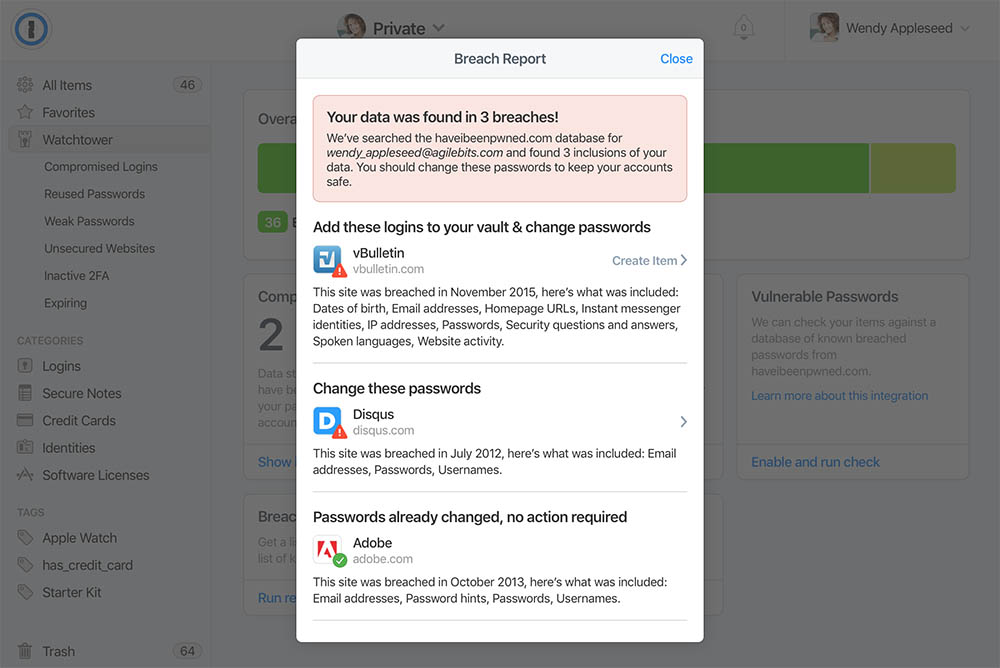
Troy Hunt, web security expert and creator of the website Have I Been Pwned (HIBP), wrote a blog post announcing his partnerships with Firefox and 1Password. For those unfamiliar with the site, Have I Been Pwned allows you to search across multiple data breaches to see if your email address has been compromised. The service is especially handy now that data breaches are becoming a daily occurrence. Hunt writes: Last November, there was much press about Mozilla integrating HIBP into Firefox. I was a bit surprised at the time as it was nothing more than their Breach Alerts feature which simply highlighted if the site being visited had previously been in a data breach (it draws this from the freely accessible breach API on HIBP). But the press picked up on some signals which indicated that in the long term, we had bigger plans than that and the whole thing got a heap of very positive attention. I ended up fielding a heap of media calls just on that one little feature - people loved the idea of HIBP in Firefox, even in a very simple form. As it turns out, we had much bigger plans and that's what I'm sharing here today. Over the coming weeks, Mozilla will begin trialling integration between HIBP and Firefox to make breach data searchable via a new tool called "Firefox Monitor." Here's what Hunt has to say about 1Password: As of now, you can search HIBP from directly within 1Password via the Watchtower feature in the web version of the product. This helps Watchtower become "mission control" for accounts and introduces the "Breach Report" feature. If you're a 1Password user you can use this feature right now, just head on over to the 1Password login page.
-
Trump Officials Planning Escalation of US-China Tech Trade War (arstechnica.com)
An anonymous reader quotes a report from Ars Technica: The Trump administration is looking to widen its trade war with China by restricting Chinese access to U.S. technology, according to reports from the Wall Street Journal and Reuters. "The Treasury Department is crafting rules that would block firms with at least 25 percent Chinese ownership from buying companies involved in what the White House calls 'industrially significant technology,'" the Wall Street Journal says. A separate proposal would institute beefed-up export controls preventing Chinese companies from buying these technologies from U.S. firms. The policies could be announced as soon as this week, the Journal says. In the past, the Trump administration has blocked multiple attempts by Chinese companies to buy U.S. semiconductor firms and imposed a sweeping export ban on Chinese smartphone maker ZTE after ZTE was caught selling U.S. technology to Iran and North Korea -- though the administration recently lifted the ban.
-
Apple To Unveil High-End AirPods, Over-Ear Headphones For 2019 (bloomberg.com)
According to a new report from Bloomberg's Mark Gurman and Debby Wu, Apple is "planning higher-end AirPods, a new HomePod and studio-quality over-ear headphones for as early as next year." From the report: The Cupertino, California-based company is working on new AirPods with noise-cancellation and water resistance, the people said. Apple is trying to increase the range that AirPods can work away from an iPhone or iPad, one of the people said. You won't be swimming in them though: The water resistance is mainly to protect against rain and perspiration, the people said. Slated for 2019, the earbuds will likely cost more than the existing $159 pair, and that could push Apple to segment the product line like it does with iPhones, one of the people said. Apple is also working on a wireless charging case that's compatible with the upcoming AirPower charger.
There are over-ear headphones coming from Apple, too. Those will compete with pricey models from Bose Corp. and Sennheiser. They will use Apple branding and be a higher-end alternative to the company's Beats line. Apple originally intended to introduce the headphones by the end of 2018, but has faced development challenges, and is now targeting a launch as early as next year, the people said. A previous Bloomberg report was plugged, teasing a new version of the current AirPods that will feature a new chip and support for hands-free Siri activation. They are reportedly launching later this year. -
Mouse and Keyboard Support Could Be Coming To the Xbox One This Year (theverge.com)
Over the weekend, Windows Central received a purported internal Microsoft presentation from earlier in the year detailing plans for mouse-and-keyboard support for the Xbox One. Microsoft has been teasing the support for years now, but it's finally becoming a reality soon. The Verge reports: Sources familiar with Microsoft's plans tell The Verge that Microsoft and Razer presented their plans at the annual Xfest event for developers earlier this year. Razer is planning to allow game developers to tap into its API to bring Chroma lighting effects to games. If all goes according to plan, Xbox One users will start to make use of this later this year with Microsoft's fall update for the Xbox.
Xbox gamers will welcome the addition of keyboard and mouse support, but some will question the impact on multiplayer games. Microsoft is allowing developers to detect whether a keyboard or mouse is present on an Xbox One, and games could potentially only match keyboard and mouse users with similarly equipped players. Balancing games will be down to developers, and Microsoft is offering up all the tools required to ensure games can implement the support in a variety of ways. -
Amazon Workers Facing Firing Can Appeal To a Jury of Their Co-Workers (bloomberg.com)
An anonymous reader quotes a report from Bloomberg: Jane was working in Amazon's Seattle headquarters when she was asked to a meeting with her manager and a human resources representative. They gave her a document outlining concerns about her work performance and spelled out three choices. She could quit and receive severance pay, spend the next several weeks trying to keep her job by meeting certain performance goals, or square off with her manager in a videoconference version of the Thunderdome, pleading her case with a panel of co-workers while her boss argued against her. Jane, who asked that her real name not be used to discuss a personal matter, chose the last one.
Amazon is borrowing a page from union grievance processes that don't apply to most corporate employees. But only about 30 percent of those who appeal their manager's criticisms prevail, meaning they can keep their jobs or seek new ones within the company with different bosses, according to people familiar with the matter. Eighteen months after its debut, the hearing process has created resentment and raised questions about fairness, according to current and former workers as well as attorneys familiar with their situations. "It's a kangaroo court," says George Tamblyn, a Seattle employment lawyer who helped one former Amazon worker plan her appeal earlier this year. "My impression of the process is it's totally unfair." According to a person familiar with the process, the workers who fail to make their case and get their job back can still choose between severance pay or a performance-improvement plan. The program, called "Pivot," was started last year.
Here's what Amazon has to say on the matter: "Pivot is a uniquely Amazonian program that was thoughtfully designed to provide a fair and transparent process for employees who need support. When employees are placed in Pivot, they have the option of working with their manager and HR to improve with a clear plan forward, of leaving Amazon with severance, or of appealing if they feel they shouldn't be in the program. Just over a year into program, we're pleased with the support it offers our employees and we're continuing to iterate based on employee feedback and their needs." -
Silicon Valley Execs Will Meet on Wednesday To Discuss Privacy (axios.com)
An anonymous reader shares a report: Privacy and government affairs officers from a number of the largest tech companies plan to convene in San Francisco on Wednesday to discuss how to tackle growing questions and concerns about consumer privacy online. The Information Technology Industry Council, a Washington trade group that represents major tech companies, organized an all-day meeting to jump-start the conversations. Members include Facebook, Google, Apple, Salesforce, IBM, Microsoft, Intel, Qualcomm, Samsung, Dropbox, and others. ITI expects the meeting to be attended by companies across the industry's sectors, including hardware, software and device makers -- but declined to say which companies would be there.