Slashdot Mirror


Subverting Fingerprinting

squizzar writes in with news of a 27 year old Chinese woman who was discovered to have had her fingerprints surgically swapped between hands in order to fool Japanese immigration. "It is Japan's first case of alleged biometric fraud, but police believe the practice may be widespread. ... The apparent ability of illegal migration networks to break through hi-tech controls suggests that other countries who fingerprint visitors could be equally vulnerable — not least the United States, according to BBC Asia analyst Andre Vornic." Time for some biometric escalation. Could iris scans be subverted as easily?
169 comments

  1. GLORIOUS NIPPON by Anonymous Coward · · Score: 1, Insightful

    Can't blame her for wanting to live in Japan.

  2. Shodan's retinal scanners can always be fooled by Anonymous Coward · · Score: 2, Funny

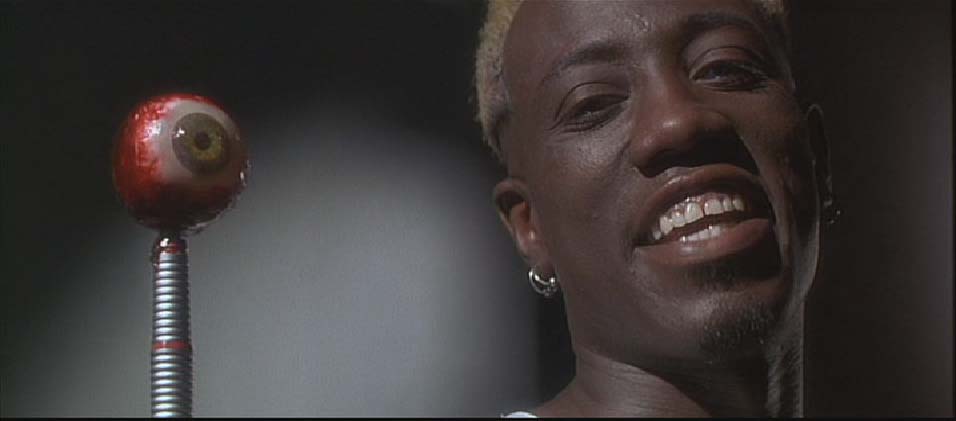
    if you carry around a handy severed head.

    1. Re:Shodan's retinal scanners can always be fooled by Ethanol-fueled · · Score: 5, Funny

      This method is much more compact.

    2. Re:Shodan's retinal scanners can always be fooled by Anonymous Coward · · Score: 0

      This method is much more compact.

      Kind of puts me in the mood for a popsicle though. =\

    3. Re:Shodan's retinal scanners can always be fooled by Dan541 · · Score: 1

      No, because when you peer into something your eye adapts for the darkness so the person would need to be peering into something of equal darkness as you kill them so the eye stays at the optimal configuration. Otherwise the scan will differ enough to fail.

      Also the eye may dilate as you kill them which will also fuck the result.

      --
      An SQL query goes to a bar, walks up to a table and asks, "Mind if I join you?"
    4. Re:Shodan's retinal scanners can always be fooled by plastbox · · Score: 1

      Have you not seen Demolition Man?! The owner of the eye was not killed, hand in your geek card right now!

    5. Re:Shodan's retinal scanners can always be fooled by Dan541 · · Score: 1

      What's Demolition Man?

      --
      An SQL query goes to a bar, walks up to a table and asks, "Mind if I join you?"
    6. Re:Shodan's retinal scanners can always be fooled by SpoodyGoon · · Score: 1

      You put just a little too much thought into this. I'm going to go hide now.

    7. Re:Shodan's retinal scanners can always be fooled by Dan541 · · Score: 1

      Hmmmmm....

      Surly only someone with a valuable retina would hide.

      --
      An SQL query goes to a bar, walks up to a table and asks, "Mind if I join you?"
  3. Watching 'Bladerunner' too many times? by ColdWetDog · · Score: 2, Interesting

    The tech for swapping fingerprints apparently exists. I don't know anybody swapping out eyeballs.

    However, the open question that TFA brings up is whether or not you can skin graft somebody elses fingerprints on to you. (Or vice versa). You can do allograft skin grafts, at least temporarily, so it's feasible.

    --
    Faster! Faster! Faster would be better!
    1. Re:Watching 'Bladerunner' too many times? by MichaelSmith · · Score: 4, Interesting

      Or how about just carving a custom print into the finger. Maybe something like the laser surgery they do on corneas or tattoos.

    2. Re:Watching 'Bladerunner' too many times? by HTH+NE1 · · Score: 3, Insightful

      The tech for swapping fingerprints apparently exists.

      The tech for swapping fingerprint cards has existed even longer. Sometimes it's the people taking the prints that swap them for you.

      --
      Oh, say does that Star-Spangled Banner entwine / The myrtle of Venus with Bacchus's vine?
    3. Re:Watching 'Bladerunner' too many times? by Anonymous Coward · · Score: 0

      The fear of rejection would probably be too high of a risk for most plastic surgeons to take the job. Also the costs of prescriptions, surgery, to subdue antibodies and $$$convincing someone to do this with you, or... i suppose acquiring a set of fingers off the black market hehehe ,would make it a costly endeavor.

    4. Re:Watching 'Bladerunner' too many times? by lobiusmoop · · Score: 1

      I think you might be thinking about 'Minority Report' instead of 'Blade Runner' in terms of retinal scanning.

      --
      "I bless every day that I continue to live, for every day is pure profit."
    5. Re:Watching 'Bladerunner' too many times? by drijen · · Score: 1
      I recall reading about a number of the Mobster era convicts, (Alvin Karpis, in particular, IIRC), that would:

      Restrict blood flow to their finger tips
      Shoot the ends up with cocaine
      Shave off the fingerprints with a knife

      Voila, no more prints.

    6. Re:Watching 'Bladerunner' too many times? by digitalunity · · Score: 1

      I've read several enlightening stories on the web in years past saying eyeball transplants are not far off. Apparently new eyeballs, some stem cells and time can allow the brain to recognize and rewire itself for the eyes of another.

      Sounds really creepy, unless you're a blind man.

      --
      You can't legislate goodness. Let each to his own destiny, by will of his freely made choices.
    7. Re:Watching 'Bladerunner' too many times? by digitalunity · · Score: 1

      None of those really subvert fingerprint scanning. It just invalidates the results. The police are highly likely to notice your lack of prints.

      A transplant moving your finger pads around though will let you through as unidentified. A far more valuable thing.

      --
      You can't legislate goodness. Let each to his own destiny, by will of his freely made choices.
    8. Re:Watching 'Bladerunner' too many times? by martas · · Score: 1

      forget blade runner, this article reminds me of minority report so much that it's a little creepy...

    9. Re:Watching 'Bladerunner' too many times? by MrNaz · · Score: 1

      BS.
      The optic nerve is the most complex neural pathway in the body after the spine. We're closer to a working release of Duke Nukem Forever than we are to eyeball transplants.

      --
      I hate printers.
    10. Re:Watching 'Bladerunner' too many times? by meerling · · Score: 1, Interesting

      Having missing or 'weak' fingerprints is enough to get arrested.
      There are several cases of this in the USA in the last few years.

      So far they've all ended up being attributed to disease or professions that have the side effect of diminishing or eliminating fingerprints.

      Having a lack of fingerprints is not illegal, but the cops excuses have always been, "If'n ya ain't got dem fingerprints, ya must be upz ta no good...".
      (Extreme hick accent intended for purposes of parody.)

    11. Re:Watching 'Bladerunner' too many times? by srothroc · · Score: 1

      Why swap out the eyeballs? Couldn't you get contacts that would change your irises?

    12. Re:Watching 'Bladerunner' too many times? by Anonymous Coward · · Score: 0

      no but a contact lens might do the trick... might be a little more practical than swapping out an eye ball as well.

    13. Re:Watching 'Bladerunner' too many times? by pHus10n · · Score: 1

      Wow. [citation needed].

      No, wait...citation required.

    14. Re:Watching 'Bladerunner' too many times? by Anonymous Coward · · Score: 0

      Not far off?

      Corneal transplants, which are sometimes incorrectly called eye transplants, were first performed in 1961, and have been fairly commonplace since the 70's or 80's, with a large number of them being done as outpatient procedures today. Over 90% of corneal transplant recipients have sight restored.

      As far as transplanting a whole eyeball, that would require transplanting or somehow "re-wiring" the optic nerve, which is probably the most complex nerve group in the human body second only to the spinal cord. Most experts would agree that to see a successful, working, eyeball transplant within the next hundred years would be a miraculous medical breakthrough. Some sort of bionic option is probably far more likely.

    15. Re:Watching 'Bladerunner' too many times? by Khyber · · Score: 2, Funny

      "We're closer to a working release of Duke Nukem Forever than we are to eyeball transplants."

      We have already made eyeball replacements. Low resolution, only 12x12px, and it transmits the signals to your brain via the tongue, BUT IT WORKS.

      Duke's fucking late to the party, as always.

      --
      Still waiting on Serviscope_minor to wake up to fucking reality and realize that Jessica Price isn't going to fuck him.
    16. Re:Watching 'Bladerunner' too many times? by dredwerker · · Score: 1

      o so it wouldnt be creepy if you were blind but it would if you werent - thats just blindist :)

      --
      On a long enough timeline. The survival rate for everyone drops to zero. Chuck Palahniuk, Fight Club, 1996
    17. Re:Watching 'Bladerunner' too many times? by Anonymous Coward · · Score: 0

      There is no need to swap eyeballs. It has long been technically possible to tattoo lines/patterns on the retina (don't have time to find the link, but there's some information on www.bme.com).

    18. Re:Watching 'Bladerunner' too many times? by JackieBrown · · Score: 1

      Surely there was a reason they were trying to fingerprint those people for the police to even notice...

      I have never had a cop in the US (nor Canada) randomly ask to verify if I have fingerprints.

    19. Re:Watching 'Bladerunner' too many times? by Anonymous Coward · · Score: 0

      It is pretty hard to fool an iris scanner. Using the Wesley Snipes method wouldn't cut it, because (good) iris scanners look for the little involuntary muscle spasms in your pupil, and the natural reaction to light is also a dead giveaway if missing.

      As for the Minority report scenario, tampering with your eyes carries extreme risks that no sane person is willing to take, and such operations are not (yet) even possible.

    20. Re:Watching 'Bladerunner' too many times? by mlush · · Score: 1

      I recall someone had his chest skin grafted to his fingertips... [FX]Google chest skin fingerprints[/FX] Hmm back in 1941 one Robert J. Philipps had his chest skin grafted onto his fingertips.... they got him because he had left a bit round the edges.

    21. Re:Watching 'Bladerunner' too many times? by Jarik+C-Bol · · Score: 1

      i remember another guy who had sliced off his fingertips, cut them up like a puzzle, and put em back in a different order. they got him also. took the prints into photoshop and rearranged them back into there original order.

      --
      I've decided to Diversify my Holdings. I've divided my cash between my left and right pockets, instead of all in one.
  4. What a security vulnerability! by Logic+Worshipper · · Score: 2, Insightful

    This is only a security threat if someone removes my finger and graft's it to someone else's hand so they can get my data. So my data is only as secure as the skin on my finger. I'm so scared. The likelihood of someone stealing my finger to get data is really high. Worse, they'll steal my eyeball to fake an iris scan. Maybe soon they'll just steal my brain and remove the passwords I have memorized. I'm sure in all those scenarios what I'll be thinking is "OMG, My Data!"

    1. Re:What a security vulnerability! by EdZ · · Score: 2, Insightful

      Or simply take your fingerprint from an object you've held, print it out on an inkjet or laser printer, and stick the printout on the reader. Instant identity theft, no finger transplant required.

    2. Re:What a security vulnerability! by biryokumaru · · Score: 1

      Actually, I've heard stories of rich folk in Central America who get car jacked, but have biometric locks, so the carjackers cut off their fingers.

      It happens.

      --
      When you're afraid to download music illegally in your own home, then the terrorists have won!
    3. Re:What a security vulnerability! by Fluffeh · · Score: 1

      You forgot to supplement and emphasize your post with a WHOOSHing sound as it passed over the GP head.

      --
      Moved to http://soylentnews.org/. You are invited to join us too!
    4. Re:What a security vulnerability! by Anonymous Coward · · Score: 2, Informative

      Well, I'd get in trouble for this if I didn't post anonymously....

      I work for a Fingerprint Sensor manufacturer. There are roughly two of those for current laptops (Authentec and Upek), with several other up-and-comers (Validity, Egistech), and a legion of failed manufacturers.

      The ability to spoof a fingerprint sensor using a printed fingerprint is highly dependent on the specific technology used. As I remember the Mythbusters episode, they used an optical placement fingerprint sensor (glass plate that you put your finger down on, and hold it still). You won't find those in any current laptop designs - they cost too much money, and they are susceptible to easy spoofing. Microsoft currently sells an add-on optical placement fingerprint sensor.

      Current FPS technology for laptops is a swipe sensor - a small rectangle that you place your finger on, then swipe. The technologies involved in acquiring the fingerprint are sufficiently different between manufacturers that, without testing, it's hard to say which sensors will be susceptible to a paper spoof and which won't, which will be susceptible to a Gummi Bear spoof and which won't.

      In general, I'm sure you'd find that current sensors are far less susceptible to spoofed fingerprints than sensors just a few years agos. But, I'm also sure that you'd find some current sensors that were easily spoofed.


    5. Re:What a security vulnerability! by LordLimecat · · Score: 1

      That wasnt central america, it was (IIRC) Indonesia.

    6. Re:What a security vulnerability! by Opportunist · · Score: 1

      Pretty much that. All it proves is that you can become "not you", not that you can become someone else. It works to avoid a positive match, but it won't work to create a false positive match.

      --
      We used to have a Bill of Rights. Now, with the rights gone, all we have left is the bill.
    7. Re:What a security vulnerability! by Opportunist · · Score: 1

      You'd get in trouble from your employer for breaking the news that the systems are getting more secure and harder to spoof?

      --
      We used to have a Bill of Rights. Now, with the rights gone, all we have left is the bill.
    8. Re:What a security vulnerability! by michaelhood · · Score: 1

      Malaysia, is the story you're thinking of - http://news.bbc.co.uk/2/hi/asia-pacific/4396831.stm - though it's happened more than once I've heard, but don't have any other links.

    9. Re:What a security vulnerability! by TheLink · · Score: 2, Interesting

      And that is why physical keys are better.

      Just buy insurance for the stolen car.

      While insurance might compensate you for your lost finger, most people are more attached to their fingers than they are to their car ;).

      And even if you're more attached to your car, this sort of system will cause you to lose both.

      --
    10. Re:What a security vulnerability! by Logic+Worshipper · · Score: 1

      That's another issue. Considering that issue what the article is about is completely pointless to discuss. Yeah, you can do that, so who cares if you can remove someone's finger prints and surgically implant them onto someone else, when you can just spoof the finger print reader?

  5. Woah by Idiomatick · · Score: 1

    That is really excessive. You can melt your fingerprints off with battery acid ... or like any harsh chemical. surgically swapping them sounds way harder @_@

    1. Re:Woah by T+Murphy · · Score: 1

      You'd draw less suspicion if you change your fingerprints rather than just get rid of them entirely.

    2. Re:Woah by LandGator · · Score: 1

      Fresh pineapple juice does the trick. Makes your fingers taste better, too.

      --
      There is nothing wrong with yr Internet. Do not attempt to adjust the picture. We are controlling the transmission - NSA
    3. Re:Woah by girlintraining · · Score: 0

      A lack of fingerprints would be noticed. The mafia did this for awhile by burning their fingerprints off with a hot iron so as not to leave them behind at the crime scene. The FBI later discovered that as fingerprints are based on deeper layers of the skin than what's on the surface, even a person who had done thisstill left a distinctive mark that could be identified -- although it was more difficult.

      It would be a lot easier to use a clear plastic covering (the "silly putty finger" school of thought) or skin grown in a petri dish over a composite material with a different imprint and then grafting it over your skin -- such temporary grafts survive a limited period of time before corroding. essentially, you make thin slits in existing tissue and then 'stitch' the graft in. Remember that the graft only has to survive for a day. Micro-perforations would make it a minimally-invasive procedure, with little scarring once the grafts have deteriorated.

      --
      #fuckbeta #iamslashdot #dicemustdie
    4. Re:Woah by Idiomatick · · Score: 4, Informative

      According to mythbusters you could get past most scanners with a photocopy of someone else's fingers :P

    5. Re:Woah by cgenman · · Score: 5, Funny

      True story:

      I worked at a video game developer once who had biometric finger scanners to clock in and out, but required you to type in your employee number first.

      "If it has my fingerprint, shouldn't it know my employee number?"

      So I started playing with it. I started with the same finger on the same hand. It took it. Then a different finger on the same hand. Yup. It took a different finger on a different hand. And then we got creative.

      Someone Else's finger? Check. Elbow? Check. Toe? Check. Tongue? Check.

      In fact, we finally found the limit of the system. It took a warm hot dog pressed up against the fingerprint scanner, but not a cold one. A lot of my faith in fingerprint biometrics was shattered then and there. I since dated someone who had a fingerprint scanner on her computer, though that only seemed to let me trough wrongly some of the time.

      Another thing we learned? Co-workers don't appreciate it when you lick the thumb scanner that everyone has to clock in with.

    6. Re:Woah by vxice · · Score: 2, Informative

      that was likely a low tech scanner. Just because it says it scans for fingerprints doesn't mean it really does and just like in any other field you get what you pay for. I work on biometrics projects at my school and one of the labs I used to work in had a hand geometry scanner, made a dozen or so measurements of the length and such of fingers one of the older and less secure methods, it required an id number because while unlike fingerprint hand geometry is good for a one to any search. meaning that it will only confirm an id because mostly the accuracy is so low compared to what it would need to determine different people without combining other security vectors. Just keep in mind not all scanners are created equal and not all modalities, different biometric paths such as fingerprint iris and many others, are equal and they can be easily combined to increase security in a similar way multiple passwords adds security and it needs to be tailored to the application just like any other security approach. and just like all other methods of security it is a cat and mouse game.

      --
      every anarchist is a baffled dictator. Benito_Mussolini
    7. Re:Woah by arthurpaliden · · Score: 1

      I saw a security expert open a finger print scanner lock by squishing a gummy bear on the scanner part. He was giving a 'this is the real world" type lecture. We did not let the manager who authorized the purchase know. It would have ruined his day.

    8. Re:Woah by Anonymous Coward · · Score: 0

      True story:

      I worked at a video game developer once who had biometric finger scanners to clock in and out, but required you to type in your employee number first.

      "If it has my fingerprint, shouldn't it know my employee number?"

      So I started playing with it. I started with the same finger on the same hand. It took it. Then a different finger on the same hand. Yup. It took a different finger on a different hand. And then we got creative.

      Someone Else's finger? Check. Elbow? Check. Toe? Check. Tongue? Check.

      In fact, we finally found the limit of the system. It took a warm hot dog pressed up against the fingerprint scanner, but not a cold one. A lot of my faith in fingerprint biometrics was shattered then and there. I since dated someone who had a fingerprint scanner on her computer, though that only seemed to let me trough wrongly some of the time.

      Another thing we learned? Co-workers don't appreciate it when you lick the thumb scanner that everyone has to clock in with.

      Also that your mouth in particular is a teeming mess of bacteria, or at least moreso than usual.

    9. Re:Woah by Anonymous Coward · · Score: 1, Funny

      But what about the eternal question:

      Did it accept your johnson???

    10. Re:Woah by Anonymous Coward · · Score: 0

      That doesn't mean they're not recording the finger print in case there is a problem later...

    11. Re:Woah by Anonymous Coward · · Score: 0

      Then, I think the fingerprint scanner was actually a number ID clock machine with a thermometer: Input employee number + hot flesh = pass.

    12. Re:Woah by Anonymous Coward · · Score: 0

      Have you tried a penis print? :D

    13. Re:Woah by Ren+Hoak · · Score: 1

      The Myth Busters episode regarding this is several years old. Fingerprint scanning technology has improved rapidly in the mean time.

      Like everything, it's hackable if you know the full details, but it gets harder each year, and even when Myth Busters used photo copies and copper etchings to get past them, there were commercially available scanners that these techniques could not fool. I have no reason to believe Myth Busters was aware of the bleeding edge technology, but I do know the technology existed then and is improved today.

    14. Re:Woah by Anonymous Coward · · Score: 0

      A lack of fingerprints would be noticed. The mafia did this for awhile by burning their fingerprints off with a hot iron so as not to leave them behind at the crime scene.

      Few people know this, but the invention of gloves was in fact spurred greatly by disgruntled mafia henchmen.

    15. Re:Woah by Anonymous Coward · · Score: 0

      Must be an old biometric reader. Newer models are more advanced. Also, have you noticed that newer biometric readers only have a small crosssection & require you to swipe your finger? This probably helps clear off fingerprint imprints from the last guy, for a better read.

    16. Re:Woah by Anonymous Coward · · Score: 0

      In fact, we finally found the limit of the system. It took a warm hot dog pressed up against the fingerprint scanner, but not a cold one. A lot of my faith in fingerprint biometrics was shattered then and there. I since dated someone who had a fingerprint scanner on her computer, though that only seemed to let me trough wrongly some of the time.

      I hope you didn't press your cold hot dog up to _her_ biometric scanner.

    17. Re:Woah by horza · · Score: 1

      Biometrics can be used for prevention but also detection. The scanner may not be doing a comparison at all but just recording the fingerprint. Simply a digital way of "signing in". If another employee or an outsider logs in under a false employee number then at least you now have recorded evidence. And implementing this will be dirt cheap.

      Phillip.

    18. Re:Woah by Anonymous Coward · · Score: 0

      Another thing we learned? Co-workers don't appreciate it when you lick the thumb scanner that everyone has to clock in with.

      I, in my turn, wouldn't appreciate to lick the thumb scanner that everyone has to clock in with.

    19. Re:Woah by IpSo_ · · Score: 1

      The reason you had to enter the employee ID first is likely because it was doing a 1:1 match on the fingerprint, which in most devices I've used is done at a MUCH lower threshold than a 1:many search.

      On any decent device these thresholds (1:1 and 1:many) can usually be set separately and what can often happen is that the employees aren't properly trained how to use them (yes, there should be training) so they run into all sorts of issues with failed scans, so rather than train the employees they just set the thresholds so low that 1:many searches don't actually work, and 1:1 matches are virtually useless.

      Even the "lowest tech" scanner can differentiate between a toe, hotdog and finger without any issues at all.

      --
      Open Source Time and Attendance, Job Costing a
    20. Re:Woah by Anonymous Coward · · Score: 0

      I don't want to touch anything that your "warm hot dog" has touched. I am scared to death of iris scanners, though. I don't think they could blind you, but someone could tamper with it and it would. Or, more likely, sabotage it to spray a chemical into your open eye that would blind or hurt you. You are extremely vulnerable in the scan position. No, thanks! It should only be done by a medically trained eye doctor and not some minimum wage security drone out in the field.

      Your hot dog test does lead to an untapped area of biometrics though. "Down Under" biometrics. Your dog probably has many unique characteristics including vein distribution. And I've heard each woman is as unique as a snowflake down there. I would like to apply for a government grant to develop testing for this.

  6. Did she fool anyone, though? by AnotherUsername · · Score: 4, Insightful
    From TFA:

    Japanese newspapers said police had noticed that Ms Lin's fingers had unnatural scars when she was arrested last month for allegedly faking a marriage to a Japanese man.

    Seems like until they can get rid of the circular scars around their fingertips, they aren't going to fool anyone. From now on, when officials notice circular scars or other shaped scars around fingertips, they will probably have the person undergo further testing.

    As far as iris switching...I don't think so. I have a feeling that the permanent blindness that likely follows(though I am not an ophthalmologist, so I can't be sure as to what is possible) will override any benefits that come from the short term gains of biometrics trickery.

    --
    I don't like Linux. This doesn't make me a troll.
    1. Re:Did she fool anyone, though? by Anonymous Coward · · Score: 0

      As far as iris switching...I don't think so. I have a feeling that the permanent blindness that likely follows(though I am not an ophthalmologist, so I can't be sure as to what is possible) will override any benefits that come from the short term gains of biometrics trickery.

      What if you're blind to begin with?

    2. Re:Did she fool anyone, though? by Jah-Wren+Ryel · · Score: 4, Insightful

      From now on, when officials notice circular scars or other shaped scars around fingertips, they will probably have the person undergo further testing.

      However, their cost to check has now gone up by at least 2x, maybe even 10x - they need to manually inspect every person (you can't just check the negatives because if the faker happens to have passed through successfully in the past their 'new' prints will already be in the database).

      And this is only one attack vector. We've already seen the korean woman last year who used a practical application of the gummy bear trick to fool the japanese too.

      The thing to remember is that these systems will only get less effective as time goes by. All the hype when proposed about how great they are, for whatever intended purpose, represents the best they will ever be - the more familiarity people get with the systems, the more ways people will figure out how to circumvent them.

      Kinda warms my freedom loving heart it does.

      --
      When information is power, privacy is freedom.
    3. Re:Did she fool anyone, though? by Idiomatick · · Score: 1

      I'm not sure how you expect 'person goes by unnoticed' to make the news....

    4. Re:Did she fool anyone, though? by AdmiralXyz · · Score: 1

      However, their cost to check has now gone up by at least 2x, maybe even 10x - they need to manually inspect every person (you can't just check the negatives because if the faker happens to have passed through successfully in the past their 'new' prints will already be in the database).

      Not really. Japan prints every foreigner that passes into the country anyway, I don't think a manual inspection before they make you put your fingers on the pad would add that much time to the process.

      --
      Dislike the Electoral College? Lobby your state to join the National Popular Vote Interstate Compact.
    5. Re:Did she fool anyone, though? by putaro · · Score: 2, Interesting

      It does add up. And some people have scars on their fingers for non-nefarious purposes. The tip of one of my thumbs was cut off in an accident and then sewn back on. I fly in and out of Japan all the time. All I need is more Mickey Mouse at immigration.

    6. Re:Did she fool anyone, though? by martas · · Score: 1

      oh my god, this could lead to the formation of entire blind terrorist networks! they could be ANYWHERE!

    7. Re:Did she fool anyone, though? by swb · · Score: 1

      My first thought. Their methods & technique were crude, but with practice and probably some refinement it could probably be made turnkey for anyone who could make chocolate chip cookies from the recipe on the chip bag.

    8. Re:Did she fool anyone, though? by Hoi+Polloi · · Score: 2, Interesting

      I has psoriasis when I was fingerprinted for a DOD lab job. My fingerprints were temporarily gone and all I had was thick smooth skin on my fingertips. I even told them I had no prints and they didn't care. My print cards looked like heel prints, they wouldn't match my hands today at all.

      I also had a hard time holding onto things with smooth fingertips.

      --
      It is by the juice of the coffee bean that thoughts acquire speed, the teeth acquire stains. The stains become a warning
    9. Re:Did she fool anyone, though? by Falconhell · · Score: 1

      I've always thought there was something suspicious about Stevie Wonder.

    10. Re:Did she fool anyone, though? by MillionthMonkey · · Score: 4, Funny

      A guy at work was always talking about using gummy bears to commit the perfect crime. You somehow make a mold of someone's fingerprint using that gummy bear material. Then you use it on a fingerprint scanner, which gets fooled by it, and it lets you in. Then, get this- you eat the gummy bear fingerprint mold, and permanently destroy the evidence of your intrusion.

      That always struck me as a little improbable. You mean you're just going to eat that thing right after you pressed it against a disgusting fingerprint scanner?

    11. Re:Did she fool anyone, though? by Clandestine_Blaze · · Score: 1

      That always struck me as a little improbable. You mean you're just going to eat that thing right after you pressed it against a disgusting fingerprint scanner?

      Some people live by the five-second rule!

    12. Re:Did she fool anyone, though? by blyloveranger · · Score: 1

      Unless you use it on a Japanese fingerprint scanner, then you only have 3 seconds.

    13. Re:Did she fool anyone, though? by Jeeeb · · Score: 1

      However, their cost to check has now gone up by at least 2x, maybe even 10x - they need to manually inspect every person (you can't just check the negatives because if the faker happens to have passed through successfully in the past their 'new' prints will already be in the database).

      Where did you pull those numbers from? When you enter Japan you're already talking one on one with an immigration official (He checks your passport .etc.) It would be trivial for him to ask to check your fingers before scanning. Hell couldn't that be automated with updated technology?

    14. Re:Did she fool anyone, though? by dredwerker · · Score: 1

      they wouldnt know where they were though

      --
      On a long enough timeline. The survival rate for everyone drops to zero. Chuck Palahniuk, Fight Club, 1996
    15. Re:Did she fool anyone, though? by Foolicious · · Score: 1

      That always struck me as a little improbable. You mean you're just going to eat that thing right after you pressed it against a disgusting fingerprint scanner?

      Totally. No way the gazillions of dollars or revenge or whatever you'd get from your perfect crime would be worth that.

      --
      Please don't use "umm" or "err" or "erm".
    16. Re:Did she fool anyone, though? by Anonymous Coward · · Score: 0

      15 second rule

    17. Re:Did she fool anyone, though? by HalifaxRage · · Score: 1

      don't you mean superstitious?

      --
      bomb the us up set someone
    18. Re:Did she fool anyone, though? by OwMyBrain · · Score: 1

      That always struck me as a little improbable. You mean you're just going to eat that thing right after you pressed it against a disgusting fingerprint scanner?

      Sure! You just sterilize it with some vodka.

    19. Re:Did she fool anyone, though? by vadim_t · · Score: 2, Insightful

      That always struck me as a little improbable. You mean you're just going to eat that thing right after you pressed it
      against a disgusting fingerprint scanner?

      Won't most people end up doing that anyway?

      Come to work, put the finger on the scanner, go to the cafeteria, grab a donut or something, eat it.

      If the thought of eating something that touched a fingerprint scanner disgusts you, avoid thinking too much of all the crap you touch with the fingers every day, or you might vomit.

      Just a few examples: your car's wheel is probably very seldom cleaned, tests have showed that keyboards have more germs on them than toilet seats, any banknote or coin you have may have passed by hundreds of other owners sick with who knows what and been dropped on a large variety of surfaces, any door handles you touch may have bacteria left by 20 other people, and so on.

      With all of that, I don't think eating a gummi bear that touched a fingerprint scanner is going to add that much extra danger, in comparisons to the benefits that could be conferred by "the perfect crime"

  7. Both hands by Dan+East · · Score: 1

    Fingerprint both hands. With digital scanning it's not that big of a deal.

    --
    Better known as 318230.
    1. Re:Both hands by Raptoer · · Score: 1

      Systems probably don't do comparisons between different fingers, if you don't know which finger it is yes it should. But comparing a finger known to be the left thumb against another finger known the be the right thumb? or even worse they switch the prints on the middle 3 fingers and swap them around from index to ring finger or something. The computing time for a problem like that goes up 10x if you have to compare each incoming print against all fingerprints on a person.

    2. Re:Both hands by Anonymous Coward · · Score: 0

      10 markings on the scanner (one for each finger), passport has a few points per finger, using a identical scanner. Scanner checks that each finger matches the old finger, in this case it's you have to do 10 comparisons A1 vs A2, B1 vs B2 and so on, if more than one does *not* match, then it may be the wrong person, so pull him/her out of line and bring out the phone-book (to call Pearl for the interrogation).

  8. long term identity subversion prevention by drDugan · · Score: 3, Insightful

    The only real identity that is immune from subversion is consistent, community agreement.

    What I mean by this is that every piece of data measured can be faked, copied, or altered in the database against which the measurement is checked. DNA can be planted, id cards will be sold on black markets and faked, biometrics can be later changed or forged. The measured data in the database against which identity is checked can be altered - *all* the technology-based methods for ID have vectors of attack.

    What cannot be faked is what ones peers and friends agree upon regarding who an individual really is, and that the human in wuestion really is the person they agree it is. If all the friends and neighbors agree you really are Bob, then you're Bob regardless of what you do, or what data is stored in electronic systems. This is an unwieldy (nearly impossible) metric for access to a bar, authentication for into services, permission to drive, or asserting your ID at the bank to get your money. However, at its heart, community consistency could be the unalterable root from which all the other identification methods would rely upon. Basically one can create all kinds of electronic, physical, and technology based systems that will need to get reset when they are faked or forged or incorrect. To rely on other electronic systems for that reset is flawed and misses the essential nature of how people understand and use interpersonal identity.

    1. Re:long term identity subversion prevention by Anonymous Coward · · Score: 1, Insightful

      Not true, I've seen a case where a person built up multiple fake identities over a number of years in small country towns by visiting once a week as Bob in town one and Dave in town two etc. When it came for the ‘community’ to verify his identity as part an ID application process the people had know Bob/Dave for a number of years and he was granted numerous ID’s. It only got found out when they ran a facial recognition match over the system. It was a lot of work on his part but beats the community component.

    2. Re:long term identity subversion prevention by Anonymous Coward · · Score: 0

      and suppose I leave my community to go walkabout?

      Honestly, if you want all your "friends and neighbors agree you really are Bob, then you're Bob regardless of what you do, etc.", you could also argue that if a group of people argue that black is white and white is black, that should be so. There are many examples of rule by mass that doesn't end up well, sometimes it must be best to follow your own gut, at least you won't have your conscience on you afterward.

    3. Re:long term identity subversion prevention by girlintraining · · Score: 3, Funny

      To rely on other electronic systems for that reset is flawed and misses the essential nature of how people understand and use interpersonal identity.

      Not everyone likes their friends, family, coworkers, or neighbors. Some people have jobs that are highly mobile. Some people prefer not having attachments to others. There are individuals that don't have a community identity of any kind. Should a person be denied access to those resources simply on the basis that they have no friends?

      Officer: "Well your honor, he hadn't committed any crimes but we noticed that he had no friends."

      Judge: "Good enough for me! Anyone who has no friends is clearly a threat to society. Book 'em danno."

      Officer: "Uh, yes sir. Who's Danno?"

      Judge: "Nevermind, son. It was before your time."

      --
      #fuckbeta #iamslashdot #dicemustdie
    4. Re:long term identity subversion prevention by MarkvW · · Score: 1

      I dunno . . . ever seen the movie "The Return of Martin Guerre?"

    5. Re:long term identity subversion prevention by Anonymous Coward · · Score: 0

      Highly mobile? TPM chip implant into the femur. Value not observable unless directly connected via a surgical procedure. Used as an authenticator-of-last-resort for your government issue ID card.

    6. Re:long term identity subversion prevention by Jahava · · Score: 3, Insightful

      What cannot be faked is what ones peers and friends agree upon regarding who an individual really is, and that the human in wuestion really is the person they agree it is. If all the friends and neighbors agree you really are Bob, then you're Bob regardless of what you do, or what data is stored in electronic systems. This is an unwieldy (nearly impossible) metric for access to a bar, authentication for into services, permission to drive, or asserting your ID at the bank to get your money. However, at its heart, community consistency could be the unalterable root from which all the other identification methods would rely upon. Basically one can create all kinds of electronic, physical, and technology based systems that will need to get reset when they are faked or forged or incorrect. To rely on other electronic systems for that reset is flawed and misses the essential nature of how people understand and use interpersonal identity.

      I disagree. Community relationships can be forged just as easily (if not easier) than biometrics in every sense.
      First, you have to ask yourself "which community?" With modern transportation, Bob's community could easily span his state. With modern communication, Bob's community could span the entire world. Concepts of traditional associations and communities are in a state of constant flux. To Bob's closest friends, he may be a blob of text. It's entirely possible that Bob goes throughout life without anybody ever truly knowing him. And even if he develops close relationships, they may be difficult to extract and correlate enough to develop any serious sense of him. Just go read an obituary ... those are a person's closest contacts giving their most sincere impressions of that person. Do you feel like you really know him after reading one? Is it really likely that they do?
      Then, you have to ask yourself "what consistency?" To his World of Warcraft pals he may be a secret agent astronaut millionaire. To his Facebook friends, he may seem a fun, insightful guy who loves to play sports. To his parents, whom he visits on holidays, he might be a successful banker. To his landlord, he might be a deadbeat who lost his banking job in the recession. All of these personas are maintainable and verifiable in the context of his community relationships.
      So bring forgery into account. Online, forgery is easy, as long as there's internal consistency with his community. In person is more difficult, but there are physical look-alikes and actors who could pull it off. Someone claiming to be Bob could completely redefine his community impression with enough determination. Point is, someone can easily pretend to be Bob, with or without his blessing, in any of his community relationships if they devote enough time and circumstance works in their favor.
      So what really is a person's identity? It's not community relationships any more than it's biometrics. All of those are third-person impressions of an organism, and they only certify identity through temporal and physical correlation of their data. The only physical identity that is Bob is his brain, which (for now) cannot be duplicated and (spiritually) will never be (if that's the kind of thing you believe in). Even then, Bob can change in an instant with brain trauma ... a complete rewiring! ... but it's still Bob, from society's (and the law's) point of view.
      His identity is not absolutely verifiable for the same reason it's unique ... it resides in a medium that is neither fully understood nor fully expressible. For all practical purposes, Bob will remain the sum of his parts, both socially and biometrically. Our ability to gauge Bob, like our ability to impersonate him, is based squarely on our perceptive capabilities and our time investment, and biometrics (especially retinal scans and DNA prototyping) are pretty damned capable.

    7. Re:long term identity subversion prevention by shentino · · Score: 1

      Which works just fine up until the point that everyone is bribed to say something.

      Or maybe Bob just did something so apparently horrible that everyone decides to lynch him by refusing to vouch for him.

    8. Re:long term identity subversion prevention by sjames · · Score: 2, Insightful

      At one time, that was sort of the final safety valve. If worst came to worst, a person could start over with a more or less fictional history and be judged from that point forward only.

      While that can be misused, there can also be legitimate uses. We as a society seem to be racing headlong the other direction. Get caught peeing on a dumpster and you might get a scarlet letter for life.

    9. Re:long term identity subversion prevention by Anonymous Coward · · Score: 0

      To summarize:
      Bob is Fred.
      Both are trapped in an introspective hell.

    10. Re:long term identity subversion prevention by Anonymous Coward · · Score: 0

      That's why I only invest with Bernard Madoff. All my friends say he's really trustworthy.

  9. Only a matter of time... by DaRanged · · Score: 1

    Brings a whole new meaning to the word hacking. But in truth, how long will it be until can be swapped replaced 'a la' Minority Report?

    As all kinds of technology improve, cheapen, become more accessible, so do the means to subvert them.

  10. Really.... by Darkness404 · · Score: 1

    Really, fingerprinting is based on the belief that no two people have identical fingerprints, furthermore, most commercial/personal scanners are going to have a degree of forgiveness, after all, you don't want to be locked out of your laptop for having a dirty hand or something. Fingerprints are not secure, they can be manipulated, changed, altered, etc. A fingerprint is nothing more than a key.

    --
    Taxation is legalized theft, no more, no less.
    1. Re:Really.... by Jezza · · Score: 2, Insightful

      "The Myth of Fingerprints" - Paul Simon, right? As far as I understand it they only use a few "distinguishing features" anyway - and they allow for damage to those (like a cut). However, the point is that it's hard to predict what will "fool the scanner" and what won't. If you don't know which "distinguishing features" it's looking for what do you change? Even harder is to get the scanner to give a false hit on someone else's finger print data (so you can pretend to be them).

      As evidence at a crime scene I think finger prints are far more suspect than they might at first appear.

    2. Re:Really.... by NotQuiteReal · · Score: 1

      I think you are saying it is easier not to be "you" than it is to be somebody else... seems reasonable to me. We can all change, if we want to.

      --
      This issue is a bit more complicated than you think.
  11. Why would she do that? by Anonymous Coward · · Score: 1, Interesting

    The thing they never talk about in these stories is what would drive someone to go to such lengths? There's rarely even a single quote from the person arrested, and yet the police can say whatever they like. What does that say about a society?

    1. Re:Why would she do that? by MichaelSmith · · Score: 1

      Well okay but you could spend all century talking about Bad Shit in China which the people there want to get away from.

    2. Re:Why would she do that? by Anonymous Coward · · Score: 0

      What does that say about a society?

      That the lies criminals tell aren't all that interesting?

  12. Scanners by girlintraining · · Score: 1, Interesting

    The problem isn't technology in this case, but rather bad assumptions made by the designers and users. What you're doing when you use a biometric scanner is (most often) taking a reading and converting that into a hash. And for any given hash, there will be at least one pattern that will resolve for that hash, possibly several or many. It's the same with DNA -- we can't sequence and compare a person's entire DNA, but we know certain parts of certain genes exhibit a high degree of variability, and so we sequence those and use them for comparison.

    In this case, an assumption was made that fingerprints don't change on a person. Well, using lasers and surgical techniques, they can be changed, and therefore the system can be bypassed -- not because the technology is flawed, but the assumptions made about its use were. Now that this technique has been observed, we need to add another step to the identification process: Looking for scars on the fingers that suggest surgical techniques have been applied. The fingers should be carefully inspected before fingerprinting anyway -- to identify other forms of fraud as well.

    Of course, there's still the human variable: Immigration necessarily requires hundreds to hundreds of thousands of personnel to administrate the rules. And the system is only as strong as the weakest link -- or the weakest person. There will always be people that can be bribed or manipulated -- or just plain lazy, and those weaknesses can be exploited. And truthfully, it'd probably be cheaper.

    As long as the government walls off access to goods and services by attempting to uniquely identify people, there'll be a market for false identification. Is the price point their system has set too low?

    --
    #fuckbeta #iamslashdot #dicemustdie
    1. Re:Scanners by misexistentialist · · Score: 1

      we need to add another step to the identification process: Looking for scars on the fingers that suggest surgical techniques have been applied.

      Although consigning some thousands of people with accidental scars on their fingers to official non-existence is insignificant, it would seem more convenient for everyone just to tag the populace with more durable and difficult to counterfeit implanted microchips.

  13. What about the disabled? by Psaakyrn · · Score: 1

    Wouldn't fingerprinting fail spectacularly on people with no fingers? (e.g. Darth Vader, Luke Skywalker (for one hand), etc...)

    1. Re:What about the disabled? by MichaelSmith · · Score: 1

      I am not sure Japan is actively trying to keep Darth Vader and Luke Skywalker out of the country.

      But as to your point: yes I suppose so. Techniques like this which work on 99% of the population free up resources to manually check the remaining 1%.

    2. Re:What about the disabled? by abigor · · Score: 3, Funny

      Yes, Darth Vader has been able to slip undetected into numerous Western democracies for this very reason.

    3. Re:What about the disabled? by sincewhen · · Score: 2, Funny

      "Yes, I have changed my fingerprints. Pray that I don't alter them further!"

      --
      -- Braden's law of data: All data spends some of its lifetime in an excel spreadsheet.
    4. Re:What about the disabled? by Falconhell · · Score: 1

      Yeh, that Dick Chaney disguise is a ripper!

    5. Re:What about the disabled? by sqlrob · · Score: 1

      He even got a job at CNN

  14. FBI fighting this since the 1930's by Somegeek · · Score: 5, Informative

    "other countries who fingerprint visitors could be equally vulnerable — not least the United States", according to BBC Asia analyst Andre Vornic.

    Vornic needs to do some research. Criminals in the US have been attempting to surgically alter or mask their fingerprints since at least the 1930s, and the FBI has been researching the techniques since then as well. I remember reading about this in a book from the 60's, where a counterfeiter surgically swapped his prints around, and the FBI recognized them, out of order, and matched them back up with the original fingers.

    --
    And as you tread the halls of sanity, You feel so glad to be, Unable to go beyond. I have a message, From another time..
  15. Still the same fingerprints...? by TangoMargarine · · Score: 2, Interesting

    So the only way this person's surgery is actually worth anything is if fingerprint scans care which hand the prints are one? I would think that if you switched your hands' fingerprints, you'd still have the same prints, which could be picked up easily enough as long as the scan tests the prints against your right and left hands both.

    Not to mention, as I'm sure someone has by now, they would probably notice the scars. I would think it would be more worth it to get someone else's fingerprints, if you could.

    --
    Unity? Screw that: XFCE. Slashdot Beta? Screw that: SoylentNews. Australis? Screw that: Pale Moon. UX developers DIAF
    1. Re:Still the same fingerprints...? by icegreentea · · Score: 1

      Think about it. If you have big noticable scars... don't you think that would effect the scan?
      Also, I think they only transplanted part of each fingerprint around. So you would get a transplanted section in the middle of your finger or something. That would make detection harder.

    2. Re:Still the same fingerprints...? by izomiac · · Score: 1

      I would think it would be more worth it to get someone else's fingerprints, if you could.

      Swapping one's own finger pads is bound to be painful and you'd lose your sense of touch for quite a while (perhaps some of it permanently). Graphing on someone else's would mean that you'd need to take immunosuppressants to make rejection less likely. Taking those drugs is better than dying, but they're certainly no walk in the park, and expensive to boot. You'd basically be sacrificing years of your life and the health of your remaining years. I could see a suicide bomber doing it in a heartbeat, but not someone trying to fool immigration.

  16. Re:Skip the prints and the eyes by Kratisto · · Score: 1

    What good will that be to the government?

    --
    Conscience is the inner voice which warns us that someone may be looking.
  17. Never Say Never Again by mederjo · · Score: 1

    The movie "Never Say Never Again" clearly illustrated the shortcomings of iris scanning. That was back in the '80s. Pretty easy to fake the US President's iris and get the live warheads to replace the dummy ones. If USAF measures can be circumvented so easily then how can ordinary immigration officials deal with it?

    I suppose there's an outside chance it could have all been fictional I guess. With all this reality TV it's so hard to tell what's real these days...

    1. Re:Never Say Never Again by Anonymous Coward · · Score: 0

      The movie "Never Say Never Again" clearly illustrated the shortcomings of iris scanning. That was back in the '80s...

      Wrong! "Never Say Never Again" clearly illustrated the shortcomings of _retina_ scanning!

    2. Re:Never Say Never Again by AnotherUsername · · Score: 1

      When it comes to reality tv, I think it is safe to say that it is all fiction.

      --
      I don't like Linux. This doesn't make me a troll.
    3. Re:Never Say Never Again by lobiusmoop · · Score: 1

      It's another Bond film - 'Diamonds are Forever' - that has the fake fingerprint tech in it.

      --
      "I bless every day that I continue to live, for every day is pure profit."
  18. Life imitates art by inviolet · · Score: 1

    So I gather it's time to upgrade our biometric identification to the new "colonic map" technology?

    --
    FATMOUSE + YOU = FATMOUSE
  19. Fraud? by maxume · · Score: 3, Interesting

    Is it really fraud? Is there some promise that everyone has made to never make alterations to their bodies?

    (I think it's dumb, but I don't see how it is fraud, she didn't actually impersonate anyone or anything)

    --
    Nerd rage is the funniest rage.
    1. Re:Fraud? by Anonymous Coward · · Score: 0

      If she hadn't you would think that her passport would have been as incriminating as her fingerprints. Then again, most police departments around the world suck at sharing data except when it has some use in the harming of innocent citizens.

    2. Re:Fraud? by nedlohs · · Score: 1

      Note the word "alleged". They are accusing her of doing it in order illegally enter the country.

      She obviously did impersonate someone, well at least claim to be someone who possibly doesn't exist at all, since otherwise she wouldn't be in the country.

      It seems pretty cut and dry since she would also have had to use false information on the parts of the immigration form asking things like "what is your name?", "have you ever been deported?", and so on.

    3. Re:Fraud? by aukset · · Score: 1

      Its not illegal to copy/forge a signature either, unless the purpose is to impersonate or defraud. Its called intent. It will llikely be more diffucult to prove intent than to prove the act itself, however. It is like the difference between copying someone's signature on a blank sheet of paper versus doing so on a check.

      --
      No sig now
    4. Re:Fraud? by jimicus · · Score: 1

      Its not illegal to copy/forge a signature either, unless the purpose is to impersonate or defraud. Its called intent. It will llikely be more diffucult to prove intent than to prove the act itself, however. It is like the difference between copying someone's signature on a blank sheet of paper versus doing so on a check.

      IANAL but I would have thought it pretty hard to come up with a convincing alternative to the explanation a prosecutor may use: "the accused had their fingerprints surgically swapped around to avoid detection".

  20. What about publishing them openly? by Richard_J_N · · Score: 4, Interesting

    How about a public (anonymised) repository of fingerprints. The idea is this: I can't change my prints, nor can I get back control once the government has taken them. But I could publish them to the world. That makes the print very easy for anyone else to fake. In other words, plausible deniability.

    1. Re:What about publishing them openly? by syousef · · Score: 1

      How about a public (anonymised) repository of fingerprints. The idea is this: I can't change my prints, nor can I get back control once the government has taken them. But I could publish them to the world. That makes the print very easy for anyone else to fake. In other words, plausible deniability.

      Your plausible deniability just landed you in jail for aiding terrorists. Please try again later.

      --
      These posts express my own personal views, not those of my employer
    2. Re:What about publishing them openly? by TorKlingberg · · Score: 2, Insightful

      How is that going to help you when they refuse to let you in at the border check?

    3. Re:What about publishing them openly? by /.Rooster · · Score: 2, Insightful

      How about a public (anonymised) repository of fingerprints. The idea is this: I can't change my prints, nor can I get back control once the government has taken them. But I could publish them to the world. That makes the print very easy for anyone else to fake. In other words, plausible deniability.

      Why stop there.. Post DNA to the web too ;)

      To my mind the who idea of biometrics as an absolute to your identity is bogus. It is nuts to think that just because DNA is 'unique' you it makes it exclusive enough to be a guarantee of who you are. Given time and technology and the descendants of the current DNA cloning technology they use to solve crimes being smaller, cheaper and portable how long will it be before DNA is realised to be THE most unreliable source of exclusivity there is as EVERYONE leaves traces of their DNA everywhere they ever go.

      Think of it this way. My brother who works in a top research Lab had the experience of the associated bank to the lab talk about putting in a biometric cash machine. This lab specialises in biomedicine and so it was rather a shock to the bank in question when they had hundred of very qualified scientists signing a petition against the idea. Why you make ask? Simple, they know the limits of biometric data and are ahead of the loop when it comes to it's usefulness. In a traditional set up if you lose your credit/debit card what happens? You contact the bank, they cancel the card, they give you a new one, End of story. If your biometric data gets compromised what do you do then?

      Sometimes it is better if people thought about the long term instead of the quick fix, but the truth of the matter is all this climate of fear , suspicion, and draconian security is all fueled by the industries that profit from them. Is this any surprise to people? It is the same with spam email and viruses. These are very simple problems to circumvent but there is a MASSIVE industry making sure no one ever does.

      Call me a cynic but that's the way I see it.

      'snuff said.

      --
      Rooster - A friend. "Anyone's friend in particular or just generally well disposed to people?"
    4. Re:What about publishing them openly? by Richard_J_N · · Score: 1

      Well, I may not be able to control my identity, but I can repudiate my biometrics. The idea would be (if enough people participated) that a given fingerprint or DNA sample at a crime scene etc would cease to identify any one person in any reliable way.

    5. Re:What about publishing them openly? by mpe · · Score: 1

      My brother who works in a top research Lab had the experience of the associated bank to the lab talk about putting in a biometric cash machine. This lab specialises in biomedicine and so it was rather a shock to the bank in question when they had hundred of very qualified scientists signing a petition against the idea.

      No different to software experts objecting to voting machines based on general purpose computers...

  21. Gives a new meaning to... by Nefarious+Wheel · · Score: 2, Funny

    I'm sure in all those scenarios what I'll be thinking is "OMG, My Data!"

    Gives a new meaning to the term "thumb drive".

    --
    Do not mock my vision of impractical footwear
    1. Re:Gives a new meaning to... by Opportunist · · Score: 3, Funny

      I don't want to see the keychain of a future burglar...

      --
      We used to have a Bill of Rights. Now, with the rights gone, all we have left is the bill.
  22. Bottle Cap Technique by BountyX · · Score: 1

    Very easy to fake a print using the bottle cap technique. Surgical alteration seems a bit overkill to me.

    --
    Trying to install linux on my microwave, but keep getting a kernel panic...
  23. That's gotta hurt... by Trip6 · · Score: 1

    ...cutting off one's fingerprints and swapping them between hands? OUCH!!! And there's more nerves there than anywhere else in the body.

    --
    I hate being bipolar; it's awesome!
    1. Re:That's gotta hurt... by Khyber · · Score: 1

      I'm willing to bet there are far more nerves in the glans of your penis.

      --
      Still waiting on Serviscope_minor to wake up to fucking reality and realize that Jessica Price isn't going to fuck him.
    2. Re:That's gotta hurt... by Trip6 · · Score: 1
      --
      I hate being bipolar; it's awesome!
    3. Re:That's gotta hurt... by pinkushun · · Score: 1

      For sure, but that's why the piercing feels so good.

  24. Re:Yuo 7ail i7? by martas · · Score: 1

    probably, but also conscience to railway hence buttsex could instead contribute to global warming. Since

  25. Re:Skip the prints and the eyes by Anonymous Coward · · Score: 2, Funny

    Yea but that won't work on Americans.

  26. The obvious answer? by Concerned+Onlooker · · Score: 1

    I would have thought the answer to subverting retinal scans would have been suggested by the original story: Just cross your eyes.

    --
    http://www.rootstrikers.org/
  27. This will be quite e by Anonymous Coward · · Score: 1, Informative

    Hi There,

    I work for a company that has designed and implemented fingerprint bordergate security for many countries. This may include the country in mention.

    This problem will be quite easily overcome. As processing power increases, it will be increasingly easy to search more combinations of captured fingerprints against prints stored on a database. For instance, at this time there is no need to search somebody's right thumb against all of the left thumbs stored in the database. This is for obvious reasons. The fingerprints that are captured in a process as described in the article are not hashed together or in any other way combined, they are simply searched individually against prints stored on a database for the given finger position.

    The solution is to simply search each fingerprint against (at least) the fingerprint stored for the opposing hand. You could also search against the entire database. This is similar to the process used when lifting a fingerprint from a crime scene, in which case the finger of origin is often unknown.

    So, the solution will be quite simple, and will simply require more processing power for the search. More money to the vendors.

  28. Easy enough... by hyades1 · · Score: 1

    If your only objective was to stop your retinal scan from being successfully compared to one on record, I'd think a little mild laser surgery would solve the problem.

    --
    I've calculated my velocity with such exquisite precision that I have no idea where I am.
  29. Subverting iris scans by dido · · Score: 1

    Hello, Mr. Yukamoto, and welcome back to the GAP!

    --
    Qu'on me donne six lignes écrites de la main du plus honnête homme, j'y trouverai de quoi le faire pendre.
  30. Time for some biometric escalation. by Anonymous Coward · · Score: 1, Funny

    Hear, hear, I am eagerly waiting for my rectal probe at every immigration process...no jokes about my orientation, please.

    1. Re:Time for some biometric escalation. by Anonymous Coward · · Score: 0

      I, for one, welcome our rectal probing overlords...

      Wait a minute, I have to think about it a little deeper... eer , did I say deeper...let's put this topic to rest for now...

  31. did anybody wonder? by Anonymous Coward · · Score: 0

    The techniques will become better over time and after a while, there will be better solutions to change finterprints. It's as always, if there is a way to secure something some will find a way to fool it. And it will not stop with it, iris scanning and even genetic fingerprints aren't really save for that matter.

    cb

  32. Escalation??? by Anonymous Coward · · Score: 0

    "Time for some biometric escalation. Could iris scans be subverted as easily?" How is iris scans an escalation, I have always proposed iris scans as I don't leave iris prints around myself and it is not likely to be used for anything but identification / verification. Iris scans instead of fingerprints would be a huge victory for privacy.

  33. Final Analysis: Learn and Adapt by redblue · · Score: 1

    To combat the rising tide of surgically transplanted organs by alien terrorists what is needed is a... probe ...for an organ they dare not change. Like the prostate area.

  34. Wisdom follows, pay attention! by Anonymous Coward · · Score: 0

    There is an american company, whose name has not been revealed because of the FISA seal protecting them. They have a working prototype in fridge size of a spit-sample based rapid DNA analyzer, which works in just 3 minutes. It ignores the 96% of DNA invariably common to all homo sapiens from yankee to bushman, korean to inca. The rest is analyzed and hashed into an S-key like sentence for display.

    The device cannot reveal the full DNA analysis to outside display, only the hash, to protect privacy of health and genetic data. The hash display is done in either of two bit-wise equivalent format for easy human memorization. One mimics the traditional redskin names, like Sitting Bull Mighty Cloud Jumping Elk, the other imitates the long chinese names.

    The US government plans to field this tech for union-wide mandatoy personal identification for all legal and fiscal matters as soon as the device can be shrinked to desktop size and made to work in the 1 minute, peferrably 30 seconds timeframe. The S-name will be your legal name and your legacy name (family name + given name) will be kept only for casual use.

    A specialty of the recently built prototype is the ability to sense minute DNA contamination which indicates the person being identified had twin(s) in the same womb. This breakthrough is a big step, as it allows use of evidence in criminal proceedings. It is estimated first luggage-able devices or field trial will be delivered in 4,5 years at 675,000 USD apiece if all goes on track.

    This makes fingerprints and iris scan useless an irrelevant!

  35. Eww! by zigge · · Score: 1

    i'm not using any fingerprint scanner - not with all these swine flu's going around!

  36. Iris size: Trivial by DrYak · · Score: 4, Informative

    Also the eye may dilate as you kill them which will also fuck the result.

    Mydriasis happens with death, indeed.
    But it's almost trivial to induce myosis instead, using the proper chemicals. (Cocaine, as an example of something which won't be difficult to obtain for would-be criminals. As a bonus, this same substances doubles as a way to kill the victim through overdoses AND a way to preserve the iris in myosis).

    --
    "Sufficiently advanced satire is indistinguishable from reality." - [Tips: 1DrYakQDKCQ6y52z6QbnkxHXAocMZJE61o ]
    1. Re:Iris size: Trivial by Dan541 · · Score: 1

      Voice of experience, is that you?

      --
      An SQL query goes to a bar, walks up to a table and asks, "Mind if I join you?"
    2. Re:Iris size: Trivial by Anonymous Coward · · Score: 0

      Cocaine dilates the eye. You want something like morphine instead. Try to know a lit

    3. Re:Iris size: Trivial by poofmeisterp · · Score: 1

      Voice of experience, is that you?

      Ya know, I was just starting to wonder why he is spending so much time on that, which could be spent digging a tunnel. :> Come on. It was funny in my head. lol

  37. Yeah. by Anonymous Coward · · Score: 0

    Listen, I like all this being and nothingness stuff just as much as the next person but I'm only on this planet for a few decades and don't really have the time.

    You're born, and you die. Between the two you remain that person - even if you do change a bit in between. That's good enough in most situations for most people.

    Most of us don't have time to ask ourselves if we really exist or whether the world is just a figment of our imagination.

  38. Hard to fake. by DrYak · · Score: 1

    carving a custom print into the finger {...} like the laser surgery they do on {...} tattoos.

    Well, it's going to be less easy, because the actual appearance of fingerprints depends on the shape of deep skin structure.
    Thus "fingerprint" laser surgery would have to go deeper as "tattoo" laser surgery.
    This rises problems of transporting and focusing the laser energy.
    This also brings more risks of scarring (and you want to present fingers which look "normal" to the security check).
    etc.
    Not impossible, but currently harder to do than transplant.

    But perhaps 3D bio-matrix printing could be used ? There has already been some not-so-much successful attempts to lab-grow skin tissue on an artificial matrix (to be used to cure burn victims). If the methods gets better, and we can manage to 3D print the correct artificial matrix with the necessary annexes (sweat ducts, blood vessels, etc.). It's difficult to achieve too, but much more convenient (less scarring, no complex laser-through-skin-into-deeper-layer surgery, possibility to control if the finger-print looks as desired before grafting, etc.)

    Hum, I sense business opportunity here.

    --
    "Sufficiently advanced satire is indistinguishable from reality." - [Tips: 1DrYakQDKCQ6y52z6QbnkxHXAocMZJE61o ]
  39. That was really Rong of her to do that! by pinkushun · · Score: 1

    No seriously this is no raughing matter ^.^

  40. Retina vs. optical nerve : It's CNS. by DrYak · · Score: 2, Informative

    We have already made eyeball replacements. Low resolution, only 12x12px, and it transmits the signals to your brain via the tongue, BUT IT WORKS.

    Sorry, no. The thing is a *retinal* replacement.
    That's where the whole trick lies.

    The main problem is the way the signal processing in the eye function - the eye is already central nervous system.

    Absolutely everywhere in the body, senses signal are processed the exact same way :
    Some specilised type of cell detects some event (chemical, physical, whatever).
    This signal is carried from there by a nerve - which linkes peripheral nervous system to central nervous system - to a first place (in the central nervous system) where the signal is processed : instead of discrete event and absolute signals (which could be subject to noise, level drift, etc.), the input from several source are averaged, and local differences is made between input. The output signal is not "local levels", but "global levels" and "constrast and other difference between points of data". That data - after going through a relay/gate (usually the Thalamus) is processed further by the brain. Thus the brain doesn't work in terms of signal strength, but in terms of variations over space and time.

    With other sense : It easy, the nerves transmit the raw data, and the first process is occurring in places like the spins or the basal ganglia. There's a pretty simple 1-to-1 mapping between the things you sense and the signal in the nerves. And as the signal come from various parts of the body, the skin, whatever. it's pretty much easy to map "who is who" at a level where the nerves are still spread out. (Cochlear implants exploit this nicely : this signal is just a representation of the physical manifestation, and it's nicely spread along the cochlea. It's easy to find where to place each electrode for each corresponding sound frequency).

    With sight : well it's not easy. This time, the first processing happens already in the eyeball. Those nice 1-to-1 nerves are the layers of cells which connects the deep photosensors (rods and cones) with the surface neural cells (which do the processing). This surface layer of cell works as the first central nervous system processor. What goes out of the eyeball is an already processed information, like the one which climbs up the spin in other senses.
    The optical nerves itself is not a nerve technically. It connects 2 parts of central nervous system : the upper layer in the retina and the nucleus in the brain (which works as relay/gate).

    From this come several problem:
    - It's central nervous system. The connection can't regrow. Therefore the brain can't rewire itself to use the new eyeball as suggested by GP.
    - It's processed signal. What travels the nerve are not pixels, but already processed data : contrast information about the picture, global light levels, etc.
    - It's not nicely spread out. Instead it's lots of nerves wrangled together in a small area which don't 100% follow spacial representations of the pictures on the retina. (Ok, you can globally make distinction between left and right parts. but you can be precise down to each nerve fiber). It's like trying to map body regions on a cross-section of the spine it's hard to get it beyond a certain resolution.

    Therefore it's easier to imagine a connection to the optical zone of the brain (like the huge plug at the back of the cranium in Matrix).
    - You still got the "processed signal" problem (you can't just send raw pixels there)
    - But at least its a region spread over a certain surface, thus having better accessibility and easier to map than everything wrangled together in a nerve
    - And it's close to the target. There is no need for new nerves to grow, the signal is already there.

    --
    "Sufficiently advanced satire is indistinguishable from reality." - [Tips: 1DrYakQDKCQ6y52z6QbnkxHXAocMZJE61o ]
  41. Time for some biometric escalation?? WTF! by chord.wav · · Score: 1

    Time for some biometric escalation.

    BULLSHIT! It's time to stop the gestapo tactics and open all the borders to anyone that wants to enter any country. After all, we are all human beings born in the same planet. Those imaginary lines that they always told you were borders between US and THEM, they are just that, imaginary lines made up by the people in power.

    "Imagine there's no countries" - John Lennon

  42. Re:Skip the prints and the eyes by Anonymous Coward · · Score: 0

    only because the massive amount of intelligence in an American's brain could never be stored on your pathetic little computers.