Slashdot Mirror
Domain: atariarchives.org
Stories and comments across the archive that link to atariarchives.org.
Comments · 97
-
Question-answering systems
"Semantic search" is actually a dumbed-down version of what, in AI, used to be called "natural language question answering systems". The first one that was sort of useful was Bobrow's "Baseball", which, unlike Eliza, actually did something useful. "Baseball" had a small database of baseball statistics, and could answer questions like "How many games did the Orioles play in June?". I'm surprised that someone doesn't have a natural language query system for sports statistics on the web today. It's not out of reach technically, because the underlying data is well-structured. Sports fans would use it.
What something like this is really doing is translating natural language to SQL. "How many games did the Orioles play in June?" translates to something like SELECT COUNT(*) FROM games.baseball WHERE (hometeam="Orioles" OR awayteam="Orioles") AND month(gamedate) = 6 AND baseballseason(gamedate) = baseballseason(NOW()); There are existing tools for this, and there have been for years.
"Semantic search" is a dumbed down version of that because it doesn't try to answer the question. It just tries to spew back material which appears to contain an answer to the question. It's like talking to a politician, sales rep, or Jesus freak. "Ask Jeeves" was about as close as we ever got in the WWW era.
The problem with semantic search is that standalone queries have to be stated with more clarity and precision than most users are likely to achieve. The original article suggested "What is palladium used for?" as a query. That's a completely different query from "What is the Palladium used for?". As a standalone query, the best answer is probably "Worship of the goddess Pallas Athene". Which is probably not what the user wanted. With location hints, one might guess that the user wanted information about some theater or nightclub named the Palladium. But that's a guess; sometimes it will be wrong.
This leads to systems that engage in dialogue with the user. Probably by asking the user multiple choice questions. That's quite feasible, but it usually just means funneling the user into some kind of "wizard"-like sequence of dialog boxes. Many sites have "product selectors" like that.
Another approach, which seems to be where Google is going, is to collect vast amounts of information about the user's previous behavior, which can be used as additional context for search requests. That's likely to help, but it makes downsides. If everybody gets a different answer when searching for something, you can't tell other people what to search for to find something. Asking the same question again, after doing other things, might get you a different answer. It's probably going to do the wrong thing some of the time. Given the model that "search is a box into which you type in what you want, more or less", that could drive users nuts.
And none of this really applies to shopping-related searches, which aren't formal queries at all.
-
Re:Prior art
remember the same technique used on the Atari 8-bit computers, in the monochrome "Graphics Mode 8" level. By offsetting the *placement* of pixels, you could accomplish new colors.
This method of Artifacting is described in great detail in the Atari Archives. -
Free Machine Language/Assembly books
You can fire up an emulator and start with something simple like Machine Language for Beginners...
Or download the PDF of The Art of Assembly Language from the book's fugly website.
-
Re:Old Sun hardware is always neat
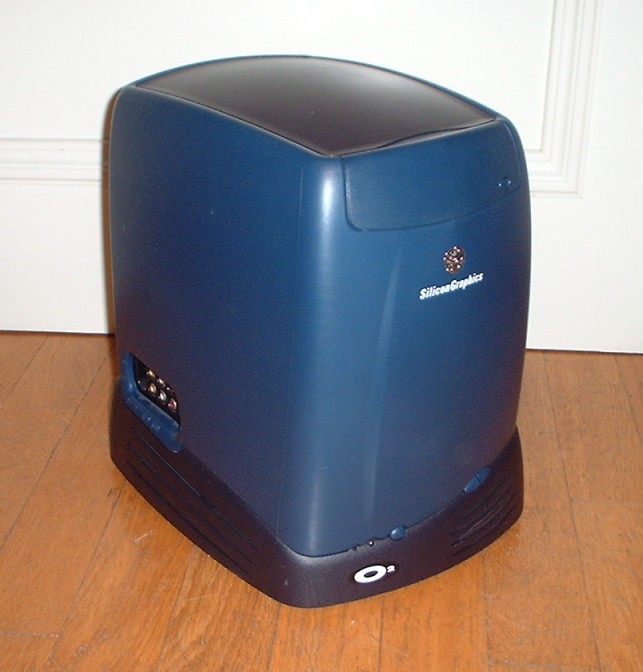
If you can muck up an old SGI, those are pretty neat, too
They're not even so expensive these days, either. I saw some Indigos on eBay for free the other week - the guy obviously just wanted the space, for them to go to an enthusiast & thought this would the best way for them to get exposure. IIRC the special effects to The Wrath Of Kahn were rendered on a farm of these, so a screen capture or movie playing would help make the exhibit more multi-media and mainstream.SGIs are also gorgeously good looking. A 16 CPU Origin 2000 went for £620 on last week; I have to say it was quite the temptation.
Stroller.
-
Re:Disconnect between consume and "consumer"
-
Re:I find this hard to believe> Likewise for "scrolling", it is likely game developers just talked about "following", or "moving" or other ways of describing the background movement. I don't have any evidence to back this up, just a vague sense of being aware of the games long before I ever heard those terms used to describe them.
Well, the Atari 400/800 computers, designed 1978-79 and released in 1979, had references to the term "scrolling" in its system equates (a couple of registers called HSCROL and VSCROL). The names HSCROL and VSCROL presumably came from the hardware designers...
Also, the book "De Re Atari" (published 1981) has a whole chapter on scrolling, that mentions the HSCROL and VSCROL registers.
I'm sure Atari didn't invent the term, it's just the earliest usage of it that I remember.
-
Old coding practises, not conspiracy
> but what possible code could be "fallen through" into
> that would set CPU execution *inside* the metafile
Actually, I think it was done for performance releases (remember, existed back in the Win 3.0 days).
Back in ye olden days, there was a common software practise called self modifying code. It was used in some implementations of FORTH, but it was far more popular on systems that had few registers like C64. It was generally used as a way to dramatically speed up code on those slow processors.
Have a look at the popular C64/Atari program SpeedScript (see http://www.atarimagazines.com/compute/gazette/1987 05-speedscript.html or http://www.atariarchives.org/speedscript/ch3.php ).
The source code it gives an example:
"This module is chiefly concerned with the word processor editing functions.It contains many common subroutines, such as TOPCLR and PRMSG to clear the command line and print messages. It contains the initialization routines and takes care of memory moves (inserts and deletes). A second module, SPEED.2, is responsible for most input/output, including the printer routines. SPEED.1 is the largest file in the linked chain. UMOVE is a high-speed memory move routine. It gets its speed from self-modifying code (the $FFFFs at MOVLOOP are replaced by actual addresses when UMOVE is called). UMOVE is used to move an overlapping range of memory upward (toward location 0), so it is used to delete. Set FROML/FROMH to point to the source area of memory, DESTL/DESTH to point to the destination, and LLEN/HLEN to hold the length of the area being moved." -
Re:Anyone remember the RUN magazine (C=64) ?
>SpeedScript?
Yeah, that sounds right!!! I know that was it. It was soo cool, all my friends would come over and do their papers on it too. All written in assembler too! I remember adding a spellchecker to it from COMPUTE! Gazette magazine.
Hey I found a version for the Atari documented here on the web, you might like to read it, its even got the codes to enter in with MLX to build it:
http://www.atariarchives.org/speedscript/ch2.php#s pl
Someone else posting about speedscript on the C64 here too:
http://www.troyandjessica.com/article/12/ode-to-th e-commodore-64.html
Found a manual here:
http://project64.c64.org/misc/SpeedScript%203.2.tx t
I used a Citizen 120D dot matrix printer, worked great.
When I went to college I used a 2400baud modem, with a vt100 emulator on a C64 (Which was only 40cols BTW), but you could hit a hot key and it would switch to this TINY FONT to show the whole 80x24 vt100 screen.
Man...I remember having to use a whole crapload of key combinations to get things like the GOLD-KEY to work for my EDT session.
But by god, my C=64 got me a pretty good ways through the first few years of engineering school including a serious amount of hacking an coding on VMS from home.
Damn, where did we go wrong? Think just don't seem as fun anymore. -
Re:Slow down, buddy...
Yes, and thanks for the excuse to revisit _De Re Atari_, the original hacker's cookbook. The initial experience programming such a little multiprocessing OS definitely set me off on the right track. And the dearth of documentation of its powerful facilities (until and excluding De Re Atari) gave me the DIY hacker mentality that I cherish to this day.
-
Re:moronic questionDid he use Google Desktop to index his drive?
Hopefully the police will use careful searches rather than keyword hits with endless connection of unrelated items. Because Computers Don't Argue. (After all, you are within six degrees of seperation with terrorists, murders, armed criminals, drug dealers, George W. Bush...)
-
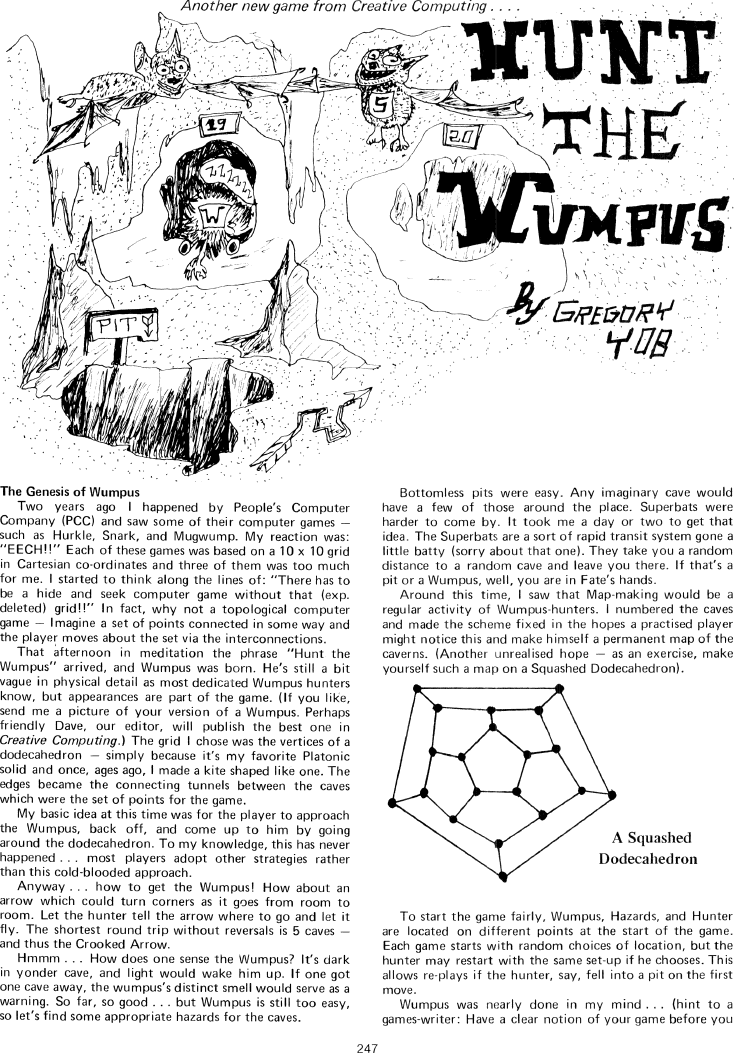
Me first: Hunt the Wumpus!
-
Re:No Gurantee Against reimplentation
'paraphrasing'... time thus spent is wasted - you didn't do anything productive in the process.
I couldn't disagree more.
I learned to program in C by first reading a book on C and then sitting down with a couple of the old David Ahl Basic Computer Games books and re-writing some of the programs in C.
The programs were small enough to be fairly trivial to re-implement and interesting enough to keep me working at it.
My C programs weren't original but "paraphrases" of the Basic-language games in Ahl's books. And I don't think I wasted my time as I got a reasonably decent understanding of the basics of C from that and had fun while doing it as well. -
Careful which books you read citizen
After all, there's a war on terror going on, and Computers Don't Argue
-
Re:Interesting idea
So it's a return to hardware support of Player-Missle graphics?
-
VCF Needs Retro Coders!Two years ago it was three people on Commodores (PET, C64 and VIC-20), Last year VCF had C64, Apple II and Apple IIgs competitors. Are there no Atari 8-bit coding fiends left???
C'mon crack open an old computer programming book, boot up an emulator (or for us collectors, dust off one of those micros you have stacked in the corner.) and practice writing your three-hour masterpiece.
Resources for Retrocoders:
Atari Archives bookshelf, includes many 6502/BASIC related books
Project 64's C64 Manuals & Programmer's Reference Guide
Here's some Apple IIgs manuals.
Not much of any on-line accessible resources for Apple IIs, where are all the real Apple II fans!!???
As a retrocode winner, I would sugest looking at the stuff in the Atari Archives (the BASIC Games books) to get ideas of the type of games that are doable in three hours (no, not Super Star Trek, the smaller ones!) But I wouldn't write any of 'em verbatim, you get points for making it more modern, flashier, and/or vintage computer related.
-
Re:Linux needs games!
What exactly would you use the OS for on a console? Drivers are unnecessary since low level access can be compiled into the game binary and anything the game might need can be on the disk.
Current generation console systems already have a small kernel. Enough to load files off CD-ROM, download data from the network using TCP/IP, and run multiple lightweight threads. Many games (even early generation home computers like the Atari 800) made use of parallel processing to implement AI (the spare CPU time during vertical blank interrupts could be used to run depth searches of possible moves).
Have a read of Chapter 8 of De Re Atari to see why having an OS/kernel is useful.
THE OPERATING SYSTEM
INTRODUCTION
With every ATARI Home Computer System comes an ATARI 10K Operating System Cartridge. The importance of this cartridge is often overlooked. Without it, you have a lot of potential, but absolutely nothing else! This situation is not unique to the ATARI Home Computer System; It is encountered with all computers. A computer is, after all, merely a collection of hardware devices. A user must manage these resources to accomplish any task. If all programmers had to start from scratch on each program, we would have an even larger software shortage than we have today. The solution that has evolved over the years is to build in a program that manages the resources available to the system, and eases the programming burden required to control them. This program is known by various names: Operating System, Master Control Program, System Executive, System Monitor, etc. In the ATARI Home Computer System it is known as the Operating System or OS.
-
Re:Hmmmm.....time did advance, right?Actually you could get *limited* colors at 320x200. I forget what the term for it was
Yes. It was called 'artifacting', and occurred when using high resolution monochrome modes. It looked terrible, different computer models and different TV's produced different colors, and you were still stuck with 160 pixels of resolution anyway because you had to turn on every other pixel to get a certain color (an ugly khaki green or, alternatively, a shocking sky blue. or at least that's what it looked like on *my* system, depending on whether you used even or odd pixels).
This mode wasn't available for the 2600 though, so not really on topic.
Oh, and it's De Re Atari, reproduced in full for your pleasure.
Slashdot is like Playboy, everyone skips the articles and goes straight for the juicy stuff.
-
Bringing up BASIC
-
Re:Creativity?
everybody remembers when sim city first came out. it was revolutionary. why? because it developed a whole new category: simulations.
It did? Could'a fooled me. Graphically-rich simulations, maybe. But simulations in general? This is a lot older than SimCity and it's a run-the-city simulation game too. -
Re:That, ADMIRAL to you, punk!
Maybe he was talking about the ~80% of CS students who are male. Or maybe he was talking about these guys.
-
Logo OS? Try a Lisp OS
Given that Seymour Papert designed Logo as Lisp minus parentheses plus turtle graphics, you might look to a Lisp OS for a proof that it could be done. Well, here's your prototype.
-
Re:The software arms race.
So the boys and girls of PreEmptive Solutions built a version of DashO that not only optimized, but also obfuscated in whole new (and patented) ways. Instead of adding useless code, for example, it changed all the variable names -- hundreds, even thousands of them -- to the same name, for example "a." Try to figure that out from a code printout..
These Java and
That's very true. The Atari technique consisted of setting the variable and array name tables to zero length strings. It was fairly easy to read the saved binary files of the Atari BASIC programs and read the command tokens. From these you could deduce what the variable was being used for, and rename it accordingly. -
101 BASIC Computer gamesI took am looking for this book. Every Internet Bookseller that lists it has it out of stock or out of print.
The library used to have it back in the 1980's but since the 1990's must have retired it.
I am not even sure if the company that published it is still in business.
A close as I can find it are these web sites:
http://www.atariarchives.org/basicgames/
http://www.atariarchives.org/morebasicgames/
They are for the DEC BASIC language, but I am sure they can be easily converted to whatever BASIC you are using.
-
101 BASIC Computer gamesI took am looking for this book. Every Internet Bookseller that lists it has it out of stock or out of print.
The library used to have it back in the 1980's but since the 1990's must have retired it.
I am not even sure if the company that published it is still in business.
A close as I can find it are these web sites:
http://www.atariarchives.org/basicgames/
http://www.atariarchives.org/morebasicgames/
They are for the DEC BASIC language, but I am sure they can be easily converted to whatever BASIC you are using.
-
WOOT! Perfect Timing of this story
I was trying to find this book just last month, but I couldn't remember the title, or author. All I remembered was that the cover was red.
Once I saw the cover, I remembered that I use to read the sequel: More Basic Games
-
The best tech cartoon I ever saw
Hey, thanks for jogging my memory, I've been looking for my favorite cartoon for many years, and this was where it was published.
-
Re:How geniuses come to be
Didn't everyone have a copy of De Re Atari?
-
Re:Not only am I old enough...
You've probably notced by now, but Big Computer Games is here. I didn't mention it because, like to said, no one has heard of it either.
-
classic computer game books
If you're old enough to argue about these computers, you're old enough to remember David Ahl's books BASIC Computer Games and More BASIC Computer Games. Both are available on the Web, as of today.
-
classic computer game books
If you're old enough to argue about these computers, you're old enough to remember David Ahl's books BASIC Computer Games and More BASIC Computer Games. Both are available on the Web, as of today.
-
Some great looks forward:It amazes me how thoroughly 1984's personal computer futurists missed the idea of an internet. From one of the articles:
- When it comes time to list the century's great orphaned ideas, the computerized checkbook will rank with the lava lamp. I can't remember the last time I wrote a physical check to pay a bill.
- "Family budget spreadsheet" programs exist because somewhere along the line software makers got confused between "the American family" and "the limited partnership." Quicken. Quicken Quicken Quicken.
- Next we come to the computerized electronic calendar...If I relied only on what I could put in an electronic address book, my personal relationships, would fall apart. The other problem, of course, is that electronic address books don't fit in your pocket. Not only did he miss the PDA, he cited the reason he missed the PDA.
- A subset of this silliness [on-line chatting] involves phone-line news services... At the average rate of $25 per hour, you can order up in just a few hours the equivalent of a year's subscription to the New York Times, which gives you grocery coupons and stuff with which to line bird cages. Hoo boy. I pay about $50/month for good DSL and read the news from five different sources every day, cross check two or three different weather reports, and waste unlimited amounts of time here. This guy didn't just miss the Internet, he missed BBSes.
I'm wondering which of today's slammed-on technology waves will actually take hold ten years from now. If I could figure it out, I'd be rich enough to pay somebody to waste time here for me.
-
1984 Memory RequirementsFrom one of cited books:
The longer programs, especially THE CITADEL OF PERSHU and CHATEAU GAILLARD, take up a fair amount of memory: almost 20K for the first, and close to 25K for the second. If memory is in short supply on your system, see Chapter 19 for some hints on how to "compress" the amount of memory the programs require.
If more programmers today realized what can be done in that amount of memory, or better yet had to spend a few months programming in such an environment before being allowed to touch a "real" computer, I'm thinking we would have far more stable and efficient software today.As an aside, it was interesting to see the introduction to this book making note of the variants of BASIC out there, and how to adapt the programs to each one. I was an Atari bigot back then (at the righteous age of 12), and remember ignoring articles that primarily targeted other, inferior, machines.
-
Re:"Net Speak"
The page he is referring to is located here
-
spock cover
This image alone is worth the visit to the site. Interesting background too:
In any event, the original Best of CC had Mr. Spock on the cover. However, a few years later when we needed more books, Paramount was getting nasty about the use of Star Trek characters without a proper license. Initially we were under their radar screen, but we would have had to pay them mucho $$$ for the larger press run of the reprint book, so we needed another cover. The cover illustration I used had been used on an issue of the magazine (can't remember which issue) but the printer had mixed up two of the color negatives (cyan and magenta), so it looked a bit strange. Needless to say, the artist was rather unhappy with the outcome as was I, so I decided to use the same illustration, this time with the correct colors, on the cover of the book.
It's been a long time since computer books were so underground that they could publish with copyrighted images on the front covers. Actually, it's been a long time since underground publications period could get away with this.
-
Interesting thoughts on the future
Here's another prediction for the future that came true:
From Computer Animation Primer (published 1984):
By David Fox and Mitchell Waite
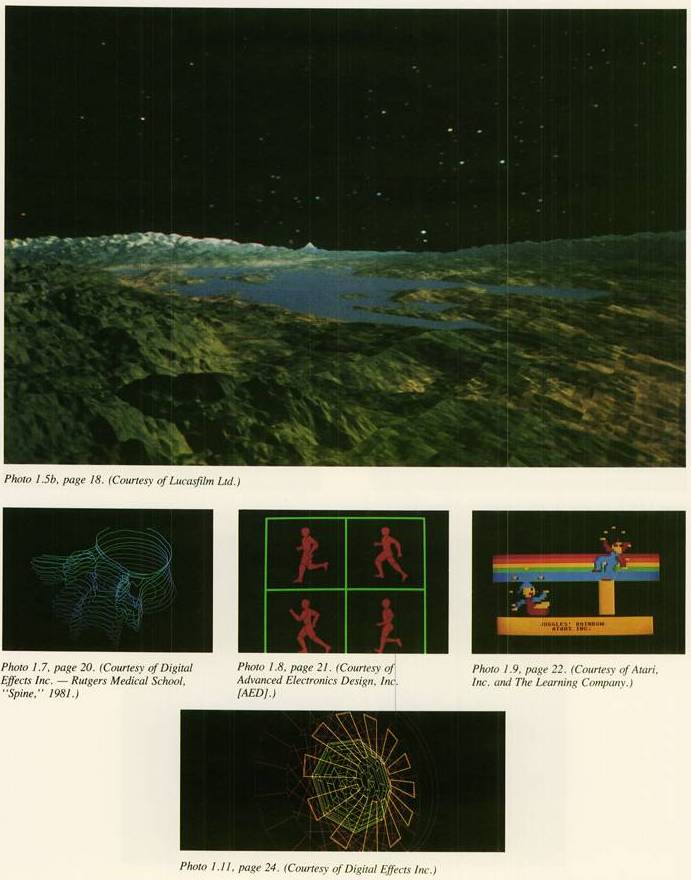
Some of today's most sophisticated special effects utilize shading techniques. The use of transparency, surface detail, shadows, texture and reflections are more of an art than a science. Although it is difficult to imagine how these techniques will one day be simplified, it is almost certain that they will. Perhaps LSI chips (large scale integration -- the technique used to make microprocessors) will be developed that apply shading algorithms to user-generated scenes. -
Wonderful stuff
Love it: this book was published on the same year I graduated in CompSci and went into business as a programmer.
Especially cool, the retro views on technology, I found. Yoda back strikes.
Like the one on computer safety. I mean, how many people actually take a break every 30 minutes to avoid damaging their eyes? -
Re:You're a tool.
Books about IC logic and assembler are nice
WTF??? My copy of the TTL Cookbook is gonna help somebody write a virus?
Don Lancaster, hang your head in shame!
heh -
Re:C64 die-hard alert
Huh? There was a hard drive for 8-bit Atari machines too. Logically enough, it connected to the joystick port.
-
Re:Citizen #24601JavertScan is online.
Increased beer drinking by #24601 noted, profile trigger, escalating.
Cross-indexing library list.
Kidnapped by Robert Louis Stevenson
Possible federal crime detected, alerting FBI.
Robert Louis Stevenson, author, deceased 1894.
Ammending FBI alert: Murder, consider dangerous...Of course, this was all done better in Computers Don't Argue by Gordon R. Dickson. How nice that we can now turn an idea from 1965 into reality!
-
In the beginning...
there was Hunt the Wumpus
Okay well it's not box art, but it's from the days before there were boxed games.
-
SIO2PC cable and De Re Atari
Not what you're asking for
This makes for better backups (as you can fit a lot of disk images on 1 CD
Also:
It doesn't include the pinouts
-
Re:Incompatible keyboard?
The Atari used a character set called ATASCII, though I'm sure the keyboard wouldn't have any knowledge of this. This page shows the ATASCII and internal values. I'm sure some mapping scheme could be made to work with the original keyboard...maybe the Atari key can be mapped as ALT. Interesting...
-
Should we pity or envy kids?
I'm now firmly in the trenches of middle age, and so have begun to succumb to that tendancy that we all get as we grow older to gaze back upon my life and to tell the kids of today how great they have it now. This usually begins with the phrase Back when I was a kid...
Back when I was a kid, microcomputers were just beginning to be something that my super rich friends could get. Computers like an Apple II, which I had no chance of affording.
Then the Atari came out. Not only was it cheaper, but it had really kick/ass graphics like Star Raiders. So I worked for nearly a year, earned $400 and bought my first computer. I had already learned BASIC on other machines, so I saved a bit longer and got a BASIC cartridge. A few months more, and I had a cassette deck to store my programs on.
About that time I started to learn about how the graphics architecture of the machine worked. I bought a copy of De Re Atari. I got their assembler/editor cartridge and started to write some programs of my own. I read the ROM listings. I remember writing my first truly useful program: a program for copying copy protected cassette tapes so I could backup my copy of Jawbreaker.
I goofed around with that silly computer for years. By the time I was finished, there was really very little about the system that I did not understand. And that's probably the last computer that I truly did understand.
It's simply not possible to understand all the inner workings of a computer like that any more. Or, maybe it is possible, but it simply isn't worth your time. You (or your kid) probably have other things to do with computers, like make web pages, edit photos, or make videos. Computers have become a doorway to doing other things, and like most doorways, people don't give them much thought anymore. I sometimes find that a bit sad, but then I think of all the cool things kids can do. My nineteen year old swears that he didn't want to learn to program, but he has a webpage with all sorts of javascript madness on it. He's made videos. He's photoshopped photos of his friends. In short, he's doing what he likes to do: taking the computer for what it is, and using it to do what he wants. I can't say that I see much wrong with that.
I guess I should give some recommendations for those people whose kids really think they do want to learn how to program. They could do a lot worse than to use Python. It's a fairly reasonable language that is interactive and enables you to do fun stuff nearly immediately. If the kid is interested in making games, they can use Pygame, which I've found to be very pleasant to play with, and is available on many platforms. Download some example games, and then help them figure out how they work. Change some of the graphics to use graphics of their own. Encourage them to share their work with others, perhaps using the web. Answer questions. Be enthused. Help get a club or group started at their school. Be a parent.
-
A few hardware links ...
Okay, maybe a few basic hardware References, HI-LED, Breadboard, and Chip Products links would help.
Reference - AtariArchives Electronic Computer Projects
Reference - Electronic Circuit Guidebook Sensors
Reference - Robot Building For Beginners
Global Specialties Breadboards
Eductional Kits USA including LED kits
High Intensity (HI) LED Source Discrete LEDs, LED Panel Mount Lamps, Based LED Lamps, SMT LEDs, PCB LEDs
RF Digital Corporation HI-LED White Red Yellow Blue Green
National Semiconductor Chip Products Catalog National Semiconductor Products
PMC-Sierra Chip Products Product Directory
R.T.Nollet, Chip Products, Australia
There you go; it should be enough to get you started on the hardware. Others that are far better at software can help with some of the required programming resources. If you can afford an old logic analyzer (maybe 8/16-pin, at surplus stores) for the I/O buses they can help you optimize your code. Years ago, (when I did) I would have used, an appropriate Hex/Machine code to do a small project like this. If you and a couple colleagues/friends succeed at this level
OldHawk777
Reality is a self-induced hallucination.
-
Re:Mapping the AtariMapping The Atari is available online:
Check it out, once the slashdotting has died down...
-
takes time, but is worth it
I have scanned several books (in my case, Atari and other classic computing books) for atariarchives.org. The process takes time, but is worth it.
A scanner with a reliable sheet feeder is essential. This doesn't necessarily mean expensive -- I've seen a lot of reasonable-looking scanners with ADFs on ebay for less than $100.
I cut the pages off the books using a single-edge razor blade -- non-ragged cuts are essential. Then I scan then into TIFF format at 300 DPI, greyscale. If I want searchable PDFs, I use OmniPage X on a Mac to create image-over-text PDF, it's quick and easy.
But most of the time, I these books are for Web viewing. So I use a graphics conversion program with batch capability (GraphicConverter on the Mac) to a) increase the contrast dramatically -- near 100%; b) trim the whitespace from the edge of the images; c) scale the pages as necessary. d) scale them more to create thumbnail versions.
There are no hard-and-fast rules for choosing the final file type. Just got to balance file size and readability, and this varies from book to book. Sometimes I go with JPEG, sometimes 8-bit GIF, and sometimes 4-bit GIF. Sometimes I'll convert every page to GIF and also to JPG, then use a little script to select the smallest one for each page. -
takes time, but is worth it
I have scanned several books (in my case, Atari and other classic computing books) for atariarchives.org. The process takes time, but is worth it.
A scanner with a reliable sheet feeder is essential. This doesn't necessarily mean expensive -- I've seen a lot of reasonable-looking scanners with ADFs on ebay for less than $100.
I cut the pages off the books using a single-edge razor blade -- non-ragged cuts are essential. Then I scan then into TIFF format at 300 DPI, greyscale. If I want searchable PDFs, I use OmniPage X on a Mac to create image-over-text PDF, it's quick and easy.
But most of the time, I these books are for Web viewing. So I use a graphics conversion program with batch capability (GraphicConverter on the Mac) to a) increase the contrast dramatically -- near 100%; b) trim the whitespace from the edge of the images; c) scale the pages as necessary. d) scale them more to create thumbnail versions.
There are no hard-and-fast rules for choosing the final file type. Just got to balance file size and readability, and this varies from book to book. Sometimes I go with JPEG, sometimes 8-bit GIF, and sometimes 4-bit GIF. Sometimes I'll convert every page to GIF and also to JPG, then use a little script to select the smallest one for each page.