Slashdot Mirror
Domain: bris.ac.uk
Stories and comments across the archive that link to bris.ac.uk.
Comments · 144
-
Re:In other News...
I could also create a new fruit drink called Unix [...] with no trademark problems.
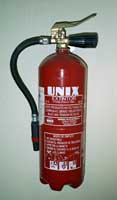
There is a brand of fire extinguisher called "UNIX". -
Re:Tools?
They do... typically deisel engines can last up to and over a million miles with typical (and scheduled) maintainance. Take care of your car's engine and you might get more than a lifetime's worth of use out of it, too.
I'm more interested in the bonding issue. If heat can effect the bonding (because steel and diamond have very different thermal expansion coefficients), then how useful would this really be for, say, cutting tools?
Also, I can't see armor plating as being all that impressive. diamond coated steel might have excellent wear characteristics, but since the layer is just atoms thick (I'm assuming, article didn't say... maye you could build it up with repeated coatings?) it wouldn't offer much to resist bending or puncture... thus not being a big improvement for armor. Diamond is also brittle, meaning it'll be easy to crack if you bend or chip it.
Heat transfer properties, however, are very interesting. If they can build up layers, you could start with a thin wire forms and make diamond heat sinks... and diamond is a very good heat conductor. (based on the process they describe to make it, doesn't sound too expensive either... heating up hydrogen and methane gas? Pfft!)
=Smidge= -
Re:Why bother with the small fish?
Now that would be just wrong. I would never get a satellite image of Boca Raton, find the address on MapQuest, then indicate Ground Zero and a suggested blast radius. Goodness me, no... (This is far enough downthread that I'm not going to get the admin pissed off, right? Right?)
-
LEPs and OLEDs are Molecules that Emit Light!
The parent is correct, it certainly is not the first time that light has ever been generated from a molecule by applying electricity!
I refer you to the parent's link and Cambrige Display Technology. Both are well on the way in the development of applications for simple polymer molecules that emit light when a current is passed.
I know that the simplest LEP Cambridge Display Technologies discovered (PPV) is of a similar scale (if not even smaller in diameter) to nanotubes, however I can't compare efficiencies, nor do I know much about optoelectronics so I couldn't say how a wavelength of 1.5 microns (the emission quoted in the article) compares to those of LEPs (visible light so between 400 and 700 nanometers).
My point is that I dispute the article's claim that it is the first time that molecules have produced light when an electrical potential is placed across them. Perhaps IBM think that nanotube light emission is more suited to optoelectronics than OLEDS/LEPs.
If you want to learn more about LEPs I did a project on them as part of my Chemistry degree, it's hosted by the Royal Society of Chemistry here and a slightly more up-to-date but not as pretty version is hosted here
-
Play Ultima7 on Linux (Exult)
Ultima7 was a game I played and played. It was so unbelievably huge and you seemed to be able to do anything you wanted. And then Windows95 came along and I could no longer play unless I rebooted into DOS mode. And then the sound didn't work, which was a shame considering how often I had to reboot Win95
I was overjoyed to find that you can play Ultima 7 parts I and II with the open source Exult Engine. If you have the data files then you can (with effort) load them up and play. Exult gives a faithful rendition of the old games (although currently you can get away with more stealing and the animals talk to you). Also you can play windowed and increase the resolution (320x200 was fairly restrictive, even at the time!)
Heartily recommended to people who know the game and people who don't.
-
Play Ultima7 on Linux (Exult)
Ultima7 was a game I played and played. It was so unbelievably huge and you seemed to be able to do anything you wanted. And then Windows95 came along and I could no longer play unless I rebooted into DOS mode. And then the sound didn't work, which was a shame considering how often I had to reboot Win95
I was overjoyed to find that you can play Ultima 7 parts I and II with the open source Exult Engine. If you have the data files then you can (with effort) load them up and play. Exult gives a faithful rendition of the old games (although currently you can get away with more stealing and the animals talk to you). Also you can play windowed and increase the resolution (320x200 was fairly restrictive, even at the time!)
Heartily recommended to people who know the game and people who don't.
-
Re:Ummm - Randy Racer here with today's tip ...
Amazing what you don't know when you think you know what you are talking about, isn't it! I was going from memory, and my knowledge of NO2 is from the '60s and '70s - NO2 IN CARS, YOU FREAKS!
From Molecule of the month:
At room temperature, N2O is quite unreactive with most substances, including alkali metals, halogens, and even ozone. It is therefore widely used as a propellant in aerosol cans in place of the CFCs which can damage the ozone layer. When heated sufficiently, however, N2O decomposes exothermically to N2 and O2. If this reaction occurs in the combustion chamber of an automobile, 3 moles of gas would be produced from 2 moles, providing an extra boost to the piston, as well as liberating more heat. It also has a number of other benefits. The increased oxygen provides more efficient combustion of fuel, the nitrogen buffers the increased cylinder pressure controlling the combustion, and the latent heat of vaporisation of the N2O reduces the intake temperature. (my emphasis) Therefore N2O is occasionally injected into the fuel lines of racing cars to give more power to the engine and to give the car exceptional acceleration.
>Ever heard of Nitrous Oxide (NO2)? Used in racing to help increase the performance of the vehicle, works by cooling the air (making it denser - more air - therefore more O2 - through the carb) before it enters the carb, does not burn or otherwise directly enhance POWER,
Actually this is about 100% wrong. Bonus points for correct grammar and spelling, nice use of paragraphs, but completely devoid of facts.
Would you consider 95% wrong? How about 97%? Hey, I almost got a fact, there, that should count for something!
Somebody mod this guy up, he is much closer to right (97%? 98%?) than I am.
-
Along those lines...
For further reading,
Molecules With Silly Names
is amusing too. -
Re:Kim Stanley Robinson
Well, that's definitely part of his appeal, but I think his writing's a bit different to conventional space opera. He's definitely writing about moral shades of grey as opposed to the basic Doc Smith 'good vs evil' scenario. Also, as you say, it's anarcho/socialist space opera as rather than the regular imperial/libertarian variety.
Banks has an excellent article about the political structure of the Culture online here.
He's not really a new wave writer, though, I'll give you that.
-
Re:My idea
That system does exist, and is called Single Transferable Vote (or Instant Runoff.) In the student union elections here at Bristol University, we use a variation on STV, where there is also the option to vote to reopen nominations (i.e. a "none of the above" vote.)
In STV, you rank the candidates in order of preference on the ballot paper. If any candidate has a majority of first preferences, gthen they win, otherwise the lowest ranked candidate is elimated, and the votes for that candidate are re-asigned to the second preferences given by the voter. If there is still no majority, the lowest ranked candiate is eliminated, and the votes for them re-asigned by next preference. This process is repeated until one candidate has a majority. -
Nitrogen triiodide
Agreed. If you've never seen the Anarchist's Cookbook, it's rather like a long "Overrated" Slashdot post printed on paper with pictures and a handsome black cover. The guy doesn't really understand most of the things he discusses and is on the firmest ground when he sticks with safe topics (guns and knives). It was written during the Vietnam era by a pissed-off draft age guy. Now he's turned to Jesus and says he wishes he hadn't written the book at all. Another mind lost to religion.
The best explosive recipe in the book is one that the author discounts in passing- nitrogen triiodide, or NI3. (Actually, the structure is NI3-NH3, where the NH3 is bound to the NI3 electrostatically by what resemble hydrogen bonds.) According to the Cookbook a fly landing on it will set it off (which is probably true, although I never succeeded in getting a fly to cooperate). It claims it's too useless for any serious consideration when planning your anarchy. It might not be good for that, but it's great for pranks. I've had so much fun with that stuff. The secret to NI3 is DO NOT MAKE TOO MUCH OF IT. That way you can keep your fingers. A gram is way too much. Just take a few iodine crystals and put them under ammonia, and presto, it turns into this black powder. If you keep it under the ammonia, it's actually quite stable. When not under ammonia (even when under pure water) it might go off at any moment. Pick it up from the ammonia with a plastic eyedropper, and deposit the black sludge on some surface. Once dry it rapidly loses its NH3 adduct and becomes extremely sensitive to shock, decomposing explosively producing N2 and I2. Don't get traces of it on your clothes or skin, or you'll be treated to a continuous snap-crackle-pop of microscopic explosions (quite annoying).
Finding references on it is difficult- it's almost like people don't want to do research on it. It's probably unstable because the iodine atoms are huge compared to the nitrogen. Congestion around the central N forces the molecule into a planar shape, with repulsive interactions among the three iodines, so it's unhappy for steric reasons. One thing I did find out was that the stuff turns bright orange if you leave it under the ammonia for a long time (like a month). This is probably because it picks up additional NH3 adducts.
-
Re:My child has grown a third leg . . .
Also the kilowatt is a nominal figure. In actual usage, depending on the model, output can be 8.3% to 22% below the nominal figure. This is why the instructions on your tv dinner always say 'microwave ovens vary'.
-
Re:Balance Vs. thresholds
Has anyone else heard about the research into people balancing sticks on their fingertips, and how this has to do with random neuro-muscular noise, but generated by the body instead?
I'm not sure if this is what you mean, but it's possible to stabilize a pendulum (e.g., a stick) in an inverted position by vibrating the base (e.g., your hand) rapidly. Here's the first link that I could find on Google. It's been a while since I've dealt with the math, but I think it has something to do with the Mathieu equation from Floquet Theory.
</math lesson> -
Re:Found 2 years ago
Might be a little bit of speculation, but they could do a bit of comparative studies. They could potentially know the size of infants (from nearly hatched egg fossils) and adults. Depending iftyou consider them warm or cold blooded you can roughly estimate their growth rate based on contemporary animals (say gators, birds and mammals) and extrapolate from there.
Also, some bones and teeth exhibit growth rings, like those of trees. Maybe this type of dino had bone growth rings that are clearly visible.
Age Determination of Dinosaurs
BONE STRUCTURE AND HISTOLOGY
Dinosaur Metabolism
Bone Histology
Dinosaurs' metabolism
Dinosaur Growth and Behavior
Sea turtle bones bear rings that help scientists measure sexual maturity -
Re:seem to be a lot of troublediamond have probabbly the best thermal conductivity known to man
What gave you that idea?
I dunno what gave him that idea, but I thought it was a well-known fact.
According to the first link, the thermal conductivity of copper (in W/cm-K) is 3.937. Room-temperature diamond: 6.299. And an isotopically pure room-temperature diamond: 50. The last link claims a conductivity of 2000 W/cm-K for CVD diamond and talks about using it to cool stuff.
So I guess the more interesting question is where you got the idea that diamonds wouldn't work well for cooling.
-
Everyone knows that
Everyone knows that UNIX is really just a is really just a Fire Extinguisher, and certainly not a web page or much less a legal trademakr. Extinguisher, and certainly not a web page or much less a legal trademakr.
-
Unix fire extinguisher
Have a look at this picture taken on 20th of August 1991 in Spain. Seems that the company has never heard of the trademark on UNIX either...
-
Re:StromatolitesEvidence of removal of CO2 leading to global cooling in the past
See this page for this quote
The major cause of snowball earth and its subsequent melting is down to variations in the quantities of greenhouse gases.
and much more about the effect of green house gasses in the past.
-
Re:you are rationalizing
-
Think RDF
RDF - the XML format for metadata - essentially describes relationships between resources and is a superset of the problem area you describe. I had a cursory look to see if people had taken the obvious step of using diagram tools to edit rdf and yes they have:
Using DIA and GraMToR and GraphViz and IsaViz and lots lots more
You might also be interested in They Rule which draws some interesting social networks!
While this is all standard 2d editing (I think the 3d editing thing is nonsense btw, unless you actually have a 3d coordinate system then you are actually describing a 2d network diagram) there are other visualisation options which may be interesting. Mindmapping tools allow you to navigate the network of concepts may be interesting as are star trees. Both provide a focussed view on a small part of a much larger network with some context information to help you choose how to navigate. They are more useful for display than authoring.
Hope something in here is useful
-Baz
-
Technical ArticleFor a more technical description of the ULTra, try
Lots of discussion of transportation systems, network layout, engineering, control, etc.
-
Re:In other words
So you have no objection to people putting images into their pages like this page does, giving no indication that it comes from someone elses page? Fine
-
Picture of the watch
You can see a picture here:
Pub Watch -
Re:Really?
Who said anything about small?
-
More info...
For more information on the watch and other Bristol uni wearable stuff look at http://wearables.cs.bris.ac.uk
-
Read before posting, please.
Actually, the paper at http://atg.fen.bris.ac.uk/picet.htm makes it clear that the costs will be one quarter, and the safety ten times as great. Read before posting. Idiot.
Insightfull? not. -
Acorn RiscPCDoes anyone else remember the case Acorns RiscPC used. IIRC it was modular, you could add more 'slices' to gain an extra 5.25" and and extra 3.5" drive bays, plus a couple of expansion slots.
Looking on google gives some details on the case. Not necessarily smaller, but looks kinda ok, and sounds upgradeable.
-
Spamol!
Do I smell SPAM!? I bet they got poisoned by spamol. Or maybe is just "Diureja".. and they needed to take a "dUMP".
-
See RDF
I don't think XML by itself carries enough metadata to understand much beyond whether a document is valid or not. I think RDF and RDFS have a big role to play in getting XML database ready.
Perhaps hopping on the XML database bandwagon before RDF technologies mature could be a mistake. Forget the semantic web, I want to see the sematic database.
-
Re:Does this mean
Hey, you want to see some fun gates? Check out my homepage (http://www.bits.bris.ac.uk/oliver/story/Antinomi
a lism.html).
It's a story about invisible logic gates that lose numbers. Lots of quantum stuff in there too! -
Re:Magnetics?
All objects (not just ferrous) are slightly magnetic. This article about flying frogs explains it well.
direct link to the -
Re:The age of the earth is unknown if you won't lo
How do you verify the other dateing methods?
How do they actualy work?
Well enough in practice. There's too much to talk about here. See Radiometric Dating and the Geological Time Scale for an overview of general dating, and Isochron Dating Methods on using multiple isotopes to cross-check each other. There are some class notes: Module 2 and Module 4, if you're interested in the grisly details.
It's worth noting that isotope dating techniques had to prove themselves in the 1910's through '50s. They weren't just proclaimed as The Way by the Secret Evilutionist Cabal, as some have implied. 8^)
-- -
Re:The age of the earth is unknown if you won't lo
How do you verify the other dateing methods?
How do they actualy work?
Well enough in practice. There's too much to talk about here. See Radiometric Dating and the Geological Time Scale for an overview of general dating, and Isochron Dating Methods on using multiple isotopes to cross-check each other. There are some class notes: Module 2 and Module 4, if you're interested in the grisly details.
It's worth noting that isotope dating techniques had to prove themselves in the 1910's through '50s. They weren't just proclaimed as The Way by the Secret Evilutionist Cabal, as some have implied. 8^)
-- -
Re:Memorizing pi
Well, I only ever managed 150, but for all you Mac users out there:
The Humpage Pi Page
with CalcPi, a rather quick program that renders Pi out to as many places as you want.
Well, I like it!
- Oliver
"exp(i*Pi)+1=0" - Euler -
Another reason this is exciting
Besides that fact that the materials involved here are "cheap and easy," another interesting aspect to this is that the superconductivity appears to occur through the good 'ol BCS mechanism, which is your grandma's physics (not that wacky stuff they need to explain the ceramic material transitions).
-
The Pioneering Robot Snooker Player 1986-1988
The first robot ever to play snooker (related to the game of pool) was developed under a team led by Professor Khorosh Khodabandehloo at the University of Bristol, UK.
The Bristol snooker robot played a famous match against the then world snooker champion, Steve Davis of the UK. The robot, a customised IBM Model 7565, was severely handicapped because its operating envelope covered only about 87% of the table and also because freeplay in its joints limited its mechanical accuracy and repeatability. The strategy part of the robot was quite sophisticated having been based on advice from Steve Davis himself. It was able to make forward and reverse analyses of states of play based on support logic programming (related to but more powerful than fuzzy logic programming). The cue it used to hit a ball was actually a pneumatic piston powered by compressed air. Davis beat the robot easily! As an undergrad student, I helped to design, implement and test the robot's image processing software using the now defunct Automatix AV4 Image Processing System once made by Robotic Vision Systems, Inc..
The whole project was filmed and shown on BBC television on the Q.E.D. science programme of 16th March 1988. Extraordinarily there are now no webpages at Bristol University to celebrate this pioneering robotics project. Professor Khorosh Khodabandehloo has left Bristol University to run his own robotics consultancy. One of his former research assistants, Ken Ho, however, has made webpages about the Bristol snooker robot: here and here.
-
Re:*BSD problemswp14 writes:
Speaking as an investor, I have bad feelings about *BSD (financial). It is pretty clear that *BSD does not have the broad industry backing required to be successful. Some endeavors seem to be eternally "spooked" or fated. *BSD is perhaps one of the better examples of this phenomenon. There is jinx that has hovered over *BSD for years. I don't know that anyone can explain why. *BSD problems are fairly complex. I don't think you can give a simple one sentence explanation for *BSD's failure. It reminds me of the Amiga's failure. The Amiga was an example of some good ideas that were perpetually jinxed. *BSD has the unfortunate legacy to share that same one way boat ride down the river Styx. Darwin's problems will only hasten the process
Interesting thoughts, but a hard answer for BSD's difficulties requires further investigation. One could make a career out of the whole study of industrial design failures. In some cases, such as that of the Tacoma Narrows Bridge Disaster, the causes are self-evident (in retrospect, anyway). In other cases, such as the problems with BSD unix, the reasons for failure are more subtle and require some digging. On the one hand, BSD had the problem with copyright violations which led to a lawsuit. But would a lawsuit be sufficient to permanently cripple the whole BSD project?
Perhaps the closest analogy in terms of industrial failures is that of the Ford Edsel. Touted as the "car of the future", the Edsel was an unqualified flop. Yet, there wasn't anything really all that terrible about the Edsel. For whatever reasons, the public roundly rejected it. The same could be said about BSD unix. There isn't anything terribly wrong with it, but it has been pretty much rejected by the IT industry at large. Did the legal problems play a hand? Most definitely. But that doesn't explain it all.
There is no easy way to assign "x's" and "o's" to a dilemma of this sort. In the end, you might have to call it "bad luck". The public bases its choices on mysterious reasons that are beyond even the best marketing hype. Why was the public enamored with the hula hoop? Why are scooters now the latest craze? Those with the answers aren't saying. For every success, there are dozens of unheard of failures which have disappeared into obscurity. Anyone remember "Hacky Sack"? I thought so.
-
Re:suck it and see.
-
Re:Minimum Wage Laws
From a BBC report on the introduction of the minimum wage in Britain:
Trade Secretary Stephen Byers says its introduction was 'remarkably smooth' and that fears that the minimum wage would damage jobs were wrong.
Service sector employment is growing "Tory predictions about the minimum wage's impact on jobs are already being shown to be nonsense," he said, citing a recent survey of firms by Reed Personnel Services.
The survey showed company support for the principle of a minimum wage rose to 87% in the run-up to April 1, when the minimum wage took effect, compared to 49% two years ago.
Earlier Shadow Trade Secretary John Redwood said there was evidence that employers were getting around the increased costs of the minimum wage by cutting benefits, such as free work clothes or taxis home, for their staff. He said that up to 250,000 jobs would be lost through a combination of higher government taxes and red tape.
But Mr Byers said that service sector jobs increased by 2.2% in 1998, with Burger King, McDonalds, and Allied Domecq, which owns a variety of pub franchises, all increasing employment.
Bizarrely enough, even McDonalds, that bastion of workers' rights (found by a British judge to be forcing down wages in the catering industry) supports a minimum wage in Britain. ( Reference).
On a different note, just what kind of moron volunteers to work 20 hours a week for nothing more than free AOL connection? Unless you're a pedophile or something, the payment is not worth your time expended. Get a Saturday job.
-
Re:Hmmm
There is no one way sign on this bridge!
Sure there is: down. Surely I'm not the only one who can't shake a mental image of the Tacoma Narrows bridge. -
Partitioned Cache
Part of a project I was involed with at Bristol University involved partitioning caches. See Here. This techniques essentially exposes the cache at the application level. Programs can configure the cache into many partitions each of a different size. When accessing memory, a program specifies which partition the access should be performed through. This approach has many benefits (no interference, deterministic performance to mention but two), but also has the effect that only the required amount of cache is used, thus saving power. It would be interesting to see these two techiniques combined.
-
Chewbacca Defense
This is essentially it. A couple of words were changed to be appropriate to the Union Society. I couldn't find an actual transcript elsewhere.
-
Re:Facist Technique
but you literally could write an xfiles plot generator.
Like This one perhaps? -
Chief Software Architect?
Somehow I'm reminded of the Tacoma Narrows Bridge collapse when I hear that Bill Gates will be the chief software architect. Clearly he's had his fun, and now that the DOJ is going to rain on his parade, he's taking his ball and going home (just to mix a few metaphors). I can't help but wonder what Bill Gates II will do when the stock collapses, since what he does now is tend the Gates Foundation, which is likely to see a nosedive or two.