Slashdot Mirror
Domain: csiro.au
Stories and comments across the archive that link to csiro.au.
Comments · 301
-
No 5 is (almost) alive ~ CSIRAC
CSIRAC - (1949 - 1961) - digital computer, entire machine housed at melbourne museum (victoria, australia) after service with CSIRO ( formerly called CSIR), Radio physics lab Sydney University finally residing at Melbourne University.
- approx 5th digital computer created
one of last original computers intact
CSIR Mk1 or CSIRAC designed by team lead by Maston Beard and Trevor Pearcey for CSIR (CSIRO)
primary store of 768 20-bit words
magnetic drum 4,096 word capacity
10ms access time
clock speed 1000Hz
serial bus
paper tape input
30 KW power requirement
crt output of registers
high level programming via language INTERPROGRAM
audio output for errors
first computer programmed for music
emululator available
references:
http://en.wikipedia.org/wiki/CSIRAC
http://www.cs.mu.oz.au/csirac/csirac.html
story on recreations of some of the original music tracks CSIRAC
50th Anniversary of the CSIRAC -
Re:Think Cheap
never mind aluminum, use this cardboard case. Simple, cheap and easy.
Aluminum requires a TONNE of energy to produce -- have a read about Embodied Energy. Do a search on embodied energy -- it will change the way you think about consumption, pollution and the solution to sustainability.
-
Re:I'm not convinced
-
come on now - this case is 100% shit
do we really need this? computer cases are little more than shells. Why are we chopping down trees for what is essentially a few-years-use object? And, cases made of ALUMINIUM? Christ, do you know what kind of embodied energy is contained in Aluminium?
This case is our worst nightmare.. hell it might look pretty, but so do my nice pink lungs. Please, its nice to look at but really, is this something we should be buying? I certainly think not. -
Old story: It's a duplicate from last April
See this for the original Slashdot story. The press release is at the Australia Telescope National Facility website.
-
Re:Wonder if it's Linux boxen?
Also, what is the basis of a search engine?
Well, the paper from 98 that describes the PageRank algorithm (as used by Google) can be found here
Theres a simple explanation of various indexing/ranking schemes here, but if you really want to get up to speed on research into searching the web, try looking at some of the papers from the TREC Web Track
Happy reading,
Dave -
Helps with pollution from plants, trees, etc?
Unfortunately, this paint doesn't seem to help with the hydrocarbons released by plants that can contribute to smog.
Oak trees, for example, give off isoprene, which combined with water and sunlight create formaldehyde.
Trees have been blamed for up to 65 percent of ozone-forming chemicals in cities such as Houston. -
A couple interesting approaches...
The two ways that impress me the most are exact opposites: one is simple, and one is complicated.
The first one I really like is OpenBSD. Their boot scripts are the most straightforward. It's all just a very simple shell script. I also like the idea of
However, customizing those scripts could be a pain.
The other example I really like has been well articulated by Richard Gooch, creator of Linux devfs (now labelled a failed experiment by kernel hackers). You can read about what Richard has to say here. This is the idea of boot scripts with dependencies. This idea still needs a little bit of work to be done well.
I've often thought about writing my own boot scripts... It would be very simple, but also have dependencies, and track PIDs of daemons being run. It wouldn't have any runlevels, or, if it did, they would be easily redefinable. -
Check out the "Zone of Avoidance"!I love the "zone of avoidance."
Perhaps it's an area that smells bad?
Oh, no, wait, it has to do with dust.
-
Busy with Mars probe tracking
"The Dish" is currently very busy tracking and communicating with the Mars spacecraft, but it is primarily a science instruments, one of the world's great radio telescopes.
-
Busy with Mars probe tracking
"The Dish" is currently very busy tracking and communicating with the Mars spacecraft, but it is primarily a science instruments, one of the world's great radio telescopes.
-
Animations
Animations of the evolution and current state of the pulsar system are available.
-
distributed scopes?What about distributed scopes or arrays of telescopes across many miles? Scopes, especially radio telescopes, don't all have to be in the same physical location.
Here's a "close together" example:
http://www.estec.esa.nl/conferences/FPD/info/tos-m m981104.htmlHere's a short paper minus images on telescope arrays:
http://www.atnf.csiro.au/technology/future/2001oct "The maximum extent of LOFAR is 350 km"
It seems there are proprietary astronomers who like proprietary programmers always think bigger is better when in fact smaller, more spread out is the best choice.
In principle the resolving power of a telescope depends on its diameter -- a bigger one can see finer detail -- but in practice atmospheric turbulence, the same effect that makes stars appear to twinkle, blurs the stars and erases fine detail. This is why the Hubble, even though it is not large, only about 2.4 meters (96 inches), compared with the new giants on the ground, can do breathtaking work.
The proposals sport Brobdingnagian names like the California Extremely Large Telescope, or CELT; Giant Magellan; or the Overwhelming Large Telescope, OWL, a 100-meter-diameter behemoth being contemplated by a collaboration of European nations. And their proponents promise appropriately outsized scientific results.
-
Nope...The rabbit population was reduced in the 1950's by a deliberately introduced disease called myxomatosis. Foxes were introduced well before this in the 19th century by English aristocratic dimwits who wanted to go fox hunting, along with their other great work like blackberries (which are a huge pest in the Australian bush).
Another rabbit virus called callicivirus was introduced about 10 years ago, which has also helped to bring the population down to a less damaging level.
There are dozens of other introduced pests that hugely damage the Australian natural environment and agricultural productivity, from cats, to weeds like Paterson's Curse. Due to this, and past successes, Australian governments throw a lot of money at research into biological control.
-
Re:I wish they would release the data
That's actually a good idea. Take a look at:
Argus NGRT
Square kilometer array
Also, I think there was a
IANARA but what I understand is that computer tech is now getting to the point where you can basically make a reverse phased array. In a phased array you can generate a fully steerable radar beam with no moving parts by having a grid of radio emitters. Each emitter puts a specific delay on the waveform it generates so that the constructive interference of all the elements makes a big beam that you can scan all over the sky. Also, you can generate multiple beams this way. This is great if, for example, you detect an incoming airplane with the main beam, you simply divert a small portion of the beam to track that airplane while the rest of the big beam continues sweeping the sky.
Well, if you have a large array of simple detectors - they don't have to actually be dishes, simple aerials will do, you can take and run a computer network to look at all the incoming raw radio data and back extract the intensity and direction of each incoming signal. With this system, you can watch an artibrary number of signals at once, only limited by computing power. Furthermore, your 'telescope' watches the entire sky at once. Here's a rundown of this array vs traditional radio astronomy:
Array tech:
Can view multiple object at once
Can track rapidly moving sources
Easily discriminates space from Earthbound or LEO sources
Detects short, transient sources
Requires massive amounts of computing power
Traditional (big dish) tech:
Can only view multiple objects if they are very close to one another
Can only track moving sources as quickly as the dish can be accurately turned
Has trouble discriminating between space and earthbound sources unless you take the time to move the dish (to see if the signal goes away - an earthbound source that's bleeding into a dish will still be present even if the dish is turned slightly)
Only sees transient events if it happens to be looking at them when they happen.
Requires little computational power
The primary limitation is computer power. The square km array is basically a radio telescope that will cover the better part of Australia with a total reciever area of a square km, easily outpowering all of the radio telescopes ever built. However, this telescope, at full resolving power can only look at a few objects at a time at a single frequency, not the entire sky since doing so for so many elements would require something like a metric fuckload of teraflops. Instead, some elements will be dedicated to a low resolution/sensitivity whole sky scan to detect transient events and the rest of the array will train its virtual beams on various objects of interest or on said transients within a fraction of a second of their detection with the wide scan.
Here's where I think amateurs could come in:
the square km array, if it's ever built, will only look at the Southern hemisphere. Furthermore, it will be taken up by radio astronomers, not SETI or amateurs. I know Paul Allen is setting up some sort of massive SETI system not unlike this but, IT would be nice to have more than one group doing this.
So here's what should be done:
Set up a system of radio recievers that people can easily build/buy to put on their computers.
Have these computers slaved to some sort of very accurate time clock, eg: GPS
Have each computer pull out all of the waveforms from a pre-agreed frequency, eg: standard SETI search frequencies)
Set up a central or distributed system to pull out any non-Earthbound sources. (this array tech is great for IDing non-human sources since widely spaced recievers can easily triangulate distances to nearby sources out to a few hundred km, eliminating the vast majority of non-ET tr -
As a mechatronic engineering student...I have been talking to a variety of people in my school about what robotics will mean to their fields when in full gear and a lot of people do not believe me. I realize that people unduly associate most robotics with mere sci-fi and even when I explain how a modern printer is made they still disbelieve me of the effects this will have on manual and service labor.
I'm not here to make personal sex bots or anything. If anything I hope to become a miner or an explorer through my machines. Why are people so reluctant to acknowledge the impending future where we face critical economic realities when we lose most of the rote labor industries to robots?
Are there any conferences besides futurists ones advocating policy research into this?
-
Re:what's the use?
I have six virtual desktops on my current single-monitor setup. I normally have at least four in use, and frequently use all six. If I had to group these on to physical monitors I would need to move to a bigger room, and would probably end up with whiplash.
I have 2 virtual desktops, (one "theory", and one "play"), and each of those is divided into a 6x4 virtual pages. These are usually full of junk, but I have sort of worked out that a particular program always goes on a particular page, (and xemacs takes up 8 different pages at a time, with position in the desktop dependant on which program is in the buffer).
I have used multiple monitor systems before (and have a laptop next to me currently, and linked by using debian's x2x - which is just the r0x0rs), and love them to death. The control computer at ATNF is a 4 headed beast, unfortunately on win NT (that crashes once a week) - the left monitor has a browser, usually open to the BOM weather page, the other 3 have about 5 different control panels and diagnostic plots.
Now, here comes the question. How does one use both a dual headed setup with a pager? I use fvwm2, and would never ever ever get rid of FvwmPager. But can it integrate with a xinerama setup? Is each of the virtual pages twice the normal size, so one virtual page spans across both monitors? Or do you have one pager per monitor?
I read something in the docs that seemed only relevant where you are not running xinerma, and instead have two separate displays -
Anyone know?
Of course, this is a moot point, because I have a 19" LCD, and there is no way in heck the department are going to buy me another flat panel, no matter what size it is (and there is not enough room on my desk for a CRT) -
thumbs downGotta say, I hate the idea. I've dealt with unusual apps in charge of starting services in the past (AIX had some kind of DCE-based service control daemon) -- and it was a world of hell. Shell scripts, by comparison, are comprehensible, tweakable, and very very easy to deal with. I know -- this sounds very unlikely -- but any system that has to deal with as many settings/dependencies/external hooks etc. as the boot scripts, is going to be that confusing anyway no matter what language it's in!
But I do like the idea of parallelization of the boot scripts, and starting X a whole lot earlier (like before the daemons are all started); I hacked up the init scripts to do this on my desktop linux machine a few years ago, and on Solaris and SunOS machines before that, and it was great for boot time.
Richard Gooch's need(8) and provide(8) tools look like a fantastic way to do this simply, comprehensibly, and without rewriting everything in a new language. that's available here, and that page notes that it should be in versions of init in util-linux since 2.10q.
-
simpleinit
There already is a better init system: simpleinit. I've worked with it on embedded systems, and it rocks.
It's dependency-based, so you only start up the services you need. Read all about it.
Dependancies are a big improvement over runlevels, although you could implement runlevels on top of it.
-
Replacing the Aging "Wheel" Device
Apparently freedesktop.org has devolved from a desktop standards initiative to a home of pointless wheel-reinvention. Here's a list of the projects listed above, followed by their existing, more mature counterparts:
Init Replacements: simpleinit, minit, jinit, runit, daemontools, serel. Progeny also has their own system based on Gooch's need/provide architecture.
D-BUS: CORBA
HAL: Discover -
Alternative system that doesn't use make
Here's another dependency-based parallel booting system. This one doesn't use make though. It uses a few (simple) utilities to do the work.
-
Richard Gooch's method
Richard Gooch published an interesting implementation of parallel init scripts almost a year ago: http://www.atnf.csiro.au/people/rgooch/linux/boot
- scripts -
Some older implementations of this ideaI think I first heard about this concept from Richard Gooch who, not surprisingly, wrote an implementation based on the util-linux init implementation. See Linux Boot Scripts, Richard Gooch for more information.
Midori Linux also has parallel boot scripts which really helps speed up the boot process on the devices that use it. The design is very nice (and based on Richard Gooch's) and doesn't rely on "make". It's named quickinit (it's just a
I'm not sure using "make" is the best way to implement this although it is an interesting idea. "init" can manage dependencies without too much additional code. The Gooch/Midori systems are nice because dependencies are implemented as simple commands in the init scripts. You just add a "need <service>" command and it will block until the service is available. If I recall correctly, quickinit basically managed a full dependency tree whereas the Gooch version maintained a simple list (which works fine until you want to do something more complicated like restarting X windows or handle resume/suspend using the init system). It's too bad no major distributions have picked up this idea.
Of course, rebooting needs to be first stable and second fast. It's not like we want to reboot all that often.
-
The state next door did this already...The Australian CSIRO (Commonwealth Scientific and Industrial Research Org.) got together with the NSW RTA (New South Wales (the state just north of Victoria, where this story's system came from) Roads and Traffic Authority) already hopped into bed together to come up with what sounds like, by all accounts, a technically better system...
The CSIRO's RoadCrack system is designed to find cracks in the pavement as small as 1mm wide, at 'highway speeds' of up to 105Km/h (65Mph).
The link doesn't say when this one was built, but it won awards in 1999, and was 'upgraded' in 2001.
-
CSIRO did it first...The CSIRO system that I assume this is built on top of/based upon has been receiving awards since 1998.
See here for details.
Q.
-
surplus stores!
Surplus stores vary by locale, of course. There was an ask.slashdot topic on this last March.
Basically, the most interesting are near NASA centers, followed by military bases and National Laboratories [sort of like CSIRO but not really]. Silicon Valley also has interesting surplus stores, of course.
-
Look at home first.I just returned from 2 years backpacking around Australia and one thing I realized from travelling is how much you take your own country for granted. In that light here are some geeky things I saw in Australia that you may not be aware of:
- CSIRAC - In the Melbourne Museum "the only remaining intact first generation stored memory computer in the world"
- Parks Observatory - From the film The Dish. Yes it exists and is near Parkes only 6 hours west of Sydney. Free Visitors Center
- Powerhouse Museum - In Sydney. Displays from the industrial revolution to the digital age. Also does a cool Aibo demonstration if you've never seen one before.
As for stuff in North America, I've taken living here for granted and hardly done much local traveling so all I can think of in my neck of the woods is Science World in Vancouver. It's aimed more towards the kids though but the domed IMAX theater is impressive.
No matter what you see or do you're going to have a fantastic time. Just don't try to plan too far ahead or expect to stick to a schedule or budget or you'll spend all your time worrying and won't have any fun.
-
Re:what a waste
Quite frankly, you'll never see untested technology being used in these sorts of endevors. Its far more profitable to start a company to research, develop, promote, produce and sell these sorts of technologies.
I beg to differ. Lake Tuggeranong College used a prototype CSIRO motor during two of their three World Solar Challenge (a similar race heald in Australia). sUNSWift built their own cells (litterally; if you've ever seen solar cells being built this is a huge achievement) and developed their own technique for sealing the cells in composites (i.e. encapsulation). Both these teams developed their own aerodynamics, at least some of their own electronics, own telemetry software and a myriad of other non-trivial engineering tasks. The whole is made up of many smaller parts. What makes these projects special is that they all join together into something terribly nice.
--
Tom Rowlands
(Sorry, I can't sign this.) -
Don't forget about the Square Kilometer Array
in Australia.
Site are here, here, and here.
Some technical details are here.
From the later,
The antenna has "...a proposed collecting area at low frequencies (150 MHz to 1.5 GHz) of roughly 1 km2 (or 106 m2) - the equivalent of more than one hundred dishes of 100 m diameter. In contrast, the largest and most sensitive existing array has a physical area approximately one hundred times smaller than this."
That's pretty big. -
Don't forget about the Square Kilometer Array
in Australia.
Site are here, here, and here.
Some technical details are here.
From the later,
The antenna has "...a proposed collecting area at low frequencies (150 MHz to 1.5 GHz) of roughly 1 km2 (or 106 m2) - the equivalent of more than one hundred dishes of 100 m diameter. In contrast, the largest and most sensitive existing array has a physical area approximately one hundred times smaller than this."
That's pretty big. -
This needs correcting
-
Re:Nice
Glass is easily recyclable though. You can crush it up into course particals and use it as aggregate in concrete and asphalt paving, or just melt it down and make new things out of it.
This wasn't always the way, but the CSIRO has been doing some research into using waste glass as not only aggregate in concrete, but as a sand substitute as well, and green lighted its use.
-
Re:Nice
Glass is easily recyclable though. You can crush it up into course particals and use it as aggregate in concrete and asphalt paving, or just melt it down and make new things out of it.
This wasn't always the way, but the CSIRO has been doing some research into using waste glass as not only aggregate in concrete, but as a sand substitute as well, and green lighted its use.
-
Re:Australian History?
sigh...
I'm Australian and I'll bite.
The first Australian Computer: was developed in 1946 - and one of only four in the world at the time.
If you really want to consider the speed of technology - check out how American Cell phone market penetration compares to Australian Cell phone market penetration -
are the rtr mkrs modifying the linux kernel ?
or linking against gpl licensed libraries?
i'd guess the router people developed their own networking and security libraries for their embedded platforms (modified BSD code, for instance).
if they just use an existing port of the linux kernel (or publish their changes) and make their propietary api's loadable kernel modules (with the rest of their software in user space) i don't see where the
gpl issues are.
--TRR -
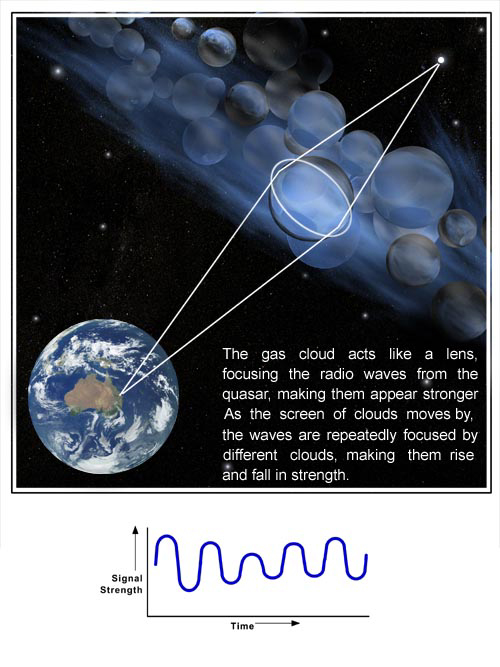
Re:What gas clouds!?
All of the pages you refrenced refer to "interstellar medium" outside of the solar system.
However, the illustrations on the explanatory page are wildly out of scale and show the gas clouds sitting nearly atop the earth. It gave me the impression of vast expanses of "ether-bubbles" floating above us, and was also a bit puzzled. -
Uhh ... cloud bubbles?
Since when does a gas "cloud" appear as a perfectly shperical radio lensing bubble? I think some Aussies have lost their marbles and are seeing them, much like the ancient Greeks of the past, by gazing stupifully into the sky.
-
images of the process
I'm so glad they included those giant 5mb copies of the images. Those puny little jpegs just weren't enough to explain the process to me. If there's no scrollbar, it's too small.
-
Re:That is a crying shame
They still use major/minor configurations? Why not do what DevFS is doing?
But then, I'm not a kernel developer.What do I know? -
Re:From a Canberran ..I put up a map (albeit an old one, missing the new northern Gunghalin suburbs) to show some friends who don't live in Canberra what we were all talking about when we said this and that suburb were toasted. Basically, the fire was being blown in from the west, and a number of suburbs on that side of the town, also blowing ash over 100km (60+ miles) away. IIf the wind hadn't changed, it might have toasted half the city (there is a high density of trees all through).
More significantly, the water processing and sewerage treatment plans were both knocked out, threatening to cause the flow of sewerage into water storage facilities. Imagine the capital of Australia with no fresh water or sewerage for a minute.
Anyway, Mount Stromlo, which was destroyed, is visible on the map, and i've included a section of the Bush Fire Brigade Map which shows the region and the fires.
Updates on the situation can be found here.
-
Re:I don't get it
I just found out that cheap internet was certainly not one of the aims, its more like they use the Ka band to talk to the satellite as part of a high perf computing experiment. Here is a link
-
It seems...
It runs on NT here is a link
Remove the last abs52.html from the address and you get the directory listings, just in case any one is interested in reading up. -
This is so lazy
There is something I find annoying with Slashdot, it's the bad habit of posters to leech news from other sites that already refer to a previous coverage on another site. This is absurd: I click on Slashdot's link to go to geek.com's link, which sends me to The Inquirer, from which I can finally have the real thing. Is this only me that is irritated or what? Hey, when I read the same news first on OSNews (who at least have the decency to redirect to original sources more often) and that some hours after I see that same story on Slashdot, but with the link pointing to OSNews, I find that a bit ridiculous. Not that I think it wrong to acknowledge that news posted on Slashdot came from another news aggregator (that's how one learns about the other ones), but the point is that you end up with a neverending arab telephone, and the guy down the line says black when you're posting white. Or else it's a new way to counter the slashdot effect, and I'm not just getting it.
-
The computer is dismantled and stored...
Check out this page which tells us the history of the said computer. In the end, it says the following:
Following the University of Melbourne's purchase in 1964 of a Control Data 3200 from the USA, CSIRAC was donated to the Museum of Victoria. At this time it was realised that CSIRAC was the oldest computer still in operation, and worthy of preservation so it was carefully dismantled and stored.
CSIRAC is now the centre-piece of the IT display at the Museum in Melbourne. -
Cloud seeding didn't work in Australia
I share another posters scepticism - spraying as much silver iodide or ice as a plane can carry into the air created 250x normal rainfall out of nothing? Sure...
Australia has far more need of enhanced rainfall than Britain. There have been extensive trials by the Commonwealth Scientific and Industrial Research Organization (CSIRO) and overall cloud seeding does not work.
To quote from a summary of CSIRO's findings: "CSIRO has shown that in Australia cloud seeding is effective only in a limited number of weather conditions. Cloud seeding will never break droughts; cloudless skies will never produce rain."
CSIRO have also produced guidelines for water managers considering trying cloud seeding. My take on their conclusion is: it won't work, save your money.
-
Cloud seeding didn't work in Australia
I share another posters scepticism - spraying as much silver iodide or ice as a plane can carry into the air created 250x normal rainfall out of nothing? Sure...
Australia has far more need of enhanced rainfall than Britain. There have been extensive trials by the Commonwealth Scientific and Industrial Research Organization (CSIRO) and overall cloud seeding does not work.
To quote from a summary of CSIRO's findings: "CSIRO has shown that in Australia cloud seeding is effective only in a limited number of weather conditions. Cloud seeding will never break droughts; cloudless skies will never produce rain."
CSIRO have also produced guidelines for water managers considering trying cloud seeding. My take on their conclusion is: it won't work, save your money.
-
Re:Sydney Harbour Bridge
Don't just look at it walk across it. Walk over it! The tour guides know their stuff, they'll tell you lots of intresting things about its contruction: why it hasn't rusted away, how it supports itself, and how many rivets were used.
You can walk across on the sidewalk for free, though it's a long way up and a long way down. Not as much technical detail, but the view can't be beat. The price is right too.
On vacation last April I also hit the radio telescope at Parkes, and the Siding Spring Observatory. Much fun. Got some great pictures of The Dish.
...laura
-
Re:Parkes link
(does not mention SETI yet, at least not prominently)
Perhaps not, but the link from that to the Long Baseline Array is quite interesting. There is a map of the array of telescopes - the spread is huge!
-
Re:Parkes link
(does not mention SETI yet, at least not prominently)
Perhaps not, but the link from that to the Long Baseline Array is quite interesting. There is a map of the array of telescopes - the spread is huge!
-
Re:Parkes link
Parkes Observatory Homepage (does not mention SETI yet, at least not prominently)