Slashdot Mirror
Domain: esa.int
Stories and comments across the archive that link to esa.int.
Stories · 342
-
ESA Plans Test of Asteroid Defense System
vinlud writes "It has been announced by Dutch television ESA has chosen the Don Quijote programme to investigate the possibilities of altering the collision course of asteroids heading for Earth. The program, selected among five other studies, contains two spacecraft: Hidalgo and Sancho. Hidalgo will impact an asteroid of approximately 500 m diameter at a relative speed of at least 10 km/s while Sancho will retreat to a safe distance to observe the impact. An animation of the mission sequence (6.49 Mb) can be downloaded from here." -
Cassini-Huygens Saturn Orbit Insertion Imminent
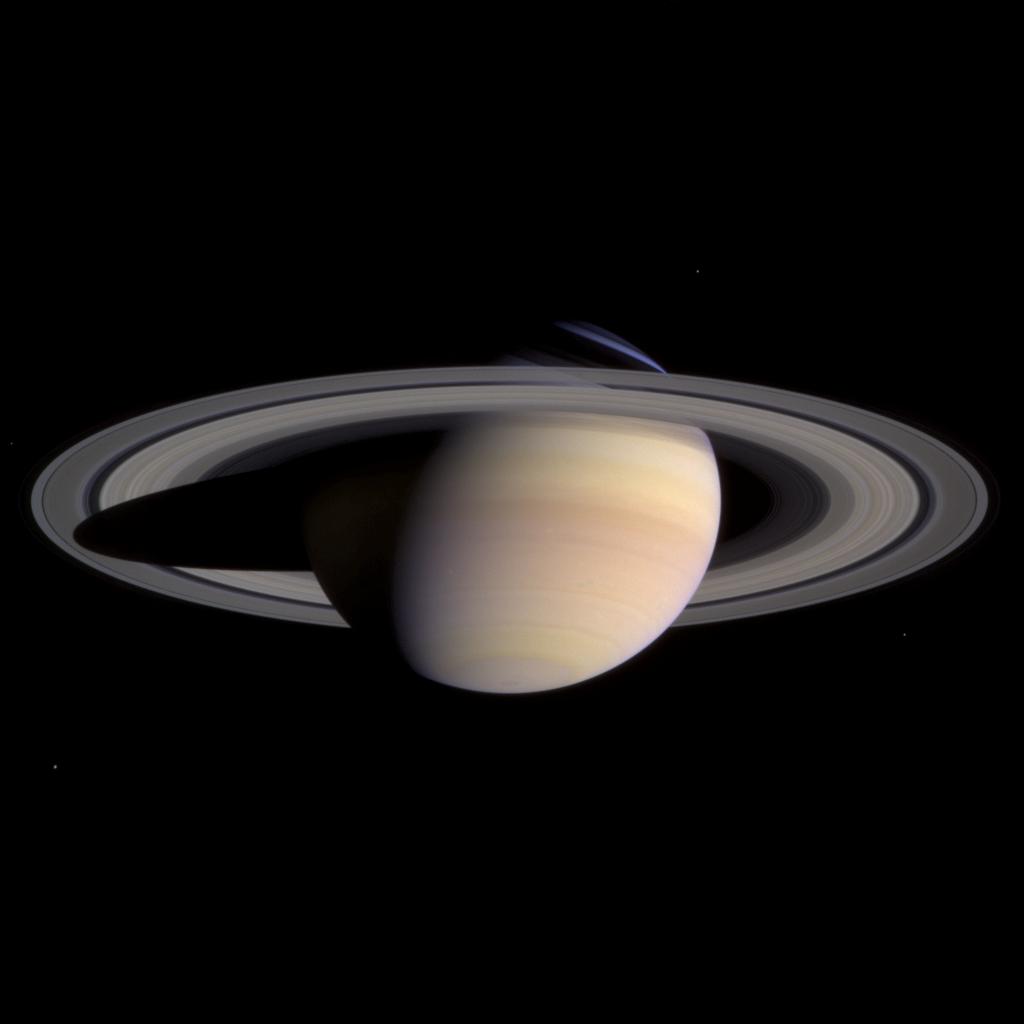
Anonymous Explorer writes "Fresh off of its fly-by with the Saturnian satellite Phoebe, the Cassini-Huygens craft is set for Saturn Orbit Insertion on June 30, 2004. Cassini-Huygens has a planned four year mission ahead for Saturn and its many moons. With 450 watts of power for the electronics, this mission has plenty enough horses to run the stretch with plenty-o-pep to spare. Thanks to all that power, and the plethora of electronics on Cassini and the Huygens probe, we can now hear sounds from Saturn. Pretty cool stuff! Festivities are scheduled to begin on June 29th with a broadcast of Cassini Saturn Orbit Insertion Press Conference on Nasa TV. SOI [PDF link] will occur after Cassini fires its main engine for 96 minutes, in order to slow down and be grabbed by the pull of Saturn. As always we extend an invitation to everyone to join #cassini on irc.freenode.net and help us celebrate this historic mission." -
The Swarm Constellation Will Look Inside the Earth
Roland Piquepaille writes "Among six Earth Explorer candidate missions, the European Space Agency (ESA) has chosen a 'Swarm' of satellites to look inside the Earth and to do the best survey ever of the Earth's geomagnetic field. The mission, scheduled for launch in 2009, will consist of three satellites released by a single rocket. Two will fly side-by-side 450 km above us while the third one will cruise at an altitude of 530 km. In "ESA to probe Earth's magnetic field," the Register also looks at this future mission which will lead to a better analysis of the Sun's influence in our solar system. More details and illustrations are available in this overview." -
ESA Completes Important Step Toward Vega Launcher
Sven-Erik writes "ESA is reporting that 'An important step forward has just been made in the development of ESA's Vega launcher. After several months' work at the Guiana Propellant Plant at Europe's Spaceport the inert casting of the main Vega motor has been successfully carried out.' The 30-meter tall Vega launcher will be capable of placing a 1.5 ton payload into polar orbit, and it is scheduled for its first launch in 2006 from Europe's Spaceport in French Guiana, where the Ariane 1 launch facilities are being adapted for its use. It will be a perfect complement to ESA's large Ariane 5 and the medium-classed Soyuz." -
ESA Completes Important Step Toward Vega Launcher
Sven-Erik writes "ESA is reporting that 'An important step forward has just been made in the development of ESA's Vega launcher. After several months' work at the Guiana Propellant Plant at Europe's Spaceport the inert casting of the main Vega motor has been successfully carried out.' The 30-meter tall Vega launcher will be capable of placing a 1.5 ton payload into polar orbit, and it is scheduled for its first launch in 2006 from Europe's Spaceport in French Guiana, where the Ariane 1 launch facilities are being adapted for its use. It will be a perfect complement to ESA's large Ariane 5 and the medium-classed Soyuz." -
ESA Completes Important Step Toward Vega Launcher
Sven-Erik writes "ESA is reporting that 'An important step forward has just been made in the development of ESA's Vega launcher. After several months' work at the Guiana Propellant Plant at Europe's Spaceport the inert casting of the main Vega motor has been successfully carried out.' The 30-meter tall Vega launcher will be capable of placing a 1.5 ton payload into polar orbit, and it is scheduled for its first launch in 2006 from Europe's Spaceport in French Guiana, where the Ariane 1 launch facilities are being adapted for its use. It will be a perfect complement to ESA's large Ariane 5 and the medium-classed Soyuz." -
ESA Completes Important Step Toward Vega Launcher
Sven-Erik writes "ESA is reporting that 'An important step forward has just been made in the development of ESA's Vega launcher. After several months' work at the Guiana Propellant Plant at Europe's Spaceport the inert casting of the main Vega motor has been successfully carried out.' The 30-meter tall Vega launcher will be capable of placing a 1.5 ton payload into polar orbit, and it is scheduled for its first launch in 2006 from Europe's Spaceport in French Guiana, where the Ariane 1 launch facilities are being adapted for its use. It will be a perfect complement to ESA's large Ariane 5 and the medium-classed Soyuz." -
ESA Completes Important Step Toward Vega Launcher
Sven-Erik writes "ESA is reporting that 'An important step forward has just been made in the development of ESA's Vega launcher. After several months' work at the Guiana Propellant Plant at Europe's Spaceport the inert casting of the main Vega motor has been successfully carried out.' The 30-meter tall Vega launcher will be capable of placing a 1.5 ton payload into polar orbit, and it is scheduled for its first launch in 2006 from Europe's Spaceport in French Guiana, where the Ariane 1 launch facilities are being adapted for its use. It will be a perfect complement to ESA's large Ariane 5 and the medium-classed Soyuz." -
ESA Completes Important Step Toward Vega Launcher
Sven-Erik writes "ESA is reporting that 'An important step forward has just been made in the development of ESA's Vega launcher. After several months' work at the Guiana Propellant Plant at Europe's Spaceport the inert casting of the main Vega motor has been successfully carried out.' The 30-meter tall Vega launcher will be capable of placing a 1.5 ton payload into polar orbit, and it is scheduled for its first launch in 2006 from Europe's Spaceport in French Guiana, where the Ariane 1 launch facilities are being adapted for its use. It will be a perfect complement to ESA's large Ariane 5 and the medium-classed Soyuz." -
ESA's Rosetta Probe Passed 1st Test
be_stress writes "The BBC are reporting that ESA's Rosetta Probe has passed the first phase of its mission. It has currently made observations of Comet C/2002 T7. This is just the first part of a much bigger mission to intercept Comet 67P/Churyumov-Gerasimenko and release a probe to study the chemistry of the comet. The Rosetta probe will enter a quiet 'cruise-mode' until September, when th second stage of commissioning will commence." -
ESA's Rosetta Probe Passed 1st Test
be_stress writes "The BBC are reporting that ESA's Rosetta Probe has passed the first phase of its mission. It has currently made observations of Comet C/2002 T7. This is just the first part of a much bigger mission to intercept Comet 67P/Churyumov-Gerasimenko and release a probe to study the chemistry of the comet. The Rosetta probe will enter a quiet 'cruise-mode' until September, when th second stage of commissioning will commence." -
Cassini Alters Path. Phoebe Now In Sight!
Anonymous Explorer writes "This week the Cassini-Huygens Spacecraft finally entered the Saturn system and made its first main-engine burn in five years in preparation of for the Phoebe flyby. This long journey has been one filled with much promise and peril. Launched in 1997, Cassini is expected to have a rendezvous with the moon Phoebe on June 11. For those of us who are lazy, that's just a tad under two weeks away. After the Phoebe flyby, it's on to the ringed planet, with an anticipated July 1 ground orbit insertion. The ESA's Huygens probe will descend into the atmosphere of Titan a few months after Cassini is inserted into orbit. This mission promises to be one that brings a very psychedelic and beautiful area of our solar system into clearer focus. This multinational mission is one the most ambitious scientific explorations yet undertaken and promises some truly otherworldly images in the near future. With 31 moons/natural satellites thus far discovered orbiting Saturn, there should be a lot to keep us occupied. Anyone else excited about the journey to a ringed world? Lets all enjoy this ride. It promises to be a unique one as much as for the scenery as for the science. Informal discussion regarding the Cassini-Huygens mission can be found at #cassini on irc.freenode.net." -
Hayabusa Earth Flyby Swings Toward Asteroid
An anonymous reader writes "As the first of its kind to return asteroid samples to Earth, the Japanese Hayabusa mission took pictures this week during its successful Earth flyby. Eventually headed to the asteroid belt, the probe will feature a novel sample collection 'horn' which hops around on the asteroid's surface and lands intermittently for only a second at a time. The samples will be dust clouds fired up from repeated bullet impacts, since the asteroid's low gravity makes it difficult to 'land' on. When faced with a similar problem, the European Rosetta mission alternatively will harpoon the surface to hang on while also touching down on another small-mass asteroid." -
A Moment Of Reckoning for Cassini
No_Weak_Heart writes "The NASA/ESA Cassini-Huygens probe has caught sight of Titan and is now returning images that 'rival anything scientists have seen before - and that includes images from the Hubble telescope.' See more detailed images at the mission homepage." -
Best Images Yet Of Saturn's Moon Titan
DoraLives writes "During recent commissioning observations of a new instrument designed for a completely different purpose, the European Southern Observatory managed to grab the best imagery yet of Saturn's largest moon. Although the imagery bears more than just a passing resemblance to some of the quainter maps of other planets there's no denying the superb, sub tenth arcsecond, resolution of the new images. And of course, if that's not good enough, they're sending a a little something to land on Titan next January. Should be interesting." -
Space Technology to Conquer Everest
Roland Piquepaille writes "These days, the European Space Agency (ESA) is busy sharing its space technologies. Last week, in "Space technology hits the slopes," it said that the ski maker Rossignol hopes to beat the world speed skiing record of 250 km/h by using skis stabilized by a mechanism developed for ESA's Rosetta spacecraft. And today, the ESA announced that a satellite-based Health Monitoring Kit developed by the Canadian company March Networks and co-funded by ESA, will help climbers to escalate Everest. Of course, this kind of technology can be applied at lower altitudes. This overview contains other details and references about the March Networks Health Monitoring Kit." -
Space Technology to Conquer Everest
Roland Piquepaille writes "These days, the European Space Agency (ESA) is busy sharing its space technologies. Last week, in "Space technology hits the slopes," it said that the ski maker Rossignol hopes to beat the world speed skiing record of 250 km/h by using skis stabilized by a mechanism developed for ESA's Rosetta spacecraft. And today, the ESA announced that a satellite-based Health Monitoring Kit developed by the Canadian company March Networks and co-funded by ESA, will help climbers to escalate Everest. Of course, this kind of technology can be applied at lower altitudes. This overview contains other details and references about the March Networks Health Monitoring Kit." -
Methane on Mars?
mbone writes "Two independent groups are claiming the detection of methane in the Martian atmosphere, one using the Mars Express orbiter, and the other using ground based telescopes. This detection, if confirmed, would be of great significance for the search of life on Mars, as Methane will not last long in the Martian atmosphere and thus must be renewed, presumably either by biological processes or by volcanic vents, which would be a good place for life to develop. The leader of the ground based astronomy team, Michael Mumma of the Goddard Space Flight Center, when asked if the methane was biological in origin, said 'I think it is, myself personally.'" -
Successful Rosetta Lift-Off
CrystalFalcon writes "The BBC is reporting that the Rosetta spacecraft has had a successful lift-off after a two cancelled launch attempts. Rosetta is targeted at a near-Earth comet, and features a 'lander.' The European Space Agency has more information on the mission." -
Successful Rosetta Lift-Off
CrystalFalcon writes "The BBC is reporting that the Rosetta spacecraft has had a successful lift-off after a two cancelled launch attempts. Rosetta is targeted at a near-Earth comet, and features a 'lander.' The European Space Agency has more information on the mission." -
Mars Express Images of Olympus Mons
tr0llb4rt0 writes "The New Scientist reports on high resolution images of Olympus Mons taken by the ESA's Mars Express probe. Earlier pictures had suffered due to problems syncronizing the images from the high resolution stereo camera but these latest images are of excellent quality and scientists expect the quality of future images to improve further. High resolution images are available at the ESA's Mars Express Multimedia Gallery." -
Mars Express Images of Olympus Mons
tr0llb4rt0 writes "The New Scientist reports on high resolution images of Olympus Mons taken by the ESA's Mars Express probe. Earlier pictures had suffered due to problems syncronizing the images from the high resolution stereo camera but these latest images are of excellent quality and scientists expect the quality of future images to improve further. High resolution images are available at the ESA's Mars Express Multimedia Gallery." -
Rosetta, the Comet Hunter
Roland Piquepaille writes: "After being delayed for about a year because of a failure of the Ariane-5 rocket, the Rosetta spacecraft is scheduled to be launched on February 26. Rosetta is a special spacecraft, including an orbiter and a lander. And it will take up to 2014 before landing on Comet 67P/Churyumov-Gerasimenko -- with the help of a harpoon. Then, as says the European Space Agency (ESA), Rosetta will help to solve planetary mysteries. This news release looks at the goals of Rosetta's mission and explains why it will take more than ten years to reach the comet. But here the 'funny' part of the story: the landing. 'In November 2014, the lander will be ejected from the spacecraft from a height which could be as low as one kilometre. Touchdown will be at walking speed, about one metre per second. Immediately after touchdown, the lander will fire a harpoon into the ground to avoid bouncing off the surface back into space, since the comet's extremely weak gravity alone would not hold onto the lander.' This overview contains more details and includes illustrations of the Rosetta's spacecraft and its landing on the comet." -
Mars Express Confirms Water on Mars
jki writes "So, finally: Through the initial mapping of the South polar cap on 18 January, OMEGA, the combined camera and infrared spectrometer, has already revealed the presence of water ice and carbon dioxide ice. This information was confirmed by the PFS, a new high-resolution spectrometer of unprecedented accuracy. The first PFS data also show that the carbon oxide distribution is different in the northern and southern hemispheres of Mars. The MaRS instrument, a sophisticated radio transmitter and receiver, emitted a first signal successfully on 21 January that was received on Earth through a 70- metre antenna in Australia after it was reflected and scattered from the surface of Mars. This new measurement technique allows the detection of the chemical composition of the Mars atmosphere, ionosphere and surface." On another note, NASA has gotten some sort of signal from Spirit, but it's still not fully functional. -
News from Mars
An anonymous reader writes "While the Beagle 2 may have been gobbled up by Mars--Eater of Spacecraft, the main part of the ESA's recent Mars mission is doing well. The Mars Express Orbiter has sent back some amazing pictures of The Grand Canyon of Mars (Valles Marineris). Yes, this is the same gigantic geological feature that was missed by Mariner 4, 6, and 7 but finally found by Mariner 9. In other news, the Spirit rover is getting ready to grind the rock Adirondack (picture)." -
News from Mars
An anonymous reader writes "While the Beagle 2 may have been gobbled up by Mars--Eater of Spacecraft, the main part of the ESA's recent Mars mission is doing well. The Mars Express Orbiter has sent back some amazing pictures of The Grand Canyon of Mars (Valles Marineris). Yes, this is the same gigantic geological feature that was missed by Mariner 4, 6, and 7 but finally found by Mariner 9. In other news, the Spirit rover is getting ready to grind the rock Adirondack (picture)." -
News from Mars
An anonymous reader writes "While the Beagle 2 may have been gobbled up by Mars--Eater of Spacecraft, the main part of the ESA's recent Mars mission is doing well. The Mars Express Orbiter has sent back some amazing pictures of The Grand Canyon of Mars (Valles Marineris). Yes, this is the same gigantic geological feature that was missed by Mariner 4, 6, and 7 but finally found by Mariner 9. In other news, the Spirit rover is getting ready to grind the rock Adirondack (picture)." -
News from Mars
An anonymous reader writes "While the Beagle 2 may have been gobbled up by Mars--Eater of Spacecraft, the main part of the ESA's recent Mars mission is doing well. The Mars Express Orbiter has sent back some amazing pictures of The Grand Canyon of Mars (Valles Marineris). Yes, this is the same gigantic geological feature that was missed by Mariner 4, 6, and 7 but finally found by Mariner 9. In other news, the Spirit rover is getting ready to grind the rock Adirondack (picture)." -
News from Mars
An anonymous reader writes "While the Beagle 2 may have been gobbled up by Mars--Eater of Spacecraft, the main part of the ESA's recent Mars mission is doing well. The Mars Express Orbiter has sent back some amazing pictures of The Grand Canyon of Mars (Valles Marineris). Yes, this is the same gigantic geological feature that was missed by Mariner 4, 6, and 7 but finally found by Mariner 9. In other news, the Spirit rover is getting ready to grind the rock Adirondack (picture)." -
Space Tug to Save the Hubble?
Aglassis writes "In an article at SpaceRef, the CTO of Orbital Recovery Corporation claims that his company will be able to develop a space tug that could save the Hubble Space Telescope (from becoming 'a ballisticly implanted reef in the Pacific') by either moving it into a much higher stable orbit, or by moving it to the ISS where it could be maintained and operated. Some of the reasons that he cites are that the Hubble's replacement, the James Webb Space Telescope, could be delayed or suffer some sort of failure. Since the JWST will be at the L2 point, servicing will be impossible." -
Next Goals For The ESA
zeux writes "With all the news we got recently from space I tried to gather some information about the next goals of the ESA (European Space Agency). Along with a space vehicle designed to carry supplies to the ISS between 2004 and 2013, they are working on the new 'Vega' launcher (2006) and still playing with the SMART-1 probe which is slowly heading to the moon testing an ion drive that is ten times more efficient than the usual chemical systems (1500 hours cumulated thrust time so far)." -
Next Goals For The ESA
zeux writes "With all the news we got recently from space I tried to gather some information about the next goals of the ESA (European Space Agency). Along with a space vehicle designed to carry supplies to the ISS between 2004 and 2013, they are working on the new 'Vega' launcher (2006) and still playing with the SMART-1 probe which is slowly heading to the moon testing an ion drive that is ten times more efficient than the usual chemical systems (1500 hours cumulated thrust time so far)." -
Next Goals For The ESA
zeux writes "With all the news we got recently from space I tried to gather some information about the next goals of the ESA (European Space Agency). Along with a space vehicle designed to carry supplies to the ISS between 2004 and 2013, they are working on the new 'Vega' launcher (2006) and still playing with the SMART-1 probe which is slowly heading to the moon testing an ion drive that is ten times more efficient than the usual chemical systems (1500 hours cumulated thrust time so far)." -
Next Goals For The ESA
zeux writes "With all the news we got recently from space I tried to gather some information about the next goals of the ESA (European Space Agency). Along with a space vehicle designed to carry supplies to the ISS between 2004 and 2013, they are working on the new 'Vega' launcher (2006) and still playing with the SMART-1 probe which is slowly heading to the moon testing an ion drive that is ten times more efficient than the usual chemical systems (1500 hours cumulated thrust time so far)." -
Next Goals For The ESA
zeux writes "With all the news we got recently from space I tried to gather some information about the next goals of the ESA (European Space Agency). Along with a space vehicle designed to carry supplies to the ISS between 2004 and 2013, they are working on the new 'Vega' launcher (2006) and still playing with the SMART-1 probe which is slowly heading to the moon testing an ion drive that is ten times more efficient than the usual chemical systems (1500 hours cumulated thrust time so far)." -
Next Goals For The ESA
zeux writes "With all the news we got recently from space I tried to gather some information about the next goals of the ESA (European Space Agency). Along with a space vehicle designed to carry supplies to the ISS between 2004 and 2013, they are working on the new 'Vega' launcher (2006) and still playing with the SMART-1 probe which is slowly heading to the moon testing an ion drive that is ten times more efficient than the usual chemical systems (1500 hours cumulated thrust time so far)." -
Mars Express 3D Image Released
zoney_ie writes "As reported in BBC News Online, ESA (European Space Agency) have released an image of the surface of Mars, captured in 3D and full colour. Europe's Mars Express orbiter has been taking pictures of the Martian surface at down to 10m resolution. The mission will result in Mars being more carefully mapped than Earth has been to date! Full size image available on ESA's Mars Express Website." -
Mars Express 3D Image Released
zoney_ie writes "As reported in BBC News Online, ESA (European Space Agency) have released an image of the surface of Mars, captured in 3D and full colour. Europe's Mars Express orbiter has been taking pictures of the Martian surface at down to 10m resolution. The mission will result in Mars being more carefully mapped than Earth has been to date! Full size image available on ESA's Mars Express Website." -
NASA Cancels Hubble Mission, and Other Space Bits
An anonymous reader writes "NASA Watch is reporting that NASA has cancelled Servicing Mission 4 for the Hubble Space Telescope. The reason given is not for budgets, but for safety." ender81b writes "With all the excitement generated by the Mars Exploration Rovers now is a good time to look at future space exploration missions. One of the most exciting is the Kepler spacecraft which will search for terrestrial planets around nearby stars. Other interesting upcoming missions include the New Horizons mission to explore Pluto and the Kuiper belt, Deep Impact which will fire a small impactor into a comet to study the insides, Messenger which will fully photograph Mercury for the first time, and the ESA's Herschel infrared space telescope and Rosetta spacecraft which will land on a comet for the first time. Whew, good time to be invovled in space exploration!" StarWreck writes "Cnet.com is reporting that the Mars Rover uses Java. The same piece of software that lets people around the world play video games on their cell phones is now letting scientists drive the ultimate remote-controlled car across the surface of Mars." -
Still No Contact from Beagle 2
Many of you have submitted this, so this will be a condensing of the relevant information. WebfishUK writes: "The BBC has just released this story which announces the failure of the latest and possibly best chance to contact the British built Mars probe, Beagle 2. Given that Mars Express was designed to communicate with Beagle (unlike the earlier attempts with NASA's Mars Odyssey), this may indicate that something catastrophic has happened to Beagle 2." From Bromrrrrr: "[The] ESA is reporting that the Mars Express, which everybody was hoping would be able to get through to the poor lost puppy, has failed its first attempt. 'We have not lost hope yet to contact Beagle 2, but we also know that it has landed on an unforgiving planet,' said David Southwood, ESA's Director of Science." and I-R-Baboon adds: "The Mars Express mothership from the EU passed 350 km over the intended landing site of the Beagle 2 hearing only silence. Although nothing was heard, hope has not been given up yet, as scientists will keep trying until February, with more passovers of the Beagle 2's landing site on January 8th, 9th, 10th, 12th, and 14th." Additional updates can be obtained from the Beagle 2 homepage as well as from the ESA's homepage for the Mars Express. Here's hoping that the lander is only down, and not out. -
Still No Contact from Beagle 2
Many of you have submitted this, so this will be a condensing of the relevant information. WebfishUK writes: "The BBC has just released this story which announces the failure of the latest and possibly best chance to contact the British built Mars probe, Beagle 2. Given that Mars Express was designed to communicate with Beagle (unlike the earlier attempts with NASA's Mars Odyssey), this may indicate that something catastrophic has happened to Beagle 2." From Bromrrrrr: "[The] ESA is reporting that the Mars Express, which everybody was hoping would be able to get through to the poor lost puppy, has failed its first attempt. 'We have not lost hope yet to contact Beagle 2, but we also know that it has landed on an unforgiving planet,' said David Southwood, ESA's Director of Science." and I-R-Baboon adds: "The Mars Express mothership from the EU passed 350 km over the intended landing site of the Beagle 2 hearing only silence. Although nothing was heard, hope has not been given up yet, as scientists will keep trying until February, with more passovers of the Beagle 2's landing site on January 8th, 9th, 10th, 12th, and 14th." Additional updates can be obtained from the Beagle 2 homepage as well as from the ESA's homepage for the Mars Express. Here's hoping that the lander is only down, and not out. -
Still No Contact from Beagle 2
Many of you have submitted this, so this will be a condensing of the relevant information. WebfishUK writes: "The BBC has just released this story which announces the failure of the latest and possibly best chance to contact the British built Mars probe, Beagle 2. Given that Mars Express was designed to communicate with Beagle (unlike the earlier attempts with NASA's Mars Odyssey), this may indicate that something catastrophic has happened to Beagle 2." From Bromrrrrr: "[The] ESA is reporting that the Mars Express, which everybody was hoping would be able to get through to the poor lost puppy, has failed its first attempt. 'We have not lost hope yet to contact Beagle 2, but we also know that it has landed on an unforgiving planet,' said David Southwood, ESA's Director of Science." and I-R-Baboon adds: "The Mars Express mothership from the EU passed 350 km over the intended landing site of the Beagle 2 hearing only silence. Although nothing was heard, hope has not been given up yet, as scientists will keep trying until February, with more passovers of the Beagle 2's landing site on January 8th, 9th, 10th, 12th, and 14th." Additional updates can be obtained from the Beagle 2 homepage as well as from the ESA's homepage for the Mars Express. Here's hoping that the lander is only down, and not out. -
Beagle II Successfully Separates
Control42 writes "After the long journey out, it seems that little Beagle II, the lander of the Mars express mission has successfully separated. If all goes well, the lander should touch down on Christmas Day. Seems that NASA has actually lost the edge in robotic space exploration." Reader chalker writes "In order to build public interest in the Mars Exploration Rovers 2004 missions landing in January, NASA has released a series of movie trailers (Flash enabled page, Windows Media and Quicktime formats) for what they are calling "M2K4". They contain quite amazing animations of the landings, as well as a professional artistic style typically seen in action movie trailers. Additional videos on the launch, cruise, and landing challenges can be found at the JPL based mission site." -
Mars Express Sends Back First Photo of Mars
Andrew Browne writes "Today the European Space Agency received the first photo of Mars from its Mars Express probe. The photo was taken on December 1st and processed by the DLR Institute for Planetary Research and by the Freie Universitat Berlin. Mars Express was launched June 2nd of this year and is due to arrive at the Red planet later this month. The extremely speedy voyage is thanks to our close approach to Mars this summer. Other probes taking advantage of the launch window include NASA's Spirit and Opportunity Mars Exploration Rovers. You can track the progress of all the probes heading to Mars with NASA's solar system simulator." -
Mars Express Sends Back First Photo of Mars
Andrew Browne writes "Today the European Space Agency received the first photo of Mars from its Mars Express probe. The photo was taken on December 1st and processed by the DLR Institute for Planetary Research and by the Freie Universitat Berlin. Mars Express was launched June 2nd of this year and is due to arrive at the Red planet later this month. The extremely speedy voyage is thanks to our close approach to Mars this summer. Other probes taking advantage of the launch window include NASA's Spirit and Opportunity Mars Exploration Rovers. You can track the progress of all the probes heading to Mars with NASA's solar system simulator." -
Mars Express Sends Back First Photo of Mars
Andrew Browne writes "Today the European Space Agency received the first photo of Mars from its Mars Express probe. The photo was taken on December 1st and processed by the DLR Institute for Planetary Research and by the Freie Universitat Berlin. Mars Express was launched June 2nd of this year and is due to arrive at the Red planet later this month. The extremely speedy voyage is thanks to our close approach to Mars this summer. Other probes taking advantage of the launch window include NASA's Spirit and Opportunity Mars Exploration Rovers. You can track the progress of all the probes heading to Mars with NASA's solar system simulator." -
Galileo System To Include Jamming Capability
CharonX writes "The Galileo project, an european alternative to the US based (and controlled) GPS system, recieved a severe setback today. Under US pressure the EU has agreed to use transmission frequencies that could be easily disturbed or completely jammed by the US military. Since one of Galileo's main advantages had been being independent of goverment or military control, this is a severe setback. Read more here on Heise.de (German - ya might want to use the fish)" Some of the background on this had NATO being unhappy with some of the provisions of it as well - at the least military structure. -
Writing in Space with a Cheap Ballpoint Pen
Roland Piquepaille writes "Some days bring big surprises. Like many people, I always believed that it was impossible to write in space with ordinary pens because ink would not flow. So imagine my astonishment when I read Pedro Duque's diary from space this morning. Pedro Duque is an astronaut since 1992. Now, he's on board of the International Space Station (ISS) since October 18, 2003. And he's writing -- from space -- with a cheap ballpoint pen, like Russians apparently always did: 'So I also took one of our ballpoint pens, courtesy of the European Space Agency (just in case Russian ballpoint pens are special), and here I am, it doesn't stop working and it doesn't "spit" or anything.' Isn't it amazing? This summary contains more details and a photograph of Pedro Duque on board ISS." Note that NASA didn't go crazy developing a pen for space. Surface tension is the important factor for all pens, not gravity. -
Writing in Space with a Cheap Ballpoint Pen
Roland Piquepaille writes "Some days bring big surprises. Like many people, I always believed that it was impossible to write in space with ordinary pens because ink would not flow. So imagine my astonishment when I read Pedro Duque's diary from space this morning. Pedro Duque is an astronaut since 1992. Now, he's on board of the International Space Station (ISS) since October 18, 2003. And he's writing -- from space -- with a cheap ballpoint pen, like Russians apparently always did: 'So I also took one of our ballpoint pens, courtesy of the European Space Agency (just in case Russian ballpoint pens are special), and here I am, it doesn't stop working and it doesn't "spit" or anything.' Isn't it amazing? This summary contains more details and a photograph of Pedro Duque on board ISS." Note that NASA didn't go crazy developing a pen for space. Surface tension is the important factor for all pens, not gravity. -
Writing in Space with a Cheap Ballpoint Pen
Roland Piquepaille writes "Some days bring big surprises. Like many people, I always believed that it was impossible to write in space with ordinary pens because ink would not flow. So imagine my astonishment when I read Pedro Duque's diary from space this morning. Pedro Duque is an astronaut since 1992. Now, he's on board of the International Space Station (ISS) since October 18, 2003. And he's writing -- from space -- with a cheap ballpoint pen, like Russians apparently always did: 'So I also took one of our ballpoint pens, courtesy of the European Space Agency (just in case Russian ballpoint pens are special), and here I am, it doesn't stop working and it doesn't "spit" or anything.' Isn't it amazing? This summary contains more details and a photograph of Pedro Duque on board ISS." Note that NASA didn't go crazy developing a pen for space. Surface tension is the important factor for all pens, not gravity.