Slashdot Mirror
Domain: gnu.org
Stories and comments across the archive that link to gnu.org.
Comments · 13,360
-
Re:Open source JAVASeems to me that around here the only type of software that can be good is something that is open
Almost. But we prefer the word "Free".
-
Choice
I understand that most distros come with a packaging manager, but if I want to write a program, allow downloads from my site, then (to the best of my knowledge) there's no way for it to easily be installed and have menu shortcuts etc set up....
"Menu shortcuts setup..."? ok, for what? KDE? Gnome? Fluxbox? Afterstep? The reason there is no universal "installer" is that there can be no assumptions made about how a person chose to configure the system, since the advantage here of course is having a CHOICE. It's a bout having the FREEDOM to configure things the way that works best.
Of course you are also free choose Redhat/RPM and install software which makes assumptions based on that Redhat system and how someone at Redhat decided your system should be configured. That's perfectly acceptable.
If you want full freedom and flexibility, source code is the only way. For me personally, building from source works best for me, you however are free to CHOOSE whatever works best for you. But PLEASE don't say that every UNIX system out there should conform to meet some standard so that a single software installer will function correctly on all of them. Now THAT is is just ridiculous.
My suggestion. Develop your software. Use standard tools like autoconf, automake, etc. Then allow distribution maintainers to develop packages based on your source distribution. If you want to push the process along, for something like gentoo you could very easily write a small ebuild and submit it to them to include in portage. It's also fairly easy to make RPMs.
-
Choice
I understand that most distros come with a packaging manager, but if I want to write a program, allow downloads from my site, then (to the best of my knowledge) there's no way for it to easily be installed and have menu shortcuts etc set up....
"Menu shortcuts setup..."? ok, for what? KDE? Gnome? Fluxbox? Afterstep? The reason there is no universal "installer" is that there can be no assumptions made about how a person chose to configure the system, since the advantage here of course is having a CHOICE. It's a bout having the FREEDOM to configure things the way that works best.
Of course you are also free choose Redhat/RPM and install software which makes assumptions based on that Redhat system and how someone at Redhat decided your system should be configured. That's perfectly acceptable.
If you want full freedom and flexibility, source code is the only way. For me personally, building from source works best for me, you however are free to CHOOSE whatever works best for you. But PLEASE don't say that every UNIX system out there should conform to meet some standard so that a single software installer will function correctly on all of them. Now THAT is is just ridiculous.
My suggestion. Develop your software. Use standard tools like autoconf, automake, etc. Then allow distribution maintainers to develop packages based on your source distribution. If you want to push the process along, for something like gentoo you could very easily write a small ebuild and submit it to them to include in portage. It's also fairly easy to make RPMs.
-
You may all ready know this...
... but just in case you did not I'll toss it up here.
Lawrence Lessing (another lawyer who has done lots of writing about the internet, and been talked about on Slashdot often) posts what IMO is some very insightful information on "cyberlaw" at his blog from time to time. If you enjoyed this interview, and have not cheked out Lessing's work.
Here are some of the groups that Lessing is working / has worked with...
creative commons
eff
puclib knowledge
fsf
-
GIFT
Sounds like GIFT - The GNU Image-Finding Tool.
-
Re:Per-Seat pricing is fine....RHES != FreeThe availability of the source without the binaries for an entire distro is clearly a way to get around the GPL - although you can technically share the software the reasonable way to do so is prohibited- go to gnu.org and find the 4 freedoms defined and you will see one of them is sharing the software (not just the source) RedHat does NOT allow you to install on machines if you have not purchased a license for that machine. You have to buy support for every machine you want to install it on. See this InfoWorld article or read the actual license at here (here's a quote: "If Customer wishes to increase the number of Installed System, then Customer will purchase from Red Hat additional Services for each additional Installed System. During the term of this Agreement and for one (1) year thereafter, Customer expressly grants to Red Hat the right to audit Customer's facilities and records from time to time in order to verify Customer's compliance with the terms and conditions of this Agreement")
I know RedHat contributes, but I prefer to use Debian nowadays.
Things are going from bad to worse - first the Redhat->Fedora transfer and now Sun is in bed with Mickeysoft.
-
Re:To curb the anti-Red Hat gibberish
1) They release all their config tools under the GPL
GPL is far from a magic wand. (It won't make your code automagically perfect. You have to have programmers that can do that before that'll happen)
2) They contribute to the kernel, GCC, glibc, XFree86, GNOME, OpenOffice.org and other projects
Remember gcc 2.96?
3) They're standing up and fighting SCO
I would too if my business was completely bassed on selling Linux.
I don't have any major hate of Redhat's stuff though, and I was mostly just pointing out the bad points. (Personally, I just don't like it because it felt too confining, so thus, tada, I didn't use it)
-
Reminds me of GNU stowSelf-contained package directories under Unix is not a new idea. From the GNU software directory:
stow - Manages installation process
Manages the installation process by keeping packages separate while making them appear to be installed in the same place. Stow doesn't store an extra state between runs, so there's no danger of mangling directories when file hierarchies don't match the database. Also, stow will never delete any files, directories, or links that appear in a stow directory, so it is always possible to rebuild the target tree.
Maybe they can work together with the ROX people since they have been doing something similar for a number of years now. -
Re:Not that anyone will see this...
:-). It is interesting to contrast the style of graphical user interaction in games with that in traditional desktop GUIs. Games are generally about direct manipulation, and have simple, non-modal interfaces. This is true even of non-twitch games: for arcade games, the ideal input device itself is often something other than the mouse or keyboard. I use cgoban to play gnugo fairly regularly. The only part of the process I abhor is the stupid dialogs one has to click through at the beginning. After that, things get sensible again.
That said, the games I play are mostly web-based, e.g. WeBL. The OSS community had a big spate of web-GUI programs a couple of years ago. It has mostly died out, perhaps because programs like CUPS demonstrated that one could do just as ugly and stupid a user interface using web forms as with traditional dialogs. I dunno.
But I'm confident that if game interfaces looked and worked like desktop GUIs, computer gaming would be dead by now.
-
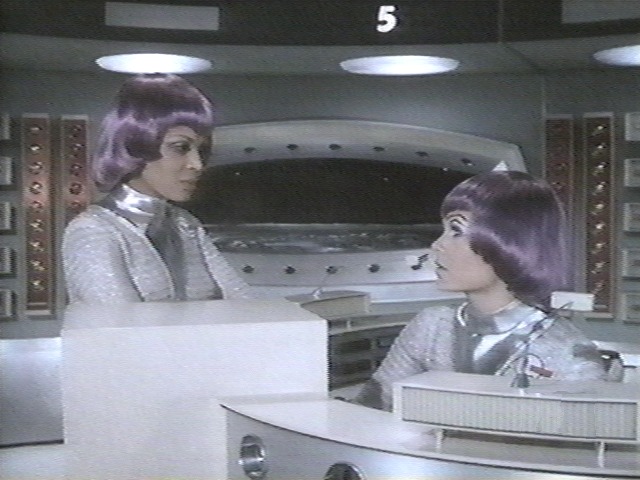
But will I be working under the PHMBs?!!!You just can't take *BSD seriously when its fronted by losers like these. Would you buy software from them? I don't think so! You BSD groupies need to find some sexy girls like her ! I mean just look at this girl ! Doesn't she excite you? I know this little hottie puts me in need of a cold shower! This guy looks like he is about to cream his pants standing next to such a fox . As you can see, no man can resist this sexy little minx . I mean are you telling me you wouldn't like to get your hands on this ass ?!
With sexy chicks like the lovely Lt. Gay Ellis you could have people queuing up to buy open source products. Could you really refuse to buy a copy of Linux if she told you to? Come on, you must admit she is better than an overweight deamon or a gay looking goat ! Don't you wish you could get one of these ? Personally I know I would give my right arm to get this close to such a divine beauty !
Join the campaign for more cute open source purple-haired moonbabes today!
--
I didn't post this as AC, so I must not be trolling.
-
Text of the Article
Here's the text of the article to relieve the stress from the site. Slashdot operators: please link to it from the feature.
Introducing the RMS-Lint
Introduction
A new tool aims to revolutionize the way people communicate with the famous free software evangelist Richard M. Stallman, (also known by his initials - "RMS"). Its project leader Shlomi Fish has more to say of it:
"RMS-Lint is called RMS-Lint because like most lints it warns on many things that are obviously not errors, because there's a chance that they are. RMS-Lint is an interactive speller that runs over the document word by word with a sophisticated look-ahead and look-behind and warns the user over any word or combination of words that may irritate Stallman, or otherwise will be frowned upon by him."
RMS-Lint's Rules
In accordance to the Free Software Foundation's list of words to avoid and other documents available on the FSF Site, the following rules are recognized by RMS-Lint:
-
Warns on every use of the term "Linux" not preceded by "GNU/". This is due to the fact that Stallman advocates using "GNU/Linux" instead of just "Linux" to refer to the entire operating system. It especially warns on "the Linux kernel" (because the kernel part is redundant as Linux is just the kernel).
Legitimate use of the term "Linux" to refer to just the kernel are also warned about, but can be overridden.
-
Warns on every use of the term "open source" and even the word "open". Replacements are "free software", "free", "revealed", "viewable", and the bootload of synonyms from the Merriam-Webster Online Dictionary". Also warns on the terms "closed-source" or "closed".
-
Warns on every use of the term "free" for fear it may be used to imply costlessness. As for legitimate uses of the term ("free as in free speech"), it should be noted that being a lint, RMS-Lint attempts to cover every possible error, not just the ones that actually are such. Replacements are "liberal", "libre", "costless", "gratis", and you also have an option to ignore it.
-
Warns on every use of the term "pirate" or "piracy". It is our belief that when talking to Dr. Stallman, people won't usually wish to talk about the sea-faring robbers, but instead on illegitimate copying of one form of media or another. Thus, RMS-Lint warns on every such use and suggests the alternatives of "illegal copier/copying", or "bucanneer".
-
Warns on every use of "Intellectual Proprety" or "IP" (a common short form of it). The developers of RMS-Lint realize that IP can also mean the "Internet Protocol" (as in "IP address", "my IP is '192.168.1.1'"), but we believe that when corresponding to RMS, such use will be relatively uncommon, and does not justify risking mentioning "intellectual property" to him.
- And much, much more...
Opinions on RMS-Lint
Eric S. Raymond, a long time friend of Stallman, and the chief leader of the open source movement, expressed a great deal of content from the availability of this tool. "I've been waiting for such a thing all my life. Communicating with Richard has become more and more difficult, and RMS-Lint can easily make it much better."
Raymond's long time collaborator Bruce Perens also expressed happiness that RMS-Lint has become available. "Modern-day open source enthusiasts find it more and more difficult to communicate with Richard Stallman due to his terminological whims. RMS-Lint is just the tool that can help them validate their E-mails for RMS' correctness."
Meanwhile, Richard Stallman himself expressed dismay from this project: "RMS-Lint is an unsatisfying symptomatic cure for a big problem.
-
-
allright, that's IT!You just can't take *BSD seriously when its fronted by losers like these. Would you buy software from them? I don't think so! You BSD groupies need to find some sexy girls like her ! I mean just look at this girl ! Doesn't she excite you? I know this little hottie puts me in need of a cold shower! This guy looks like he is about to cream his pants standing next to such a fox . As you can see, no man can resist this sexy little minx . I mean are you telling me you wouldn't like to get your hands on this ass ?!
With sexy chicks like the lovely Lt. Gay Ellis you could have people queuing up to buy open source products. Could you really refuse to buy a copy of Linux if she told you to? Come on, you must admit she is better than an overweight deamon or a gay looking goat ! Don't you wish you could get one of these ? Personally I know I would give my right arm to get this close to such a divine beauty !
Join the campaign for more cute open source purple-haired moonbabes today!Purple-haired moonbabes run LINUX! And that's good enough for me.
props to the Ceren/BSD troll. -
Purple-haired moonbabes run LINUX!
You just can't take *BSD seriously when its fronted by losers like these. Would you buy software from them? I don't think so! You BSD groupies need to find some sexy girls like her ! I mean just look at this girl ! Doesn't she excite you? I know this little hottie puts me in need of a cold shower! This guy looks like he is about to cream his pants standing next to such a fox . As you can see, no man can resist this sexy little minx . I mean are you telling me you wouldn't like to get your hands on this ass ?!
With sexy chicks like the lovely Lt. Gay Ellis you could have people queuing up to buy open source products. Could you really refuse to buy a copy of Linux if she told you to? Come on, you must admit she is better than an overweight deamon or a gay looking goat ! Don't you wish you could get one of these ? Personally I know I would give my right arm to get this close to such a divine beauty !
Join the campaign for more cute open source purple-haired moonbabes today! -
Purple-haired moonbabes run LINUX!
You just can't take *BSD seriously when its fronted by losers like these. Would you buy software from them? I don't think so! You BSD groupies need to find some sexy girls like her ! I mean just look at this girl ! Doesn't she excite you? I know this little hottie puts me in need of a cold shower! This guy looks like he is about to cream his pants standing next to such a fox . As you can see, no man can resist this sexy little minx . I mean are you telling me you wouldn't like to get your hands on this ass ?!
With sexy chicks like the lovely Lt. Gay Ellis you could have people queuing up to buy open source products. Could you really refuse to buy a copy of Linux if she told you to? Come on, you must admit she is better than an overweight deamon or a gay looking goat ! Don't you wish you could get one of these ? Personally I know I would give my right arm to get this close to such a divine beauty !
Join the campaign for more cute open source purple-haired moonbabes today! -
I can answer if you talk about GPL
I don't know how many times I've to explain that again and again to my co-workers. I just back from explaining to a manager of such question, only found the same thing in
For GPL derivative work:
YOU ARE NOT REQUIRED TO DISTRIBUTE THE SOURCE WHEN YOU AREN'T GOING TO DISTRIBUTE THE BINARY.
For tailor-made projects which the result work are used inhouse you don't need to worry too much about leakage of secret. Nobody force you to release the source of the derivatives.
In this connection, GPL is especially desirable for Government projects, as the binaries of such GPL derivatives can be distributed without source code, when distributed among governmental departments. (see FAQ)
Finally if you HAVE to distribute the result products and don't want to share the sources with your customers. Just TALK to the original author of the GPL sources your project derived from for a seperate license desirable for your distribution. Pay them decently, we need to feed our family and pay mortgage. -
Re:Massachusetts and Open Source
As the original poster of one of the referenced articles, I have a couple thoughts on Open Source Software in Massachusetts.
First, the cited announcement of the Open Source Trough is really encouraging news. How can one find fault with the notion of having Apache, Zope, Linux, OpenLDAP, etc. all pre-packaged and distributed around to all the different state departments? Better still, this same package will be being made available to the various cities and towns of Massachusetts, too. The fact that other states may start working with Massachusetts to embrace / expand the Trough is icing on the cake.
Second, the question that immediately comes to mind is why it took so long? If GNU (along with Linux) is viewed as one of the parents of the Open Source Movement (or even just an important element), then the Boston / Cambridge / Rt. 128 area is arguably one of the most important sites worldwide for both the past and the present of the Open Source Movement. While it's true that some of the key Massachusetts regional sites like Saugus.net and Boston.com are (and have been for quite awhile) both users and advocates of open source software, there are many more regional sites that aren't. As for the Commonwealth of Massachusetts itself, it's great that it's sticking out against Microsoft even when so many others caved, and it's great that it's finally pushing open source software to its various departments, but it's amazing to me that they're only just starting to do so now.
If the Open Source Movement is taking so long to convince the governments right in its own backyard to switch, how long is it going to take to influence governments more distant? We can only hope that this Trough will have a positive impact and really serve to introduce open source software to those who otherwise would never have even looked.
-
Re:Movies kill the radio star
This is one of the most pleasant accolades any Anonymous autocharicature Coward has ever bestowed on me. I would like to thank the Academy, Mr. Stallman and his hairdresser, and the hordes of Slashdotters who also agree that application building is preferable to destroying. As a show of solidarity, I will let you, Anonymous warmonger Coward, keep the bar of soap, if it's all you've got for the year. Thanks for giving peace a chance.
-
Re:Source and un-install
My solutions for that problem:
- stow
- $ make install DESTDIR=/tmp/foo
$ cd
$ find . -type f > - build from rpm.src
-
Stow: uninstall from source
Stow lets you install each package in its own directory (i.e.,
-
Re:theOpenCD
With a name like "Pimp Ass Newsreader", it's gotta be good...
-
Re:Trouble with Internal GLP developmentYes, you don't have to release to the rest of the world, but you have to release to your internal users, right? And by the GPL you cannot restrict your users from redistributing the software. Sure, they may be your employees, but technically you'd be violating the GPL by telling them they could not release the software to others.
Not according to the FSF, who claim in their GPL FAQ:Is making and using multiple copies within one organization or company "distribution"?
No, in that case the organization is just making the copies for itself. As a consequence, a company or other organization can develop a modified version and install that version through its own facilities, without giving the staff permission to release that modified version to outsiders. (emphasis mine) -
Use XML and XSLT/XQuery
Why not create an XML schema for documentation, then use something like XSLT or XQuery (implemented in Qexo, part of GNU Kawa) to create valid XHTML (or plain HTML, plain text and others...)? This future proofs against any new web paradigm and gives complete separation of design from content.
-
"Content is more important than..."This may sound like a flamebait, but I think the FSF pages are a prime example for this misguided principle. It's only recently that they added menus (and on www.gnu.org they still got it wrong by putting it on the right instead of the left where everyone expects it), and according to theGNU/FSF Web Site Guidelines they are still frowned upon.
The general attitude of not caring about the layout, and just putting in the content, leads to pages which have far tooo long lines in typical browser windows (I thought that latex had spread the news that lines should not have more than 66-68 letters), have the ugly "ul" lists as the main structural ingredient, and makes the whole site (there's actually quite a lot of content there) pretty hard to navigate.
But I am pretty sure that they support lynx well, yeah. Don't want to troll, but I think Linus Torvalds' quote recommending to print out the GNU coding standards just once (so that you can burn them) applies to their Web Site Guidelines equally well. It should be time that the 90s and the news that a well-layoutet presentation actually helps to communicate the content (instead of "just distracting from it") reaches every web site author out there, even if he only uses emacs on console for his daily work.
-
"Content is more important than..."This may sound like a flamebait, but I think the FSF pages are a prime example for this misguided principle. It's only recently that they added menus (and on www.gnu.org they still got it wrong by putting it on the right instead of the left where everyone expects it), and according to theGNU/FSF Web Site Guidelines they are still frowned upon.
The general attitude of not caring about the layout, and just putting in the content, leads to pages which have far tooo long lines in typical browser windows (I thought that latex had spread the news that lines should not have more than 66-68 letters), have the ugly "ul" lists as the main structural ingredient, and makes the whole site (there's actually quite a lot of content there) pretty hard to navigate.
But I am pretty sure that they support lynx well, yeah. Don't want to troll, but I think Linus Torvalds' quote recommending to print out the GNU coding standards just once (so that you can burn them) applies to their Web Site Guidelines equally well. It should be time that the 90s and the news that a well-layoutet presentation actually helps to communicate the content (instead of "just distracting from it") reaches every web site author out there, even if he only uses emacs on console for his daily work.
-
Re:About Face!
they are better than the others in accepting rules of search engines market and recognizing user's needs but when it comes to abstracting or/and inventing/pushing the searching process to the next level (i.e. distributing searching processes to the client side making them as integral part of searching network and then moving really to the exploration of how the whole f**** thing could be handled) they play hard just like the others....
look at their policies about search requests not from the regular browsers or the limititations of "great service" GoogleAPI (1000 requests per day. yay)....
from Google Terms of Service:
"You may not send automated queries of any sort to Google's system without express permission in advance from Google." or "Please do not write to Google to request permission to "meta-search" Google for a research project, as such requests will not be granted."
yes, every person should work hard to maximize the profit. we all need just dreams of having billion dollars.
google is in the same direction like yahoo or microsoft, they just have better sense for time scale. long term. that is the goal.
i'm not so happy with that till i see they go some sort of GPLing the whole thing. call me zealot, as i care..... -
Re:QT? What about licensing?It sounds like you're just mad that Trolltech decided not to go with a "free for commercial use" model like the LGPL
I'm perennially amazed that the GNOME zealots, who started out from the GNU "all software must be free" zealot camp, now argue that Qt is bad because it doesn't allow proprietary applications. (Actually, it does, if you buy a licence from Qt. Unlike, say, GNU's readline library, which was deliberately GPL'd and not LGPL'd by Stallman, who will not issue you a commercial licence.)
In fact, RMS even wrote an article on why you shouldn't use the LGPL for your next library. Without the backing RMS gave GNOME in its early days, when it was an unusable piece of crap and KDE had already hit a high-quality 1.0, it would never have got off the ground. (Remember GNOME 1.0? *shudder*) And yet the selling point now is that GNOME is more suitable to proprietary apps? I just can't figure out where all this is coming from.
If anything, Qt is a shining success story on how to make money with GPL'd software using a dual-licensing strategy. Far from continuing to vilify Troll Tech, the GNU/GNOME zealots ought to trumpet this story as a way to encourage more proprietary software companies to play nice with the linux world. (Peter Deutsch did the dual-licence thing long back with ghostscript, but he only released year-old versions of ghostscript under the GPL, and that's still the practice. Troll Tech releases current versions of Qt under GPL as well as their commercial licence.)
-
Re:How Much to dev with?Lumpy wrote: in other words, every company out there that uses KDE legally needs to buy a QT license???
Otter replied: You're assuming wrong. This has to do with QT development -- ie, you can't develop proprietary internal apps with the free Qt version. As opposed to the GPL which only deals with release. (Apple has similar restraints on using modified Darwin internally.)
I don't think that's right either. Qt is available under two licenses:
- the GPL. (Qt/X11 only.)
- a more permissive licenses that costs $$$ per developer. (All Qt versions.)
...and the big thing with the GPL is that you application can only be distributed under its terms if it's based on any GPL software (including Qt/X11).
That's not a problem with internal applications. They're not distributed at all. Thus, you can develop internal apps against the GPLed Qt/X11. No money required.
Where you do need to buy a license is if you are doing any of these things:
- distributing a Qt-based application without source code. (violates the GPL)
- distributing a Qt-based application without allowing your users to redistribute it. (violates the GPL)
- distributing a Qt-based application there are patents on, unless your users are unconditionally granted usage without charge. (violates the GPL)
- developing an application against Qt/Windows, Qt/Mac, or Qt/Embedded. (Even if you're not distributing it.) (These versions are not available under the GPL at all.)
Of course, you should read the GPL yourself, where the terms are stated much more precisely.
-
This is inaccurate
If they don't want to pay for a commercial QT license, they are in exactly the same boat that they would be if they wrote a GTK app; i.e., if they want to distribute, they have to distribute under GPL.
GTK has no such restriction. It is released under the LGPL. -
Re:QT? What about licensing?
Whatever they say in the FAQ is bollocks. They have released their code under the GPL, hence you follow the GPL, not any "extra rules" they've come up with. The GPL says nothing about whether software is "commercial" or "non-commercial", it only states you must make available and distribute the source under the GPL. They've violating their own software license if they try and enforce extra rules (see clause 4). I agree that the Windows think is a big PITA, however IIRC there is a project attempting to write a GPL'd port of QT for Windows.
-
Gorgeous girl reviewed!
You just can't take Linux seriously when its fronted by losers like these. Would you buy software from them? I don't think so! You Linux groupies need to find some sexy girls like her! I mean just look at this girl! Doesn't she excite you? I know this little hottie puts me in need of a cold shower! This guy looks like he is about to cream his pants standing next to such a fox. As you can see, no man can resist this sexy little minx. I mean are you telling me you wouldn't like to get your hands on this ass?!
With sexy chicks like the lovely Ceren you could have people queuing up to buy open source products. Could you really refuse to buy a copy of BSD if she told you to? Come on, you must admit she is better than an overweight penguin or a gay looking goat! Don't you wish you could get one of these? Personally I know I would give my right arm to get this close to such a divine beauty!
Join the campaign for more cute open source babes today! -
Re:Can we truly call it an Upgrade?>I'd personally (and anonymously) like to thank
>Slashdot for providing a link to this article.
>The dos/windows to Linux guide linked to in
>IBM's roadmap will help me out quite a bit. I'm
>a Windows/Novell professional and Linux
>beginner. I cant wait to learn more about Linux.No problem. *grin* Welcome aboard, BTW. If you want more help, check out The LinuxDocumentation Project at some point as well, which has an enormous amount of good information about Linux. I would also thoroughly recommend the first Halloween document which has a comparitive analysis of Windows and Linux, written by a man who at the time worked for Microsoft, with commentary from the Open Source Initiative. This document contains a lot of information about Linux's strengths in comparison to Windows, and why Microsoft view it seriously as a competitive threat.
Another very good source of information are Eric Raymond's The Cathedral and The Bazaar, which explains the open source philosophy.
One other source of information which I've found very interesting is the GNU Philosophy pages. As you most probably know, GNU software is a major part of a Linux distribution, and these pages talk about the underlying philosophy of the GNU project. I hope this helps, and if you benefit from using Linux yourself, remember to tell some friends about it...We need to keep spreading the word.
-
GNU Smalltalk
If you are looking for a Smalltalk-like language for scripting applications without the Smalltalk GUI, check out GNU Smalltalk. It's a pretty faithful implementation of Smalltalk, and it even has a JIT.
-
The common sense rebuttal
Number one:
The easiest step towards securing your network is removing Outlook (Express, 2000, XP etc etc etc) Outlook is the number one target of viruses and the biggest headache ever.
Number two:
Access may be a good tool for personal usage but in my opinion it is the shittiest piece of hacked ass software ever. It's ubiquity has led to a mass of shitty databases with crappy little frontends prone to corruption and horrific DB management. Forcing direct client to SQL connections IMO is a good idea, less chance for some of that data horded in the Access frontend being sucked off a hapless user workstation and having the thousand or so customers info cached locally released on the web.
Now, with that said my work uses a groupware package like Outlook+exchange that is faar less prone to attacks, with a good attachment blocking spam filter at our head end, we see basically 0 mail infections. (That and we remove outlook express/outlook from our automated installations so the users aren't happily installing and popping their personal mail either.)
Number Three:
The only other valid issue mentioned is the Word compatibility. This is really only an issue with the newest version of Office/Word, and I tend to save everything in PDF if it's leaving my hands anyways. With the trend of businesses holding off on office upgrades I see this issue nearly being void, nearly...
The only concern the adoption of OO has is that newer systems will come solely with 2003 and the DRM bullshit. And the only way to fight it is to back HP 100% and start getting FLOSS pushed onto more vendors. Eventually OO will get pushed on EVERYTHING new as the default option. Ubiquity for free beats ubiquity for $$$ any day.
I'm no zealot, but more power to the movement. -
Re:Regarding the issue of control...Theft is theft.
Correct. But copyright violation is not theft. If it were, we wouldn't need new laws. Theft is already illegal.
Read about the use of words here
-
Re:So, then....
"e-macs too; a different bastard"
You know, I really love it when people flame about Emacs (what's e-macs?) Lisp, because Emacs didn't start out based on Lisp. The original Emacs was based on TECO, which was another text editor with a built-in command language (it looked something like "l z-."g -l @o/CONT/ '" - kind of reminds you of Perl, doesn't it?). But then this brilliant programmer named Bernard Greenberg decided to write an Emacs in Lisp. Now, this was unheard of at the time (the time being late 70s). After all, Lisp was slow, had lots of funny parenthesis, and there really weren't any large interactive programs besides Macsyma written in it. Even funnier was that he was writing it for Multics - there were no other Lisp programs running on it, so it would be the first major Lisp application and interactive screen editor for Multics. After about a year's worth of work, he got it done. And guess what? It was a tremendous success. The users loved it, and pretty soon all the Multics installations were running it. Multics Emacs was convenient, fast, and very handy. So handy, in fact, that secretaries learned to write extensions for it. That's right, secretaries learned to program Lisp. Keep in mind this wasn't the fancy kind of Lisp that you get with GNU Emacs - this was really down and dirty Maclisp - no fancy debugging support or the nice data structures. Now, ask yourself this, if the secretaries could learn to program in Lisp, why can't you? Maybe it's time to switch to a different profession.Oh, nobody cares about Lisp.
You seem to care enough to spend your time arguing about it.I have written many small routines in Lisp only to have to scrap them because when it came time to debug the programs I couldn't follow my own logic.
Looks like you have trouble following your own logic when writing English too.PS - did you know that you can script AutoCAD in Visual Basic? It's been available now for several years.
PPS - Bernard Greenberg wrote a very beautiful paper on Multics Emacs that was published in the Proceedings of the 1980 Lisp Conference. A much larger, mostly technical paper is available on-line, but it doesn't have the same usage stories. RMS recounts the secretaries story in a speech given at ILC 2002. It seems that Multics Emacs had a large impression on the development of GNU Emacs. From this (and another document that he authored) I think that Bernard Greenberg deserves a lot of credit for originating the modern Lisp programming style.
-
ESR goes too far
For the most part, I have no problem with what these essays say--better user interfaces are needed and so is documentation that ordinary users have a chance of understanding if they ever get around to reading it. But I think one of the conclusions toward the end is remarkably unproductive:
It's been twenty years since the GNU Manifesto and nearly seven since The Cathedral and the Bazaar. I think it's time we stopped congratulating ourselves quite so much on our dedication to freedom [...]
I've never seen people "congratulating [them]selves [...] on their dedication to freedom" on Slashdot or in anything from the open source movement. From both of these groups I've seen calls endorsing non-free software if that software is perceived to get people on with their task, and I've seen much maligning of RMS (usually coming from posters who apparently haven't read or heard what he actually endorses). It's ironic that ESR's self-described rant will only be taken seriously and/or fixed because of software freedom. If this were proprietary software he were complaining about, the most skilled hackers could do nothing but wait for the proprietors to make things better. Fortunately we are dealing with free software. If the people who's feedback he lists really think that the issue of freedom is so important and these problems with CUPS are crucial, they can write the software to fix the interface and improve the documentation, or they can hire someone to do these jobs for them. With a completely free software system you can do that, no matter what part of the system you're dealing with.
This also calls for an unnecessary ordering of attention (first we must stop paying attention to this, then we must start paying attention to this other thing) because there's no reason why we should drop software freedom in exchange for some practical technical advance. It's the open source movement (which ESR and others started over a decade after the free software movement began) that encourages users to dismiss software freedom for a development methodology. There's nothing wrong with having both software freedom and a better UI with applications that figure out your setup so you don't have to.
I appreciate the complaints he's making because I've raised similar ones myself in other forums (unlike him, I have experienced a great deal of trouble with printing with MacOS X and scanning with Microsoft Windows, while printing and scanning with Fedora Core 1 has been plug-and-play for my printer and scanner). I don't want anyone to stop raising issues and writing well-worded complaints (such as ESR's is). At the same time, I see far too little software freedom talk and I don't think we need to stifle freedom talk to get to the heart of the problem on improving UIs and documentation. GNOME hackers had demonstrated their commitment to improving their UI well before ESR's rant was written and it looks like Project Utopia will make things even better.
-
Re:Standards
The fact that there isn't a 'C Nazi Squadron' who bust down your door at 3AM because you omitted a semicolon debunks your assertion.
Um, yes there is.
-
Re:Well, is it a modified MythTV
There are entire sections devoted to what constitutes aggregation and what rules apply to distribution (commersial or otherwise) in the GPL FAQ.
-
Re:Well, is it a modified MythTV
So if I want to distribute a commerical product using GPL code I must seperate the GPL code from the commerical code? Differentiate then at a function based level? Class Level? File Level? Logical Level? Can I re-write functions internal to the GPL project to get the output I need?
nonononono.
First, decide if you want your product to be GPL. If not, then you can't use any GPL code at all, on the level you're talking. If you want to include GPL software on your CD, but your actual program is separate and independent of the GPL stuff, no problem. You must provide sources for the GPL product, but not yours.
Second, commercial or non-commercial is irrelevant. Forget about it. The only issue is when you charge for the source code, you can't charge more than "reasonable cost of media" or somesuch.
Third, if you don't want your program to be GPL, but you want to use open source code, make sure you link dynamically to libraries that are LGPL, or another open source license that allows dynamic linking in that fashion.
Fourth, you have to deal with license compatibility. I think it's possible to link to a GPL library statically, or to incorporate GPL code into yours without GPLing your own code, but you have to release your code under a GPL-compatible license. That area is complicated and I don't completely understand it myself.
So, in summary, if you want your program to be GPL, you don't have to worry about separating your code from theirs. You only have to make sure you keep all copyright notices intact, and you note what changes you made to the code and place your own copyright notices around your own code. The end result will all be GPL, so you just want to make sure your contributions are noted. This is important in the future because if you don't, and the core developers all agree to change the license, they could change the license on your code without your permission, but they don't know they need your permission because you didn't mark your code properly.
The GPL doesn't deal with commercial vs non-commercial uses of the software, it only deals with distribution--all distribution.
If you dynamically link to LGPL libraries, you must provide the source code upon request to those libraries, but you do not have to provide the source code to your program nor do you have to GPL your program. If a GPL library can reasonably be expected to be installed on someone's machine, you don't have to GPL your code, I think. Because it's a system library. So you don't have to GPL your code that uses the WinAPI and winelib to compile, since you can reasonably expect the end-user to have winelib. I think. I could be wrong.
Remember, I'm not a lawyer, and the answers to all of your questions can be found at the source.
-
Re:InsaneYou are spewing a lot of inaccurate statements. In particular, whatever you mean by "software aquired under the BSD license" being Free, the GNU folks do consider the BSD license to be a free software license.
http://www.gnu.org/licenses/license-list.html
You describe "Free-Software" (it is not hyphenated) as that being licensed under terms that "make it perpetually free". As the original terms under which you obtain a work cannot be arbitrarily changed, if you obtain it Free of restrictions it will remain so; perhaps you are talking about derived works ? In that case, you may mean "copyleft" rather than "Free-Software".
-
Re:I'll drop MD5 in a heartbeat...
From the GNU text utilities man page, correct? If you read the texinfo document (like the man page suggests), you get more information:
`-b'
`--binary'
Treat all input files as binary. This option has no effect on Unix systems, since they don't distinguish between binary and text files. This option is useful on systems that have different internal and external character representations. On MS-DOS and MS-Windows, this is the default.While ryanr's comment about files transferred between systems being modified is valid (used to be a big problem with ftp and binary files in the old days), the one saying most operating systems will mangle files on the fly is false. Microsoft is the only one who I recall have ever done that by default, and then only because DOS text files end with a special character.
Unless my roommate's poison made me lose more memory than I thought, there was no conversion of anything--all text mode would do is make the OS stop reading after the end of file character, even if there was more content in the file.
Yeah, there are systems which convert to their native cr/lf order, but to do so by default would create a big mess...especially considering how hard it is to accurately detect if a file is text or binary.
For example, Linux's FAT (MS filesystem) driver has options to assume everything is text and convert it, and also an option to try and autodetect by file extension, but the default is to assume everything is binary, because that is the most sane one. Under Linux fopen's text mode flag doesn't do anything, because fopen is implemented in libc not the kernel, so it has no way of knowing if the file is on a native filesystem or an alien one...
-
Why is there no standard document format?
While reading this thread I have for the past 2 hours trying to find a middle ground between MS Word documents and the alternative (for now) OpenOffice.org.
- I downloaded OpenOffice.org v1.1
- Saved my Word document in different formats (.rtf,
Nothing has yet worked to fully translate the fancy cover page the people in Marketing designed for our company documents (Our company name in a vertical column and right aligned). I know that maybe my document would be too much to ask since I'm sure the person doing it spend many hours fiddling with MS Word options.
Now, my problem with Stallman's proposal of converting all our Word documents to plain text or HTML is no better. Definitely plain text will not do specially with people wanting to impress clients with fancy graphics and all; and is hard for an HTML document to contain images and font styles (hard to put everything in one attachment).
The closest I got with Word is saving my documents in
The other alternative would be PDFs, but then wouldn't Adobe start changing the spec as Micro$oft right now?
my $0.02 -
No proprietor can supply software freedom.
Microsoft lies by omission the same way Bill Gates did when he recently visited the University of Illinois at Urbana-Champaign--don't mention software freedom, anytime someone mentions "free software" only talk about price (where proprietary software often fails to compete). I certainly appreciate the opportunity to inspect, share, and modify software to suit my needs. Whether I take advantage of it is up to me. I don't have that option with proprietary software. When you focus on software freedom, you focus on something software proprietors cannot, by definition, compete with.
The Free Software Society at UIUC is currently working to arrange a response talk where issues of software freedom can be addressed. I host "Digital Citizen" on WEFT 90.1 FM every other Wednesday; two weeks ago I had Brad Kuhn, executive director of the FSF, and Chris Foster, founder of the Free Software Society, on my show to respond to Bill Gates' speech in which he took a question from someone asking about the Linux kernal. When I arrange for some web hosting, I'll post a copy of the show and other episodes of the show under a Creative Commons license.
Even on technical features, Microsoft fails to point out that their programs run on all the operating systems (which makes their "networked, highly collaborative world" claim hard to swallow unless you have committed yourself to always using Microsoft Windows for all things). I'm well aware that over 90% of the world's PCs run Microsoft Windows, but as more people hear about Microsoft's illegalities and lenient treatment by the world's governments, as well as all the viruses and trojan horses that spread so quickly via Microsoft programs, I think this will change.
-
Re:Giftwrapped bullshit
No, you're wrong.
TC is not that.
See RMS explanations
The problem with TC is indeed that we might loose the control of our property. That's the risk. On the other hand, it is obviously a powerfull technology. As long as we can keep control over it.
Latest moves by MS (investing in Phoenix, biggest BIOS manufacturer) and others are frightening though.
Without control, TC is evil
With control, it is useful.
Yet, the masses are to loose... as usual. -
Re:trust this
Might I submit a more inclusive link?
-
Re: DRM = Digital Restrictions Management
My Righteous Leader RMS says DRM is Digital Restrictions Management.
-
Re:Switching views
Since I bought my iBook G4 in February I've been using it a lot more than my Linux server. That said, I still run everything except Firebird/Firefox on the server and use the iBook as a SSH-based wireless remote terminal (GNU Screen is, like, the greatest tool ever), so I can't quite call it my "primary" machine per se.
-
Huh? There's a proprietary Java?
-
Re:How can we fracture it?
you do not distribute additional software intended to supersede any component(s) of the Redistributables
As long as Sun's Java is non-free, Debian and other distributions need the right to distribute replacements for the compiler, class libraries, and Java Virtual Machine. -
Re:How can we fracture it?
you do not distribute additional software intended to supersede any component(s) of the Redistributables
As long as Sun's Java is non-free, Debian and other distributions need the right to distribute replacements for the compiler, class libraries, and Java Virtual Machine.