Slashdot Mirror
Domain: honeysucklecreek.net
Stories and comments across the archive that link to honeysucklecreek.net.
Comments · 24
-
Re:Why haven't we done Voyager 3 and 4?
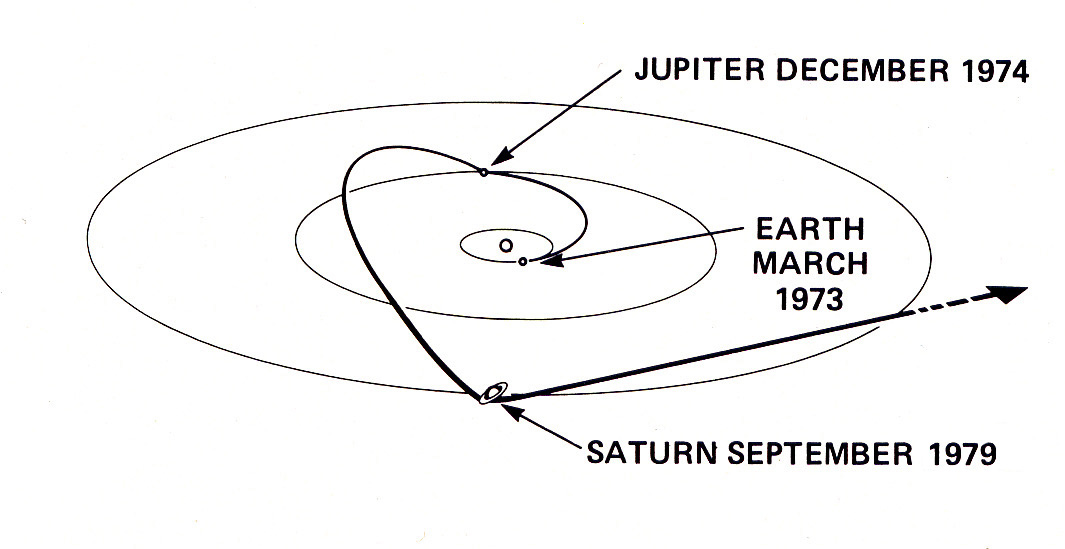
For an idea of how much that alignment helped, here's the crazy path Pioneer 11 took from Jupiter to Saturn without the benefit of alignment. Instead of flying from Jupiter's orbit to Saturn's orbit, it had to fly almost to the opposite side of the solar system to intercept Saturn. Nearly 5 years, compared to approx 2 years for Voyagers 1/2.
Original paper describing the travel benefits of the alignment. -
Re:https://en.wikipedia.org/wiki/Planetary_Grand_T
While the planetary alignment was convenient, it isn't exactly necessary on RTG-powered spacecraft. Pioneer 11 visited Jupiter, then flew to almost the opposite side of the solar system to visit Saturn. Longer travel time (and greater chance of equipment failure during that time) is the only drawback.
Another factor working against a Pluto encounter was the lack of sunlight that far out. During Voyager 2's encounter with Neptune (which was slightly further away from the sun than Pluto at the time), sunlight was so dim that NASA had to reprogram the cameras to take longer exposures than they were originally designed. Then someone calculated that Voyager 2 would be moving so fast that the photos of Neptune would be blurred just by the changing parallax between the spacecraft and Neptune. So they programmed the spacecraft and cameras to rotate slightly during the exposures, effectively panning the camera to cancel out the changing parallax.
All this happened so quickly they got just one shot at it, and they had to do it blind. By the time the first near photos reached Earth, if they had turned out to be blurred, any correcting instructions sent to Voyager 2 would have arrived after the spacecraft had passed Neptune. So NASA wasn't even sure if the closest Neptune and Triton photos would even be aimed correctly. Heck, they weren't even sure they were going to make it to Triton (Voyager 2 flew less than 5000 km over Neptune's North pole to get to Triton). But as it was the last major destination and they'd recently discovered an atmosphere on Triton, they figured what the heck and rolled the dice. As it turned out, they got everything right, and Voyager returned some spectacular Neptune and Triton photos.
A Pluto encounter would've run into the same problem. Except Pluto is a much smaller target than Neptune, whose mass (and therefore gravity) is much less accurately known so properly aiming the camera is even trickier. Even New Horizons (with newer, more sensitive cameras) is going to have to use the same panning trick Voyager 2 used at Neptune. New Horizons is moving fast enough it could cover the distance from the Earth to the Moon in less than 8 hours, so all the close-up photos and measurements of Pluto are going to be over in a matter of hours. And it's basically guiding itself - providing the most accurate measurements we have of Pluto's mass so we can fine-tune its trajectory as it approaches Pluto. -
Re:that's sad
I expect that as long as we are setting rockets on their ass and blasting them into space, it would not be "rocket science" to design a launch facility that is adaptable to different vehicles and sizes. Re-inventing the wheel is expensive.
Warning - I am an inveterate Rocket slut......
The difference between different Rockets is astounding. My post isn't trying to contradict - I have some fun examples to enjoy
Freedom 7 Mercury launchL
http://voyagerslog.blogspot.co... Alomost unbelievably single. A retaining ring, and a pivoted gantry.
This is almost shocking. There was a tower and elevator that owuld pull away before launch - probably because those early ones were so explodey. But this is darn simple. And we were learning as we went at the same time.
Gemini program. The rocket was more powerful, and thrust effects were getting getting to be a problem, they could wreck a rocket.
Here is a cool photo I'd not seen before - a time exposure photo of Gemini 10 put in place and launched - Love it.
http://en.wikipedia.org/wiki/C...
Back to the launchpad itself, now you'll see it is built up some. I'll note that this was a repurposed launch pad, having been used for Titan II rockets. It was abandoned at the end of the Gemini program. The larger thrust required thrust deflectors to avoid damage to both the Pad and rocket. http://www.honeysucklecreek.ne...
Then we move onto the Saturn 1, but lett's ski ahead to the Saturn V.
This was one serious big sumbitch rocket. The days of taking a little rocket out horizontally were gone, replaced with the vertical transport. The sizes were so different that in addition to handling the amount of thrust, everything was bigger.
Which brings us to Launch complex 39 Of Apollo and Shuttle fame.
Now we can repurpose things if needed. The pads are large enough to handle Saturn V's, so they could be modified for shuttle use, and at present 39A is being modified for Spacex Falcon Rockets, and 39B launchpad is going to be used for SLS. http://en.wikipedia.org/wiki/K...
That's the long version with pictures. The tl;dr version is that the early launch pads were rendered useless as the Rocket power grew, and building new pads was happening whaile th eold ones were in use. Even getting the Rocket for the Apollo-Soyuz mission gusseted up required changes The Saturn 5 Rocket was just too much oomph to send a stripped down Apollo to low earth orbit, the pads that were used for the Saturn 5 launchpad were used because the Pads normally used for that Rocket were not operational any longer, so they strapped on a Saturn 1-B with what was called a milkstool. The photo shows the concept.
-
WE ARE LIVING IN A FUTURE DARK AGE
[OP] "disappearing into old email addresses and obsolete storage devices, a Canadian study (abstract, article paywalled) indicated
Well so much for the study. Money changes everything. Eventually one hundred thousand copies of the abstract will exist on the Internet, but the authors' future descendants will find only only one actual link that leads to content, which terminates at a page saying "this domain is for sale".
You'd think that even science data of extremely low bit rate such as original weather station temperature data should be out there somewhere. A lot of other people did too... but all that is available now might be "value added" ajusted data. Not an evil conspiracy per se, it's human nature at it's best and worst.
A handy chronology of the history of data retention:
[2500BC] King Fuckemup boldly slew the enemy and I, Scribe Asskissus hath inscribed it in stone. He is an asshole who owes me back wages."
[1500] "With quivering quill I will write mine own data."
[1866] "Data published at great expense into leather-bound volumes. Dust sold separately."
[1970] "This is really important. we should print it and store it in a binder."
[1971] They didn't.
[1983] "I'll write it to floppy disk with a notsosticky label"
[1985] "After a long and desperate search, the label has been found!"
[1987] "Unlabeled floppy disk keeps coffeemaker level."
[1995] "Roxio CD storage is forever, and Real Scientists don't close their data sessions."
[2003] "Microsoft Word has experienced a problem updating from an older document format and will now close. Save your work as soon as possible."
[2005] "I'll just email it to myself and shut the computer off immediately, then pick it up at work."
[2009] "Yes, three copies! In the safe. There was a fire. Yes, inside the safe. It was a fireproof safe, so no one noticed."
[2010] "This is really important. I should print it and store it in a binder. But my ink cartridge is dry."
[2013] "Our data has been uploaded to the Cloud where it will live forever."
[2500] "King Grapeape slew the primitive humans and buried their statue on the beach. I, Scribe Anthopoapologus hath incribed it in stone."Perhaps the most mystiying data retention escapade of Modern Times is the missing Apollo 11 SSTV moon tapes which contained a multiplexed stream of raw telemetry and the original slow-scan TV signal broadcast from the moon. Not 'missing' really, rather we know they were re-used and recorded over because everyone assumed it was someone else's job to ensure that at least one copy was in a safe place. While the earth station operators dutifully sent their tapes to NASA where the sharpest signal of the moon landing was sure to be perserved for posterity (not), fortunately there were some librarians on duty, and you can aquire DVDs of the moonwalk with better quality than the recordings you've seen in countless movies -- an 8mm film camera pointed at an original SSTV monitor at Honeysuckle Creek, and the best quality scan-converted version.
In the Foundation series, Asimov envisioned Gaia, a world in which a telepathic network of sentient (and sensuous) beings kept a 'working set' retrievable data in-memory -- but also via access to progressively less and non-sentient objects, such as plants and even rocks -- a vast archive. Ask the mountain, it will answer in time, a long time.
Our own Earth has a Gaia storage mechanism, a record of its magnetic field over geologic time stored as polarization in crystallized lava floes. But it i
-
Re:Why are nuclear fission systems too heavy?
-
On small step fer uhhh (Cut!! Take-2)
- If the landing had been faked, one of the most famous quotes in history wouldn't have been flubbed. They would have re-shot it as "One small step for A man..."
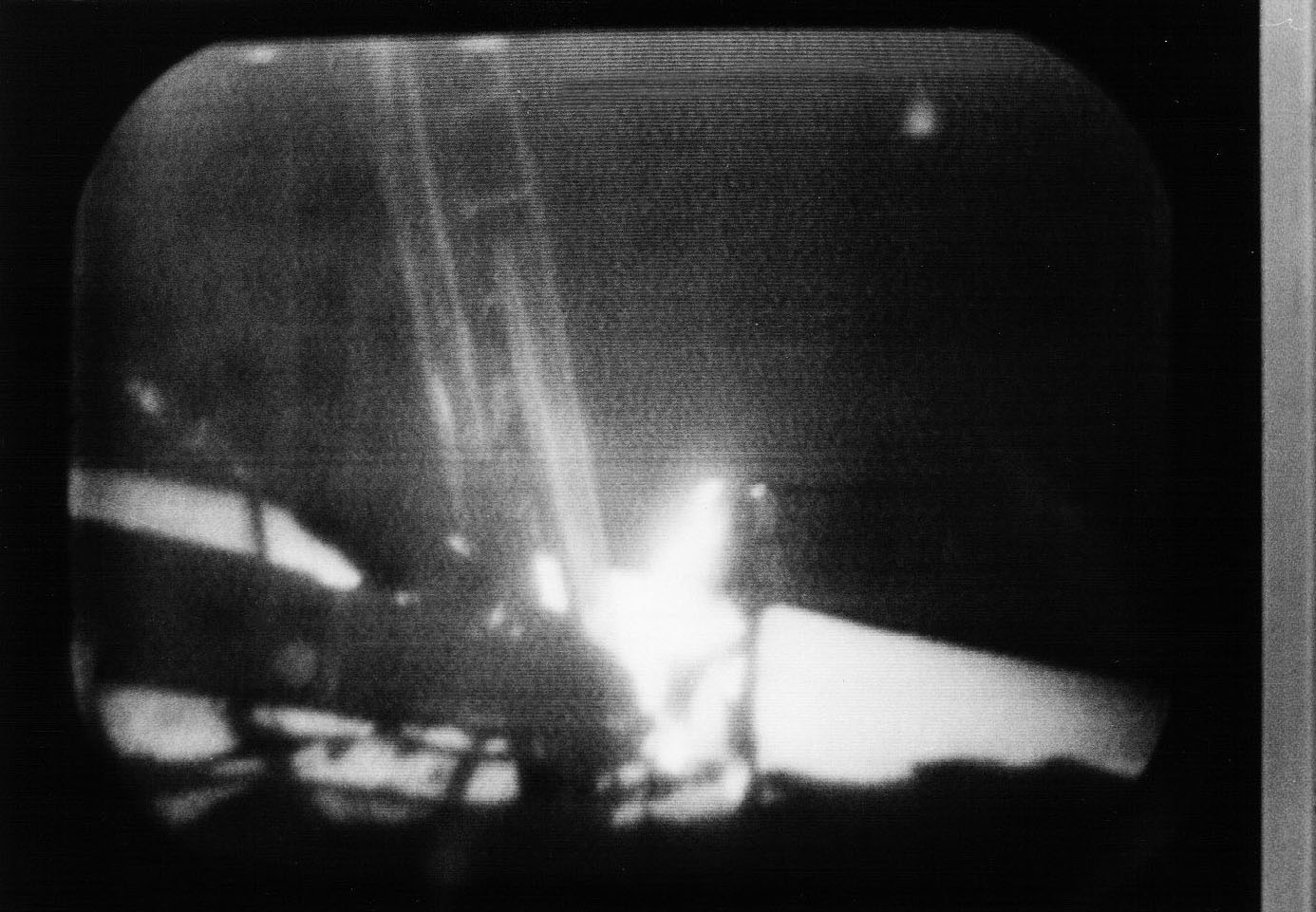
- The first step (descending from the ladder) would not have been broadcast to the world upside down.
- The picture quality would have been better. Even as a 5-year old I remember complaining my dad that the lunar landing picture was bad. (This on a early-1960s rabbit-eared B&W Zenith that didn't show a very clear picture of anything.)
- If the landing had been faked NASA wouldn't have lost the original SSTV video and analog data tapes (thus raising the eyebrows of doubters) or if it were intentionally lost, they would have also "lost" the high quality Super-8mm movie of the first manned lunar landing filmed off the monitors at Honeysuckle creek.
-
Re:It's not the only thing
I know something about it because I was following it at the time, and because I am still involved in such stuff.
Here are some links to get you started
http://www.nasa.gov/mission_pages/apollo/missions/index.html
http://www.myspacemuseum.com/sitemap.htm
http://www.honeysucklecreek.net/msfn_missions/ALSEP/hl_alsep.html -
Quality comparison
Thanks for the link. Here are a pair of images to show the improvement we can expect, the first from the TV broadcast:
http://www.honeysucklecreek.net/Apollo_11_EVA_stills/images/A11TV08.jpg
and the second from the slow-scan video:
http://www.honeysucklecreek.net/Apollo_11_EVA_stills/images/A11TV07.jpg
So there's a very impressive improvement in quality, but it's not HD or anything. Although now they have the original tapes, perhaps they can post-process them a bit more and improve the quality further.
Links from this page:
http://www.honeysucklecreek.net/Apollo_11_EVA_stills/index.html
-
Quality comparison
Thanks for the link. Here are a pair of images to show the improvement we can expect, the first from the TV broadcast:
http://www.honeysucklecreek.net/Apollo_11_EVA_stills/images/A11TV08.jpg
and the second from the slow-scan video:
http://www.honeysucklecreek.net/Apollo_11_EVA_stills/images/A11TV07.jpg
So there's a very impressive improvement in quality, but it's not HD or anything. Although now they have the original tapes, perhaps they can post-process them a bit more and improve the quality further.
Links from this page:
http://www.honeysucklecreek.net/Apollo_11_EVA_stills/index.html
-
Quality comparison
Thanks for the link. Here are a pair of images to show the improvement we can expect, the first from the TV broadcast:
http://www.honeysucklecreek.net/Apollo_11_EVA_stills/images/A11TV08.jpg
and the second from the slow-scan video:
http://www.honeysucklecreek.net/Apollo_11_EVA_stills/images/A11TV07.jpg
So there's a very impressive improvement in quality, but it's not HD or anything. Although now they have the original tapes, perhaps they can post-process them a bit more and improve the quality further.
Links from this page:
http://www.honeysucklecreek.net/Apollo_11_EVA_stills/index.html
-
Wired has a great article about the loss...
...here. Finding the tapes seemed nearly impossible at the time (2007) - the old reel-to-reel machines were dead, whole warehouses were being closed, and the people who were actually driving the recovery effort were mostly Apollo-class themselves - well into their golden years. It reminded me of some of the Library of Congress horror stories, only more desperate and with better special effects. If they do have the footage and can actually decode it, this is an amazing find - I wasn't holding out much hope.
Another cool site is Colin Mackellar's Honeysuckle Creek Tribute Site. Tons of info on the recording, the differences in quality, etc.
Really good news.
-
Re:Glad to hear that
Coincidence. The search kicked off at least seven years ago, when an ex-Honeysuckle Creek employee discovered an old tape in his garage. It was sent for analysis, in the hope that high resolution video of the Apollo 11 landing could be recovered. The tape turned out not to be of the moon landing. It did prompt people to ask "what happened to the originals", and kicked off a serious search. It turned out that NASA has misplaced their own copies.
Copies of the telemetry tapes (hundreds of them) were eventually discovered in the basement of the Physics building at Curtin University, Perth, Australia. They had been placed in the Uni's care by an Australian scientist (Brian O'Brien) who had run an Apollo experiment. He had the tapes as a record of the data from his own experiment, but by luck the telemetry stream includes everything, including the video. It turns out that Curtin Uni thought they weren't that important, on the basis that if they were important, NASA would have already had copies.
-
Re:Gullible
On a serious note, I paid a visit recently to the actual site (Honeysuckle Creek) where the Apollo 11 moon landing images (including the famous 'one small step' transmission) were actually received (no, it wasn't at Parkes, contrary to what the movie 'The Dish' might have you believe). All it is now is a concrete slab and a couple of small memorials with some pictures of what it used to look like and some stories of how difficult it was to get there back in the day (it's in pretty inaccessible and rugged terrain in the Australian Capital Territory, just a couple of dozen km south of Canberra).
Sorta sad that it's all gone, considering the historical importance of that place (and Australia's logistical/communications support for the Apollo program in general). It's in a national park though so I guess that's why they aren't allowed to develop anything substantial on the site these days.
-
Re:Commercial venture for the greater good
If you remember, back in 1969, watching glorious full-color live images of the Neil Armstrong walking on the Moon, then either your memory is wrong, or you were using chemical enhancement to get the color. (Not unusual during the '60's).
The original camera on Apollo 11 was black and white and had 212 x 218 resolution at 10 frames per second. (It could also do 4x the resolution in each dimension at 1.4 frames per second, but that wasn't used for the news broadcasts.)
See this description for more details, or rent The Dish. -
Re:Photos
-
Re:Photos
-
Re:Photos
-
Re:It was a good run...
You'd better go read up on RF Engineering -- that simple "broadcast and reception hardware" is a lot more complex than you would like to believe.
You don't just "ask" a high-performance radio to receive on a specific frequency or modulation type. They have to be designed to be there doing that in the first place. And those radios work or the datalink that allows the upload of code changes simply wouldn't be there. They were designed, tested and done -- long before launch.
An example: Uploading code into your car's FM stereo system to "ask" it to receive XM Satellite digital signals, isn't going to do diddly. Wrong frequency band, wrong antenna type, wrong modulation/demodulation hardware... etc.
The frequencies and radios in use between ALL of the NASA/Mars spacecraft is a well-designed, well-orchestrated system, considering they also need to be heard from incredible distances directly by their controllers on Earth when required.
For more information on that, look up details of the Deep Space Network (DSN). When you have to cryogenically cool (freeze) your antennas to get the thermal noise down so you can hear some weak signal out there, even using a dish the size of my house to gather the EM waves -- you're working on something that took a lot more thought than just uploading a patch to a rover.
The fact that they CAN patch the rovers remotely all hinges on the RF engineers that make the various radio links work. Most of them cut their teeth transmitting to and receiving from Voyager I and II, which they did all the way to the end of the Sun's magnetic influence and our solar system.
If you go all the way back to Apollo, and the manned moon missions, the technology was relatively crude, but just as well-planned and laid out. You can find all sorts of frequency and system detail for Apollo at http://www.honeysucklecreek.net/ -- which in and of itself is a fascinating primer on how difficult it was back then to communicate just with the Moon.
Now controllers "talk" all day long to Mars... time-delayed by the speed of light. Truly an amazing feat.
But hell, we're all about instantaneous cell phone communications, and we bitch when a cell phone call drops these days -- completely ignoring the complexity that's gone into building a worldwide RF network in almost every significantly populated area where a pocket-phone with an antenna smaller than your pinky finger, is a reality.
I find the stuff fascinating, and think about what's next in RF Engineering. Software-Defined Radio seems to be the best "tinkerers playground" these days -- someone's going to have some major breakthrough there that's going to re-define how we all do RF Engineering. Only a matter of time.
Time will tell if so-called techno-geeks in the U.S. ever find it interesting again, too.
RF Engineering is still a huge opportunity for a good student. All the discussions of Slashdot about CS and Software Engineering courses not being worth the paper they're printed on... and people complaining about that are silly. Students would be wise to ALSO study the works of Mr. Ohm, Mr. Maxwell, Mr. Nyquist, Mr. Watt, Mr. Marconi, etc... etc... etc... those skills are instantly applicable to almost every major product or service for sale in the tech fields today. Add in computer programming knowledge and you're suddenly on a path to some really interesting projects.
And it's lucrative too. Ask anyone that's created a $30 lighting controller for your house how much they had to pay a consulting RF Engineer to make sure the device didn't emit any serious Electo-Magnetic Interference (EMI) for their various certifications! -
The Dish was just a movie!!!!!!!!
-
Where is Sam Preecs?
http://www.honeysucklecreek.net/Apollo_11/tapes/Se arch_for_SSTV_Tapes.pdf
From page 17:
Accession Document #69A4099. Note: Sam Preecs is the Agency Official who signed the
Accession. He is the most likely person to know where the tapes are. Where is Sam today?
From page 16:
Conclusion:
The tapes we are searching for were most likely stored in Accession #69A4099 which according to
the National Archives records, were transferred back to Goddard. The answer as to what became of
the tapes can only be determined by Goddard. In a like manner, answers as to where these tapes
might reside today can only be determined by digging into the Goddard organization and
procedures of the time period during which the Accession #69A4099 was active, and trying to
contact some of the members who were at the time responsible for managing this particular activity.
The organization that exists at Goddard today is very much different from what was in effect thirtyseven
years ago, as well as the methodology with regard to the handling of this type of material.
The information, if it does exist, resides with those who managed these efforts during the 1970's. If
we want to find out where they are, that's where we must go if these treasured archival tapes are to
be located. The search has shifted back to Goddard and, under the leadership of Dick Nafzger, a
new phase of the search is being discussed within Goddard to determine the organization that is best
qualified to oversee and continue the search.
From page 14:
Stan Lebar Describes His Search Efforts
In 2005, the current search for the tapes was initiated by Stan Lebar through Richard Nafzger of the
Goddard Space Flight Center. This search has resulted in several promising leads. Richard Nafzger
concurs with Stan's findings described below, and has requested that he continue the effort with his
approval, and that of other NASA management. Stan describes his search to date:
I understand that there are those at JSC who are presently engaged in the new program effort to
return to the moon and are seeking the very same tapes that we have been looking for these past
couple of years. Rightly so, they want to review the Apollo lunar EVA telemetry data that was
produced by Apollo in the 1969-70 time period, as indeed they should.
Below is a summary of the National Archive search for the Apollo 11 Lunar surface telemetry tapes
I performed under the direction and support of Richard Nafzger, of NASA Goddard that was
completed in March, 2006.
1. The three tracking sites which received the 10 frame rate Apollo 11 lunar camera television
signal, as transmitted directly from the moon during the lunar EVA, were Goldstone, CA,
Honeysuckle Creek, Australia and Parkes, Australia. The M-22 tape recorder, using 14 inch tape
reels recording at 120 inches per second, was primarily used to record the transmissions. The
procedures for shipping the original recorded tapes were defined by a NASA document. Each site
was to prepare dupes of the processed tapes, send the original boxes of tapes (on the order of 12-15
tape reels with five tape reels per box) to Goddard and retain the dupes until so advised by Goddard.
Upon receipt of the original tapes, Goddard was to verify that each tape received contained the
original data as recorded at the tracking sites. When Goddard had verified that the original M-22
tapes from the sites contained data, each site was so notified and the dupes that were being retained
by each site could then be erased and used for other purposes.
2. A search for documentation at Goddard that would show either the present stored location for the
Apollo 11 tapes or disposition was never located. No reference documentation was ever found that
referred to any of the Apollo mission telemetry data tapes. When the National Arch -
PDF
Just go to http://www.honeysucklecreek.net/Apollo_11/tapes/S
e arch_for_SSTV_Tapes.pdf -
Re:distance
You are correct. You can also do the London - >LAX/SFO -> SYD -> CAN route... but I wouldnt recommend it. Im a Canberraian that lives in London and I have, err hum, a great deal of experience with this trip. It isnt a terribly pleasent one BTW.... 30 hours is a good ballpark.
Oh and looking at the recommendation for the Canberra backpackers... I would give that two thumbs up... at least two years ago... friends of mine have stayted there... its own by a fairly swank Hotel across the road... they even pipe the movie channels from the swank hotels in house cctv to the backpackers... TV in all rooms as well.. dorms and doubles/singles.
And if any space geeks wanna go and pay respect to the ruins of the tracking station that really txed the images and sound of Neil Armstrong taking his first steps on the moon then(despite what the move The Dish says... it wasnt Parkes) go to Honeysuckle Creek
Alas there is much left -
Re:distance
You are correct. You can also do the London - >LAX/SFO -> SYD -> CAN route... but I wouldnt recommend it. Im a Canberraian that lives in London and I have, err hum, a great deal of experience with this trip. It isnt a terribly pleasent one BTW.... 30 hours is a good ballpark.
Oh and looking at the recommendation for the Canberra backpackers... I would give that two thumbs up... at least two years ago... friends of mine have stayted there... its own by a fairly swank Hotel across the road... they even pipe the movie channels from the swank hotels in house cctv to the backpackers... TV in all rooms as well.. dorms and doubles/singles.
And if any space geeks wanna go and pay respect to the ruins of the tracking station that really txed the images and sound of Neil Armstrong taking his first steps on the moon then(despite what the move The Dish says... it wasnt Parkes) go to Honeysuckle Creek
Alas there is much left -
Re:Hop over and check out "The Dish"
Just keep in mind that if you do go to Honeysuckle Creek don't expect to find a tracking station anymore. I went there to do astrophotography once as it's outside of the city a bit and was disapointed to find that the tracking station was just a few concrete slabs
Link.