Slashdot Mirror
Domain: intel.com
Stories and comments across the archive that link to intel.com.
Comments · 3,303
-
Re:Even if this was true...
from a business perspective, a removable CPU is a win for intel
Depends. Enthusiasts will cough up for another motherboard + processor , where they used to need to spend only for a new processor. Motherboard sometimes, and always the chipset, is the extra sales Intel gets when CPU is soldered to the motherboard. A non enthusiast doesn't upgrade for 8 years anyway these days so no loss there.
Intel doesn't make motherboards though.
It does, has for a long time, and pretty popular ones at that.
-
Re:No wired...
Holy shit. I just realized you're right. There's no wired network port.
He's not right. Buy the one that has the wired network port if you need it. -
Re:AMD was better
I like AMD as much as you (I pretty much expect posts about CPUs to be filled by your posts, hairyfeet.), but the Atoms support 4GB, at least the D525 and D510 do and those already are on the market quite a while... (By extension: also the single core equivalents of those chips). If you see support listed as less, it means that the motherboard doesn't support more. The chipset is or physical layout is what determines what you can put in the machine. Example: I just bought a Zotac ZBox Nano ID61 with a Celeron 867. Accordin to ark.intel.com, that CPU supports 16Gb, but there is only one SO-DIMM slot and the documentation say 8GB. Well, if it becomes cheap, I can obviously try a 16GB module (if they come out). Sometimes that works, as my experience tells, but it remains a gamble.
I've been coming back from my Atom craze. The above Celeron CPU is one reason: pretty conservative on the power use and more oompha than an Atom at about the same price-point. The main reason, though, is that many Atoms come with proprietary graphic chipsets that are not the Intel HD nnnn that have excellent open source driver support. They're PowerVR and suck under Linux. I've looked at E-350 based solutions, but where I am, motherboards for those start at 100€. For that price, with Atoms I can have the motherboard (obviously with CPU) and RAM and perhaps even a small disk or SSD. Sure the E-350 is better, but it's often irrelevant given the application these machines are used for.
I loved the AMD A4/6/8/10 APUs. Those give a quite nice bang for the buck. Yes, an i3 will beat them, but the motherboard for the i3 will cost more and support less RAM. I think they wanted to get the A-series sold by OEMs, but somehow that didn't work. A shame, they make nice low-cost machines that barely make any noise.
-
Re:AMD was better
I like AMD as much as you (I pretty much expect posts about CPUs to be filled by your posts, hairyfeet.), but the Atoms support 4GB, at least the D525 and D510 do and those already are on the market quite a while... (By extension: also the single core equivalents of those chips). If you see support listed as less, it means that the motherboard doesn't support more. The chipset is or physical layout is what determines what you can put in the machine. Example: I just bought a Zotac ZBox Nano ID61 with a Celeron 867. Accordin to ark.intel.com, that CPU supports 16Gb, but there is only one SO-DIMM slot and the documentation say 8GB. Well, if it becomes cheap, I can obviously try a 16GB module (if they come out). Sometimes that works, as my experience tells, but it remains a gamble.
I've been coming back from my Atom craze. The above Celeron CPU is one reason: pretty conservative on the power use and more oompha than an Atom at about the same price-point. The main reason, though, is that many Atoms come with proprietary graphic chipsets that are not the Intel HD nnnn that have excellent open source driver support. They're PowerVR and suck under Linux. I've looked at E-350 based solutions, but where I am, motherboards for those start at 100€. For that price, with Atoms I can have the motherboard (obviously with CPU) and RAM and perhaps even a small disk or SSD. Sure the E-350 is better, but it's often irrelevant given the application these machines are used for.
I loved the AMD A4/6/8/10 APUs. Those give a quite nice bang for the buck. Yes, an i3 will beat them, but the motherboard for the i3 will cost more and support less RAM. I think they wanted to get the A-series sold by OEMs, but somehow that didn't work. A shame, they make nice low-cost machines that barely make any noise.
-
Re:AMD was better
I like AMD as much as you (I pretty much expect posts about CPUs to be filled by your posts, hairyfeet.), but the Atoms support 4GB, at least the D525 and D510 do and those already are on the market quite a while... (By extension: also the single core equivalents of those chips). If you see support listed as less, it means that the motherboard doesn't support more. The chipset is or physical layout is what determines what you can put in the machine. Example: I just bought a Zotac ZBox Nano ID61 with a Celeron 867. Accordin to ark.intel.com, that CPU supports 16Gb, but there is only one SO-DIMM slot and the documentation say 8GB. Well, if it becomes cheap, I can obviously try a 16GB module (if they come out). Sometimes that works, as my experience tells, but it remains a gamble.
I've been coming back from my Atom craze. The above Celeron CPU is one reason: pretty conservative on the power use and more oompha than an Atom at about the same price-point. The main reason, though, is that many Atoms come with proprietary graphic chipsets that are not the Intel HD nnnn that have excellent open source driver support. They're PowerVR and suck under Linux. I've looked at E-350 based solutions, but where I am, motherboards for those start at 100€. For that price, with Atoms I can have the motherboard (obviously with CPU) and RAM and perhaps even a small disk or SSD. Sure the E-350 is better, but it's often irrelevant given the application these machines are used for.
I loved the AMD A4/6/8/10 APUs. Those give a quite nice bang for the buck. Yes, an i3 will beat them, but the motherboard for the i3 will cost more and support less RAM. I think they wanted to get the A-series sold by OEMs, but somehow that didn't work. A shame, they make nice low-cost machines that barely make any noise.
-
Re:i don't get it
Intel makes chips with more than 8 cores.
10 core Xeon: http://ark.intel.com/products/53580/Intel-Xeon-Processor-E7-8870-30M-Cache-2_40-GHz-6_40-GTs-Intel-QPI
Granted, it's incredibly expensive (as you point out) and I've only seen them in blade applications. But, they do make them. It's also worth pointing out that on the whole, one intel core gives far superior performance than one AMD core of the same clock speed (see http://www.cpubenchmark.net/high_end_cpus.html). Moreover, Intel's hyperthreading can be of a huge help, if your application profile fits.
Measuring $/core or $/CPU Cycle is not a very accurate way to gauge price/performance.
-
Re:AMD was better
AMD processors all support ECC memory, while Intel usually only supports it in the Xeon processors (which can cost thousands of dollars).
http://ark.intel.com/search/advanced/?s=t&ECCMemory=true Even i3 CPU's support ECC.
Only for a small, random smattering of chips. The vast majority of i5s and i7s you find on Newegg and the like don't, and most systems that ship also don't include CPUs with ECC support. It's certainly not universal across all products, while AMD has made things like VT-x, VT-d, and ECC common to all their processors.
-
Re:AMD was better
All Bulldozer-based processors and future generation AMD processors have hardware accelerated AES. Intel usually doesn't, but frequently they don't even specify it.
http://ark.intel.com/search/advanced?AESTech=true Right down to the first-gen Core i5's
AMD processors all support ECC memory, while Intel usually only supports it in the Xeon processors (which can cost thousands of dollars).
http://ark.intel.com/search/advanced/?s=t&ECCMemory=true Even i3 CPU's support ECC.
AMD was also committed to Coreboot for a while, which was great for our freedom. (Unfortunately, they haven't released the required specifications for their more recent chips.)
You mean they not only failed to promote your freedom, they also reneged on a promise?
-
Re:AMD was better
All Bulldozer-based processors and future generation AMD processors have hardware accelerated AES. Intel usually doesn't, but frequently they don't even specify it.
http://ark.intel.com/search/advanced?AESTech=true Right down to the first-gen Core i5's
AMD processors all support ECC memory, while Intel usually only supports it in the Xeon processors (which can cost thousands of dollars).
http://ark.intel.com/search/advanced/?s=t&ECCMemory=true Even i3 CPU's support ECC.
AMD was also committed to Coreboot for a while, which was great for our freedom. (Unfortunately, they haven't released the required specifications for their more recent chips.)
You mean they not only failed to promote your freedom, they also reneged on a promise?
-
Re:Vanila linux
Thanks, I've checked the links and they both seems to refer to 847E (even the second one, scrolling down, in the order description says "Celeron 847E,4G RAM w/4xLAN,4xCOM,2xMini-PCIe")
In the comparison on the Intel website, it looks one of the main differences is indeed the presence of the "Processor Graphics" on the 847E:
http://ark.intel.com/compare/55764,56056
From this link:
http://www.notebookcheck.net/typo3temp/pics/beaa4362c7.gif
The "Processor Graphics" looks like a big chunk of sylicon.
I've also found a link to a GPU benchmark that gives the 847 a 85 score, putting it in GMA territory:
http://www.videocardbenchmark.net/video_lookup.php?gpu=Intel+HD+Celeron+847&id=785
Yes, I'll wait for some field reports. Not an impulse buy for sure.
-
No Intel HD Graphics in Celeron 847?
I'm thinking of buying one myself and installing a proper debian on it, but this is concerning:
http://ark.intel.com/compare/55764,56056
Does it mean that it has a PowerVR based GMA like the latest Atoms? That would be a deal breaker for me.
-
Re:There are a hell of a lot of Itanium users
Intel provides an Itanium reference board that makes it possible for other manufacturers to release OEM Itanium based systems. As a second manufacturer example, I've used on of Bull's Novascale Bullion servers. It wasn't very cost effective, but it did include 256 cores, and continued running just fine when one socket was damaged during shipping. The sort of applications that need that many cores and heavy redundancy against hardware failures exist, and no commodity hardware will satisfy them. There's just only a few hundred thousand of such systems sold each year.
-
Re:Marketing Speech? 10 writes per day for five ye
The article makes me a bit suspicious: "Intel's own high-endurance MLC NAND can be found in the drive, which is rated for 10 full disk writes per day for five years." sounds pretty bad actually, if I understand it right. Per cell this means: 365*10*5 = roughly 20.000 write cycles per cell? Sure wear leveling algorithms are there, but 20.000 cycles is not exceptional, or am I wrong?
With an Intel SSD you never actually get anywhere near the total number of write cycles. Because of a special Intel wear-levelling feature called BAD_CTX 0000013x the drive will brick itself periodically, forcing you to erase it and resetting the write config. It's a clever feature of Intel SSD products that I haven't seen other manufacturers implement yet.
-
Re:Two issues
-
Re:Desktop
Okay, Here's an i7 product with 6 cores.
-
Re:TPM Of Evil
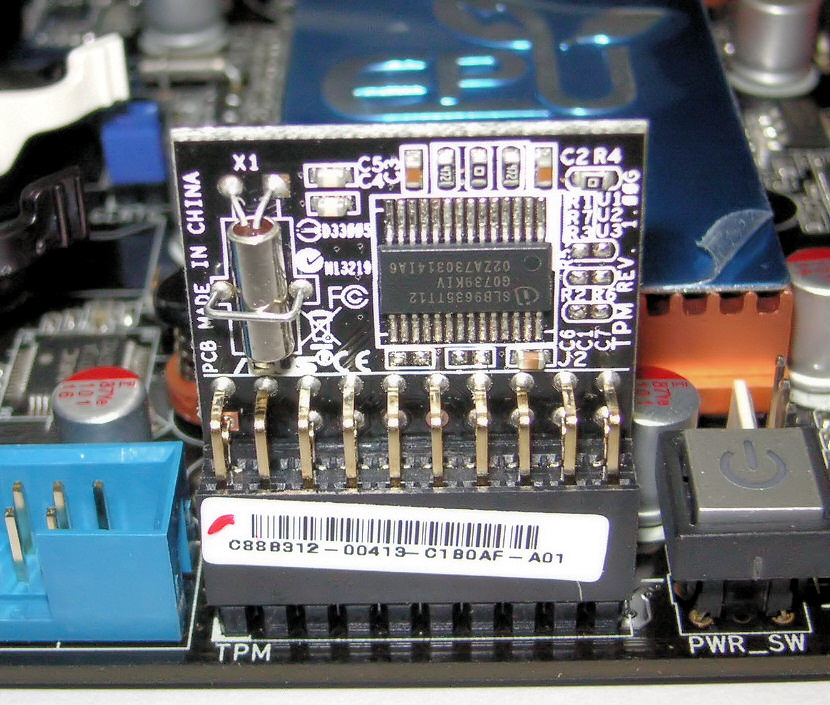
Well guys, I don't know about you, but I have only one question: Is it a separate chip on the motherboard? Because if it is, I'm hosting SMC desoldering classes the day this thing hits the market. Who'd have thought the day would come when we'd have to modchip our own damn computers...
Depends on the implementation. Some TPMs are not exactly hard to remove(that riser card on the LPC headers is sold as an option for that particular motherboard, so they made it easy to add or remove.
Some, like the chip on which that Asus module is based, or a bunch of the Infineon and Atmel ones, are reasonably civilized TSSOPs. Not hard to remove, allegedly packaged to be hard to tamper with at a chip level; but it's your problem if the firmware/BIOS/whatever flips out and refuses to do anything until the TPM is restored(and each one has a unique, and kept secret from you, RSA key burned in, so you have fun cloning/impersonating it to a hostile chipset...)
If, on the other hand, you have a system with something like the Intel GM45 chipset, you'd better have your microscope and ion beam ready because the TPM is on the same silicon as the motherboard chipset.
The TPMs from the likes of Broadcom are somewhere in the middle: They are integrated directly with some of the company's ethernet(and possibly other; I'm only familiar with the ones in some GigE products) chips; and aren't exactly going to be trivial to remove; but your computer will still work if you take a screwdriver to that part, unlike the Intel ones.
-
Re:tl;dr version
OMG... your brand new AMD system is faster than an intel system from 2008. Watch out Intel!
http://ark.intel.com/products/35569/Intel-Core2-Duo-Processor-P8400-3M-Cache-2_26-GHz-1066-MHz-FSB
-
Intel should preparel x86 replacementThis article shows the obvious: Excluding caches, performance per transistor in Intel x86 CPUs is very low. As example, current best performance per clock in the Intel CPUs is the AVX (Core i5/i7 -Sandy and Ivy Bridge-), delivering up to 8 FLOP per cycle with AVX SIMD opcodes (2 SIMD ALUs) while in previous generations was just 4 FLOPS per cycle with SSE2/3/4 (just 1 SIMD ALU). Thats miserable (back in 2000, the Playstation 2 was already capable of FMAC opcodes with 8 FLOPs/clock per SIMD ALU!!!). As example, similar performance with 4 FLOP per cycle with one SIMD ALU, at one fraction of waffer area.
Here is a 50$ ARM general purpose multicore-CPU example for matching 999$ performance of fastests Intel Core i7 (e.g. i7-3770K 3.9GHz (peak), 4 CPU, 8 threads, 2 SIMD ALU/CPU = 8 SIMD ALUs = 64 FLOPs/clock -> 3.9*10^9Hz * 64 FLOP/s = 249.6 GFLOPS:- 4 x ARM OooE (e.g. Cortex A9-like) 2.0GHz with 2 SIMD FMAC-capable ALUs/CPU (ALU = 16 FLOPs/clock, i.e. 2 ALUs = 32 FLOPs/clock -> 4 * 2.0*10^9 * 2 * 16 = 256 GFLOPS
- 4 * 32KB + 4*32KB (256KB) L1 full-speed code and data cache
- 4 * 256KB (1MB) L2 half-speed cache
- 2 MB L3 half-speed cache
- 2 or 3 lane ring bus (cheaper interconnect).
For increasing integer and load/store performance, it could be achieved with pipeline and issue/execution modifications, using more functional units. The limit is to keep the OooE simple enough for avoiding wasting transistor in executing tons of instructions unnecesarily.
-
X-25M Death: Firmware bug too?I had an 80G Intel X-25M fail in an interesting manner. Windows machine, formatted NTFS, Cygwin environment. Drive had been in use for about a year, "wear indicator" still read 100% fine. Only thing wrong with it is that it had been mostly (70 out of 80G full) filled, but wear leveling should have mitigated that. It had barely a terabyte written to it over its short life.
Total time from system operational to BSOD was about ten minutes. I first noticed difficulties when I invoked a script that called a second script, and the second script was missing. "ls -l" on the missing script confirmed that the other script wasn't present. While scratching my head about $PATH settings and knowing damn well I hadn't changed anything, a few minutes later, I discovered I also couldn't find
Of the files I recovered by copying them from the then-mortally-wounded system, I was able to diff them against a valid backup. Most of the recovered files were OK, but several had 65536-byte blocks consisting of nothing but zeroes.
Around this point, the system (unsurprisingly, as executables and swap and heaven knows what else was being riddled with 64K blocks of zeroes) crashed. On reboot, Windows attempted (and predictably failed) to recover (assinine that Windows tries to write to iself on boot, but also assinine of me to not power the thing down and yank the drive, LOL.) The system did recognize it as an 80G drive and attempted to boot itself - Windows logo, recovery console, and all.
On an attempt to mount the drive from another boot disk, the drive still appeared as an 80G drive once, unfortunately, it couldn't remain mounted long enough for me to attempt further file recovery or forensics.
A second attempt - and all subsequent attempts - to mount the drive showed it as an 8MB (yes, eight megabytes) drive.
I'll bet most of the data's still there. (The early X-25Ms didn't use encryption). What's interesting is that the newer drives have a similar failure mode that's widely recognized as a firmware bug. If there were a way to talk to the drive over its embedded debugging port (like the Seagate Barracuda fix from a few years ago), I'll bet I could recover most of the data.
(I don't actually need the data, as I got it all back from backups, but it's an interesting data recovery project for a rainy day. I'll probably just desolder the chips and read the raw data off 'em. Won't work for encrypted drives, but it might work for this one.)
-
Re:Slightly off thread I know...
Owning VxWorks also gives Intel a way to get into military designs. These are high margin, low-volume parts just like server CPUs, so it's a lucrative market for Intel to get into.
That said, they've only made half-assed commitments, offering just 7 years availability of embedded processors (most places do 10+ years). That works for simpler projects, but the bigger government designs may require a CPU upgrade before the finished product even ships!
And yes in the Windows desktop world it's no big deal to upgrade a CPU,. but in the embedded world where board support packages will vary from one board to another (regardless of processor compatibility), upgrading your computer can range in difficulty from simple to incredibly complex. And since these things are always low-volume, you constantly run the risks of running into driver/hardware bugs on a new platform, so there are lots of reasons to avoid changing the hardware powering a project as much as possible.
-
Re:It's improductive
First, when did I say all motherboards have reasonable drivers?
-
Re:Wow
I am working under the assumption that English isn't your first language. If I am wrong, feel free to correct me.
The mobile versions (ending in T, U, M, UE, and ME) of the Intel i3 series are spec'ed to consume only 17 watts or 35 watts at full load. If you can explain to me how a mobile AMD spec'ed to consume 35-40 watts "takes up way less watts than intel", maybe I can understand your meaning of "way less" better. The 55 watt version of the i3 is intended for desktops (and the web site the GP referred to was testing the i3-3225 which is one of the desktop models, regardless of your belief otherwise), not mobile solutions, but given that people used to put 90+ watt Pentiums into notebooks, it is certainly feasible to do it if an OEM was crazy enough to think that consumers no longer care about battery life.
Regardless, the web site was also evaluating system power, which means differences in motherboard power consumption are being added on top of differences in CPU power consumption, possibly distorting any conclusions of CPU power consumption and perhaps leading your confusion.
-
Re:Unfair benchmark publishing from AMD
i3s dont come with intel 4000 graphics
If you don't want to look stupid it pays to check before making blanket statements. Especially ones as trivial to check up on as this.
http://ark.intel.com/products/65692/Intel-Core-i3-3225-Processor-3M-Cache-3_30-GHz -- desktop i3 with HD 4000 graphics
-
Re:Fuck Apple.
-
Re:antitrust issues?
That is entirely different from what intel is implying, which is that the BIOS issues regarding windows 8 preventing other operating systems from running
I don't see anything in TFA to indicate that Intel is implying that. Perhaps you're inferring that, but I'm not sure what those "BIOS issues" are; if you mean "UEFI issues", that's part of Microsoft's requirements for UEFI-for-ARM, not UEFI-for-x86.
TFA doesn't say where the statements in question were made, but the picture accompanying the article makes it look as if it were an Intel presentation somewhere, and if I look for Intel presentations in San Francisco around this date, it suggests this was probably the San Francisco 2012 Intel Developer Forum.
Given that, a little more searching found an Ars Technica item about this; it says
On September 11, Intel Architecture Group Executive Vice President David Perlmutter told IDF attendees in his keynote that the Clover Trail system-on-a-chip architecture was designed specifically for Windows 8 tablets and “convertibles.” In effect, Clover Trail is Intel’s effort to provide a full Windows 8 experience (including enterprise features missing from Windows RT) on devices competitive with ARM-based Windows 8 tablets.
To achieve that, Intel worked closely with Microsoft to instrument the chip to allow Windows 8 to control Clover Trail's advanced power management features, which support what Perlmutter called "always-on" functionality. It's that special sauce in Clover Trail that won't be supported for other operating systems, including Linux, likely in part because of Intel’s desire to keep those features close to the vest—and because of contractual obligations to Microsoft.
Still somewhat speculative ("likely in part because of..."), but a bit less handwaving than the Inquirer piece. Intel do have hardware features that they don't publicly document, and those power management features may fall into that category.
-
Re:Sounds like BS
I did a Google search for "clover trail" "Windows 8 chip" and found ONLY the Inquirer article and other articles and blog posts directly quoting and linking to it.
I did a Google search for
"clover trail" linux site:intel.com
and found a press release from June 2012 that said "The company has 20 design wins based on the forthcoming 32nm Intel® Atom SoC, codenamed “Clover Trail,” and designed for Microsoft* Windows* 8."
"Designed for Microsoft Windows 8" could mean anything from "we designed it to be incapable of running anything other than Windows 8" to "our design target was Windows 8 tablets but if it runs other OSes that'd be just fine with us (but maybe that's unlikely because, for example, Android for tablets is mainly being used on ARM so maybe no manufacturer will care about using it to run anything else)" to "we designed it so that it would run Windows 8 better than earlier designs".
-
Let's be pedantic
Computation is zero energy, for sufficient values of zero.
Since the energy inputs and outputs of digital computation are necessarily equal for all forms of computation not involving fission, fusion, zero-point energy, quantum teleportation, black holes and other such esoteric things in the computation process, yes, computation is zero energy. I would wager that the entire amount of energy created or destroyed in the process of computation by humans in all of history wouldn't amount to an entire Joule.
Computation does now require converting energy from electrical energy format to thermal energy format though. Since quite a lot of electrical energy is used to create thermal energy in the regular course of business naturally this means that peak computation electrical energy efficiency can be improved not just by increasing the computations per KWh but also by putting the computation in the place where you wanted the thermal energy anyway, or using the thermal energy once you have it for some other purpose. That way you get to use the same watt twice at no additional cost. Fortunately Intel is already on this one too.
-
Re:duh
Unless they are targeting a lower end of the market. If you look at the low-end NetApp and Equilogic systems, I'm betting those could be (and may already be) powered by ARM chips.
One of EMC's competitors (Engenio, owned by NetApp now), had boxes in a variety of price ranges. The high-end boxes were all Xeons, while going down in price you would find PowerPC, and ARM chips (specifically XScale) inside.
Also, running on low-power chips is easier if they have a secondary chip to do RAID 5 and 6 calculations for them (or if it's built into the main CPU as an add-on module. Intel actually does this now with some of their Xeon chips).
-
Re:AMD 64.. not Intel 64.
Intel 64 == IA64 == Itanium
IA-64 == Itanium. Intel64 != {IA-64,Itanium}; Intel64 == Intel's flavor of 64-bit x86 as licensed from AMD.
-
Re:AMD64 != Intel64
The correct term for x86_64 is AMD64, not "Intel 64-bit architecture". AMD developed it, and licenses the patent to Intel.
Yes.
Intel64 is Itanium,
No. IA-64 was Itanium, but that architecture (which I think started out as an HP architecture) is now just called the Itanium architecture. "Intel64" is Intel's name for the 64-bit architecture as originally defined by AMD, modulo some differences and modulo Intel and AMD going their own and subsequently modified by both parties with different flavors of SSE4.
to which Haiku has NOT been ported.
Haiku was not ported to IA-64/Itanium. It was ported to whatever you want to call the 64-bit x86 architecture (I prefer x86-64, with my second choice being AMD64, although I guess if you want to include Intel's version of SSE4 rather than AMD's version, that's "Intel64").
-
Re:Err
Parent wrote:
The main thing I hate about the Q6600 is it lacks hardware virtualization
What are you smooking, bro?
Intel says the Q6600 supports VT-x:
Intel® Virtualization Technology (VT-x) YES
And from my
model name : Intel(R) Core(TM)2 Quad CPU Q6600 @ 2.40GHz
flags : fpu vme de pse tsc msr pae mce cx8 apic sep mtrr pge mca cmov pat pse36 clflush dts acpi mmx fxsr sse sse2 ss ht tm pbe syscall nx lm constant_tsc arch_perfmon pebs bts rep_good aperfmperf pni dtes64 monitor ds_cpl vmx est tm2 ssse3 cx16 xtpr pdcm lahf_lm tpr_shadow vnmi flexpriority
Maybe you just forgot to flip a switch in your BIOS?
-
Re:Floating point
These new kind of servers will also have to face competition with the Intel Phi, in both performance and density.
-
Re:Why Intel should buy RIM and Qt
Huh.... Android has always run on x86. At my previous job, we routinely ran it on netbooks as development platforms. Intel has their own resource page about it, of course: http://software.intel.com/en-us/articles/intel-atom-x86-image-for-android-ice-cream-sandwich-installation-instructions-manually/
First product is the Lava Xolo X900, sold in India.
The problem with making this general: the x86 is still too power hungry for a dual-core phone, and most of the Android competition is moving to either quad core or to higher performance cores (QualComm Krait or ARM A15) which outperform the Atom, clock for clock, and yet still draw less power.
But Intel's clearly in the game, at least, with these latest Atoms. It's probably only another generation or two before they can tweak Android and the silicon to match performance against ARMs, at least well enough to sell in the USA. Then the only problem is selling major manufacturers on why they should pay twice as much for an x86 SOC versus an ARM. Will be fun to watch....
-
Re:Linux Gaming
I own several PCs, my main is a quad-core with around 5TB storage, the others from the same generation.
None of them have optical drives. I have no optical disks at home. I have no need for them.
Some coworkers have Macbook Airs, those don't have Optical drives either, so it's not just me in the linux world.If I wanted to buy a game on DVD, I'd have to pay extra shipping, plus customs, and get an optical drive. It'd take up space at home, and the CD could get scratched, etc.
Optical drives are dying. Intel's ultrabooks don't have any. Some high end computers have blu-ray, some don't have nay optical drives.There's no need for optical drives anymore, they have no use in 2012. People are just used to having them, that's all.
-
Re:Have they fixed the simulator speed?
Launch speed is still slow, but there is now Intel support for the emulator so it runs faster. Also released today is rev. 2 of the "Intel Hardware Accelerated Execution Manager" which may include some performance enhancements.
http://software.intel.com/en-us/articles/intel-hardware-accelerated-execution-manager/
-
Re:Cultists
http://hardware.slashdot.org/comments.pl?sid=2982693&cid=40667911 (Exactly one post up from yours in response to the very same thread question).
But thanks for playing.
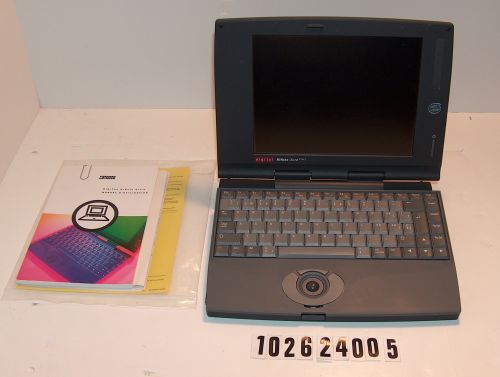
Allow me to retort and prove you a liar and the venerable slashdot post you cite as mistaken. I can't help but notice there is no actual reference to a DEC model number that could be checked... but I did notice there is an "Intel Inside" sticker on the laptop in the picture. Observe the powers of the mighty Google search and the humblest of internet research (my emphasis):
In 1991 Carter launched the Intel Inside® coop marketing program. The heart of the program was an incentive-based cooperative advertising program. Intel would create a co-op fund where it would take a percentage of the purchase price of processors and put it in a pool for advertising funds. Available to all computer makers, it offered to cooperatively share advertising costs for PC print ads that included the Intel logo. The benefits were clear. Adding the Intel logo not only made the OEM's advertising dollar stretch farther, but it also conveyed an assurance that their systems were powered by the latest technology. The program launched in July 1991. By the end of that year, 300 PC OEMs had signed on to support the program.
Source: 11th paragraph down
The PowerBook was launched in October of 1991. I can't see what model laptop that is, nor do you or the cited slashdot poster offer this guarded information. In the late summar of 1991, Intel was scrambling to get their now famous (or infamous) "Intel Inside" campaign off the ground and find computer manufacturers to adopt the campaign and use the sticker. Considering DEC and Intel were invoved in a bitter patent dispute concerining the chips until it was finally settled in 1997, I suspect that the DEC laptop pictured was not released within the three months between July and October of 1991. Suffice to say, it is enough to prove the OP was mistaken... that computer could not have been released in 1990.
Apple indeed was the originator of this wrist-rest laptop design, and the design was very rapidly duplicated by all manufacturers of laptops. It is not cult, attempt at deception or self-delusion. It is a verifiable fact.
Thanks for playing.
-
Re:... WITH 100% CHINESE-SOURCED COMPONENTS !!
Except, for the most part, its not. This is an Intel based super computer, and only one of Intel's eleven wafer fabs is in China (one is in Israel, one is in Ireland, and the rest in the US), and only two of its seven assembly plants (one in Vietnam, one is Costa Rica, and the rest in Malaysia). Further, the fab in China produces chipsets, not microprocessors. Sure, other parts like wiring, or the racks may be manufactured in China, but the most important (and by far most expensive) part of a parallel focused supercomputer like this is the cost of so many processors. Processors which were probably produced in Hillsboro, OR or Chandler, AZ. Source: http://download.intel.com/newsroom/kits/22nm/pdfs/Global-Intel-Manufacturing_FactSheet.pdf
-
Re:Besides MS and Intel...
but I'd personally avoid CPUs with built-in graphics and coprocessors.
I'm curious now, what CPU would you buy then? All modern ARM SoCs and x86-compatible CPUs from both Intel and AMD feature built-in graphics.
-
Re:Is this really a hardware issue?
And to answer my own question, it does appear that Intel has a microcode update dated 2012-06-06. The Linux version is at http://downloadcenter.intel.com/Detail_Desc.aspx?agr=Y&DwnldID=21385
(Linux itself isn't vulnerable, but guest operating systems might be.)
-
Re:He's mostly right
"When you push the performance, the architecture doesn't matter as much, because most of the energy is spent figuring out what to run and when to run it."
I doubt that.
Hyperthreading, an Intel tech, significantly increases speed while not doing the same to power consumption or die size. Another Intel only tech, power boost allows them to run the processor at an unsustainable clock speed for a short period of time. There's also a concept of pipelining that allows multiple instructions from a single thread to run staggered as long as they won't collide in their use of a particular component within the CPU architecture and don't have hard inter-dependencies such as reading the result of the previous operation.
Basically, features specific to a CPU architecture very much impact execution performance and efficiency. I guess you could have been talking strictly about the instruction set but that's only a very small part of a CPU architecture. -
Re:User key management
It's possible that your CPU probably doesn't support hardware virtualisation. Many don't. Here is a list:
-
Re:The NVIDIA Transition?
After years of frustration with crap drivers for ATI video cards and crap drivers for AMD chipsets from third parties (any of them) I finally switched to Intel CPU, Intel chipset, and Nvidia graphics cards. I even bit the bullet and got an Intel model motherboard and made sure the RAM I bought was on the list of tested RAM.
I have had zero problems since I bought it in 2009. Intel DP55WG, Intel i7 860, EVGA GeForce GTX 260, 8GB of a supported SKU of Kingston RAM. The biggest problem I've had (knock on wood) is that one of the case fans rattles rarely.
-
Re:One core, two threads?
Actually, and i3 has 2 cores with 4 threads.
Actually, these days even an Atom has 2 cores, 4 threads, and 64 bit code capability now. And all in 10 watts. Blew my mind.
-
Re:Reverse vaporware?
Glad to see I'm not the only one. i like to hang out on tech feeds like Daily Rotation and Fresh news and when i saw this I went "since when did Cisco make an iPad ripoff?" and had to go look it up. Maybe if these companies actually tried a little marketing and advertising then they might actually get some sales, don't ya think?
Looking at the specs it was an interesting looking device although i'd have to question using an Atom for it. if you wanted to go X86 you would be better off with an AMD C series bobcat since that would give you dual cores and 1080p over HDMI and if you wanted battery life you'd be better off with ARM, and of course android is used primarily on ARM so I really don't get it. and why would you want to put a single core CPU in this day and age? Aren't most of the midrange and up tablets running dual cores? Looking at the price...holy fuck! The cheapest place is $940? for a single core Atom?
So maybe its best that they killed the thing and that we hadn't heard of it because somebody obviously didn't think this thing through.
-
Re:Old News
Western Digital has had self-destructing drives for years.
There's also Intel's 320 series and its notorious Bad Context 13x Error, which destroys all data on your drive at arbitrary moments. After first claiming they'd fixed it, Intel then went on to just ignore the problem. So they beat RunCore to the market by at least a year, and unlike RunCore the Intel drives don't even require you to push a button in order to destroy all data on them.
-
Re:Old News
Western Digital has had self-destructing drives for years.
There's also Intel's 320 series and its notorious Bad Context 13x Error, which destroys all data on your drive at arbitrary moments. After first claiming they'd fixed it, Intel then went on to just ignore the problem. So they beat RunCore to the market by at least a year, and unlike RunCore the Intel drives don't even require you to push a button in order to destroy all data on them.
-
Re:No more hours of downtime
Please stop spreading false information. Flash is flash. It has a limited number of write cycles. Straight from Intel:
Intel warrants to the purchaser of the Product specified above in its original sealed packaging (“Original Purchaser”) and to the
purchaser of a computer system built by an Original Purchaser containing the Product (“Original System Customer”) as follows:
if the Product is properly used and installed, it will be free from defects in material and workmanship, and will substantially
conform to Intel’s publicly available specifications for the “warranty period”, which is THE SHORTER OF: (A) A PERIOD OF FIVE
(5) YEARS BEGINNING ON THE DATE THE PRODUCT WAS PURCHASED IN ITS ORIGINAL SEALED PACKAGING IN THE CASE OF AN
ORIGINAL PURCHASER OR THE DATE OF ORIGINAL PURCHASE OF A COMPUTER SYSTEM CONTAINING THE PRODUCT IN THE
CASE OF AN ORIGINAL SYSTEM CUSTOMER; OR (B) THE PERIOD ENDING ON THE DATE WHEN THE USAGE OF THE DRIVE, AS
MEASURED BY INTEL’S IMPLEMENTATION OF THE “SMART” ATTRIBUTE (E9) “MEDIA WEAR-OUT INDICATOR”, REACHES A
“NORMALIZED VALUE” OF “1”, AS REPORTED BY THE INTEL® SSD TOOLBOX. -
Re:No more hours of downtime
Please stop spreading false information. Flash is flash. It has a limited number of write cycles. Straight from Intel:
Intel warrants to the purchaser of the Product specified above in its original sealed packaging (“Original Purchaser”) and to the
purchaser of a computer system built by an Original Purchaser containing the Product (“Original System Customer”) as follows:
if the Product is properly used and installed, it will be free from defects in material and workmanship, and will substantially
conform to Intel’s publicly available specifications for the “warranty period”, which is THE SHORTER OF: (A) A PERIOD OF FIVE
(5) YEARS BEGINNING ON THE DATE THE PRODUCT WAS PURCHASED IN ITS ORIGINAL SEALED PACKAGING IN THE CASE OF AN
ORIGINAL PURCHASER OR THE DATE OF ORIGINAL PURCHASE OF A COMPUTER SYSTEM CONTAINING THE PRODUCT IN THE
CASE OF AN ORIGINAL SYSTEM CUSTOMER; OR (B) THE PERIOD ENDING ON THE DATE WHEN THE USAGE OF THE DRIVE, AS
MEASURED BY INTEL’S IMPLEMENTATION OF THE “SMART” ATTRIBUTE (E9) “MEDIA WEAR-OUT INDICATOR”, REACHES A
“NORMALIZED VALUE” OF “1”, AS REPORTED BY THE INTEL® SSD TOOLBOX. -
Re:Where are the cores?
While a 22nm fabrication process is all well and good, why haven't Intel bothered to release their 80-core, teraflop chip that they touted some 6-7 years ago and said that we would have in our computers by 2011?
http://techresearch.intel.com/ProjectDetails.aspx?Id=151
Because they never said the teraflop chip was going to be a commercial product at all? Learn to read, it was basically the equivalent of an academic research project. I have no idea where you get this 'in the PC by 2011' thing from, certainly not from anything Intel ever said about that chip.
(Nonetheless, you're probably getting some of the fruits of that research whenever you use a modern Intel chip -- the research project was mainly for the purposes of investigating the best, most power efficient methods of interconnecting many cores on a chip. I'd note that shipping Intel chips don't work much like the teraflop chip. Probably one outcome of the research project was that the approach tried wasn't actually all that great. Sometimes research tells you what you shouldn't do...)
-
Re:Where are the cores?