Slashdot Mirror
Domain: jamanetwork.com
Stories and comments across the archive that link to jamanetwork.com.
Comments · 97
-
Re:Say what?
Considering that approximately one-third of Americans adults are obsese, I don't think that Americans care much about such things anyways.
-
Re:Hmmm
No, that's not what your article says at all. And I don't think the article correctly expresses the conclusions of the study about which it reports.
The article opens with the line "Psychopaths...may be born with physical abnormalities in their brains..." (emphasis added).
Thereafter they report the findings of the study, which merely addresses the differences discovered in the brains of psychopaths. I don't doubt this, and I don't think many do. The primary mechanisms which give rise to psychopathy are almost certainly neurological. But never again in the article do they discuss the cause of the psychopathic brain structure, and nothing in the summary of the paper indicates the researchers addressed the causes at all.
So, psychopaths have different brain structure than non-psychopaths. But what causes a brain to exhibit those mechanisms? Can a healthy baby's brain turn into a psychopathic brain because of developmental reasons, like poor nutrition or childhood abuse and neglect? Or is it genetic, and are they actually born that way?
The article you linked says they may be, and that may be the case, but I think it's an example of poor reporting. The study concludes with: "Evidence of robust structural brain differences between persistently violent men with and without psychopathy adds to the evidence that psychopathy represents a distinct phenotype." They specifically call it a phenotype, and not a genotype. The study does not seem to address the cause of the difference in gray matter between those with and without psychopathy.
I do not believe one can reasonably say that "psychopaths are born." Given the current state of research, it seems most reasonable to say that some are likely born with genetic predispositions to psychopathy, and it is then likely that environmental factors during development result in psychopathy.
-
Side effects may include death
Testosterone supplementation in men with low T levels appears to have the unfortunate side effect of death.
There is a growing literature on the potential dangers of testosterone supplementation. Not enough yet to say it's as clearly a bad idea as female HRT, but for sure it isn't something men should run out and do without a careful and personalized discussion with a knowledgeable (actual) doctor.
In general I think it's safe to say that the "take extra of the hormones that go down with age in some people" theory of fighting aging is pretty thoroughly discredited by now. Thyroid hormone, growth hormone, testosterone, estrogen, etc. - the science is clear this is not how you fight aging. In general, more likely to hasten death than prevent it.
-
Re:its a tough subject
Lopman, Ben (2013). "Gastroenteritis Hospitalizations in Older Children and Adults in the United Sates Before and After Implementation of Infant Rotavirus Vaccination". The Journal of the American Medical Association 310 (8): 851–853.
And:
http://jama.jamanetwork.com/ar...
A "Hypothesis" in science is still better than what you're claiming, and, at the very least, even if there is not sufficient "studies / tests / real results" (which, hint, I just SHOWED YOU real results from JAMA, but that's going to require you to understand them), this would definitely qualify as a working hypothesis. So stop trolling and ACTUALLY educate yourself, not read conspiracy websites. -
Re:Optometrist?
This is "the boat payment is due" theory of medical and automotive malpractice first postulated by Click and Clack, the Tappet Bros. This was later bolstered in a recent landmark article in JAMA. The upshot is when the doctor is away and unable to schedule unneeded costly procedures, the patient is more likely to survive. The corollary is that the doctors have their best interest in mind, not the patient's.
-
Re:There is no vaccine for the worst diseases
http://jama.jamanetwork.com/article.aspx?articleid=193060 Here's the link that states pretty clearly that the chicken pox vaccine is certainly not highly likely to actually cause Chicken Pox. It helps to read the actual literature.
-
Re:I don't get it
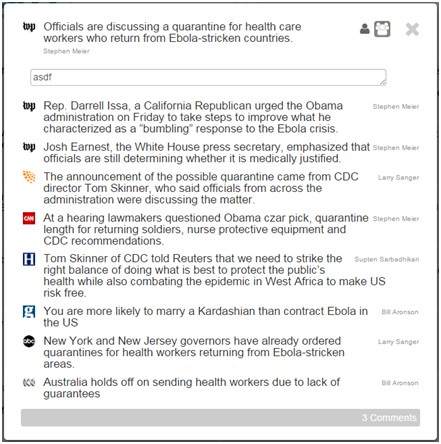
I'm a journalist. After looking at your samples http://larrysanger.org/wp-cont... http://larrysanger.org/wp-cont... I was wondering what the benefit is of Infobitt over Google News.
You had an Ebola story. I would define the task as gathering information, verifying it, identifying the important issues and organizing it. By that definition, I think the New York Times did a pretty good job. I got most of my information about it from Science magazine and New England Journal of Medicine. (The trade press covers stories with an order of magnitude more detail, they understand it better, and they know better how to identify the important issues and organize it.)
Jon Cohen did a lot of the Ebola coverage for Science. He covered the AIDS epidemic, wrote one of the leading books about it, and covered several other major epidemics around the world in the kind of detail Science magazine's PhD-level readers want to know. He has a salary that's enough to live comfortably and an expense account that can send him around the world. I can't imagine how crowd-sourced volunteers could ever deliver information about Ebola as well as Cohen could.
I could say the same for New England Journal of Medicine, JAMA, Lancet, BMJ, Reuters, and several other news sources. The big difference I notice is that your Bitt is a miscellaneous collection of stories, some of which is unverified bullshit, like Darrell Issa's pointless partisan attacks on Obama. There were easily 100 major stories on the Ebola quarantine that day. Why did you pick those 8?
If I were giving a journalism class, I would say, "A news story has to have a story."
There's a fire hose of information out there. The first job of a journalist is to throw out 99% of it. Then throw out another 90%. Then try to make some sense out of it.
For example, JAMA last week had 8 or 9 articles on the theme of reforming health care delivery.
http://jama.jamanetwork.com/is... Each of those articles illustrated one important aspect of the problem, and they all fit in together. They deliberately had one article that contradicts another article.Sorry to be so tough but that's the way editors treated me, and that's the way I treat reporters today. It's for their own good.
-
Seriously?
From TFA:
That’s according to a study published Monday in JAMA Internal Medicine, which suggests that high-tech equipment and sophisticated treatment techniques may distract from what’s most important during cardiac arrest — transporting a critically ill patient to the hospital quickly.
The TFA mentions about a study on JAMA but there is NO LINK to the real article/study? Or the author does not know how to properly cite the source he is talking about? I have to dig it out by myself and it is at http://archinte.jamanetwork.co...
-
Another /. story that doesn't link to the paper
Sigh. Another Slashdot story about a new article published in a scientific journal, another Slashdot story that fails to link to the original published paper. I just noticed that the "News for nerds. Stuff that matters" tagline no longer appears on the Slashdot front page; this sort of omission is probably one of the reasons why.
For people who are interested in the actual data:
Sanghavi, P. et al. "Outcomes After Out-of-Hospital Cardiac Arrest Treated by Basic vs Advanced Life Support." JAMA Intern Med Published online November 24, 2014. doi:10.1001/jamainternmed.2014.5420.
And here's the JAMA press release.
-
Another /. story that doesn't link to the paper
Sigh. Another Slashdot story about a new article published in a scientific journal, another Slashdot story that fails to link to the original published paper. I just noticed that the "News for nerds. Stuff that matters" tagline no longer appears on the Slashdot front page; this sort of omission is probably one of the reasons why.
For people who are interested in the actual data:
Sanghavi, P. et al. "Outcomes After Out-of-Hospital Cardiac Arrest Treated by Basic vs Advanced Life Support." JAMA Intern Med Published online November 24, 2014. doi:10.1001/jamainternmed.2014.5420.
And here's the JAMA press release.
-
Re:The New Magic
FTFA ( http://archpsyc.jamanetwork.co... ):
"Administrative data [...] were used to predict suicides [...] using machine learning methods (regression trees and penalized regressions) [...]."So, decision trees: http://en.wikipedia.org/wiki/D...
-
No
I don't think so. The JAMA article http://archinte.jamanetwork.co... does look at longitudinal effects but the 25% figure comes from comparing states with and without. From the abstract:
States with medical cannabis laws had a 24.8% lower mean annual opioid overdose mortality rate (95% CI, 37.5% to 9.5%; P=.003) compared with states without medical cannabis laws.
The common way to statistically analyse the effect of one variable is to model as many variables as the data allows and run a regression to isolate the effect of the target variable.
It may be that there are other problems with the study (e.g. correlations between the variables assumed to be independent) but this isn't one of them. -
Re:Correlation Does Not Imply Causation
People need to stop buying into fad diets and nonsense theories. Barring allergies, most humans are fully capable of assimilating anything they throw at their GI system. Exercise some bloody portion control and get off the couch once in awhile. The rest will take care of itself.
As it turns out not all calories consumed are the same: http://jama.jamanetwork.com/ar...
Diets that produce lower insulin response give a metabolic advantage and reduce hunger. In the study the advantage of a low-glycemic diet over a low fat one, at the same calorie level, was 125 calories per day. This has matched my own experience, additionally I've seen another 75 calorie per day advantage from hunger reduction when not controlling for total calories. (free feeding) Combined that's roughly equivalent to a 1.5 mile jog for a 200lb adult, nothing to sneeze at.
I don't think it has anything to do with insulin or glycemic index, in fact it's depressingly simpler than that, the palatability hypothesis.
When we're surrounded by highly palatable foots we overeat. And as it turns out mostly highly palatable things have a lot of carbs, hence the association between low-carb or low GI and weight loss. But one of the best weight loss foods is plain baked potatoes, and they're nothing but starch with a ridiculously high GI. That doesn't mean the food can't be tasty, fruit is pretty damn good, but you're not going to be able to get away with a diet of pizza, cookies, chips, and doughnuts because those trigger overeating like crazy. And if you're addicted to them it's not that hard to kill the addiction, just don't have them in the house. Out of sight, out of mind.
I've actually been surprised how avoiding the hyper-palatable foods has improved my cravings. Everyday at work they literally put a plate of cookies on a bookshelf directly in front of my desk and I don't even feel tempted. You don't have to do anything crazy, just keep to simple foods, avoid the super tasty snack foods, and it will make a huge difference.
-
Re:Correlation Does Not Imply Causation
People need to stop buying into fad diets and nonsense theories. Barring allergies, most humans are fully capable of assimilating anything they throw at their GI system. Exercise some bloody portion control and get off the couch once in awhile. The rest will take care of itself.
As it turns out not all calories consumed are the same: http://jama.jamanetwork.com/ar... Diets that produce lower insulin response give a metabolic advantage and reduce hunger. In the study the advantage of a low-glycemic diet over a low fat one, at the same calorie level, was 125 calories per day. This has matched my own experience, additionally I've seen another 75 calorie per day advantage from hunger reduction when not controlling for total calories. (free feeding) Combined that's roughly equivalent to a 1.5 mile jog for a 200lb adult, nothing to sneeze at.
-
Re:The original paper
Link here: http://archpsyc.jamanetwork.co... (already included in the summary)
-
Nope. That's not the case.
Not to invoke an argument, but the TFA talks about listening to sermons and reading the bible.
No. Here is what it says.
"Harold G. Koenig, director of the Center for Spirituality, Theology, and Health at Duke University and a professor of psychiatry"... author of "The Healing Power of Faith", "Faith and Mental Health"... "Listening to sermons and reading religious works like the Bible may also invoke a cognitive benefit, Koenig said."
I.e. Faith guy says maybe faith good for brain.
Also, that Discovery article is crap.
That "One recent study, published in December of 2013 in JAMA Psychiatry" - no it wasn't.
And which study does this sentence refer to? The supposed December 2013 JAMA one (actually published in February 2014) or the 2011 one?And while a 2011 study found a shrinking of the hippocampus among people of certain religions, Koenig, a co-author of the study, points out that no one has replicated that work yet.
Cause, it either says that Koenig is a co-author of the JAMA study (which he isn't, but which is no made clear anywhere in the article which doesn't even name the study it discusses) and he disagrees with the data from the 2011 study...
OR, he is a co-author of 2011 study (which he was) which says that certain religious people have a shrinking hippocampus.
With which he disagrees as well, pointing out "no one has replicated that work yet".Koenig is essentially saying "Fuck my study which shows how religion may actually be bad for your brain. Don't look at it. Nothing to see there. Not replicated. Bad study. Bad!"
Also, everything Koenig and that other guy who had nothing to do with the study (he apparently has not even read it) but they asked him to comment on it anyway, Dr. Majid Fotuhi, said about the social effect... pure bullshit.
From the actual study:Importance of religion or spirituality, but not frequency of attendance, was associated with thicker cortices in the left and right parietal and occipital regions, the mesial frontal lobe of the right hemisphere, and the cuneus and precuneus in the left hemisphere, independent of familial risk.
Going to church does not matter. How much you THINK that religion or spirituality matter to you matters.
-
Sensetional article
Lisa Miller have a spiritual agenda.
Here is her TEDx talk about love and stuff: http://www.youtube.com/watch?v...
Also this study is in contradiction with this study:
Being Religious or Spiritual Is Linked With Getting More Depressed
http://www.huffingtonpost.co.u...From Lisa Miller:
http://archpsyc.jamanetwork.co...
"We previously reported a 90% decreased risk in major depression, assessed prospectively, in adult offspring of depressed probands who reported that religion or spirituality was highly important to them."From Being Religious or Spiritual Is Linked With Getting More Depressed
"A key finding of the study, conducted in several different counties, is that a spiritual life view predisposed to major depression, especially significantly in the UK, where spiritual participants were nearly three times more likely to experience an episode of depression than the secular group."Lisa Miller have first to explain this contradiction. Maybe some people get cortical thickness from religion, and some don't. I don't have access to Lisa's article.
-
Re:Welcome to a third-rate USA
You and I must be reading different journals.
Perspective: Asia's Ascent — Global Trends in Biomedical R&D Expenditures
January 2, 2014
N Engl J Med 2014; 370:3-6
Owing to cuts mandated by the Budget Control Act of 2011, the NIH budget for fiscal year 2013 was reduced by $1.7 billion, to $29.2 billion — a 5.5% reduction that continued a trend of declining federal funding for biomedical research that began in 2003.2
Our analysis reveals that U.S. inflation-adjusted R&D expenditures and the U.S. share of global expenditures decreased from 2007 through 2012. The decline is remarkable because the United States has provided a majority of the funding for biomedical R&D globally for the past two decades — a share that some previous analyses suggested was as high as 70 to 80%.2 Moreover, the decline was driven almost entirely by reduced investment by industry, not the public sector, between 2007 and 2012. Sequestration of NIH funding in 2013 and beyond will exacerbate this reduction by causing U.S. public-sector expenditures to decline.
Although our data set has its limitations, our findings reveal a decline in U.S. financial competitiveness in biomedical R&D and may have implications for the debate over appropriate federal policy in this area. The lack of a coordinated national biomedical R&D strategy is disappointing, at a time when mature economies such as those of Japan and Europe have maintained their level of investment in this area.http://jama.jamanetwork.com/ar...
Funding of US biomedical research, 2003-2008.
JAMA. 2010 Jan 13;303(2):137-43. doi: 10.1001/jama.2009.1987.
Funding of US biomedical research, 2003-2008.
CONCLUSION: After a decade of doubling, the rate of increase in biomedical research funding slowed from 2003 to 2007, and after adjustment for inflation, the absolute level of funding from the National Institutes of Health and industry appears to have decreased by 2% in 2008. -
Re:Sinister?
I gave a method of finding alternative statistics which you choose to ignore.
OK, I'll bite. You referenced the CDC and NIH and I pointed out that their numbers totally reject your numbers. Now you're not happy that I'm using the CDC and NIH and failing to use your unnamed alternative knowledge sources that are, like, totally better than the CDC and NIH that you referenced earlier. OK. Let's do it.
Should we just google 'gardasil vaccine injury' and see what we get?
First link is something pointing out that Gardasil is safe by any reasonable measure. Probably not a kosher source of alternative knowledge from your perspective, so I'll skip those. Moving on.
There's this, which has numbers but no references. Here's one with references, so that's a good start. 48 deaths! Wow! Wait, the reference is just to VAERS, which we talked about earlier. Just the VAERS root site, not even the actual document. Well, let's try again.
Lots more stuff, just going back to VAERS. Did I mention that the VAERS analysis has been done to death? Lots of web sites with personal anecdotes (probably also reported to VAERS, so thank goodness that's covered). Some (most, maybe) of those may be very true. But again, we're talking about roughly 60,000,000 doses, and we're not accumulating anything like a significant probability of serious reaction. Which is why we use statistics. Like so:
National Geographic gives the odds of being hit by lightning in any given year as 1 in 700,000. That means that we'd expect 85 of those women to be struck this year. If they all reported "hit by lightning" to VAERS, "hit by lightning" would surpass a bunch of the other things they've reported as "side effects" that people are panicking about.Followed by more attempted ad hominem and riducule.
All to defend you being a liar...That's a gorgeous juxtaposition. Dude, I'm attacking your data, not you. If you want to reduce the amount of damage, bring better data next time.
-
Re:Cause and effect may be backwards
It's been documented in may places.
Decline in the Incidence of Schizophrenia in Finnish Cohorts Born From 1954 to 1965
If there was a causal link between marijuana use and schizophrenia for example, there would be an increase that could be shown in historical data. The evidence instead suggests that maybe some people have been successful at self-medicating. -
Re:For 10 cents a day...
For 10 cents a day, I'll take the risk that I'm wasting my money. It's cheap insurance, and there might even be a benefit.
You might want to consider that there might be a significant risk of harm too.
Slight negative effect on lung cancer survival for high doses of Vitamin A.
Increase risk of all-cause mortality for high doses of Vitamin E.
Significant increase in mortality from gastrointestinal cancers from high doses of antioxidants, A & E in particular. -
Re:terrorism! ha!
-
Overall, cyclists live longer
This is of course a complex question. Sure, cyclist are more prone to accidents and air pollution than those who commute by private car or by public transport. Then again, cycling to work is a "free" daily exercise – a benefit too often overlooked. A Danish study published in 2000 found that in a group of 30,000 randomly selected individuals, those who did not cycle to work experienced a 39% higher mortality rate than those who did – even after adjusting for other risk factors. So considering the overall effect, it seems that cycling is actually safer than not cycling, probably due to its positive effect on your physical fitness.
-
Re:I take 6 grams a day
6000 mg vitamin C daily, not counting vitamin C in the food? That is a lot. Consult your physician and be very, very cautious about suggesting medical advice if you are not prepared to take moral and financial responsibility for it. Yes, vitamin C is important. Yes, increased intake of vitamin C has been show to have several health benefits, including reduced stroke and cardiovascular disease risks, especially in smokers. However, "increased intake" means "well below 1g/day".
6000 is 30-100 times the recommended daily dose. Although studies indicate that vitamin C intake at 2-4 g/day may not have large adverse effects (1), one has to be extremely cautious when recommending supplementing your diet by a 100x of a daily dose. The fact that you don't experience any adverse effects such as kidney stones (at least yet) does not mean that a person reading your comment will not suffer from that either.
Apart from the problems with the digestive tract, vitamin C can hamper endurance in physical exercises (2). Moreover, vitamin C not used by the organism (which requires as little as 100-200mg / day) is excreted (3). For that, it is metabolised to oxalic acid, which in turn can cause kidney stones (4 and the references therein). So yes, although problems with vit. C overdose do not seem to be common and are not comparable to overdoses of some other vitamins, at 6g/d saying that "C can't hurt" is very risky (especially as supplements can contain other vitamins as well, and the fat soluble vitamins A, D, E and K can cause severe adverse effects -- vitamine poisoning -- when overdosed).
The highest risk-free level of daily intake for vitamine C has been recently proposed to be 1000 mg (1g) (5, 6). People, before you install some shady software someone recommends at a biology-oriented website, ask your IT friend for advice. Before your follow medical advice from Slashdot, consult your physician.
"Rational by choice."
Prove it. Read the evidence based medical studies rather than trusting and spreading anecdotes.
(1) http://onlinelibrary.wiley.com/doi/10.1111/j.1753-4887.1999.tb06926.x/abstract
(2) http://ajcn.nutrition.org/content/87/1/142.short
(3) http://ajcn.nutrition.org/content/69/6/1086.short
(4) http://onlinelibrary.wiley.com/doi/10.1046/j.1365-2362.1998.00349.x/full
(5) http://jama.jamanetwork.com/article.aspx?articleid=189543
(6) http://www.pnas.org/content/93/8/3704.short -
Re:Why not just 0?
In 2011, 31,000 people died firearm-related deaths.
http://wiki.answers.com/Q/How_many_gun_deaths_are_in_the_US_every_year
In 2010, there were 10,000 deaths due to drunk driving, and that number is falling.
http://www.centurycouncil.org/drunk-driving/drunk-driving-fatalities-national-statistics
More crap and bullshit from the anti-gun-control crowd.
All but 11,000 of those gun related deaths were from suicide, so the number of innocent victims are much closer to drunk driving than it you are presenting.
http://www.cdc.gov/nchs/fastats/homicide.htmMany of the remaining deaths were at the hands of repeat offenders, meaning that meaningful prison reforms to lower our recidivism rate would be more effective than gun control. For example, in Illinois, from 1990-2000, 42% of homicides were at the hands of people with at least one felony conviction.
http://jama.jamanetwork.com/article.aspx?articleid=201308Also, gun related deaths are down 49% since 1993, so I'm no sure why you are using that to exonerate drunk driving, but condemn firearms.
http://www.pewsocialtrends.org/2013/05/07/gun-homicide-rate-down-49-since-1993-peak-public-unaware/This, despite there being more firearms in the country since that time.
http://www.gallup.com/poll/150353/self-reported-gun-ownership-highest-1993.aspx -
Re:Replacement available
Depression meds work no better than placebo.
Since they don't cite which study they are talking about, I can't begin to pick apart it's actual problems. In 2010, there was a study (damned if Scholar isn't finding it right now) about SSRI treatment of 'mild to moderate depression'. It showed, and was widely quoted at the time, that placebos were as effective as SSRI and tricyclics. Sure, sounds damning, except that the definition of 'mild depression' is as vague as the rest of your post makes it sound.
Severe depression, on the other hand, is not vague and "I'm feeling run down". It's "I can't get out of bed, and a general practitioner has ruled out other issues, and I just want to die so can someone hand me that gun because I don't feel like getting up to get it." Yes, JAMA published research has shown that placebos need to be given in studies to see that antidepressants are actually working. Other studies show that, in meta-analysis, TCAs and SSRIs do work; though by narrow margins. And if the article in 2010 was the Kirsch one, you can read the abstract here on what the data says when corrected for what the patients reported or doctor measured (i can't read the article from here) their depression symptoms to be.
In total, you remain wrong in thinking that the statement of "the use of the scientific method in psychology is crap" has any merit. Reading a pop-psy article of course skims over the actual details and avoids bringing up what the statistical values were; that would confuse readers who want it condensed into bite sized bits to throw around. But for gods sake, don't cite wiki in an article complaining about the scientific method.
-
Re:Even worse
I remember reading a few years ago that one of the top medical journals (New England, IIRC) started letting doctors publish review articles for drugs without mentioning that they were paid by the company that sells them.
That may have been true a decade ago, but now journals (e.g. JAMA, NEJM, Lancet) are fairly serious about clamping down on conflicts of interest, ghost writing, and other shady practices. For example here is one example of the required disclosure (for JAMA). Of course, someone could still lie/dissemble/etc... But this would be considered as the aberrant flow.
In a sense though the damage is done. If you search for ghost-writing and rofecoxib you can see articles regarding the extent of the problem in the late 90's with respect to Vioxx. It's a long road to getting back credibility/trust.
-
Re:It's not especially about the fly ash though...
By which mechanism? Oh that's right, sympathetic magic because it is also dust.
You call it magic. I consult the EPA, CATF, and JAMA.
Also why should I post sources against someone that is very obviously just making stuff up and pretending they know it's real?
Why should I bother posting sources against someone that is very obviously just making stuff up and pretending they know it's real? I mean, it's not like you've cited one thing you've said, and citations disproving your statements are about 10 seconds of google searching away. Despite that, I've bothered to cite various sources like the EPA and CATF. Other cites used information collected by the World Health Organization and other reputable sources.
It doesn't get anyone anywhere since we both know it's made up and also the only bit you've got that's actually about fly ash, using a landslide as evidence that the stuff is dangerous is misleading - so is snow in the wrong place.
Well, you could have gone to the links and found that there are people concerned, that there's moves to further restrict the stuff, and there have been incidents of ground water contamination from leeching. Water being one of the biggest killers in the world is a known but separate issue. The problem I was trying to point out with the landslide of ash was the possibility of chemical contamination making so that people couldn't just move back into their homes after cleanup.
Really, you want to be insulting? Fine. You are a very poor debater. You fail to post sources or citations. You fail to respond with countering evidence when I provide evidence. You fail to provide specific details, attack the person instead of addressing the topic, etc... I'm not perfect, but you suck.
-
Re:I say cut the F-35
There was a collection of articles and letters about the Swiss health care system in the Journal of The American Medical Association in 2005. Regina Herzlinger, who is one of the most popular advocates for a Swiss-style health care system here, with editorial columns in the Wall Street Journal and elsewhere, wrote an enthusiastic article about how the Swiss system is consumer-driven, gives people free choice, and is doing wonderfully. JAMA likes to get both sides of the story, so they had a more measured article by Uwe Reinhardt, the health policy professor at Princeton. A few weeks later JAMA published letters, including some from real doctors in Switzerland, the tenor of which is reflected by their headline, "Holes in the Swiss health care system." http://jama.jamanetwork.com/article.aspx?articleid=200895
Unfortunately JAMA is mostly paywalled, and my notes are on another computer, but basically their free-market, consumer-driven system didn't work. Once you have a system of free-market incentives, doctors and hospitals have a great incentive to get around the system. For example, they have co-payments and deductibles, to give patients a stake in the game. However, they can't have copayments for treatments costing $50,000 or $100,000, because 20% of $100,000 is more than middle-class people want to be at risk for. So after a certain maximum, they stop the copayments. Result: Once they reach the maximum, doctors and hospitals can spend on anything -- CAT scans, weeks in the ICU, surgery, expensive drugs, consultations, anything to save grandma -- and the insurance company has to pay 100%. So according to the Swiss doctors, the present growth of the Swiss system is unsustainable, and the Swiss were trying to figure out how to reform the system. (BTW the Swiss health insurance companies are very heavily regulated, and it's considered bribery to contribute money to political campaigns. Try that here.)
So the Swiss health care system doesn't work. What else have you got?
Socialized medicine is economically efficient and single payer is also somewhat efficient and preserves the private doctor practices. I haven't seen any market-based system that works. They look good on paper but when you try them out in real life they don't work, and there are careful evaluations in peer-reviewed medical journals to document their failure. The government would have to correct the free market by giving massive subsidies to people who can't afford to pay free-market health care (as Obamacare does). That generates perverse incentives. People on welfare can't work because they'd lose their health care. The administration becomes complicated and expensive. In the US, the administrative costs of the insurance companies and the providers who deal with them takes about 1/3 of your health care premium dollar.
Marcia Angell, the former editor of the New England Journal of Medicine, said that the more incremental changes you make, the more administratively complicated the system becomes, and the more expensive it becomes. Angell supported single payer. It works in Canada.
-
Re:Gun research blocked by political pressure
How about from the whitehouse itself, research on guns was never banned, just advocacy. BOOM
This is hair-splitting. What if the results indicated that gun control reduces crime or deaths? How could such results even be reported without running afoul of the Congressional prohibition? So in effect, the restriction says, "You can do research on gun control so long as your findings do not favor gun control." Since the agency can't know what the outcome of the research will be in advance, the net effect is to make such research impossible. What Federal administrator is going to be willing to risk having his career ended by an accusation of misappropriation of Federal funds because the research came out the "wrong" way? The practical effect is clear: the research was shut down. From the JAMA article:
Precisely what was or was not permitted under the clause was unclear. But no federal employee was willing to risk his or her career or the agency's funding to find out. Extramural support for firearm injury prevention research quickly dried up. Even today, 17 years after this legislative action, the CDC's website lacks specific links to information about preventing firearm-related violence.
-
Re:Gun research blocked by political pressure
The only thing 'blocked by the NRA' is a line item for budget from congress. This does not prevent or preclude any kind of research or overhead funding of such a research project by any agency. Please get your information straight.
j
Also false, as documented in the Journal of the American Medical Association article (which I gather that you still haven't bothered to read) which has links to the relevant appropriations acts for the agencies in question, which includes general restrictions on the use of the appropriated funds, not merely blocking a single line-item project.
-
Re:Gun research blocked by political pressure
. Unfortunately such research has been largely blocked by political pressure from the gun lobby. Apparently, they feel that their interests are best served if we keep arguing about stupid anecdotes instead of real science.
Your argument may have made some sense if it weren't for the fact that the Director of CDC's unit that would have been in charge of the research came out and said prior to any research being conducted that they intended to make guns as repugnant as cigarettes. He outlined an agenda wherein the "science" would be made to serve a political goal. True science is not conducted with an agenda in mind - it serves to unveil the truth, not pander to a political ideology where the "scientists" have pre-determined the outcome of the "research."
Dr. Mark Rosenberg, Director of the CDC's National Center for Injury Control and Prevention (NCIPC) in 1994 told The Washington Post: "We need to revolutionize the way we look at guns, like what we did with cigarettes. Now it [sic] is dirty, deadly, and banned."
-
Re:Gun research blocked by political pressure
You can already pull crime statistics, nobody is stopping you from doing this - same as disease statistics. Violent crime rates have gone down, ALOT, over the past 30-40 years. With a height of 52 victims of violent crimes per 1000 people down to less than 17 victims of violent crime per 1000 people in 2009. We had less than 50 guns per 100 people in 1969, as of 2009, we are at a 1 for 1 ratio of guns to people. There went your epidemiology calculations.
Unfortunately for your thesis, crime rates have also come down "ALOT" in states with strict gun control. It is thus quite clear that there are social and demographic factors other than guns that influence crime rates. This sort of situation in which there are multiple potential causes is exactly the sort of thing that epidemiological methods are designed to disentangle (and yes, this can indeed handle situations where "cause" and/or "cure" is randomly distributed within a population)--the very sort of research that the gun lobby is trying to prevent.
-
Re:Stupid anecdotes are a waste of time
Surveying people about "defensive uses" is an idiotic way to go about it, and obviously invalid. How do you determine in an objective manner whether what somebody claimed in a survey as a "defensive use" actually prevented injury? Here's a clue--you cannot do valid scientific research by surveying people and asking them to guess what might have happened if they had not had a gun. Real research is factual, not contrafactual.
The only valid way to go about this is to look at objective, verifiable outcomes, such as measured incidence of criminal victimization and injury--and this is exactly the kind of research that the gun lobby has been trying to derail--presumably because they believe that the knowledge obtained from such factual research would not be in their best interest.
-
Re:Blood is on the NRA Hands
Well, we can't analyze statistics intelligently and act on them, because the NRA lobbied Congress to prevent us from doing so.
http://jama.jamanetwork.com/article.aspx?articleid=1487470
Viewpoint: Silencing the Science on Gun Research FREE
Arthur L. Kellermann, MD, MPH; Frederick P. Rivara, MD, MPH
JAMA. 2012;():1-2. doi:10.1001/jama.2012.208207.The nation might be in a better position to act if medical and public health researchers had continued to study these issues as diligently as some of us did between 1985 and 1997. But in 1996, pro-gun members of Congress mounted an all-out effort to eliminate the National Center for Injury Prevention and Control at the Centers for Disease Control and Prevention (CDC). Although they failed to defund the center, the House of Representatives removed $2.6 million from the CDC's budget—precisely the amount the agency had spent on firearm injury research the previous year. Funding was restored in joint conference committee, but the money was earmarked for traumatic brain injury. The effect was sharply reduced support for firearm injury research.
To ensure that the CDC and its grantees got the message, the following language was added to the final appropriation: “none of the funds made available for injury prevention and control at the Centers for Disease Control and Prevention may be used to advocate or promote gun control.”4
Precisely what was or was not permitted under the clause was unclear. But no federal employee was willing to risk his or her career or the agency's funding to find out. Extramural support for firearm injury prevention research quickly dried up. Even today, 17 years after this legislative action, the CDC's website lacks specific links to information about preventing firearm-related violence.
When other agencies funded high-quality research, similar action was taken. In 2009, Branas et al5 published the results of a case-control study that examined whether carrying a gun increases or decreases the risk of firearm assault. In contrast to earlier research, this particular study was funded by the National Institute on Alcohol Abuse and Alcoholism. Two years later, Congress extended the restrictive language it had previously applied to the CDC to all Department of Health and Human Services agencies, including the National Institutes of Health.6
These are not the only efforts to keep important health information from the public and patients. For example, in 1997, Cummings et al7 used state-level data from Washington to study the association between purchase of a handgun and the subsequent risk of homicide or suicide. Similar studies could not be conducted today because Washington State's firearm registration files are no longer accessible.8
-
Re:Clip
And you can't get precise figures because the NRA lobbied congress to forbid government funding from paying for research into gun fatalities.
http://jama.jamanetwork.com/article.aspx?articleid=1487470
Viewpoint: Silencing the Science on Gun Research FREE
Arthur L. Kellermann, MD, MPH; Frederick P. Rivara, MD, MPH
JAMA. 2012;():1-2. doi:10.1001/jama.2012.208207.The nation might be in a better position to act if medical and public health researchers had continued to study these issues as diligently as some of us did between 1985 and 1997. But in 1996, pro-gun members of Congress mounted an all-out effort to eliminate the National Center for Injury Prevention and Control at the Centers for Disease Control and Prevention (CDC). Although they failed to defund the center, the House of Representatives removed $2.6 million from the CDC's budget—precisely the amount the agency had spent on firearm injury research the previous year. Funding was restored in joint conference committee, but the money was earmarked for traumatic brain injury. The effect was sharply reduced support for firearm injury research.
To ensure that the CDC and its grantees got the message, the following language was added to the final appropriation: “none of the funds made available for injury prevention and control at the Centers for Disease Control and Prevention may be used to advocate or promote gun control.”4
Precisely what was or was not permitted under the clause was unclear. But no federal employee was willing to risk his or her career or the agency's funding to find out. Extramural support for firearm injury prevention research quickly dried up. Even today, 17 years after this legislative action, the CDC's website lacks specific links to information about preventing firearm-related violence.
When other agencies funded high-quality research, similar action was taken. In 2009, Branas et al5 published the results of a case-control study that examined whether carrying a gun increases or decreases the risk of firearm assault. In contrast to earlier research, this particular study was funded by the National Institute on Alcohol Abuse and Alcoholism. Two years later, Congress extended the restrictive language it had previously applied to the CDC to all Department of Health and Human Services agencies, including the National Institutes of Health.6
These are not the only efforts to keep important health information from the public and patients. For example, in 1997, Cummings et al7 used state-level data from Washington to study the association between purchase of a handgun and the subsequent risk of homicide or suicide. Similar studies could not be conducted today because Washington State's firearm registration files are no longer accessible.8
-
Gun research blocked by political pressure
There's more that one way to approach a question. Different states have very different gun laws. So one could compare rates of victimization for various types of crimes (with appropriate statistical adjustment for demographic factors). One could look at rates of accidental gun injuries and "friendly fire" shootings. There have been efforts to research these issues using the same sort of sophisticated epidemiology that has been developed to assess disease risk and drug safety. Unfortunately such research has been largely blocked by political pressure from the gun lobby. Apparently, they feel that their interests are best served if we keep arguing about stupid anecdotes instead of real science.
-
Re:30,000 killed by firearms, 31,000 by poisoning
You never provided the sources for your data to start with, and presented them so that they appeared to arise from the same source and methodology and covered the same period. That's your first mistake. Your second mistake was that you never provided a rebuttal to my points. If you claim that drug induced effects exclude accidents - as opposed to accidental *injuries*, then you never provided a quote. Your third mistake is your recourse to conspiracy theories.
It's not that you used the CDC and that paper that is problematic. It's your mixing of them without noting the big, huge difference between them. Re the paper, even as it was published there was substantial criticism. Their CI cannot be considered accurate. As the commentators on the paper note, if you restrict the data they used to only the more recent years, the assessment of ADR deaths falls to 13k.
-
Re:Mommy...
-
Re:Consider this map of Gun Deaths By State
And yet our Congress has legislated away any power for agencies like the CDC to really look into gun related injuries and death. http://jama.jamanetwork.com/article.aspx?articleid=1487470 Makes you wonder why they take the time to write such legislation if there is "nothing to see here" in those reports.
-
Re:Biking is better
The problem with your safety claims is that they only consider violent, on-road death. That's not that large a risk of death for most people, cyclists or not. In practice, we die of strokes, heart attacks, cancer, and the cumulative effects of chronic conditions like diabetes and failing circulation -- all of which are made (much) worse by lack of exercise. When you look at all causes of death (and not just the eye-catching ones), even when adjusted for age, weight, and other risk factors, choosing to drive a car to work (in Denmark) leads to a 39% higher mortality rate. In another country (England) with road (un)safety closer to ours, the estimate is that for someone choosing to ride a bike in "moderate" amounts (to work, around town, so in the 30-100 mile/week range), each expected year of life lost to a bicycle crash is paid back 10-20x by years gained from improved health.
A citation for your deaths-per-mile comparison would be good. The only estimate I've seen was done years ago by someone at Failure Analysis Associates (and attempts to further vet the numbers have been fruitless) and it was that per-hour (not mile) cycling and driving were about equivalent in risk. That's going to give you 2-3x for cycling per mile, with the numbers obviously skewed by special infrastructure designed for the safe distance travel by cars (interstate highways) and no infrastructure of similar quality anywhere for bicycles in this country (do you "share" your road with roller-bladers, dog walkers, and parents with baby-joggers 2-abreast?)
If your bike commute is that slow, yet you want it to be a workout, you're doing it wrong. My doctor has no complaints. I've ripped handlebars in half (twice) and split firewood with an ax, so somehow the upper body is getting something from somewhere.
-
Re:Ever notice the drug commercials...
He can't. He's quoting a website verbatim.
However, the title of the JAMA article is "Is US Health Really the Best in the World?", and it's available here, though apart from the statement (accompanied by another citation that I'm not ambitious enough to track down) of the number of deaths, it says little else relevant to this story.
However, I used to work with those adverse effect records, and citing them directly is incredibly misleading. The 106,000 deaths is only a tiny percentage (0.06%) of the 170,000,000 Americans on prescription medications (rough mental estimate of 48%), and it's inflated. The way adverse effects are recorded, any drug that could possibly be the cause of death is recorded as having definitely caused it. If an epilepsy drug causes a side effect, and the patient takes acetaminophen for it but overdoses and dies, the epilepsy drug is considered to be at fault, because the death was a result of its adverse effect.
The reason for this odd system of inflated numbers is that its purpose. The system was designed to inform doctors and researchers of what could happen as a result of a drug's use, including any previously-unknown interactions. By recording that an epilepsy drug, when taken with acetaminophen, could cause overdose symptoms, researchers could be pointed to an interaction between the two medications.
For direct deaths, the percentage (original research, no source) is closer to 0.001%, and the majority of these (to the point where I couldn't really differentiate "all") were where the prescription triggered an allergic reaction that wasn't already known (or at least recorded in the doctors' notes).
-
Re:Lies
Unless I'm entirely mistaken, the specific studies in question are the African studies which your links rely on as proof that circumcision reduces HIV infection. (All three studies were conducted by the same group over the same time period and use the same methodology; I suspect that if they didn't get good enough results they were planning to pool them in one study.) The circumcised men were instructed not to have sex for the first two months of the 12-month study period whereas the control group were allowed to; in addition, because all men were given free condoms and advice on safer sex at every visit but the circumcised men had more follow-up visits the circumcised group had better access to both condoms and advice.
The APA article your links bases their claims on is also misleading in other ways. For example, the 3 randomised trials were not exactly " consistent with previous ecological and observational studies in Africa, Europe, and the United States" - as I recall the observational studies showed much larger benefits (and in fact the more robust the studies are, the smaller the effect seems to be). The Ugandan trial also couldn't actually show that "the protective effect of circumcision increased with longer time from surgery" as they claim because there was no control group after 12 months and therefore not a sliver of evidence that the decrease in HIV infection rates over time had anything to do with circumcision whatsoever; while didn't stop the researchers from claiming it as a benefit from circumcision and even extrapolating the decrease out into the distant future and prominently quoting the extrapolated figures in their abstract, they had no basis for those claims whatsoever.
Also, the bit about "Male circumcision and HIV protection among MSM have not been studied as well as heterosexual transmission" is weasel-worded bullshit - we've studied this to death even after study after study showed no benefit, and subsequent studies have still shown no benefit. The lack of evidence for it working has nothing to do with lack of research - we've researched it plenty and it just doesn't work. Furthermore, notice how they dismiss all the studies showing that circumcision doesn't affect the risk of men transmitting HIV to their female partners and cherry-pick some that do; in practice things may be even worse because studies that were showing early signs of concluding that it actually increased the risk to female partners have been terminated early for getting undesirable results!
-
Re:Why is CP illegal?
As horrible as child abuse is, it is utterly irrational grandstanding to say that child abuse is worse than murder. If I asked you if you would rather be raped or killed, do you really mean to tell me that you would answer "killed"? If not, then murder is worse than any form of abuse. The heinousness of a crime is directly proportional to its effect on the victim. There can be no crime more heinous, therefore, than any crime that deprives the victim of his or her existence unwillingly.
I can't speak for the GP, but I would answer "killed". It is a grave misjudgement to take for granted that your experience of the world is universal. Consider the suicide rate among victims of childhood sexual abuse.
"The lifetime prevalence of having at least 1 suicide attempt was 3.8%. Adverse childhood experiences in any category increased the risk of attempted suicide 2- to 5-fold."
http://jama.jamanetwork.com/article.aspx?volume=286&issue=24&page=3089
Is it worse to take away a life, or risk leaving a survivor who wants to die? Some people might consider a lifetime sentence like that a fate worse than death.
-
Re:So....
That statistic is one of the most widely quoted among the RKBA crowd. And no, most gun owners that I know don't exaggerate about these sorts of statistics. This is simply because most of us don't see the point of winning an argument by lying. Now group size on the other hand. Well, I threw away the target, but...
Anyway, back to the point. The statistic is not Wayne LaPierre's nor does it belong to the NRA-ILA. It comes from a paper published in The Journal of the American Medical Association by Gary Kleck, PhD titled "What Are the Risks and Benefits of Keeping a Gun in the Home?" In it he cites a study by himself and Marc Gertz which estimated as many as 2.55 million defensive uses of firearms each year in the US. This includes situations in which merely displaying a firearm stopped the confrontation.
The paper may be obtained from the JAMA website:
http://jama.jamanetwork.com/pdfaccess.ashx?ResourceID=3329130&PDFSource=13A copy of the original study is here:
http://www.guncite.com/gcdgklec.htmlIncidentally, in 1994, a year after the Kleck/Gertz study The Department of Justice conducted their own survey and estimated only 1.5 million defensive uses annually.
I would also add anecdotally, a few years ago I was part of the 2.5 million (or more?) for that year, when the display of the full-size 1911 that I had holstered under my jacket that day dissuaded an urban youth from using his knife to collect my wallet. He approached. I told him to stop. He pulled his knife. I pulled back my jacket. He smilled and went the other way. I walked on.
LaPierre is deserving of criticism on occasion, but this is not one of them.
-
Re:Ridiculous, Impossible, Etc.
From here we branch into a chicken-and-egg discussion on addictive behavior and cognitive effects. Yes, heavy marijuana abuse is correlated with negative cognitive affects and to some degree these are residual. There are many factors the play into addiction and addictive behavior, but I hold with Heraclitus in believing that "Character is fate". We can certainly say that there is little to no physiological dependence involved in marijuana use, less so than with caffeine. Thus I believe it follows readily that addictive behavior has more to do with the personality than with the substance, and I believe the scientific literature* tends to support that.
* To the degree to which social psych qualifies
-
Re:Junk food is the problem
People with type 2 diabetes are insulin resistant. And yes, obesity can cause insulin resistance, but does not have to. Interestingly, insulin resistance is not solely caused by a large simple carbohydrate intake, but instead by a large quantities of dietary fat. You can look it up yourself here: http://diabetes.diabetesjournals.org/content/40/11/1397.short
Oh yes, another cause is also lack of physical activity:
http://jama.jamanetwork.com/article.aspx?volume=279&issue=9&page=669.And here you are, preaching that carbohydrates and physical activity are the root of all evil and only fat is good.