Slashdot Mirror
Domain: lbl.gov
Stories and comments across the archive that link to lbl.gov.
Comments · 511
-
Done Deal
pubmed
golden path
bioconducter
public library of science
gnumeric
cluster analysis
etc. etc. etc.
What's the BFD ??? A lot of scientists are on the open source bandwagon and have been for years. Walmart's coming to town and the Ivory Towers are falling.
-
Re:Just so people know ...
First, you were getting nanometers (nm) and millimeters (mm) mixed up. nm refers to the minimum feature size. (Or your resolution, if you will.) the 300mm slabs refer to the size of the entire wafer, on many dies are fit.
Have you ever seen a picture of a circular piece of silicon? That's a wafer. All of the rectangles you see on the wafer are the individual dies, which are placed in a plastic(If you're really cheap, and you're not worried about static in handling) or ceramic(what's normally used) casing. Once you place the die in the casing, and perform a little bit of wiring inside, you have your chip. -
Re:US Research
I define basic research (as opposed to "basic research") as something that contributes both to the immediate applied research problems and accumulates fundamental knowledge of the nature in general.
So to summarize, you just made a dozen contrarian posts because you wish "basic research" meant something different than what it means. -
Re:The Standard Model
The standard model is pretty well fucked anyway. It's not a revolution, it's a kick in the ass that's going to force us to re-examine a large amount of our basic assumptions/research done in the Standard Model.
Already outstanding issues include pentaquarks (5-quark exotic baryons), the inability to find the Higgs boson (not so much finding it, but having the found mass be correct), muon g-factor anomalies, and kaon decay, to name but a few.
I guess what I'm saying is: it's going to be a long time. Don't hold your breath. -
End Of The World Is Nigh! DOOM! DOOM! DOOM!
<sarcasm>
The sun is angry; we are doomed. These flares are just the beginning, they will increase in magnitude until they are so big, they penetrate the Earth's magnetic field, destroy the entire ozone layer and sanitize the surface of the Earth with UV rays - just like an autoclave. Not even bacteria will survive except underground and deep in the Ocean.
The signs are showing, this is the END OF THE WORLD! The sun has been showing more activity since 1940 than it has for the last 1000 years put together. Doom is imminent!
Scientists don't act worried, they think they understand the sun and how it works, but science it just guesses. Maybe the sun is made of iron instead of hydrogen where would all the theories that say we are safe be then, if such a basic 'fact' about the sun turned out to be wrong?
As the flares grow in size and number you will all see that my theory is correct! "What is my theory?" you ask. It is that since the END OF THE WORLD makes a good movie plot point, that it must be happening NOW! These are going to be interesting times... We should all start storing canned food and porno mags in bomb shelters now before it's too late and we get cooked by the MASSIVE RADIATION STORM!
And what if the sun should stop flaring, and I should get proven wrong. WE ARE STILL DOOMED! In the same way that load from a light socket makes the generators in a power plant harder to turn, so geomagnetic storms transfer the kinetic energy of megatons of speeding charged particles directly to the magmatic dynamo at our planet's core. Small purturbations can affect this chaotic fluid flow in unpredictable ways but the most worrying is that the shock from the kinetic energy of all those particles will cause avalanches at the core/mantle boundary this will cause massive vulcanism that will cover the earth with lava!
If that doesn't get us, terrorists wielding viruses will.
Get out your sandwich board and whisky! Walk the streets and warn! THE END OF THE WORLD IS NIGH!!!!
<sarcasm>
-
Yes!-List
-
Re:Name of Element 111
No element 118, sorry.
http://enews.lbl.gov/Science-Articles/Archive/118- retraction.html -
Re:Barring one factHere are a couple of links on frequency control that may prove of interest:
http://www.ornl.gov/ORNL/BTC/Restructuring/ORNLTM
2 00341.pdfhttp://certs.lbl.gov/RealTime_K2.html
sPh
-
Re:Kinds of dark matter
Neutrinos do oscillate into other neutrinos, don't they? (http://supernova.lbl.gov/~evlinder/umass/neu.htm
l ) And that means they must have a (small) rest mass. This doesn't make up the missing matter entirely, but I think the figure is 20%. -
The article is wrong!First of all, let's not forget that the speed of light is a defined quantity:
c=299,792,458 m/s ( exactly).
A microwave oven is a resonant cavity, and the resonant frequencies for the modes (TE/TM) are given by
omega(i, j, k) = pi * c * sqrt( (i/A)^2 + (j/B)^2 + (k/C)^2 );
where A,B,C are the dimensions of the cavity and i,j,k are non-negative integers (not all zero) which specify the mode.
This experiment does not "measure" the speed of light. All this "experiment" does is tries to isolate out a specific mode (i = 2, j = k = 0) and verifies that the frequecy rating printed on the back of the oven corresponds to this mode (which is still a cool thing to do).
You see, the manufacturer already implicitly *used* the value of c above in designing the oven and calculating the value of the number printed on the back of it, so the "experiment" is not capable of making a (independent) measurement of c.
Lest you think I am nitpicking, this kind of problem plagues us physicists all the time!
-
Data vs. TimescalesThe temperature data for the past earth shows wide/rapid swings and periodicity on a number of timescales. Depending on the window you adopt, you can find data to support/refute just about any position you'd like to make a political case for.
Interesting article with an enlightening series of graphs can be found here
-
Grid computing: get a clueToday I finally decided to get a clue about grid computing. So I went over to IBM developerWorks, and followed the link to this "conceptual flyover" article. Having developed enough interest, I decided to check out Foster's original paper called the Anatomy of the Grid. Impressive!
Links:
See also: Throughput Computing -
Re:Just goes to show you.You've got that right.
If you're impressed by how these "magnetars" can affect us, check out gamma-ray bursters.
From http://www-2.cs.cmu.edu/afs/cs.cmu.edu/user/mnr/st The integrated flux of the strongest burst, GB790305, was 10^-4 ergs/cm^2 (the time structure of this pulse was consistent with a
We might get beat up real good by one of those bad boys - the Earth could get cooked if one happened right outside our neighborhood.
rotating or precessing neutron star; the period is about 8 seconds).
A lethal dose to unshielded astronauts would be about 4 x 10^6 ergs/cm^2, so anyone 200,000 closer to the burster than we were had
better have good shielding.
...
If the burster was at 5 billion light years (say), the lethal radius for unshielded astronauts would be around 25,000 light years. I hope one doesn't go off in our galaxy soon.
Ah well, what's life without a little excitement? -
Re:At the risk
Link should have been to lbl paper from 1995
-
Re:Heard of Flourescence?
Also, keep in mind that fluorescents are efficient at staying on, and use more power when first turned on, so if you're updating areas in your house to use compact fluorescents, you might need to modify some habits (if you'll be back in a few hours, leave it on.
I have heard that that is a myth, and that the extra energy to start a fluorescent tube is equivalent to less than a second of leaving it on.
I've looked to see if I can back this up, and it is indeed listed as a myth in a paper from the Lawrence Berkely Laboratories
On the other hand, it is certainly true (from my experience) that it takes a while for a fluorescent to brighten up, so they're not ideal for lights like the poster's paint closet, or even stair lights.
-
Some other projects along the same lines....
Here are some links to other projects that have similar goals - examining expansion of the universe, faraway objects, etc. They also have sophisticated infrared imaging capabilities. The James Webb Space Telescope (formerly Next Generation Space Telescope) is the successor to Hubble, and Supernova/Acceleration Probe which, from what I remember, locates potential supernovae by examining data taken at fixed ground locations then points an orbiting camera at the calculated location to collect radiation data. Really interesting stuff!
-
Here's the analysisAnalysis of SCO's Las Vegas Slide Show Bruce Perens, Perens LLC
With help from Linus Torvalds and the Open Source community.You may re-publish this material. You may excerpt it, reformat it and translate it as necessary for your presentation. You may not edit it to deliberately misrepresent my opinion.
An SCO presentation shown in Las Vegas on August 18th alleged infringement by the Linux developers. The presentation, in Microsoft PowerPoint format is here, and an conversion of the presentation that can be viewed using a web browser is here .
SCO released the presentation to Bob McMillan, a reporter for IDG News Service, without any non-disclosure terms. Bob asked me to comment upon it. here's his story.
I will start with SCO's demonstrations regarding "copied" software. It is likely that SCO would present the very best examples that they have of "copied" code in their slide show. But I was easily able to determine that of the two examples, one isn't SCO's property at all, and the other is used in Linux under a valid license. If this is the best SCO has to offer, they will lose.
Slide 15 shows purports to show "Obfuscated Copying" from Unix System V into Linux. SCO further obfuscated the code on this slide by switching it to a Greek font, but that was easily undone. It's entertaining that the SCO folks had no clue that the font-change could be so easily reversed. I'm glad they don't work on my computer security
The code shown in this slide implements the Berkeley Packet Filter, internet firewall software often abbreviated as "BPF". SCO doesn't own BPF. It was created at the Lawrence Berkeley Laboratory with funding from the U.S. Government, and is itself derived from an older version called "enet", developed by Stanford and Carnegie-Mellon Universities. BPF was first deployed on the 4.3 BSD system produced by the University of California at Berkeley. SCO later copied the software into Unix System V.
The BPF source code is here on the Lab's web site. A paper on its design, published in 1993, is here
BPF is under the BSD license. That license allowed SCO to legally copy the code into Unix System V in 1996, but since SCO doesn't own the code, they have no right to prevent others from using it.
So, in this case the SCO "pattern-recognition" team correctly deduced that the Linux and SCO implementations of BPF were similar. But I was able to determine the origin of BPF after a few minutes of web searches on google.com . Why couldn't a "pattern-recognition team" do the same? It's difficult to believe they simply didn't bother to check. It's also likely that SCO dropped attribution of the Lab's copyright from the System V copy of the BPF source code, or the team would have known.
The Linux version of BPF is not an obfuscation of the BPF code. It is a clean-room re-implementation of BPF by Jay Schulist of the Linux developers, sharing none of the original source code, but carefully following the documentation of the Lab's product. The System V and Linux BPF versions shown in slide 15 implement the same virtual machine instruction set, which is used to filter (allow, reject, change, or reroute) internet packets. And the documentation for that VM even specifies field names. Thus Schulist's and the Lab's implementations appear similar. Had Schulist chosen to directly use the Lab's code, it still would have been legal. But the version in Linux is entirely original to the Linux developers. There is no legal theory that would give SCO any claim upon it.
Slides 10 through 14 show memory allocation functions from Unix System V, and their correspondence to very similar mat
-
Here's the analysisAnalysis of SCO's Las Vegas Slide Show Bruce Perens, Perens LLC
With help from Linus Torvalds and the Open Source community.You may re-publish this material. You may excerpt it, reformat it and translate it as necessary for your presentation. You may not edit it to deliberately misrepresent my opinion.
An SCO presentation shown in Las Vegas on August 18th alleged infringement by the Linux developers. The presentation, in Microsoft PowerPoint format is here, and an conversion of the presentation that can be viewed using a web browser is here .
SCO released the presentation to Bob McMillan, a reporter for IDG News Service, without any non-disclosure terms. Bob asked me to comment upon it. here's his story.
I will start with SCO's demonstrations regarding "copied" software. It is likely that SCO would present the very best examples that they have of "copied" code in their slide show. But I was easily able to determine that of the two examples, one isn't SCO's property at all, and the other is used in Linux under a valid license. If this is the best SCO has to offer, they will lose.
Slide 15 shows purports to show "Obfuscated Copying" from Unix System V into Linux. SCO further obfuscated the code on this slide by switching it to a Greek font, but that was easily undone. It's entertaining that the SCO folks had no clue that the font-change could be so easily reversed. I'm glad they don't work on my computer security
The code shown in this slide implements the Berkeley Packet Filter, internet firewall software often abbreviated as "BPF". SCO doesn't own BPF. It was created at the Lawrence Berkeley Laboratory with funding from the U.S. Government, and is itself derived from an older version called "enet", developed by Stanford and Carnegie-Mellon Universities. BPF was first deployed on the 4.3 BSD system produced by the University of California at Berkeley. SCO later copied the software into Unix System V.
The BPF source code is here on the Lab's web site. A paper on its design, published in 1993, is here
BPF is under the BSD license. That license allowed SCO to legally copy the code into Unix System V in 1996, but since SCO doesn't own the code, they have no right to prevent others from using it.
So, in this case the SCO "pattern-recognition" team correctly deduced that the Linux and SCO implementations of BPF were similar. But I was able to determine the origin of BPF after a few minutes of web searches on google.com . Why couldn't a "pattern-recognition team" do the same? It's difficult to believe they simply didn't bother to check. It's also likely that SCO dropped attribution of the Lab's copyright from the System V copy of the BPF source code, or the team would have known.
The Linux version of BPF is not an obfuscation of the BPF code. It is a clean-room re-implementation of BPF by Jay Schulist of the Linux developers, sharing none of the original source code, but carefully following the documentation of the Lab's product. The System V and Linux BPF versions shown in slide 15 implement the same virtual machine instruction set, which is used to filter (allow, reject, change, or reroute) internet packets. And the documentation for that VM even specifies field names. Thus Schulist's and the Lab's implementations appear similar. Had Schulist chosen to directly use the Lab's code, it still would have been legal. But the version in Linux is entirely original to the Linux developers. There is no legal theory that would give SCO any claim upon it.
Slides 10 through 14 show memory allocation functions from Unix System V, and their correspondence to very similar mat
-
Why are students so passive - one storyThey tried to follow what I said, but they had no concept of figuring things out on their own.
(This is slightly off-topic, but I just want to get this off my chest)
I don't know about you but I am a lecturer at university level (I'm posting AC because some of my students might recognize me) and for the last five years I've observed a gradual decline in the motivation and, in particular,
They come to the class and sit there like empty receptacles I am supposed to fill in with information that'll be on the exam. If I digress and try to tell them something extra-curricular (like showing photos from my latest trip to the ALS) they'll scream bloody murder (or first they'll ask if this will be on the exam and if it's not they'll scream bloody murder).
You try to ask them questions and you get blank looks. Some students look at each other as if they're confused by the prospect that they'd actually participate in the class. Some people who I know know the answer won't say anything and keep staring at their open book as if there's something particularly interesting in there.
And don't get me wrong. They are not fundamentally stupid people beneath the surface. They just don't know how to use their head until someone tells them how. Some of them actually do know how, but the reason why they are so passive remained unanswered for a long time.
Then, last week, I was visiting my brother who's married with children when her 10-year old niece came to me and asked if "uncle could help with my math homework". The homework was typical 3rd grade mathetmatics and it was apparent that while my niece was mathematically talented, the problem was actually quite hard to solve using the methods they had been taught so far. I skimmed a few pages forwards and lo-and-behold, there was the method I would have used. I showed it to her and said something along the line "You can always go ahead and look for help in the later parts of the book - you're so good with math that you can learn these things by yourself".
She took the book, smiled shyly but looked a bit worried. Then she said something that still makes my blood boil: "But my teacher says that we are not supposed to learn anything by ourselves because we might learn wrong things".
I mean what the hell?! Since when did thinking for yourself and being interested in the subject become "a bad thing"? Learning wrong things?!
I know this is just one case and it's impossible to draw any conclusions based this, but I have a suspicion that something is horribly wrong in the school these days. Could it be that this "do what I say and God help you if you try to learn things on your own!" attitude is prevalent and actually making people into these passive vessels that expect teachers just to pour information into them.
Anyone else experienced anything similar?
Oh, and with my bros permission I called that teacher about the matter and told her in no uncertain terms that if I ever hear that my niece has been discouraged by teachers from thinking and learning, I'll call PTA and the local newspaper and I'll sue the school too.
-
Re:Isn't water denser than ice??
First of all, I don't trust anything from Wisconsin.
Second of all, read this.
"Change in energy use per capita, 1970-97: - 5.1%"
Energy use per capita in the US is going down, at least in Colorado. But last I checked, Colorado isn't shrinking, its growing. And its an average energy consumption state, considering its wide climate varieties, etc.
So if populations are increasing but energy use per capita is shrinking, there will be an overall increase in BTU use. But the idea is that people are using less power. The US, considering the huge growth both population and economy-wise, is not using that much more power, relatively speaking.
The other thing is, some of the most populous states have the lowest per capita energy use. It seems the more people that are in a state the better the distrobution among those people. according to this site.
And I could give a shit about hydrocarbons. What is produced in manmade hydrocarbons is dwarfed by the natural processes which put hydrocarbons in the atmosphere. And despite that, hydrocarbons aren't even the worst greenhouse gas perpetrators. Water vapor is. All those people clamoring for a hydrogen economy aren't even considering what putting all that water vapor into the atmosphere would do... do you think arizona would be the same ecosystem with 1 million vehicles putting 2 gallons of water into the air a day?
From what I've seen, things are moving on a good pace but the doomsdayers want technology stopped regardless. -
Re:Great Post!I must have missed the part where the professor explained WHY we have unstable elements. We have so many stable elements that I've always wondered why everything on the table >92 is unstable?
I remember a little more: nuclei are made of protons (positively charged) and neutrons (no charge), usually in roughly equal numbers (except Hydrogen, which is usually just a proton). The protons repel each other. The nucleus is held together by a very powerful, but very short range nuclear force between both protons and neutrons. As the nucleus gets bigger, the electric repulsion starts to overcome the nuclear force, and the nucleus becomes more and more likely to decay. But I don't remember why you can't just have a pile of neutrons...
Actually #92, Uranium, is unstable, but U238 has a half-life of 4.4 billion years, which is why it's not that hard to find (about half of it has decayed since the creation of the earth). I think all elements above 83 (Bismuth) are unstable. The short-lived ones are found in nature as the result of decay of Uranium or the other longer-lived ones. See this table of isotopes.
-
Re:Nothing to do with deregulation
No - there was plenty of capacity at the time.
Graph of capacity/demand -
not very plausibleI did my thesis research on isomers like these, and this doesn't sound plausible to me at all. Here is some data on the isomer they're talking about. The reason this isomer is cool from a basic research point of view is that it has 16 units of spin, which is a huge amount for a long-lived state; most high-spin states decay rapidly (within nanoseconds) by emitting gamma-rays, which means there's no way to store them in bulk, not even in theory. The reason this particular state has such an unusually long half-life is that there aren't any lower-energy states with similar spins, and it's hard to get a gamma ray to carry off more than one or two units of spin.
The article says they're planning to make this isomer in gram quantities by shooting gamma rays into a sample of ground-state 178Hf, which is the reverse of the decay process. The problem is that the cross-section is going to be very low, for exactly the same reason: it's hard to get a photon to carry many units of angular momentum into or out of a nucleus. People have discussed making small (microgram) quantities of it for use as a high-spin target in reactor experiments, but nobody could figure out any reasonable way to do it.
You also have to realize that although the half-life of 31 years is long compared to most isomeric states, it's still relatively short compared to, say, 235U, which lives for gazillions of years. The relatively short half-life means that even if you could get a gram of this stuff, it'd be virtually impossible to handle safely. It would be much more radioactive than a subcritical mass of weapons-grade fissionables.
There's a long history of impractical ideas like this, going back to the Reagan-era idea of a gamma-ray laser. Luckily we're still only faced with the same basic bomb threats that've been around since the Kennedy administration, but that's bad enough. The real thing to worry about, IMO, is the nuclear cauldron that's shaping up in Asia: Iran, Afghanistan, India, and North Korea.
OT: Are other people finding Slashdot extremely slow and unresonsive recently? I can hardle even access it anymore.
-
LBL data shows the blackout
See chart
-
Re:Surface tension is cool! - Troll Alert!!!Cat (or any other live being) in a large pool of bromine has a life expectancy of a few minutes. And yes it would sink.
Oh come on... are you calling into question the veracity of the famous MIT experiment? How about some facts? Bromine has a density of 3.12 g/mL--over three times that of water. People have no problem floating in the highly-saline water of the Dead Sea, which has a density of about 1.2 g/mL. So no, it wouldn't sink.
-
Re:Universe's container
From what I remember, people have made similar "spear carrying" measurements which indicate that seem to indicate that the "surface" of space is curved
Similar spear-carrying measurements have been made, yes. Well, not eactly, but measurements that can determine the curvature of spacetime.
It is curved in the Solar System. That's the effect of the Sun's gravity. That can give you, for instance, the gravitational lensing effect first observed for the Sun be Eddington back in the begininng of the 20th Century.
The Universe as a whole, though, has a flat geometry; measurements have been made that show this. (OK, there's a small uncertainty, so it might be curved a little one way or the other; and, we've only measured the observable Universe, so there could be a curvature we can't see because we're looking at too small of a piece of it (think of trying to measure the curvature of the Earth by looking at a 10'x10' patch of ground).) Here's one site which describes some of the experiments that have been done (and precision has been improved since these):
http://www.lbl.gov/Science-Articles/Archive/boome
r ang-sidebar.htmlYour memory from your modern physics class is, at the least, outdated.... 1999 or thereabouts was the first time that a measurement was made of the Universe's geometry that really gained widespread acceptance, in that it was the first time the measurement had been done well enough and precisely enough that it was believable.
-Rob
-
Re:Only works with NTMLv1, NTLM v2 not effected.
Indeed, I was just looking at this yesterday after taking over responsibility of a client's NT4 -> 2000 Active Directory migrated network, as the client machines are a mix of 98, 2000 Pro, and XP Pro.
This URL may be of some use?:
Active Directory Client Extensions for Windows 95/98 and Windows NT 4.0
I've yet to have time to check whether it's actually on the 2000 Server CD, but I hope so... (I still want to get rid of the 9x clients though)Speaking of hardening Windows networks, I'd recommend checking out a few of the following:
Berkeley Labs Computer Protection Program: Windows Security (including guides on how to harden 2000 & XP)
Some interesting Windows password quirks
Ten Windows Password Myths
Securing Windows 2000: First Steps
That should be enough to get started
Stef -
here is another one
here is another cosmic firework captured by hubble.
I was looking at this phenomenon earlier today and found out what actually causes these things.
Apparently somewhere in our Universe subatomic particles are being created with huge amounts of kinetic energy, these sparks are sent flying between galaxies at near light speeds, and these fireworks are what you see before they cool down and become invisible to telescopes. -
Seriously, WTF ??
This improper usage really bugs me, too. For everyone who hasn't yet figured it out, (including the Slashdot "editorial" staff)
The proper spelling of Berkeley [berkeley.edu] is B-E-R-K-E-L-E-Y, and the proper usage is "University of California, Berkeley," being that Berkeley is the University of California; the other UC schools (UCLA, UCSC, et al) are merely extensions of UC Berkeley, which was founded in 1868.
So no, it's not spelled "Berkly," "Berkely," "Berkley," or any combination of the three, and it most certainly has no connection to the Berklee College of Music [berklee.edu].
I'm amazed that any self-respecting geek can misspell "Berkeley", given the advances made there. Where the hell do they think Berkelium and Californium were discovered? If it weren't for Berkeley, which runs LANL [lanl.gov] and LBNL [lbl.gov], the DOD would be up shit creek, and GWB wouldn't have any of those "nuke-u-ler" weapons he likes to talk so much about. For the love of god, the guy who won a Nobel prize [princeton.edu] for inventing the frickin LASER [geocities.com] is a professor there.
Finally, without Berkeley, there'd be no BSD; it's the Berkeley Software Distribution. It's in the name of the operating system. At the very least, the person submitting the article (and the Slashdot "editors") should be able to figure out the proper spelling that way. -
Re:Photons vs Gas... Orders of magnitude?Excuse me but (as far as we know) they don't. Look here if you want proof.
The difference between having mass and not having mass is vast. Unless you want special versions of einstein's equations for photons, you have to conclude that they are massless (to the limits we can measure). -
How's it compare to a car?
On the surface, it looks like the "improved" truck still doesn't come close in safety, fuel economy or handling to a large car. For instance the safest SUV (Chevy Suburban) is still more dangerous than a Honda Accord or Toyota Camry.
-
Re:Welll....
>The right way, of course, is to keep a careful database of what's on
>your network, and report any unscheduled/unauthorized changes.
ARPwatch is an easy way to do what you described. It notifies you whenever an unfamiliar MAC addr shows up on your network.
-
Re:Two Words
As lore would have it, the original USL suit against BSD and Berkely University broke up on the rocks for a similar reason.
As lore would have it, the proper spelling of Berkeley is B-E-R-K-E-L-E-Y, and the proper usage is "University of California, Berkeley," being that Berkeley is the University of California; the other UC schools (UCLA, UCSC, et al) are merely extensions of UC Berkeley, which was founded in 1868.
So no, it's not spelled "Berkly," Berkely," Berkley," or any combination of the three, and it most certainly has no connection to the Berklee College of Music.
I'm amazed that any self-respecting geek can misspell "Berkeley", given the advances made there. Where the hell do you think Berkelium and Californium were discovered? If it weren't for Berkeley, which runs LANL and LBNL, the DOD would be up shit creek, and GWB wouldn't have any of those "nuke-u-ler" weapons he likes to talk so much about. For the love of god, the guy who won a Nobel prize for inventing the frickin LASER is a professor there.
Without Berkeley, there'd be no BSD; it's the Berkeley Software Distribution. It's in the name of the operating system. If you can't even properly spell the name of the operating system to which you're referring, why even bother to make any comment at all? -
Re:Are any isotopes of any element stable?
Good point. You may care to know that the Department of Energy has the the halflife of free neutrons is about 10 minutes 15 seconds.
They have not changed Bi-209's page yet. I think it will take them some time.
-
Re:Are any isotopes of any element stable?
Good point. You may care to know that the Department of Energy has the the halflife of free neutrons is about 10 minutes 15 seconds.
They have not changed Bi-209's page yet. I think it will take them some time.
-
Re:Are any isotopes of any element stable?
Good point. You may care to know that the Department of Energy has the the halflife of free neutrons is about 10 minutes 15 seconds.
They have not changed Bi-209's page yet. I think it will take them some time.
-
Re:Classification System Stinks
Not just another kingdom - but a taxonomic level above kingdom has been added. This is the domain level, and was introduced because of the research of Carl Woese. He found, through genetic sequence comparisons, that non eukaryotic organisms (prokaryotes) are comprised of two groups (bacteria and archae) that are as different from one another as both are to eukaryotes. A good picture and explanation can be found here.
The strength of the old taxonomic systm is that it is extensible, but it depends on a few suppositions which have been shown to be false. One of the suppositions is that there are a finite number of well-definable species which were created and will always remain exactly the same. Charles Darwin questioned this supposition by pointing out species which appeared to be transitional, and which were extremely difficult to classify in one category to the exclusion of another. Such were usually called "subspecies" and were presented as evidence for the theory of natural selection in The Origin of Species. Darwin theorized that these subspecies were in the process of changing from one form to another.
Evolution poses a serious problem to a finite taxonomic system. After Darwin's theory was widely accepted, biologist began viewing biological diversity as a spectrum rather than as quantized sets. So how do you classify a spectral array? The electromagnetic spectrum is broken into regions, like IR, UV, microwaves, radio waves, the visible spectrum, etc. These boundary regions are not well-defined and tend to change from textbook to textbook. That's sort of what phylogenists are doing these days. Most have given up on unambiguous categorization, and are concentrating instead on making taxonomy consistent with evolutionary descent. Each taxonomic group should (theoretically) descend from a common ancestor. That's harder than it sounds, but genetic data is a powerful tool in figuring out lines of descent. Genetic data has provided quite a few surprises so far about who's related to whom.
-
UNIX is a philosophyUNIX is a philosophy as more than a piece of code. It grew into a community where people shared and helped each other. MULTICS was one of the roots, another (of many) was the software tools idea of Kernighan and Plauger.
GNU/Linux is an embodyment of that philosophy, and the one that is currently the most vigorous. The original AT&T codebase was strangled by the lawyers who so wanted to protect what they saw was theirs that they starved it of the oxygen of new ideas and code.
-
Dark side of Particle PhysicsBeing a physicist and Yorkshireman I can't help commenting on this...The mine in question is the Boulby Potash mine and there have been Dark matter experiments going on there for quite a few years.
Although these experiments are performed deep underground, like neutrino, experiments their physics is somewhat different. Dark matter experiments are aimed at finding new fundamental particles as yet unknown to physics. Neutrino experiments, on the otherhand, study the properities of neutrinos and it is these experiments (SNO, SuperKamiokande) which have produced the exciting discovery of neutrino oscillations.
The reason dark matter is such an interesting field at the moment is because of the WMAP result. This indicates that only ~5% of the universe is what we call "baryonic matter" i.e. the stuff that we are made of. A further ~20% is made up of non-baryonic matter. This includes things like neutrinos, but just neutrinos is nowhere near enough. So, if we believe the WMAP result, there is a sizeable amount of matter which we cannot account for given our current understanding of physics.
However, dark matter experiments are not the only ones out there looking for this missing mass. I'm working on a collider experiment called D0 on the Tevatron collider at Fermilab near Chicago. This is currently the highest energy collider in the world (until the LHC at CERN, Geneva starts in ~2006). As such it is an excellent place to look for new physics and one such example is something called SuperSymmetry. You can essentially think of this as a symmetery between force and matter (in technical terms its a symmetry between fermions and bosons) and it doubles the number of fundamental particles.
So how does this explain the dark matter? Well, a lot of supersymmetrical models have the lightest supersymmetric particle being stable i.e. it cannot decay. Now being neutral, stable and weakly interacting, this would be an ideal candidate for dark matter and might make up the missing mass of the universe. So instead of looking for these particles scattering off nuclei (as dark matter experiments do) we can actually look to see if we can make them in high energy interactions.
Some interesting web sites you might like to read for more information are
I'd particularly recommend the last site if you want to know how much we still have to understand! (click on "Unsolved Mysteries") -
Re:Get it right
The US pulled out of the Kyoto Treaty because it was so lax on "developing nations", including China.
This is what is called an "excuse." The real reason is that it would have forced the US to face the unsustainability of it's current environmental regime with regard to carbon emissions and the impact switching to a better model would have on the economy. Given that the US is in a shitload of trouble now that Bush has let the budget deficit skyrocket (while handing a fat tax break to the wealthiest of Americans), it looks like a smart move. But eventually, this is going to have to be faced, as well as, the incredibly unsustainable foreign trade imbalance will be too. The EU could embargo us and put the lights out, given the current levels of productivity there and our insatiable need to consume.
BTW, China is not the world's largest polluter. Not even in terms of per capita. The US is. -
Re:Couple of questions...
To answer the third question first: organism have a truly massive number of proteins encoded in their genome, (almost) all of which have a specific and well-defined 3-dimensional structure. Currently the structures for several thousand proteins have been determined, and the structures are deposited at the Protein Data Bank (PDB). Most of these are solved using xray crystallography, which is part of what I'm studying. We've learned that if you are carefull, you can coax purified protein to crystallize rather than just fall out of solution in an uniteresting and useless glop. Hampton Research is one company specializing in supplies relating to the crystallization of proteins, and has some pictures of protein crystals on their site. It had been known for a long time that if you put a nice ordered object (like a crystal) into an xray beam, you would get a diffraction pattern from it. The diffraction pattern can tell you some information about the internal makeup of the crystal, such as how big the repeating unit of the crystal is (crystals are made up of a large number of small units that are stacked next to each other in a lattice). Eventually it was found that you could rotate the crystal in the beam and collect many diffraction patterns from different angles and with a large amount of effort calculate the structure of the molecules in the crystal. In the bad old days in the 60's this meant that you hired a couple of math majors to be human calculators and after five years you would have your protein structure. With computers you can go from data collection to solved structure in only a few months.
I don't quite get the "20 years" thing either. The Advanced Light Source (ALS) at Berkeley was built in 1942, or at least the original building was. It has naturally gone through a number of upgrades, the last being a totally new synchrotron built in 1987-93?. I don't know about wear and tear on the facility but we've found that as far as macromolecular crystallography (usually meaning proteins) goes, xray intensity is no longer an issue. A complete data set collected at the Advanced Photon Source at Argonne Nat'l Labs took me less than an hour. That's just 1 second exposures to xrays as opposed to up to an hour or more on our lab's xray source. The big change occuring at synchrotrons for macromolecular crystallography is automation--it takes more time for a newbie to get trained and get set up for their first collection than to actually collect their data, but robotics for this kind of thing are relatively new--also data processing and structure determination is still very time consuming. Structural genomics (basically have structures of all the proteins in an organism determined) is also taking off and automation is a Very Big Thing for them as they screen 100,000's of protein crystals--Syrrx is probably the most advanced at this so far. Of course the problem with structural genomics is that you generate 100's of structures that lay around uniterpreted--a process that still requires a human touch. Anyway, hope that's some help. -
check out national labsYou can look for internships at other national labs (doing more than just nuclear engineering).
Check AWU about the possibilities at these facilities.
Also, check these:
And there are other other national labs that I did not mention.
-
Re:Windows/OS X architecture is similar to X11
This is very difficult for most users- as most people are using one of the "pre-configured" X11 desktops like KDE/Gnome, rather than "rolling their own". And the behavior of "shifting a running window from one terminal to another" is so rare, that none of the major desktops have felt a need to support it in their GUIs.
To accomplish this task, you can use either X11 or VNC. Using VNC, it works the same as with any other VNC server (on Windows, Mac, Linux, whatever)- a VNC client can connect and reconnect multiple times, with the desktop programs still running.
To do it in X11... well, I've never done this. But I can give you a clue: xmove will make an intermediary Xserver between the application and the "real" Xserver, allowing the application's windows to be sent to other terminals while it's still running.
(Debian people can apt-get xmove) -
Good agreement with COBE
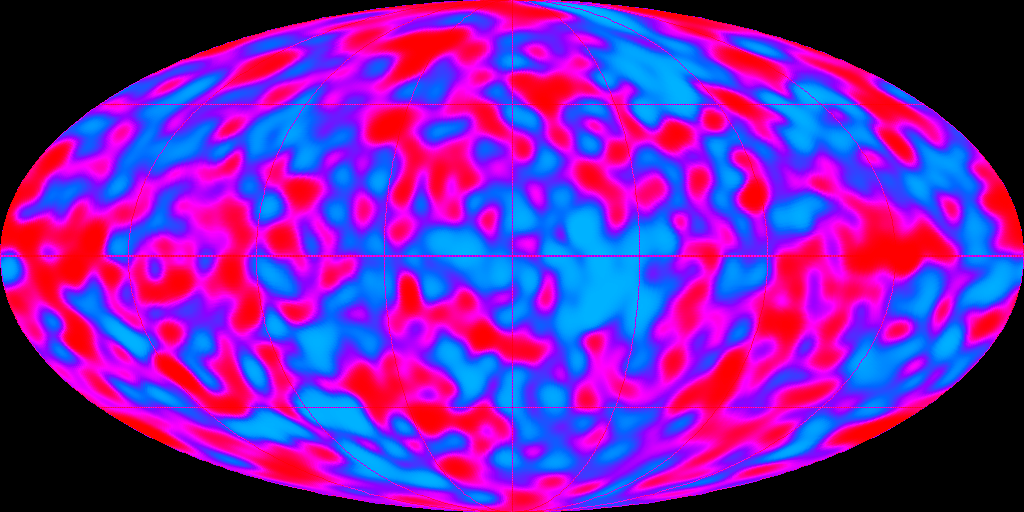
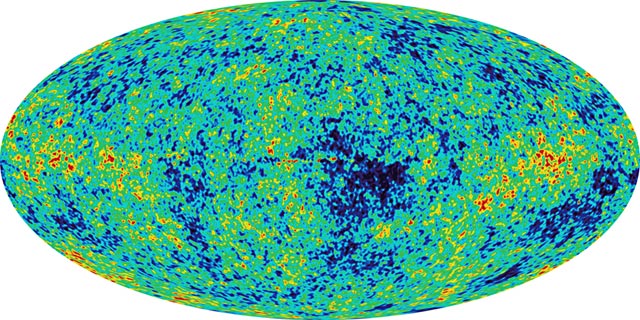
When I first saw the COBE map awhile back, a little part of me said, "Well, that's nice, but such subtle data from a single platform isn't much to go on." But now, the new image certainly does seem to correlate well with it. The similarities are graphically obvious, and the fact that those data were obtained independently from COBE's is what makes this announcement most significant.
-
Answers here, dammit.
Does Dark Energy suck or blow?
Blow... sort of. It acts the opposite of gravity, pushing everything apart.
http://www.lbl.gov/Science-Articles/Archive/dark-e nergy.html -
Dark Energy/Dark Matter/Negative Energy
Confused by "Dark Energy," "Vacuum Energy," "Dark Matter," and "Exotic Matter?" Here's a great collection of papers. (Mostly from the SNAP project)
-
seems bogus
Terahertz radiation lies on the boundary between radio and light waves and is far more difficult to detect and analyse than either, but is of huge interest for medical, security, environmental and communication uses;
If this is so groundbreaking, why do they fail to mention that "terahertz radiation" also goes by another name: infrared? If it's so hard to detect and analyze, how come my $10 radio-shack universal remote control can do it? -
Sure you want to know?
Use the net, Luke...but you must be warned...it can be shocking to learn some of the relationships that lurk in the past... - at the Presidio. You know, the park with the long military history?
-
Re:Why would anyone use anything else?I wish it was DuckTape, because a lot of people actually do use it for everything.
I like the duck...
-
Re:it's all lies
Thanks for the links. They're a great resource for research in micro-biology, and I'm sure there is lots of relevant stuff here. It'll just take some time to dig through it. I found the paper by Gary Olson and Carl Woese here most interesting. Then again as a programmer that's maybe not much of a surprise
The conclusion of that paper was pretty much like all other molecular phyogenies I've found. Still inconclusive and raising questions about our former ideas about how the phylogeny should have looked. It's this trend of conflicting findings, that would be expected if our common descent assumption is wrong, that continue to make me think our evidence for common descent is not compelling.
As I find other examples that pertain I'll post them. If you have any in particular you've seen just let me know, thanks again.